Bangkok temples itinerary: the honest 2-day temple plan
Bangkok: Grand Palace, Wat Pho, Wat Arun Sacred & Local Tour
Bangkok has hundreds of temples, but a focused two days will take you through the essential ones without the blur that comes from cramming a dozen into a single sweaty afternoon. This itinerary covers the three royal showpieces — the Grand Palace, Wat Pho and Wat Arun — plus the Golden Mount, the Marble Temple and a couple of quieter gems, arranged into a smart route that respects the heat and the dress codes. The honest principle for temple-hopping is restraint: three or four temples a day is the limit before they stop registering, so this plan deliberately leaves room to breathe. Start with the best temples in Bangkok and the temple etiquette and dress code guides.
| Duration | 2 days |
| Temples covered | Grand Palace, Wat Pho, Wat Arun, Golden Mount, Wat Traimit, Marble Temple |
| Cost | Roughly 100–500 THB entry per temple |
| Getting around | Chao Phraya Express Boat, ferries, Grab |
| Pace | Easy — 3–4 temples per day maximum |
Temple ground rules first
Two practicalities shape every temple day. Dress code: covered shoulders and knees at all temples, and stricter still at the Grand Palace — no see-through fabric, no torn jeans, proper shoes. Carry a light long-sleeve and long trousers or a long skirt rather than buying overpriced cover-ups at the gates. Timing: temples are morning activities — most royal sites close by 15:30–17:00, and the early hours are cooler and far less crowded. Remove your shoes before entering ordination halls, never point your feet at a Buddha image, and keep your voice low. The temple etiquette and dress code guide covers the rest, and temple hopping route maps the walking logistics.
Day 1 — The three royal temples
This is the headline day: the Grand Palace, Wat Pho and Wat Arun, all within a short walk and ferry of each other in Rattanakosin.
Morning: Grand Palace (08:30–10:30)
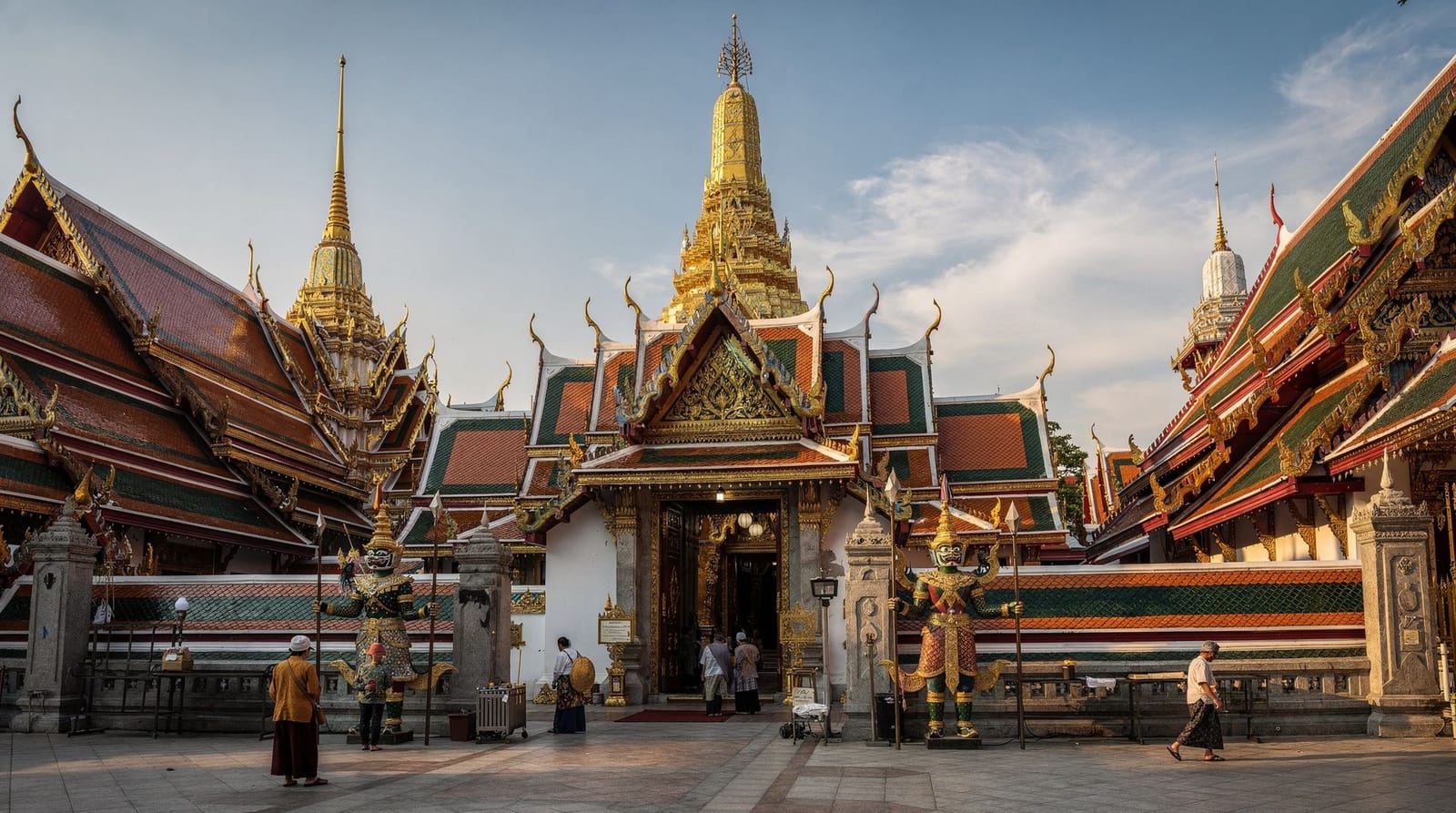
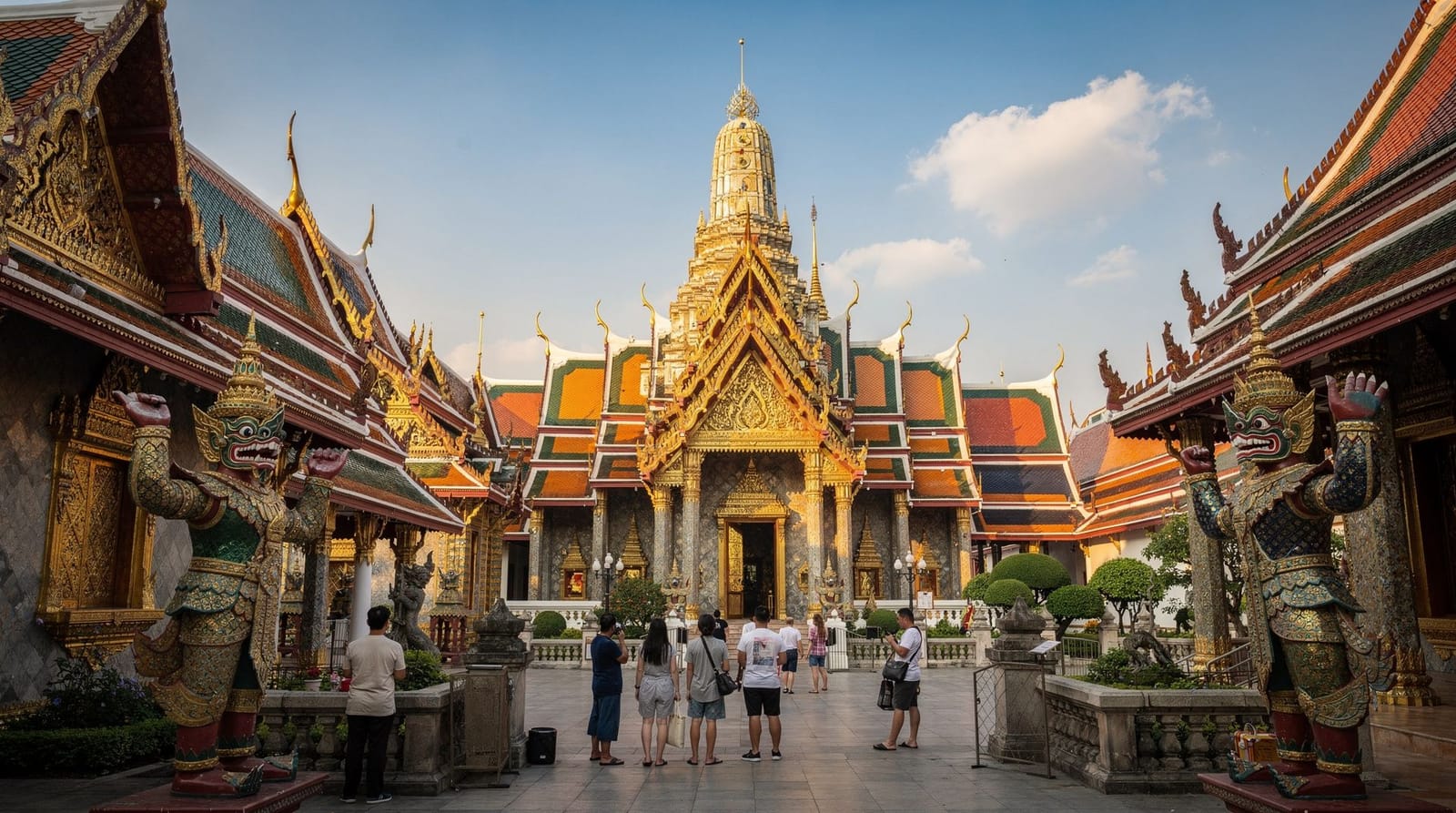
Be at the Grand Palace for the 08:30 opening (500 THB) — the first hour is the only calm one. Inside, Wat Phra Kaew (the Temple of the Emerald Buddha) is the spiritual heart of Thailand, its tiny jade Buddha set high above a dazzling interior, surrounded by the gilded chedis and the Ramakien murals. Dress strictly, and ignore the touts outside claiming it is “closed for a ceremony” — that is the city’s classic scam (Grand Palace scam warning). See the Grand Palace guide.
Late morning: Wat Pho (10:45–12:00)
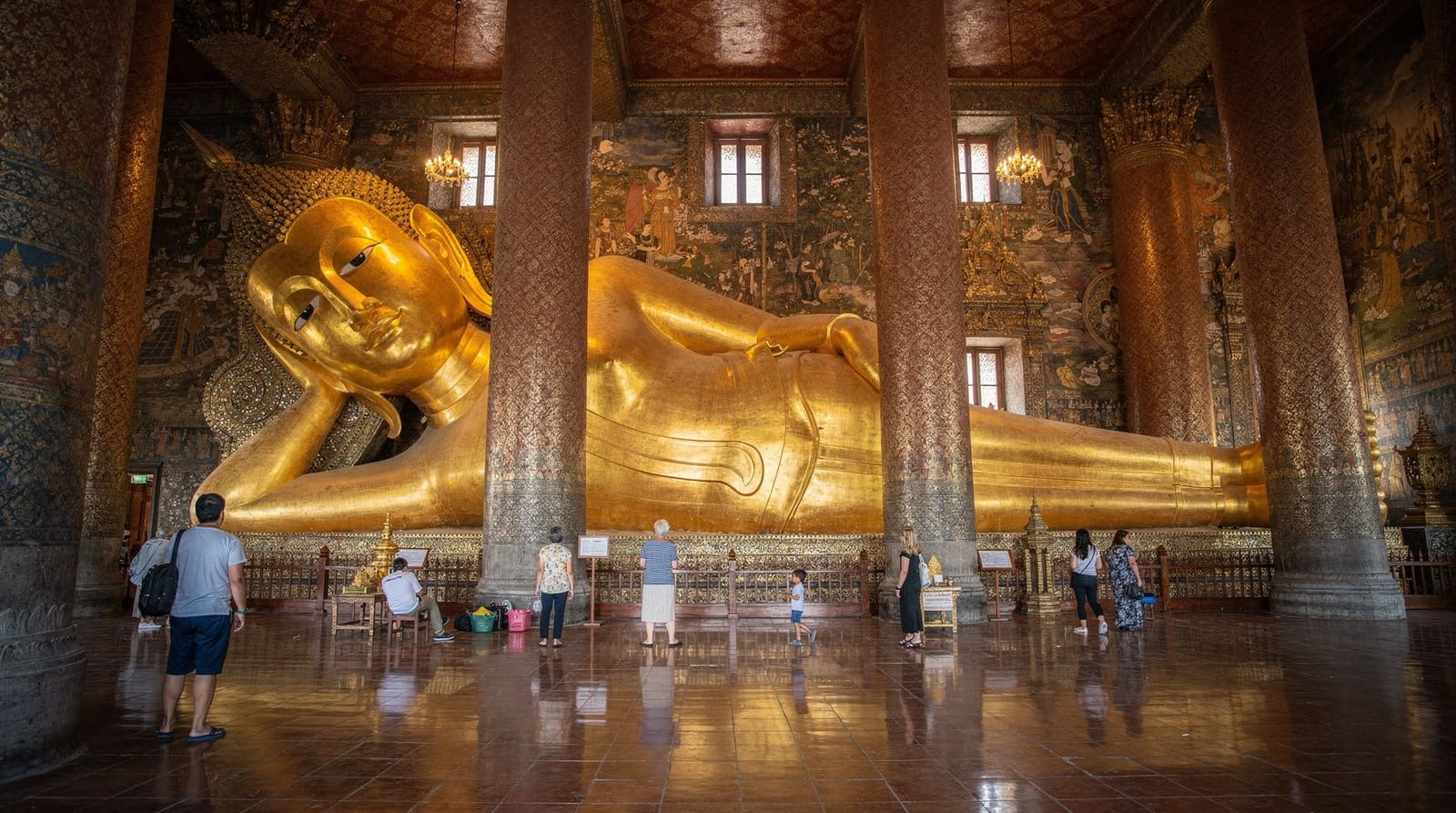
Walk ten minutes to Wat Pho (300 THB), home of the 46-metre gold-leafed Reclining Buddha and the birthplace of Thai massage. It is shadier and calmer than the palace. See the Wat Pho guide and consider a genuine 60-minute massage here (around 480 THB) to reset your feet.
Afternoon: Wat Arun (13:30–15:00)
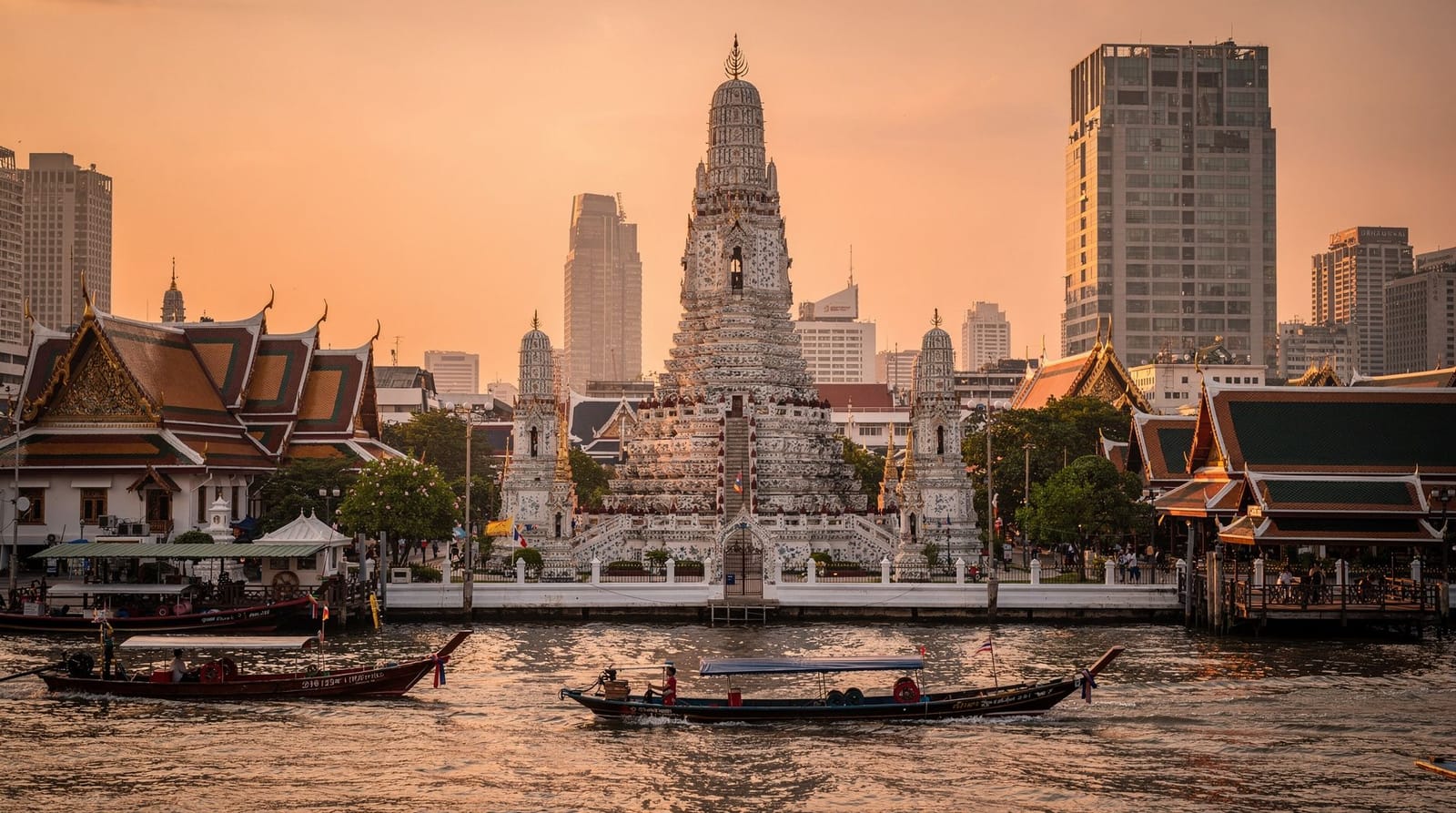
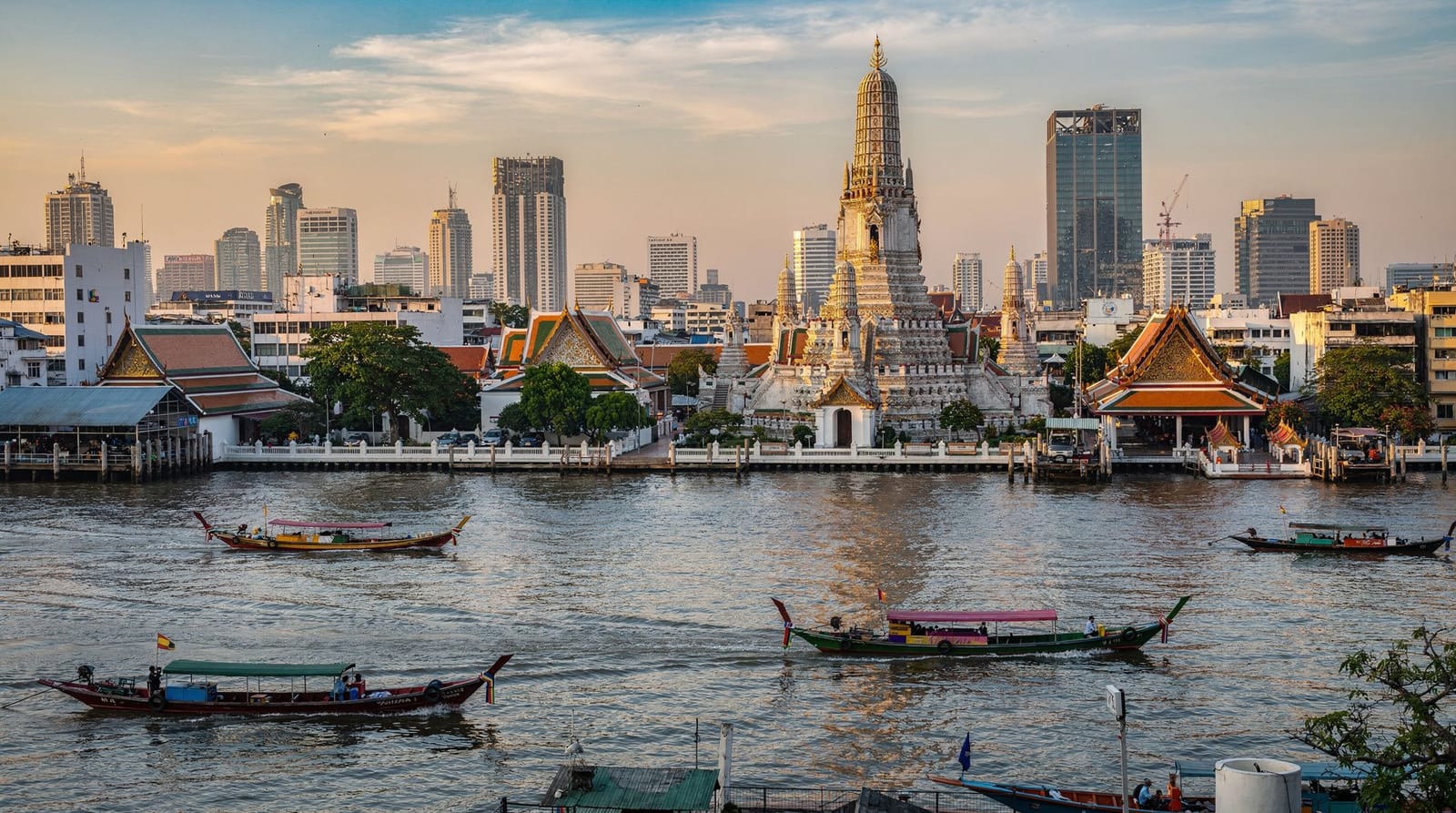
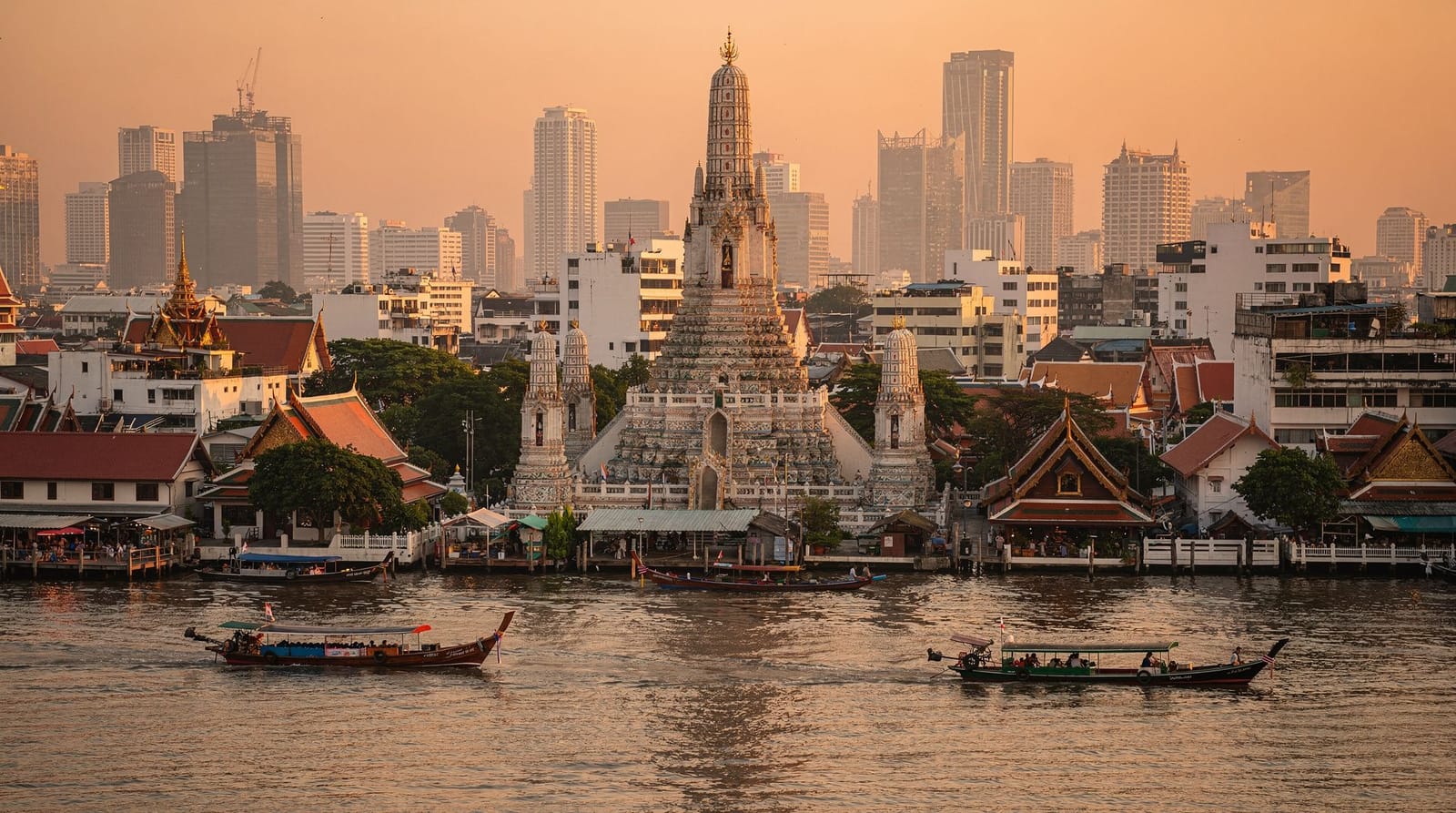
Lunch near Tha Tien, then take the 5 THB cross-river ferry to Wat Arun (200 THB), the porcelain-clad Temple of Dawn. Climb the steep lower terraces for the view back across the river. The Wat Arun guide has the detail. A guided Grand Palace, Wat Pho and Wat Arun tour bundles all three of today’s temples with tickets and context if you would rather not navigate alone — a strong choice given the scam-prone Grand Palace.
Ending day one on the river
Wat Arun is at its best right as the sun sets, so if your legs still have it in them, don’t rush straight to dinner — linger on the riverside for the golden light on the prang, then let the evening continue on the water rather than the street. A Chao Phraya dinner cruise with a live show is a relaxed way to close out a heavy temple day, gliding past the illuminated riverside temples you spent the afternoon climbing over. See the Chao Phraya dinner cruise guide for the full range of options if a cruise isn’t quite your thing and you’d rather eat at a riverside restaurant instead.
Day 2 — The Golden Mount, Marble Temple and quieter gems
Day two ranges a little wider for variety and a different mood.
Morning: Golden Mount and the old-town temples
Start at Wat Saket (the Golden Mount) (100 THB), a 318-step spiral climb to a golden chedi and a 360-degree city panorama — the best free-feeling view in the old town. Nearby cluster Wat Suthat and the Giant Swing, and the intricate Loha Prasat (Metal Castle) at Wat Ratchanatdaram. A Golden Mount, Metal Castle and Giant Swing tour links them efficiently on foot. See the Wat Saket guide.
Midday: Chinatown’s Golden Buddha
Drop into Wat Traimit in Chinatown to see the 5.5-tonne solid-gold Buddha — once hidden under plaster, rediscovered by accident in 1955. Entry is around 100 THB. Pair it with a Chinatown lunch. See the Wat Traimit guide.
Afternoon: the Marble Temple (Dusit)
Finish at Wat Benchamabophit, the Marble Temple in leafy Dusit — gleaming Carrara marble, a serene courtyard of Buddha images, and far fewer crowds than the riverside temples (100 THB). It photographs beautifully in the afternoon light and is a calm, elegant note to end on. See the Marble Temple guide and the Dusit destination. A Grand Palace, Wat Arun and Marble Temple tour is an alternative one-day combination if you prefer a guided sweep.
Beyond the essentials
If temples are your real love, Bangkok has more. The riverside Wat Paknam has a famous emerald-glass stupa ceiling and a giant Buddha (Wat Paknam guide); the Erawan Shrine in Siam is a free, atmospheric Hindu shrine wedged between malls (Erawan Shrine guide). For a different scale entirely, the ruins of Ayutthaya are a day-trip into Thailand’s temple-rich past — see the 3-day itinerary to add it.
Where to eat between temples
Don’t underestimate lunch as part of the plan — the areas around these temples are genuinely good eating, not just a refuelling stop. Near Tha Tien, between Wat Pho and the Wat Arun ferry, small riverside restaurants and noodle shops serve a solid lunch with a view; the riverside Bangkok guide has more on the stretch. Chinatown, your midday stop on day two, is one of the best street-food areas in the city — the Yaowarat Chinatown food guide will steer you toward the stalls worth the queue rather than the tourist-priced ones near the main road. Building real food breaks into a temple day, rather than grabbing whatever’s nearest, makes the whole itinerary feel far less like a route march.
Rain, heat and accessibility
Temple-hopping is outdoor, on-foot work in a hot, occasionally very wet climate, so plan for both. In the rainy season, mornings are often clear with storms building by afternoon, so front-load the day’s walking where you can — the Bangkok in the rain guide has the seasonal detail. Heat is a bigger daily obstacle than rain: carry water, wear a hat, and treat the shaded, air-conditioned breaks (the Wat Pho massage, a mall stop near the Marble Temple) as genuinely useful pacing tools, not indulgences. For travellers with mobility limitations or travelling with elderly relatives, be aware that temple grounds involve uneven stone paving, steps, and the Golden Mount’s 318-step climb in particular; the Bangkok with elderly travellers guide has practical adjustments, including which temples are easiest to navigate.
Getting around the temples
The old-city temples are not on a train line — use the Chao Phraya Express Boat (orange flag, 16 THB), the cross-river ferries (5 THB) and Grab cars. For the Golden Mount cluster and the Marble Temple, Grab or a metered taxi is easiest. Wat Traimit is steps from MRT Hua Lamphong. The getting around Bangkok and chao phraya boats guide help. Refuse any tuk-tuk driver who offers a flat-price “temple tour” — they detour to gem shops (tuk-tuk scams).
Understanding what you’re looking at
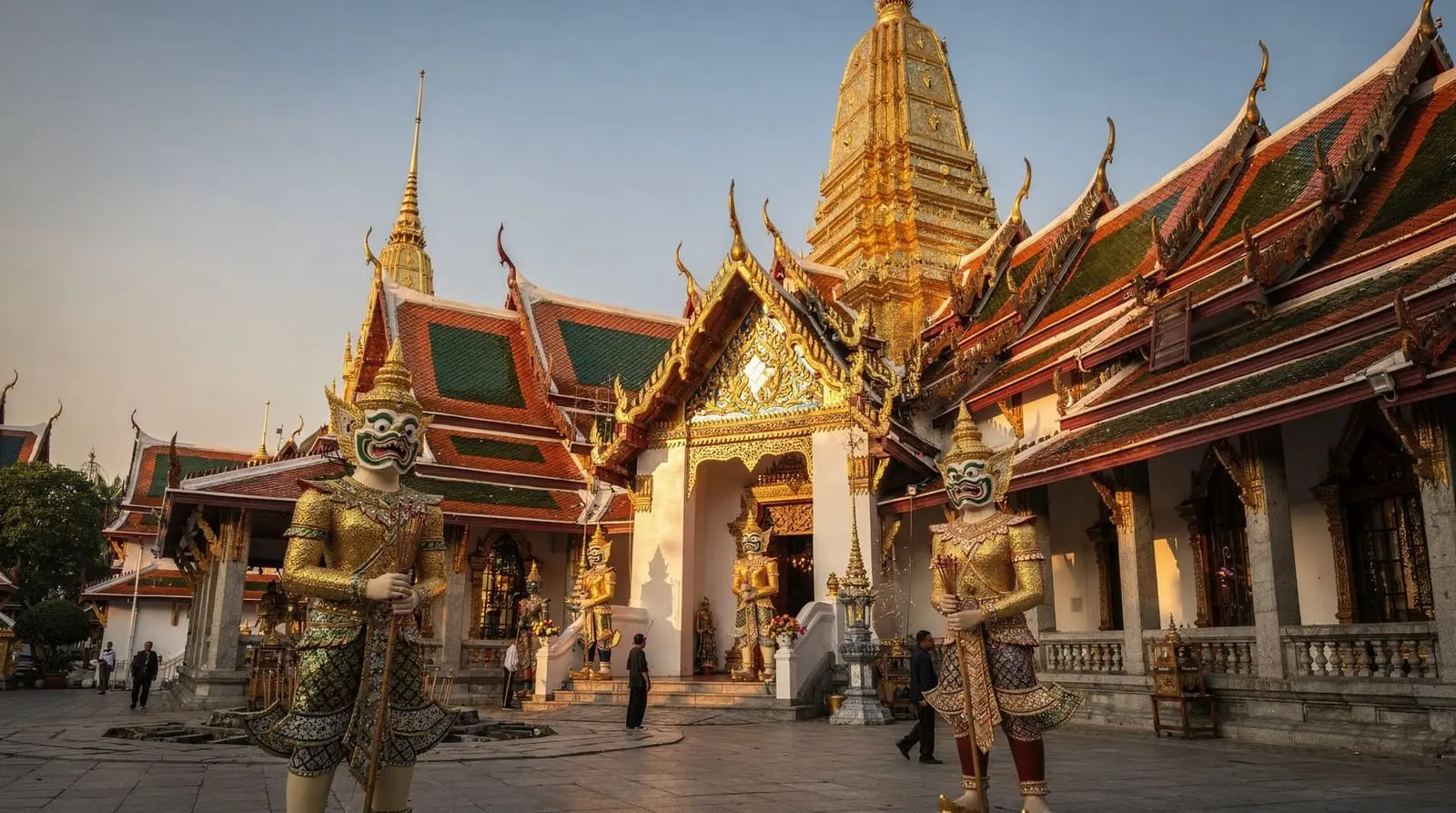
Temples mean more when you can read them. A few orientation points that deepen any Bangkok temple visit. A wat is a temple complex, not a single building; the main hall where the principal Buddha image sits is the ubosot (ordination hall), and the tall, tapering towers are prangs (Khmer-style, like Wat Arun) or chedis (bell-shaped, holding relics). The Emerald Buddha at Wat Phra Kaew is dressed in seasonal gold robes changed by the King three times a year. The colours, the mirror-glass mosaics and the mythological guardians (yakshas, kinnari) all carry meaning drawn from the Ramakien, the Thai version of the Ramayana. Reading the Buddhism in Bangkok and Bangkok culture guide guides before you go turns a row of golden buildings into a story you can follow.
A realistic temple-day timeline
Day 1 (royal temples): 08:30 Grand Palace; 10:45 Wat Pho; 12:00 lunch; 13:30 Wat Arun.
Day 2 (golden mount and gems): 08:30 Wat Saket and the old-town cluster; midday Wat Traimit and a Chinatown lunch; afternoon the Marble Temple in Dusit.
Keep day one to the three riverside royal temples and resist adding a fourth — the Grand Palace alone deserves real attention. Day two ranges wider but stays at four temples maximum, with lunch and travel time built in. The honest enemy of a temple trip is the blur that comes from cramming; three or four temples a day, properly looked at, beats eight glanced at.
Respecting the living religion
These are not museums — they are active places of worship, and Thailand takes them seriously. Beyond the dress code: remove your shoes before entering any ordination hall, never climb on or pose disrespectfully with Buddha images (taking a Buddha image out of the country is actually illegal), keep your head lower than monks and Buddha figures where you can, women should not touch monks, and keep your voice down. Photography is usually fine in the grounds but sometimes forbidden inside halls — look for signs. A respectful visitor is always welcome; the thai customs and etiquette and monarchy respect guides cover the wider sensitivities, including the deep reverence for the monarchy you’ll feel at the royal temples.
Temples beyond the two-day core
If two days only deepens your appetite, Bangkok and its surroundings hold remarkable temples beyond the headline route. Wat Paknam Phasi Charoen in Thonburi has become a pilgrimage for its dazzling emerald-green glass stupa ceiling and a colossal seated Buddha towering over the neighbourhood — genuinely unlike anything else in the city (Wat Paknam guide). Wat Mangkon Kamalawat in Chinatown is the city’s grandest Chinese temple, thick with incense. Further afield, the ruins of Ayutthaya (a day-trip north) and Sukhothai (Thailand’s first capital, further still) offer temples on an entirely different historical scale — see the Ayutthaya vs Sukhothai comparison. For photographers, Wat Arun at sunset and temple photography tips deserve a dedicated session (Wat Arun photography, temple photography tips). Two days is the essential core; a temple lover could happily spend a week.
How to photograph the temples well
Temples are Bangkok’s most photogenic subject, and a little planning lifts the results. Wat Arun glows best from the opposite (east) bank at sunset, when the setting sun lights its western face — the riverside restaurants near Tha Tien are the classic vantage. The Grand Palace interiors are busy, so arrive at 08:30 opening for clean shots before the crowds. The Marble Temple rewards the soft afternoon light on its white Carrara stone. For all of them, a wide lens captures the architecture and a longer one isolates the details — the mirror-glass mosaics, the guardian figures, the gold leaf. Be respectful: don’t pose disrespectfully, don’t photograph people praying without consent, and watch for “no photography” signs inside the ordination halls. The Wat Arun photography, temple photography tips and best photo spots guides have the detail.
Frequently asked questions about a Bangkok temples itinerary
How many temples should I see in a day?
Three or four is the honest maximum before they blur together and the heat wins. This itinerary does the three royal temples on day one and a varied mix on day two, with rest built in. Quality of attention beats quantity.
What is the dress code for Bangkok temples?
Covered shoulders and knees everywhere, and stricter at the Grand Palace: no see-through fabric, no torn jeans, no flip-flops in some seasons, proper shoes. Carry a light layer and long trousers or a skirt rather than relying on cover-ups at the gate.
How do I avoid the Grand Palace “closed today” scam?
Ignore anyone outside the gates — even official-looking ones — who says the palace is shut for a ceremony and offers a cheap tuk-tuk tour. It is open daily 08:30–15:30. Walk to the real ticket office, or take a reputable guided tour. See Grand Palace scam warning.
Which is the most beautiful temple in Bangkok?
Subjective, but Wat Arun (the porcelain-clad Temple of Dawn) and the Marble Temple (Wat Benchamabophit) are the photographers’ favourites, while the Grand Palace’s Wat Phra Kaew is the grandest and most ornate. Wat Pho’s Reclining Buddha is the most awe-inspiring single image.
Are temple entry fees worth it?
Yes — they are modest (100–500 THB) and fund upkeep. Wat Pho (300) and Wat Arun (200) are clear value; the Grand Palace (500) is the priciest but the most spectacular. Many smaller temples are free. See best temples in Bangkok.
Can I visit temples on the same day as other sights?
Yes — temples are morning activities, so pair a temple morning with a market, a spa or a river afternoon. Just don’t try to add a fourth temple to a packed afternoon; the 2-day itinerary shows a balanced mix.
Top experiences
Bookable activities with verified prices and instant confirmation on GetYourGuide.