Thai customs and etiquette: a visitor's honest guide
What are the key Thai customs and etiquette rules I should follow in Bangkok?
Greet by returning a wai (palms together, slight bow) rather than initiating it toward staff; keep calm and smiling because Thai culture values composure and saving face; never touch anyone's head or point your feet at people; remove your shoes when entering homes and temples; stand for the royal anthem and respect images of the King; and dress modestly at temples. Politeness is rewarded warmly, and visible anger almost never gets results.
Thai people are famously gracious to visitors, and a little cultural awareness goes a long way toward being treated as a welcome guest rather than a clumsy tourist. The customs that matter most are not difficult: greet politely, stay calm and smiling, respect the body hierarchy of head and feet, take your shoes off where expected, and treat the monarchy and Buddhism with care. This guide explains the everyday etiquette of Bangkok — the wai, the concept of “face”, dining, tipping, the meaning of the Thai smile — so you can move through the city smoothly and respectfully.
| Core greeting | Return a wai; don’t initiate it toward staff, drivers or children |
| Never | Touch someone’s head, or point your feet at people or Buddha images |
| Legal risk | Insulting the monarchy, disrespecting currency bearing the King’s image |
| Social rule | Stay calm — visible anger makes both parties “lose face” |
| Dress | Modest at temples; beachwear stays on the beach |
The wai: greeting, thanks and apology
The wai — palms pressed together, fingertips up, with a slight bow of the head — is the cornerstone of Thai social interaction. It serves as a greeting, a thank-you and an apology all at once. The height of the hands signals the degree of respect: hands at chest level for peers, higher (to the nose or forehead) for elders, monks and revered people.
As a foreign visitor, the one rule to internalise is to return a wai when one is offered, but not to initiate it toward people who are serving you — waiters, taxi and Grab drivers, hotel staff — or toward children. Initiating a wai “downward” looks odd to Thais. If someone wais you, a returned wai or even a warm nod with hands at chest height is perfectly correct. You will see this constantly once you arrive in Sukhumvit or anywhere staff greet guests.
Head sacred, feet lowest: the body hierarchy
Thai Buddhist culture maps respect onto the body. The head is the highest and most sacred part of a person; the feet are the lowest and least clean. Several practical rules follow.
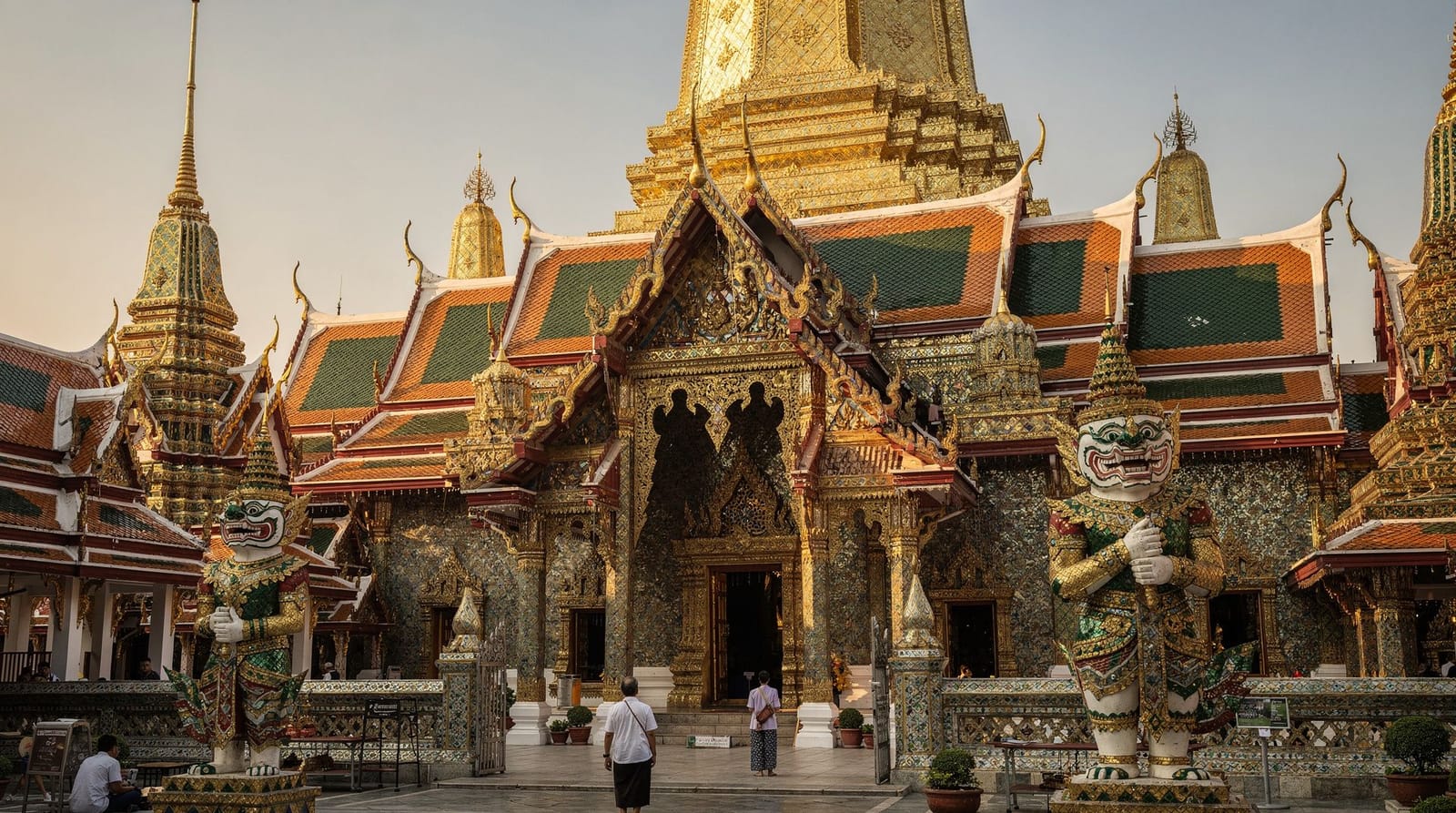
Never touch anyone’s head — not even a child’s, however affectionate the impulse — and never reach over someone’s head to pass something. Never point your feet at a person, a monk, or a Buddha image; when sitting, keep your feet tucked away rather than stretched out toward others or toward an altar. Do not use your foot to point at things, to nudge objects, or to hold a door. Do not step over people or over food laid on the ground. These rules apply far beyond temples — they govern how people sit on trains, in homes and in restaurants. The temple-specific version, with the shoe and sitting rules, is in the temple etiquette and dress code guide.
Saving face and the cool heart
If there is one concept that explains Thai social behaviour, it is “face” — a person’s dignity, reputation and social standing. Causing someone to lose face is a serious breach. Public criticism, shouting, aggressive complaining and visible anger all make the other person lose face and, just as importantly, make you lose your own.
The cultural ideal is jai yen — a “cool heart” — composure under pressure. When something goes wrong, and in a chaotic megacity things do go wrong, the effective response is to stay calm, keep smiling, and resolve the issue quietly and politely. Raising your voice at a hotel desk or a market stall will not speed anything up; it will harden positions and embarrass everyone. This is genuinely practical advice, not just courtesy: calm gets results in Thailand, anger does not. It also helps you handle the city’s common annoyances — see the common Bangkok scams guide for situations where staying composed protects both your dignity and your wallet.
The many meanings of the Thai smile
The “Land of Smiles” reputation is real, but a Thai smile is not always a sign of happiness. Thais smile to keep social interactions smooth, and a smile can mean amusement, embarrassment, apology, discomfort, or a polite way of softening bad news or saying no. Someone may smile while telling you something has gone wrong, or while declining a request, precisely to keep the exchange pleasant.
For a visitor, the takeaway is twofold. First, do not assume a smile means everything is fine — read the wider situation. Second, respond to awkwardness with your own calm smile rather than pressing for a blunt answer, which can force the other person into an uncomfortable directness their culture avoids. This subtlety is part of what makes Bangkok feel gracious, and it is worth understanding before your first interactions, as the Bangkok for first-timers guide also notes.
Dining etiquette: the shared table
Thai meals are communal. Several dishes are placed in the centre and shared, while each person has their own plate of rice. The spoon, held in the right hand, is your main utensil; the fork, held in the left, is used to push food onto the spoon rather than to eat from directly. Chopsticks appear mainly with noodle dishes such as boat noodles and Chinese-style soups.
A few courtesies make you a good guest: serve yourself modest amounts from the shared dishes rather than piling your plate; do not take the last piece of a communal dish without offering it around; let the host or the eldest person begin; and try a bit of everything offered. When eating street food across Chinatown or the markets, these formalities relax, but the instinct to share and to be unhurried remains. For the full eating landscape, see the Bangkok street food guide and the what to eat in Bangkok guide.
On spice: ask for “mai phet” (not spicy) or “phet nit noi” (a little spicy) if you are unsure — Thai “medium” can be genuinely fierce. And Thais will often offer to share their food generously; accepting graciously is part of the warmth.
Tipping and money manners
Tipping is not a built-in obligation in Thailand the way it is in some countries, but it is appreciated and increasingly common in tourist areas. Round up taxi, tuk-tuk and Grab fares to the nearest convenient figure; leave around 20 to 50 THB for hotel porters and for spa and massage staff; and add roughly 10 percent at sit-down restaurants if no service charge is already included. Many upscale restaurants add a 10 percent service charge to the bill, in which case extra tipping is optional. At street stalls and markets, tipping is not expected.
A money manner that matters far more than tipping: never disrespect Thai banknotes or coins. They carry the image of the King, so never step on a dropped banknote to stop it blowing away, never tear or deface currency, and handle money with the same care you would a portrait. This connects directly to the monarchy rules below.
The monarchy: respect that is also law
Respect for the King and the royal family is sincere and deeply felt, and it is also protected by one of the world’s strictest laws. Section 112 of the Thai Criminal Code — lèse-majesté — makes insulting the King, Queen, heir or regent punishable by up to 15 years in prison per count, and it applies to foreigners.
In daily practice: stand still and respectful when the royal anthem plays, which happens in many public spaces, in BTS and MRT stations at 08h00 and 18h00, and always before films in cinemas; never deface, step on or mistreat currency bearing the King’s image; never make jokes or critical remarks about the monarchy, even casually; and treat royal portraits, which hang everywhere, with care. This is the one area where a careless foreigner can face genuine legal consequences, so the full explanation is in the dedicated monarchy and lèse-majesté guide.
Modesty, affection and shoes
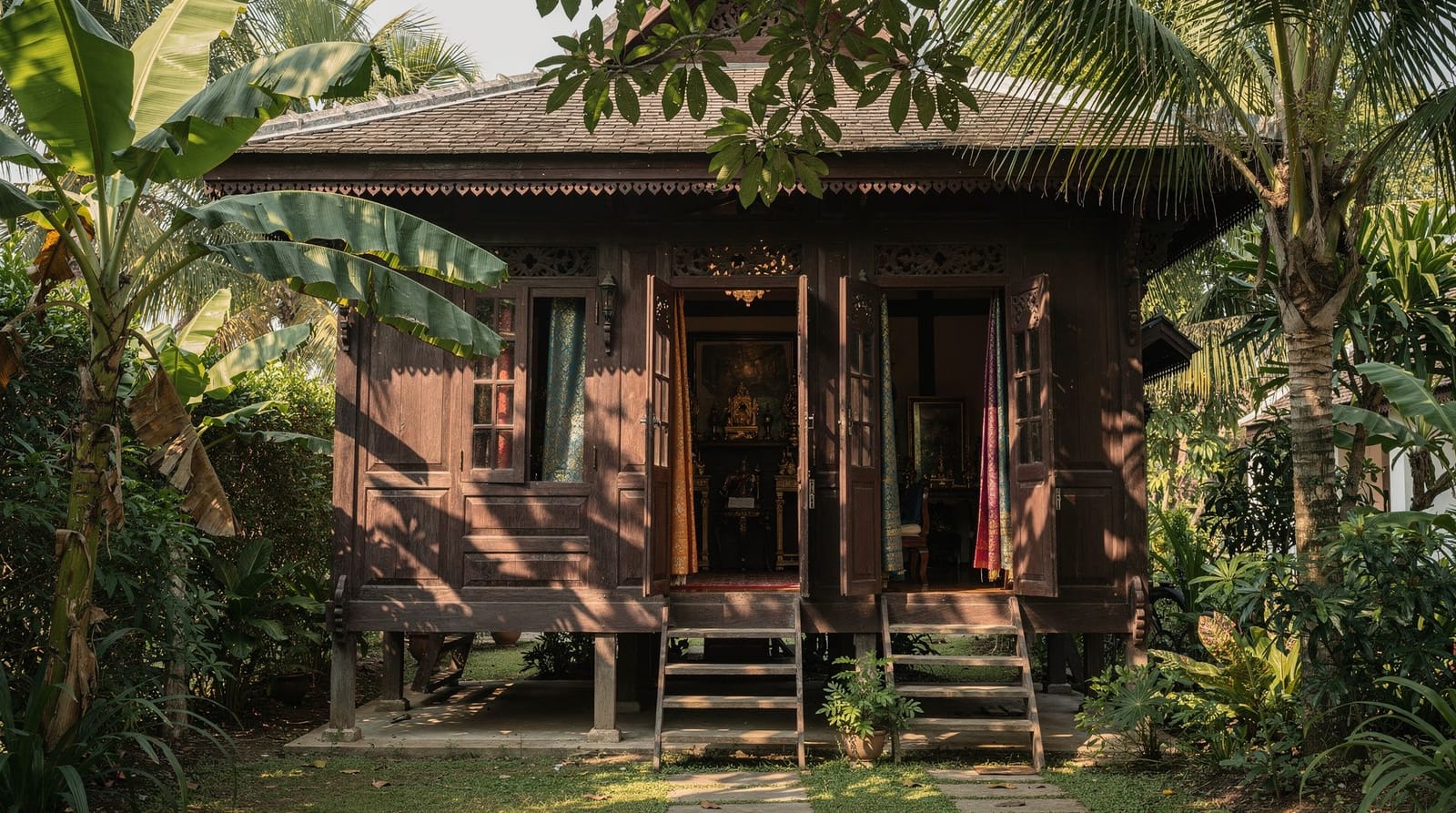
Thai society is more modest than its beach-and-party reputation suggests. Beyond the temple dress code, dress reasonably in everyday settings — beachwear belongs on the beach, not in a mall or a market. Public displays of affection beyond hand-holding are frowned upon; couples should keep it discreet. Remove your shoes when entering a private home (and many shops, guesthouses and small restaurants) — look for shoes by the door as the signal. Pointing at people with a single finger is rude; gesture with an open hand instead. And calling someone over with your palm up and fingers curling toward you is impolite — Thais beckon with the palm down.
None of this is hard, and Thais are forgiving of honest foreign mistakes. The point is not to walk on eggshells but to show that you have noticed where you are. For how these everyday customs connect to religion and the temples you will visit, see the Bangkok culture guide and the Buddhism in Bangkok guide.
Markets, shops and haggling
Etiquette shifts depending on where you’re buying. In malls, convenience stores and most restaurants, prices are fixed and haggling is not expected or welcome. In street markets, souvenir stalls and with tuk-tuk or unmetered taxi fares, gentle bargaining is normal and even expected — but the tone matters more than the tactic. A smiling, unhurried back-and-forth over a fair price is good-natured; a loud, aggressive push for the lowest possible number embarrasses the seller and marks you as a difficult customer, which tends to close doors rather than open discounts. A reasonable approach is to counter-offer politely, be willing to walk away without drama if you can’t agree, and remember that the amount in question is often trivial to you and meaningful to the seller. See Chatuchak Weekend Market and the best night markets in Bangkok guides for where this applies most.
LGBTQ+ travellers and everyday social norms
Bangkok is broadly one of Asia’s most LGBTQ+-friendly cities, with a visible, long-established scene, particularly around Silom. Public affection norms apply evenly regardless of who the couple is — Thai society expects discretion beyond hand-holding from everyone, not a stricter rule for same-sex couples specifically, and in practice attitudes in Bangkok’s tourist and entertainment districts are relaxed and welcoming. That said, rural areas and more conservative settings call for more caution than the capital. The dedicated LGBTQ+ Bangkok guide covers venues, safety and the wider social context in more depth than fits here.
A quick reference for your first days
Greet by returning wais, not initiating them downward. Keep your cool — jai yen — and never shout, even when frustrated. Do not touch heads or point feet. Take your shoes off at homes and temples. Cover shoulders and knees at temples. Stand for the royal anthem and never deface currency. Tip modestly but do not stress about it. Read the Thai smile as social lubricant, not always as agreement. Carry small notes for street food, because Bangkok’s markets and stalls run on cash. Master those and you will find Bangkok one of the warmest cities in Asia to a respectful visitor — and you will be ready for the practical side covered in the plan a trip to Bangkok guide.