Best photo spots in Bangkok: the honest photographer's guide
Bangkok: Instagram Tour with Professional Photographer
What are the best photo spots in Bangkok?
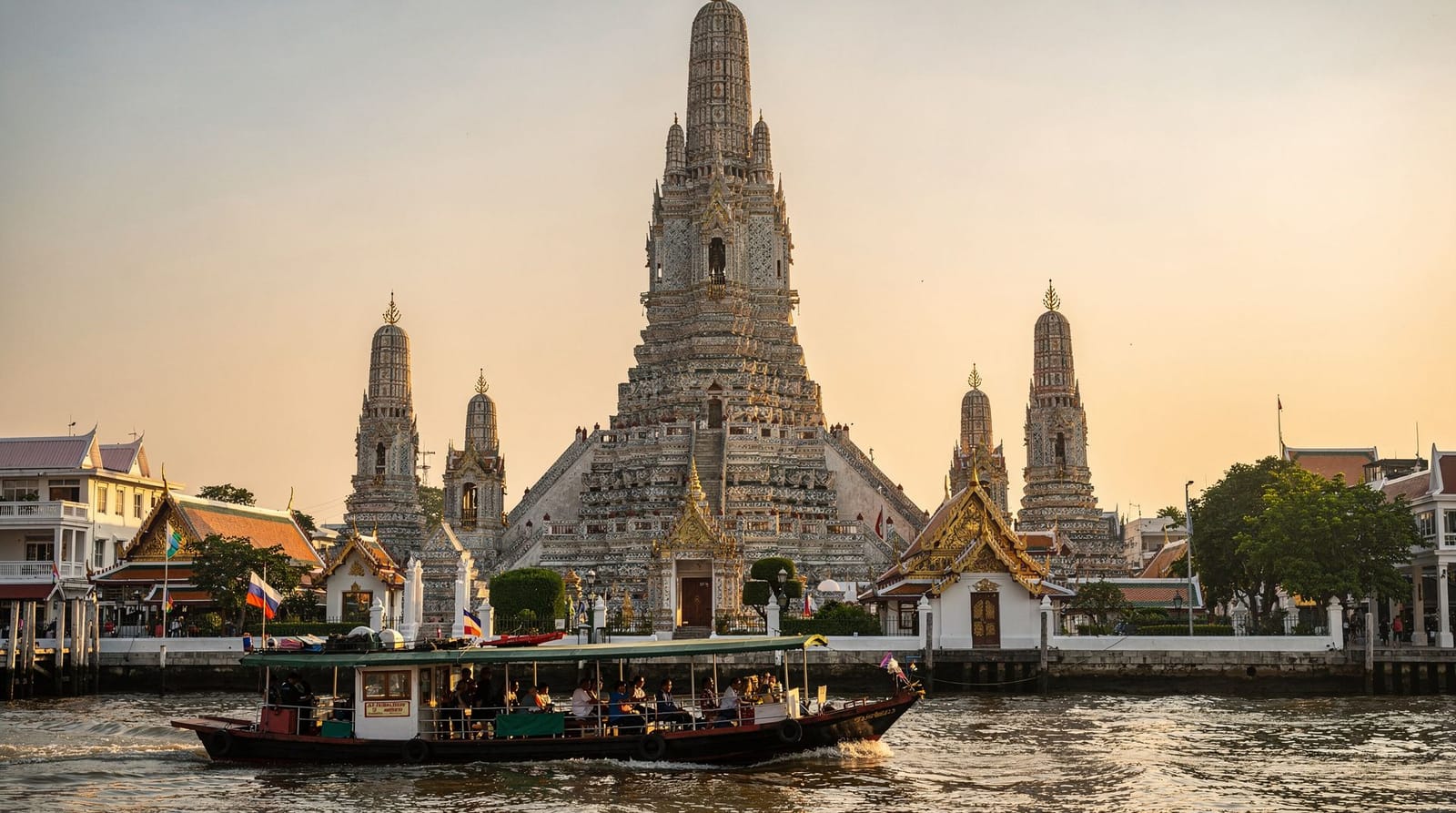
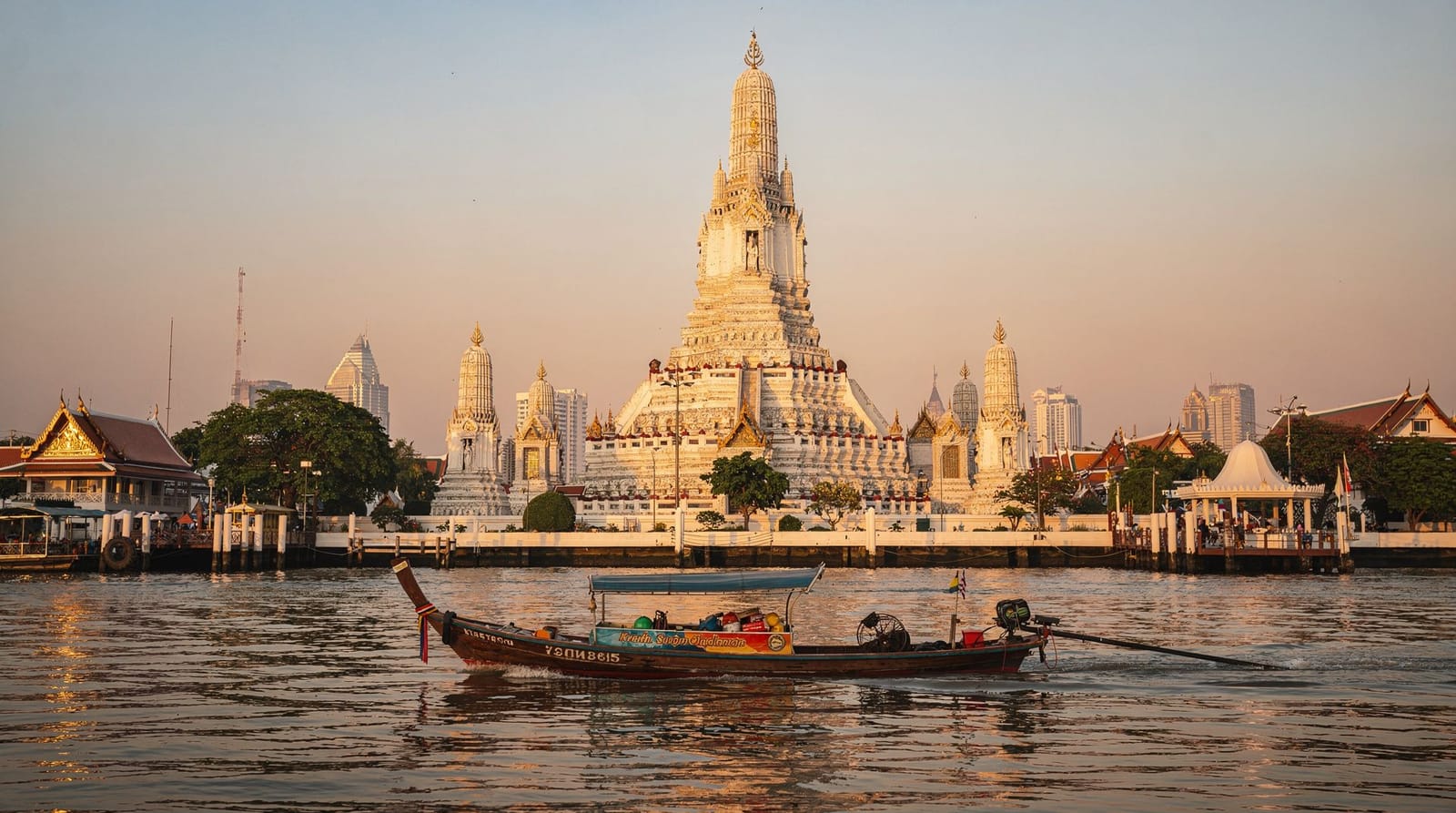
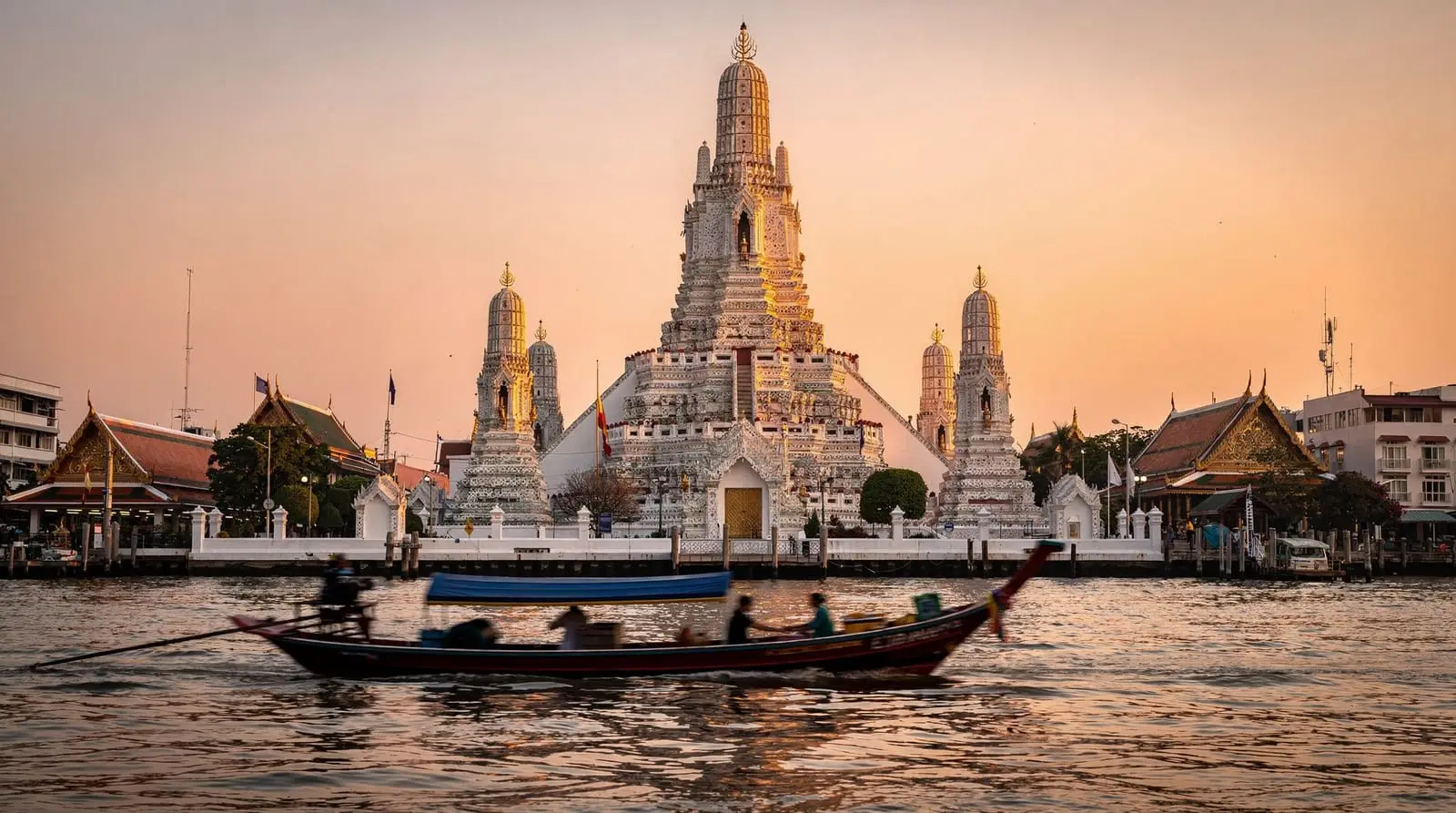
Wat Arun at sunset shot from the east bank is the single best photograph in Bangkok. Beyond it, the Grand Palace and Wat Phra Kaew at opening, Wat Paknam's green glass stupa ceiling, the MahaNakhon SkyWalk at sunset, the city panorama from Wat Saket Golden Mount, and Chinatown's Yaowarat neon after dark are the spots that consistently deliver. Light timing matters more than the camera — this guide tells you when to be where.
Bangkok is one of the most photogenic cities in Asia, and also one of the most frustrating to photograph badly. The light is brutal at midday, the heat haze swallows distant views for half the year, and the best temples are mobbed with tour groups by mid-morning. Get the timing right, though, and the city rewards you with golden spires against river sunsets, neon-soaked street markets, glass-floored skywalks and a temple skyline that looks like nowhere else on earth. This guide ranks the spots that consistently deliver, gives you the real light times, the actual entry fees, and the BTS, MRT and pier access for each — so you spend your time shooting, not scouting.
| Best single shot | Wat Arun from the east bank at sunset |
| Best free spot | Wat Paknam’s green glass ceiling |
| Best skyline | MahaNakhon SkyWalk, or a rooftop bar for a free-ish version |
| Golden hours | Roughly 06:00–07:00 sunrise, 18:00–18:45 sunset |
| Clearest skies | November–February |
The single most important thing to understand about Bangkok photography is that timing beats gear. A phone at golden hour from the right bank of the river will outshoot a full-frame camera at noon every time. Plan your day around the light, respect the temple rules, and the photos follow. For a portrait-focused experience with a local who already knows the angles, a Bangkok Instagram tour with a professional photographer handles the logistics so you can just be in the frame.
How to read Bangkok’s light
The cool dry season from November to February gives the clearest skies and the cleanest skyline shots — this is when rooftop and panorama photography is at its best. March to May is hot and hazy, with a milky sky that flattens distant views; the heat also makes midday shooting genuinely unpleasant. The rainy season from June to October brings dramatic afternoon skies and the occasional spectacular storm light, but also the risk of a washout. See the best time to visit Bangkok for the full seasonal breakdown.
Within a day, the two golden hours do most of the work. Sunrise (roughly 06:00-07:00) front-lights east-facing subjects and gives you empty streets and temples. Sunset (roughly 18:00-18:45 depending on season) is when the river, the rooftops and Wat Arun come alive. Blue hour — the 20 minutes after sunset — is the secret weapon for skyline and temple shots, when the sky still holds colour and the city lights come on. Midday is for markets, interiors and shade, not for skylines.
1. Wat Arun — the best photograph in Bangkok
Entry: about 100 THB · Hours: roughly 08:00-18:00 · Nearest: Tha Tien pier on the east bank, then a cross-river ferry (about 5 THB) to the temple; or Sanam Chai MRT plus a short walk to the pier
Wat Arun, the Temple of Dawn, is the postcard of Bangkok for a reason. The central prang — a roughly 70m spire encrusted with broken porcelain and seashell mosaics that catch the light — rises straight out of the Thonburi west bank of the river. The defining shot is not from the temple itself but from the east bank at sunset, looking across the water as the prang glows gold against the darkening sky. Shoot it from a riverside restaurant or rooftop bar near Tha Tien, or from the deck of a river cruise. As the sky fades to blue hour, the temple is floodlit and the reflection on the water doubles the picture.
Sunrise is the alternative: the rising sun front-lights the temple’s east face, giving even, warm light with almost no crowds, though it lacks the drama of the silhouette-and-glow sunset frame. If you want the reverse angle, take the cross-river ferry over and climb the steep central prang steps for a view back across the river toward the old city — note the prang closes earlier than the grounds, so go up first. The full breakdown of angles, exact ferry timing and the best east-bank vantage points is in the dedicated Wat Arun photography guide, and the Wat Arun area destination guide covers the neighbourhood around it.
2. The Grand Palace and Wat Phra Kaew — gold at opening
Entry: 500 THB (about USD 15) · Hours: 08:30-15:30 daily · Nearest: Sanam Chai MRT, or a Chao Phraya boat to Tha Chang pier
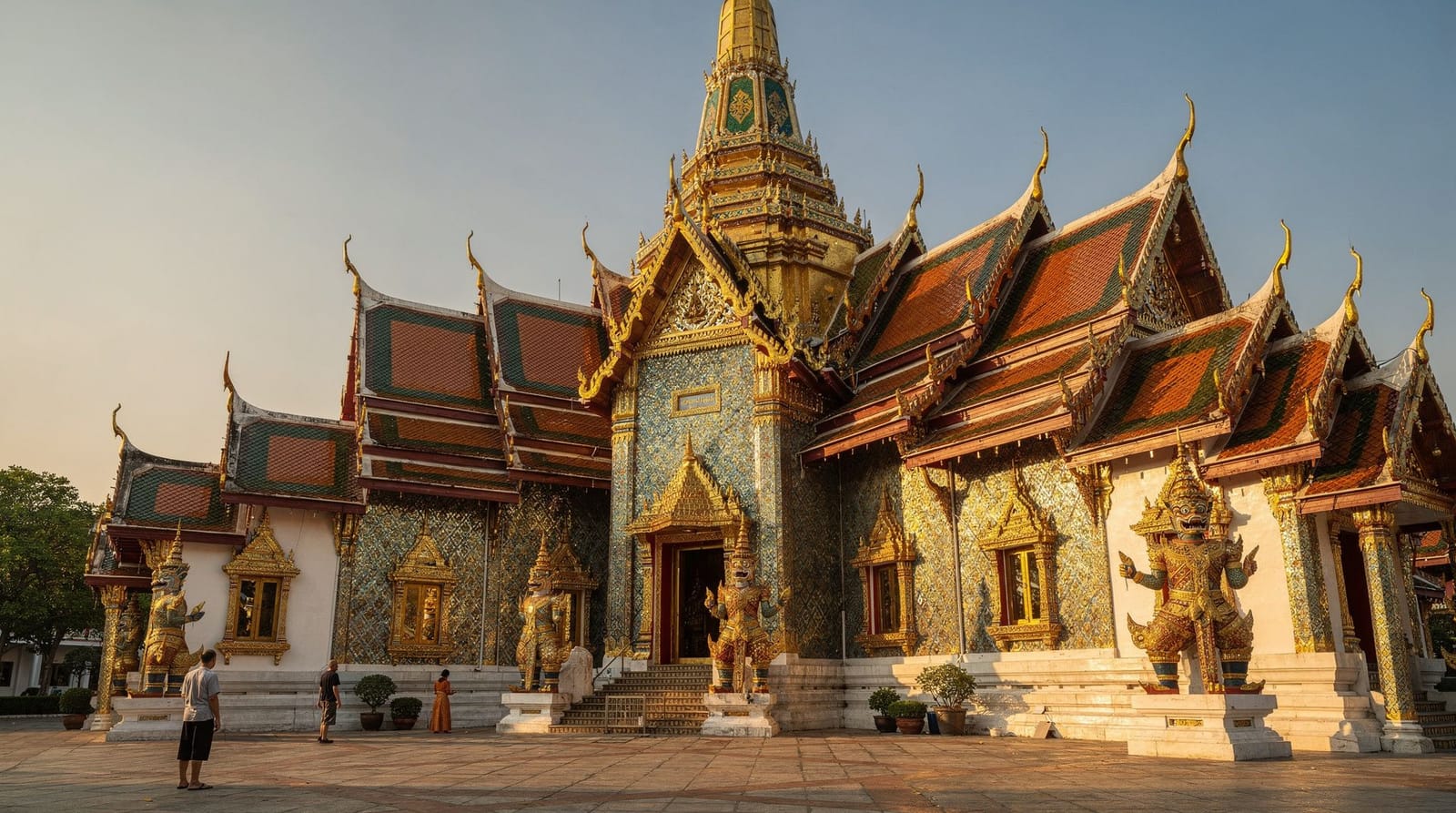
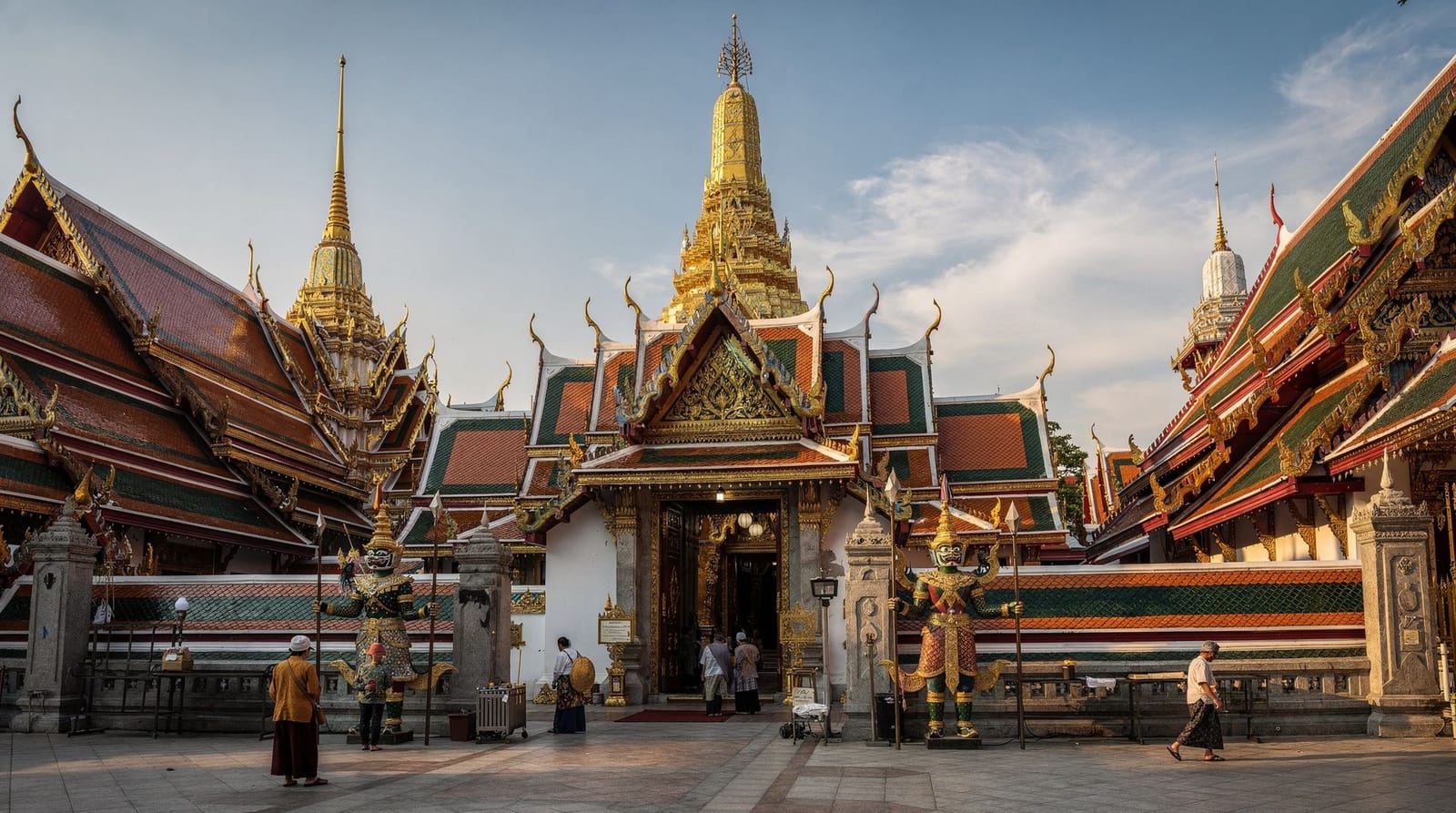
The Grand Palace complex is the most concentrated display of gilded, mirror-mosaic, glittering Thai architecture anywhere, and it photographs spectacularly — the golden chedi of Wat Phra Kaew, the demon guardians, the mural-lined cloisters. The catch is crowds: by 10:00 the site is heaving with tour groups, and clean compositions become almost impossible. Arrive at opening (08:30) and head straight for the Emerald Buddha temple while the light is still soft and the courtyards are relatively empty.
A hard rule: photography of the Emerald Buddha itself, inside the ubosot, is prohibited. You can photograph everything else freely, but inside that hall you put the camera away. The dress code is strict and enforced — shoulders and knees covered, no ripped jeans or tight leggings — and you will be turned away or made to rent a cover-up if you fail it. Read the Grand Palace dress code before you go, and the Grand Palace guide for the full visit. For the Emerald Buddha specifically, see the Wat Phra Kaew guide.
Honest assessment: the Grand Palace is the most photogenic site in Bangkok and also the most crowded and the most expensive. If you are not there by 09:30 you will be fighting for every clean frame. It is worth the early alarm; it is not worth a midday visit if photos are your priority.
3. Wat Paknam — the green glass ceiling
Entry: free · Hours: roughly 08:00-18:00 · Nearest: Bang Phai MRT (Blue Line), Phasi Charoen, then a short walk
Wat Paknam in Thonburi has become Bangkok’s most photographed temple interior thanks to a single ceiling: an emerald-green glass dome painted with a cosmic mandala, sitting above a crystal stupa, on the top floor of the white mondop tower. The shot — looking straight up into the green dome with the stupa centred beneath it — is genuinely stunning and, remarkably, free to make. Beside the tower stands an enormous seated Buddha (the Big Buddha of Wat Paknam) that dominates the skyline of the district.
Light timing: the green ceiling photographs best in late morning, when sunlight angles through the upper windows and lights the glass from within. The space is small and popular, so go on a weekday and be patient and quick — let others have their turn, do not lie on the floor blocking the room, and absolutely do not climb on the stupa for a photo. The Wat Paknam guide covers access in detail.
4. MahaNakhon SkyWalk — the modern skyline
Entry: ticketed (sunset slots are the most popular) · Nearest: Chong Nonsi BTS (Silom Line), directly connected
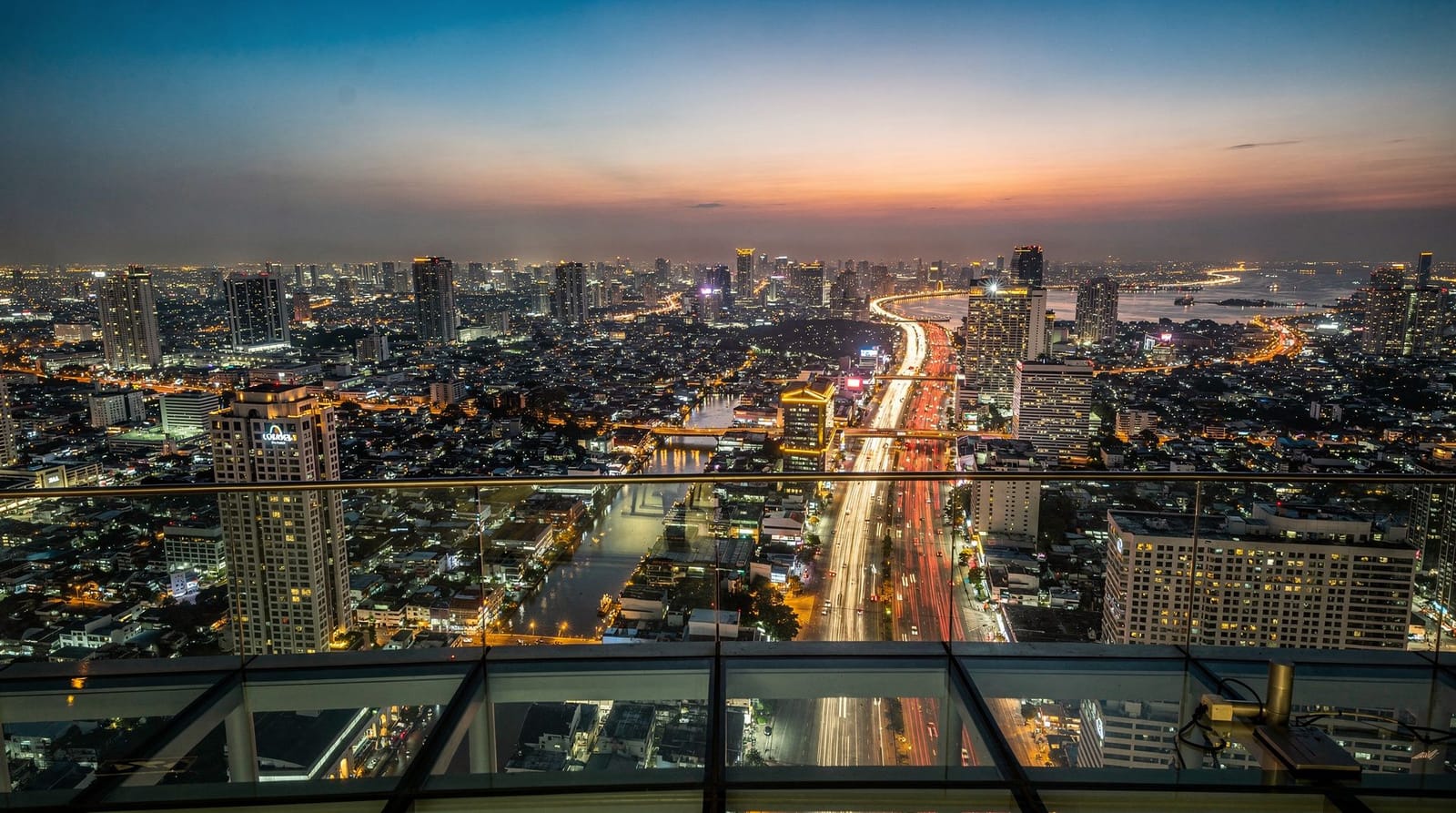
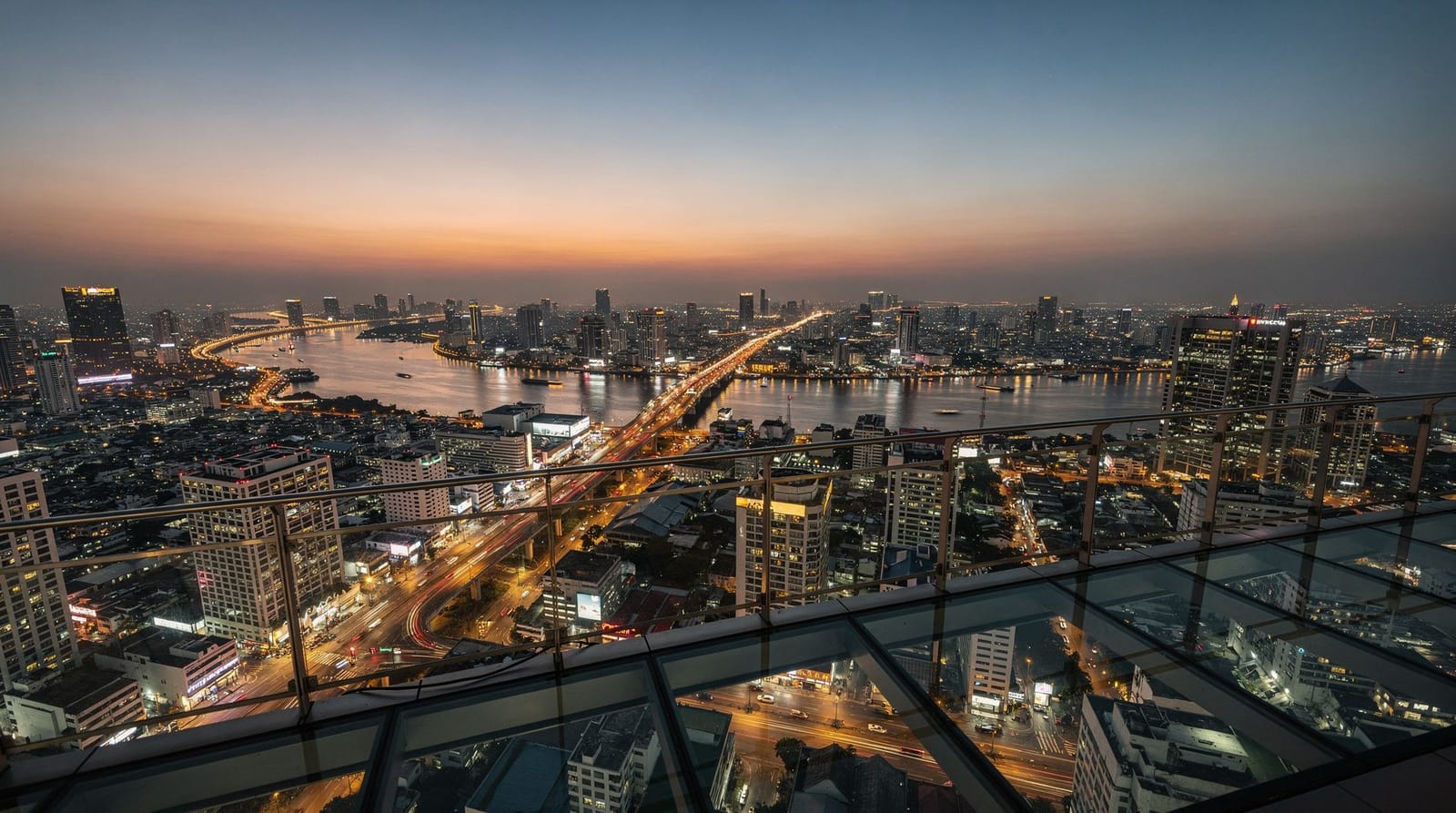
For the contemporary, glass-and-steel Bangkok, the King Power MahaNakhon tower’s SkyWalk is the headline spot. At 314m there is an indoor observation level, an open-air rooftop deck, and the famous glass floor tray that lets you shoot straight down at the city far below. Sunset is the moment — book a sunset slot and stay through blue hour as the skyline lights up. The open deck has no glass between you and the skyline, which matters for clean photos.
The MahaNakhon SkyWalk sunset ticket with a photo times your entry for golden hour and includes a shot on the glass tray. The full visit details, including how the timed slots work, are in the MahaNakhon SkyWalk guide, and for more elevated vantage points across the city see Bangkok with a view.
5. Wat Saket and the Golden Mount — the best cheap panorama
Entry: about 50 THB · Hours: roughly 08:00-19:00 · Nearest: a walk or canal boat from the old city; near the Golden Mount / Phra Nakhon area
Climb the roughly 300 steps that spiral up the artificial hill of Wat Saket and you reach a golden chedi ringed by an open-air walkway with a 360-degree panorama of the old city — a sea of temple spires, tiled rooftops and, in the distance, the modern towers. For just 50 THB this is the best-value skyline photo in Bangkok, and the climb past prayer bells and shaded landings is photogenic in itself. Late afternoon into sunset is ideal; the west-facing side of the walkway catches the golden light, and the lights of the old city come on for a blue-hour frame. The Wat Saket Golden Mount guide has the full visit.
6. Chinatown and Yaowarat — neon after dark
Nearest: Wat Mangkon MRT (Blue Line), in the heart of Chinatown / Yaowarat
After dark, Yaowarat Road transforms into a corridor of stacked Chinese-Thai neon signage, steam rising off street-food woks, and dense crowds — the most cinematic street photography in Bangkok. The classic frame is shot looking down Yaowarat from a pedestrian bridge or a road median, compressing the neon signs into a glowing tunnel. Go from about 19:00 onward when the food stalls are in full swing. Watch the traffic if you shoot from a median, keep your gear secure in the crush, and be respectful with vendors and diners. The nearby Talat Noi street-art alleys are a daytime complement — narrow lanes, vintage cars, murals and faded shophouses. For the wider after-dark scene see Bangkok at night.
7. The river itself — Chao Phraya from the water
The Chao Phraya is Bangkok’s best moving viewpoint. A dinner cruise glides past a floodlit Wat Arun, the Grand Palace walls, the ICONSIAM / Khlong San riverfront and the bridges, all at blue hour and into the night. Shooting from a moving boat means higher ISO and faster shutter speeds, but the floodlit Wat Arun reflection from mid-river is a frame you cannot get from land. The Chao Phraya dinner cruise guide covers which cruises sit lowest to the water and give the best sightlines, and the riverside destination guide maps the piers. The quieter Thonburi khlongs — the canals behind Wat Arun — give a different, more local water view by longtail boat.
8. The marble temple and the old-city lanes
Wat Benchamabophit, the marble temple in Dusit, is built of white Carrara marble with a symmetrical golden-roofed ubosot and a courtyard of bronze Buddha images — best in early-morning light when the marble glows warm and the monks line up at dawn for alms. It is one of the calmest, least crowded major temples to photograph. See the Wat Benchamabophit marble temple guide.
For street-level character without the temples, the lanes of Rattanakosin old city and the riverside warehouses of Bang Rak / Charoenkrung — Bangkok’s creative district — reward slow walking with murals, faded shopfronts and pockets of light. A local-led Bangkok old-town photo walk with a photographer covers this ground and gets you in front of the lens at the same time.
Quick reference: every spot at a glance
| Spot | Entry | Nearest access | Best time |
|---|---|---|---|
| Wat Arun | About 100 THB | Tha Tien pier / Sanam Chai MRT | Sunset, from the east bank |
| Grand Palace & Wat Phra Kaew | 500 THB | Sanam Chai MRT / Tha Chang pier | Opening, 08:30 |
| Wat Paknam | Free | Bang Phai MRT | Late morning |
| MahaNakhon SkyWalk | Ticketed | Chong Nonsi BTS | Sunset into blue hour |
| Wat Saket / Golden Mount | About 50 THB | Old city, walk or canal boat | Late afternoon into sunset |
| Yaowarat / Chinatown | Free | Wat Mangkon MRT | After 19:00 |
| Wat Benchamabophit | Free/small donation | Dusit | Early morning |
A one-day photo route
If you have a single day and want to photograph the headline spots in good light, here is the honest route. Start at the Grand Palace at opening (08:30) while it is cool and quiet. Walk to Wat Pho for the 46m reclining Buddha and its golden feet. Take the cross-river ferry to Wat Arun and climb the prang before the midday heat. Retreat to a riverside lunch and the shaded markets — Pak Khlong flower market is photogenic at any hour — through the worst of the heat. Climb Wat Saket in late afternoon for the panorama, then position yourself on the east bank opposite Wat Arun for sunset. Finish with Yaowarat neon after dark. That is a long but achievable day; the Bangkok temples itinerary and the three-day Bangkok itinerary give more relaxed versions.
Respect the rules — this is not optional
Bangkok photography comes with real legal and cultural limits, and ignoring them has consequences far beyond a stern look.
- Buddha images are sacred. Never climb on, sit beside, turn your back disrespectfully to, or pose flippantly with any Buddha image or statue. Thailand enforces strict Buddha-image and lèse-majesté laws; tourists have been detained and deported for disrespectful photos and for Buddha tattoos. Treat every Buddha image with the seriousness you would a person.
- The monarchy is protected by law. Do not photograph anything in a way that could be read as mocking the King or the royal family. Lèse-majesté is a serious criminal offence. The monarchy respect and lèse-majesté guide explains the lines.
- Dress and behave in temples — cover shoulders and knees, remove shoes before entering prayer halls, no flash on Buddha images, keep your voice down. Women must never touch a monk or hand anything directly to one. The full set is in the temple etiquette and dress code guide.
- Ask before close-up portraits of monks, vendors and worshippers. A nod and a smile go a long way; a lens thrust into someone’s prayer does not.
The dedicated temple photography tips guide goes deeper on shooting respectfully inside temples — light, angles, gear and etiquette together.
Should you book a guided photo experience?
For independent photographers who enjoy scouting, none of this requires a guide — the spots above are all reachable on your own with a transit card and an early alarm. But a guided experience earns its place in two cases. If you want portraits of yourself in iconic settings, a local photographer already knows the cleanest angles and the best light at each spot and removes the hassle of managing your own tripod. And if you want to learn the city’s photo geography fast, a half-day walk that strings together temples and hidden spots compresses days of scouting into a morning.
A Bangkok Instagram spots and half-day temples tour pairs the photogenic temples with the kind of insider angles that take locals years to learn. For the full hit list of shareable locations, see the Instagram spots in Bangkok guide, and for a styled portrait session, the Bangkok photoshoot guide covers what to expect. Beyond the obvious icons, the hidden gems of Bangkok points to quieter frames.
Frequently asked questions about Best photo spots in Bangkok: the honest photographer's
What is the single best photo spot in Bangkok?
When is the best light for photography in Bangkok?
Can I take photos inside Bangkok's temples?
Do I need a tripod for Bangkok photography?
Where can I get the best Bangkok skyline photo?
Is it safe to photograph in Bangkok at night?
Do I need a permit or fee to take photos in Bangkok?
Should I hire a local photographer in Bangkok?
Top experiences
Bookable activities with verified prices and instant confirmation on GetYourGuide.