Bangkok in 3 days: the honest three-day itinerary
Bangkok: Grand Palace, Wat Pho, Wat Arun Sacred & Local Tour
Three days is the itinerary most first-timers should aim for. It gives you the great temples and the river, a full day in the modern city of markets and malls, and — crucially — a third day to escape the city for a floating market or the ancient capital of Ayutthaya. That third day is what turns a Bangkok visit into a proper Thailand taste. The trick across all three days is the same: respect the heat, build in rest, and don’t try to bolt a fourth thing onto an already-full afternoon.
| Best for | First-timers, couples, culture lovers |
| Pace | One clear anchor per day, rest built in |
| Cost | Roughly 1,500–3,000 THB/person/day, excl. hotel |
| Getting around | Boats + Grab, BTS/MRT, a tour van or train for day 3 |
| Best months | November–February for the most comfortable day-trip |
| Day | Focus | Highlights |
|---|---|---|
| 1 | Old city and river | Grand Palace, Wat Pho, Wat Arun, Yaowarat |
| 2 | Modern city | Chatuchak/Golden Mount, Jim Thompson House, Siam, rooftop |
| 3 | Day-trip | Ayutthaya ruins, or Damnoen Saduak + Maeklong railway market |
How three days breaks down
Day one is the old city — Grand Palace, Wat Pho, Wat Arun and Chinatown, none of it on a train line. Day two is the modern city — markets, Jim Thompson, Siam and a rooftop, all connected by the BTS. Day three is a day-trip out of Bangkok, either to a floating market and the famous railway market, or to the UNESCO ruins of Ayutthaya. If you only have two days, the 2-day itinerary trims the day-trip; with a fourth day, the 4-day itinerary adds a neighbourhood or a second escape.
Day 1 — Old city, river and Chinatown
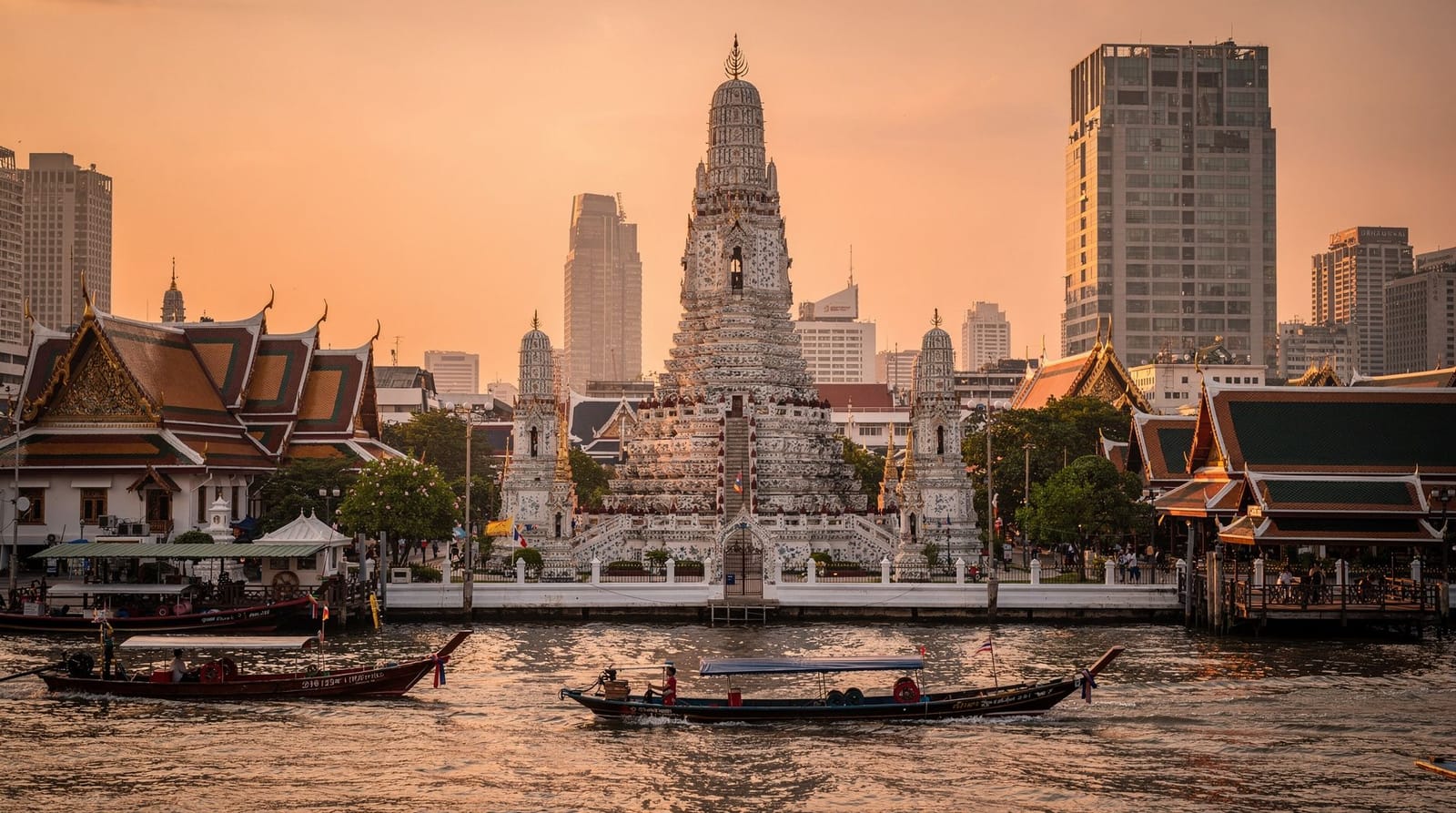
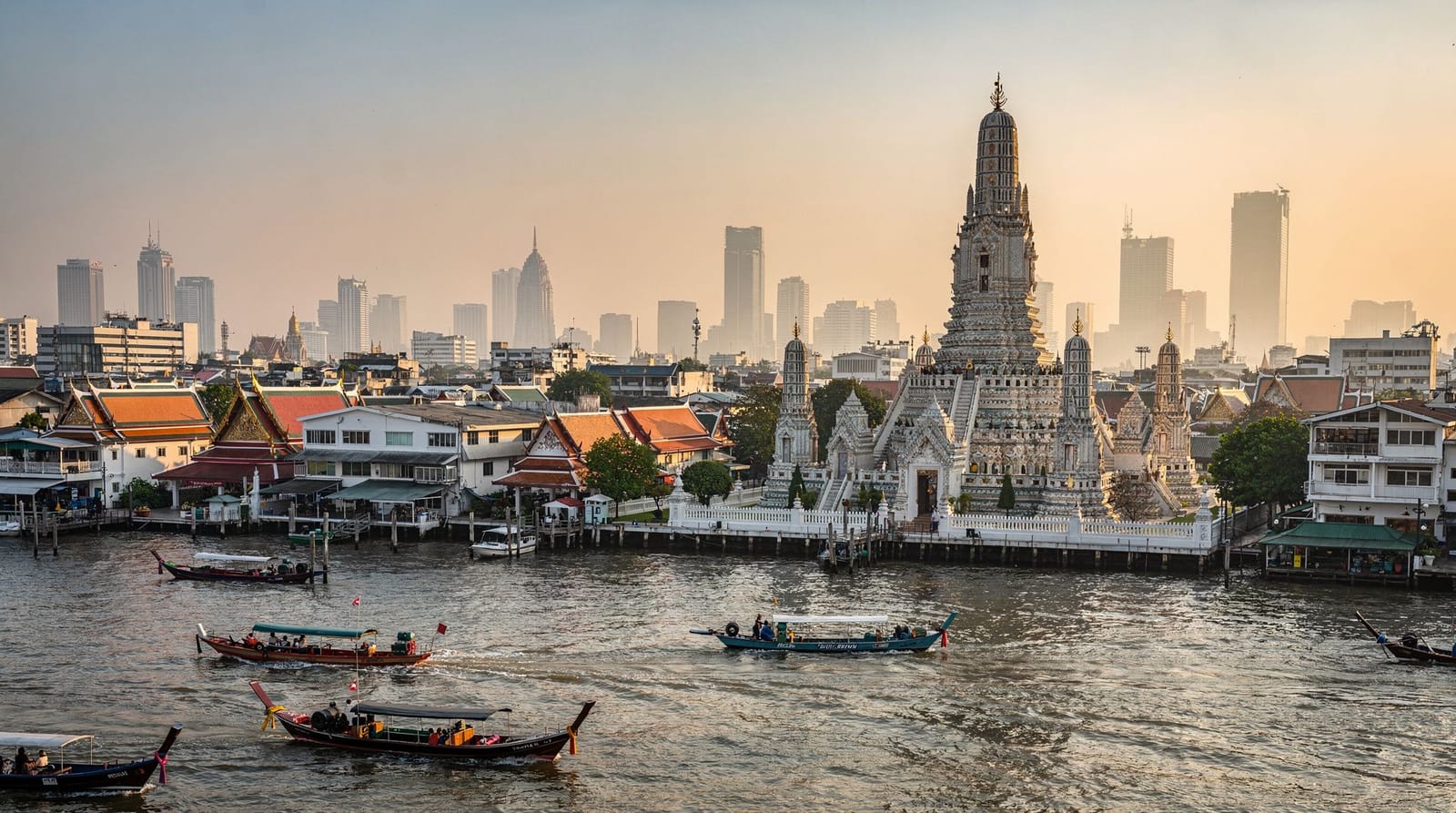
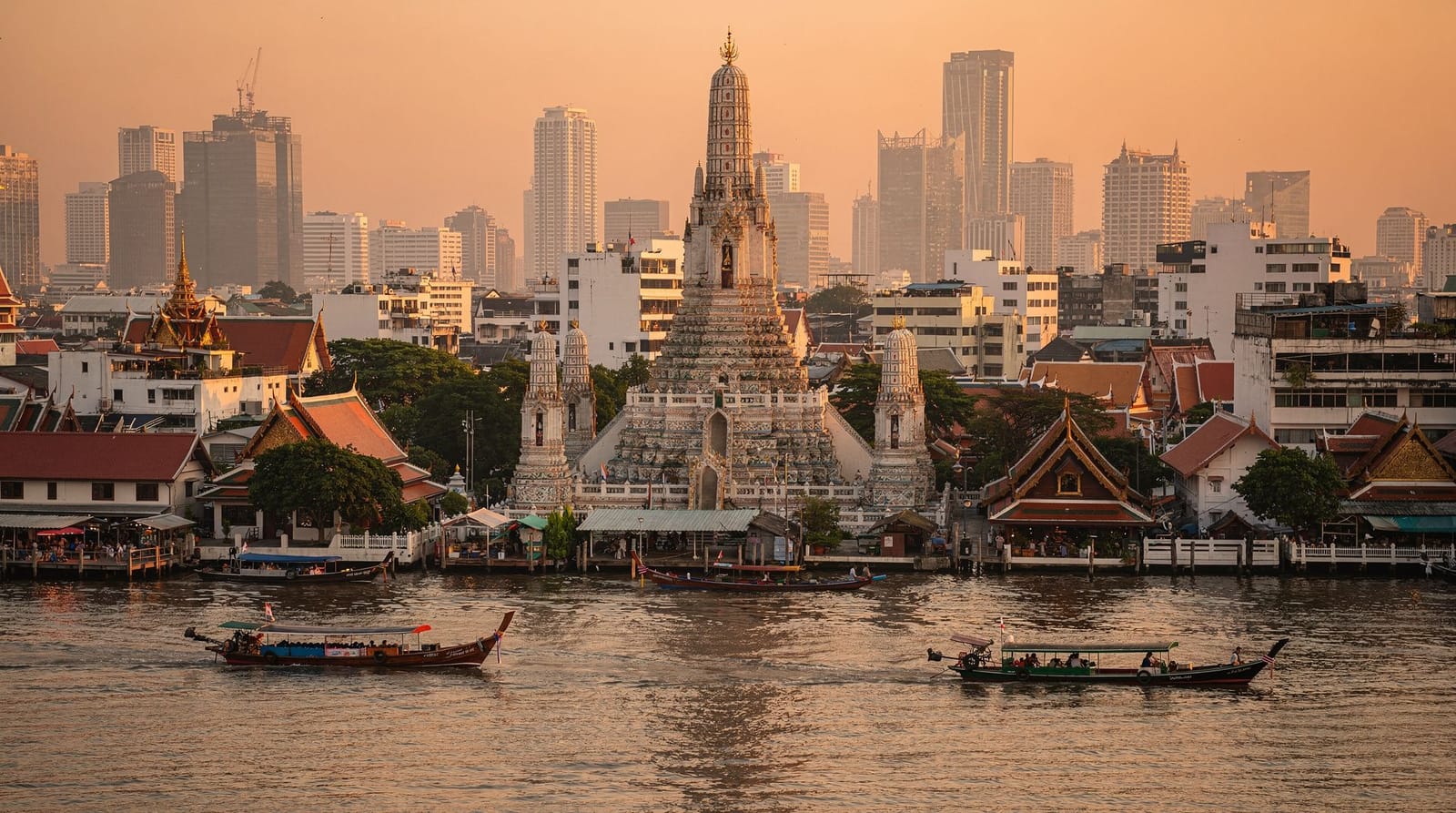
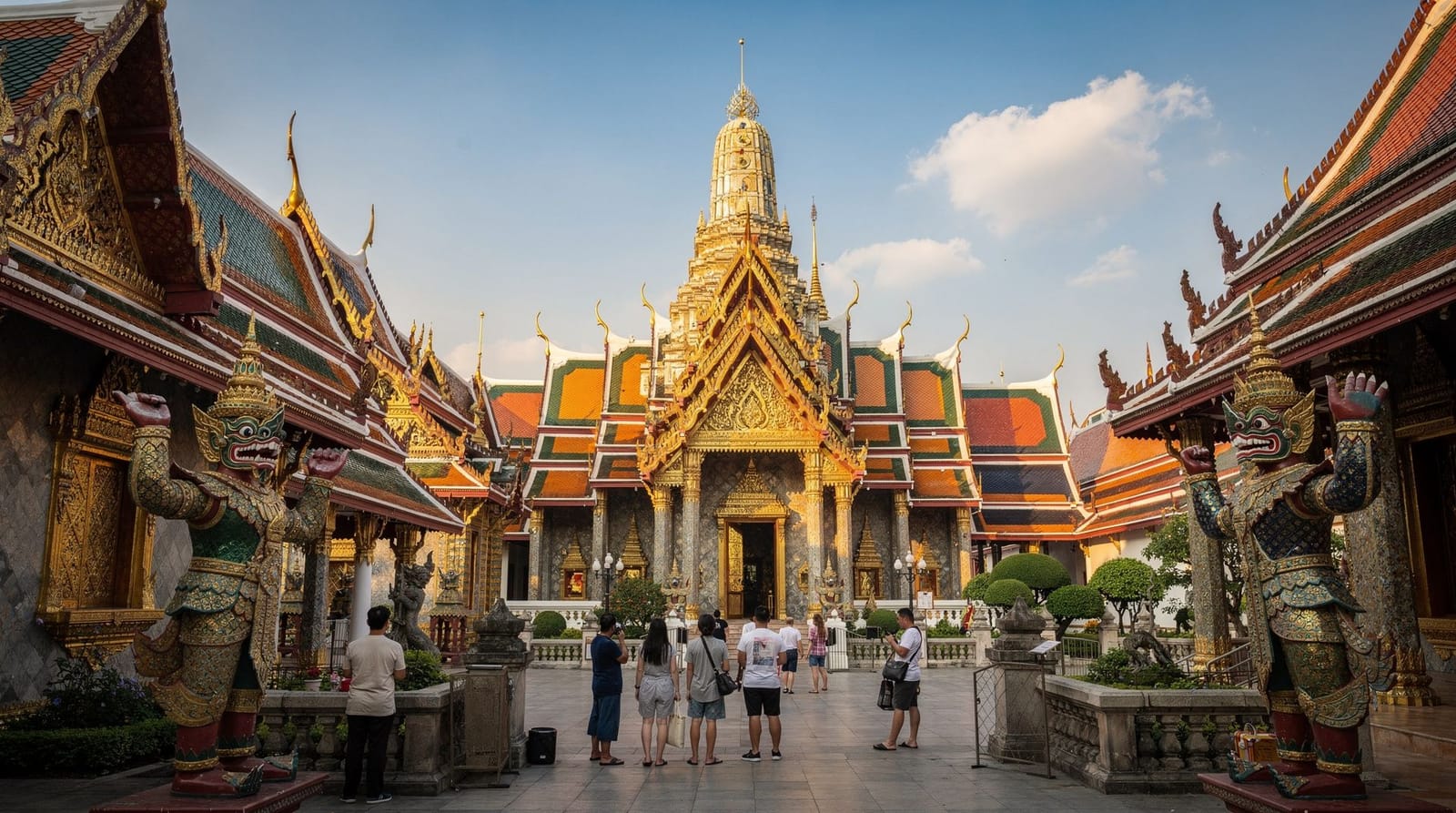
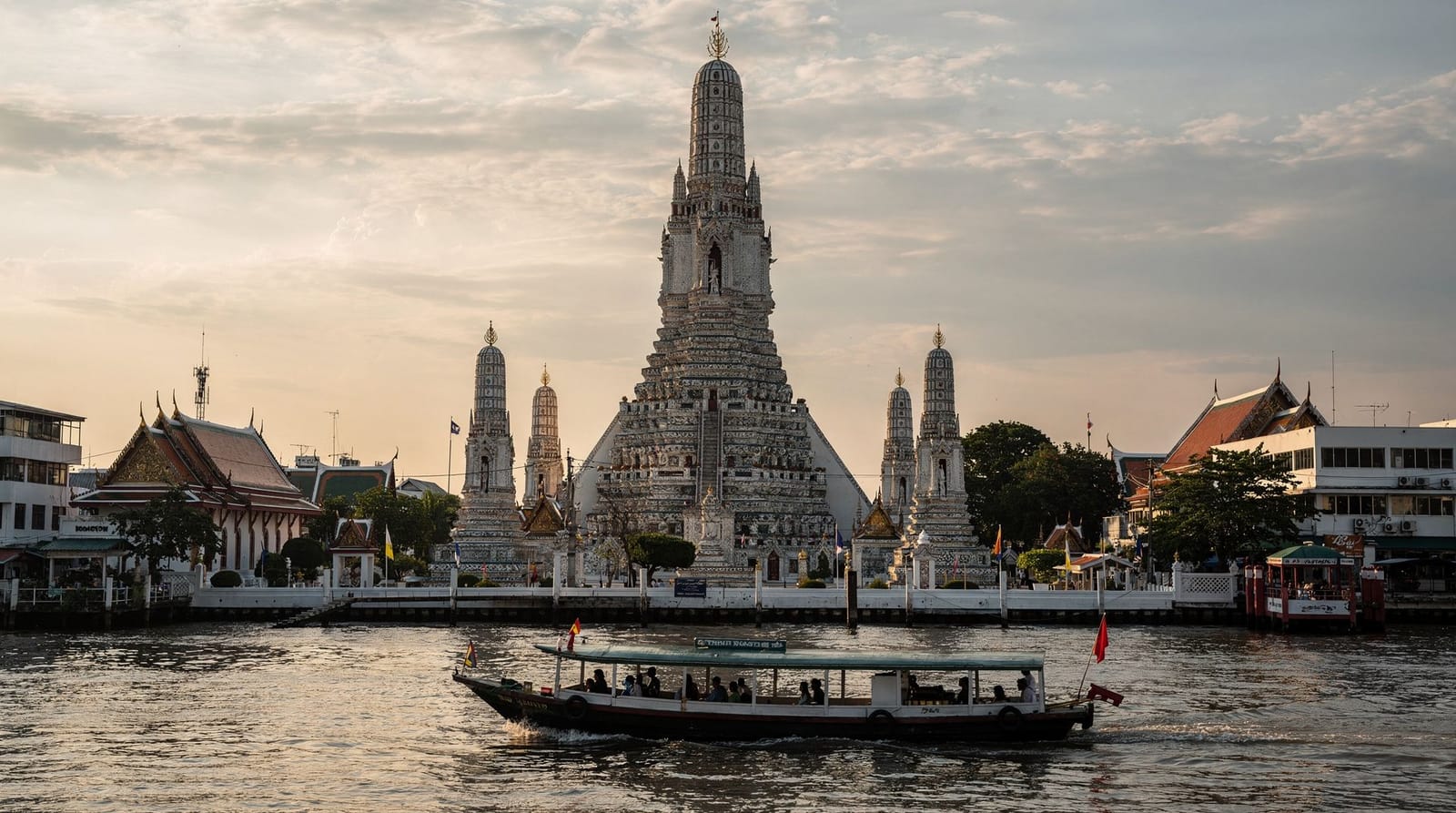
Open at the Grand Palace at 08:30 (500 THB) — first hour, smallest crowds, coolest air. Dress to the code and ignore the “palace is closed” touts; the Grand Palace scam warning explains the trick. Walk to Wat Pho (300 THB) for the Reclining Buddha, lunch near Tha Tien, then take the 5 THB ferry to Wat Arun (200 THB). A guided Grand Palace, Wat Pho and Wat Arun tour covers all three with tickets and a guide if you would rather not navigate alone. Rest in the afternoon heat, then spend the evening eating along Yaowarat Road in Chinatown — see the Yaowarat Chinatown food guide and the Grand Palace guide, Wat Pho guide and Wat Arun guide for the detail.
Day 2 — Markets, silk and the skyline
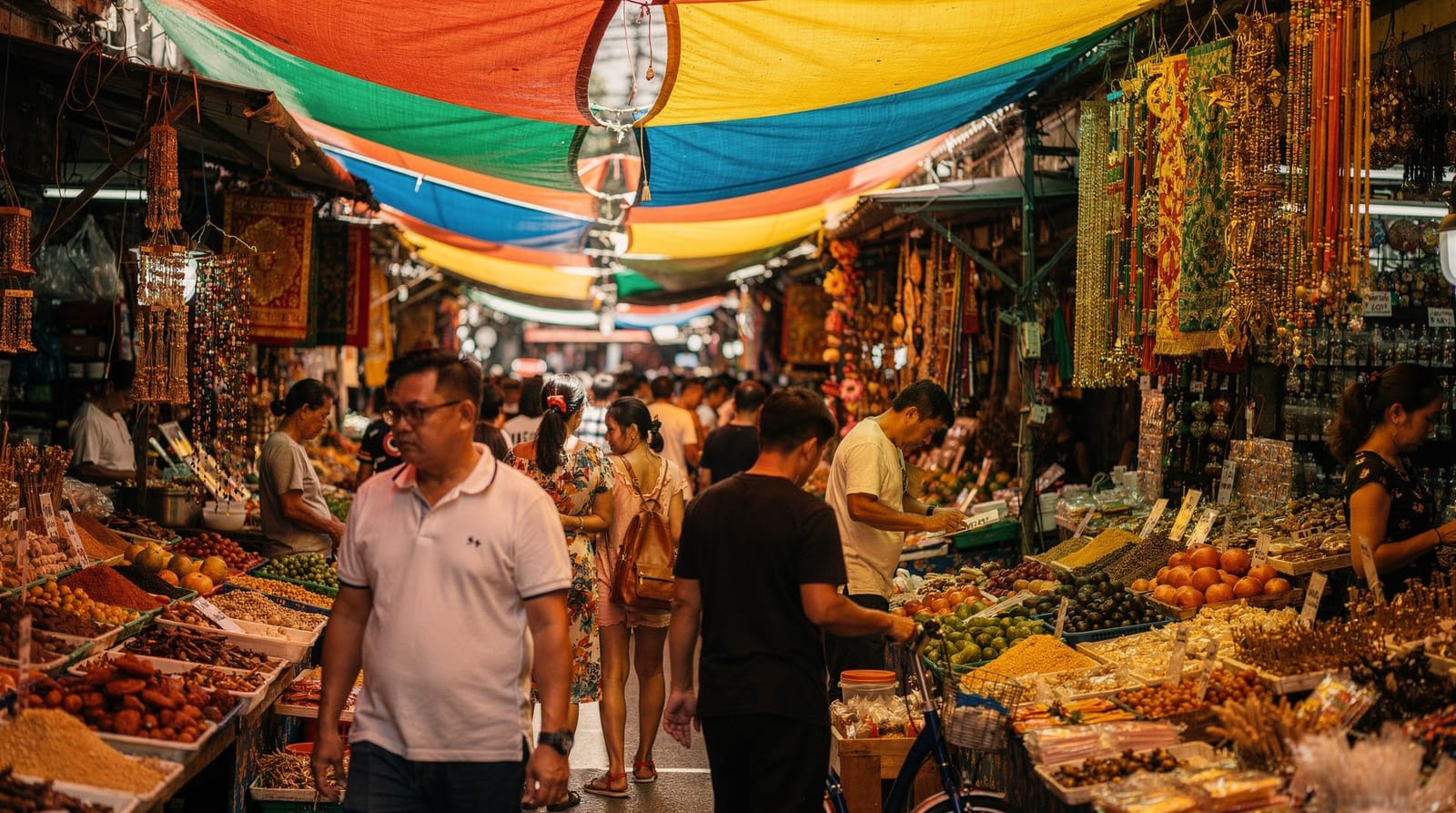
If it is a weekend, start at Chatuchak Weekend Market (free, BTS Mo Chit) — go early, see the Chatuchak guide. On a weekday, climb the Golden Mount (Wat Saket, 100 THB) instead. Midday, ride the BTS to National Stadium for the Jim Thompson House (200 THB), covered in the Jim Thompson House guide. Afternoon, browse the Siam malls or book a Thai massage; the Siam Ratchaprasong area also has the free Erawan Shrine. Finish with a sunset at one of the best rooftop bars or, for something different, a Chao Phraya dinner cruise past the floodlit temples.
Day 3 — Choose your escape
This is the day that lifts the trip. Pick one.
Option A: floating market and railway market
The classic combo is the Maeklong Railway Market (where stalls fold away as a train rumbles through inches from the produce) plus a floating market. The honest caveat: Damnoen Saduak is the touristy one — crowded, hard-sell boat vendors, best reached very early. Amphawa, an afternoon/weekend market, is mellower and more local. A Damnoen Saduak and Maeklong railway market tour handles the awkward logistics of reaching both in one morning. Read Damnoen Saduak: is it worth it? and Damnoen Saduak vs Amphawa before deciding.
Option B: Ayutthaya, the ancient capital
The UNESCO-listed ruins of Ayutthaya — Thailand’s capital from 1350 until the Burmese sacked it in 1767 — sit 80 km north, an easy day-trip by train, minivan or tour. Crumbling prangs, the famous Buddha head tangled in tree roots at Wat Mahathat, and the vast Wat Phra Si Sanphet reward a full day. The Ayutthaya day-trip and Ayutthaya: DIY vs tour guides weigh your options; a relaxed way to do it is a one-way bus and a return river cruise. The Ayutthaya destination page has the temple detail.
Getting around across three days
Days one is boat and Grab; day two is BTS and MRT; day three is a tour van or train out of the city. Inside Bangkok, the trains are fast, cheap and air-conditioned — buy single tickets or a Rabbit Card. For the old city and the river, the orange-flag express boat (16 THB) and Grab cars cover everything. The getting around Bangkok guide is the full reference, and Bangkok to day-trips transport covers leaving the city. Skip tuk-tuks that quote flat “tour” prices — they end at gem shops, as tuk-tuk scams explains.
Eating well over three days
Bangkok food is the trip’s quiet headline. Across three days, hit: a boat-noodle lunch in the old city, a Yaowarat street crawl, a cheap-and-vast mall food court at Siam, and a sit-down Thai restaurant dinner one night. The what to eat in Bangkok and best food markets guides map it out, and street food safety takes the worry out of eating from a wok on the pavement.
Honest pacing advice
The single biggest mistake on a three-day Bangkok trip is treating it like a checklist. You cannot do the Grand Palace, Chatuchak, Wat Arun, a rooftop and a floating market in one day each without burning out. Pick the headline thing each day, do it properly, leave the afternoon heat for a break, and let the evenings be loose. Three days done calmly beats five days done frantically.
Where to stay for three days
Three days deserves a well-placed base, because you will commute to the old city and out to a day-trip. The two smart choices are Sukhumvit (Asok/Phrom Phong/Nana — the BTS–MRT interchange, endless hotels and food, easy day-trip pickups) and Silom/Sathorn (riverside-leaning, rooftop bars, both train lines). For a more atmospheric, walkable base, the riverside around Charoenkrung gives you the express boat at your door and a quieter old-Bangkok feel, at the cost of being slightly off the train grid. Avoid Khao San for anything but a backpacker budget — it is fun but poorly connected. The where to stay in Bangkok and Bangkok neighborhoods guide compare the districts.
A realistic three-day timeline
Day 1 (old city): 08:30 Grand Palace; 10:45 Wat Pho; 12:00 lunch; 13:30 Wat Arun; 15:00 rest; 18:00 Yaowarat.
Day 2 (modern city): 08:00 Chatuchak (weekend) or Golden Mount (weekday); 12:30 Jim Thompson House; 14:30 Siam / massage; 18:00 rooftop or dinner cruise.
Day 3 (escape): early start (07:30–08:00) for Ayutthaya or the markets; back by late afternoon; gentle evening.
The day-trip on day three is the longest, hottest day, so keep its evening loose and undemanding. Three days works precisely because each day has one clear anchor and built-in recovery — the moment you try to add a second market or a fourth temple to a day, the whole trip tips from enjoyable into exhausting.
Two evenings worth planning
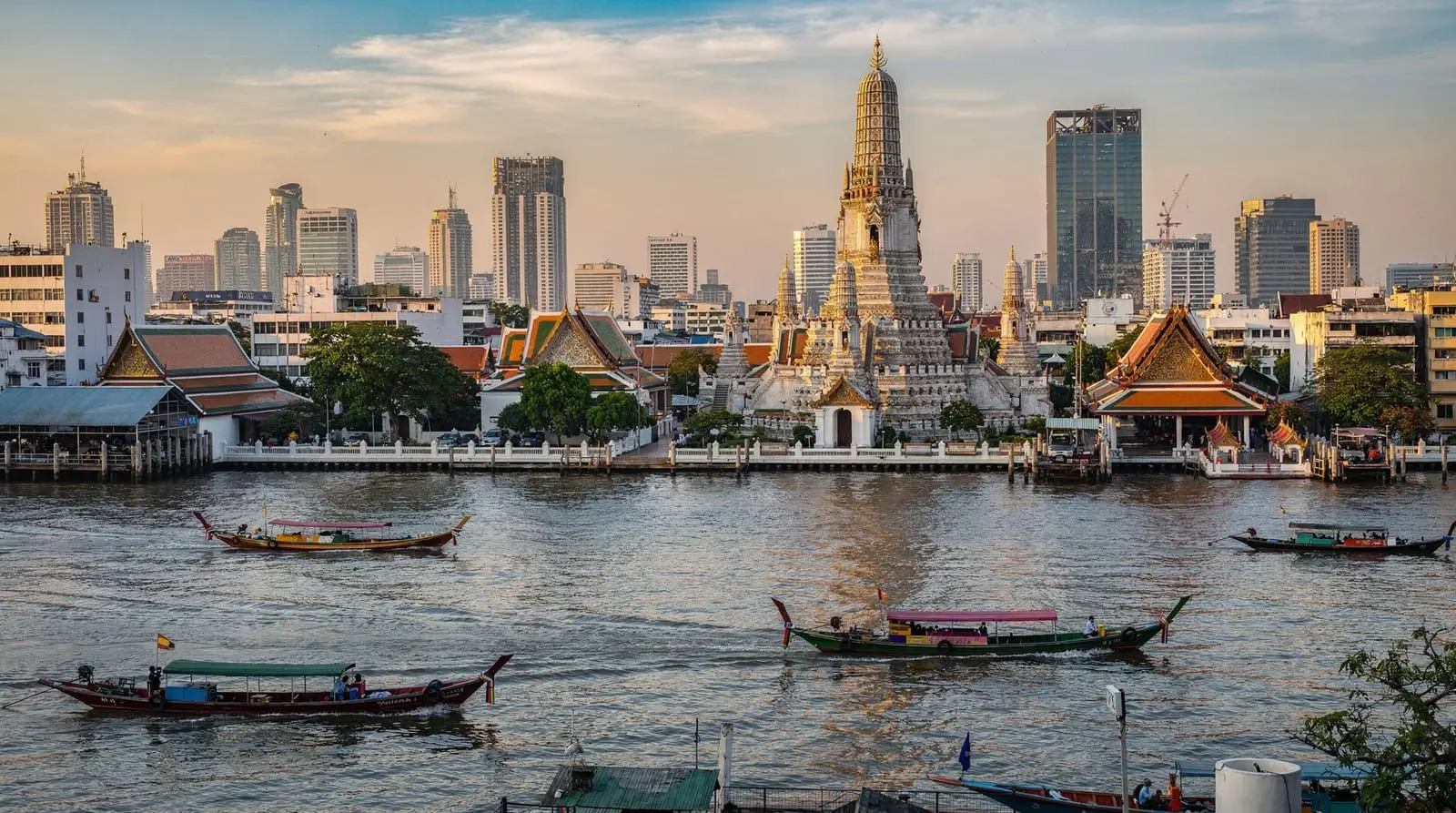
Three days gives you three nights, and Bangkok after dark is half the city’s appeal — so it’s worth deciding your evenings rather than drifting into them. Night one belongs to Chinatown: a Yaowarat street-food crawl is the perfect first-night immersion, loud and delicious and quintessentially Bangkok. Night two is your choice of skyline — a rooftop bar for cocktails over the sprawl, or a Chao Phraya dinner cruise past the floodlit temples; both are classics, pick by mood and budget. Night three depends on how the day-trip leaves you — if you’re tired, a riverside dinner at ICONSIAM or a Thai massage and an early night; if you have energy, the bars of Thonglor or a cabaret show. The Bangkok at night and Bangkok nightlife guide cover the options across price points. Deciding in advance means you book the cruise or the rooftop ahead and never waste a precious evening dithering.
Tailoring the three days to your interests
This itinerary is a strong default, but it bends easily. Culture-first travellers can swap the day-two market for a second temple cluster (the Golden Mount and the Marble Temple) and add a museum. Foodies should turn day two into a food-focused day with a cooking class and a Michelin-stall hunt. Families can replace the Grand Palace grind with the aquarium and a park (see the family itinerary). Shoppers can build a half-day around Chatuchak or the Siam malls (Bangkok shopping guide). And anyone wanting more nature can swap the day-trip for the green lung at Bang Krachao. The skeleton — old city, modern city, one escape — holds; you just change the muscle on the bones.
When to come, and what it means for the plan
The season changes how this itinerary feels. November to February (cool, dry) is ideal — comfortable mornings, clear skies for the rooftop and the river, pleasant day-trips. March to May is fierce heat; lean on indoor middays and consider a dawn start for the day-trip. June to October brings short, heavy afternoon rains — keep the indoor options (Jim Thompson, malls, the cooking class) flexible and you will barely lose time. Festival timing can also reshape a visit: Songkran (mid-April water festival) and Loy Krathong (November) are spectacular but busy. See best time to visit Bangkok, Songkran guide and Loy Krathong guide.
Packing and prep for three days
The mix of dress-code temples, air-conditioned malls and a dusty day-trip means the packing list is wider than a one- or two-day visit. Bring a light long-sleeve layer and long trousers or a skirt for the temples, comfortable walking shoes for Ayutthaya’s ruins or the floating-market boardwalks, and one smarter outfit for a rooftop or dinner cruise — see what to pack for Bangkok for the full list. Sort a SIM or eSIM on day one so Grab and offline maps work for the whole trip, and double-check your visa and TDAC requirements before you fly.
Handling a rainy day within three
Outside the cool season, expect a short, heavy downpour most afternoons rather than a washed-out day. The itinerary already has natural shelter built in: the temple viharns on day one, the malls and Jim Thompson House on day two, and — on day three — the tour van or train itself if you are on a guided day-trip. The independent floating-market trip is the most exposed to weather, since the boats and stalls are outdoors; an early start helps you beat both the crowds and the afternoon storm risk. See Bangkok in the rain for what to expect by month.
Frequently asked questions about three days in Bangkok
Is three days enough for Bangkok?
Three days is the ideal first-visit length: temples, the modern city, and one day-trip. It is enough to feel you have seen the real Bangkok and tasted Thailand beyond it. Four or more days lets you add a second escape or slow right down.
Should the day-trip be a floating market or Ayutthaya?
Ayutthaya if you love history and ruins; a floating market plus the Maeklong railway market if you want colour, food and a quirky spectacle. Both are full days. Do not try to combine them.
How do I avoid the floating-market tourist trap?
Reach Damnoen Saduak very early (before the tour buses) or choose the more local Amphawa market instead. A tour solves the transport and timing; doing it independently means an early start. See Damnoen Saduak: is it worth it?.
Can I see Chatuchak on any day?
No — Chatuchak only opens Saturday and Sunday. If your day two falls on a weekday, swap in the Golden Mount, Jim Thompson House, or the Asiatique night market, and keep Chatuchak for a weekend day if you have one.
How much does three days in Bangkok cost?
Excluding flights and hotel, budget roughly 1,500–3,000 THB per person per day (about USD 42–85), with the day-trip being the priciest day. Street food and BTS keep costs low; tours, cruises and rooftop bars push them up. See Bangkok travel costs.
Is Bangkok safe for first-time visitors?
Yes — violent crime against tourists is rare. The real risks are scams (gem shops, “closed” temples, dodgy tuk-tuks) and traffic. Stay alert at tourist sights, use Grab and metered taxis, and read common Bangkok scams.
Top experiences
Bookable activities with verified prices and instant confirmation on GetYourGuide.