The Thai monarchy and lèse-majesté: what visitors must know
How should visitors behave around the Thai monarchy and what is lèse-majesté?
The Thai monarchy is deeply revered and protected by lèse-majesté law (Section 112 of the Criminal Code), which punishes insulting the King, Queen, heir or regent with three to fifteen years in prison per count — and it applies to foreigners. Stand respectfully when the royal anthem plays in public, never deface or step on banknotes bearing the King's image, never joke about or criticise the royal family, and treat royal portraits with care. When in doubt, say nothing about the monarchy at all.
Respect for the monarchy is the one cultural rule in Thailand where a careless mistake can become a criminal matter — for foreigners as well as Thais. The Thai monarchy is genuinely revered and is protected by lèse-majesté law, among the strictest in the world, which punishes insulting the King, Queen, heir or regent with up to fifteen years in prison per count. This is not a quaint tradition to be brushed aside; it is an enforced law that has led to arrests and deportations of tourists. This guide explains what the law is, why Thais feel so strongly, and the concrete things you must and must not do.
| Applies to | Everyone in Thailand, including foreigners |
| Key rule | Never insult, mock or criticise the King, Queen, heir or regent — in person or online |
| Penalty | 3–15 years’ imprisonment per count (Section 112) |
| Safest approach | Stand for the anthem, handle money with care, avoid the topic entirely |
The three pillars and a revered crown
Thai national identity rests on three pillars — nation, religion and monarchy — represented in the bands of the national flag. The monarchy is not a ceremonial afterthought in this scheme; it is emotionally and constitutionally central. Much of the reverence visitors encounter today is tied to the late King Bhumibol Adulyadej (Rama IX), who reigned for seventy years until his death in 2016, longer than almost any monarch in modern history. Widely admired for his rural development projects and seen by many Thais as a unifying father figure, he is held in extraordinary affection, and that sentiment extends to the institution and to the current King, Maha Vajiralongkorn (Rama X). The small jade Emerald Buddha, whose seasonal robes only the King may change, is one of the clearest physical symbols of how tightly the monarchy and religion are bound together.
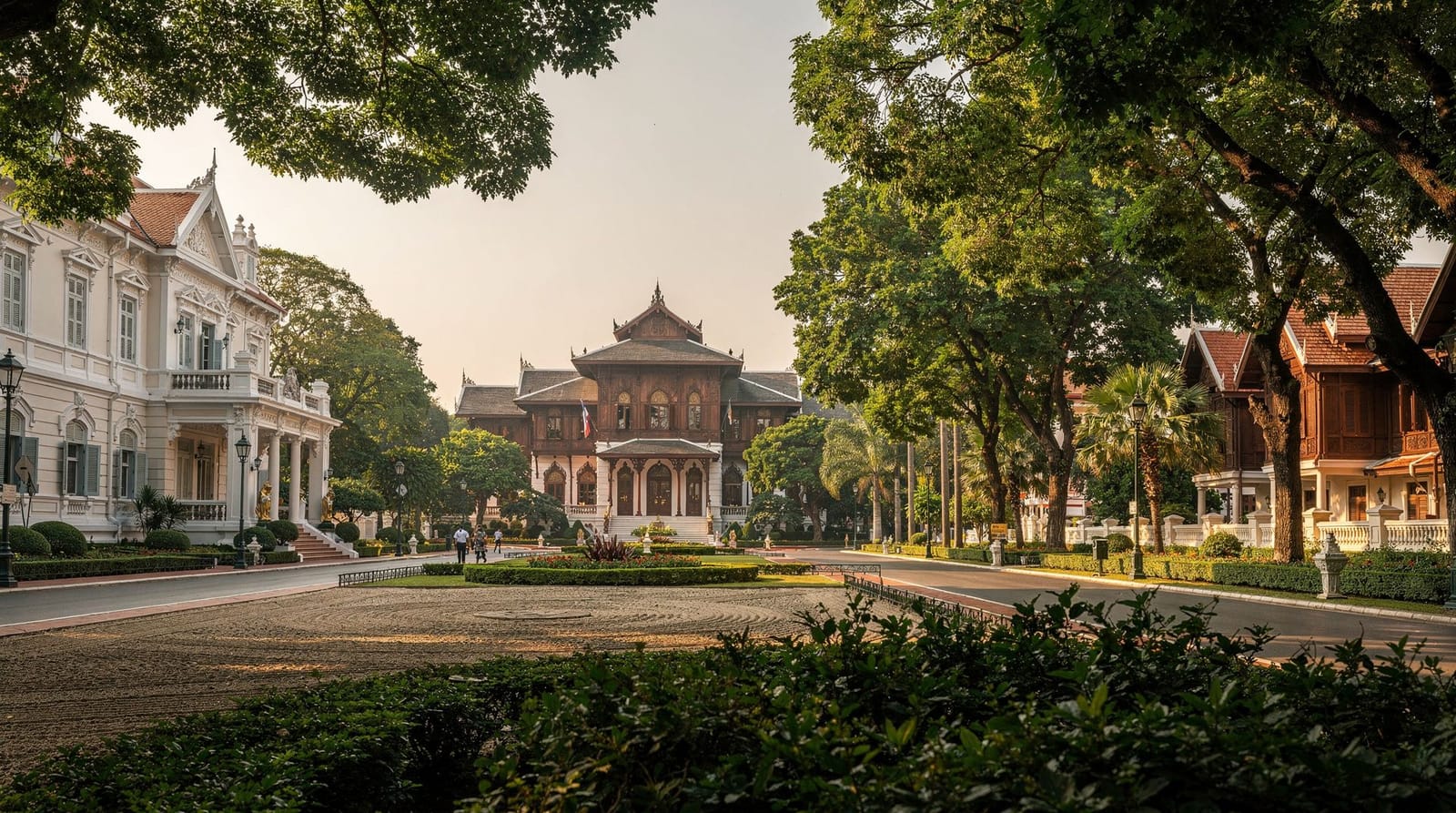
You will see royal portraits everywhere — at intersections, in shops, in stations, on enormous billboards. The royal district of Dusit, with its grand boulevards, the Ananta Samakhom Throne Hall and the leafy approach to the former royal quarter, was deliberately built to express this status; the Bangkok neighbourhoods guide places Dusit’s ceremonial calm against the modern, commercial districts elsewhere in the city. Understanding that the reverence is sincere, not merely legally enforced, is the key to behaving naturally and respectfully rather than fearfully.
Section 112: the lèse-majesté law explained
Lèse-majesté — the offence of insulting a monarch — is written into Section 112 of the Thai Criminal Code. It provides that anyone who defames, insults or threatens the King, the Queen, the heir apparent or the regent shall be punished with imprisonment of three to fifteen years. The penalty can be applied per count, meaning multiple offending statements can accumulate into very long sentences.
Several features make this law especially important for visitors to understand. It is interpreted broadly — what counts as an insult is not narrowly defined. It is actively enforced, with real prosecutions and convictions. Anyone in Thailand can file a complaint, which can set proceedings in motion. And, crucially, it applies to foreigners. There is no tourist exemption, and your embassy’s ability to intervene in a domestic criminal case is limited. The only safe strategy is prevention: never say, write, post or gesture anything that could be construed as insulting the monarchy.
What the rules look like in daily life
For the ordinary respectful visitor, complying with all this is straightforward, because the practical requirements are few and clear.
Stand for the royal anthem. A royal anthem is broadcast in many public spaces, in BTS Skytrain and MRT subway stations, and in some parks at 08h00 and 18h00, and a royal anthem is always played in cinemas before the film begins. When it plays, stop, stand still and remain respectful until it finishes — everyone around you will do the same. Continuing to walk or remaining seated and chatting is read as disrespect.
Never disrespect currency. Every Thai banknote and coin bears the King’s image. Combine that with the cultural rule that the foot is the lowest part of the body, and you have a firm prohibition: never step on a banknote to stop it blowing away, never tear, deface or mistreat money, and handle currency with care. If a note drops, pick it up rather than treading on it.
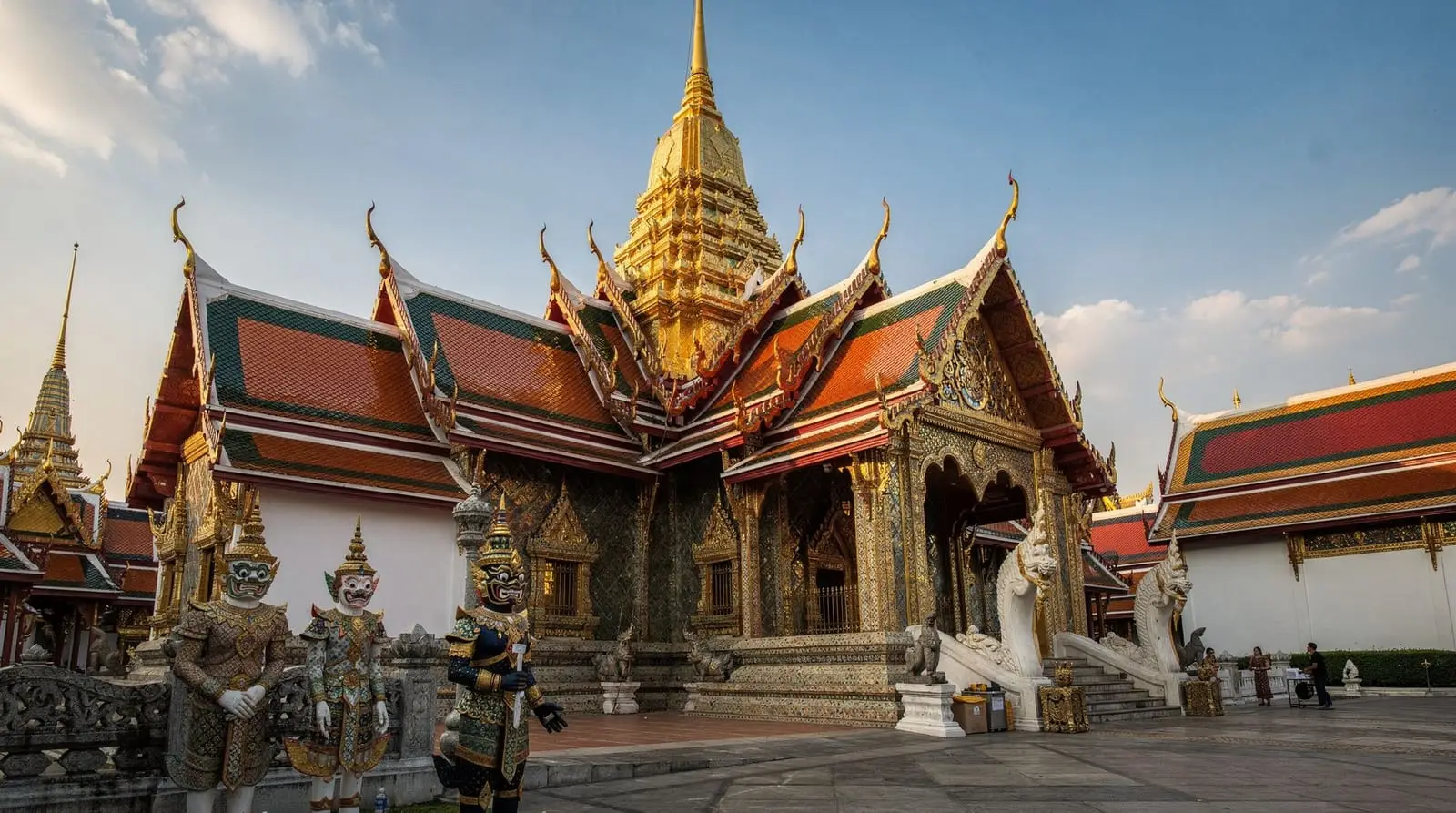
Treat royal portraits and sites with respect. Photograph the Grand Palace and public royal portraits if you wish, but never in mocking poses, never altered or defaced, and never with disrespectful captions online. Inside royal and religious buildings, follow photography restrictions, and dress modestly — the Grand Palace dress code guide covers exactly what is required at the country’s most important royal site. These small habits cover the vast majority of situations.
What never to do
A short, blunt list of things to avoid entirely:
Do not make jokes about the King or the royal family, even casually, even among friends, even if a local seems to invite it. Do not post critical or mocking content about the monarchy on social media — posts have led to arrests. Do not deface, step on, tear or doodle on currency or royal images. Do not wear or display anything that mocks the monarchy. Do not get drawn into critical political conversations about the royal family; decline politely and change the subject. Do not assume that being a foreigner protects you — it does not.
The cultural reflex that underlies all of this — the head as sacred, the foot as low, composure over confrontation — is the same one that governs temple and everyday behaviour, explained in the Thai customs and etiquette guide and the temple etiquette and dress code guide.
The Buddha-image sensitivity, and why it’s related
A closely related sensitivity surrounds Buddha images, because Buddhism is the second of the three pillars and is treated with similar reverence. Thai authorities have detained and deported foreigners over tattoos and images judged to disrespect the Buddha, and the government has run campaigns against using Buddha heads as decoration or backdrops. A respectful religious tattoo is generally tolerated, but a Buddha image used flippantly — as a doormat, a bar decoration, or a “cheeky” tattoo placed somewhere disrespectful — can cause real trouble. The full picture of Buddhist sensitivities is in the Buddhism in Bangkok guide, and the broader cultural framework that connects monarchy, religion and manners is in the Bangkok culture guide.
The shared logic is simple: in Thailand, the monarchy and the Buddha are sacred, and the foot and the casual joke are not where the sacred belongs.
Discussing politics and the monarchy: the honest advice
Travellers sometimes want to understand Thai politics, which has been turbulent, and the monarchy sits at its centre. The honest advice is to be extremely cautious. Many Thais hold the monarchy in deep affection and find any criticism genuinely offensive; others may hold private views but know that frank discussion is legally dangerous for everyone in the room. As a visitor you cannot reliably read which is which, and the law makes the conversation risky regardless.
The safe approach is to avoid raising the subject, to decline to express opinions if asked, and never to discuss the royal family in public or online while in Thailand. This is not censorship advice so much as practical self-protection in a country where the topic carries genuine legal weight. If you want to understand the history, read about it before or after your trip from sources outside Thailand, not in conversation with strangers in a Bangkok bar.
Social media and messaging apps: the digital risk
A significant share of lèse-majesté cases in recent years have originated online rather than in person — a shared post, a “like,” a forwarded message, or a comment on social media. The law has been applied to digital conduct as readily as spoken words, and content posted before arriving in Thailand has, in some interpretations, still created legal exposure once in the country. The practical guidance is straightforward: do not share, repost, comment on, or react to content critical of the monarchy while you are in Thailand or even before your trip if you plan to return, and be mindful of what is visible on your own accounts. Group chats and private messages are not necessarily a safe harbour either, since screenshots circulate. Treat your phone the same way you treat your voice in public: nothing critical of the institution, ever. This extends to seemingly playful content too — memes, ironic captions and “just joking” posts have all featured in reported cases, because intent is not always how the law is read. If you would not say it out loud to a stranger on the BTS, do not type it either.
What to do if you feel out of your depth
Most visitors will never come close to an issue, because the required behaviour is simple and the vast majority of interactions with Thai people and the culture are warm and welcoming. But if a conversation drifts toward the monarchy and you feel pressured to comment, the safest move is a polite, generic deflection — “I don’t know enough about it to have an opinion” — followed by changing the subject. If you ever feel you have said or posted something that could be misread, do not compound it by arguing the point online; seek advice quietly rather than escalating. This is not a topic where being right matters as much as being careful, and that asymmetry is exactly why the thai customs and etiquette guide and this guide both emphasise silence over debate.
Where you’ll feel the reverence
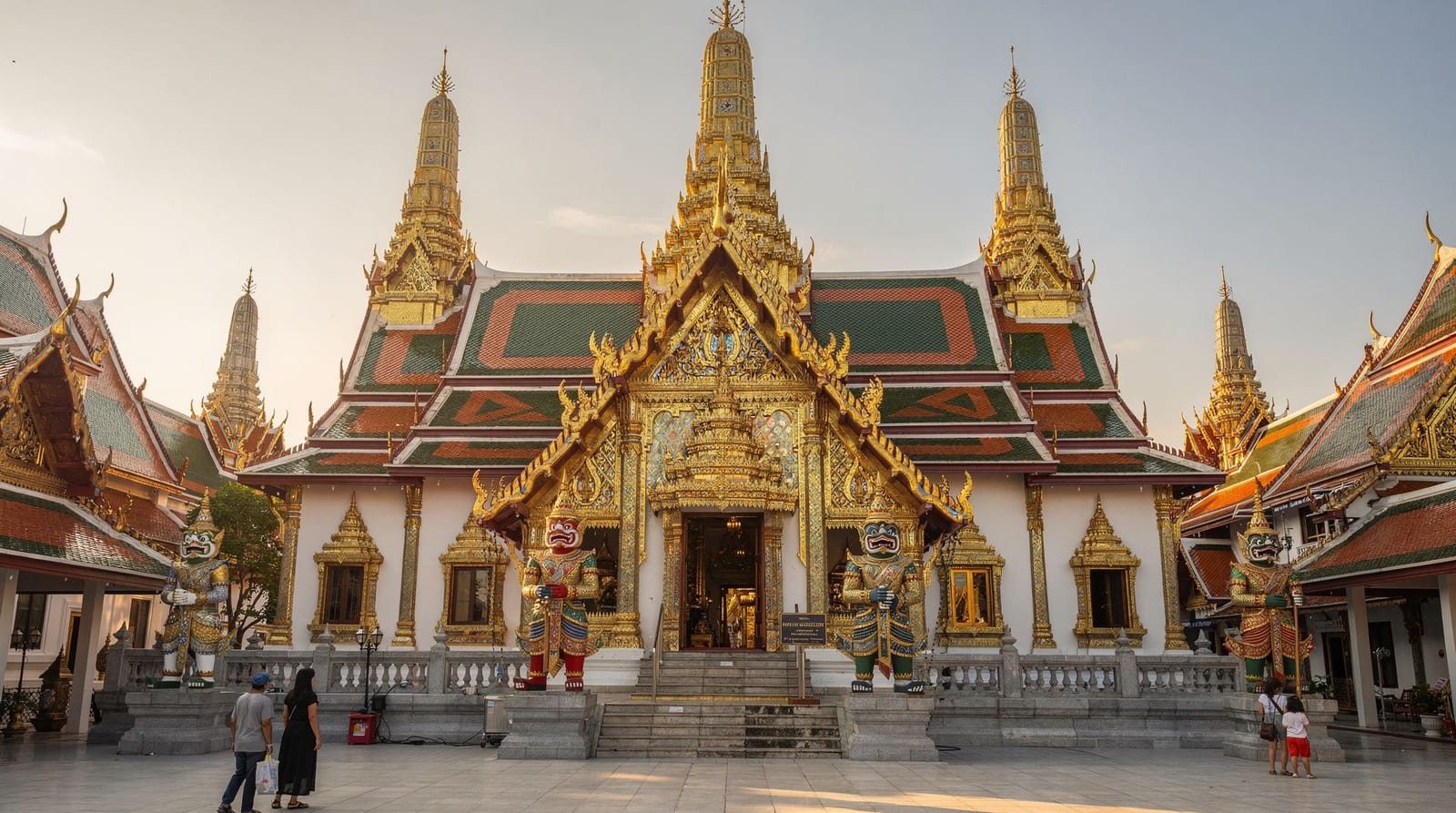
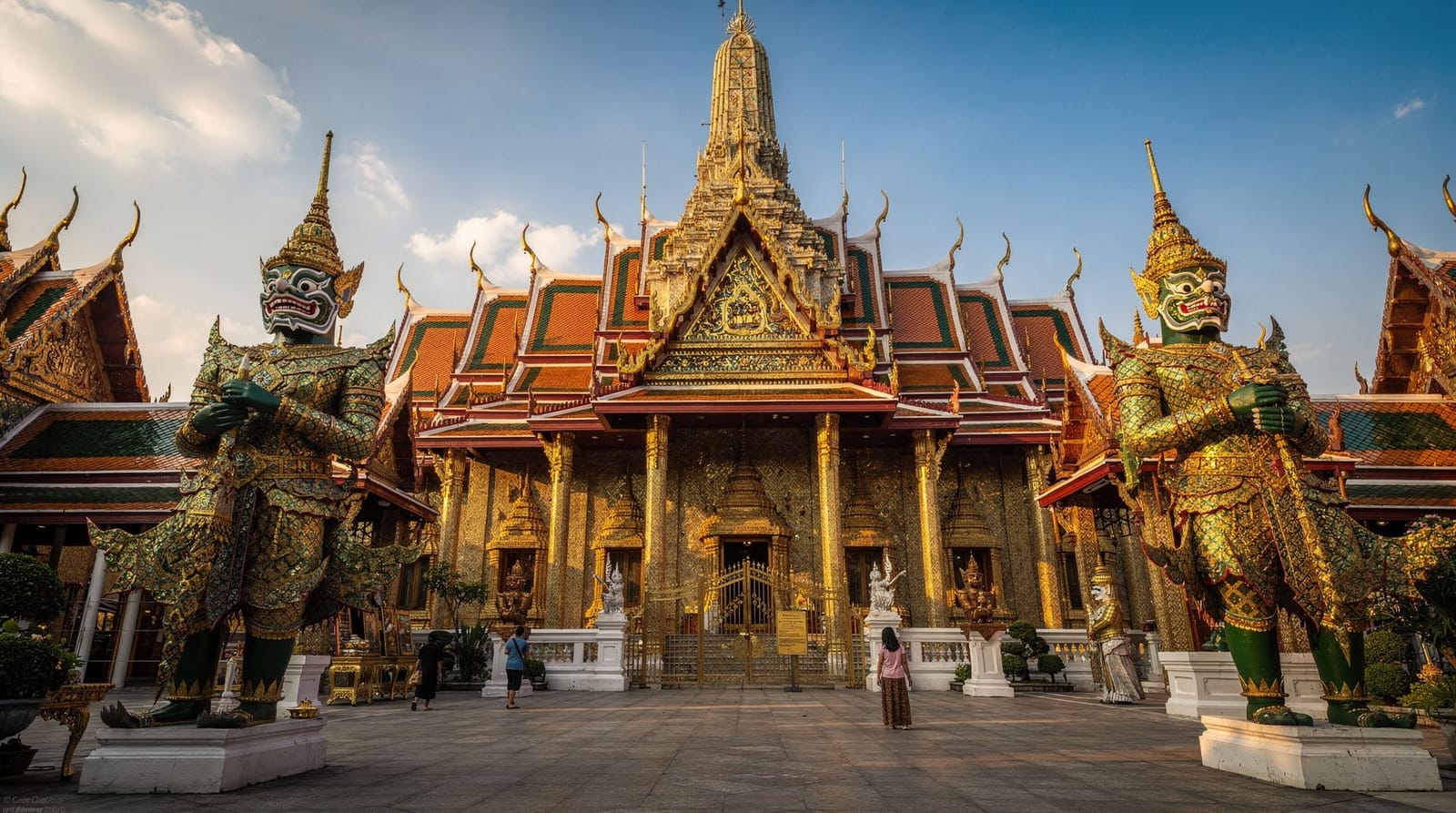
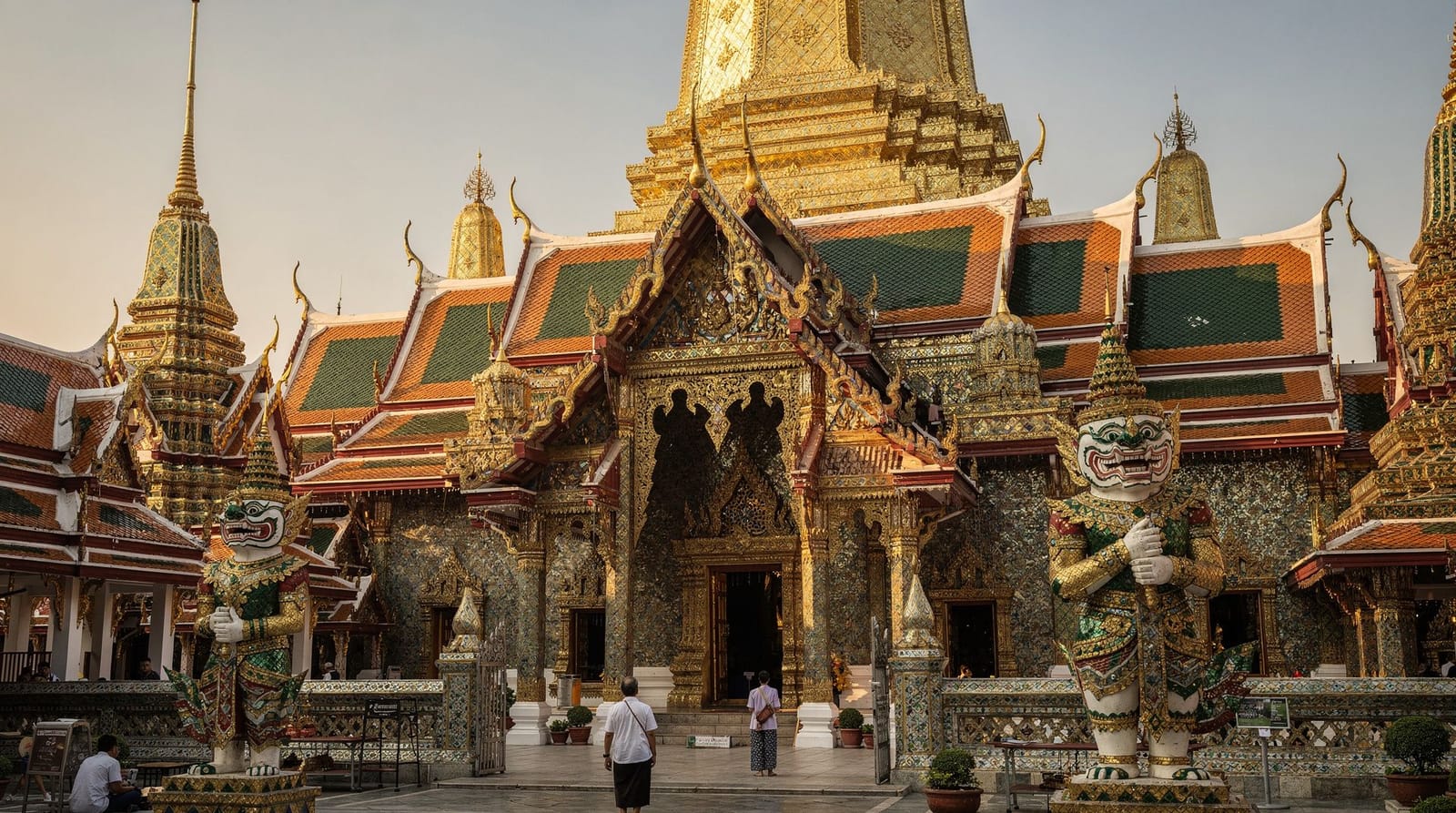
You do not have to seek out the monarchy to encounter it — it is woven through the city. The Grand Palace and Wat Phra Kaew sit at the symbolic heart of the kingdom; the royal Dusit district expresses its dignity in stone and boulevard; and royal portraits and the anthem punctuate ordinary days across Rattanakosin and beyond. On significant royal anniversaries the city fills with yellow or other auspicious colours, and public mourning or celebration can be intense and moving to witness.
For a first-time visitor, none of this need feel intimidating. Respect the few clear rules, stay quiet on the subject, stand for the anthem, handle money with care, and you will navigate it easily — as the Bangkok for first-timers guide reassures. It is worth reading this before you fly, alongside the Thailand visa and TDAC entry guide, so none of it is a surprise on arrival. The reverence around you is sincere, and meeting it with genuine respect is simply good guesthood, freeing you to enjoy the rest of what the things to do in Bangkok guide has to offer without a second thought.