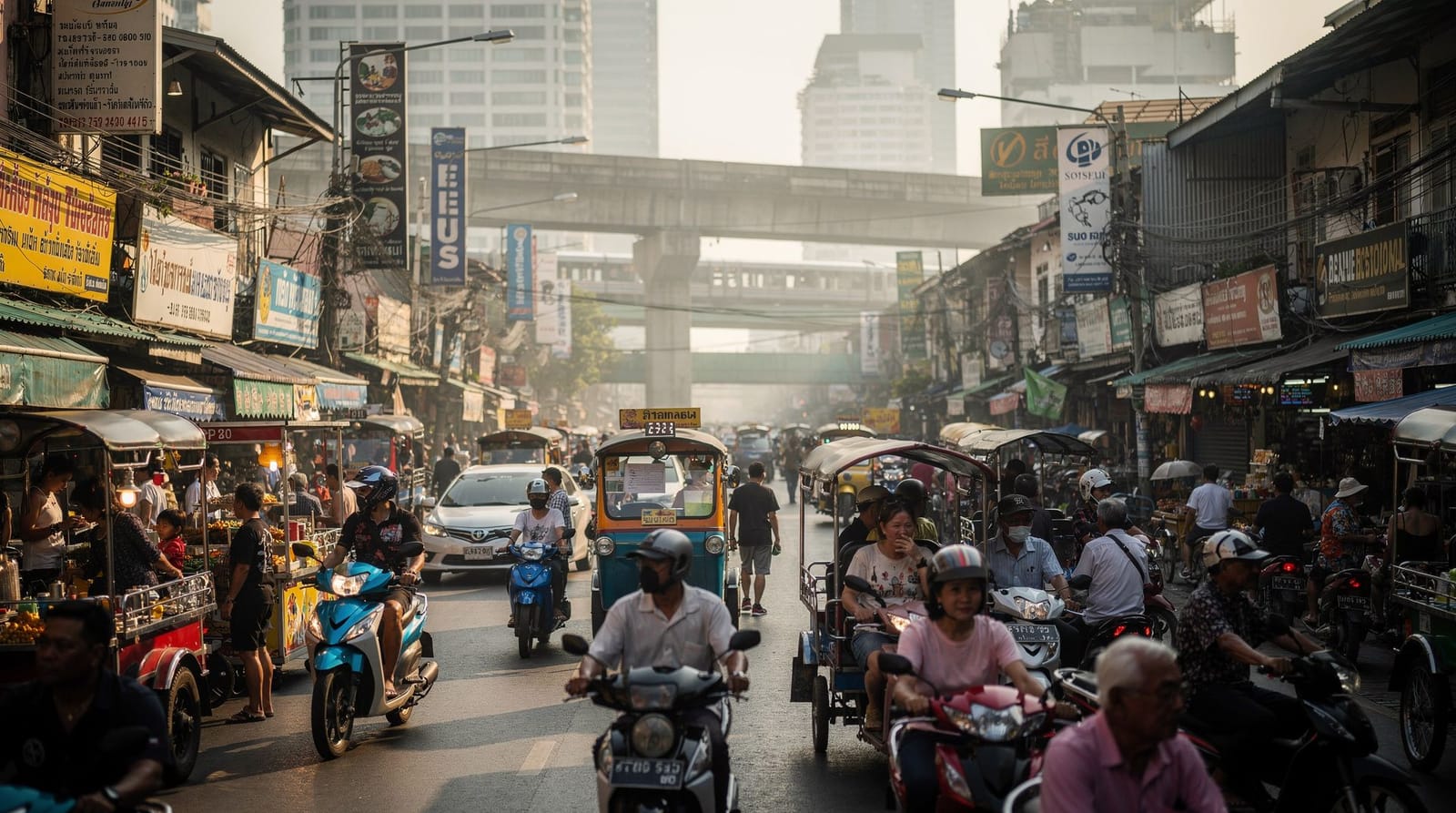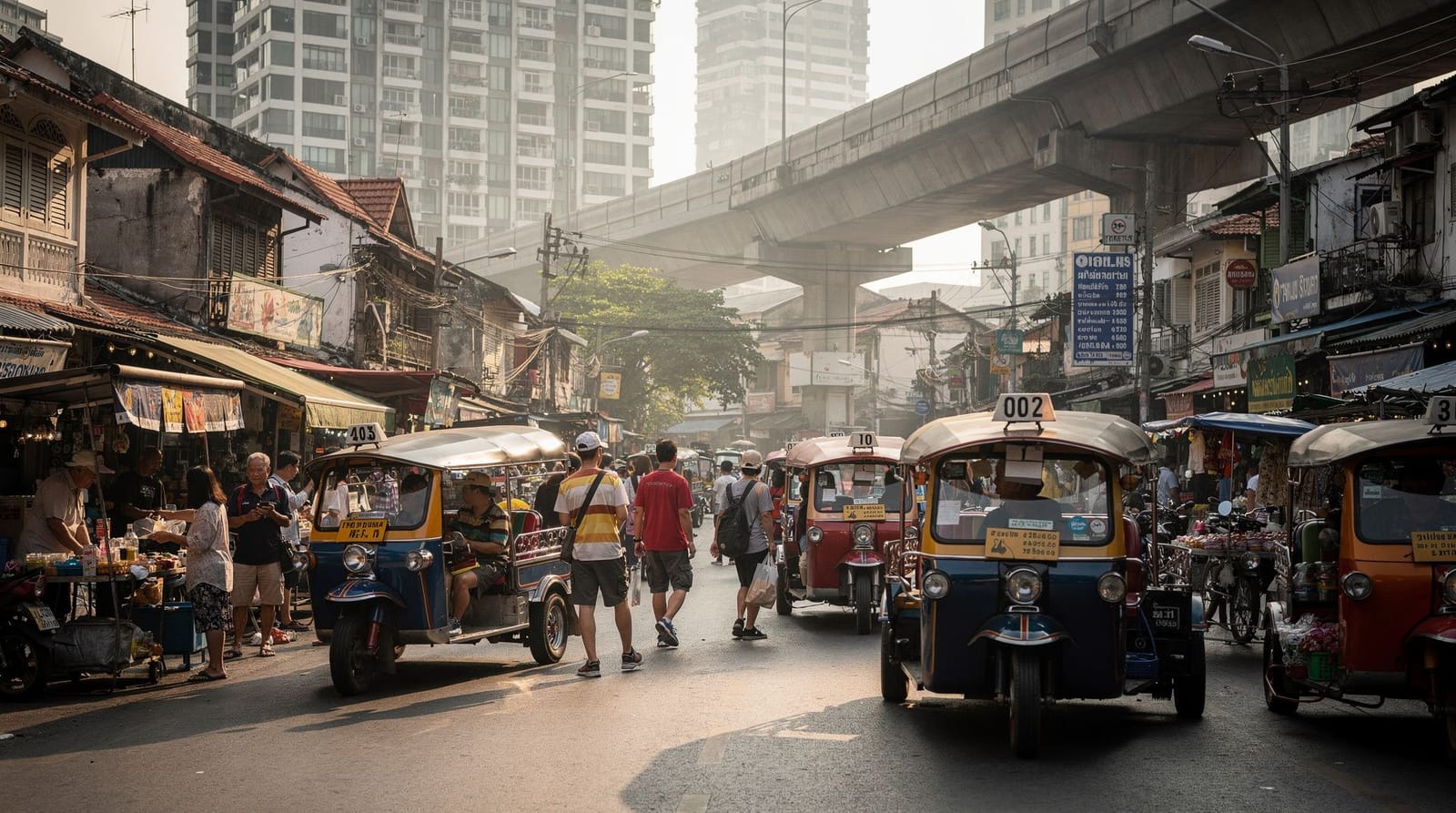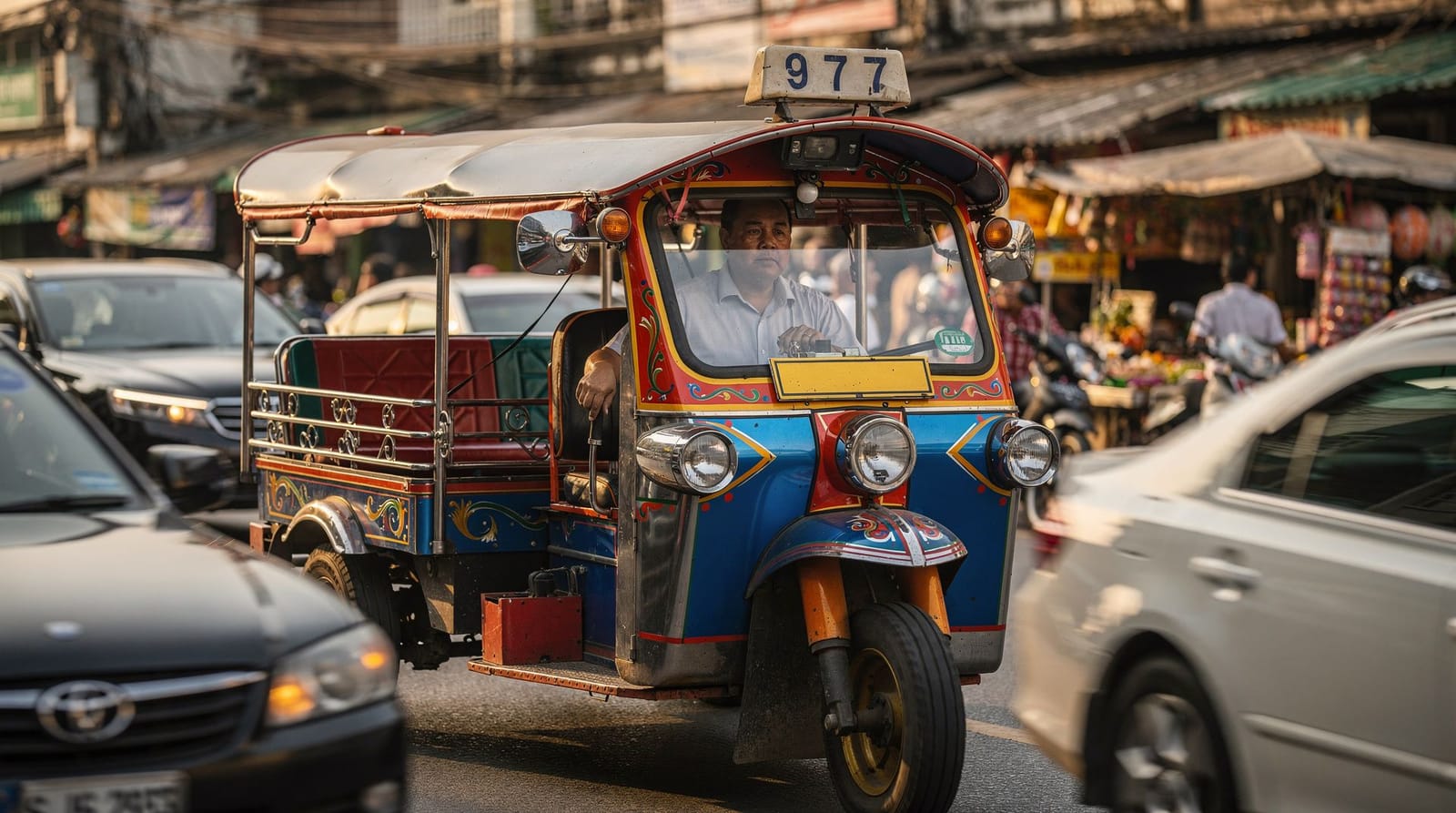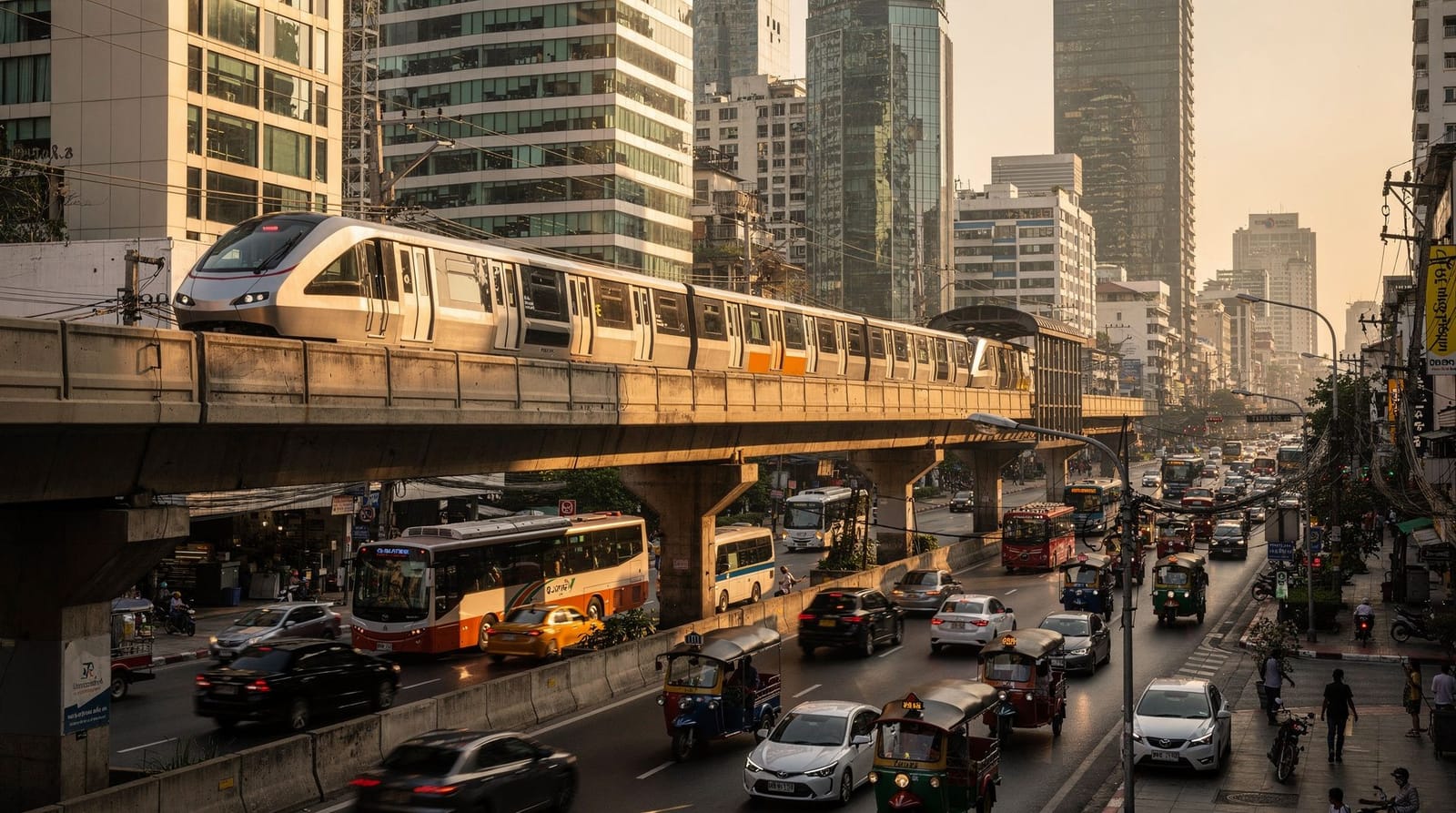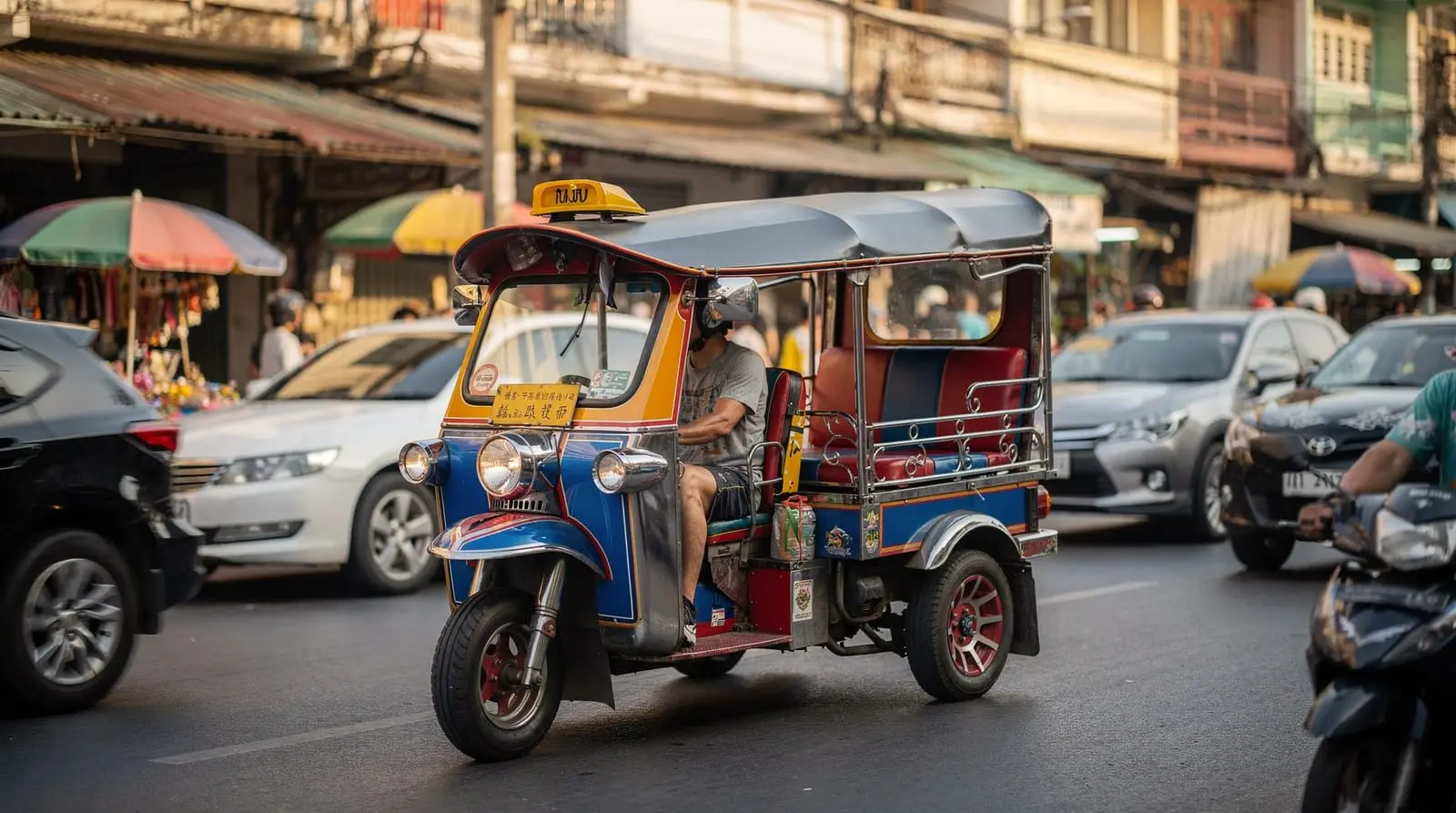
Tuk-tuk scams in Bangkok and how to ride safely
Bangkok: Street Food Tasting Tour at Night
Are Bangkok tuk-tuks a scam?
Tuk-tuks themselves are fine, but two scams are common: the cheap 10 to 20 THB tour that detours you to gem and tailor shops for the driver's commission, and inflated fares for tourists. Real tuk-tuk fares are negotiated and often cost more than a Grab car. Use Grab or Bolt for honest pricing, and treat any too-cheap tour as a trap.
The tuk-tuk is a Bangkok icon and also the vehicle behind one of the city’s most persistent scams. The three-wheeler itself is not the problem; the problem is the all-too-cheap tour that exists only to walk you through commission-paying shops, and the inflated fares quoted to tourists who do not know the going rate. This guide explains how the tuk-tuk scams work, what a fair fare actually looks like, when a tuk-tuk is worth taking, and how to use Grab and the metro to sidestep the whole thing.
| The trap | A too-cheap “tour” that detours to commission shops |
| Fair fare | 60–150 THB negotiated, short hop |
| Safer default | Grab or Bolt — fixed price, no haggling |
| If scammed | Tourist Police hotline, 1155, free and English-speaking |
| Worth doing once | A short agreed-fare ride, no shop stops |
The headline scam: the 20-baht tour
The classic tuk-tuk scam is the absurdly cheap tour. A driver offers to show you the city, or several temples, for a fixed 10, 20 or 40 THB, a price that obviously cannot cover his fuel. The catch is that the route is built around gem shops, tailors and suit shops, where the driver earns a fuel coupon or cash commission for every tourist he brings through the door. Your sightseeing dissolves into a string of shop visits, you lose hours, and you are exposed to the gem scam at the end of it. The cheap fare is not generosity; it is bait, and it is one of the central cons in our common Bangkok scams and Bangkok tourist traps guides.
How the commission machine works
It helps to see the economics. The gem and tailor shops in Bangkok pay drivers to deliver foreign tourists, because a single sale can be worth far more than the driver’s commission. So the driver loses a little on the cheap fare and makes it back, many times over, on the shop stops. This is also why the Grand Palace fake closure scam and the tuk-tuk tour are really the same machine: a stranger tells you the temple is closed, hands you to a driver, and the driver runs the shop route. Understand the commission flow and every too-good fare suddenly makes sense.
What a fair tuk-tuk fare actually is
Tuk-tuks have no meters, so every fare is negotiated, and that is where tourists get caught the other way, by overpaying. A short hop across the old city typically runs 60 to 150 THB or more depending on distance and how well you bargain, and tuk-tuks are frequently pricier than a Grab car covering the same route. So the honest framing is this: a tuk-tuk is not a cheap way to get around, it is a paid experience. Our Grab, taxi and tuk-tuk guide gives realistic fare ranges, and the getting around Bangkok guide compares it against the metro and boats.
The metered taxi cousin
The taxi version of this scam is the broken meter. A driver claims his meter is broken or simply refuses to use it, then quotes a fixed, inflated fare. The defence is to say “meter, please” before you get in and to wave the cab on if he refuses; a legitimate Bangkok taxi starts at a 35 THB flagfall. Better still, skip the negotiation entirely with Grab or Bolt, which fix the price in the app before you ride. The grab, taxi and tuk-tuk guide covers both, and for getting in from the airport the Suvarnabhumi airport to city and Don Mueang airport to city guides steer you to the official taxi queue rather than the touts.
When a tuk-tuk is genuinely worth it
None of this means avoid tuk-tuks entirely. A short open-air ride through Rattanakosin old city or buzzing Chinatown Yaowarat at night is a real Bangkok pleasure, and worth doing once. The rules are simple: agree the price before you get in, name a single destination, and refuse any offer that bundles in shop stops. A proper organised night tuk-tuk tour, where the route is fixed and the stops are food and temples rather than gem shops, is the clean way to enjoy the experience, covered in our tuk-tuk tours in Bangkok guide. For a guided evening that uses safe, vetted transport and ends at great street food rather than a tailor, this is the do-instead:
Join a guided street-food evening with vetted transportTuk-tuk versus Grab versus taxi, honestly
Travellers often ask which is best, and the honest answer is that each has a job. Grab and Bolt are the default for almost everything: the fare is fixed in the app before you ride, there is no haggling, the route is tracked, and it is frequently cheaper than a negotiated tuk-tuk. A metered taxi is fine and often cheapest of all for longer distances, provided the driver uses the meter, which you secure by saying “meter, please” before getting in and walking away if he refuses; the flagfall is 35 THB. The tuk-tuk is the worst value of the three as pure transport but the most fun as an experience, so its job is the short, once-per-trip joyride, not the daily commute. For everything beyond that, the BTS Skytrain, MRT subway and Chao Phraya boats beat all three on price and reliability.
| Price | Booking | Scam risk | |
|---|---|---|---|
| Tuk-tuk (street) | Negotiated, often highest | Haggle in person | High — cheap “tours” and inflated fares |
| Metered taxi | Meter + 35 THB flagfall | Hail or Grab Taxi | Broken-meter scam if unmetered |
| Grab / Bolt | Fixed in-app price | Book on phone | Minimal — price locked before you ride |
| BTS / MRT / boat | Fixed, cheapest overall | Buy at station/pier | None |
The grab, taxi and tuk-tuk guide lays out realistic fares side by side.
What to do if you have already been scammed
If you realise mid-tour that you are in a shop-commission run, the simplest move is to buy nothing, say you are not interested clearly and repeatedly, and walk back out to the tuk-tuk or street. Staff pressure fades quickly once it is obvious there is no sale coming. If you have already paid for gems, a tailored suit, or anything you now regret, act fast: many of these shops are unwilling to refund, but calling the Tourist Police on 1155 — a free, 24-hour, English-speaking hotline — is the right first step, and for a card payment, disputing the charge with your bank is often more effective than negotiating with the shop directly. Note the tuk-tuk’s registration plate and the shop’s name and location if you can; specifics help any follow-up. This is the same playbook that applies to the gem scam and Grand Palace scam warning cons, since they all end at the same kind of shop.
The airport tuk-tuk and taxi trap
A specific version of the overcharging scam waits at the airports. Touts inside Suvarnabhumi and Don Mueang approach arriving tourists offering rides at double or triple the real fare, sometimes via a tuk-tuk or unofficial car, often with a story about traffic or a convenient flat rate. Ignore them. Use the official public taxi queue, where the meter plus a roughly 50 THB airport surcharge applies, or take the Airport Rail Link from Suvarnabhumi to Phaya Thai and connect to the BTS. Our Suvarnabhumi airport to city and Don Mueang airport to city guides give the routes and prices. Getting this first ride right saves money and sets the right reflex for the whole trip: the person who approaches you is the one to avoid.
Why the scam persists
It is fair to wonder why a scam this well-known still works, and the answer is structural. The gem and tailor shops pay drivers enough per delivered tourist that even one sale a week makes the cheap-tour model profitable, so the incentive never goes away. Tourists rotate constantly, so there is always a fresh supply of people who have not read a guide like this one. And the scam is low-risk for the driver, since nothing illegal obviously happens, you simply spent your afternoon in shops. As long as the commission structure exists, the gem scam at the end will keep funding the cheap tuk-tuk tour at the front. Knowing the economics is the point: it explains why the bargain is never a bargain and why refusing the cheap tour, every time, is the only reliable defence.
How to ride safely, step by step
The practical checklist is short. Decide your single destination before you flag a tuk-tuk. Agree the full price out loud before you sit down, and do not let it change en route. Say no shops, and mean it; if the driver detours, ask to be let out and call a Grab. Avoid any tour priced too cheaply to be real. At night, alone, prefer a Grab car for the seatbelt and the tracked route. And for everyday movement, lean on the BTS Skytrain, the MRT subway and the Chao Phraya boats, which are cheaper, faster and entirely scam-free. Budget travellers will find the metro maths in Bangkok on a budget.
Spotting an honest driver
Not every tuk-tuk driver is running a scam, and it is worth knowing the difference so you can enjoy a genuine ride without suspicion ruining it. An honest driver quotes a fare that roughly matches the distance, names a single destination back to you rather than proposing a tour, and does not mention shops, temples being closed, or special deals. He is happy for you to compare with a Grab estimate and does not pressure you. A scam driver, by contrast, leads with an improbably low price, volunteers extra stops you did not ask for, and gets cagey when you say no shops. If you check a Grab fare on your phone first, you arrive at any tuk-tuk negotiation knowing the real cost, which both protects you and tells the honest drivers you are not an easy mark. The getting around Bangkok guide and the tuk-tuk tours in Bangkok guide help you tell a fun ride from a setup.
The cultural side worth respecting
It is worth remembering that most tuk-tuk drivers are simply trying to earn a living in a hard, competitive trade, and the scam-running minority should not turn every interaction sour. A fair fare, agreed politely and paid without haggling someone down to nothing, is part of travelling well. The aim of this guide is not to make you treat drivers as adversaries but to stop the specific, organised cons, the impossible 20 THB tour, the shop detour, the broken-meter quote, that exploit tourists. Decline those firmly, pay honest drivers fairly for honest rides, and you keep both your money and your goodwill. A short, agreed-fare tuk-tuk ride through Rattanakosin old city at night, paid willingly, is one of the small pleasures of Bangkok, and there is no reason the scams should rob you of it.
The honest bottom line
Tuk-tuks are fun and photogenic, but they are not a bargain and they are the delivery vehicle for the city’s gem-shop scam. Take one once for the experience, agree the price first, refuse the cheap shop tour outright, and use Grab, Bolt and the metro for real transport. Do that and the tuk-tuk goes back to being what it should be, a quick open-air thrill, rather than a two-hour detour through a jewellery shop. Read this with the gem scam and Grand Palace scam warning guides to see how the cons connect.
Frequently asked questions about Tuk-tuk scams in Bangkok and how to ride safely
Why is a tuk-tuk tour only 20 baht?
How much should a tuk-tuk cost in Bangkok?
Is Grab cheaper than a tuk-tuk?
Should I ride a tuk-tuk at all?
What do I do if a driver insists the meter is broken?
How do I avoid the tuk-tuk shop detour?
Are tuk-tuks safe at night?
Who do I call if I get scammed by a tuk-tuk driver?
Top experiences
Bookable activities with verified prices and instant confirmation on GetYourGuide.