Erawan Shrine guide: Bangkok's lucky Brahma shrine
Bangkok: Grand Palace, Wat Pho, and Wat Arun Private Tour
What is the Erawan Shrine in Bangkok?
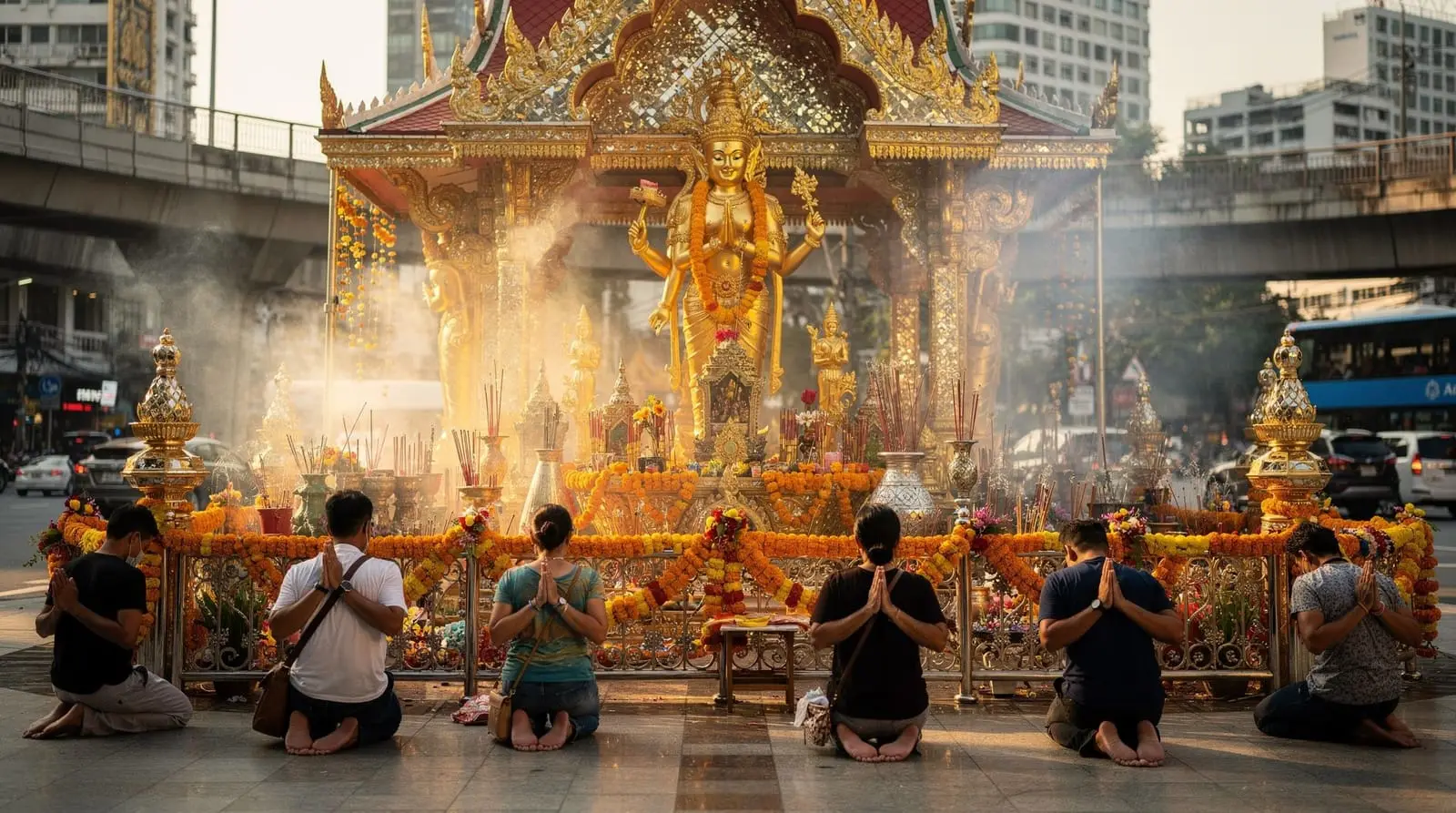
The Erawan Shrine is a famous Hindu shrine to the four-faced god Brahma, sitting on a busy corner of the Ratchaprasong shopping district beside the Grand Hyatt Erawan hotel. It is free, open 6:00-23:00, and one of Bangkok's most-visited religious sites — wreathed in marigolds and incense, with traditional dancers performing for worshippers whose wishes were granted. Reach it on foot from Chit Lom BTS.
The Erawan Shrine is one of Bangkok’s most extraordinary sights precisely because it is so unexpected: a gilded Hindu shrine to the creator-god Brahma, wreathed in marigolds and incense smoke, with classical dancers performing — all on a traffic-choked corner in the middle of the city’s glitziest shopping district. It is free, open from dawn until late, and one of the most-visited religious sites in the city. This guide explains who Brahma is, how to make an offering, what the dancers mean, and the etiquette to follow.
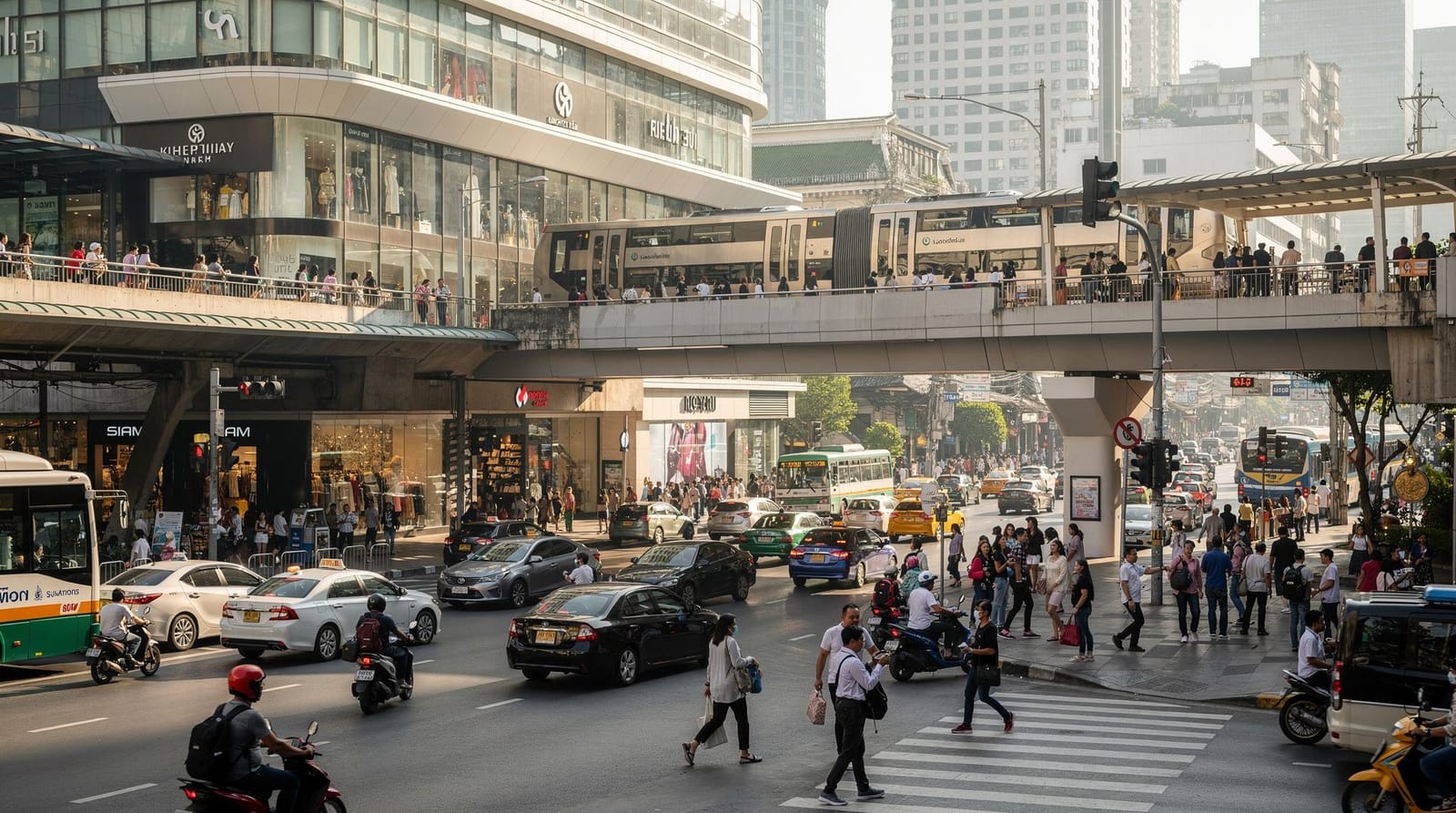
The shrine sits at the Ratchaprasong intersection beside the Grand Hyatt Erawan hotel, surrounded by the CentralWorld, Gaysorn and Amarin shopping complexes. It is a vivid demonstration of how Thai religion blends Buddhism, Hinduism and folk belief — and of how seriously Bangkokians take matters of luck and merit, even in the most commercial corner of the city.
Why a Hindu god is worshipped here
Brahma — Phra Phrom in Thai — is the four-faced Hindu god of creation. Although Thailand is Buddhist, Hindu deities are widely venerated in Thai practice, which weaves together Buddhism, Brahmanism and animism. The four faces represent kindness, mercy, sympathy and impartiality.
The shrine has a famous origin story. In the 1950s, construction of the original Erawan Hotel was plagued by accidents and delays; on the advice of an astrologer, the four-faced Brahma shrine was erected in 1956 to appease the spirits, after which the misfortune stopped. The shrine gained a reputation for granting wishes — particularly in love, business and fortune — and has been a magnet for worshippers ever since. For more on the blend of beliefs, see the Bangkok culture guide.
How to make an offering
If you want to participate rather than just watch:
- Buy a set of offerings from the vendors around the shrine — typically a marigold garland, incense sticks and a candle — for about 50-100 THB.
- Light the incense and the candle.
- Place your offerings at one or all four faces of Brahma; many worshippers circle the god, praying at each face.
- Apply gold leaf to the image if you wish, a common merit-making act.
Custom holds that if your wish is granted, you should return to give thanks — most often by commissioning the resident dancers.
The resident dancers
Troupes of classical Thai dancers in full traditional costume perform at the shrine, hired by worshippers whose wishes have been answered. The worshipper pays the troupe, and they dance and play live music — gongs, drums and the reedy pi — in that person’s name before Brahma. You can stand and watch for free, and it is one of the most genuinely atmospheric sights in central Bangkok: classical dance, incense and prayer set against shopping-mall facades and rush-hour traffic.
At a glance
| Entry | Free |
| Hours | Roughly 6:00-23:00 daily |
| Time needed | 15-20 minutes |
| Getting there | Chit Lom BTS (Sukhumvit Line), covered skywalk almost to the entrance |
| Best time to visit | Early morning or after 18:00 — cooler, and more likely to catch the dancers performing |
| Dress code | Cover shoulders and knees; remove hats |
Getting there and combining with shopping
Entry: free · Hours: roughly 6:00-23:00 daily Nearest transit: Chit Lom BTS (Sukhumvit Line), with a skywalk almost to the shrine Location: Ratchaprasong intersection, beside the Grand Hyatt Erawan
The shrine could not be more central or convenient — a covered skywalk from Chit Lom BTS leads almost to it, and it is surrounded by the city’s biggest malls. It is a natural 15-20 minute stop on a shopping day. See the Siam-Ratchaprasong destination guide, the Bangkok shopping guide and the best malls in Bangkok guide for the surrounding district. Because it costs nothing, it also appears in the free things to do in Bangkok guide.
For visitors who want to weave the Erawan Shrine into a broader temple and shrine route, a private flexi temple tour can include it alongside the Buddhist temples, and the best temples in Bangkok guide covers the wider religious sights.
Etiquette at the shrine
This is an active place of worship, not a photo backdrop. Dress modestly, remove your hat, and behave respectfully. You may photograph discreetly, but do not pose disrespectfully, turn your back on the god for selfies, or interrupt people praying or the dancers performing. Keep your feet from pointing at the deity, as at any shrine. The temple etiquette and dress code guide covers the general principles, which apply here too.
A note of history worth knowing respectfully: the shrine was the target of a tragic bombing in 2015 and was quickly restored; it remains a place of deep significance to many Thais, so visit with appropriate sensitivity.
Other shrines nearby worth a glance
Ratchaprasong has more devotional statues than most visitors realise, spaced along the same skywalk network as Erawan. The Trimurti Shrine outside CentralWorld, dedicated to a composite Hindu deity linked to love and romance, is a short walk away and busiest on Thursday evenings, when hopeful visitors leave red offerings. There’s also a smaller Ganesh shrine near the Erawan Shrine itself, popular with those seeking success in work or study. None of these need more than a few minutes each, and together with Erawan they make a short, free walking loop through Bangkok’s most unexpected pocket of devotion, right in the middle of the shopping district covered in the Bangkok shopping guide.
Fitting it into a day
Because it costs nothing and takes 15-20 minutes, the Erawan Shrine slots easily either side of a longer plan: pair a morning shopping session at Siam with an early visit before the heat builds, or stop by in the early evening on the way to dinner or a rooftop bar, when the dancers are more likely to be performing and the light is softer. It also works well tacked onto a walking tour of the wider Ratchaprasong and Siam area, since the skywalks connect most of the district’s landmarks without touching street level.
Frequently asked questions about Erawan Shrine guide: Bangkok's lucky Brahma shrine
Is the Erawan Shrine free to visit?
What are the opening hours of the Erawan Shrine?
How do you make an offering at the Erawan Shrine?
Who is Brahma and why is a Hindu god worshipped here?
What are the dancers at the Erawan Shrine?
How do you get to the Erawan Shrine?
What is the etiquette at the Erawan Shrine?
Is the Erawan Shrine worth visiting?
Top experiences
Bookable activities with verified prices and instant confirmation on GetYourGuide.