Getting around Bangkok: the complete honest transport guide
Bangkok Unlimited Bus & River Boat Pass – ThaiGo Travel Card
What is the best way to get around Bangkok?
For most visitors, a combination of the BTS Skytrain and MRT subway plus Grab covers almost everything quickly and cheaply. Use the elevated and underground trains to skip Bangkok's notorious traffic, the Chao Phraya river boats for the temples and Old City, and Grab (the ride-hailing app) for everything off the rail lines. Avoid relying on metered taxis flagged on the street and treat tuk-tuks as an occasional novelty, not real transport.
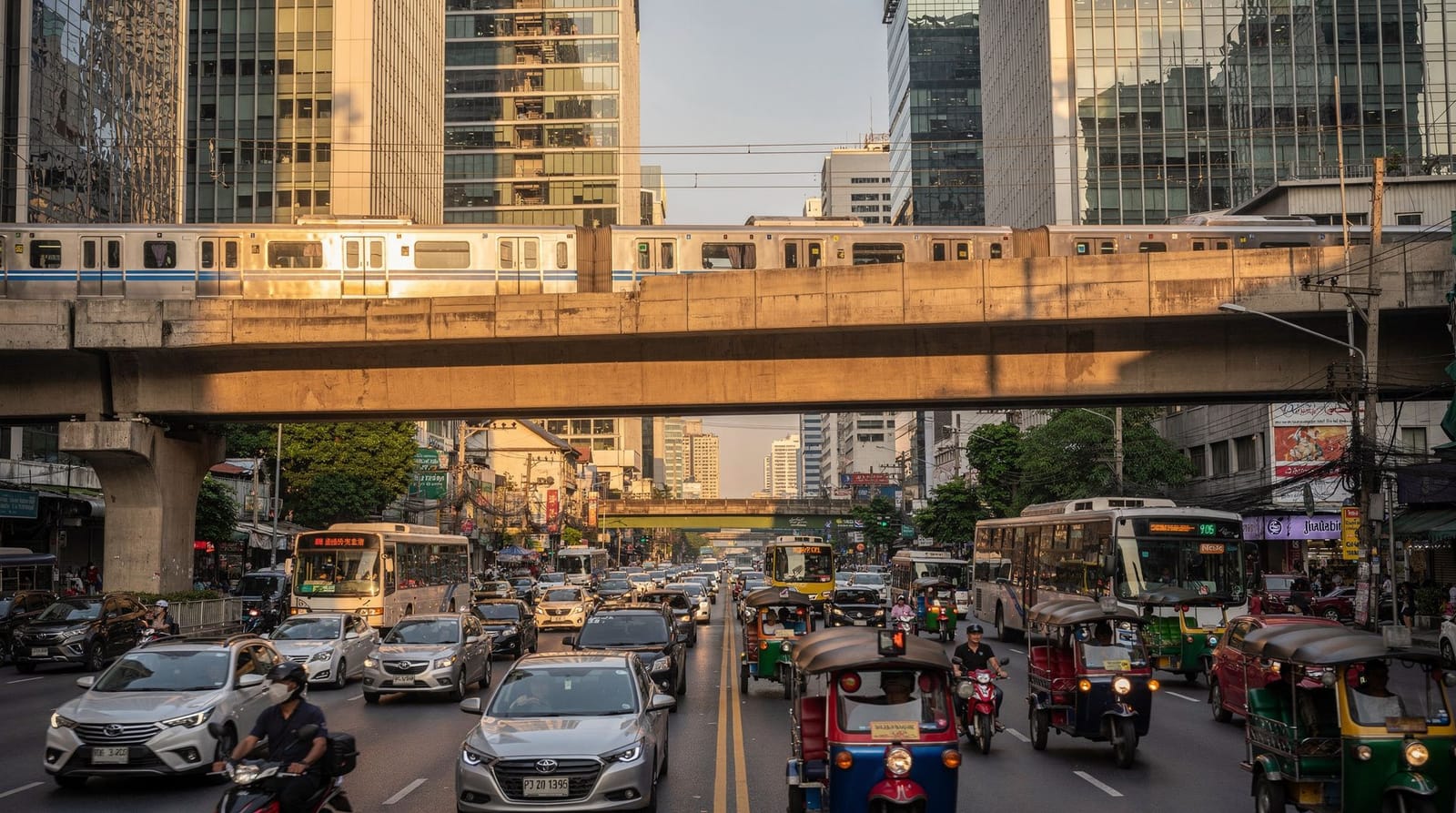
Bangkok has a deserved reputation for traffic — but it also has one of Southeast Asia’s best urban rail networks, a working river-boat system, and ride-hailing that makes taxis almost irrelevant. The trick is knowing which mode to use for which trip. Get that right and Bangkok becomes one of the easiest big Asian cities to move around; get it wrong and you spend your holiday sitting in a taxi watching the meter climb.
This guide compares every realistic option honestly — what each costs, where it goes, when it beats the alternatives, and the specific scams to sidestep. The short version: trains and boats to beat the traffic, Grab for everything else, and tuk-tuks only when you want the experience rather than the efficiency.
| Default combo | BTS/MRT + river boats + Grab |
| Cost per day | 150–350 THB for a typical sightseeing day |
| Avoid | Street-flagged taxis at tourist spots; the “20-baht” tuk-tuk tour |
| Card needed | Rabbit Card (BTS) optional; MRT uses its own token/card |
| Peak hours to dodge | ~07:00–09:30 and ~16:30–19:30 |
The golden rule: get off the road
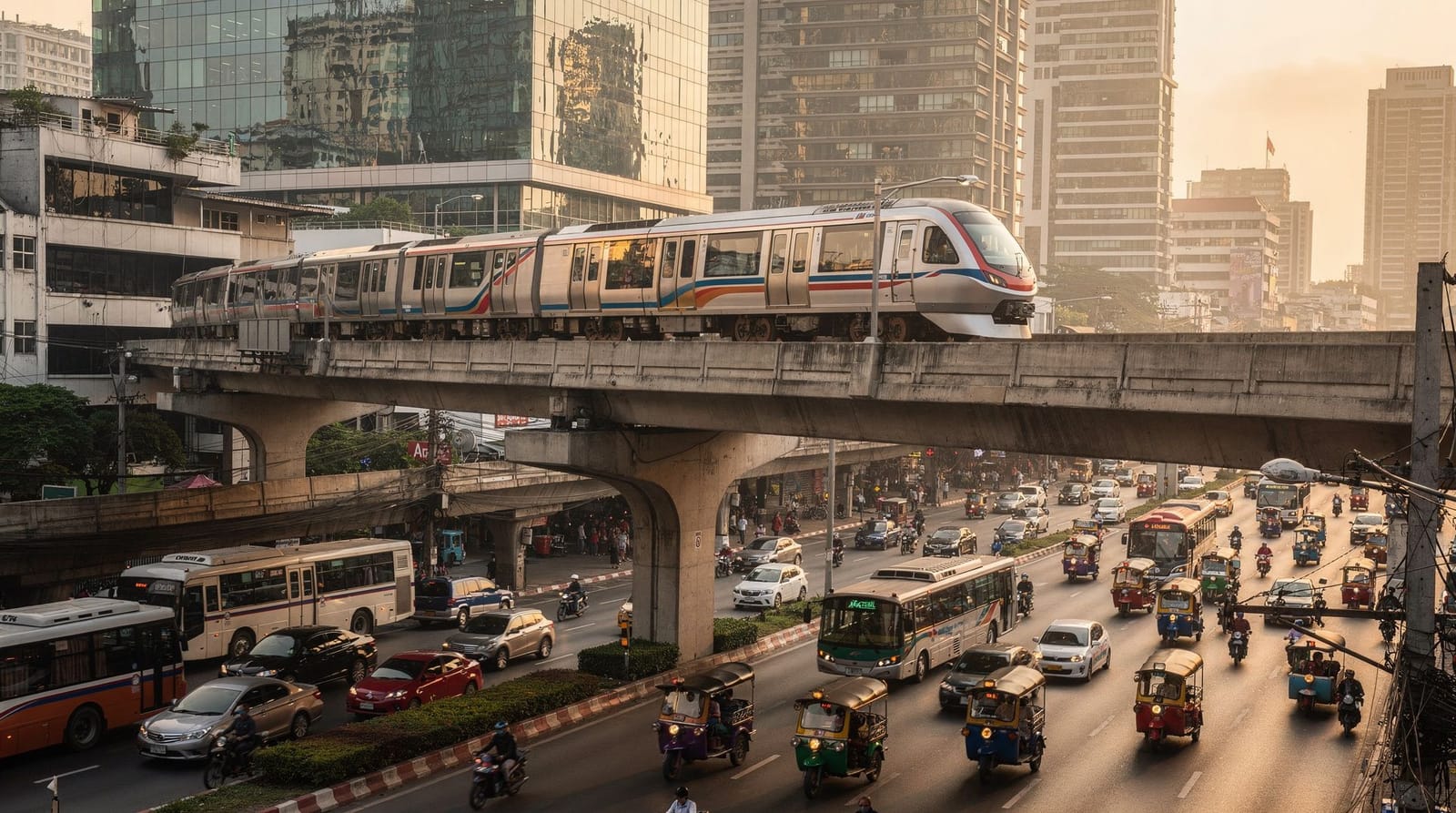
Bangkok’s congestion is real and persistent. Surface roads clog from mid-morning to late evening, and a journey that takes 15 minutes at 06h00 can take an hour at 18h00. The single most useful decision you can make is to plan your days around the rail and river network, which is physically separated from the traffic.
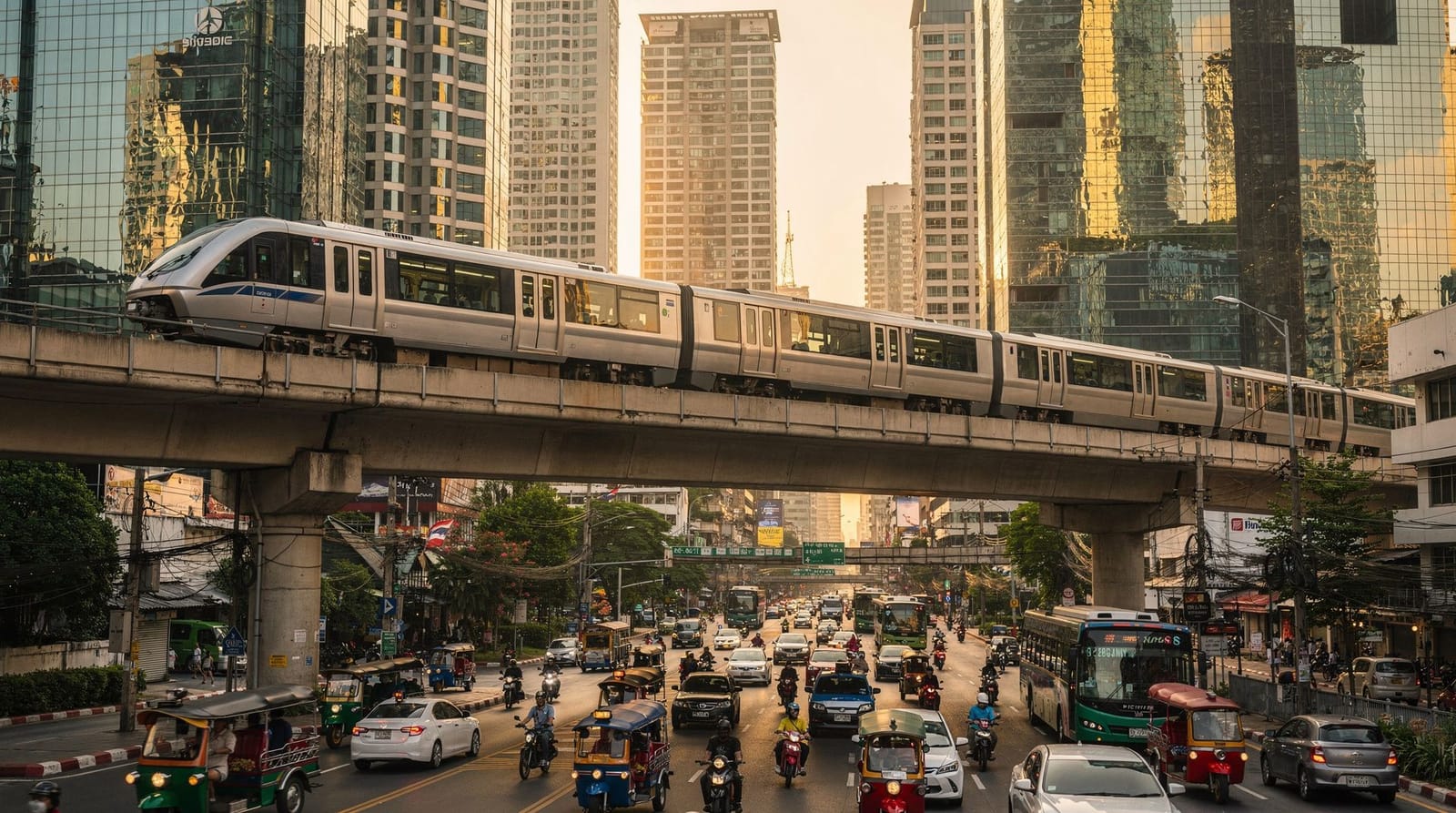
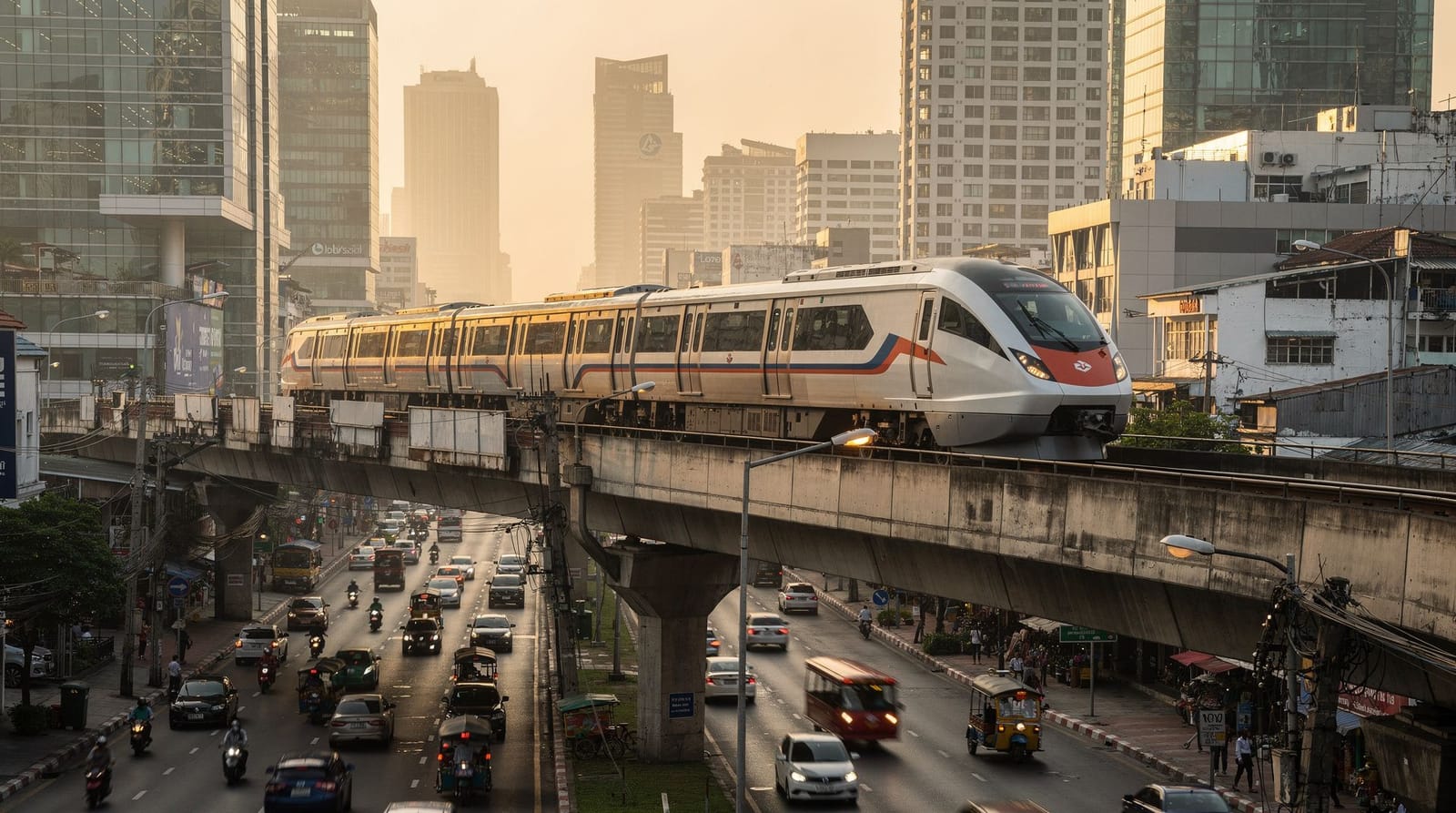
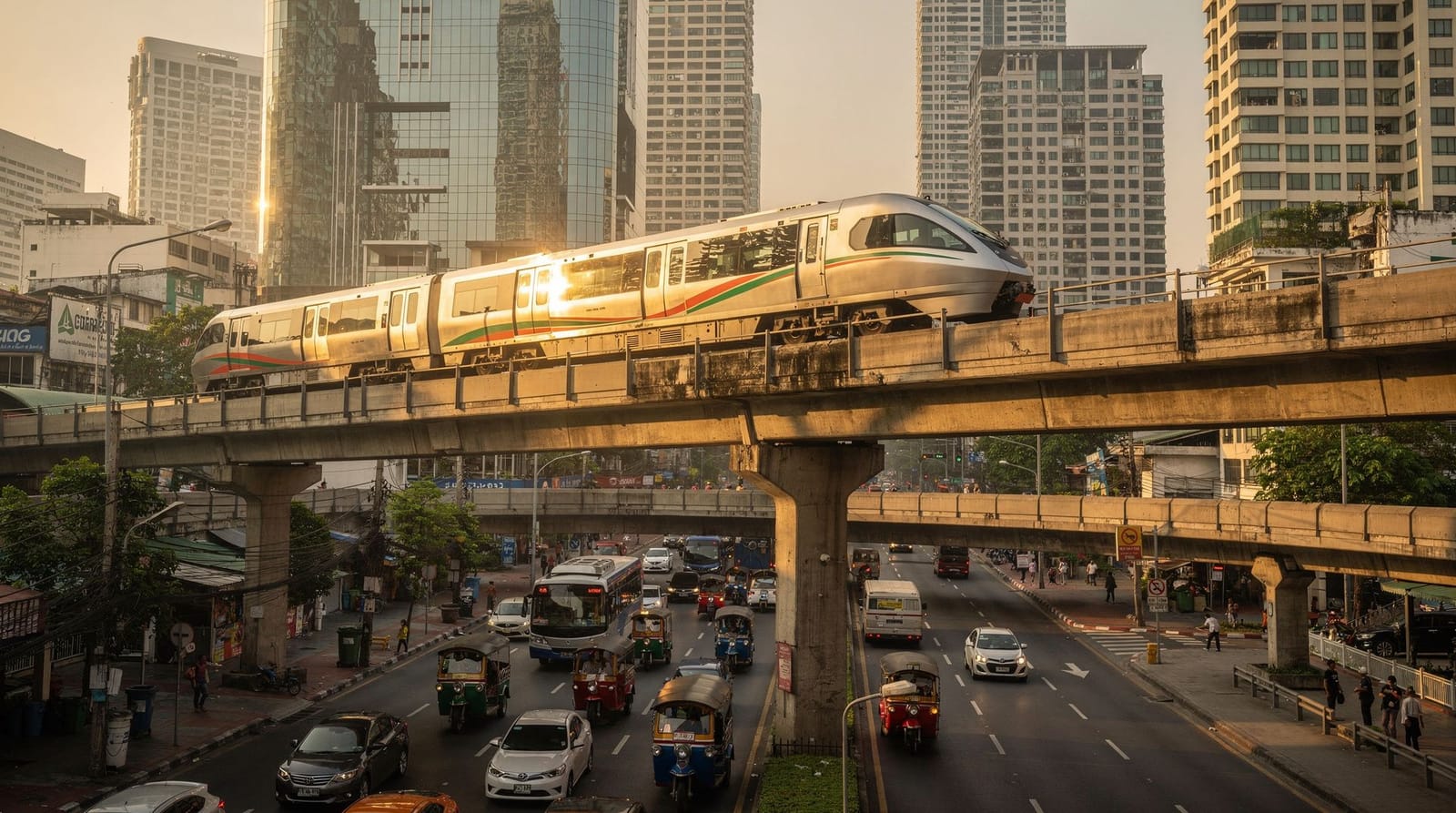
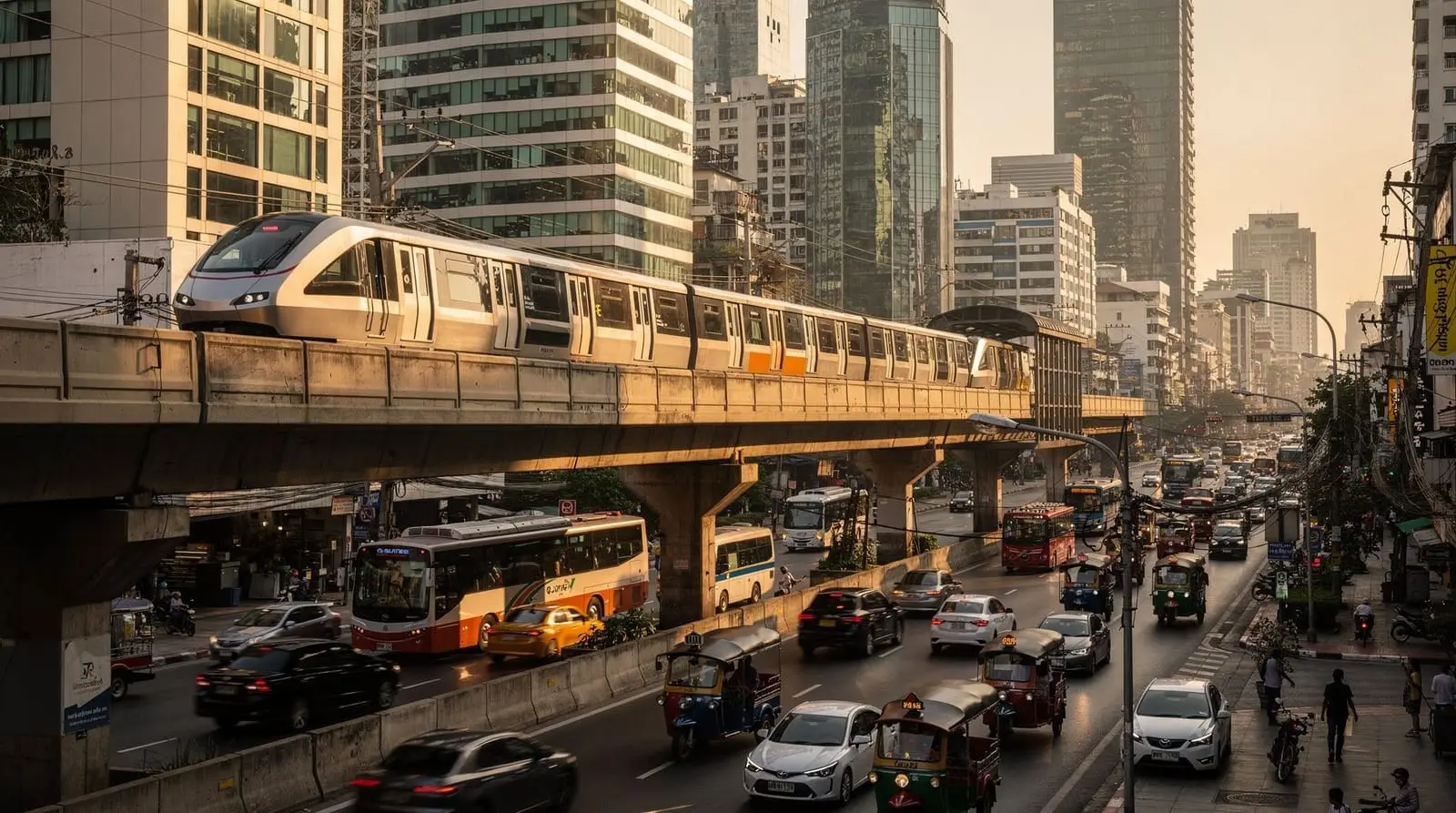
The BTS Skytrain runs on elevated tracks above the main roads of central Bangkok. The MRT runs underground and on elevated viaducts, covering different corridors. The Chao Phraya river boats glide past the worst of the road congestion entirely, linking the riverside hotels, the Old City temples, and Chinatown. Between these three, you can reach the vast majority of what visitors come to see without ever touching a road.
Only when your destination sits away from a station or pier — and many genuinely good neighbourhoods like Thonglor and Ekkamai are a walk from the nearest exit — do you drop down to Grab, a taxi, or a short tuk-tuk hop for the final stretch.
BTS Skytrain — your default for central Bangkok
The BTS is fast, clean, air-conditioned and gloriously above the chaos. Two main lines — the Sukhumvit Line (light green) and the Silom Line (dark green) — cover the modern heart of the city: the hotel and nightlife strips of Sukhumvit, the shopping mega-zone of Siam and Ratchaprasong, the business district of Silom and Sathorn, and the river interchange at Saphan Taksin, where you step off for the Chao Phraya boats.
Fares run roughly 17–62 THB (about USD 0.50–1.90) depending on distance, paid by single-journey ticket from a machine or tapped through with a Rabbit Card. Trains run from around 06h00 to midnight at intervals of a few minutes. The two lines interchange at Siam station, the busy central hub where most first-timers find their bearings.
What the BTS does not do well is reach the Old City — the Grand Palace and Wat Pho are not on the Skytrain. For those you switch to the river. The full route map, fare table and station-by-station notes are in the BTS Skytrain guide.
MRT subway — fills the gaps the BTS misses
The MRT subway complements the Skytrain rather than duplicating it. The Blue Line loops through parts of the city the BTS doesn’t reach — most importantly Chinatown (Wat Mangkon station), the Hua Lamphong area, and Chatuchak Weekend Market (Chatuchak Park / Kamphaeng Phet stations). The Blue Line also connects to the BTS at several interchanges — Sukhumvit/Asok, Silom/Sala Daeng, and Chatuchak/Mo Chit — so you can hop between systems.
Fares are similar to the BTS at 17–43 THB, but note the MRT uses its own token and card system — your Rabbit Card does not work underground, and vice versa. Trains are equally clean and air-conditioned, with airport-style security bag checks at entry. The MRT subway guide covers the Blue and Purple lines, the interchanges, and which stations open up which neighbourhoods.
Chao Phraya river boats — the best way to reach the temples
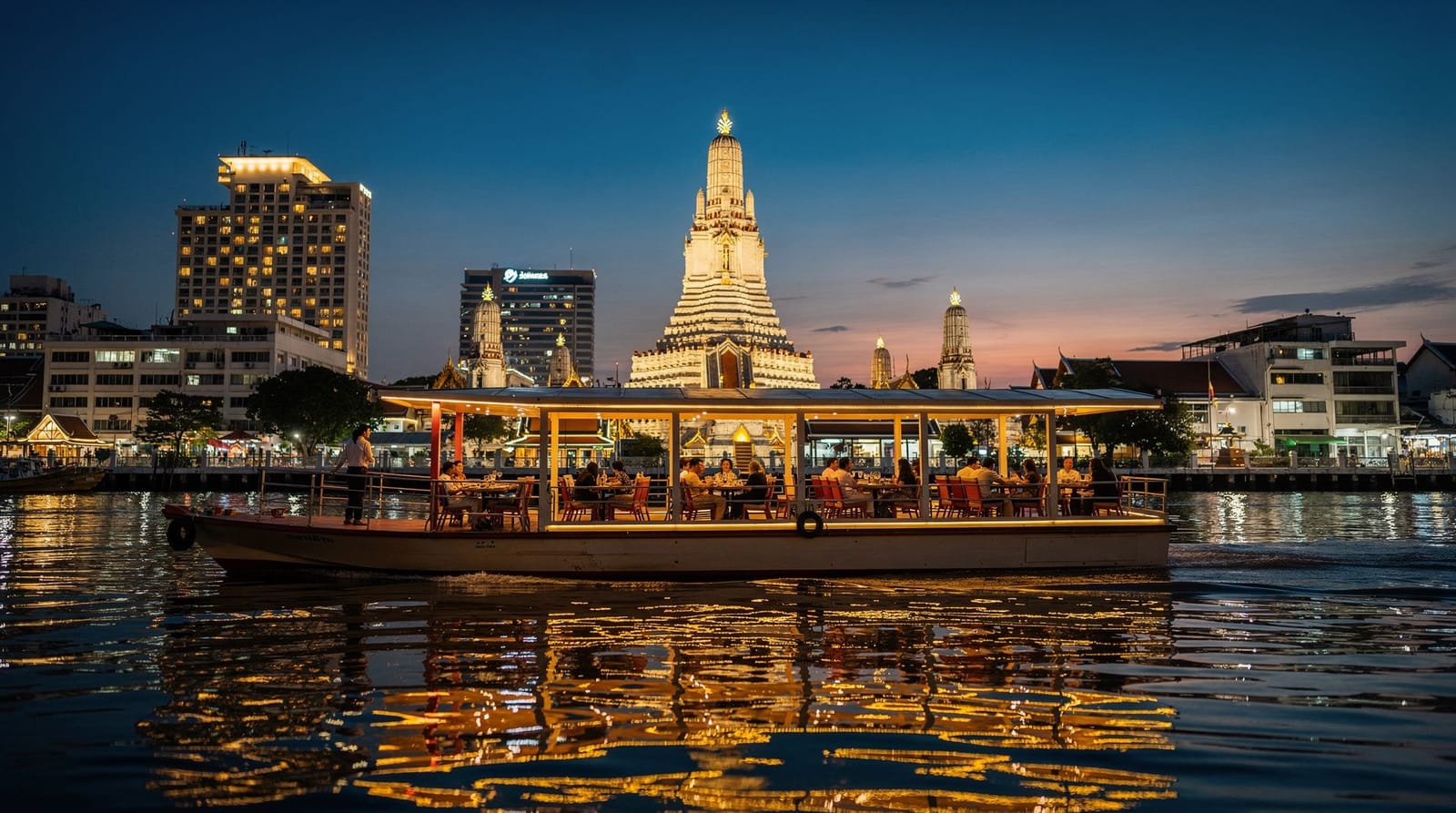
The river is the original highway of Bangkok and still the smartest way to reach the Rattanakosin Old City, Wat Arun, Wat Pho, the Grand Palace, Chinatown and the flower market. Boats depart from Sathorn (Central) Pier, directly below Saphan Taksin BTS station — the single most useful transport interchange in the city.
There are several boat services and the flag colours matter:
- Orange-flag commuter boats are the cheapest, around 16 THB flat, and stop at most piers. This is what locals use and it’s perfectly fine for visitors.
- Tourist boats (often blue-flag, hop-on-hop-off) cost more — single tickets or a day pass around 150–200 THB — but have English commentary and stop at the main sights.
- Cross-river ferries shuttle straight across to Wat Arun for a few baht.
For a relaxed day of temple-hopping with unlimited stops, the tourist boat pass is genuinely convenient. Buy a Chao Phraya hop-on-hop-off river boat day pass if you want to cruise the riverside sights at your own pace without queuing for tickets at each pier. The flag-by-flag breakdown, pier numbers and timetable are in the Chao Phraya boats guide.
For an all-in-one transport ticket that bundles the river and a sightseeing bus, a hop-on-hop-off boat and bus day pass can suit first-timers who want to cover a lot of ground in one day.
Grab — ride-hailing that replaces the taxi
Grab is Southeast Asia’s Uber equivalent and the single most useful app to install before you arrive. You set your pickup and destination in English, see the fare upfront, pay by saved card or cash, and never argue about a meter. Drivers are tracked by GPS, which adds a layer of safety, especially for solo travellers and at night.
Grab car fares across central Bangkok typically run 80–250 THB depending on distance and traffic — more in rush hour when the meter ticks on time, not just distance. GrabBike (motorbike pillion) is faster and cheaper in gridlock if you’re comfortable on the back of a bike and wear the offered helmet. Bolt is a competing app that is often slightly cheaper; locals keep both and compare.
Grab shines for the trips trains and boats can’t do: reaching a restaurant in a residential soi, getting home late after the nightlife districts close, or carrying shopping back from Chatuchak market. The full comparison with street taxis and tuk-tuks is in the Grab, taxi and tuk-tuk guide.
Metered taxis — fine if the meter is on
Bangkok’s colourful taxis are cheap when used honestly: flagfall is 35 THB and the meter climbs gently, so a cross-town ride often costs less than Grab. The problem is consistency. At tourist hotspots, airports and late at night, drivers frequently refuse the meter and quote an inflated flat fare, or claim to be “going home.”
The defence is simple: open the door, say “meter, please” and confirm the driver agrees before you sit down. If they refuse, wave them off — there’s always another taxi. Avoid taxis idling outside tourist attractions and hotels, which are the ones most likely to overcharge; walk a block to flag a moving cab instead. Expressway tolls (25–70 THB) are paid by you on top of the meter and are usually worth it to skip surface gridlock.
Tuk-tuks — novelty, not transport
The three-wheeled tuk-tuk is an icon, and one short ride through the Old City at dusk is a genuine Bangkok experience. As actual transport, though, it’s the weakest option: no air-conditioning, full exposure to heat and exhaust, no meter, and a negotiated price that’s almost always higher than a metered taxi for the same trip.
Worse, tuk-tuks are the delivery mechanism for one of Bangkok’s classic cons: the “20-baht all-day tour.” A friendly driver offers a suspiciously cheap city tour, then hauls you to gem shops, tailors and “government” emporiums where he earns commission and you waste your day. Decline politely. The mechanics of this and the related tuk-tuk scams are worth reading before you arrive.
If you want the tuk-tuk experience without the haggling, an app-based pass takes the negotiation out of it. A tuk-tuk day pass with app booking and a boat ride lets you ride the icon on fixed terms.
Buses, songthaews and motorbike taxis
Bangkok’s public buses are dirt cheap (8–25 THB) and extensive, but routes are confusing, signage is mostly in Thai, and they sit in the same traffic as everything else. They’re for the adventurous or budget-committed, not first-timers — the Bangkok on a budget guide covers how to use them.
Motorbike taxis (riders in orange vests at the mouth of most sois) are the locals’ secret weapon for short hops and beating gridlock. You negotiate a small fare (20–60 THB for a short ride), perch on the back, and weave through stationary traffic. They’re fast and useful but the riding is aggressive — only for the confident. Songthaews (shared pickup trucks with bench seats) run fixed local routes in some areas and around day-trip towns.
Before you land: SIM, apps and cash
Grab, Google Maps and most of the digital conveniences in this guide need working mobile data the moment you land, so sort connectivity before transport becomes a problem. A local SIM or eSIM bought at the airport or in advance is the standard move; our Bangkok SIM and eSIM guide covers the options and prices so you can install Grab and get moving straight off the plane rather than hunting for airport wifi. Load a card into the Grab app in advance too, since fumbling with payment details at midnight after a long flight is the last thing you want. Keep a mix of cash and card: some drivers and river-boat piers still work cash-only, and small notes make paying flag-colour boats and motorbike taxis far smoother. From either airport, Suvarnabhumi or Don Mueang, the Airport Rail Link and metered taxi counters are the reliable first move into the city before you’ve found your transport rhythm.
Budgeting transport into the trip
Transport is one of the more predictable line items in a Bangkok budget once you know the pattern: rail and boat fares are fixed and cheap, Grab is the variable cost, and taxis and tuk-tuks are where an unprepared traveller overspends. Our Bangkok travel costs guide breaks down a full daily budget including transport, so you can see how a 150–350 THB transport day fits against food, sights and accommodation. Packing right also saves money indirectly — comfortable, breathable clothing and proper walking shoes (see what to pack for Bangkok) mean you’re less tempted to cave into an overpriced air-conditioned taxi purely to escape the heat.
Step-free travel and accessibility
Bangkok’s rail network has improved a great deal but is not uniformly step-free. Most BTS stations have lifts, though a handful of older ones rely on staff assistance for a platform-level transfer, and it’s worth checking the specific station on the BTS Skytrain guide before you rely on one for a wheelchair or a stroller. The MRT is generally better equipped with lifts throughout, covered in the MRT subway guide. River boats involve a step down from a floating pier and can be genuinely tricky in a wheelchair without assistance, so Grab or a private car is the more reliable choice for anyone with mobility needs. For travellers with elderly companions or reduced mobility, our Bangkok with elderly guide has the fuller picture, and a private car and driver removes almost all of the friction covered in this section.
Putting it together: a sample transport day
Route-planning gets easier once you’ve done it once, so don’t over-plan the first day — a rough shape is enough. A well-planned Bangkok day might look like this: take the river boat from your riverside hotel to the Old City for the morning temples; walk between Wat Pho, the Grand Palace and the river; grab a cheap orange-flag boat up to Chinatown for lunch; ride the MRT from Wat Mangkon to the shopping district; switch to the BTS at an interchange to reach Sukhumvit; and take a Grab for the final hop to a restaurant tucked in a soi after dark. Almost no time on congested roads, and the whole day’s transport under 300 THB.
For longer hauls, a private car and driver makes sense — for a full day of scattered sights, or for getting to the day-trip destinations like Ayutthaya and Kanchanaburi. Hiring a private car and driver in Bangkok and nearby removes the planning entirely when you have a packed itinerary or are travelling with family or elderly companions.
Frequently asked questions about Getting around Bangkok: the complete honest transport
Is it easy to get around Bangkok without speaking Thai?
How much should I budget per day for transport in Bangkok?
Do I need a Rabbit Card to ride the BTS Skytrain?
Should I use taxis or Grab in Bangkok?
Are tuk-tuks a good way to get around Bangkok?
How do I avoid Bangkok's traffic?
Can I use Google Maps for Bangkok public transport?
Top experiences
Bookable activities with verified prices and instant confirmation on GetYourGuide.