Bangkok in the rain: a wet-day plan
Bangkok: Mahanakhon SkyWalk Entry Ticket with Options
What can you do in Bangkok when it rains?
Plenty stays dry and fun: the mega-malls (IconSiam, Siam Paragon, Terminal 21), Jim Thompson House, the Bangkok Art and Culture Centre, SEA LIFE aquarium, a Thai cooking class, a massage or spa, and the city's museums and cinemas. Bangkok rain is usually a short, heavy afternoon burst of about an hour, so plan outdoor sights for the morning and keep these indoor options as a flexible backup.
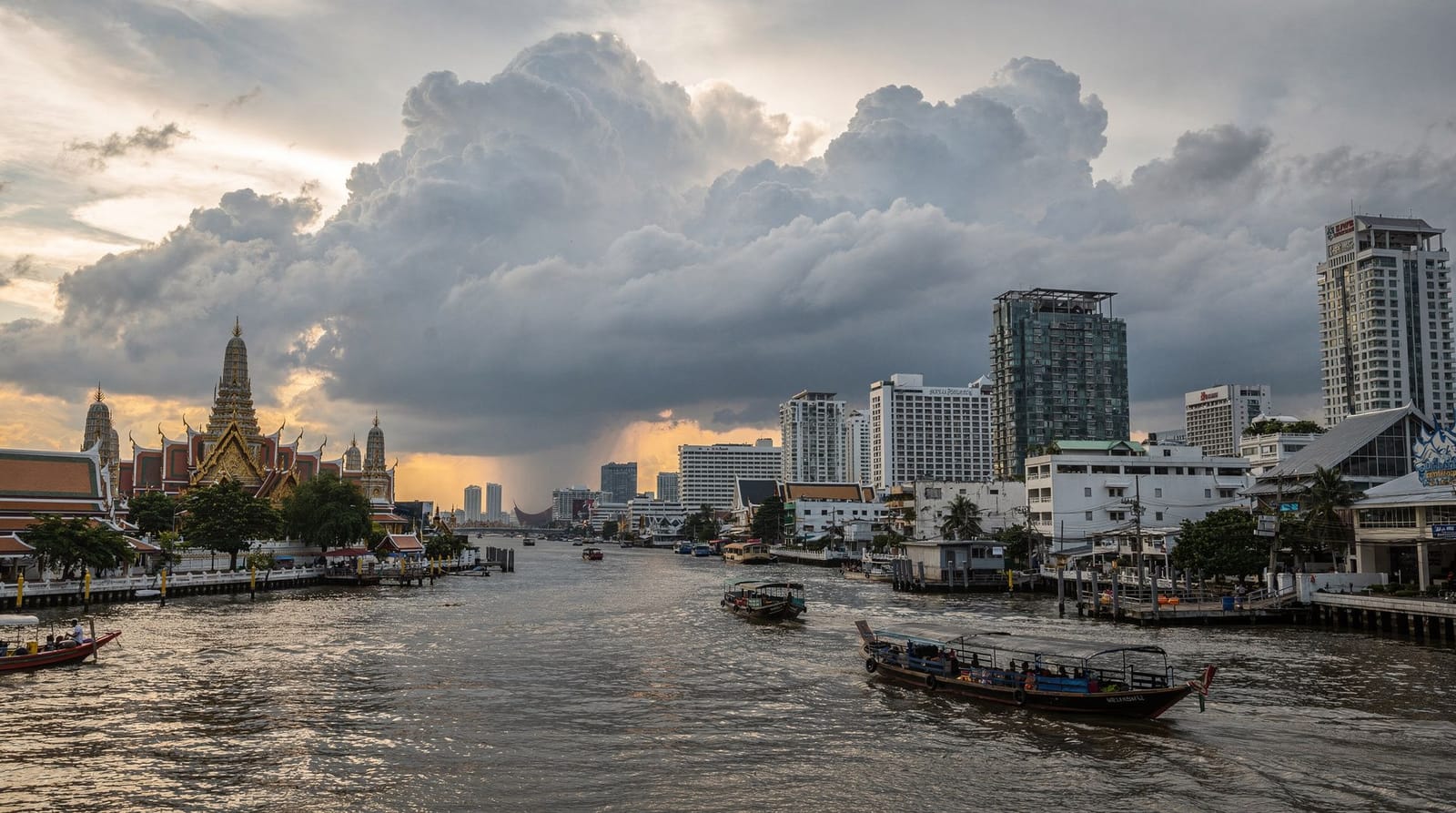
A Bangkok downpour looks dramatic but rarely ruins a day. From June to October the rain usually arrives as a single heavy burst of about an hour in the afternoon or evening, then clears — so the trick is not avoiding the wet season but planning around the rhythm of it. This guide covers exactly what to do when the sky opens: the malls, museums, classes and spas that keep you dry and entertained, plus an honest look at how the rainy season actually works and why it can be the smartest time to visit. Our rainy-season guide and month-by-month weather breakdown give the full climate picture.
The core strategy is simple: front-load outdoor sights — temples, markets, parks — into the morning, and hold a list of indoor backups for when the clouds gather. Do that, and rain becomes a gentle pause rather than a washout. It helps to remember that a tropical downpour is part of the experience, not an interruption of it: the city smells different, the light turns dramatic, and a rooftop café or a covered food court is a fine place to watch it roll through. Travellers who fight the rain have a worse time than those who simply plan around its rhythm.
| Rainy season | June–October, peak Sep–Oct |
| Typical pattern | One heavy downpour, around 30–60 minutes, usually afternoon or evening |
| Hotel savings | Around 30–50% below the Nov–Feb peak |
| Rain gear cost | Ponchos/umbrellas around 20–300 THB |
| Best transport | BTS/MRT — unaffected by rain |
How Bangkok’s rainy season really works
The wet season runs roughly June to October, peaking in September and October. Crucially, it does not mean grey, drizzly days — it means a short, intense tropical downpour, often with thunder, that passes within an hour and leaves the air cooler and the city greener. Some low-lying streets flood briefly during the heaviest storms, which is why the elevated BTS Skytrain and underground MRT are your most reliable transport — both run unaffected and feed straight into many malls. The trade-off is firmly in your favour: hotel rates drop 30–50 percent and the major sights empty out. Loy Krathong, the beautiful river-and-canal festival of floating lanterns, falls around 25 November 2026 as the season winds down.
Rain by month: what to expect
| Month | Rain pattern | Crowds & price |
|---|---|---|
| June | Rain begins, still fairly light | Moderate crowds, prices easing |
| July | Regular afternoon showers | Lower crowds, good value |
| August | Similar to July, occasional longer spells | Low crowds |
| September | Wettest month, downpours can run longer | Lowest crowds, best hotel deals |
| October | Still wet, tapering off by late month | Low crowds, deals continue |
| November | Rain fades, Loy Krathong closes the season | Crowds and prices start climbing |
Rain gear: what to buy (and where)
Do not pack a heavy rain jacket from home — Bangkok’s heat makes it miserable to wear, and cheap gear is everywhere. A disposable poncho costs around 20–30 THB at any 7-Eleven (found every few hundred metres across the city), while a decent folding umbrella runs 100–300 THB at BTS station kiosks, Chatuchak, or a Central department store. Quick-dry sandals handle a flooded pavement far better than trainers. For a fuller checklist covering the rest of your bag, see what to pack for Bangkok.
Festivals that fall in the rainy season
The wet months are not a dead zone for events. Khao Phansa (the start of Buddhist Lent) falls around July, when monks begin a three-month retreat and temples see a rise in merit-making visits — a good time to find Wat Pho or the Grand Palace area quieter but still culturally alive. Later, the Vegetarian Festival takes over Chinatown for about nine days in September or October (exact dates shift with the lunar calendar): stalls turn meat-free, vendors dress in white, and Yaowarat gets even busier after dark than usual. The season closes with Loy Krathong, the river of floating lanterns, around 25 November 2026 — see our Loy Krathong guide for where to watch it.
The mega-malls are destinations, not just shelter
Bangkok’s malls are world-class, and a rainy afternoon is the perfect excuse to treat them as attractions in their own right. Riverside IconSiam is the grandest — a soaring complex with an indoor floating market, food halls and evening fountain shows along the river. In the Siam core, Siam Paragon and MBK sit a covered walkway apart, and Terminal 21 themes each floor as a world city, complete with elaborate photo-op restrooms. All connect to the BTS, so you can mall-hop without stepping into the rain. Our best malls guide and shopping guide rank them by what they do best.
Markets and food halls that stay dry
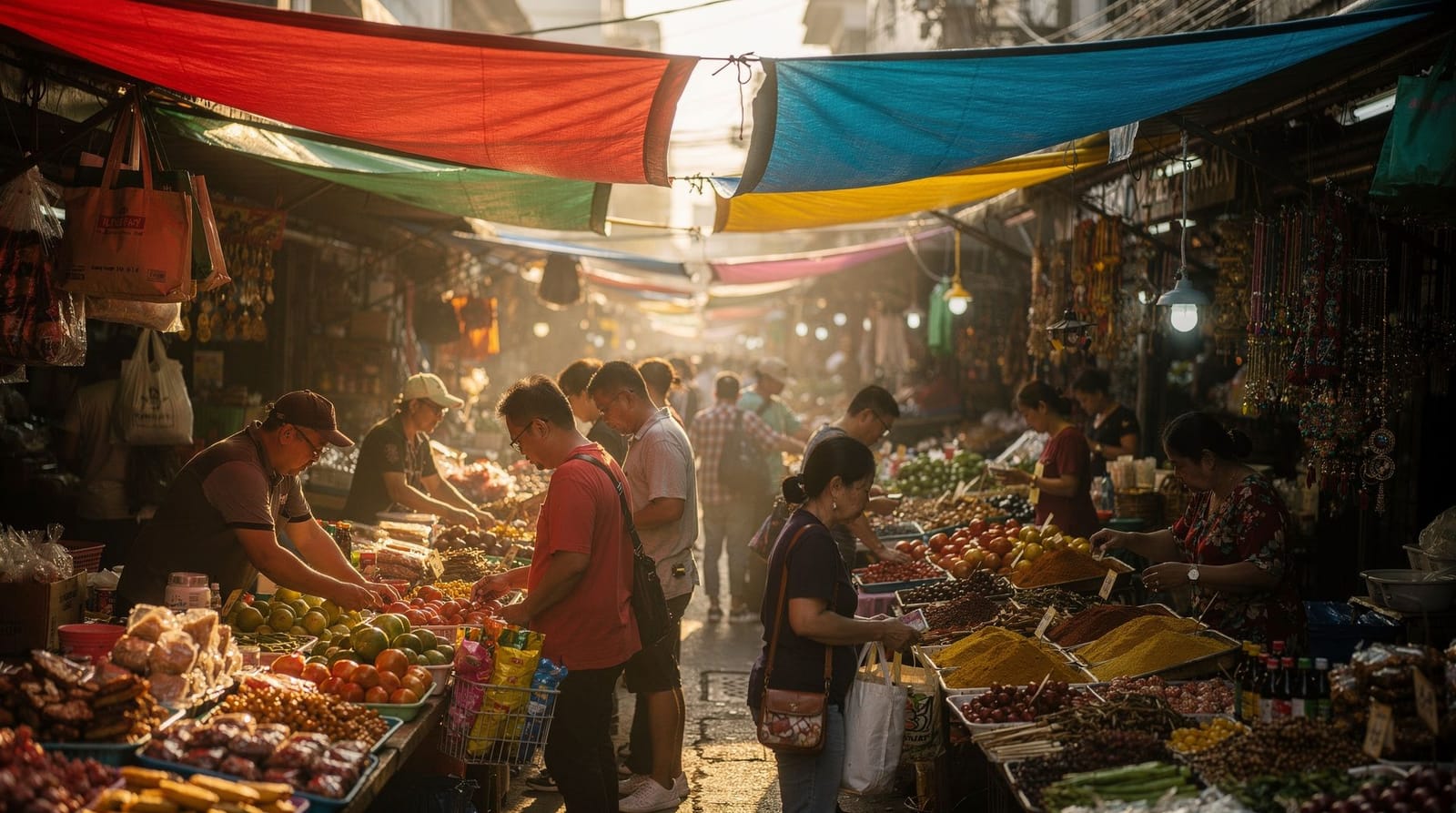
You do not have to give up the market experience when it rains. The covered alleys of Chatuchak keep you shopping through a downpour, and the air-conditioned food halls beneath the Siam malls and at IconSiam serve the same street-food classics — pad thai, boat noodles, mango sticky rice — without a drop of rain. The indoor floating market on IconSiam’s ground floor is a clever, dry homage to the real thing, complete with vendors in boats. For grazing in comfort, these covered options let you eat your way through a wet afternoon as happily as a dry one; the best malls and shopping guides point you to the best food floors.
Museums, art and silk under cover
When the rain hits, Bangkok’s indoor culture comes into its own. The Jim Thompson House (BTS National Stadium, ~200 THB) is a beautiful teak compound telling the story of the American silk magnate who vanished in 1967 — guided, shaded and entirely covered. A short walk away, the Bangkok Art and Culture Centre offers free-to-enter galleries spiralling up a bright atrium, with cafés and indie shops to wait out a storm. For families, SEA LIFE Bangkok under Siam Paragon is a large aquarium that turns a rained-out afternoon into a hit with kids — see our rainy day with kids guide for more.
Cook, eat and be pampered
Some of Bangkok’s best experiences are indoor by nature. A half-day Thai cooking class — often starting with a covered-market shop, then hands-on wok work and a meal — is arguably the ideal rainy-day activity, productive and delicious regardless of the weather. A traditional Thai massage or a session at one of the best spas (from around 300–500 THB an hour) makes a downpour feel like a gift. And eating never stops being a plan: the covered food courts and the michelin street food stalls tucked under awnings let you keep grazing through a shower — read our street-food safety tips to eat with confidence.
Outdoor sights that still work in the wet
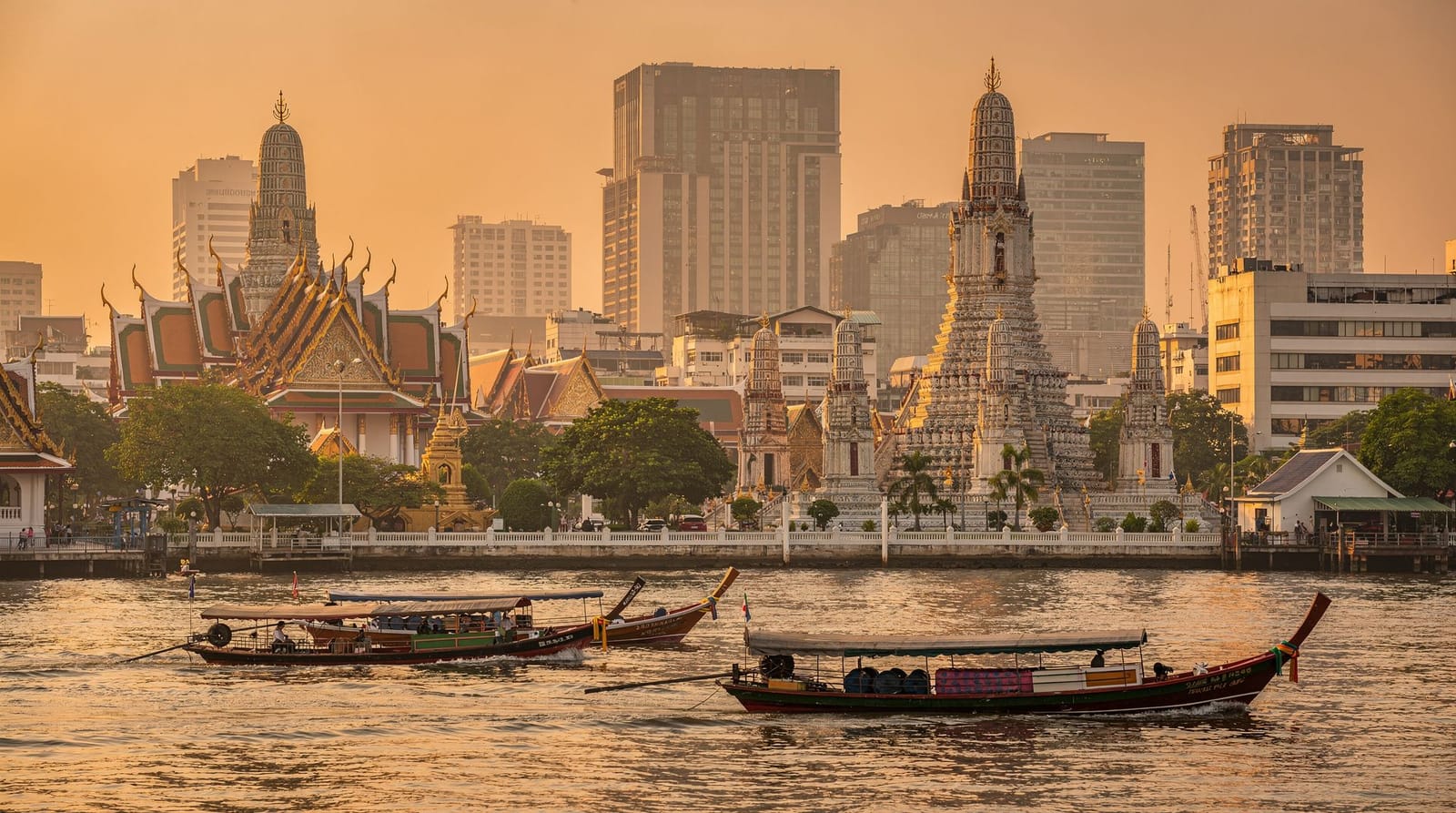
Not everything has to retreat indoors. The covered river boats and the dinner cruises run regardless of weather, and gliding past the floodlit temples through a curtain of rain is genuinely atmospheric. Many temple halls and the Wat Pho cloisters offer enough cover to keep exploring during a passing shower, and the vast covered sections of Chatuchak market keep you shopping while the rain drums on the roof. The 24-hour, partly covered Pak Khlong flower market is at its most evocative in the wet, the blooms glistening under the lights. With a cheap poncho, a passing downpour need not pause your day at all.
Indoor views and an evening cruise
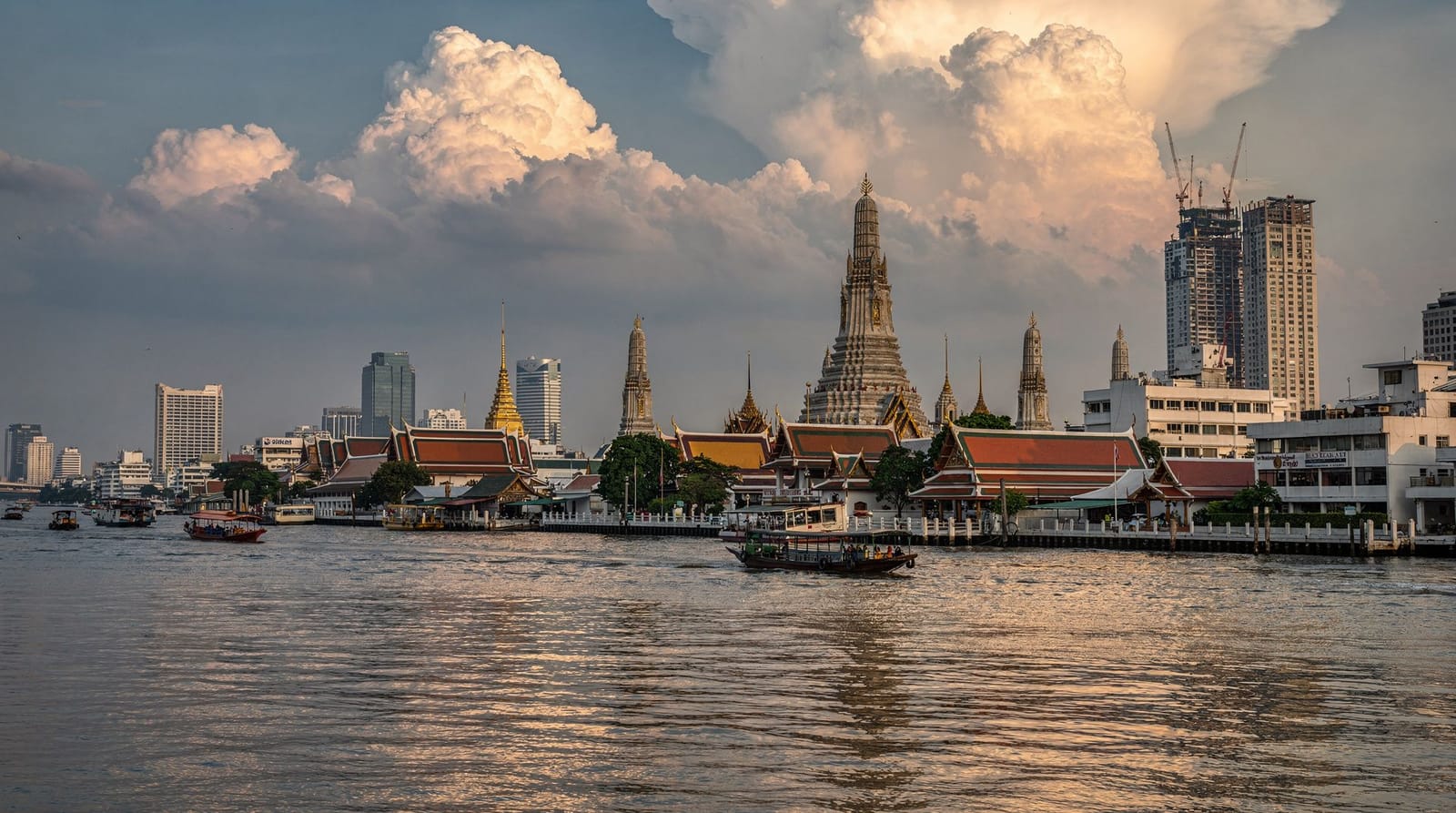
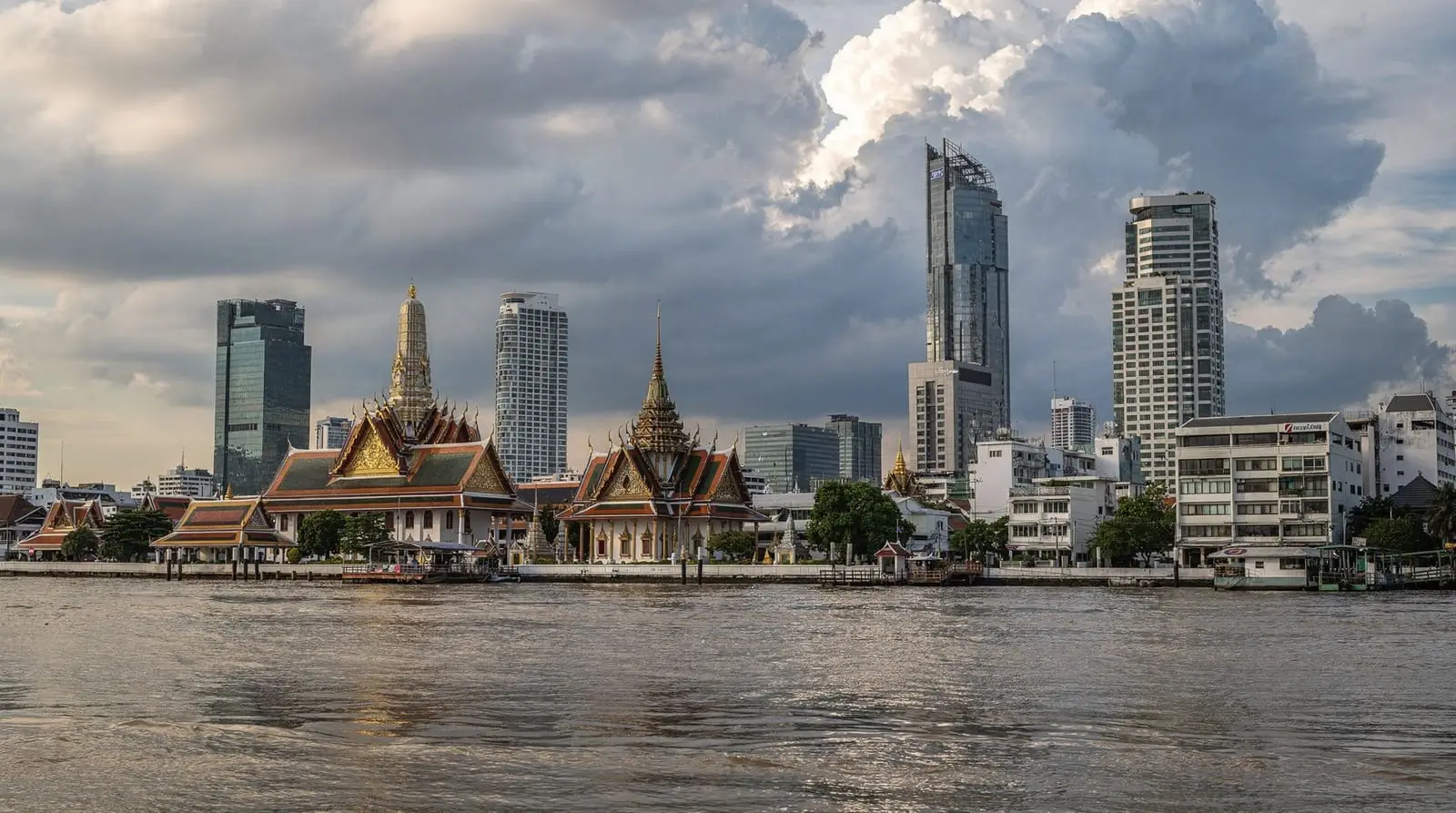
Rain need not cost you the skyline. The Mahanakhon SkyWalk (BTS Chong Nonsi, ~880 THB) has an enclosed indoor observation floor below its open-air deck, so a timed SkyWalk ticket still delivers the view even if the outdoor tray is closed in a storm — and storm clouds over the city can be spectacular. In the evening, a covered dinner cruise glides past the floodlit temples whatever the weather; an all-in river dinner cruise with hotel transfer means you never stand at a wet pier. For more elevated options, see Bangkok with a view.
Cinemas, aquariums and indoor fun
When the rain settles in for the evening, Bangkok’s malls double as entertainment complexes. Cinemas inside Siam Paragon, IconSiam and the bigger malls show the latest releases in English with Thai subtitles, often with luxurious reclining seats for a few hundred baht — and every screening opens with a moment of respect for the King, which you should stand for. The SEA LIFE Bangkok aquarium beneath Siam Paragon, an indoor ice rink at some malls, and arcades keep children happy for hours; our rainy day with kids and family attractions guides have more wet-weather ideas for younger travellers. None of this requires stepping outside, since the malls connect directly to the BTS.
Where to base yourself for rainy days
If you are visiting in the wet season, a little thought about where you stay pays off. Basing yourself in Siam and Ratchaprasong or Sukhumvit puts you on the BTS with covered walkways straight into the malls, so a downpour never strands you. The Silom and Sathorn area offers the same rail convenience with rooftop bars for clear evenings. Riverside hotels are atmospheric but more exposed to boat-pier dashes in heavy rain. Our where to stay and neighbourhoods guides help you weigh the trade-offs against your other priorities.
A flexible wet-day plan
Build the day around the rain rather than against it. Start outdoors early — a temple morning in Rattanakosin or a wander through Chinatown — while the sky is clear. When clouds build in the early afternoon, retreat to a mall, museum, class or spa. Emerge for a covered dinner and an evening that often turns out dry. Carry a 20–50 THB poncho (sold everywhere) so a passing shower never strands you, and lean on the BTS and MRT for movement. Our first-timer itinerary and the things to do pillar adapt easily to this rhythm.
Time the rain with the forecast
A little weather-watching turns the rainy season from a gamble into a plan. Tropical downpours are fairly predictable: storms tend to build in the late afternoon and evening, so mornings are usually your best window for outdoor sights. A quick check of a radar app each morning tells you roughly when the rain will hit, letting you slot temples and markets into the dry hours and book a cooking class, museum or spa for the wet ones. The rain rarely lasts more than an hour or two, and the city often clears to a fresh, cooler evening — so even a soggy afternoon need not write off the day. Our month-by-month weather and rainy-season guides set realistic expectations for each month, with September and October the wettest.
Why a rainy visit can be the smart choice
For travellers who value low prices and small crowds over guaranteed sun, the wet season is genuinely appealing. The same Grand Palace, the same river, the same street food — but quieter and cheaper, with a brief daily shower as the only cost. Time outdoor sights for mornings, keep this indoor list as your backup, and Bangkok in the rain becomes one of the better-value trips you can take. Use our best time to visit and budget guide to weigh it against the dry-season peak, and see Bangkok travel costs for how much the wet-season savings really add up to.
Frequently asked questions about Bangkok in the rain: a wet-day plan
How bad is the rainy season in Bangkok?
What are the best indoor things to do in Bangkok when it rains?
Is it worth visiting Bangkok in the rainy season?
Do Bangkok's temples and markets close when it rains?
How do you get around Bangkok in the rain?
What should I pack for Bangkok's rainy season?
Are cooking classes and spas good rainy-day options in Bangkok?
Top experiences
Bookable activities with verified prices and instant confirmation on GetYourGuide.