Rattanakosin old city
Bangkok's royal island holds the Grand Palace, Wat Pho's reclining Buddha and Wat Arun — the historic heart every first-timer should start with.
Bangkok: Grand Palace, Wat Pho, Wat Arun Sacred & Local Tour
Quick facts
- Nearest transit
- MRT Sanam Chai (Blue Line) — 5 min walk to Wat Pho; no BTS in the old city
- Character
- Royal island of temples and palaces; Bangkok's historic and ceremonial heart
- Key food
- Tha Tien market and riverside stalls; mango sticky rice carts near Wat Pho
- Key sight
- Grand Palace + Wat Phra Kaew (Emerald Buddha); Wat Pho's 46 m reclining Buddha
- Best time
- Arrive 8:30 am at opening to beat heat and tour groups; cool season (Nov–Feb)
Rattanakosin is the island where Bangkok began. When King Rama I moved the capital across the river in 1782, this loop of land inside a bend of the Chao Phraya — and a ring of defensive canals — became the new royal city. Today it holds the three sights almost every first-timer comes to Bangkok for: the Grand Palace and the Emerald Buddha, Wat Pho with its enormous reclining Buddha, and, just across the water, the spire of Wat Arun. They sit within a 20-minute walk and a 4-baht ferry of each other, which is why a single, well-planned day here is the most efficient introduction to the city you can give yourself.
What makes Rattanakosin the place to start
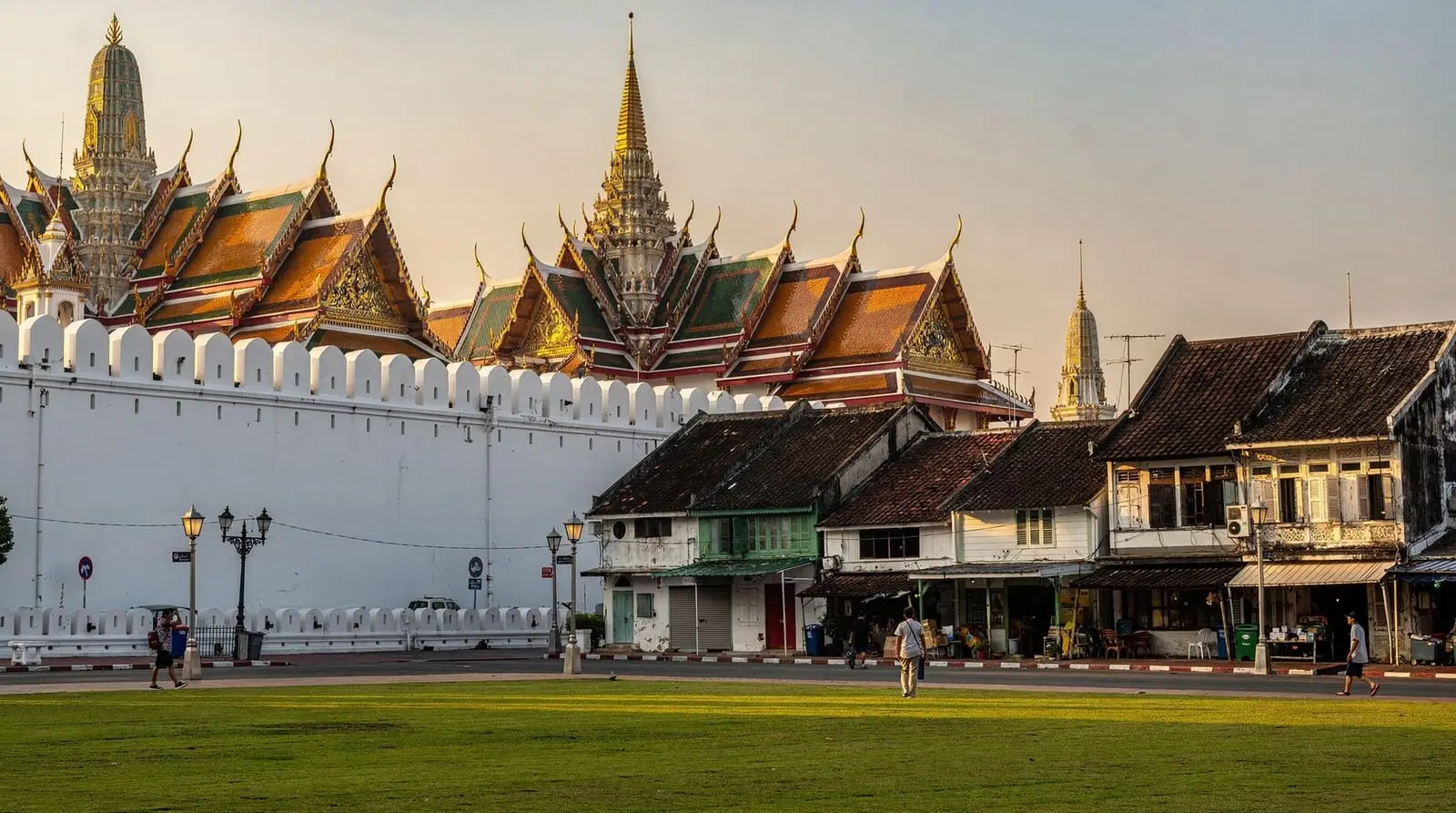
This is the ceremonial and historic heart of Thailand, and it looks the part: whitewashed temple walls, glittering mosaic-tiled spires (prang and chedi), and the kind of gilded grandeur that photographs do not exaggerate. Unlike Sukhumvit or Silom, there is almost no glass-and-steel skyline here — building heights are restricted to protect sightlines to the temples. The trade-off is that the old city has no BTS Skytrain and only one nearby MRT station, so you arrive by subway, river boat or taxi, then explore on foot.
The honest framing: Rattanakosin is dense with genuine masterpieces, but it is also the single most scam-targeted patch of ground in Bangkok. Almost every traveller who falls for the Grand Palace “closed today” trick falls for it within 200 metres of the palace walls. Read the scams section below before you go, and the day becomes simple and rewarding.
The Grand Palace and Wat Phra Kaew
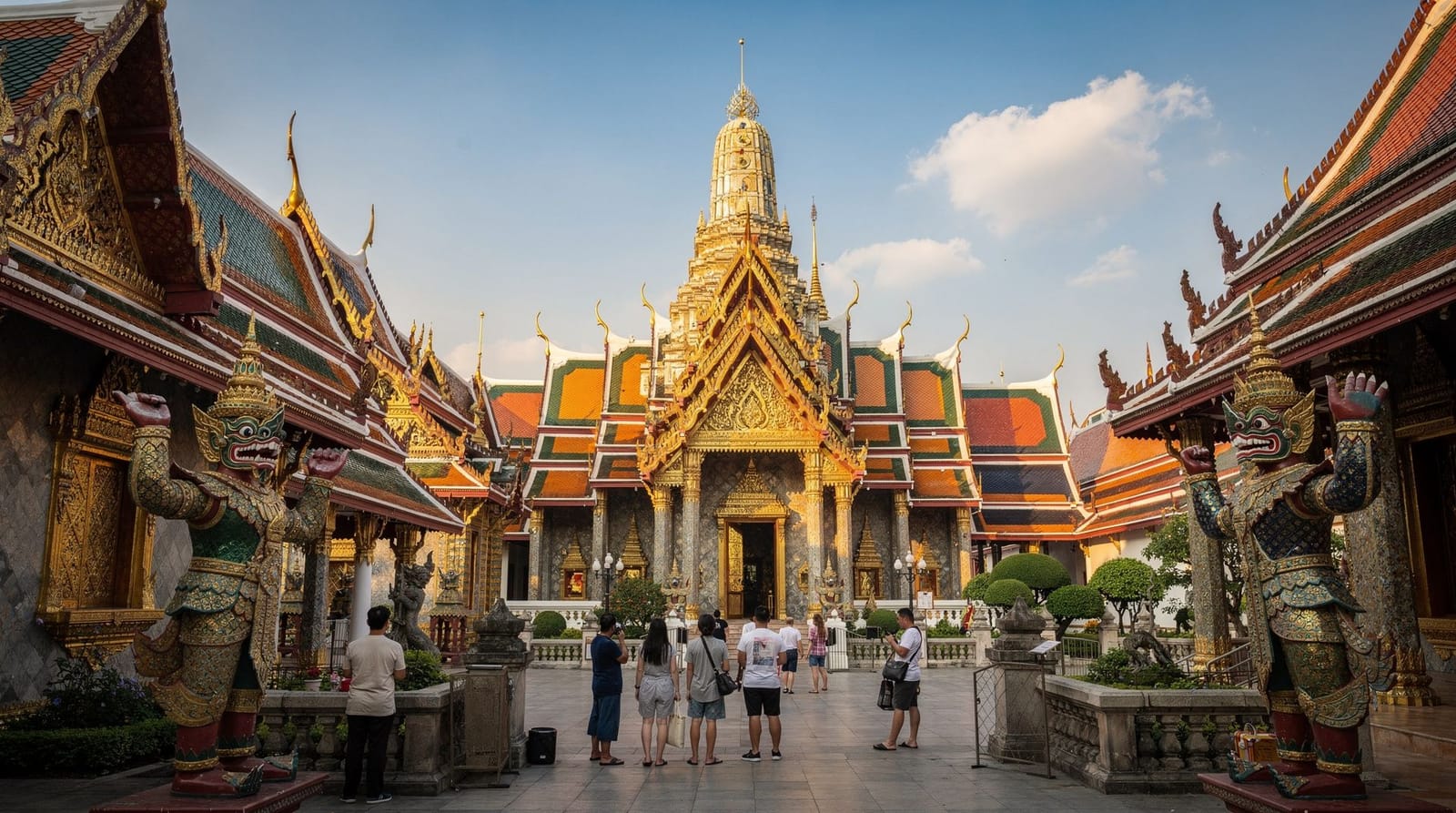
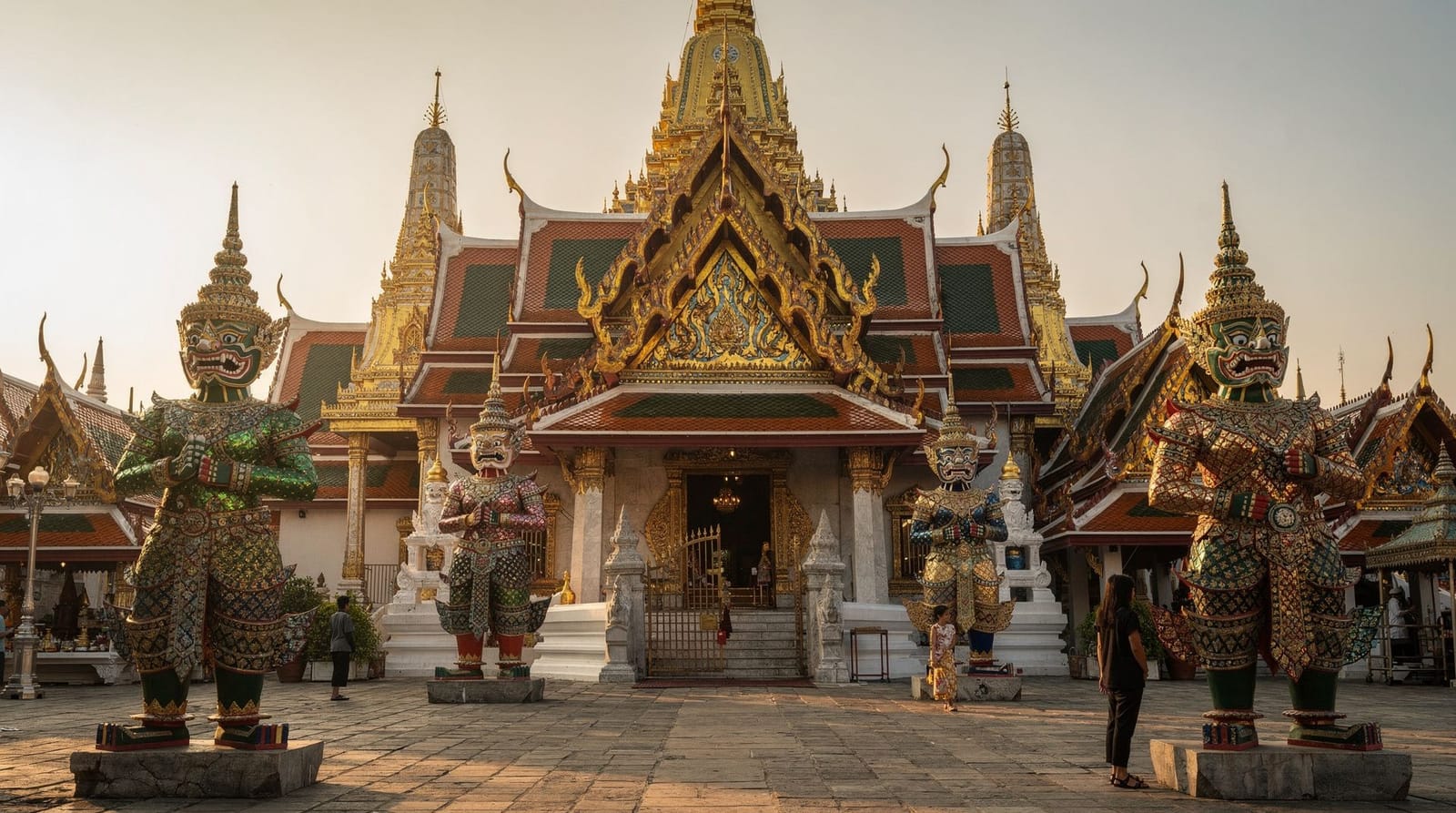
The Grand Palace complex is the headline. Built from 1782 as the royal residence, it is a walled city of throne halls, pavilions and the country’s most sacred temple — Wat Phra Kaew, home of the Emerald Buddha (actually carved from jade). Entry is 500 THB (about USD 15), which also covers Wat Phra Kaew and, on the same ticket, the Vimanmek and Dusit-area sights when open.
The dress code is enforced strictly and without exception: shoulders and knees must be covered, no see-through fabric, no ripped jeans, closed footwear is safest. They rent cover-ups near the entrance but queues are long — wear appropriate clothes and skip the hassle. Arrive at the 8:30 am opening; by 10 am the courtyards are packed and the heat off the stone is fierce.
A guide genuinely adds value here because the iconography, history and royal protocol are not self-explanatory. The Grand Palace, Wat Pho and Wat Arun sacred tour links the three temples with transport and context in one morning, which solves the navigation and the dress-code logistics at once. If you would rather move at your own pace but skip the ticket queue, the skip-the-line Grand Palace entry is the simplest option.
For everything on opening hours, what to see inside, and the dress code in detail, see the Grand Palace guide, the dress code guide and the Emerald Buddha guide.
Wat Pho — the reclining Buddha and the massage school
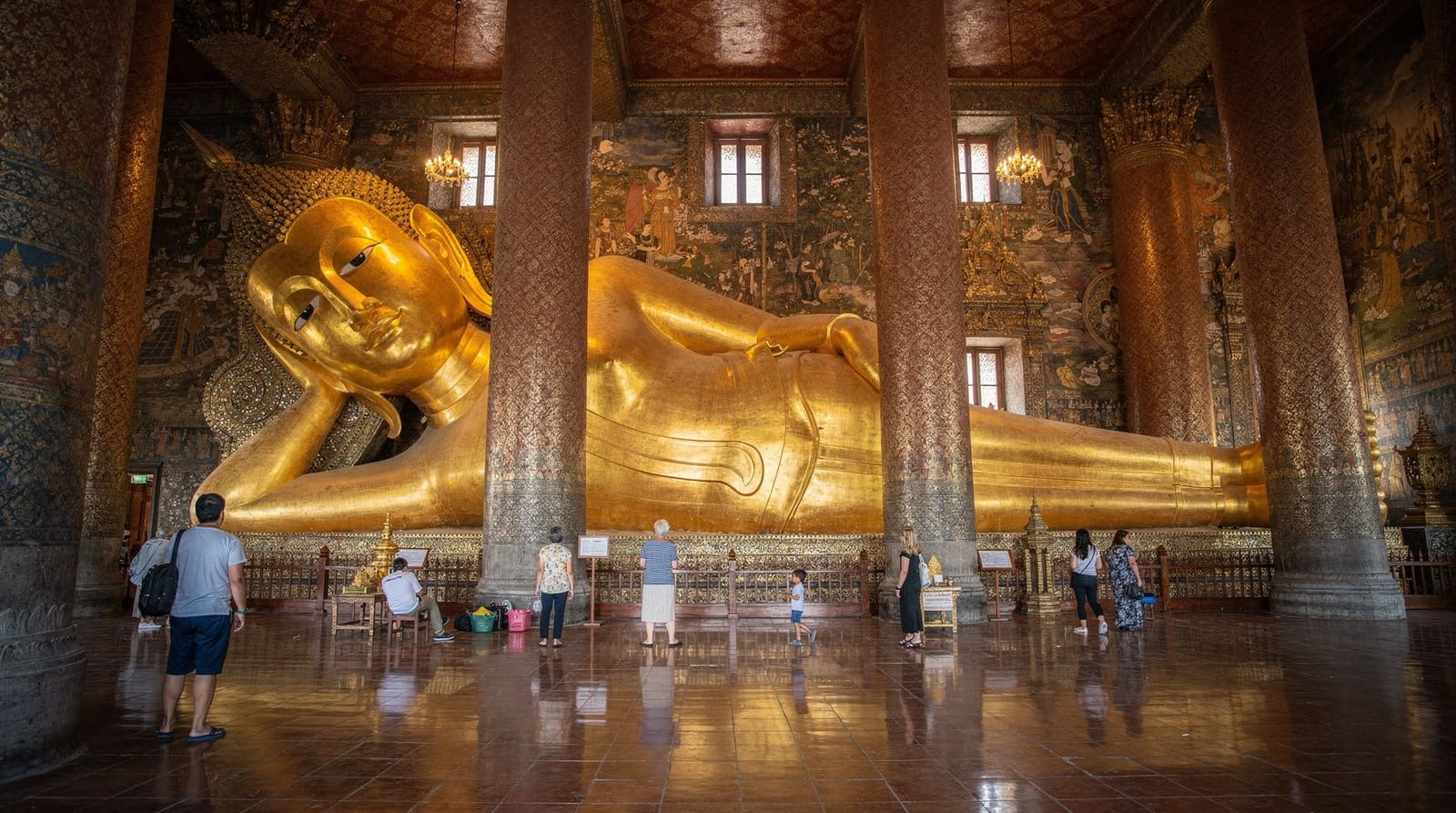
A 10-minute walk south of the Grand Palace, Wat Pho (officially Wat Phra Chetuphon) is calmer, cheaper (200 THB / about USD 6) and, for many visitors, more enjoyable. The reclining Buddha is 46 metres long and 15 metres high, gold-leafed, with mother-of-pearl soles depicting the 108 auspicious signs. Drop a coin in each of the 108 bronze bowls along the back wall for a small donation and a pleasant ringing soundtrack.
Wat Pho is also the home of traditional Thai medicine and massage — the temple ran Thailand’s first public university and still trains masseurs. You can get a genuine, no-frills Thai massage on site (around 480 THB for 30 minutes), which is a fine way to recover mid-temple-day. The Wat Pho guide covers the reclining Buddha, the chedis and the massage school in full. If you want to take Wat Pho slowly and self-guided, the Wat Pho reclining Buddha audio tour is good value.
Crossing to Wat Arun
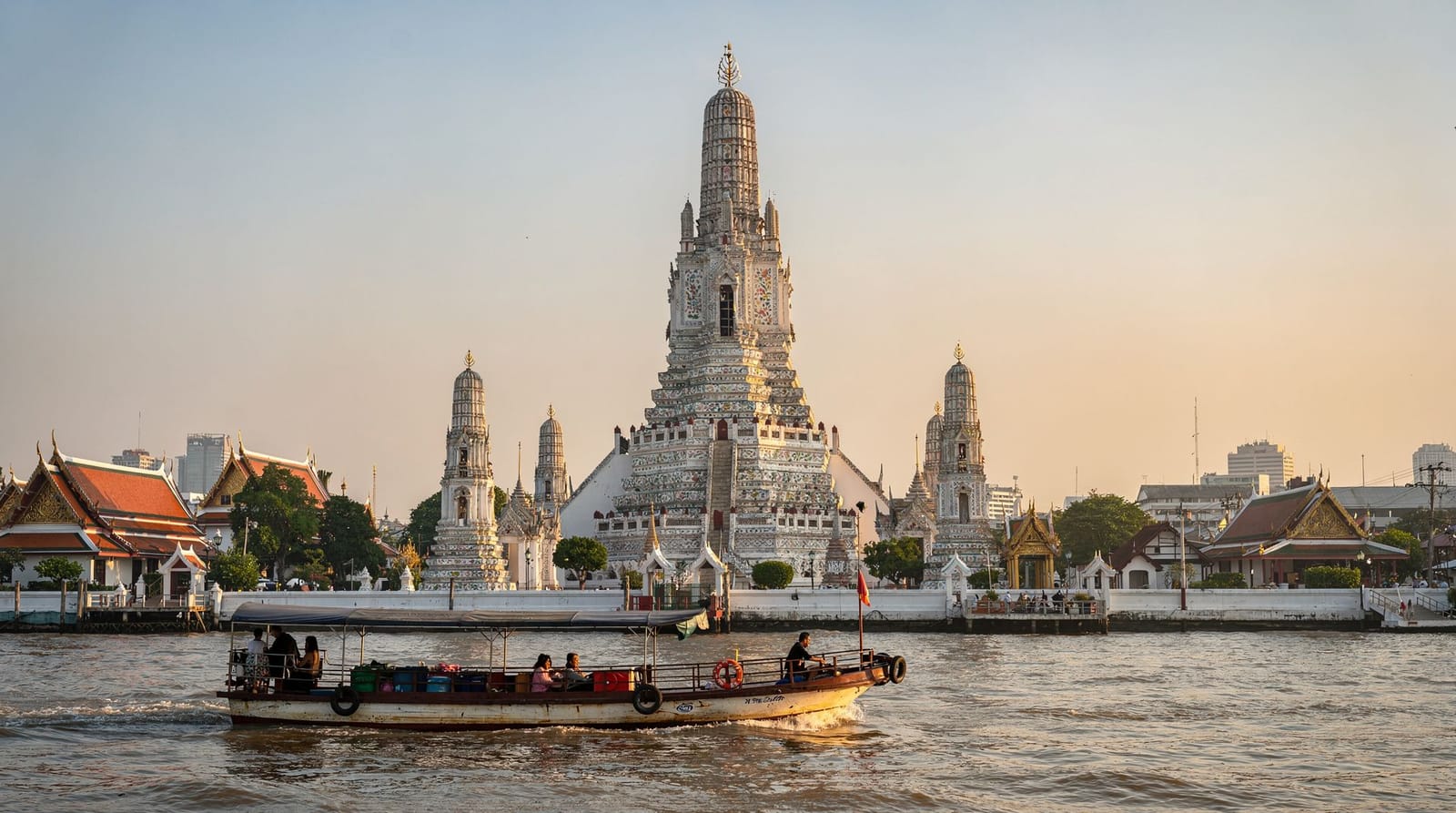
From Tha Tien pier behind Wat Pho, the cross-river ferry to Wat Arun costs 5 THB and takes three minutes. Wat Arun — the Temple of Dawn — is the steep, Khmer-style prang encrusted with broken Chinese porcelain that you will recognise from every Bangkok postcard. You can climb partway up the central tower for river views. It looks best in late afternoon light and at sunset from the riverside side. Full details are in the Wat Arun area page. For the whole three-temple loop on foot with a guide handling the river crossings, the three major royal temples walking tour is well organised.
A short history of Rattanakosin
When Ayutthaya fell to Burmese forces in 1767 and the short-lived Thonburi capital across the river proved impractical, Rama I chose this bend of the Chao Phraya to found a new capital in 1782, deliberately laying it out to echo Ayutthaya’s lost royal geography — a walled palace, a network of canals for defence, and temples built to project the new dynasty’s legitimacy. The name “Rattanakosin” (Krung Rattanakosin) means roughly “the city of the Emerald Buddha,” and the Chakri dynasty founded that year still occupies the throne today. Understanding this — that the Grand Palace was built to be a working seat of a very new monarchy, not an ancient relic — makes the site’s grandeur make more sense. For more on the religious and dynastic context, see the Buddhism in Bangkok guide, the culture guide and, for the practical etiquette of visiting a country that takes royal respect seriously, the monarchy and lese-majeste guide.
Grand Palace vs Wat Pho vs Wat Arun, compared
| Grand Palace & Wat Phra Kaew | Wat Pho | Wat Arun | |
|---|---|---|---|
| Entry fee | ~500 THB | ~200 THB | Modest fee |
| Time needed | 1.5–2 hours | 1–1.5 hours | 45 min–1 hour |
| Best time | 8:30 am opening | Late morning/early afternoon | Late afternoon/sunset |
| Crowd level | Busiest by far | Moderate | Lighter, busier at sunset |
| Signature feature | Emerald Buddha, royal architecture | 46 m reclining Buddha, massage school | Porcelain-encrusted prang, river views |
Doing all three in the order above — palace first, Wat Pho mid-morning, Wat Arun for late-afternoon light — matches the crowd patterns and the light at each site.
Vimanmek and the wider Dusit ticket
The 500 THB Grand Palace ticket is more valuable than most visitors realise: it also covers entry to the Vimanmek Mansion and other royal sights in the Dusit area, the world’s largest golden teak building and a calmer, greener contrast to the crowds at Wat Phra Kaew. The catch is that these sights keep separate, more limited opening hours and sit a taxi ride north of the old city, so most people never use this part of the ticket. If you have a second day and enjoy royal history without the crowds, it is worth the trip; check current opening status before setting out, as parts of Dusit close periodically for royal functions.
Beyond the big three
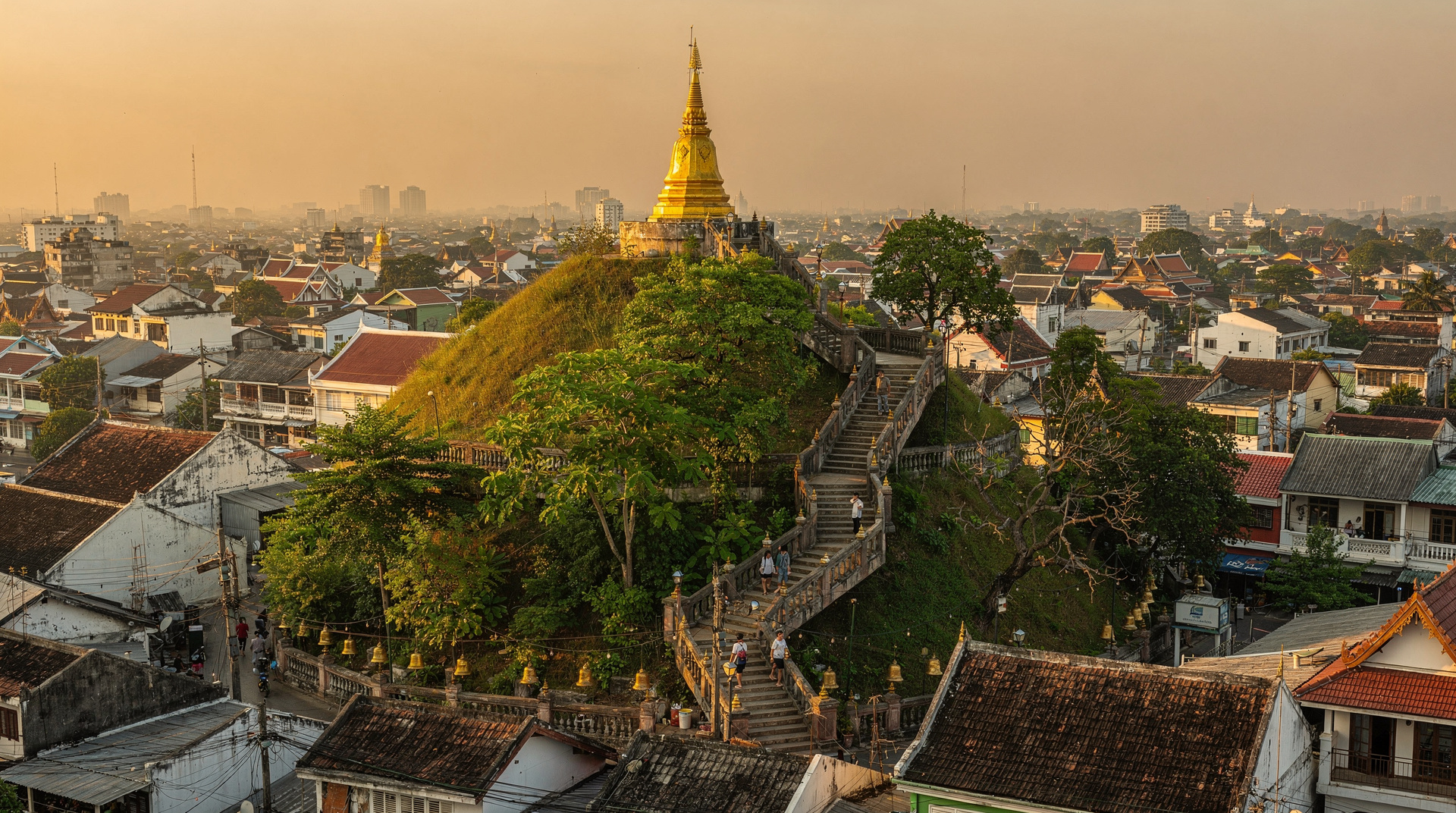
Rattanakosin rewards a slower wander. Sanam Luang, the royal ceremonial field north of the palace, is used for state occasions and kite-flying. The Lak Muang (City Pillar Shrine) marks the city’s symbolic founding point. Saranrom Park offers shade. To the northeast, the old city blends into the Golden Mount and Phra Nakhon area — Wat Saket’s gilded hilltop chedi, the Giant Swing and Wat Suthat are all a short tuk-tuk or 20-minute walk away. To the north, Khao San and Banglamphu provide the cheap food, cold beer and budget beds the temple zone lacks. A guided half-day city temples tour is a tidy way to thread these lesser sights together if you have only a morning.
Eating in the old city
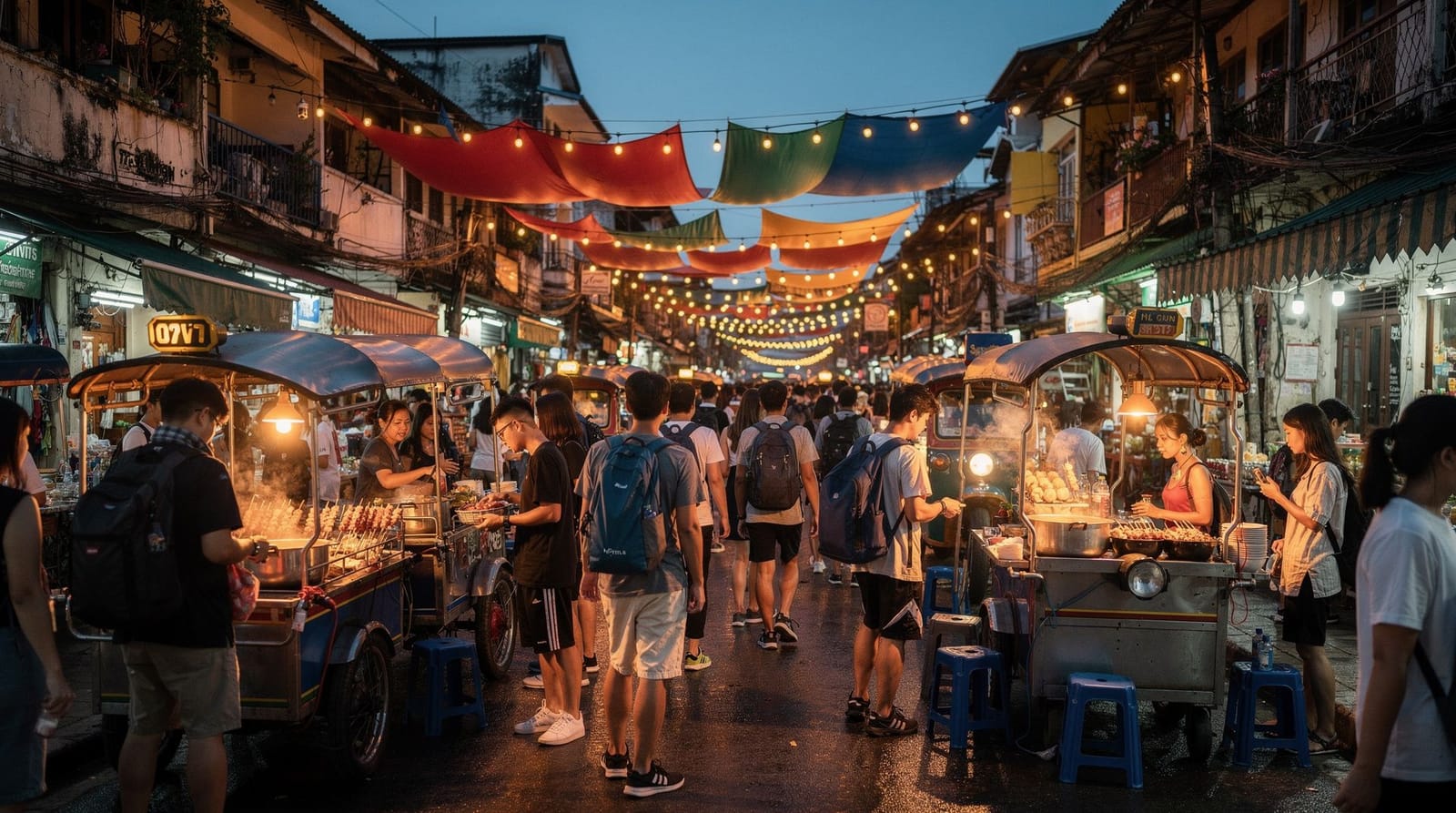
Rattanakosin is not a food destination on the level of Yaowarat, but you will not go hungry. Tha Tien market, behind Wat Pho, has dried-seafood shops and simple lunch stalls. The lanes around the palace sell coconut ice cream, grilled squid, som tam and excellent mango sticky rice in season (March to May is peak mango) — see the mango sticky rice guide. For a proper sit-down meal with a view, the rooftop spots facing Wat Arun across the river do sunset cocktails and Thai food at tourist prices but unbeatable views. Serious eaters should save their appetite for an evening crawl through nearby Chinatown.
Scams and how to sidestep them
The old city’s one persistent problem is the Grand Palace “closed today” scam. A friendly, well-dressed stranger near the palace gate tells you the palace is closed for a royal ceremony, a holiday, or until the afternoon, and helpfully suggests a tuk-tuk driver who will take you to “other temples” instead. The tuk-tuk then runs you through a circuit of gem shops and tailors where the driver earns commission and you get pressured to buy overpriced “investment” gemstones. The palace is almost never closed during posted hours.
The rules are simple: the Grand Palace is open daily 8:30 am–3:30 pm; ignore anyone who tells you otherwise; buy tickets only at the official window inside the gate; never accept a tuk-tuk “tour” offered to you near the palace; and never buy gems anywhere in Bangkok as an investment. For the full breakdown read the Grand Palace scam warning, the gem scam guide and the tuk-tuk scams guide.
Getting there and getting around
By MRT: Sanam Chai station (Blue Line) exits a five-minute walk from Wat Pho — this is the easiest arrival. The station itself, decorated like a temple interior, is worth a photo.
By river boat: The Chao Phraya Express orange-flag boat (about 16 THB) and the Blue Flag tourist boat (single ride or day pass) both stop at Tha Tien (Wat Pho) and Tha Chang (Grand Palace). Arriving by river is scenic and avoids traffic — see the Chao Phraya boats guide.
On foot: The three temples and the Golden Mount area are all walkable, though midday heat is punishing — pace yourself, carry water, and duck into temple halls to cool off.
By taxi/Grab: Easy to reach, but traffic around the palace is heavy late morning. Insist on the meter or use the Grab app — see the Grab, taxi and tuk-tuk guide.
For a structured plan that puts Rattanakosin first, the Bangkok temples itinerary, the first-timer itinerary and the simpler one-day itinerary all anchor day one here.
Frequently asked questions about Rattanakosin old city
How much time do I need for the Grand Palace, Wat Pho and Wat Arun?
A full but comfortable day. Start at the Grand Palace at 8:30 am opening (1.5–2 hours), walk to Wat Pho (1–1.5 hours including the massage school), then ferry to Wat Arun in the afternoon (45 minutes to an hour). Add lunch and you have a complete, satisfying day without rushing.
Is there a BTS or MRT station in the old city?
There is no BTS Skytrain in Rattanakosin. The MRT Blue Line’s Sanam Chai station is the closest rail option, five minutes from Wat Pho. Most visitors arrive by MRT, by Chao Phraya river boat to Tha Tien or Tha Chang, or by taxi/Grab.
What is the dress code for the Grand Palace and the temples?
Shoulders and knees must be covered at all three temples; the Grand Palace enforces this most strictly. No sleeveless tops, short shorts, ripped jeans or see-through fabric. Wear light long trousers or a long skirt and a top with sleeves, and bring closed shoes for the palace. Cover-ups are rentable at the gate but the queue wastes time.
Is the Grand Palace really closed sometimes, like people say at the gate?
Almost never during its posted hours of 8:30 am–3:30 pm. Anyone telling you it is closed for a ceremony or holiday and offering an alternative tuk-tuk tour is running the classic gem-shop scam. Walk to the official ticket window and check for yourself.
Can I visit Wat Arun on the same day, and how do I cross the river?
Yes — Wat Arun is directly across the Chao Phraya from Wat Pho. Take the cross-river ferry from Tha Tien pier (5 THB, about three minutes). Wat Arun photographs best in late afternoon and at sunset, so save it for last.
Where should I eat near the temples?
The old city has casual stalls and markets rather than destination dining. Try Tha Tien market behind Wat Pho, the coconut ice cream and mango sticky rice carts near the palace, or a riverside rooftop facing Wat Arun for sunset. For a serious food night, head to nearby Chinatown’s Yaowarat Road after dark.
Top experiences
Bookable activities with verified prices and instant confirmation on GetYourGuide.