Bangkok in 2 days: the honest two-day itinerary
Bangkok: Grand Palace, Wat Pho, Wat Arun Sacred & Local Tour
Two days in Bangkok is the sweet spot for a first visit or a long weekend: enough to cover the great temples and the river without rushing, plus a full second day for markets, Jim Thompson’s house and a rooftop sunset. Day one stays in the historic old city and Chinatown; day two moves to the modern, air-conditioned BTS districts. The key to enjoying both is honest pacing — Bangkok’s heat punishes over-packed schedules, so this plan builds in rest and indoor breaks rather than cramming a tenth sight into each afternoon.
| Best for | First-timers, weekend breaks, couples |
| Pace | Full but balanced — one world per day |
| Cost | Roughly 1,500–2,500 THB/person/day, excl. hotel |
| Getting around | Boats + Grab (day 1), BTS/MRT (day 2) |
| Best months | November–February; workable year-round with midday breaks |
| Day | Focus | Highlights |
|---|---|---|
| 1 | Old city and river | Grand Palace, Wat Pho, Wat Arun, Yaowarat or dinner cruise |
| 2 | Modern city | Chatuchak/Golden Mount, Jim Thompson House, Siam malls, rooftop sunset |
How to think about two days
Bangkok splits cleanly into two worlds. The old city (Rattanakosin) holds the Grand Palace, Wat Pho, Wat Arun and Chinatown — none of it on a train line, all of it best in the morning. The modern city — Siam, Sukhumvit, Silom — is wired to the BTS Skytrain and MRT, full of malls, markets and rooftop bars, and comfortable to move around in the afternoon heat. This itinerary gives day one to the old world and day two to the new one. If you have a third day, the 3-day itinerary adds a day-trip or a deeper neighbourhood. First-timers should also skim the first-timer itinerary for orientation.
Day 1 — Old city, river and Chinatown
Morning: Grand Palace and Wat Pho (08:30–12:00)
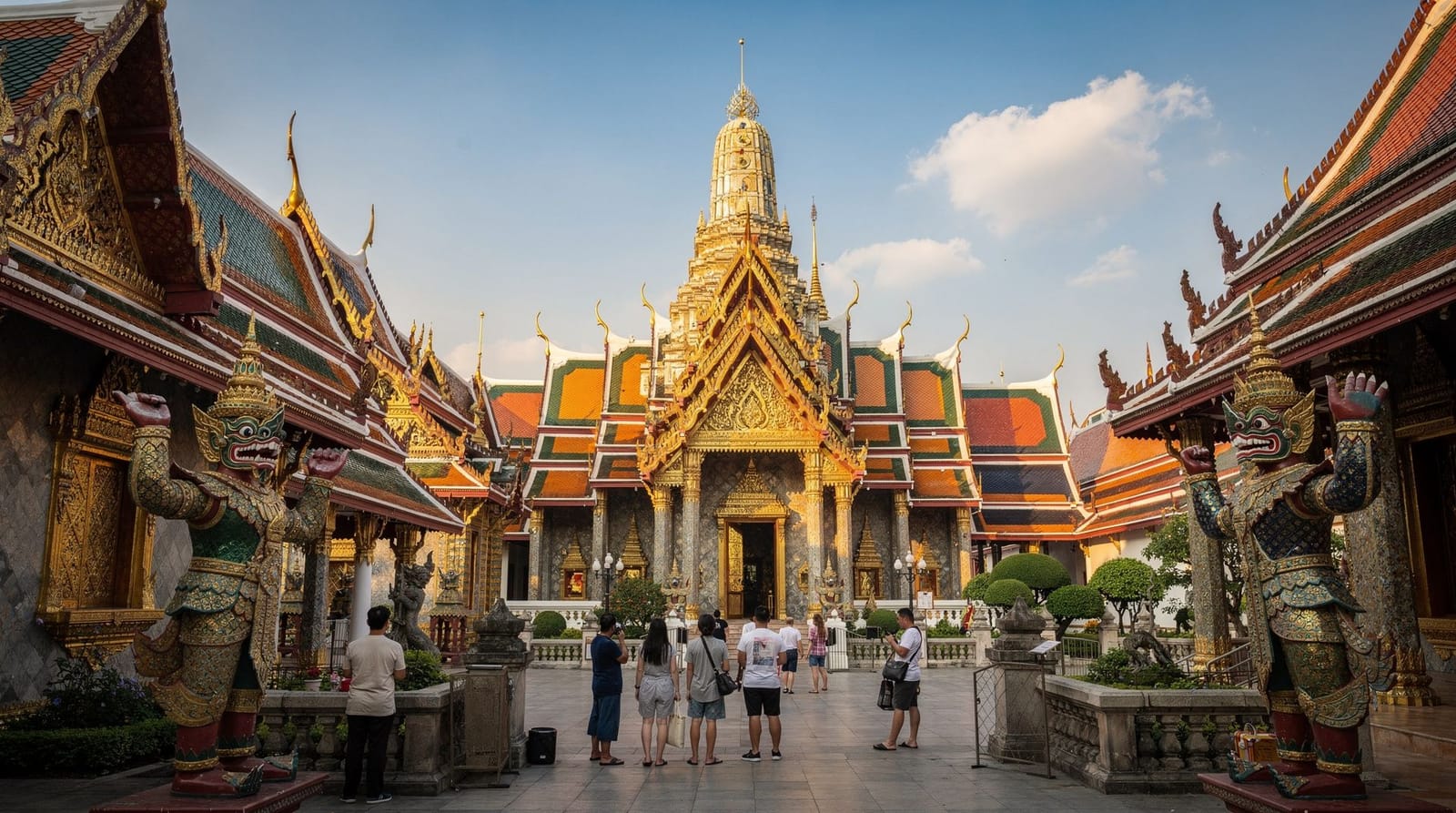
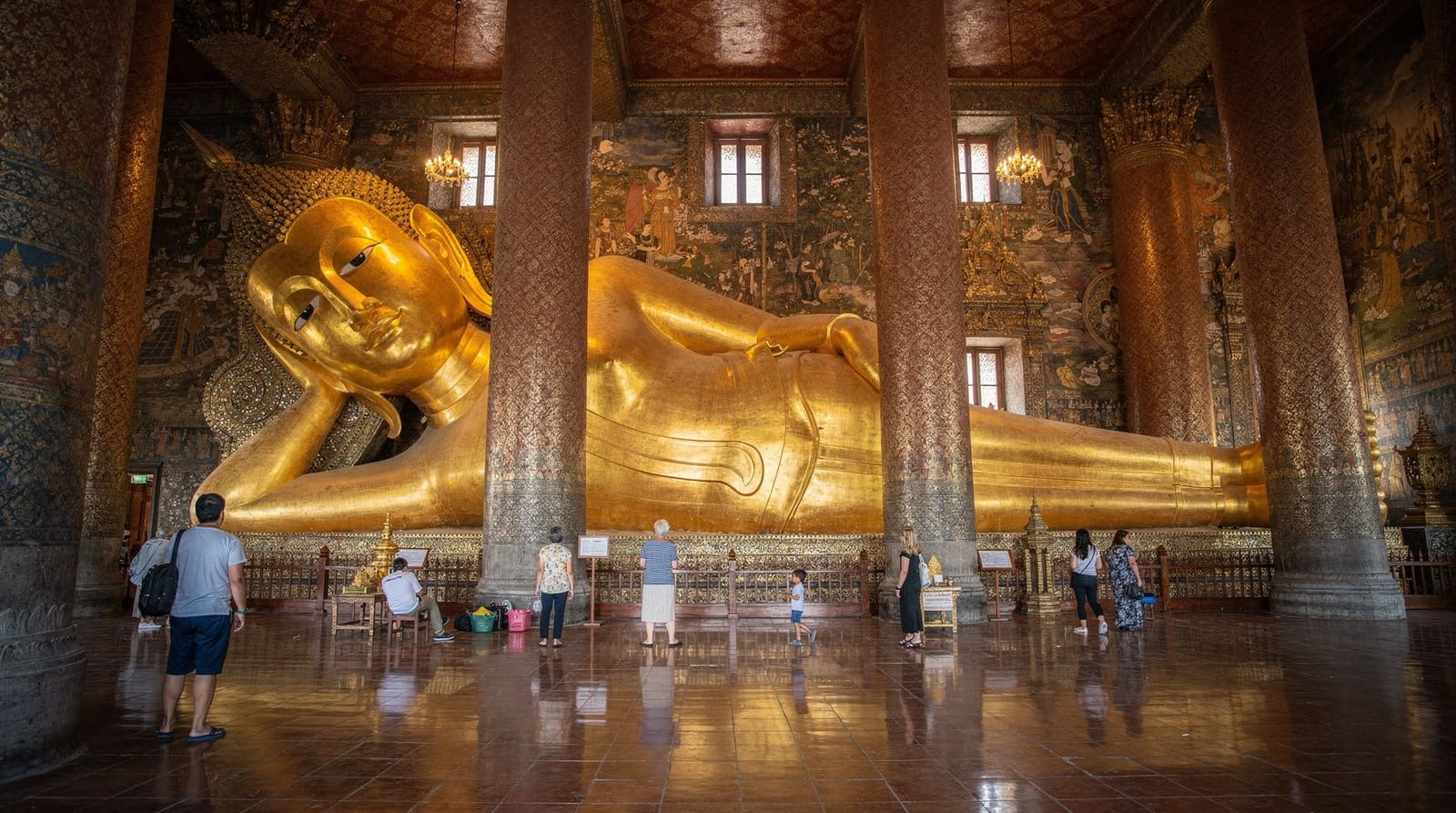
Start at the Grand Palace the moment it opens at 08:30 (500 THB, about USD 14). The first hour is the only calm one. Dress properly — covered shoulders and knees, no torn jeans — and ignore any tout outside claiming it is “closed for a ceremony”; that is the city’s classic scam, detailed in the Grand Palace scam warning. Give it 90 minutes, then walk ten minutes to Wat Pho (300 THB) for the giant Reclining Buddha. The Grand Palace guide and Wat Pho guide cover what to prioritise.
If you would rather have a guide handle tickets and context for all three old-city temples, a Grand Palace, Wat Pho and Wat Arun tour does exactly that in a single morning.
Midday: lunch and Wat Arun (12:00–15:00)
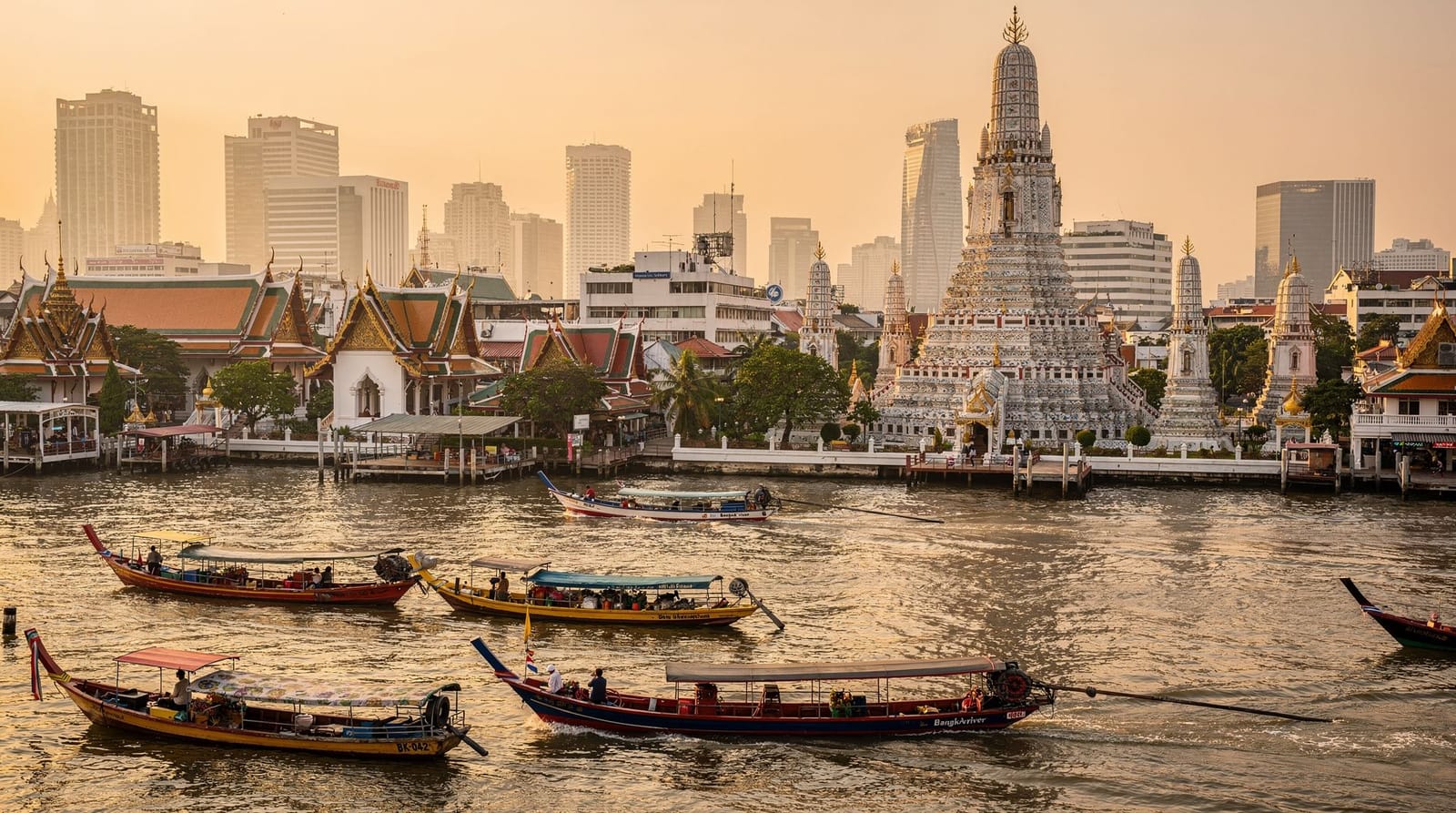
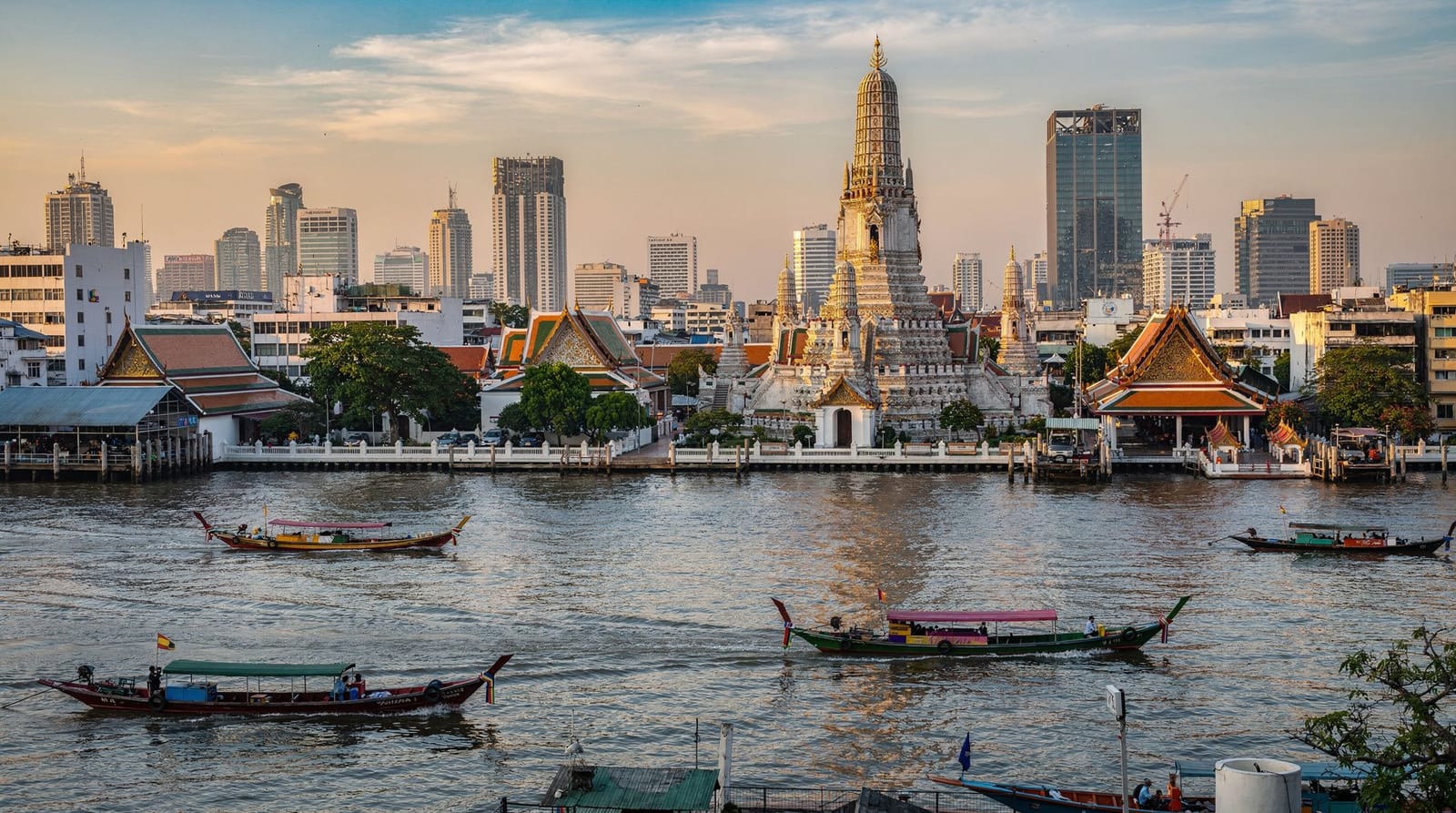
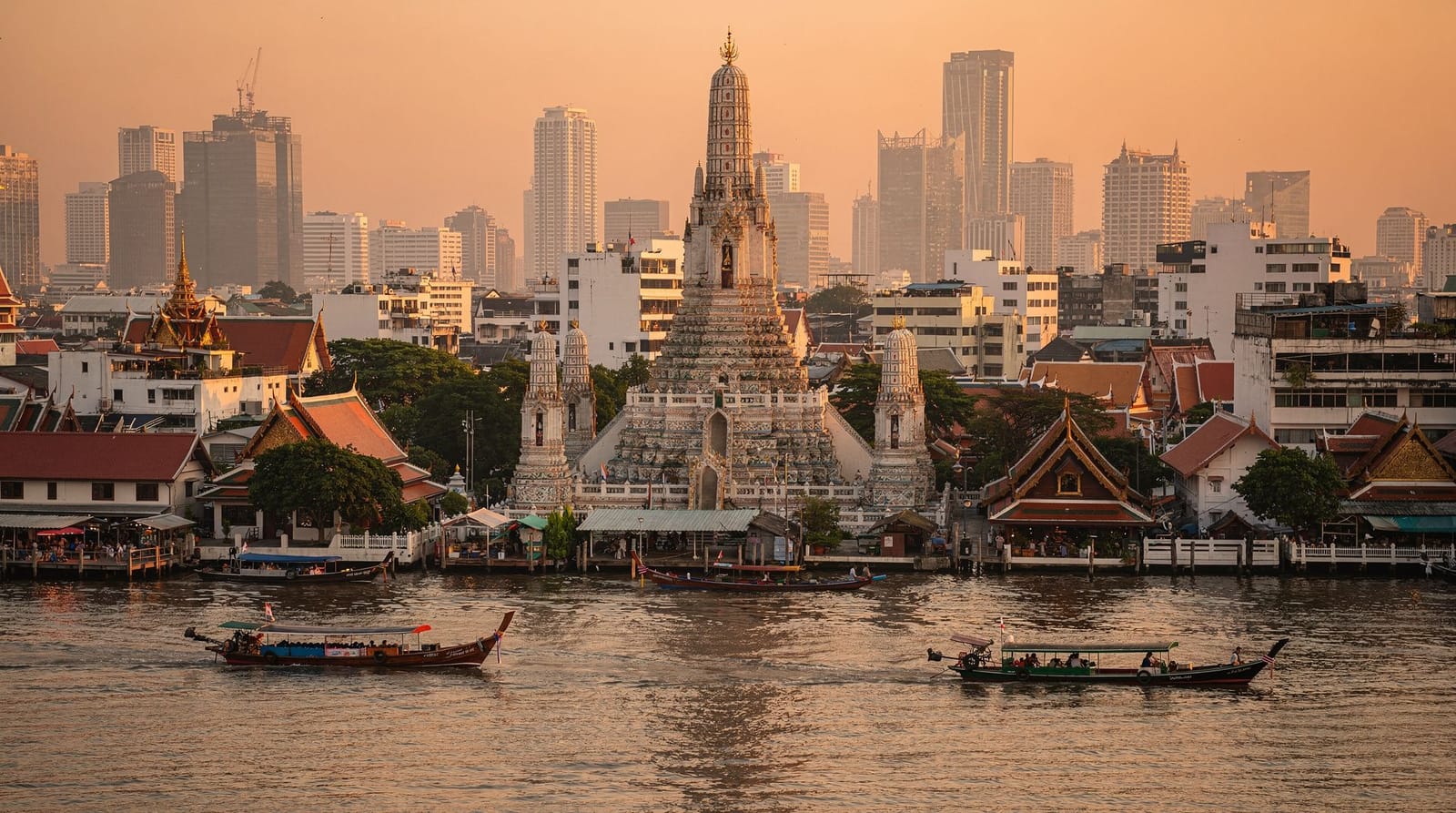
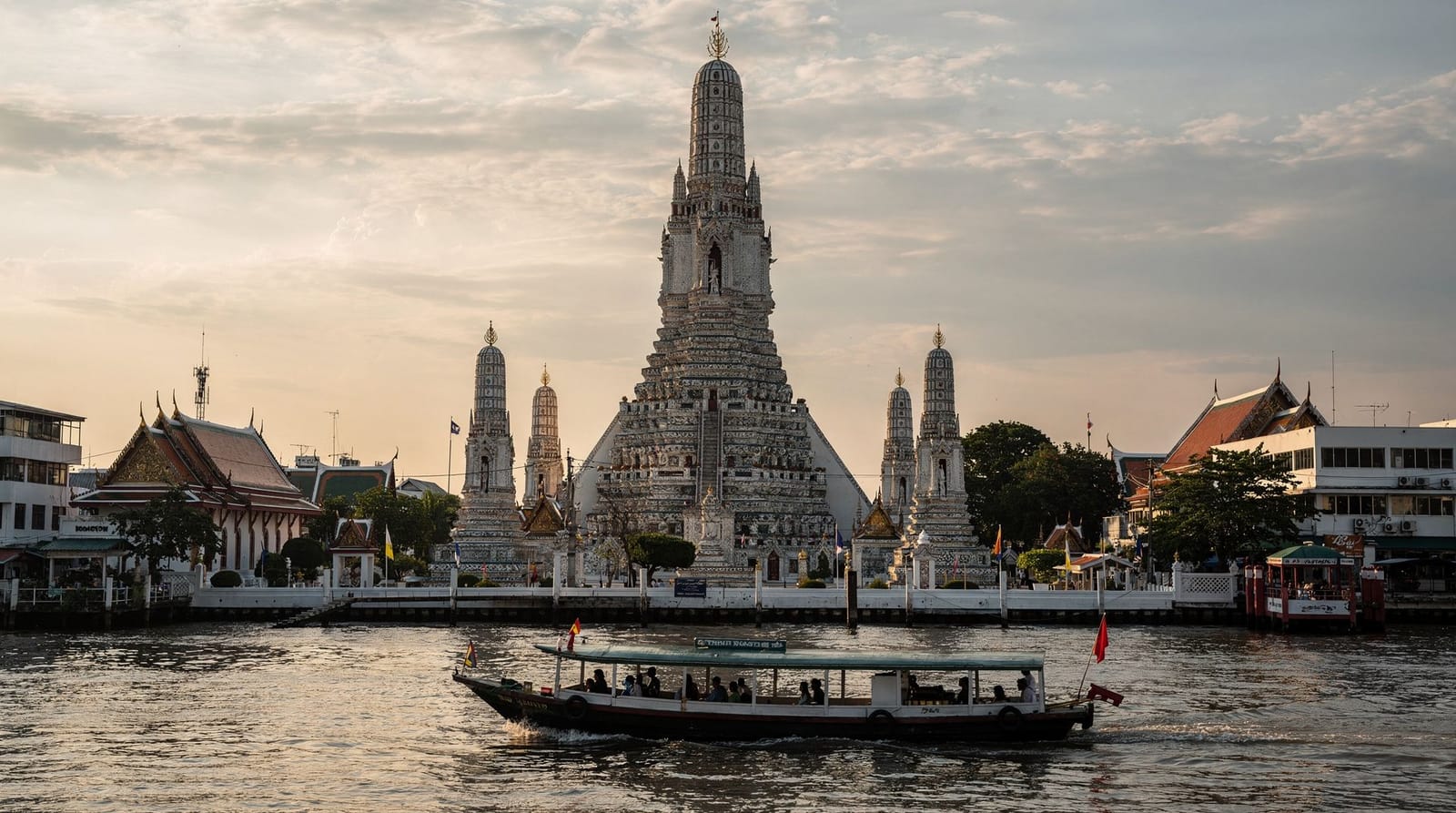
Eat near Tha Tien pier (boat noodles or pad krapow, 60–120 THB), then take the 5 THB cross-river ferry to Wat Arun (200 THB), the porcelain-clad Temple of Dawn. Climb the lower terraces for the view back across the river. The Wat Arun guide has the details. By mid-afternoon, head back to your hotel for a cold-shower break — the smartest move in any Bangkok day.
Evening: Yaowarat or a dinner cruise (18:00–21:30)
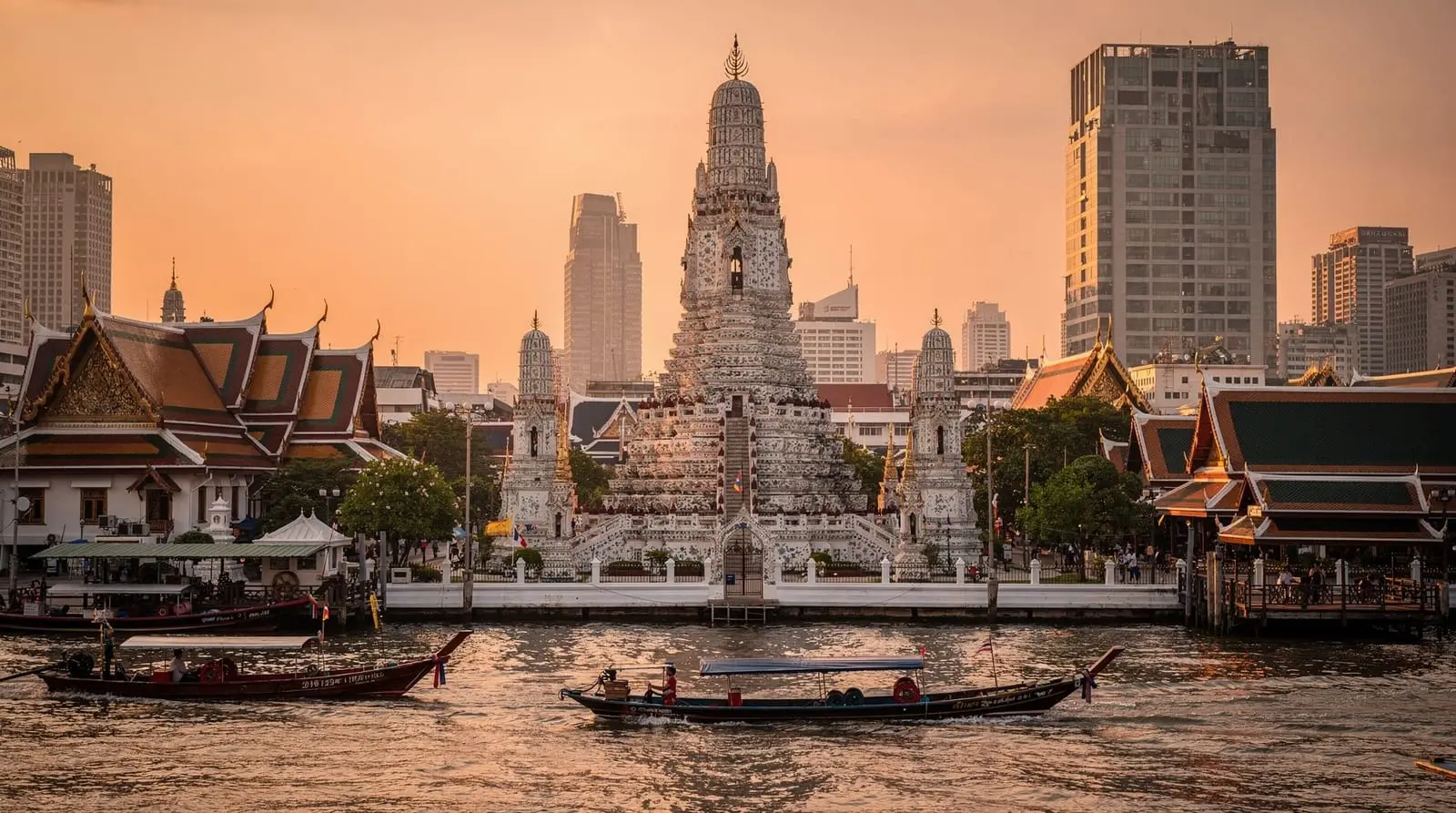
For dinner, choose your flavour of the river. Either dive into Chinatown (Yaowarat) for a street-food crawl — grilled prawns, kuay jab, mango sticky rice, around 250–400 THB; see the Yaowarat Chinatown food guide — or take a Chao Phraya dinner cruise past the floodlit Grand Palace and Wat Arun. A Chao Phraya dinner cruise is touristy but genuinely lovely at night, and reviewed honestly in Chao Phraya dinner cruise guide.
Day 2 — Markets, silk and the skyline
Morning: a market (08:00–12:00)
Your day-two morning depends on the day of the week. If it is a weekend, go to Chatuchak Weekend Market (free, open Sat/Sun) — 15,000 stalls of clothes, plants, art and food, reachable on the BTS to Mo Chit or MRT Kamphaeng Phet. Go early before the heat builds; see the Chatuchak guide. On a weekday, swap in Wat Saket (the Golden Mount) for a 318-step climb to a city panorama (100 THB), covered in the Wat Saket guide.
Midday: Jim Thompson House (12:30–14:30)
Take the BTS to National Stadium for the Jim Thompson House (200 THB), a cluster of teak houses and the story of the American who revived Thai silk before vanishing in 1967. The guided walk-through is included and air-conditioned relief is built in. A Jim Thompson House and Baan Krua tour adds the silk-weaving community next door. Read the Jim Thompson House guide first.
Afternoon: Siam malls or a massage (14:30–17:30)
You are now in the heart of modern Bangkok. Siam Paragon, Siam Center and MBK are a short walk apart at BTS Siam — escape the heat, browse, and eat cheaply at a food court. Alternatively, book a proper Thai massage (around 400–600 THB an hour); the Thai massage guide covers what to choose. The Siam Ratchaprasong area also holds the Erawan Shrine, a free, atmospheric Hindu shrine wedged between malls.
Evening: a rooftop sunset (18:00–21:00)
Finish high. Bangkok’s rooftop bars are a genuine highlight — the city sprawls below you and the heat finally relents. Options run from the famous (Vertigo, Sky Bar) to cheaper, friendlier spots; the best rooftop bars guide ranks them honestly. Most have a smart-casual dress code (no shorts or flip-flops). Drinks run 350–550 THB. If you would rather climb than drink, the Mahanakhon SkyWalk glass-floor deck is the alternative, covered in Mahanakhon SkyWalk guide.
Getting around in two days
Day one is boat and Grab territory — the old city has no train. Use the orange-flag Chao Phraya Express Boat (16 THB) up and down the river and a Grab car to reach Rattanakosin. Day two is BTS and MRT all the way: fast, cheap (16–62 THB per ride), air-conditioned and signposted in English. Buy a single-ride ticket each time or, if you will ride a lot, a stored-value Rabbit Card. The getting around Bangkok guide ties it together. Avoid tuk-tuks that quote flat tour prices — see tuk-tuk scams.
Where to eat across two days
- Old city lunch: boat noodles or pad krapow near Tha Tien (60–120 THB)
- Chinatown dinner: Yaowarat street stalls (250–400 THB)
- Siam lunch: the food courts under Siam Paragon or MBK (cheap, vast, air-conditioned)
- Splurge: a riverside dinner at a hotel terrace or the dinner cruise
For a fuller picture, the what to eat in Bangkok and Bangkok street food guide cover the essentials.
Where to stay for a two-day trip
Where you base yourself shapes how smoothly two days run. For a first short visit, two areas make sense. Silom/Sathorn puts you on both the BTS and MRT, close to the river and the rooftop bars, with a dense mix of hotels at every price. Sukhumvit (around Asok, Phrom Phong or Nana) is the most connected and convenient, packed with hotels, malls and restaurants on the BTS and MRT interchange. Both let you reach the old city by Grab in 20–30 minutes and the modern sights in minutes. Avoid basing yourself out in the old city itself for a two-day trip — it is atmospheric but poorly served by trains, which costs you time. The where to stay in Bangkok and Bangkok neighborhoods guide break down the districts in full.
A realistic two-day timeline
To keep the pacing honest, here is the clock:
Day 1: 08:30 Grand Palace; 10:45 Wat Pho; 12:00 lunch at Tha Tien; 13:30 ferry to Wat Arun; 15:00 hotel rest; 18:00 Yaowarat or dinner cruise.
Day 2: 08:30 Chatuchak (weekend) or Golden Mount (weekday); 12:30 Jim Thompson House; 14:30 Siam malls or a massage; 18:00 rooftop sunset.
The built-in afternoon rest on day one and the air-conditioned indoor blocks on day two are deliberate. Two days is enough to feel you have seen Bangkok properly only if you do not try to bolt a fifth thing onto either afternoon. Pick the headline, do it well, and let the evenings breathe.
Making the most of each district
Two days forces choices, so it helps to know what each area you’ll touch actually offers. Rattanakosin (day-one morning) is the royal old island — temples, the National Museum, and the lanes of amulet sellers near the river; it rewards slow walking but has no shade or trains, so do it early. Chinatown (Yaowarat) is at its best from dusk, when the gold shops glow and the woks fire up; the daytime version is a quieter tangle of herbal-medicine halls and market stalls worth a wander if you have an hour (Chinatown Bangkok guide). Siam (day two) is the modern retail heart — three connected mega-malls, the Erawan Shrine, and Jim Thompson’s house a short walk away. If you finish day two with energy to spare, Silom comes alive at night with its market and bars, and Sukhumvit offers the city’s deepest run of restaurants. The Bangkok neighborhoods guide maps how they connect.
If you only do one big thing each day
The honest heart of a two-day plan is choosing one non-negotiable per day and letting everything else flex around it. On day one, that is the Grand Palace — nothing else in Bangkok matches it, and it must be a morning visit. On day two, the non-negotiable depends on you: Chatuchak if it’s a weekend and you love markets; Jim Thompson House if you want culture in comfort; or simply a rooftop sunset if the trip has worn you down. Build the rest of each day loosely around that anchor, and you will leave Bangkok feeling you saw it rather than chased it. The things to do in Bangkok and top attractions guides help you pick.
A note on the heat and the seasons
Bangkok runs hot year-round, but how hot depends on when you come. November to February is the cool, dry season — the most comfortable for a packed two days, with mornings that are genuinely pleasant. March to May is brutally hot (often 38 °C+), so lean harder on the indoor middays. June to October is the rainy season, with short, heavy afternoon downpours that are easy to wait out in a mall or cafe but can snarl traffic. Whatever the month, the same rule applies: sightsee in the cool hours, retreat indoors at midday, and carry water. See best time to visit Bangkok and Bangkok weather month by month.
Packing and prep for a two-day trip
Because this itinerary swings between a dress-code-strict temple morning and an air-conditioned mall afternoon, pack for both extremes. Carry a light long-sleeve layer and long trousers or a skirt for day one’s temples (what to pack for Bangkok), plus something smart-casual for the day-two rooftop, since most enforce no shorts or flip-flops. Sort a SIM or eSIM on arrival so Grab and maps work from the first taxi ride, and check your visa and TDAC status before you fly — both are easy to overlook on a short trip.
If it rains on either day
A short, heavy downpour is common outside the cool season and rarely derails a two-day plan if you know where the shelter is. On day one, the covered viharns at the Grand Palace and Wat Pho, or a riverside restaurant near Tha Tien, ride out a shower easily; the open-air ferry to Wat Arun is the one weak link, so check the sky before queuing. On day two you are almost entirely indoors already — the malls, Jim Thompson House and a rooftop with a covered section all shrug off rain. If a storm rolls in right at rooftop time, most venues simply move guests to a covered section rather than closing, so don’t cancel the plan outright before checking. See Bangkok in the rain for a season-by-season read on how much this actually affects a short visit.
Frequently asked questions about two days in Bangkok
Is two days enough for Bangkok?
Two days covers the headline temples, the river and one full modern-city day with markets and a rooftop. It is a solid first taste. For day-trips like Ayutthaya or the floating markets, you need a third day or more.
Should I do the temples on day one or day two?
Day one. The old-city temples close by mid-afternoon and are most pleasant early. Save the air-conditioned, BTS-connected modern city for day two when the heat builds.
What if I am here on a weekday and miss Chatuchak?
Chatuchak only runs Saturday and Sunday. On a weekday, swap in the Golden Mount (Wat Saket), the Jim Thompson House, or the Asiatique riverside night market instead. The Bangkok markets guide lists weekday options.
Is a dinner cruise worth it?
For a first visit, yes — seeing the Grand Palace and Wat Arun floodlit from the river is memorable, even if the buffet is average. Pick a reputable operator and book ahead. The dinner cruise guide compares them honestly.
How much should two days cost?
Excluding your hotel and flights, budget roughly 1,500–2,500 THB per person per day (about USD 42–70) covering temple tickets, food, transport and a couple of drinks. Street food and BTS keep it low; rooftop bars and cruises push it up. See Bangkok travel costs.
Do I need to book the Grand Palace in advance?
No — you buy tickets at the gate. But arrive at 08:30 opening to beat the crowds and the worst heat, and dress to the code so you are not turned away. A guided tour can save queue time if you prefer.
Top experiences
Bookable activities with verified prices and instant confirmation on GetYourGuide.