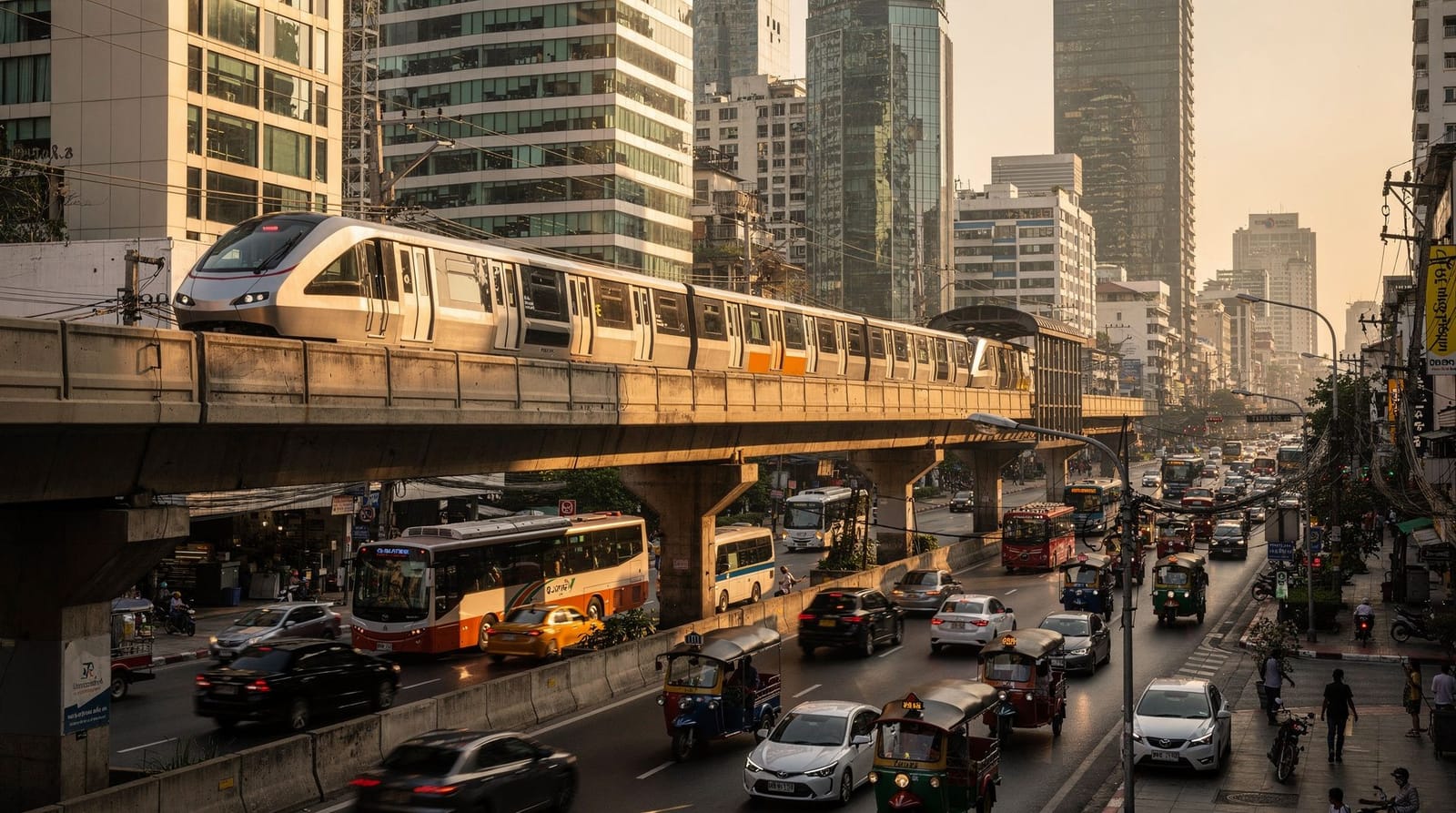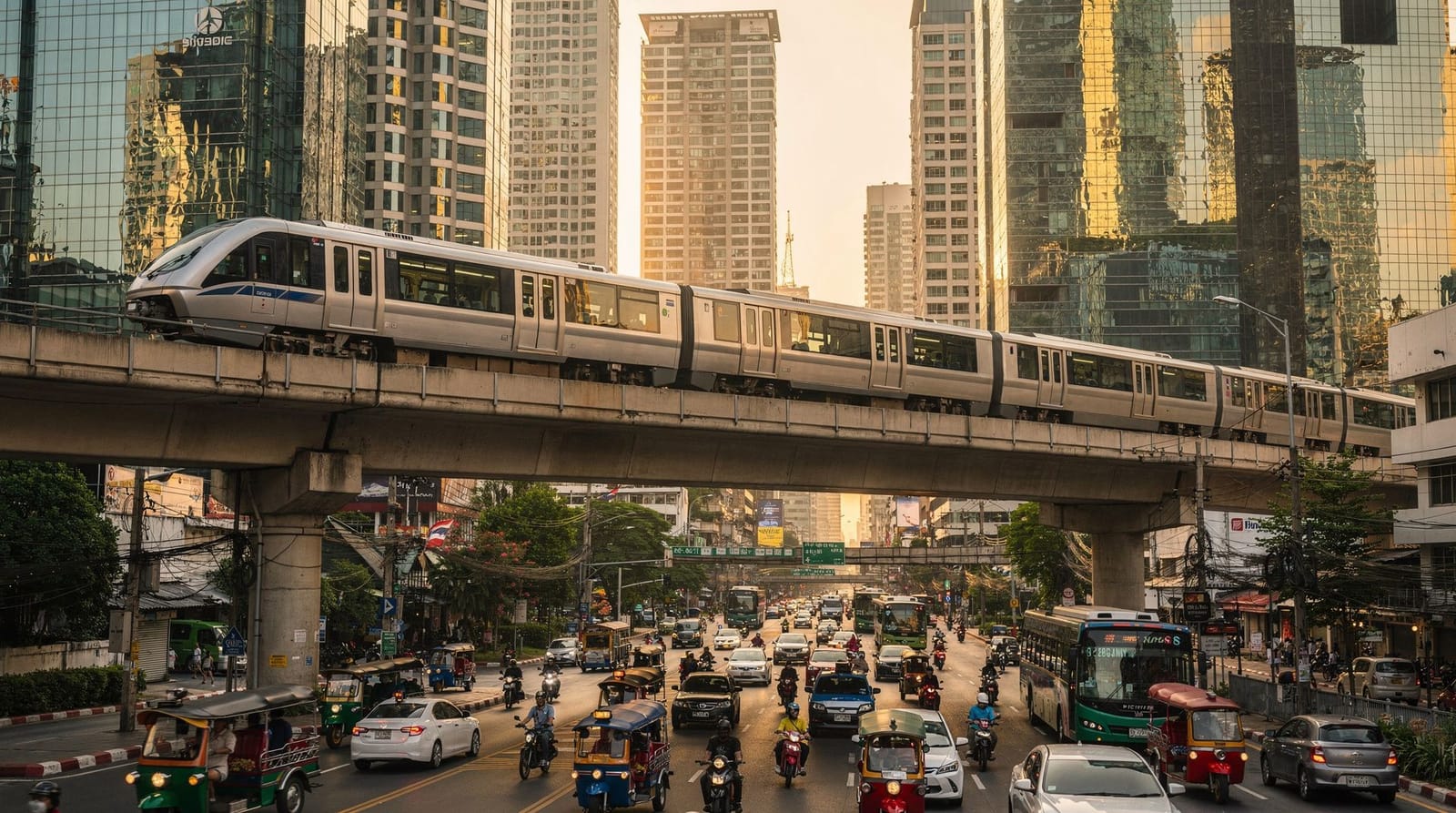
Chao Phraya river boats: flags, piers and fares explained
Bangkok: Chao Phraya River Hop-On Hop-Off Boat Pass
How do the Chao Phraya river boats work?
The Chao Phraya Express Boat runs up and down Bangkok's main river, with services distinguished by coloured flags. Orange-flag boats are the cheapest (about 16 THB flat) and the most useful for visitors, stopping at most piers including the Old City temples. The blue-flag tourist boat costs more but adds English commentary and a hop-on-hop-off day pass. Boats depart from Sathorn (Central) Pier, directly below Saphan Taksin BTS station.
The Chao Phraya is Bangkok’s original highway, and its express boats remain the smartest, most scenic and cheapest way to reach the city’s greatest sights — the Grand Palace, Wat Pho, Wat Arun, the flower market and Chinatown all cluster along its banks. Once you crack the flag-colour code and learn a handful of pier numbers, the river becomes the easiest part of getting around Bangkok, completely bypassing the road traffic.
This guide decodes the flags, lists the piers that matter, gives real fares, and tells you exactly which boat to take for each temple. It pairs with the getting around Bangkok overview and the deeper-dive Chao Phraya river boats neighbourhood guide.
| Where | Sathorn Pier, below Saphan Taksin BTS, to the Old City and Chinatown piers |
| Cost | Orange-flag express ~16 THB flat; blue-flag tourist boat ~30 THB single or ~150–200 THB day pass |
| Time needed | 10–40 minutes depending on pier, plus waiting |
| Getting there | BTS Silom Line to Saphan Taksin, walk down to the pier |
| Best time | Before 09h00 or after 16h00, away from commuter rush hour |
Start at Sathorn Pier
Almost every visitor’s river journey begins at the same place: Sathorn (Central) Pier, which sits directly beneath Saphan Taksin BTS station on the Silom Line. Step off the Skytrain, walk down the stairs, and you’re at the water. This is the great convenience of Bangkok’s transport — the elevated train hands you straight to the river boats.
From Sathorn Pier, boats head upriver (north) toward the Rattanakosin Old City, the temples and Chinatown, and downriver (south) toward Asiatique and Iconsiam. Piers are numbered with an N (north of Sathorn) or S (south) prefix and signed in English.
Decode the flags
The boats look similar, but the flag on the roof tells you the service type — and getting on the wrong one means either skipping your pier or paying more than you need to.
- Orange flag — the visitor’s best friend. The all-day local express, a flat ~16 THB regardless of distance. It stops at most piers, including all the temple stops, and runs frequently from morning to early evening. For independent sightseeing, this is the boat to take.
- No flag (local line) — the cheapest and slowest. Stops at every pier; even cheaper than orange, but limited operating hours and slower. Fine if your pier isn’t served by the express.
- Green-yellow and yellow flags — commuter expresses. Faster, but they skip many piers and run mainly at rush hour. Easy to catch out a visitor who boards expecting a temple stop that the boat sails straight past. Check the pier-stop list before boarding.
- Blue flag — the tourist boat. A hop-on-hop-off service with English commentary, a clear printed route, and a day pass. More expensive but designed for sightseeing.
When in doubt, take the orange flag — it covers the temples and costs almost nothing.
The piers that matter for sightseeing
You only need to know a handful of the numbered stops:
- Sathorn / Central Pier (CEN) — the BTS interchange and your starting point.
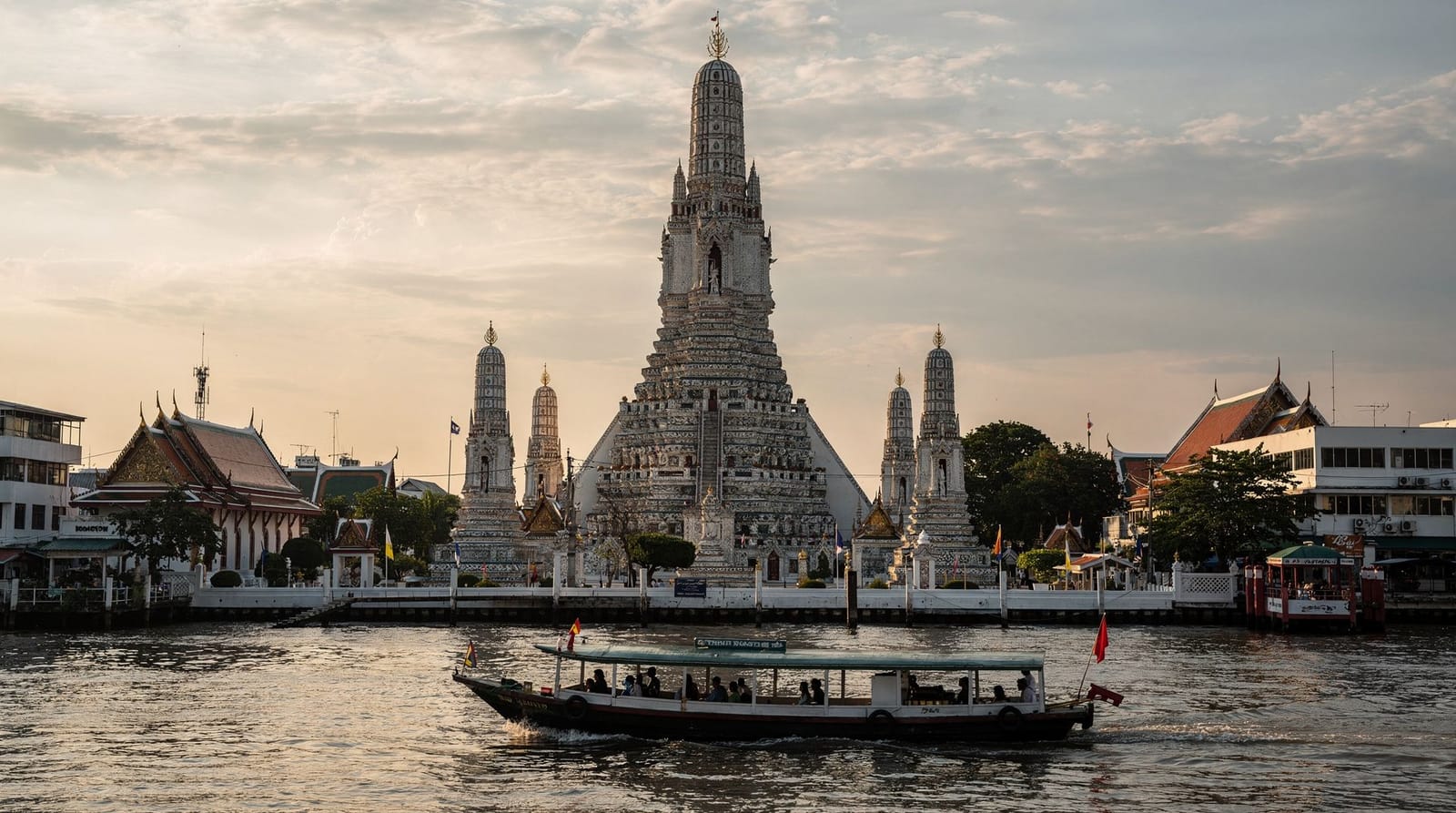
- Tha Tien (N8) — for Wat Pho (a short walk) and the cross-river ferry to Wat Arun.
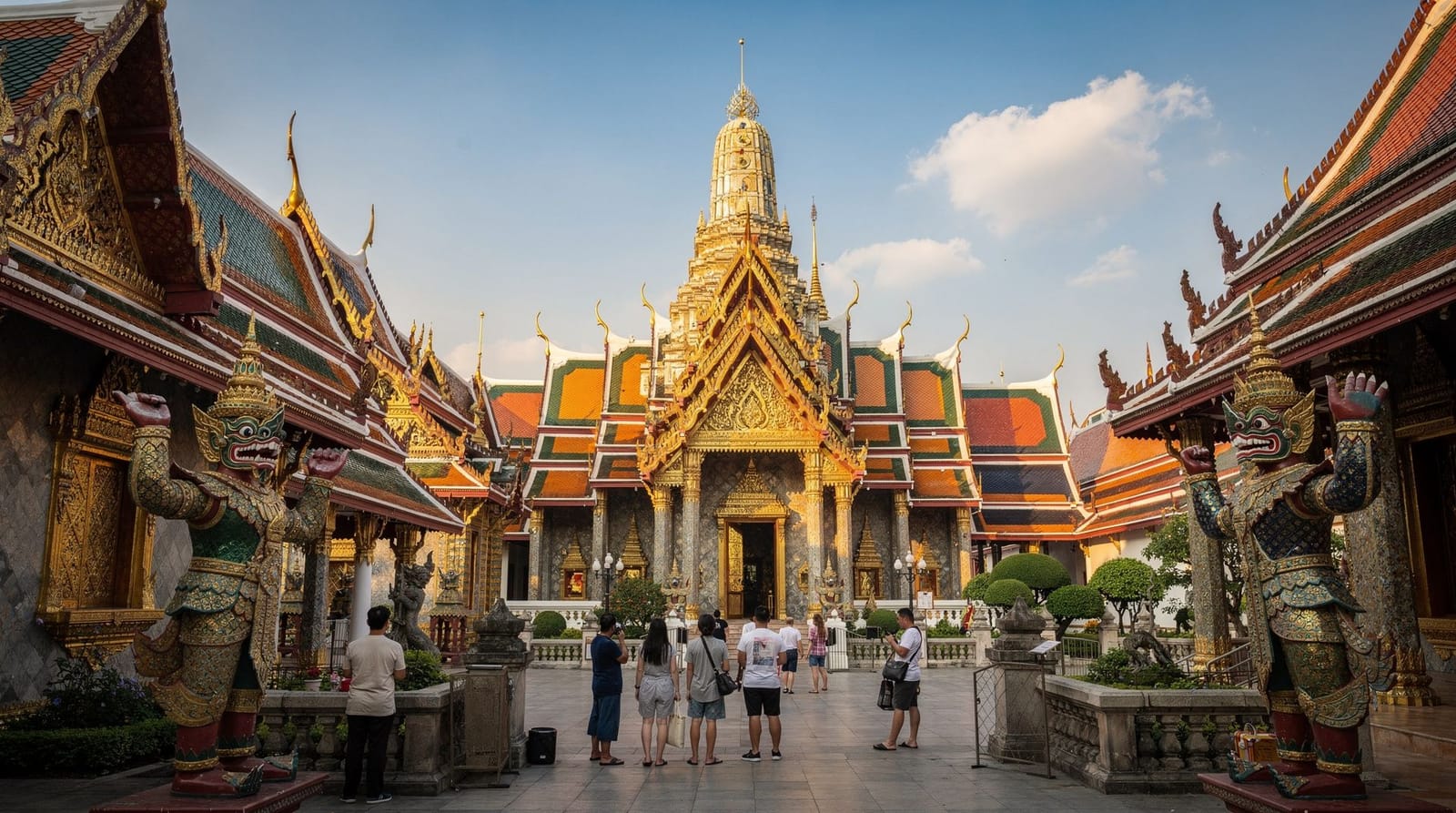
- Tha Chang (N9) — for the Grand Palace and Wat Phra Kaew, a few minutes’ walk inland.
- Tha Phra Chan / Maharaj (N10–N11) — for the Maharaj riverside complex, Thammasat University and the amulet market.
- Tha Phra Arthit (N13) — for Khao San Road and the Banglamphu backpacker district.
- Ratchawong (N5) — for Chinatown / Yaowarat.
- Pak Khlong Talad — for the 24-hour flower market.
- Iconsiam / Asiatique — downriver, served by free shuttle boats from Sathorn for the malls and the night market.
How to ride and pay
Boarding is brisk — the boats pull in, you step on quickly, and they’re off again within seconds, so be ready at the pier edge. On the orange-flag and local boats, a conductor moves through the boat collecting fares with a coin tube; tell them your destination pier and pay in coins or small notes. On the tourist boat you show your ticket or pass.
The boats can be crowded and the river choppy from passing barges, so hold the rail when standing, especially as the boat docks. There are no doors — keep bags secure and don’t lean out. It’s all part of the charm, but it rewards a little attention.
Which boat for a temple day
For most visitors doing the classic Old City temple circuit, the move is: BTS to Saphan Taksin → orange-flag boat from Sathorn Pier → off at Tha Tien (N8) for Wat Pho → cross-river ferry to Wat Arun → back across and one stop up to Tha Chang (N9) for the Grand Palace. Cheap, scenic, traffic-free.
If you’d rather not juggle flags and piers, the blue-flag tourist boat simplifies everything into a single day pass with commentary. A Chao Phraya hop-on-hop-off river boat day pass lets you ride unlimited between the main sights and dip on and off at your own pace — convenient for first-timers and families who value ease over saving a few baht.
For an even more all-in-one approach, a combined hop-on-hop-off boat and bus day pass bundles the river with a sightseeing bus to reach inland attractions in one ticket.
The cross-river ferries
Separate from the express boats are the cross-river shuttle ferries — small, frequent boats that simply shuttle straight across the river between facing piers. The essential one for visitors links Tha Tien (N8) with the Wat Arun side on the Thonburi bank. It costs only a few baht, runs constantly, and takes a couple of minutes. This is how everyone reaches Wat Arun, which sits across the water from the main Old City pier.
Beyond the express boats: canals and dinner cruises
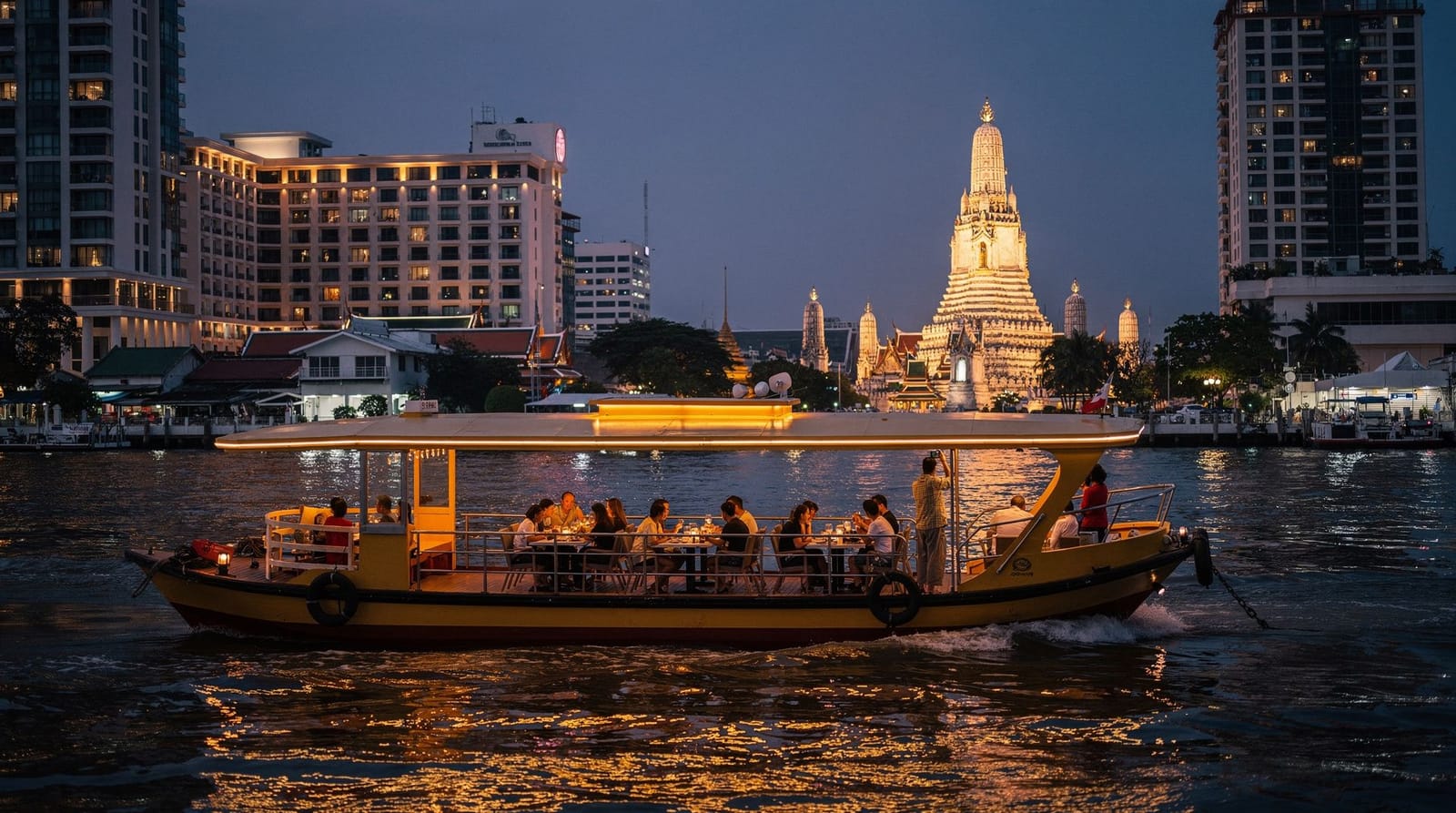
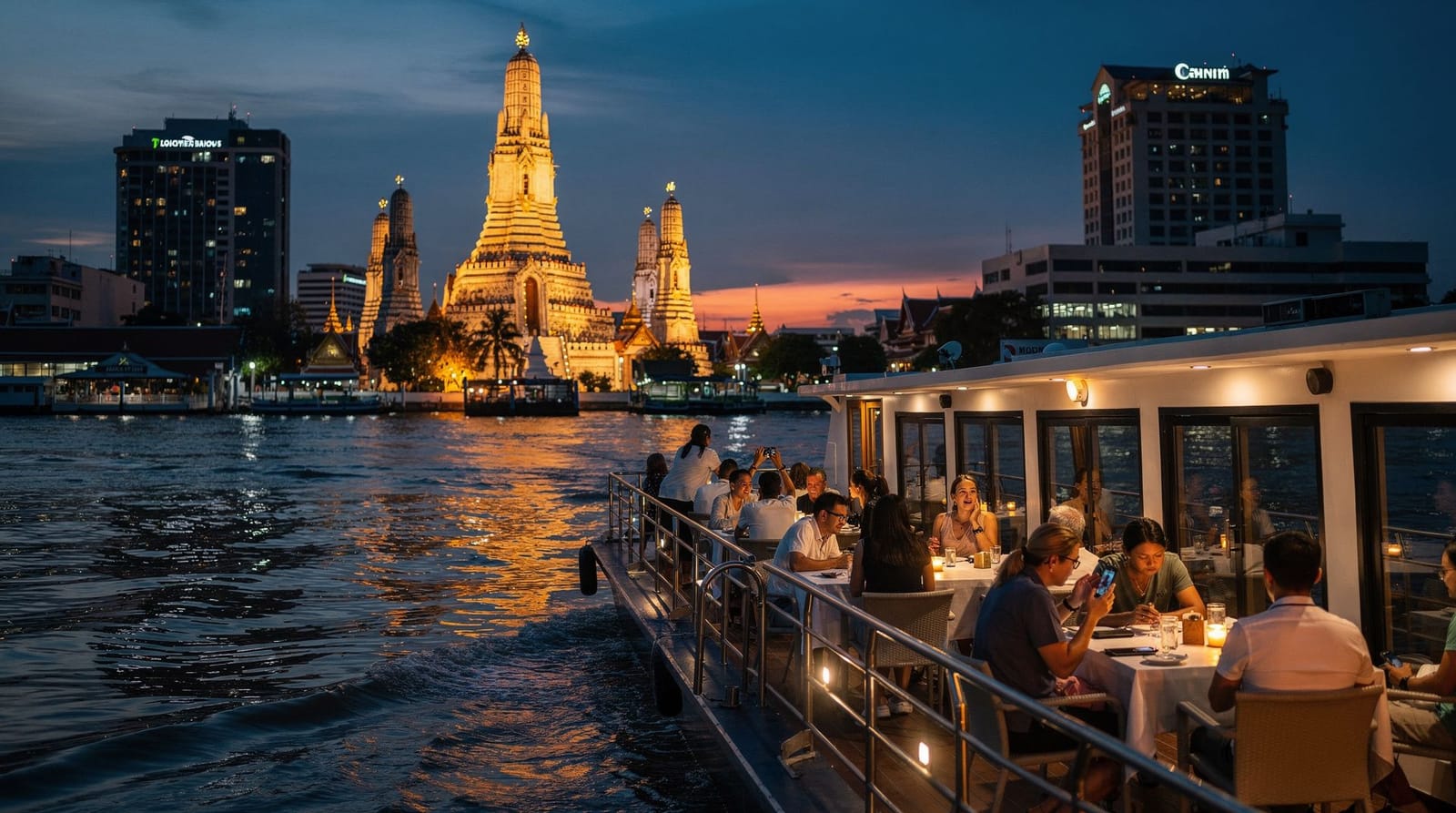
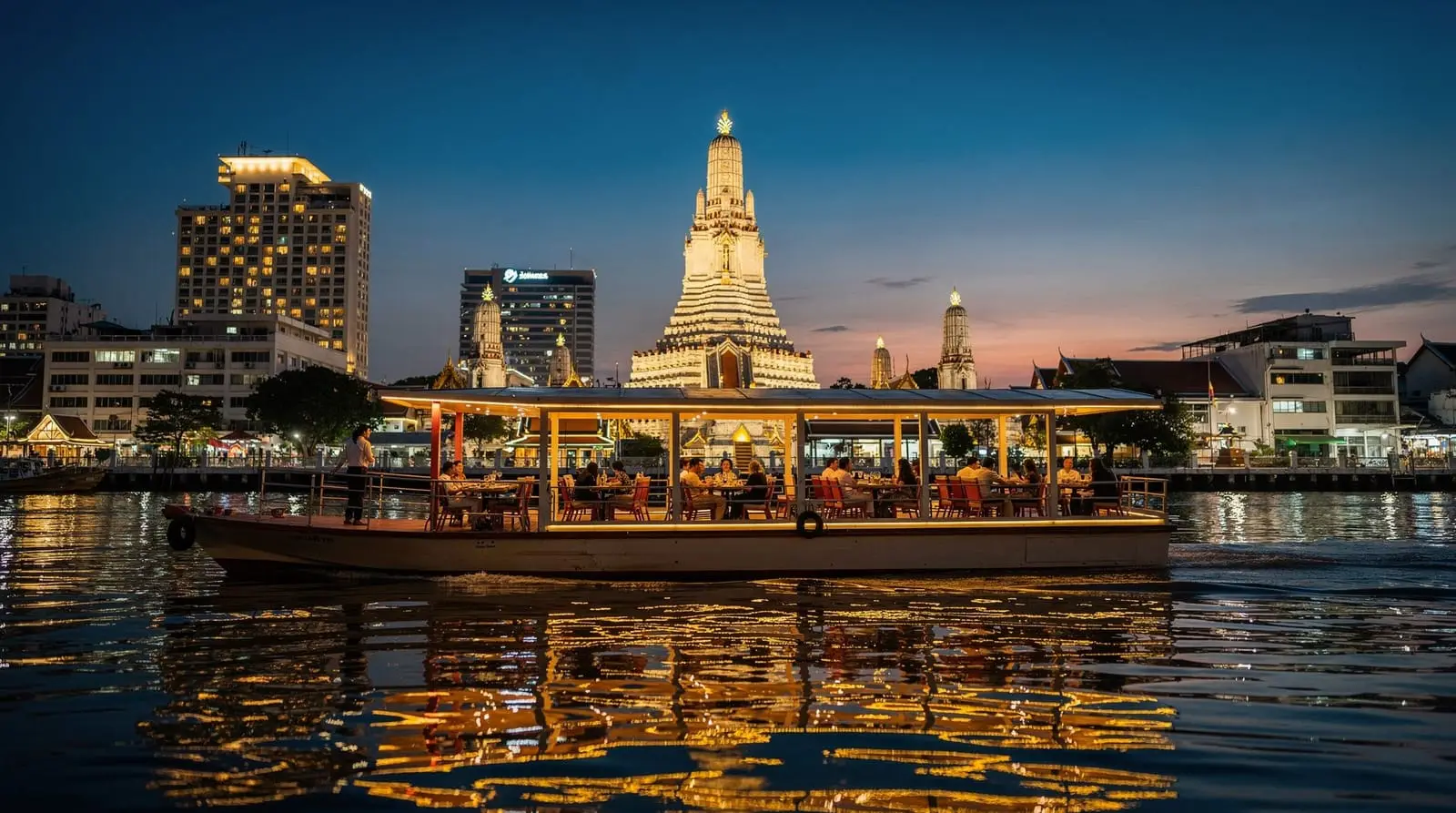
Two other river experiences are worth distinguishing from the commuter boats. The khlong (canal) long-tail boats branch off the main river into Bangkok’s old waterways — a different, more local-feeling journey through Thonburi’s canals, covered in the canal long-tail boat tours guide. And the evening dinner cruises are a separate, more upscale operation entirely — a sit-down dinner gliding past the illuminated temples and Iconsiam, detailed in the Chao Phraya dinner cruise guide. The everyday express boats in this guide are for getting around; those are experiences in their own right.
Orange, blue or cross-river ferry: quick comparison
If the flag system still feels abstract, this is the shorthand most visitors settle on after a day or two on the river:
| Boat | Cost | Best for |
|---|---|---|
| Orange-flag express | ~16 THB flat | Budget sightseeing, stops at all the temple piers |
| Blue-flag tourist boat | ~30 THB single / ~150–200 THB day pass | First-timers, English commentary, hop-on-hop-off flexibility |
| Cross-river ferry (Tha Tien–Wat Arun) | ~5 THB | The short hop across to Wat Arun only |
None of these is objectively “correct” — orange saves money, blue saves stress, and the cross-river ferry is simply unavoidable if Wat Arun is on your list.
Avoiding rush hour and the worst crowding
The orange-flag boats double as genuine commuter transport, and it shows at the two daily peaks — roughly 07h30–09h00 and 17h00–19h00 — when boats fill fast at the inner piers and boarding gets brisk rather than relaxed. Visitors doing the temple circuit rarely need to travel at those hours, so plan sightseeing trips for mid-morning or early afternoon instead, when the boats are calmer and you actually get a rail spot to stand at for photos. If you are combining the river with the BTS Skytrain or MRT as part of a longer day, the same rush-hour logic applies to the trains — a Rabbit Card speeds up the transfers regardless of time of day.
Families, luggage and mobility
The boats are functional rather than accessible: there is a step up from the pier, no ramps, and boarding happens quickly, so travelling with a stroller, a wheelchair or heavy luggage takes extra care and a helping hand from a companion. It is manageable but not effortless — see the Bangkok with kids guide and the Bangkok with elderly travellers guide for how families and less mobile visitors handle the piers and the wider transport network. If you are travelling with a full suitcase rather than a day bag, a taxi or Grab to the hotel and the river boats for sightseeing only is the easier split.
Photographing the river
The boats themselves are part of the picture, not just the way to get to one. The best light for photos from the open sides is mid-morning to early afternoon, when the piers are less rammed and you can actually get to the rail. For the classic shots of Wat Arun and the Old City skyline from the water, see the best photo spots in Bangkok guide, which maps several riverside vantage points reachable directly from these piers.
Frequently asked questions about Chao Phraya river boats: flags, piers and fares explained
Which Chao Phraya boat should I take for the Grand Palace?
What do the boat flag colours mean?
How much do the Chao Phraya river boats cost?
Where do I catch the Chao Phraya river boat?
Is the tourist boat or the local boat better?
How do I get to Wat Arun by boat?
What hours do the river boats run?
Top experiences
Bookable activities with verified prices and instant confirmation on GetYourGuide.