Temple etiquette and dress code in Bangkok
Bangkok: Grand Palace Skip-the-Line Entry Ticket
What is the temple dress code in Bangkok and how should I behave?
Cover your shoulders and knees, avoid sheer or skin-tight clothing, and remove your shoes before entering any temple building. Inside, keep your voice low, point your feet away from Buddha images, never touch anyone's head, and women must not touch monks. The Grand Palace enforces the dress code most strictly and will turn you away in shorts, short skirts or sleeveless tops, so carry a scarf or sarong to cover up quickly.
Bangkok’s temples are working places of worship, and Thais take respect inside them seriously. The rules are simple once you know them: cover your shoulders and knees, take your shoes off before entering buildings, keep your feet pointed away from Buddha images, and stay quiet. Get the dress code right before you leave your hotel and you will avoid the most common frustration — being turned away at the gate of the Grand Palace, the strictest site in the country. This guide gives you the exact clothing rules, the behaviour rules, and the practical tricks for staying cool while staying covered.
| Strictest site | Grand Palace / Wat Phra Kaew — enforced without exception |
| If unprepared | Sarong/shirt rental at the gate (refundable deposit) or a scarf from a nearby stall, ~100 THB |
| Shoes off | Before every temple building — courtyards are usually fine |
| What to bring | Light scarf or sarong, slip-on shoes, water |
| Best time to go covered-up | Early morning, before the heat builds |
The dress code, item by item
The principle is the same everywhere: shoulders and knees covered, nothing sheer or skin-tight. How strictly it is enforced varies by site, but if you dress for the strictest temple on your list you will pass everywhere.
For both men and women, the safe baseline is long, loose trousers and a top with sleeves that covers the shoulders. Lightweight cotton or linen is far more comfortable than denim in 35-degree heat. Avoid the following, which get people refused entry at the major sites: sleeveless tops, vests and tank tops; off-the-shoulder and crop tops; shorts of any length at the Grand Palace; short skirts and dresses above the knee; ripped jeans showing the knee; leggings or yoga pants worn as outerwear; and anything see-through.
Footwear matters less for what it looks like and more for how fast you can take it off — you will remove your shoes many times a day. Slip-on sandals, loafers or canvas shoes are ideal. Bring socks if you dislike standing barefoot on hot stone floors, which can be genuinely hot at midday.
Always carry a light scarf or a sarong in your day bag. It is the single most useful item for temple-hopping: drape it over bare shoulders, wrap it as a skirt over shorts, or use it as a sun cover between temples. For the full route that lets you visit several major temples efficiently, see the temple hopping route and the dedicated Bangkok temples itinerary.
The Grand Palace: the strictest gate in Thailand
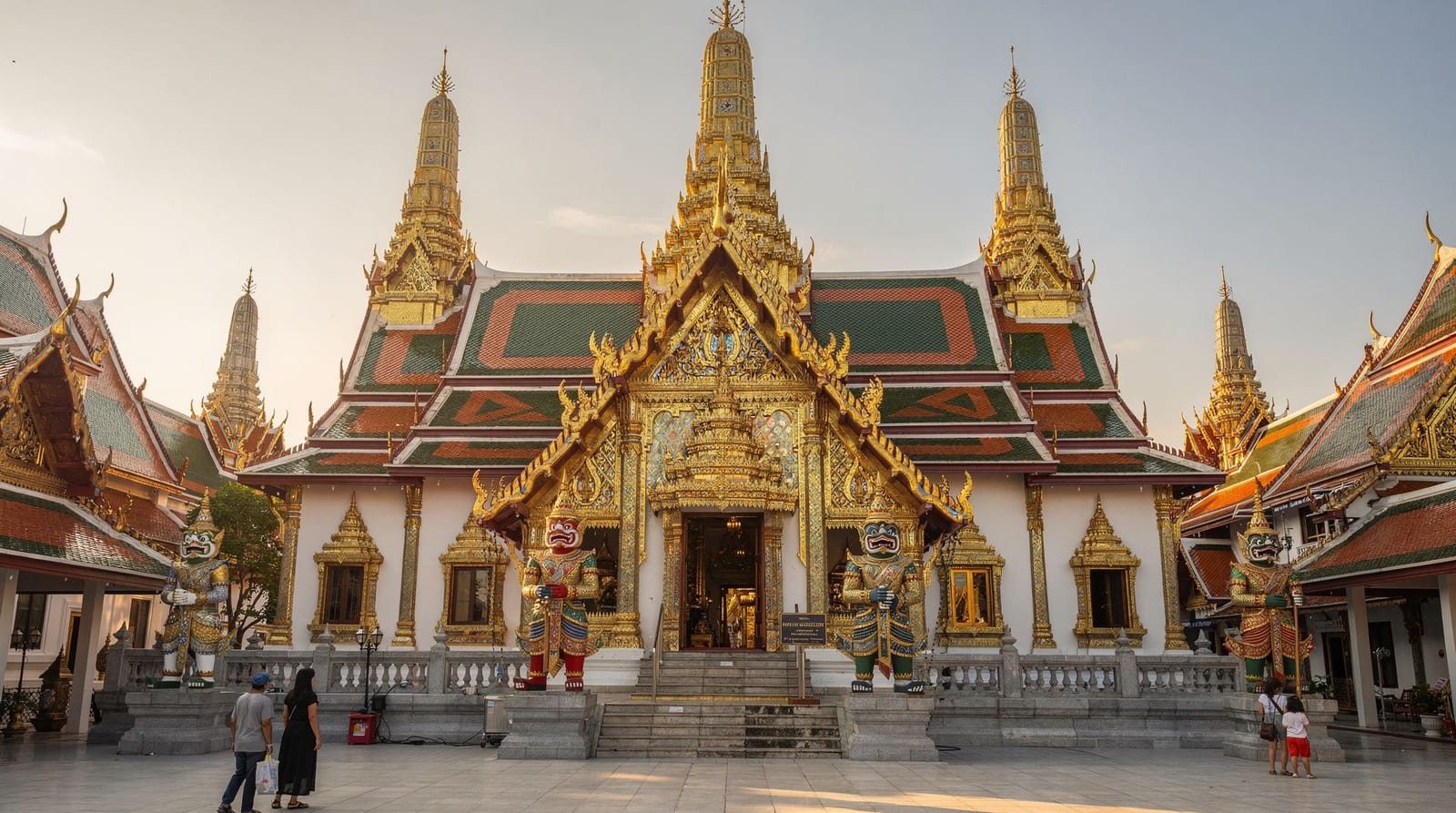
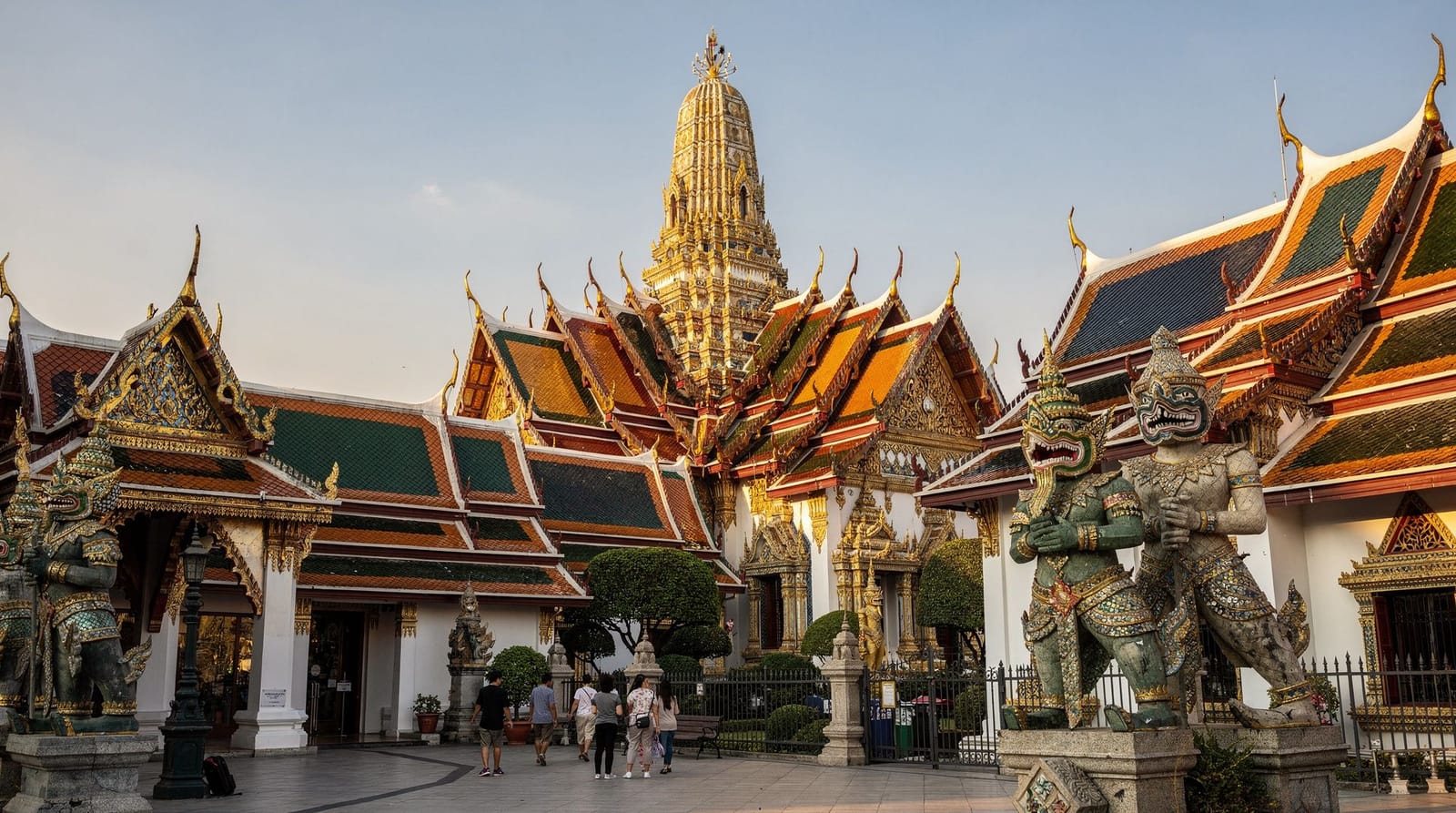
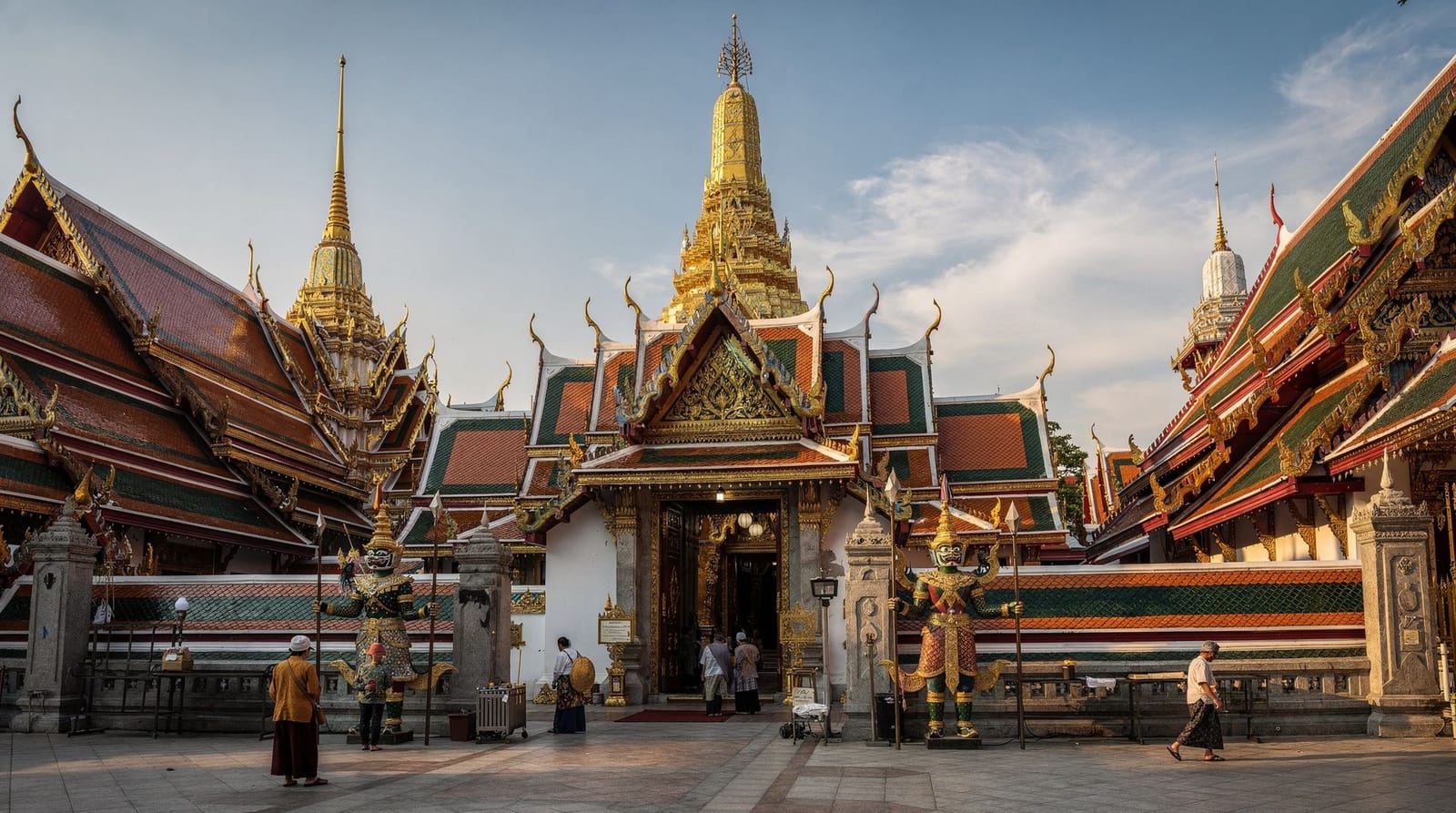
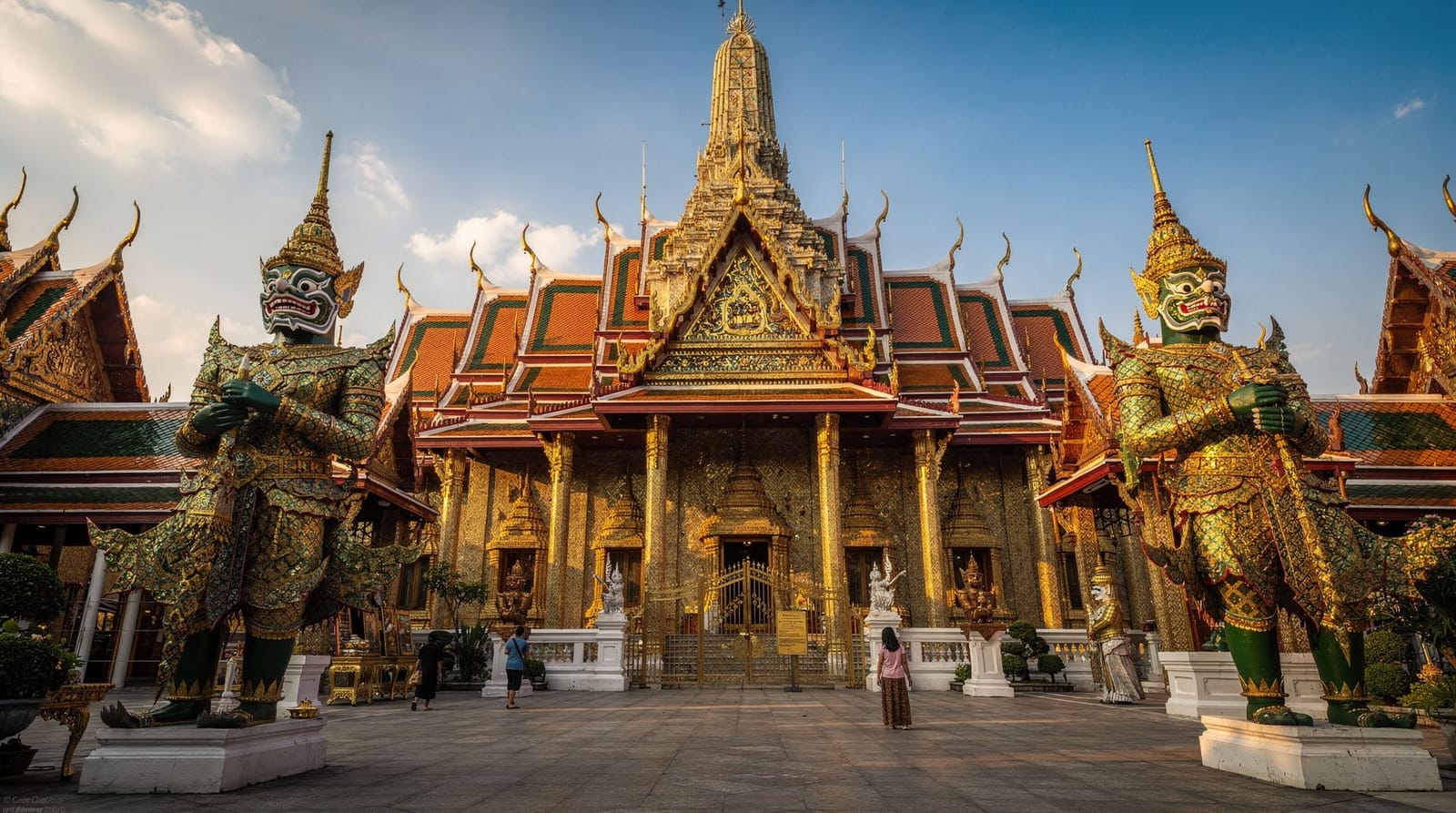
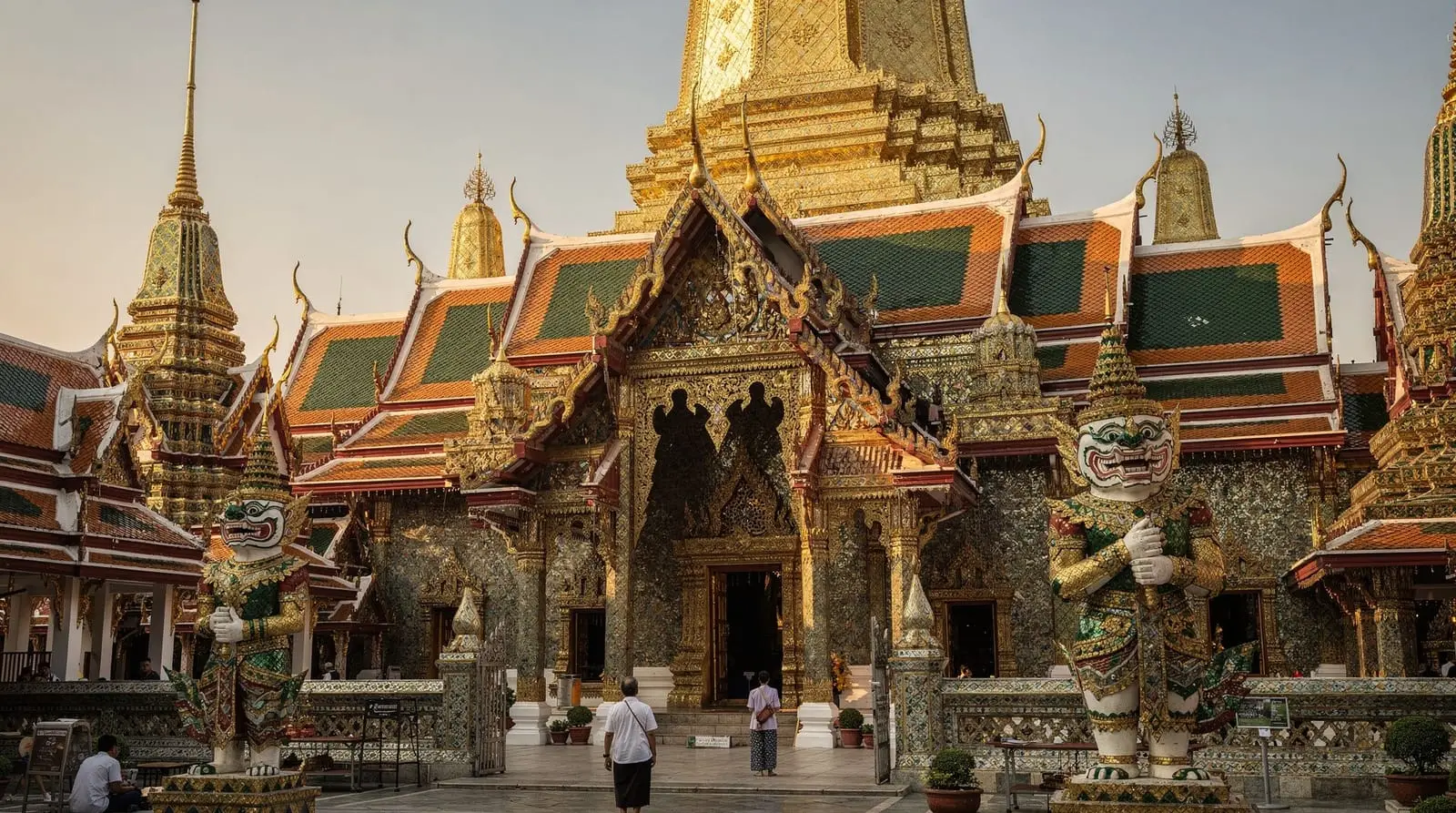
The Grand Palace and its Wat Phra Kaew, home of the Emerald Buddha, enforce the dress code more rigorously than anywhere else in the country, with staff stationed at the entrance to turn people away. The rules there are absolute: shoulders fully covered, knees fully covered (this includes men — no shorts), no tight or see-through clothing, no ripped jeans, no leggings worn alone, no crop tops.
The palace rents sarongs and shirts near the gate for a refundable deposit, but the queues are slow and you lose time you could spend inside. Worse, touts loitering outside the gates often tell visitors the dress code is stricter than it is, or that the palace is closed, to steer them toward overpriced rentals or the classic gem-shop scam. The Grand Palace dress code guide lists exactly what passes and what does not, and the Grand Palace scam warning explains the “it’s closed today” trick — the palace is almost never closed during posted hours.
The simplest advice: arrive at the Grand Palace already dressed correctly, ideally early in the morning before the heat and the crowds. From there you can walk to nearby Wat Pho, which is slightly more relaxed but still requires covered shoulders and knees, and cross the river to Wat Arun.
Shoes off: where and how
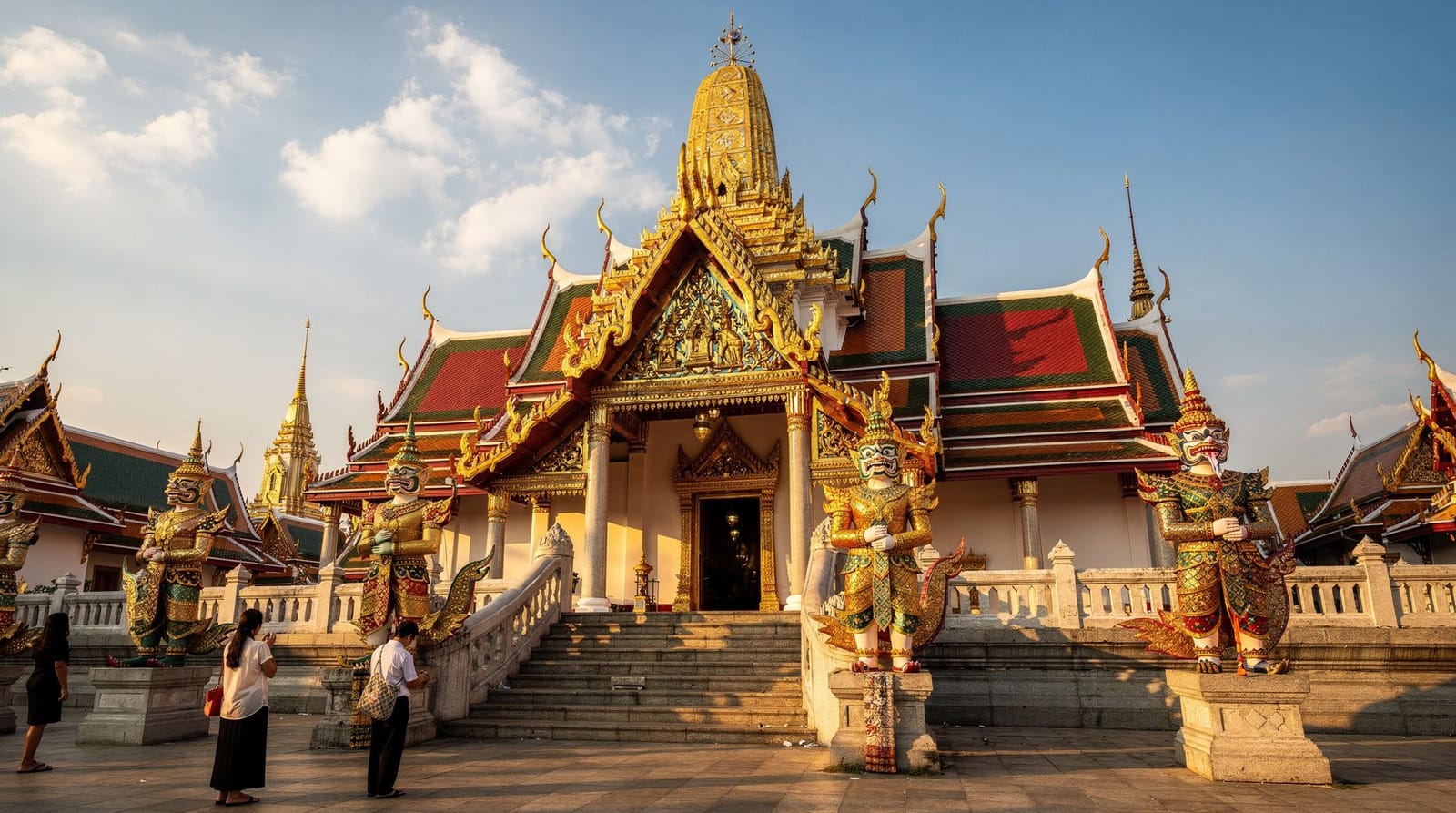
Shoes come off before you enter any temple building — the ordination hall (ubosot), the main assembly hall (viharn), or any structure housing a Buddha image. You can generally keep shoes on in open courtyards and gardens. The threshold is obvious: there will be a shoe rack, a shelf, or simply a pile of everyone else’s shoes.
A practical detail that trips people up: many temple doorways have a raised wooden threshold beam. Step over it, never on it — traditionally a doorsill is believed to house a guardian spirit, and stepping on it is disrespectful. Keep your shoes with you in a bag at busy sites if you are worried about them going missing, though theft is rare.
The rules of the body inside
Thai temple etiquette is built on a simple hierarchy of the body: the head is the most sacred part of a person and the feet are the lowest and least clean. Several rules follow directly from this.
Never point your feet at a Buddha image, a monk, or another person. When you sit down inside a hall, do not stretch your legs out toward the altar or cross them facing the Buddha — tuck your feet behind you in the polite side-sitting position. Never touch anyone’s head, even a child’s, and avoid reaching over someone’s head.
Keep your body lower than monks and Buddha images where the space allows it — Thais will often crouch slightly when passing in front of a seated monk or a worshipper. Move calmly, keep your voice to a murmur, and silence your phone. These are not arbitrary courtesies; they are the difference between being a respectful guest and an intrusive one. The broader set of body-and-behaviour customs that apply across Thai society is in the Thai customs and etiquette guide, and the religious logic behind it all is in the Buddhism in Bangkok guide.
Monks: the rules that matter most
Monks occupy the top of the social and spiritual hierarchy, and the etiquette around them is precise. The most important rule for visitors: women must never touch a monk or hand anything to him directly. If a woman wishes to give something to a monk, she places it within his reach, a man passes it, or the monk uses a receiving cloth to accept it without contact. This is not a slight against women; it relates to monastic vows.
On the BTS Skytrain and MRT subway, certain seats are reserved for monks — women should not sit beside a monk. When photographing monks, do so respectfully and from a polite distance; many are happy to be photographed, but do not pose with them as if they were a tourist prop, and never interrupt a monk who is praying, meditating or on his morning alms round.
Photography and gold leaf: doing it right
In most temples you may photograph the grounds and the main halls freely. What is never acceptable: posing with your back to a Buddha image, climbing on or sitting on statues, mimicking the Buddha’s pose disrespectfully, or any “funny” photo that uses a sacred image as a backdrop. Some inner sanctums and ordination halls forbid photography entirely — watch for signs — and flash is commonly banned near fragile old murals. For technique and where the light is good, see the temple photography tips and the dedicated Wat Arun photography guide.
If you want to participate in a small act of merit-making, applying thin gold leaf to a Buddha statue is a welcoming way to do it — buy a booklet of gold leaf for a few baht at the temple, press a small square onto the statue, and you have taken part respectfully. Lighting incense, offering a lotus bud, and donating a small amount are all genuine and appreciated gestures.
Dress-code strictness by temple
Enforcement is not uniform. Dressing for the strictest site on your day covers you everywhere else, but it helps to know where staff actually turn people away:
| Temple | Entry fee | Strictness | Shoes |
|---|---|---|---|
| Grand Palace / Wat Phra Kaew | ~500 THB | Strictest — checked at the gate, no exceptions | Off in every hall |
| Wat Pho | ~300 THB | Enforced, slightly more relaxed | Off in the ubosot |
| Wat Arun | ~200 THB | Enforced for climbing the prang | Off at the main hall |
| Wat Saket / Golden Mount | ~100 THB | Relaxed, but cover up | Off inside the chedi hall |
| Wat Traimit | ~40–100 THB | Relaxed | Off inside |
| Wat Benchamabophit | Free/small donation | Relaxed but respected | Off inside |
| Neighbourhood temples | Usually free | Rarely checked, still expected | Off inside |
What happens if you arrive dressed wrong
At the Grand Palace, staff at the entrance turn away anyone showing bare shoulders or knees before you even reach the ticket window. You have two honest options: rent a sarong or shirt from the counter near the gate (a refundable deposit, usually a few hundred baht) or walk to one of the small stalls just outside that sell cheap scarves and cover-ups for around 100 THB — often faster than the rental queue. Neither option is a disaster, just a lost 10–15 minutes you could spend inside instead.
Be alert to the classic con that preys on this exact moment: touts near the gate who tell you the dress code is stricter than it is, or that the palace is “closed for a ceremony”, to steer you toward an overpriced rental shop or a gem-shop tour. The common Bangkok scams guide and the Grand Palace scam warning cover this trick in detail — the simplest defence is to ignore anyone outside the gate who isn’t wearing an official uniform. If you’d rather not deal with any of this logistics on the day, a guided Grand Palace skip-the-line ticket gets you straight past both the ticket queue and the rental counter confusion. What to actually see once inside is covered in the Grand Palace what to see guide, and packing the right layers from the start is covered in what to pack for Bangkok.
Staying cool while covered: practical hacks
Bangkok is hot, and covering up feels counterintuitive in 35-degree heat — but it is manageable. Choose the lightest natural fabrics you own. Visit temples early, ideally before 09h00, when the air is cooler and the major sites are far less crowded; the best temples in Bangkok guide flags which open earliest. Carry water, a hat for the courtyards (remove it inside halls), and your scarf doubles as sun protection.
Plan your temple visits as a cluster rather than scattering them across a hot afternoon. The old-city temples — the Grand Palace, Wat Pho, Wat Saket on the Golden Mount — sit close together in Rattanakosin old city, and Wat Arun is a short ferry across the river. Doing them in one cool morning beats trudging between them in the midday sun. For the wider cultural context that ties temples, customs and the monarchy together, start with the Bangkok culture guide, and read the monarchy respect and lèse-majesté guide before your trip, since royal-image respect is part of the same broader etiquette.