Wat Benchamabophit: Bangkok's Marble Temple guide
Bangkok: Grand Palace, Wat Arun, and Marble Temple Tour
What is Wat Benchamabophit, the Marble Temple?
Wat Benchamabophit is Bangkok's Marble Temple, built in 1899 from Italian Carrara marble and considered the finest example of modern Thai temple architecture. Its symmetrical white ordination hall, courtyard of 52 bronze Buddha images, and reflecting canal make it the most photogenic temple in the city for craftsmanship. It appears on the back of the 5-baht coin. Entry is 50 THB and it opens 8:00-17:30, in the quiet Dusit district.
Wat Benchamabophit, the Marble Temple, is the most refined piece of architecture in Bangkok’s temple roster — a gleaming white ordination hall of Italian Carrara marble, perfectly symmetrical, mirrored in a still canal, surrounded by a cloister of 52 bronze Buddhas. It is the temple on the back of the 5-baht coin, it costs just 50 THB, and because it sits off the tourist trail in quiet Dusit, you can often have it almost to yourself. This guide covers what makes it special, the dawn alms ritual, and how to reach it.
The temple was commissioned in 1899 by King Chulalongkorn (Rama V), the reforming monarch who modernised Siam, and designed by his half-brother Prince Naris, one of Thailand’s greatest artists. The brief was a temple that fused traditional Thai forms with modern, Western-influenced precision — and the result is widely regarded as the high point of Rattanakosin-era temple architecture.
Rama V had toured Europe extensively and returned determined to modernise Siam’s institutions, infrastructure and public buildings while keeping their Thai identity intact. Wat Benchamabophit was one expression of that project: a temple built with imported materials and Western structural precision, yet unmistakably Thai in its roofline, gables and religious function. The temple continued to be refined and added to over the following years, and it stands today as the last major royal temple built in Bangkok in this classical style.
Wat Benchamabophit at a glance
| Tickets | 50 THB; Thais free |
| Hours | Daily, roughly 8:00-17:30 |
| Getting there | Taxi or Grab (no nearby BTS/MRT); Dusit district |
| Time needed | 45 minutes to an hour |
| Best for | Architecture and photography lovers wanting a quiet, uncrowded temple |
The marble ordination hall
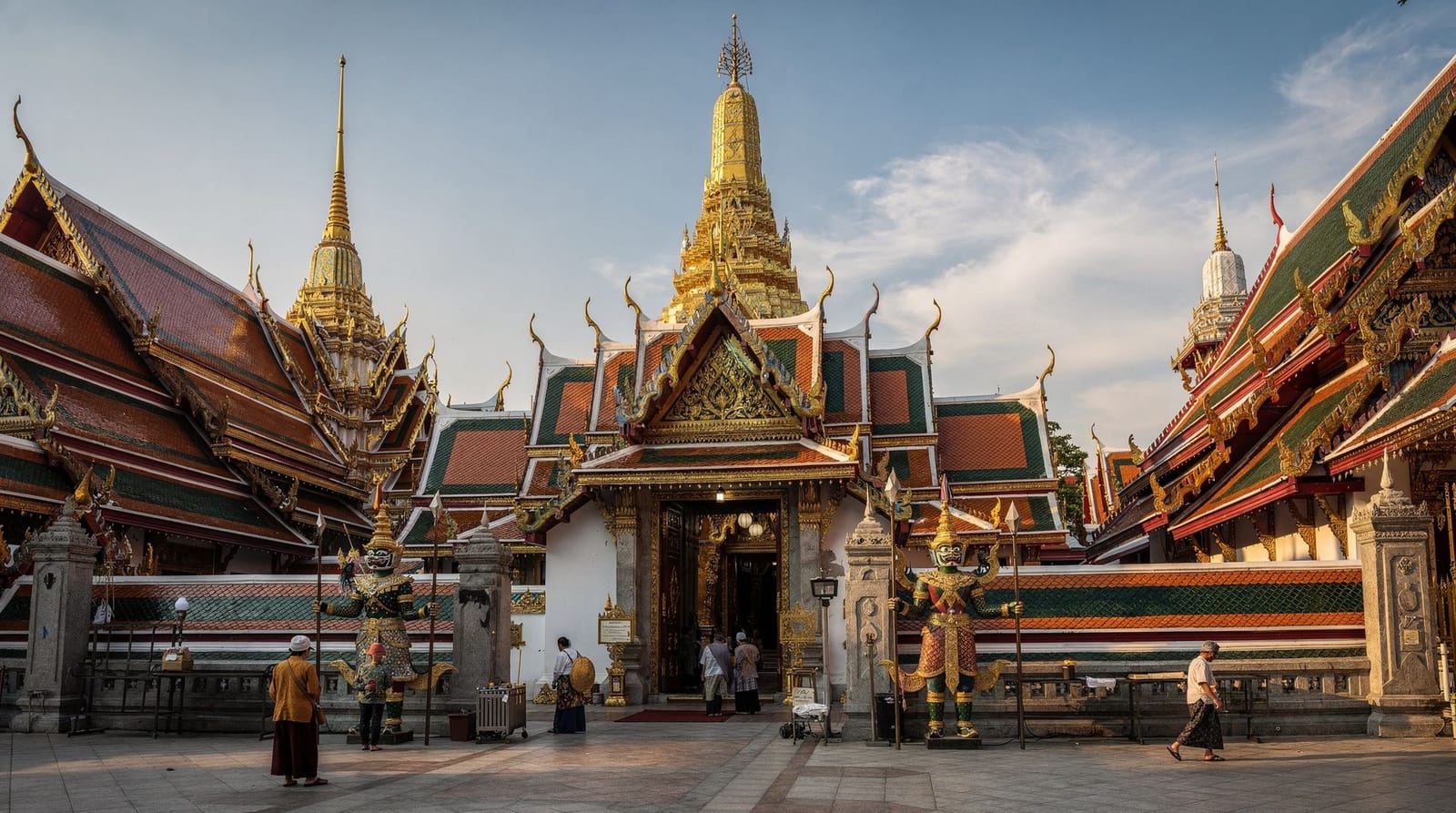
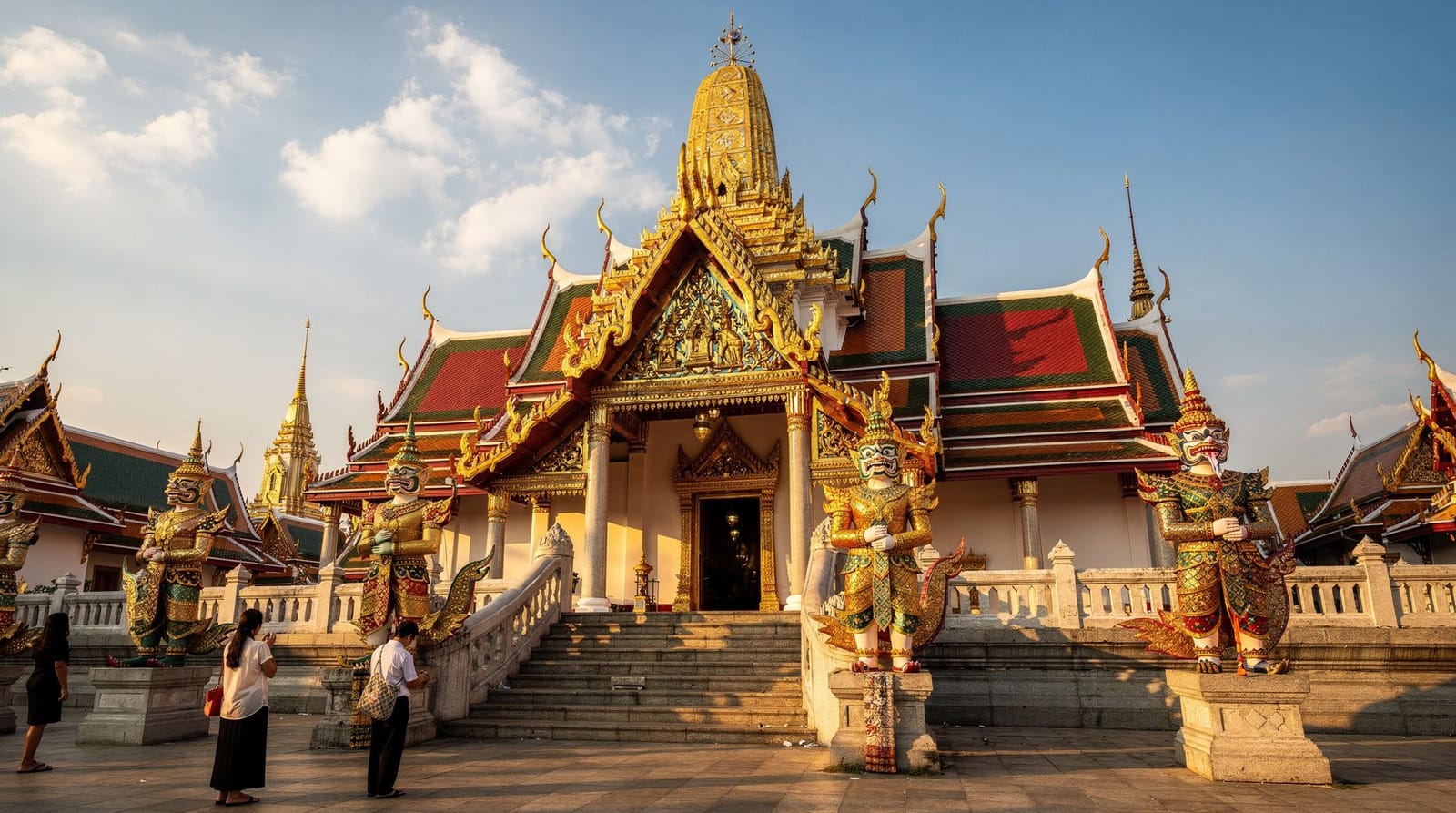
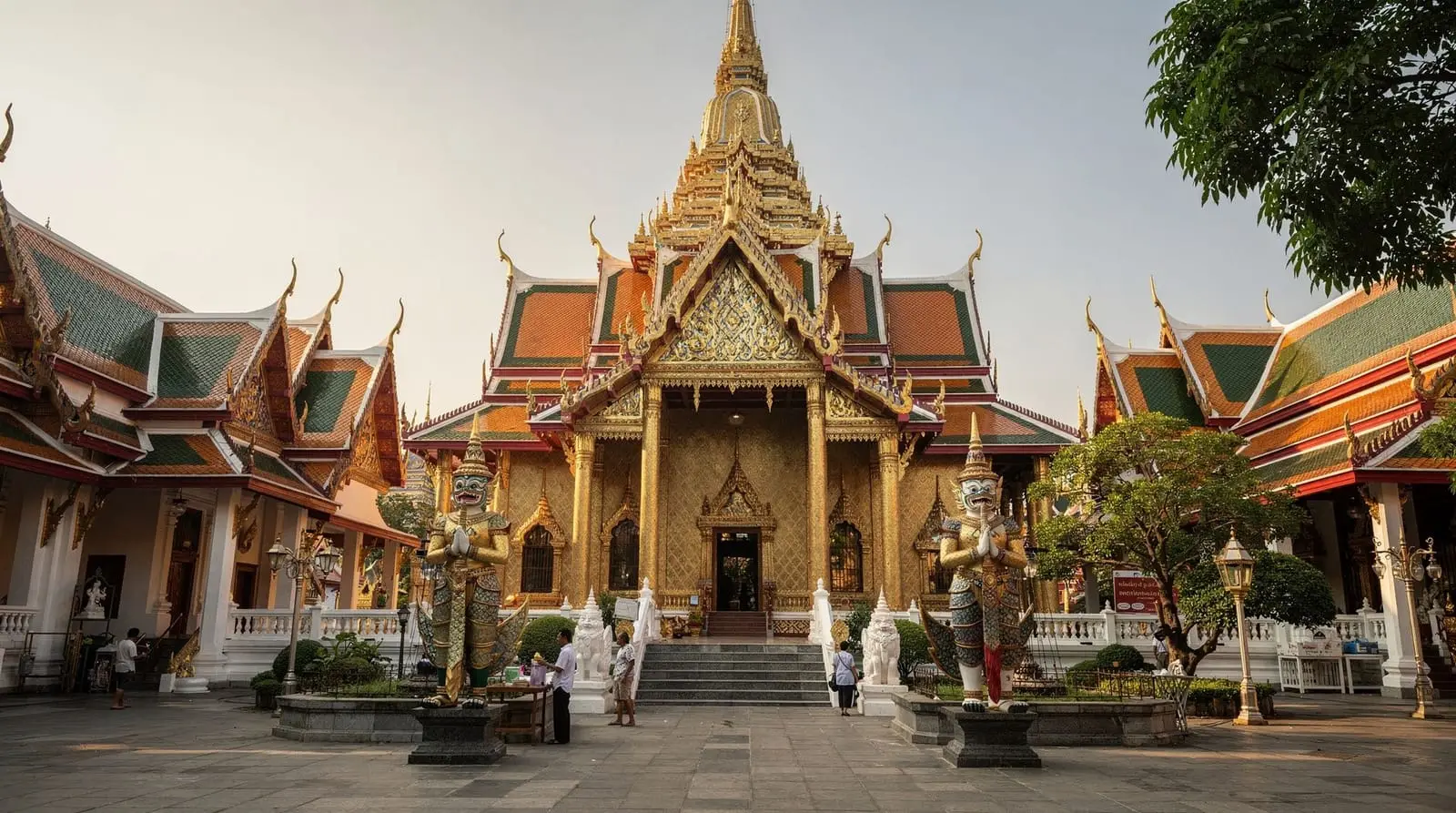
The centrepiece is the ubosot (ordination hall), clad entirely in white Carrara marble imported from Italy. Its proportions are exact and symmetrical: a multi-tiered roof in glazed orange and green tiles, gilded gables, and stone lions guarding the entrance. Inside (shoes off) sits Phra Buddha Chinnarat, a revered replica of one of Thailand’s most beautiful Buddha images, beneath painted ceilings. Stained-glass windows — unusual in a Thai temple — filter coloured light, another sign of the era’s openness to Western ideas.
The reflecting canal in front of the hall doubles the white marble facade in the water, which is why this is one of the most photographed temple buildings in the country. For the best angles, see the best photo spots in Bangkok guide.
For the canal reflection specifically, soft morning light works best — the water is usually stillest early, before boat traffic or wind stirs ripples, and the low sun avoids the harsh glare that hits the white marble at midday. Because the temple is rarely crowded, you can take your time finding the angle where the reflection lines up cleanly with the roofline, something that is far harder at the more visited river temples.
The cloister of 52 bronze Buddhas
Wrapping the courtyard behind the ordination hall is a gallery displaying 52 bronze Buddha images, gathered from across Thailand and beyond. They represent different historical periods and regional styles — Sukhothai, Ayutthaya, Lanna, and images in the styles of other Buddhist countries — and different mudras (hand gestures and postures).
It functions as an open-air museum of Buddhist art history: you can stand in one spot and compare the slim, flame-haloed Sukhothai grace with the rounder, sterner styles of other eras. For visitors interested in the religion itself, the Buddhism in Bangkok guide gives broader context.
The dawn alms ceremony
Wat Benchamabophit offers a distinctive version of the morning alms ritual. Rather than monks walking the streets, lay people come to the temple early — around 6:00 to 7:30 — to offer food to monks lined up at the entrance. It is more orderly and photogenic than the street version, and a quiet, respectful way to begin a temple day. If you photograph it, do so discreetly and at a respectful distance.
Tickets, hours and getting there
Entry: 50 THB · Thais free Hours: roughly 8:00-17:30 daily Getting there: taxi or Grab (no nearby BTS/MRT), in the Dusit district near the old National Assembly
The temple’s off-trail location is part of its charm but means a deliberate trip — there is no metro nearby, so a taxi or Grab is easiest. See the Dusit destination guide for the surrounding royal district, which also holds the old throne hall and leafy boulevards.
Pairing with the wider Dusit royal district
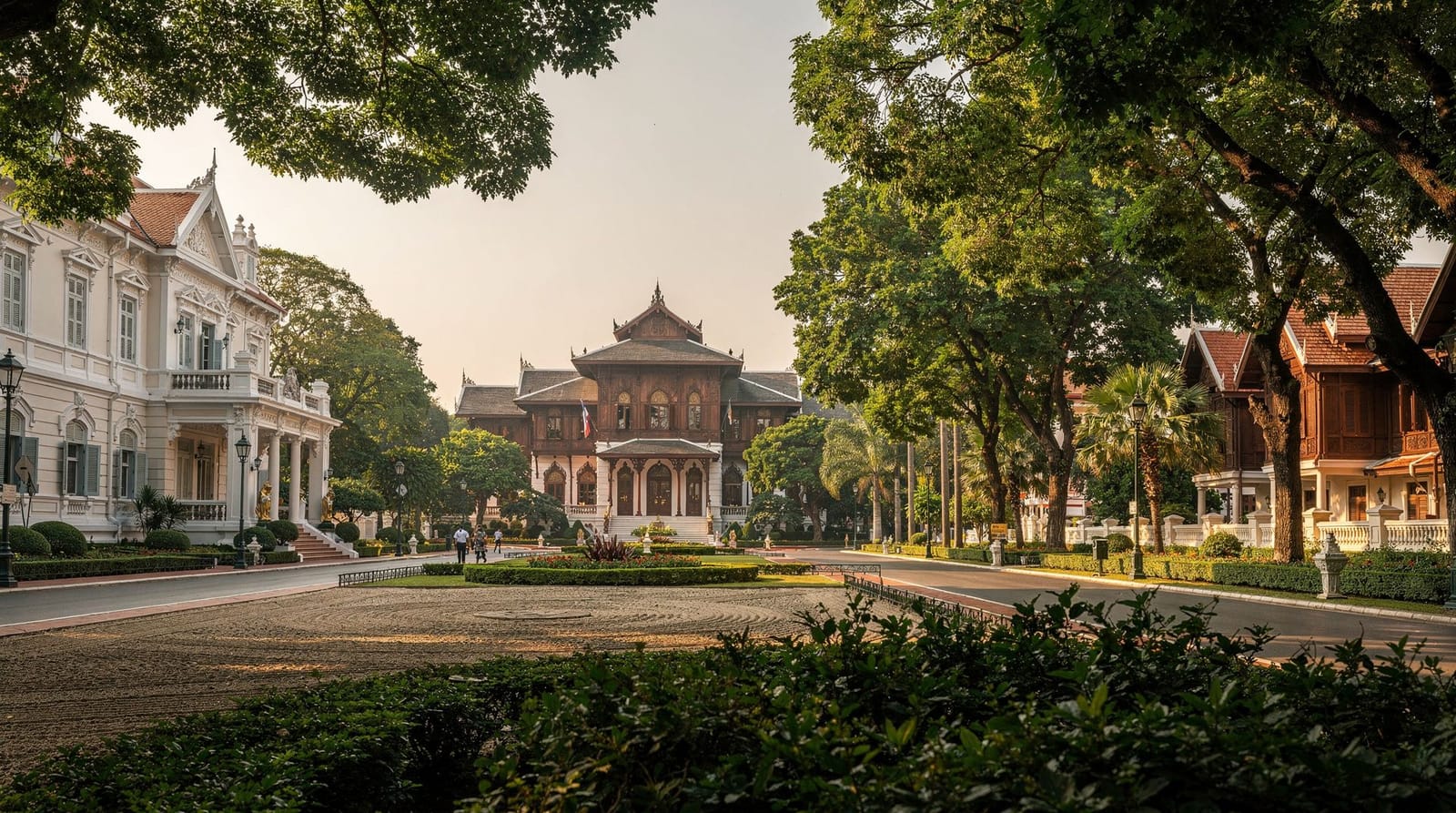
The Marble Temple sits inside Dusit, the royal district King Chulalongkorn built as his own modernised quarter of the city, and it is worth treating as one stop among several rather than an isolated trip. Vimanmek Mansion, said to be the world’s largest golden teak building, was Rama V’s residence and displays royal artefacts and photography from the era. The Ananta Samakhom Throne Hall, clad in Italian marble like the temple itself, was built as a grand ceremonial hall and later served as Thailand’s first parliament building. Together with Wat Benchamabophit, the three sites form a coherent half-day on the theme of Rama V’s modernisation of Siam, all reachable by taxi or Grab within the same district. See the Dusit destination guide for how to sequence them.
Combining the Marble Temple with other temples
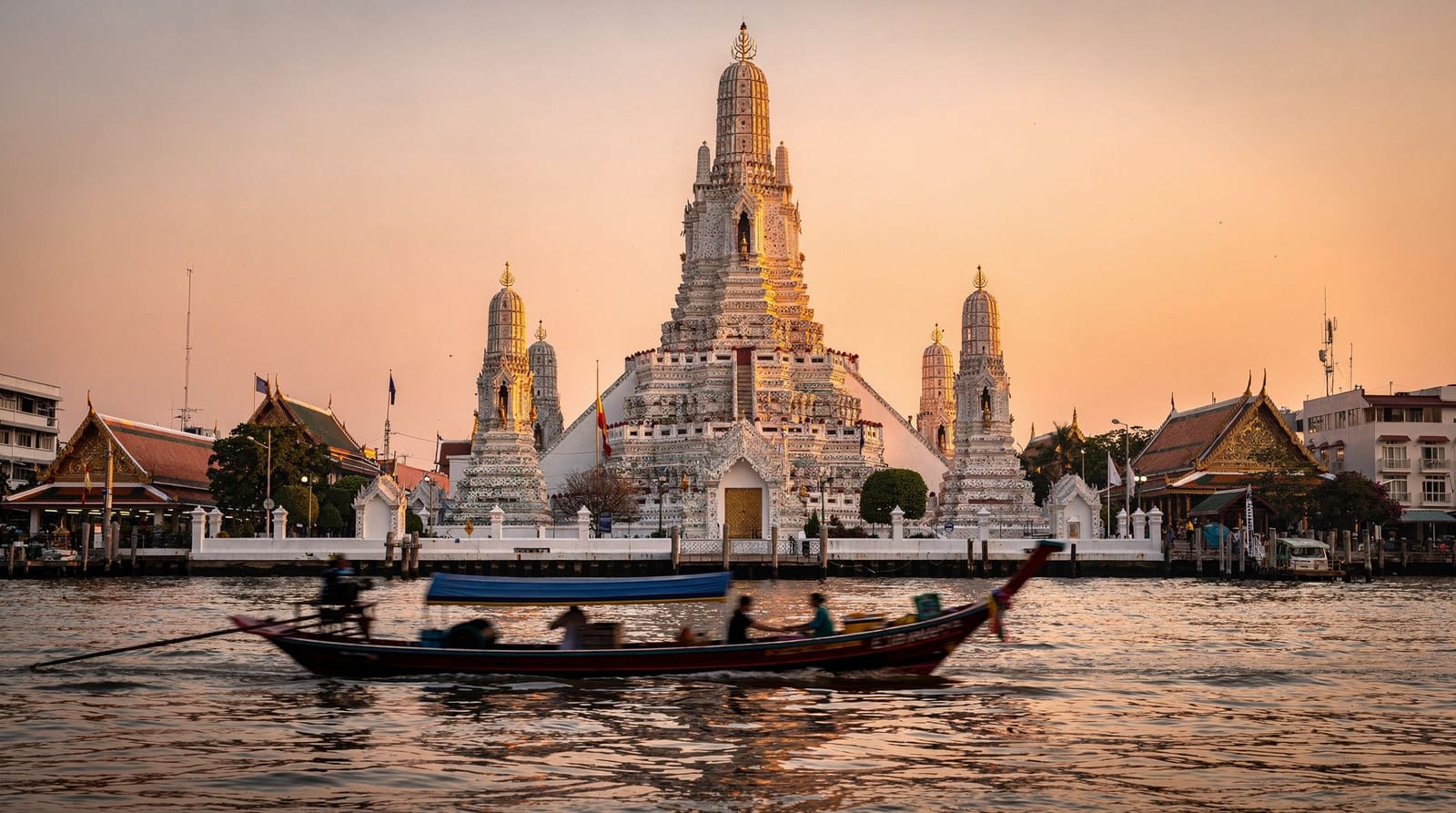
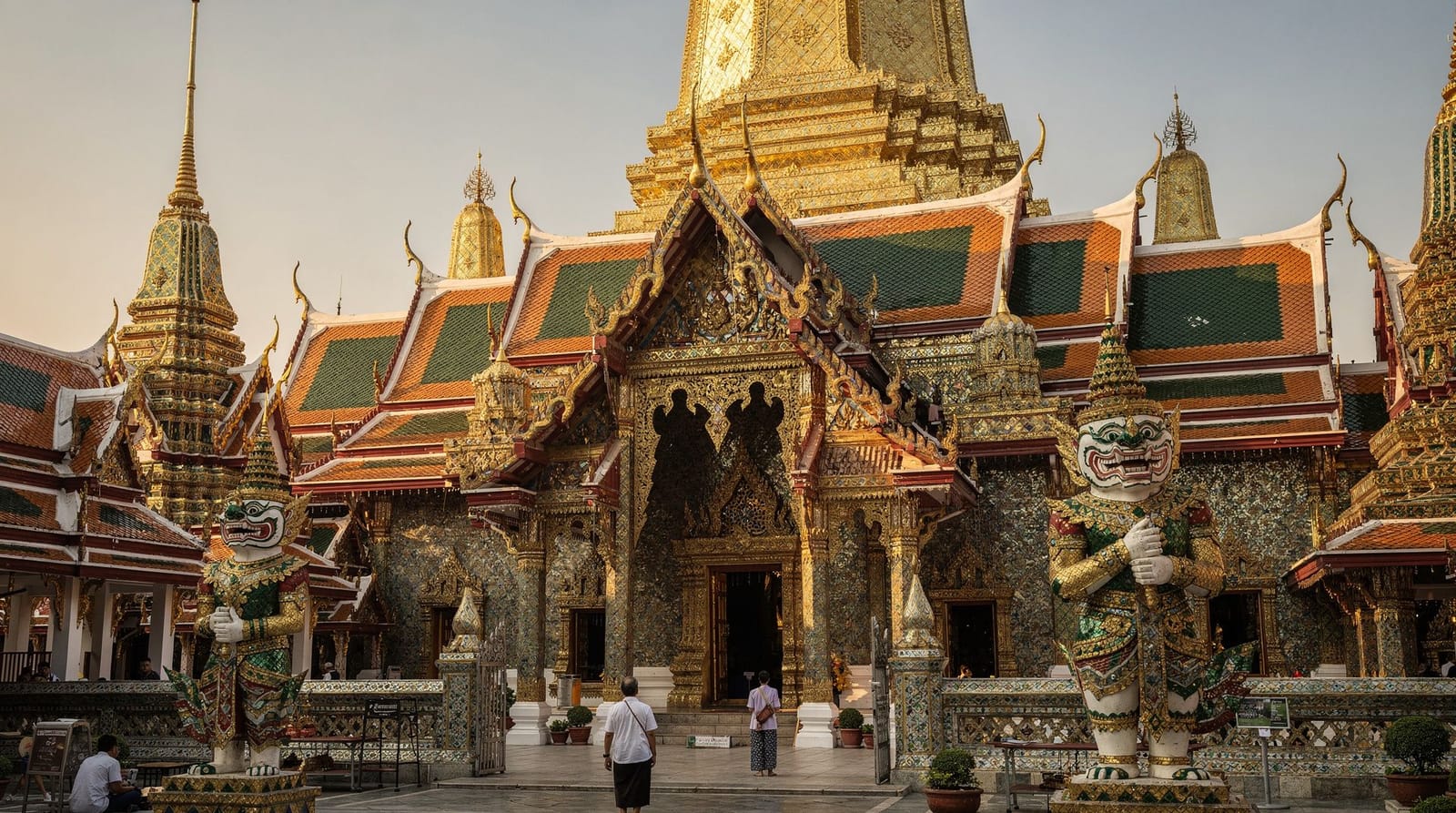
Because it is quieter and slightly out of the way, the Marble Temple works best bundled with other temples on a half-day. A guided Grand Palace, Wat Arun and Marble Temple tour pairs it with the river icons, and a golden and marble two-temple tour links it with the Golden Buddha at Wat Traimit. For a broader three-temple sweep in one outing, a Wat Traimit, Wat Pho and Wat Benchamabophit combined tour covers the Golden Buddha, the Reclining Buddha and the Marble Temple together. The temple-hopping route guide and the best temples in Bangkok guide place it in the wider context, and the Bangkok culture guide covers the Rama V era that produced it.
Dress code and how long to spend
Cover shoulders and knees; remove shoes before entering the marble ordination hall. The temple is relaxed and rarely crowded, but modest dress is expected — carry a scarf if needed. Allow 45 minutes to an hour to appreciate the marble, the bronze Buddhas and the reflecting canal. It rewards slow looking rather than a long visit. The temple etiquette and dress code guide has the full rules.
Frequently asked questions about Wat Benchamabophit: Bangkok's Marble Temple
How much is Wat Benchamabophit and what are the hours?
Why is it called the Marble Temple?
What is special about the 52 bronze Buddhas?
Can you see the dawn alms ceremony at the Marble Temple?
How do you get to Wat Benchamabophit?
How long do you need at the Marble Temple?
Is Wat Benchamabophit worth visiting?
What is the dress code at Wat Benchamabophit?
What else can I see near Wat Benchamabophit in Dusit?
Top experiences
Bookable activities with verified prices and instant confirmation on GetYourGuide.