Wat Pho guide: the Reclining Buddha and Thai massage
Bangkok: Reclining Buddha (Wat Pho) Self-Guided Audio Tour
What is Wat Pho and is it worth visiting?
Wat Pho (the Temple of the Reclining Buddha) is one of Bangkok's oldest and largest temples, home to a 46-metre gold-leafed Reclining Buddha and the birthplace of traditional Thai massage. Entry is 300 THB and includes a bottle of water. It sits a 10-minute walk from the Grand Palace and is quieter, larger and more peaceful than its famous neighbour. For most visitors it is the single most rewarding temple in Bangkok — the Reclining Buddha is breathtaking and you can get an authentic massage on site.
| Tickets | 300 THB (incl. water); Thais free |
| Hours | Daily, 8:00-18:30 |
| Getting there | Sanam Chai MRT, or boat to Tha Tien pier |
| Time needed | 1.5-2 hours (+1 for a massage) |
| Best time | Right at 8:00 opening, or after 16:00 |
Wat Pho — formally Wat Phra Chetuphon — is the temple most Bangkok regulars quietly rate above the Grand Palace. It holds the city’s most spectacular single object, the 46-metre gold Reclining Buddha; it is the birthplace of traditional Thai massage; and its vast, chedi-studded grounds are far calmer than the royal compound a short walk away. Entry is 300 THB, it opens at 8:00, and it deserves a relaxed two hours. This guide covers what to see, how to do the massage, and how to time your visit.
Wat Pho predates Bangkok itself and was expanded by King Rama I when the capital moved here in 1782. It later became Thailand’s first centre of public education — the inscriptions and diagrams on its walls and pavilions, covering medicine, astrology and massage, effectively made it an open-air university. That medical heritage is why the country’s leading traditional-massage school still operates inside the grounds today.
The Reclining Buddha — the main event
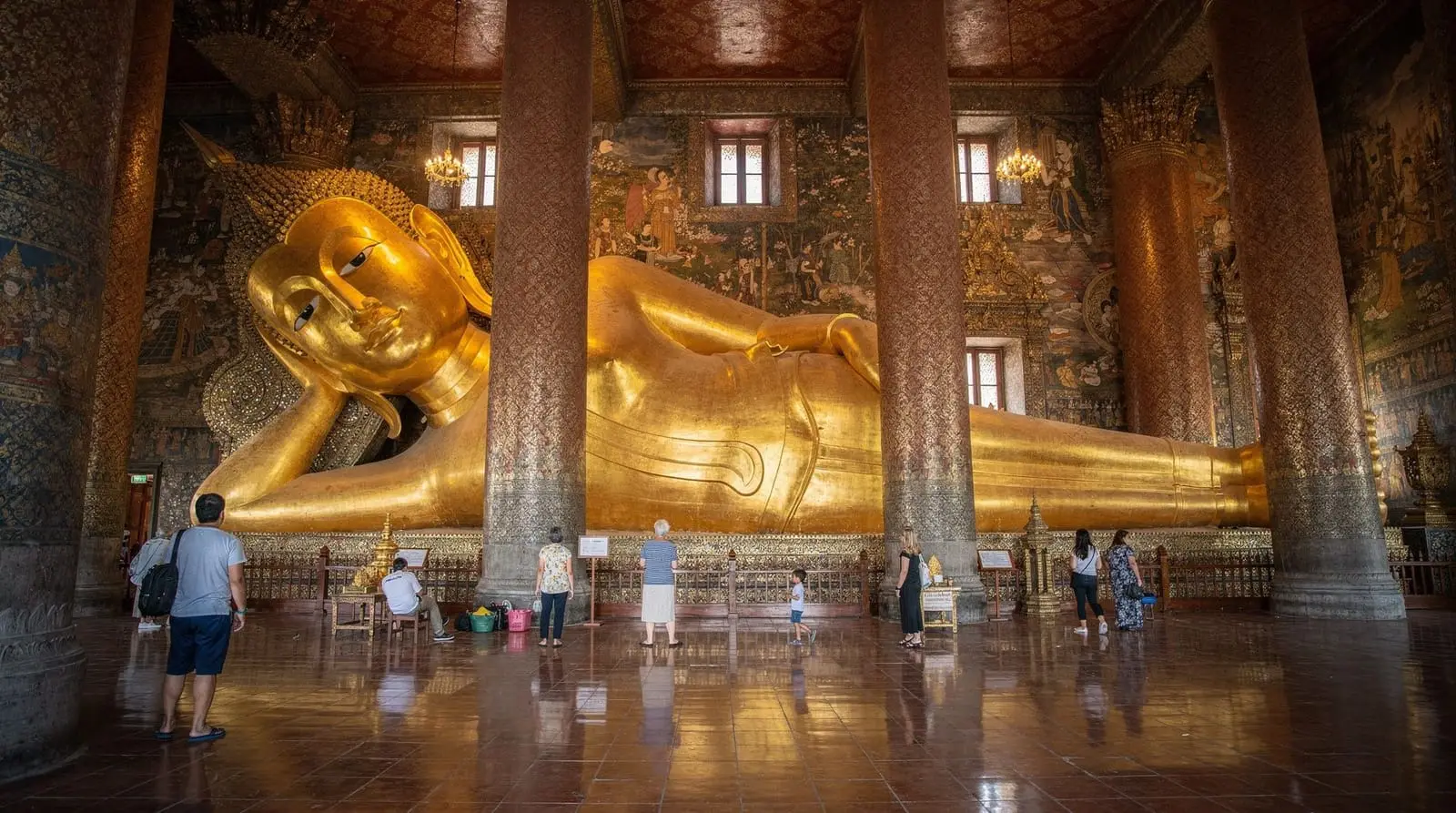
The Reclining Buddha lies in its own long hall, the Wihan Phranorn. Built in 1832, it is 46 metres long and 15 metres high, depicting the Buddha entering nirvana. The figure is brick and plaster, finished in gold leaf, and the scale is genuinely hard to absorb in one glance — you walk the length of the hall to take it in.
The most photographed details are the feet: three metres tall, inlaid with 108 panels of mother-of-pearl depicting the auspicious symbols (lakshanas) that identify a Buddha. Behind the statue, the row of 108 bronze bowls invites the coin ritual described below.
Practical tips for the hall:
- Shoes off at the entrance — there are racks, or carry them in a bag.
- The hall is busy and narrow; the best time is right at 8:00 opening or after 16:00.
- Tour groups cluster at the head and feet; the mid-section is quieter for photos.
The coin ritual
Buy a small bowl of 108 coins for about 20 THB near the entrance to the hall. As you walk the length of the Reclining Buddha, drop one coin into each of the 108 bronze bowls lining the wall, making a wish. The continuous tinkling is part of the temple’s soundscape. The coins fund maintenance, so it is a small donation as much as a ritual.
The massage school — an authentic Thai massage on site
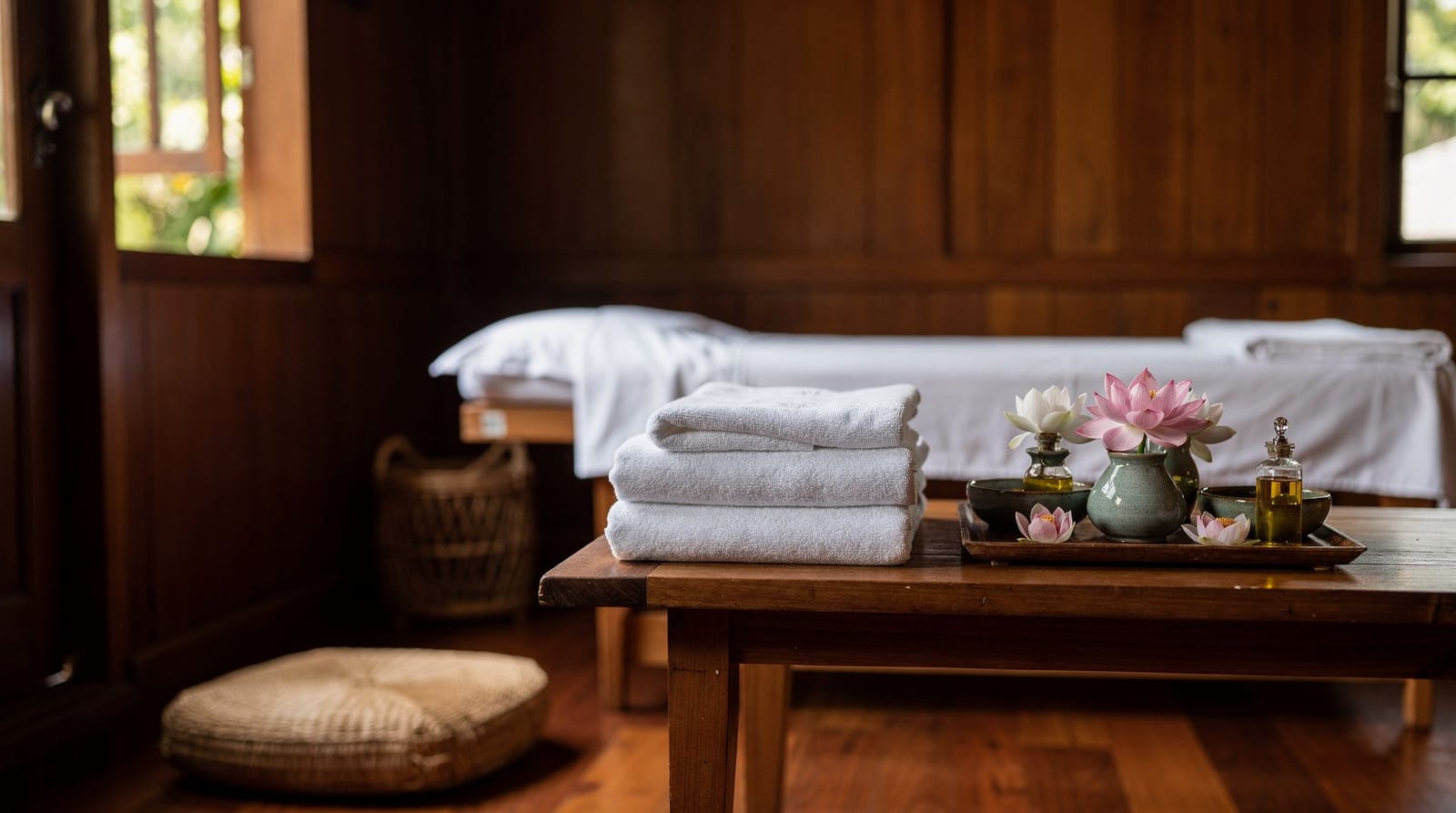
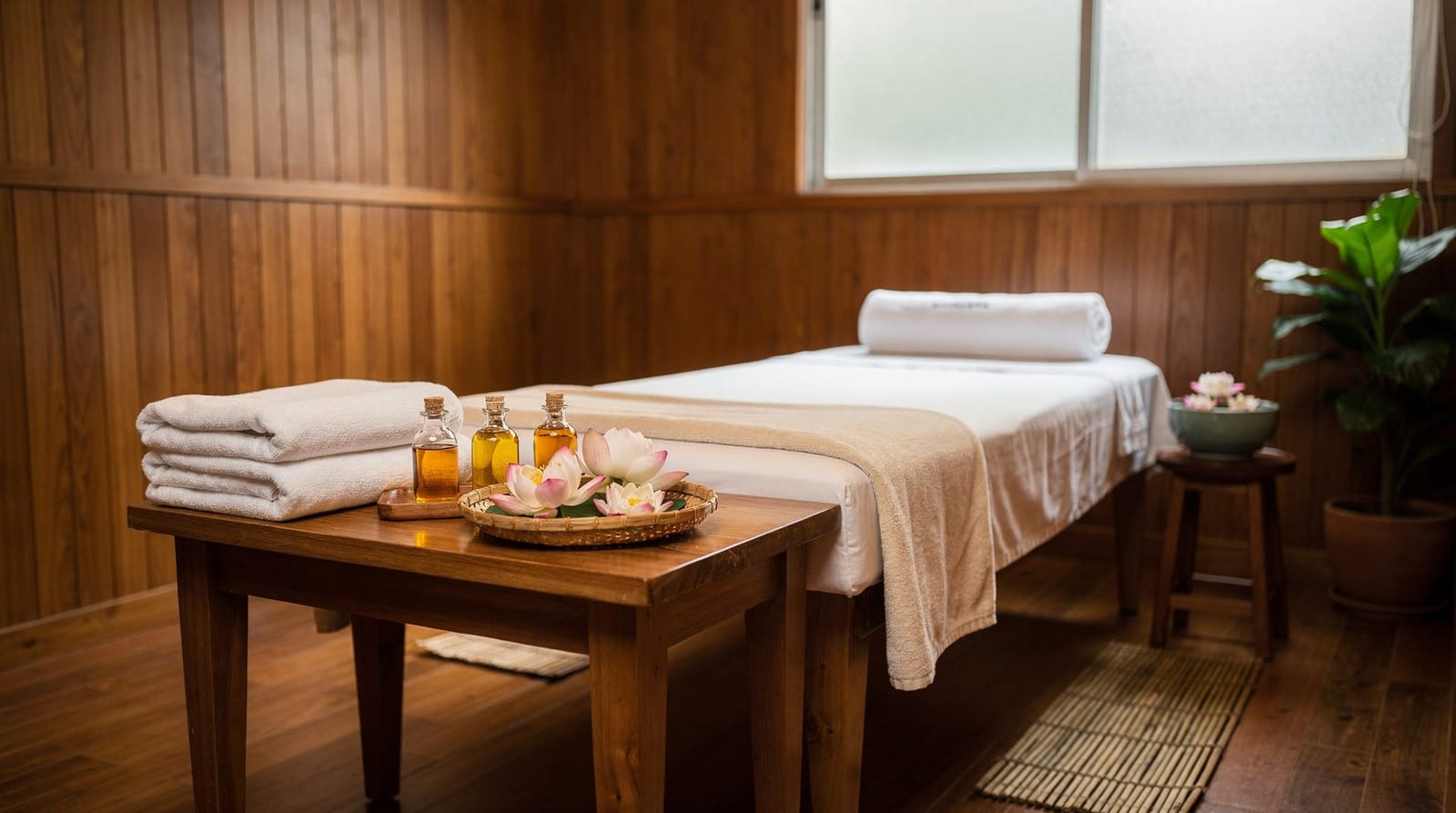
Wat Pho is the national authority on traditional Thai massage, and you can get one inside the temple. The school runs massage pavilions in the grounds; a 30-minute session costs around 480 THB and a full hour around 680 THB. This is the real thing — firm, methodical, pressure-point and stretch-based — administered by trained therapists, not a tourist spa.
Put your name on the list early, because there can be a 20-40 minute wait at peak times; explore the temple while you wait. If you become a convert, the school also offers multi-day training courses. For the full picture see the Wat Pho massage school guide and the broader Thai massage in Bangkok guide.
Beyond the Reclining Buddha
Most visitors come for the big statue and leave, missing two-thirds of the temple. Don’t.
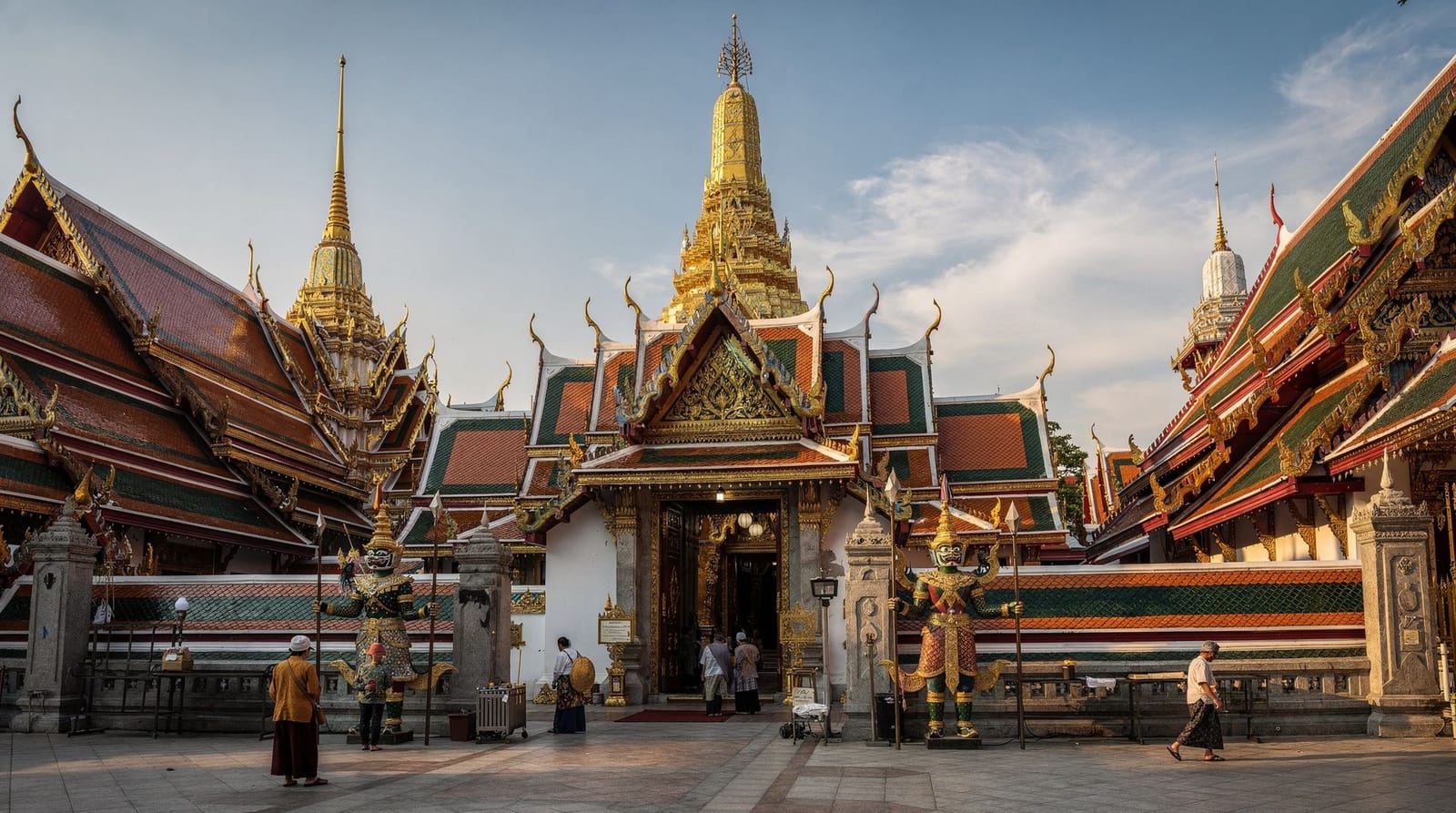
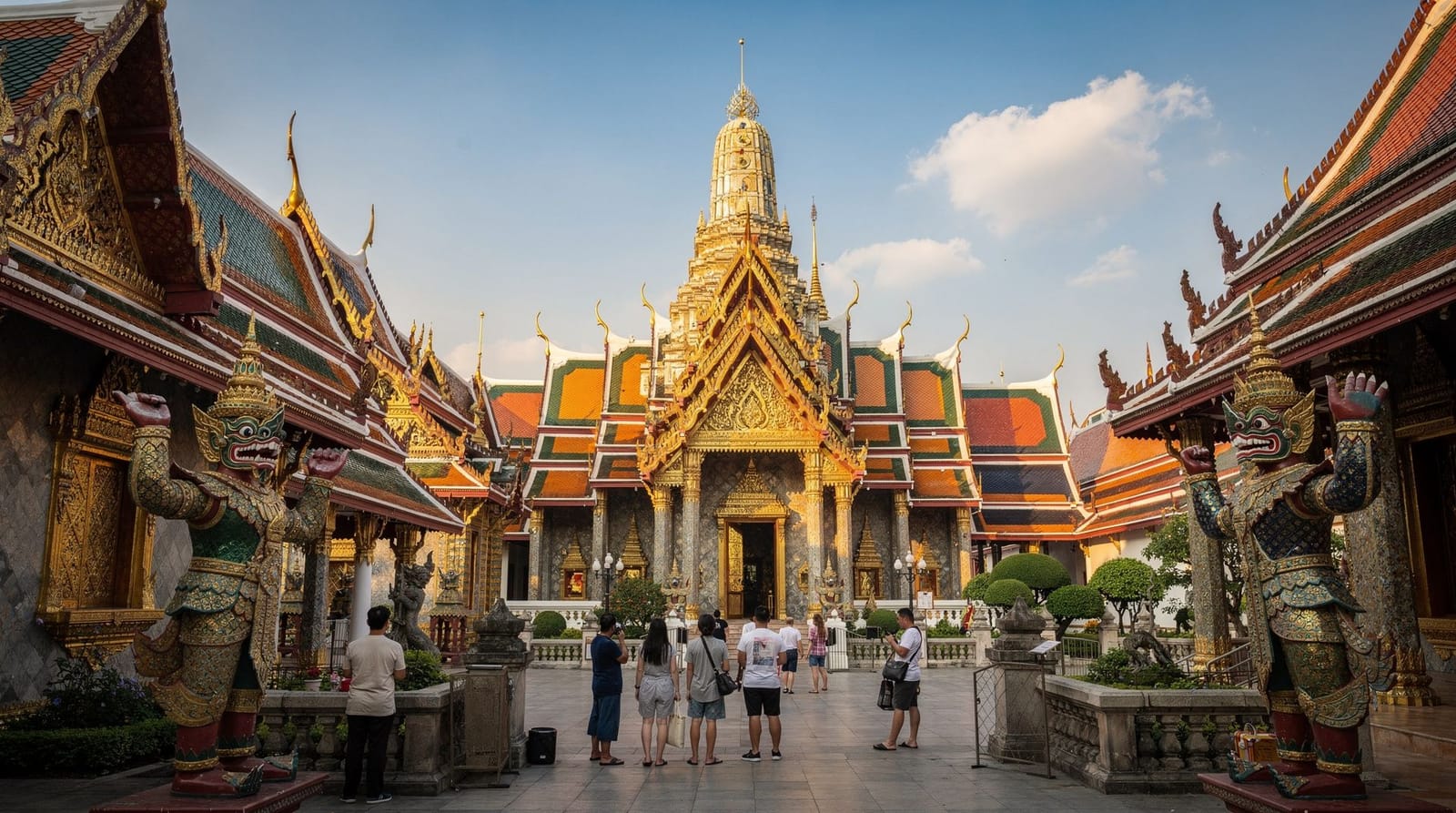
- The chedi gardens: 91 chedis (stupas) of varying sizes, including four towering royal chedis covered in coloured ceramic tiles, each commemorating an early king.
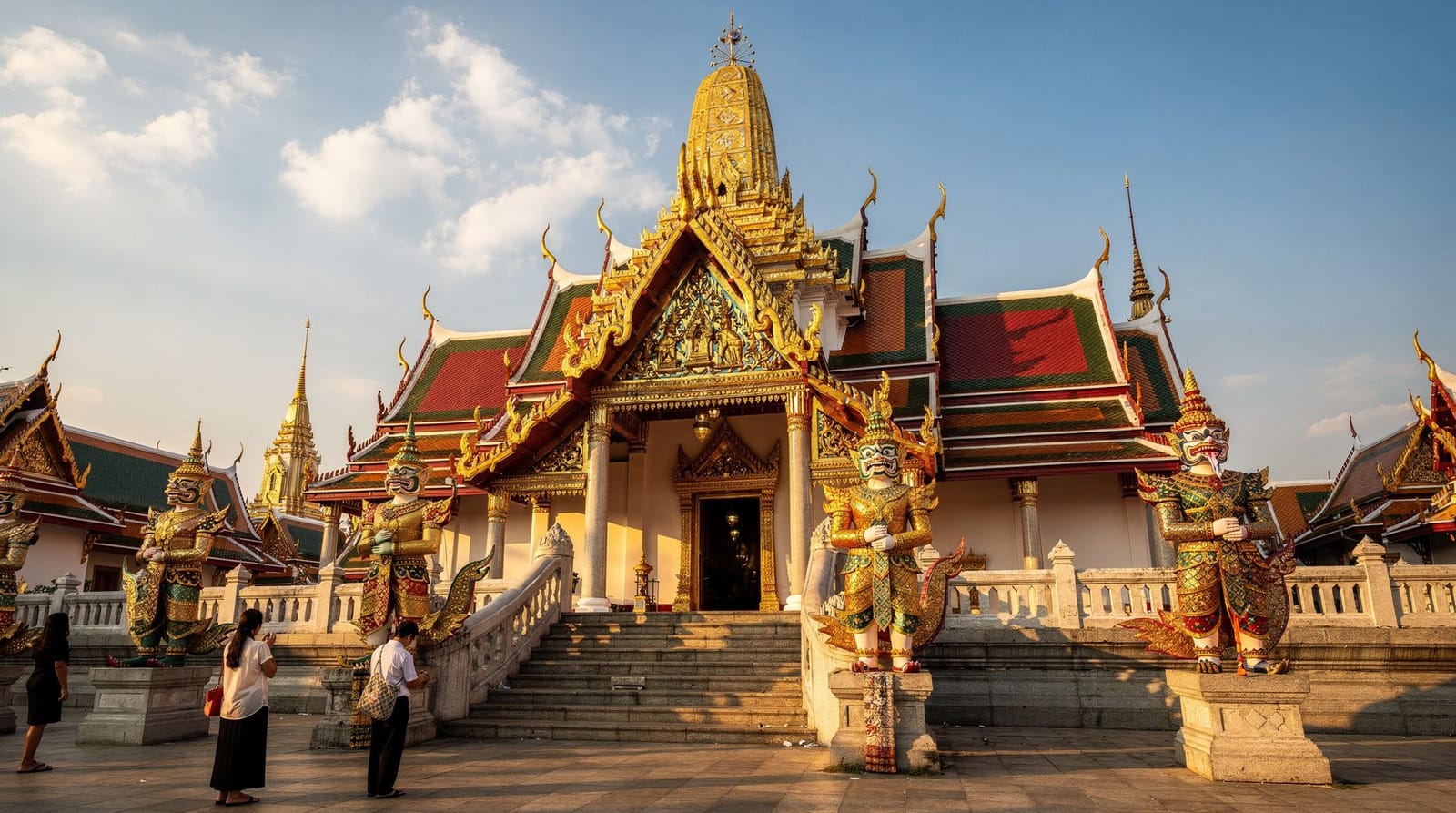
- The ordination hall (Phra Ubosot): the spiritual heart, with a gold Buddha image and intricate doors. Shoes off, quieter than the Reclining Buddha hall.
- The cloisters: double galleries lined with nearly 400 gilded Buddha images in different postures.
- The Chinese stone statues: ballast figures from trading junks, including comic top-hatted Westerners, dotted around the courtyards.
The marble inscriptions: an open-air university
Wat Pho’s most overlooked feature is not a statue but a set of texts. In the 1830s, King Rama III had marble inscriptions and diagrams installed across the temple’s walls and pavilions, covering medicine, massage, astrology, literature and history — a deliberate act of making knowledge public in an era before universities or printed textbooks were widespread. Anyone who could read could learn. This collection was later recognised internationally as part of the world’s documentary heritage, cementing Wat Pho’s reputation as a place of learning as much as worship. It is also the direct reason the temple’s massage school carries such weight today: the technique was written down and preserved here rather than surviving only through informal apprenticeship. Look for the pavilions with painted diagrams of the body’s energy lines as you walk between the main sights.
How Wat Pho compares to the Grand Palace and Wat Arun
| Temple | Entry | Highlight | Atmosphere |
|---|---|---|---|
| Wat Pho | 300 THB | 46m Reclining Buddha, massage school | Large, calmer, more time to explore |
| Wat Phra Kaew / Grand Palace | 500 THB | Emerald Buddha, royal halls | Crowded, strictly policed |
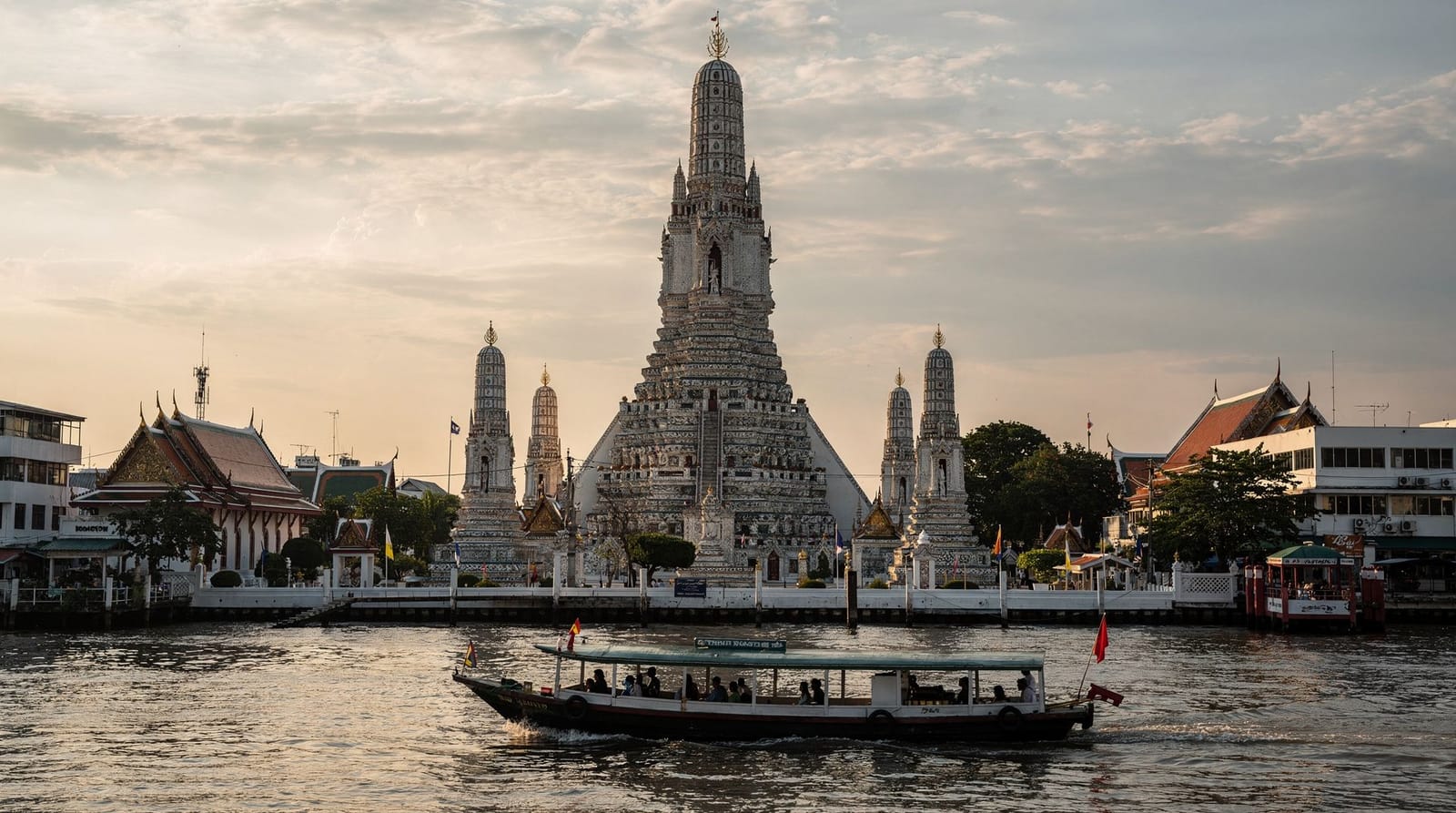
| Wat Arun | 200 THB | Porcelain prang, sunset views | Riverside, best at sunset |
Many first-time visitors expect the Grand Palace to be the highlight and are surprised that Wat Pho is the more relaxed, more rewarding stop of the two. If you can only manage one temple on a short layover, the Grand Palace vs Wat Pho guide helps you choose; with more time, doing all three in one morning is the classic Bangkok temple day.
Tickets, hours and the audio guide
Entry: 300 THB for foreigners (includes a bottled water) · Thais free Hours: 8:00-18:30 daily Nearest transit: Sanam Chai MRT (Blue Line), exit 1, a short walk; or Chao Phraya boat to Tha Tien pier
There is no online pre-booking — buy at the gate with cash. A self-guided Reclining Buddha audio-guide experience for Wat Pho is a good way to add context if you are visiting independently and want the history without a live guide.
Best time to visit
Arrive at 8:00 opening to beat both the heat and the tour groups, which peak between 10:00 and 13:00. In the hot season (March-May), midday is brutal — the open courtyards offer little shade. Late afternoon (after 16:00) is the second-best window, with softer light for photography and thinning crowds before the 18:30 close.
Combining Wat Pho with the Grand Palace and Wat Arun
Wat Pho is the natural middle of Bangkok’s essential temple trio. From the Grand Palace it is a 10-minute walk south; from Wat Pho’s river exit at Tha Tien pier, a 4-5 THB cross-river ferry reaches Wat Arun in five minutes. Doing all three in one morning is the classic Bangkok temple day — see the temple-hopping route guide for the exact sequence and the Bangkok temples itinerary to build a full day around it.
For context and comparison, the best temples in Bangkok guide ranks all the headline sites, and the Grand Palace vs Wat Pho guide helps if you must choose only one. A combined Grand Palace, Wat Pho and Wat Arun sacred tour ties the three together with transport and a guide, and for a more relaxed pace and a private vehicle, a private half-day Grand Palace and Wat Pho tour covers the same ground without joining a group.
Dress code and etiquette
Cover shoulders and knees; shoes off in the prayer halls. Wat Pho is slightly more relaxed than the Grand Palace, but the same rules apply — carry a scarf if your outfit is borderline. Don’t point your feet at the Buddha, keep your voice down in halls where people pray, and remember women must not touch or hand things directly to monks. The temple etiquette and dress code guide has the full rundown, and the Rattanakosin old city destination guide covers the wider neighbourhood.
Frequently asked questions about Wat Pho guide: the Reclining Buddha and Thai massage
How much does Wat Pho cost and what are the hours?
How long do you need at Wat Pho?
Can you get a Thai massage at Wat Pho?
What is the dress code at Wat Pho?
What is the coin ritual at the Reclining Buddha?
Is Wat Pho better than the Grand Palace?
How do you get from Wat Pho to Wat Arun?
Is Wat Pho good for photography?
Why are Wat Pho's inscriptions historically important?
Top experiences
Bookable activities with verified prices and instant confirmation on GetYourGuide.