Grand Palace Bangkok: the complete honest visitor guide
Bangkok: Grand Palace Skip-the-Line Entry Ticket
Is the Grand Palace in Bangkok worth visiting and how do I do it right?
Yes — the Grand Palace is Bangkok's single most important sight, home to Wat Phra Kaew and the sacred Emerald Buddha. Entry is 500 THB (about USD 15) for foreigners, it opens 08:30-15:30 daily, and the dress code (covered shoulders and knees) is strictly enforced. Arrive at 08:30 to beat the heat and crowds, and ignore anyone outside the gate who tells you it is closed today — that is a scam.
The Grand Palace (Phra Borom Maha Ratcha Wang) is the most important sight in Bangkok and the one nearly every first-time visitor builds a day around. Built in 1782 by King Rama I when he founded the new capital, it served as the royal residence until 1925 and still hosts state and royal ceremonies today. This guide gives you the real prices, the strict dress rules, the honest crowd timings, and a clear warning about the famous closed-today scam that targets foreigners at the gate every single day.
| Price | 500 THB (~USD 15), foreigners; Thais and under-120cm children free |
| Hours | Daily 08:30–15:30 |
| Time needed | 2–3 hours |
| Dress code | Strict — shoulders and knees covered, both men and women |
| Nearest transport | Tha Chang pier (river boat) or MRT Sanam Chai, ~15 min walk |
What the Grand Palace actually is
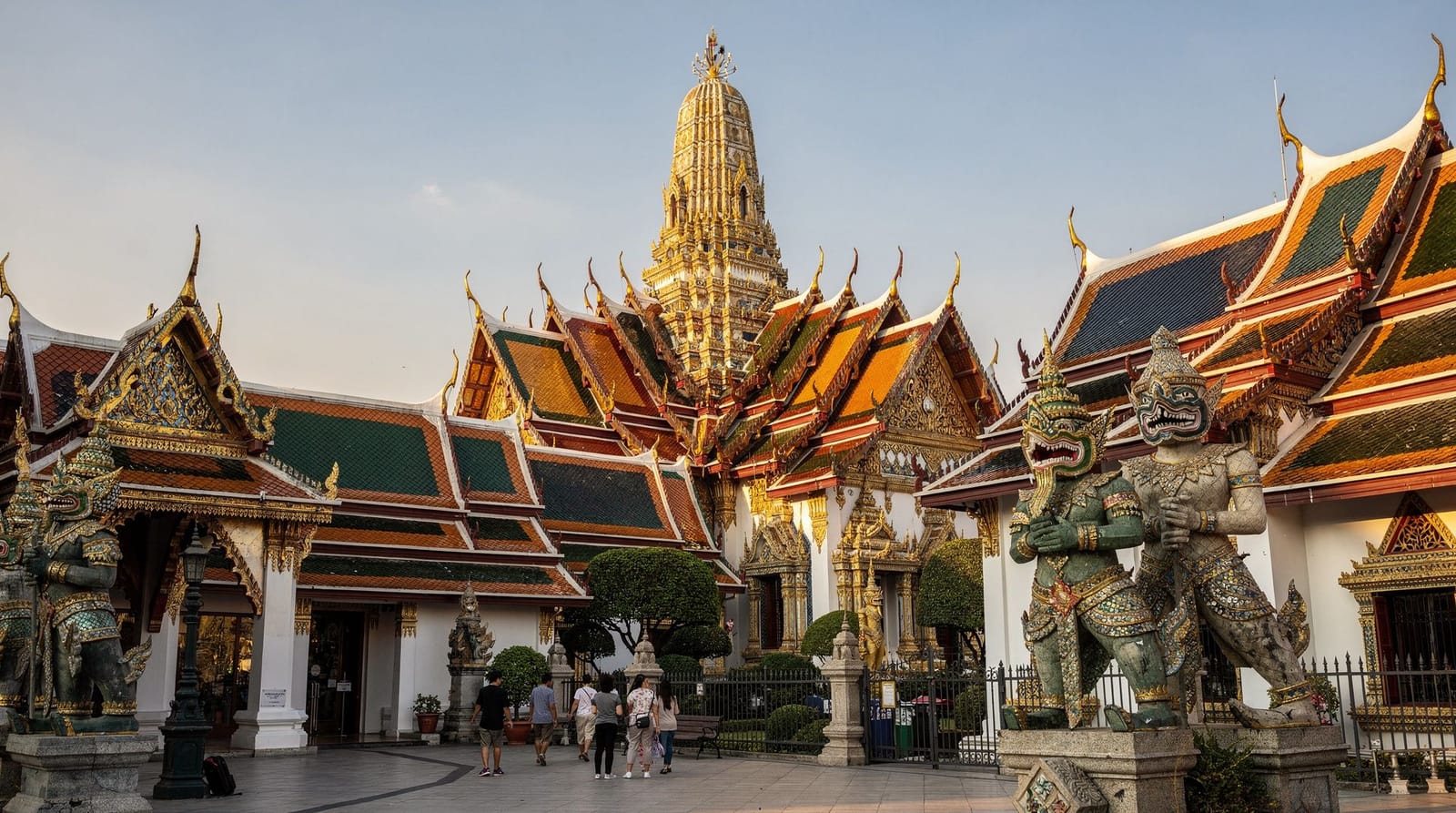
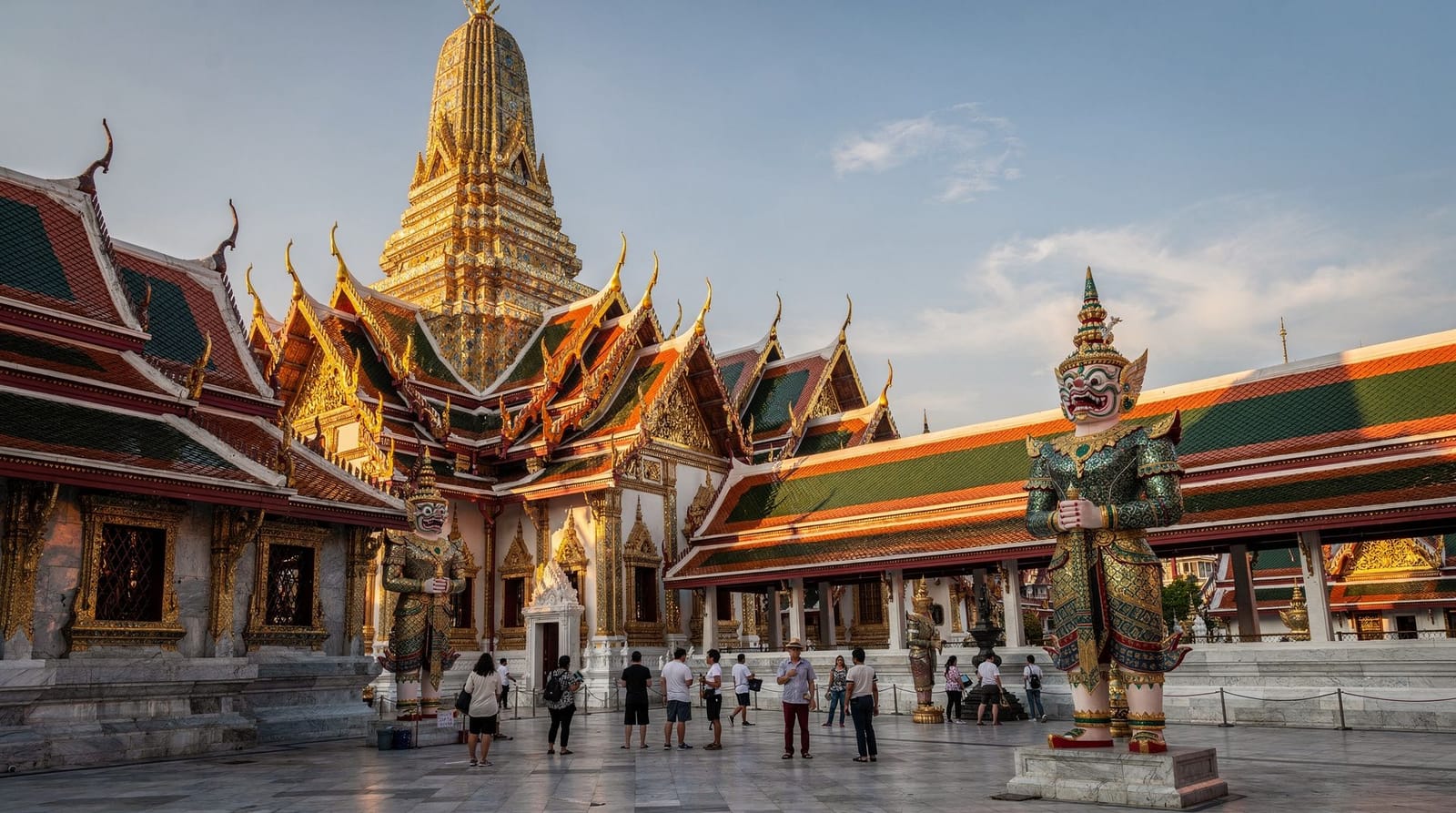
The Grand Palace is not one building but a walled royal city covering more than 200,000 square metres in the heart of Rattanakosin, Bangkok’s old royal island. Inside the white crenellated walls sit two distinct zones. The first is Wat Phra Kaew, the Temple of the Emerald Buddha — a dazzling complex of gilded chedis, mosaic-covered spires and mural-lined cloisters that is the royal chapel and the spiritual centre of the Thai kingdom. The second is the palace proper: a series of throne halls and residences where Thai kings lived and ruled for nearly a century and a half.
You enter through the Na Phra Lan Road gate. The first thing you see is Wat Phra Kaew, and most visitors spend the bulk of their time there before moving on to the outer palace halls. If you only have an hour, the temple complex is the part you cannot miss. For the full picture of which buildings to prioritise, read our Grand Palace what to see walkthrough, and for the Emerald Buddha itself see our dedicated Wat Phra Kaew and Emerald Buddha guide.
Tickets and prices
Entry costs 500 THB (about USD 15) for foreign visitors. That single ticket covers Wat Phra Kaew, the Emerald Buddha and the outer palace, and it also includes admission to the Queen Sirikit Museum of Textiles inside the grounds. Thai nationals enter free, and children under 120 cm tall enter free regardless of nationality. Keep your ticket — it is checked at more than one point inside.
The only legitimate place to buy a ticket is the official ticket office inside the main gate. Nobody on the street, in a tuk-tuk, or at a nearby shop sells genuine Grand Palace tickets, and anyone who offers to is either scamming you or steering you somewhere else. If you would rather skip the on-site queue and pre-book a voucher — sometimes bundled with a guide or audio device — a pre-arranged skip-the-line Grand Palace ticket can save time during the 09:00-12:00 peak. We break down exactly how those products work, and whether they are worth it, in our Grand Palace tickets and skip-the-line guide.
Opening hours and the best time to go
The Grand Palace is open every day from 08:30 to 15:30, with last entry around 15:30. Despite what touts will tell you outside, it is open virtually year-round and almost never closes during these hours. On rare occasions it shuts a section for a major royal ceremony, but that is announced through official channels, not by a stranger on the pavement.
The single best time to arrive is right at opening, 08:30. You beat both the brutal midday heat and the tour groups, which pour in from around 09:00 and make the complex genuinely crowded until lunchtime. If you are not a morning person, the second-best window is after 14:00, when the groups have thinned, though you will be visiting in the hottest part of the day. Avoid the 09:00-12:00 block if you can — that is when the cloisters are shoulder to shoulder. For seasonal planning, our best time to visit Bangkok guide covers the heat and rain patterns that affect how comfortable a midday visit will be.
The dress code is strict — and enforced
This is the rule that catches the most visitors out. The Grand Palace enforces a strict dress code at the gate, and staff genuinely turn people away. Both men and women must have shoulders and knees covered. That means no tank tops, no sleeveless shirts, no shorts, no short skirts, no ripped jeans that show skin, no see-through fabric, and no leggings worn as a sole bottom. Closed shoes are the safest choice. Tight athletic or revealing wear is also refused.
If you turn up underdressed, you are not stuck. There is a clothing-rental counter near the entrance where you can borrow a sarong or wrap for a refundable deposit of around 200 THB, and stalls just outside sell elephant pants or wraps for 100-150 THB. The smarter move is simply to dress correctly before you arrive — carry a light scarf or long trousers in your bag. Our full Grand Palace dress code guide covers every borderline case, and the broader temple etiquette and dress code guide explains the same rules across the city.
The Emerald Buddha
The spiritual heart of the whole complex is the Emerald Buddha (Phra Kaew Morakot), Thailand’s most sacred Buddha image. Despite the name it is carved from a single block of jade, stands about 66 cm tall, and sits high on a gilded altar inside the ornate ubosot. Three times a year the King personally changes its seasonal gold robes — a hot-season, rainy-season and cool-season set — in a ceremony that underlines how central this small statue is to the kingdom.
Inside the chapel the rules tighten. No photography is allowed in the ubosot. Remove your shoes before entering, sit on the floor with your feet tucked away so they never point toward the Buddha, and keep your voice down. This is an active place of worship, not a museum exhibit, and Thai visitors take it seriously. The respect Thais show their monarchy and their faith is bound up together — our monarchy respect and lèse-majesté guide explains why this matters more here than almost anywhere else.
What else to see inside
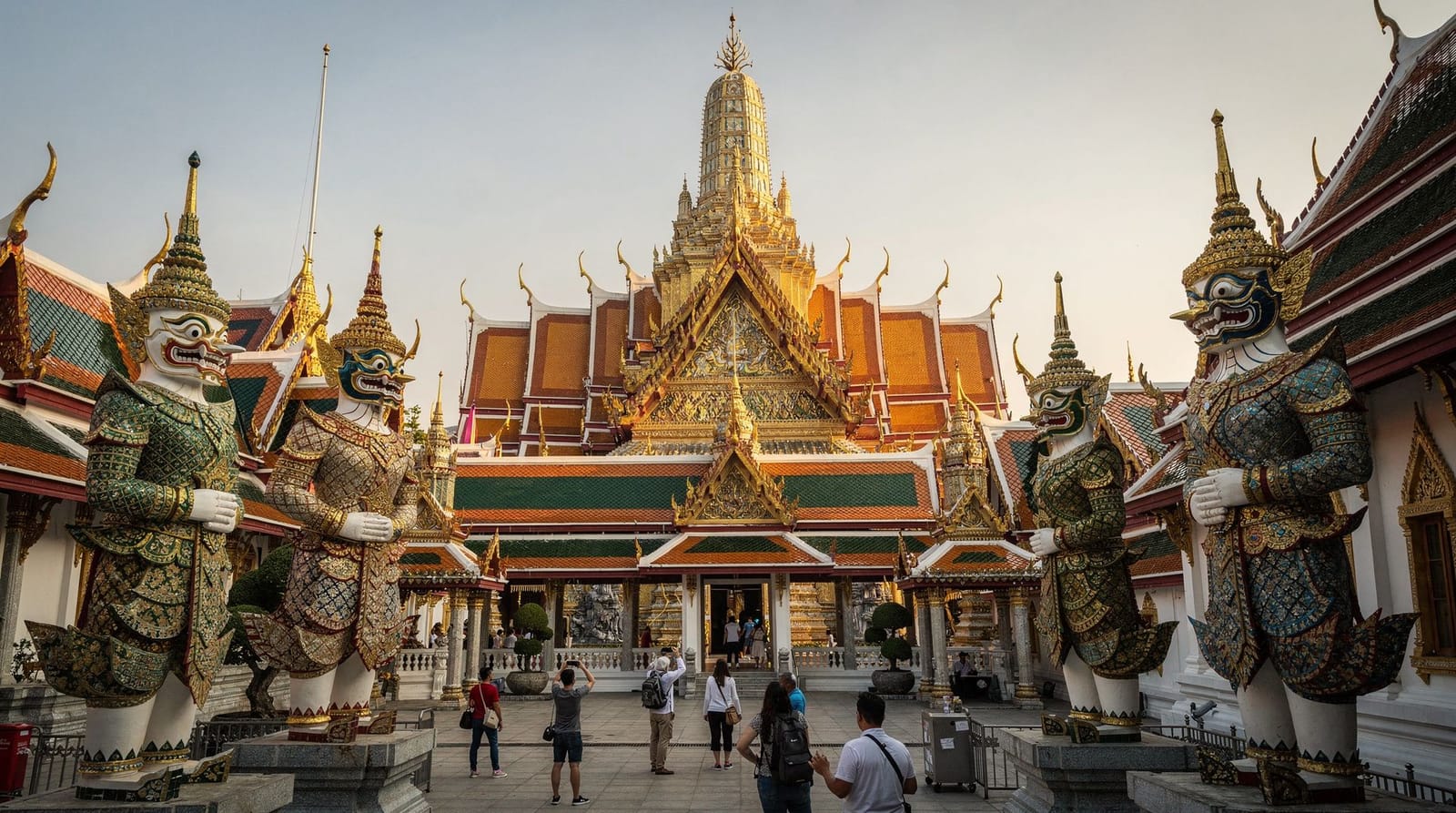
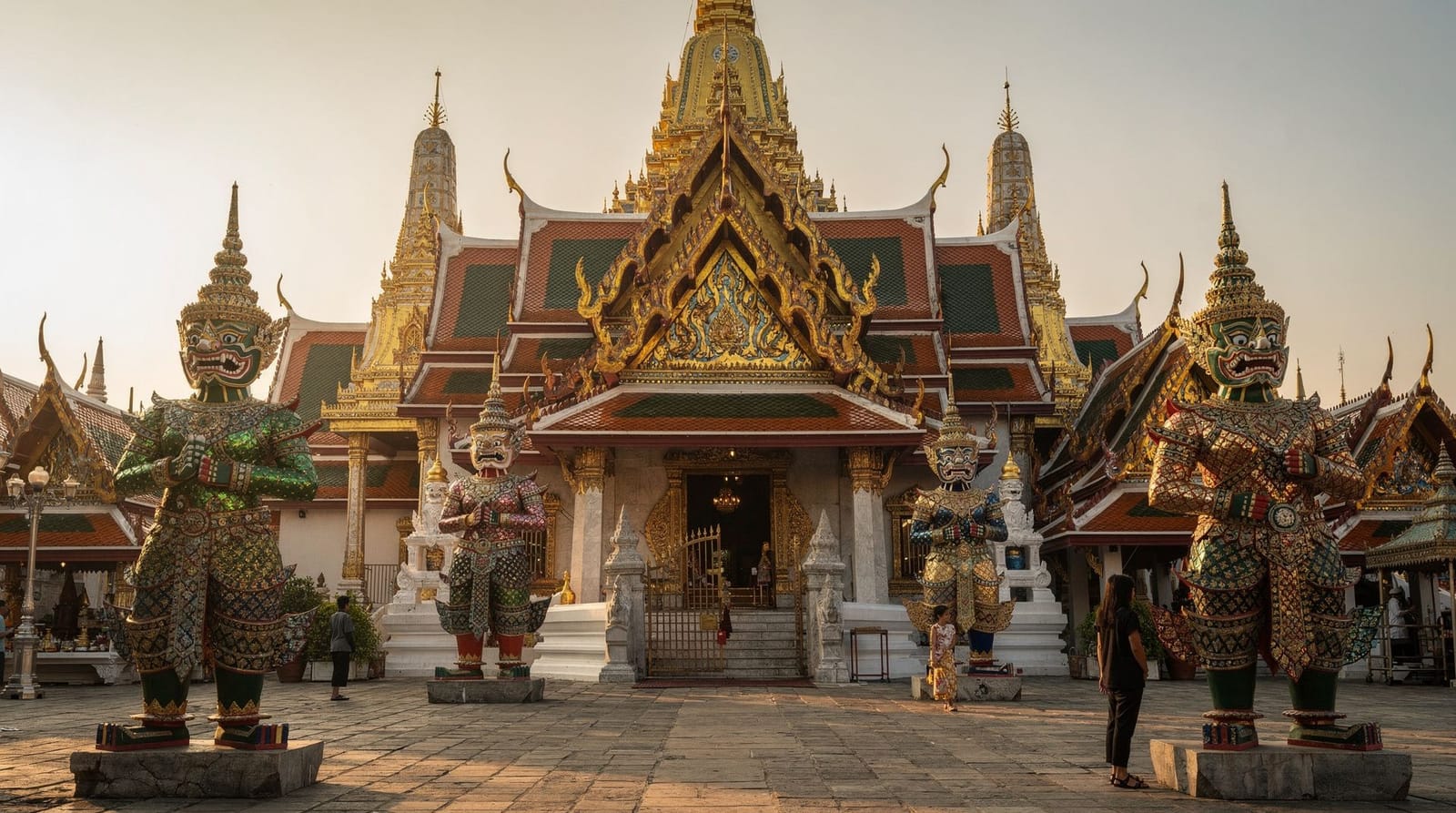
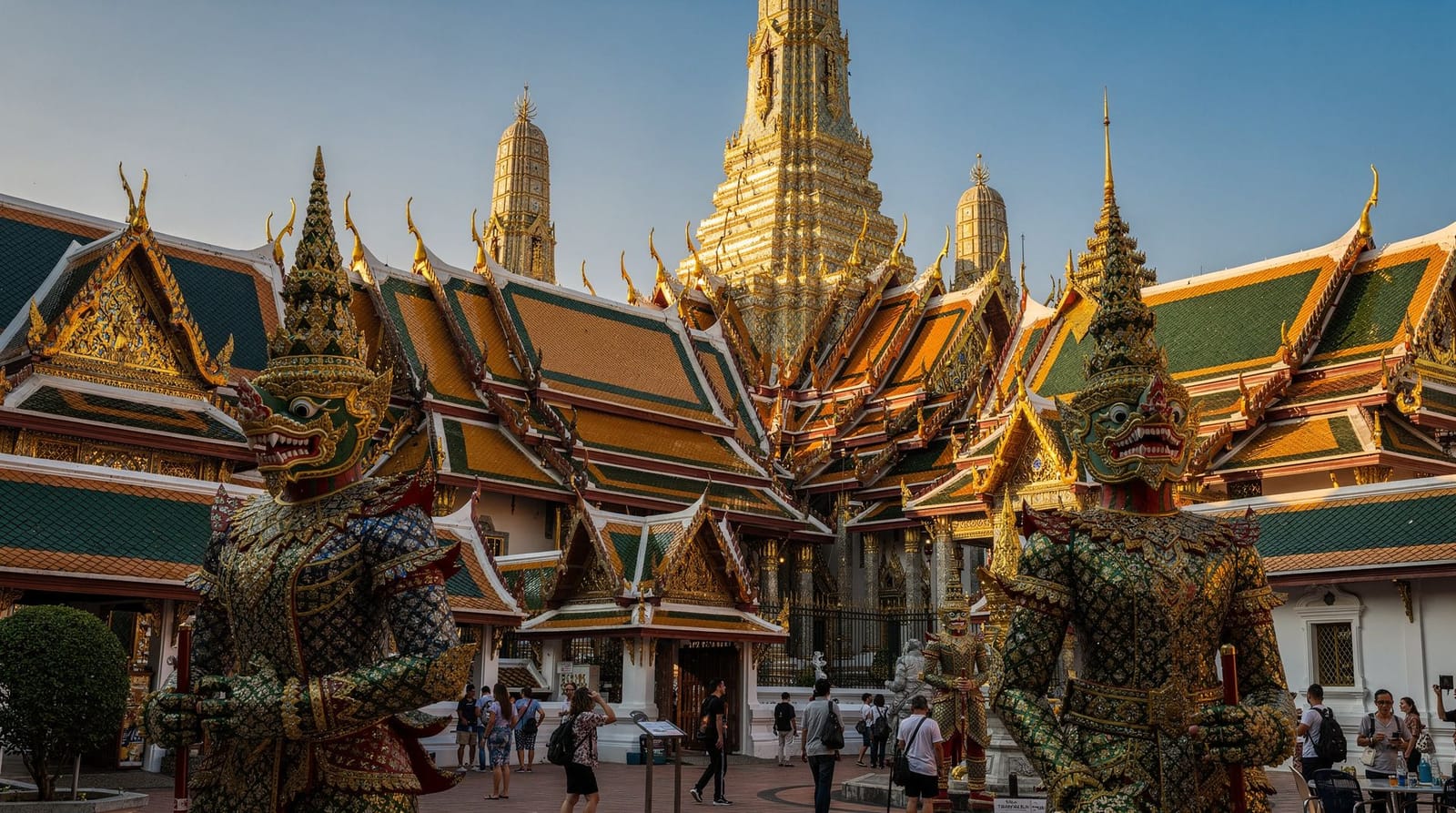
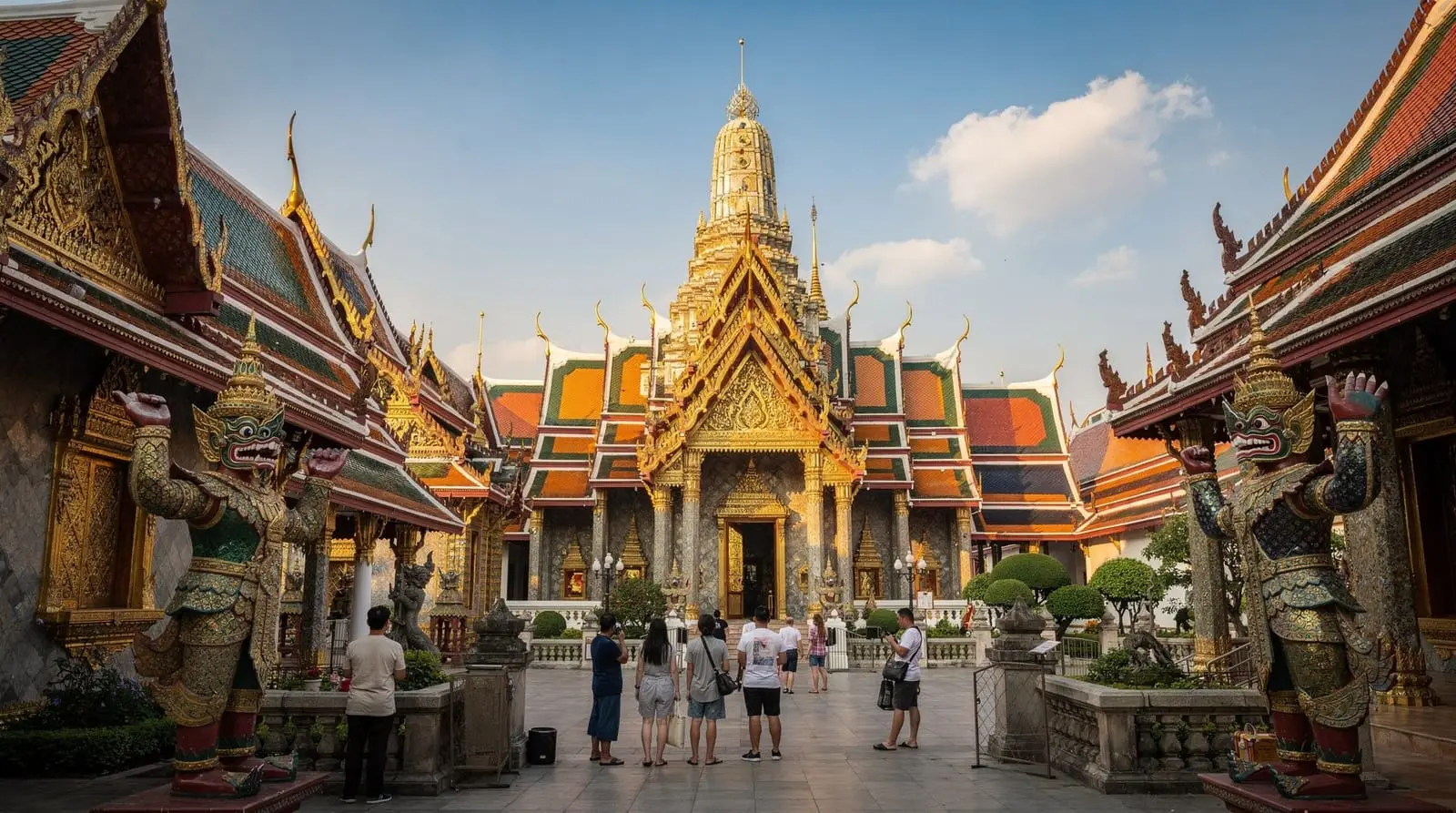
Beyond the Emerald Buddha, Wat Phra Kaew rewards a slow walk. The golden Phra Si Rattana chedi gleams above the courtyard, the Phra Mondop library holds the sacred scriptures, and a remarkable scale model of Angkor Wat sits nearby, commissioned when Cambodia was under Siamese influence. Running the length of the cloister are the Ramakien murals — 178 panels telling the Thai version of the Ramayana — guarded at the gates by towering yaksha demon statues.
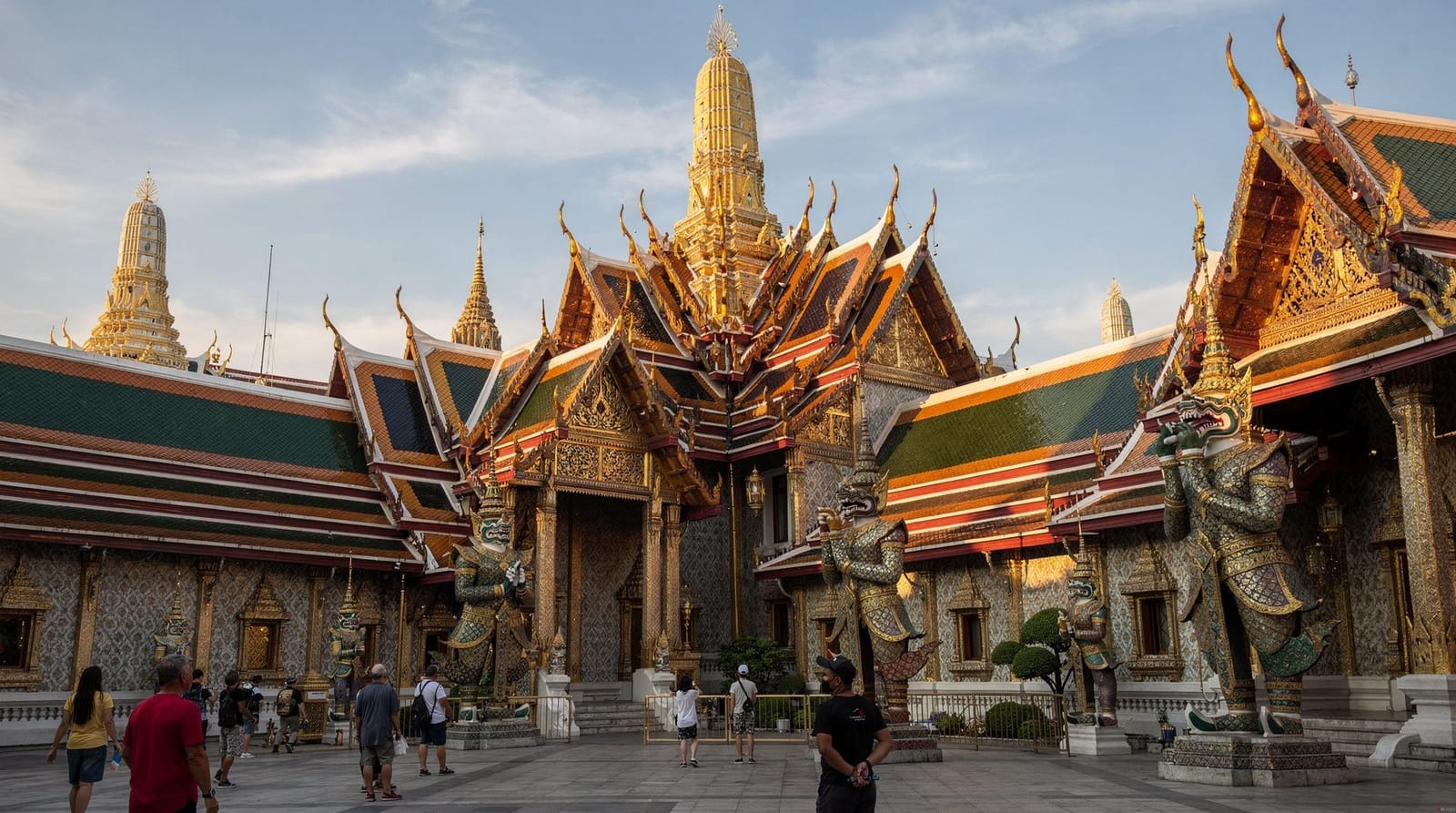
Then come the outer palace halls. The Chakri Maha Prasat is the showpiece: a grand hybrid building with an Italian-style European body topped by Thai spired roofs, the result of a 19th-century king who wanted Western grandeur without abandoning Thai identity. Nearby stand the all-Thai Dusit Maha Prasat throne hall, the Amarin Winitchai throne hall used for ceremonies, and the Borom Phiman residence. A self-guided visit covers these well, but a guided Grand Palace and Emerald Buddha tour brings the symbolism and history to life if you want context. The full building-by-building breakdown is in our Grand Palace what to see guide.
How to get there
The Grand Palace sits on Bangkok’s old royal island in Rattanakosin, and getting there is the one slightly awkward part of the visit because there is no BTS or MRT station at the door. Your options:
By river is the most pleasant. Take the BTS to Saphan Taksin, walk down to Sathorn pier, and ride the Chao Phraya Express Boat to Tha Chang pier, a few minutes’ walk from the gate. Tha Maharaj pier is another option a little further north. Our Chao Phraya boats guide explains the colour-flagged boat lines and fares.
By metro, the nearest station is MRT Sanam Chai on the Blue Line, about a 15-minute walk south through Rattanakosin — handy if you are coming from Chinatown or the river-line stations. See the MRT subway guide for routing.
By Grab or taxi, ask for the Na Phra Lan Road gate. Insist on the meter in a taxi — if a driver refuses to use it, wave them off and take the next one or order a Grab instead. Our Grab, taxi and tuk-tuk guide explains the metered-taxi refusal problem and how to avoid it. For the wider picture, the getting around Bangkok guide ties all the transport options together.
A little more history, if you want the context
Knowing a bit of the backstory changes how the gold and mosaic read once you’re standing in front of it. King Rama I moved the capital across the river from Thonburi to Bangkok in 1782 and built the Grand Palace as the seat of a new dynasty, the Chakri, which still reigns today. For nearly 150 years it was the working residence of Thai kings — the throne halls hosted state business, royal audiences and ceremonies, not just symbolic display. The royal family moved its everyday residence to Dusit Palace in the early 20th century, but the Grand Palace never lost its ceremonial role: coronations, state funerals and major royal rites are still held here. That layered history — founding capital, working palace, living ceremonial site — is part of why the dress code and behaviour expectations remain so strict; you are not visiting a museum of the past but a site still active in the present. Our monarchy respect and lèse-majesté guide explains how this history shapes etiquette across the country, not just inside these walls.
Accessibility and mobility considerations
The complex is mostly flat paved courtyard, which helps, but it also involves genuine distances between zones, several raised thresholds into the prayer halls, and no shade for long stretches — a real combination for anyone with limited mobility or stamina. Wheelchair users can navigate most of the outer courtyards, though entering some of the halls requires a step up that isn’t always avoidable. There’s no dedicated buggy or golf-cart service, so pacing yourself and resting in the shaded cloister or the air-conditioned textile museum matters more here than at most Bangkok sights. If you’re travelling with elderly companions or reduced mobility, budget extra time, bring a hat and water regardless of season, and consider visiting at the coolest part of the day even if that means arriving right at 08:30 opening rather than fitting it in later.
The scams to know before you arrive
The Grand Palace area is ground zero for Bangkok’s most persistent tourist scams, and being prepared takes all their power away.
The closed-today scam is the big one. A well-dressed, friendly local — sometimes posing as a teacher, a student or even an off-duty official — approaches you near the gate and says the Palace is closed this morning for a special ceremony, a Buddhist holiday, or royal prayers, and won’t open until later. They then helpfully suggest a tuk-tuk driver who can take you on a cheap tour of other sights while you wait. That tour ends at gem shops and tailors who pay the driver commission, and you are pressured to buy. The truth is simple: the Grand Palace is almost never closed during its published 08:30-15:30 hours. Ignore anyone who tells you otherwise and walk straight to the official ticket office to check for yourself.
The gem scam flows from this. At a “government-approved” or “today-only sale” gem shop, you are shown stones at supposedly unbeatable prices, often with a story about export tax exemptions. The gems are near-worthless, the discounts are fictional, and there is no refund once you leave Thailand. Buy no gems from any shop a tuk-tuk or stranger steers you to.
The 20-baht tuk-tuk tour is the delivery mechanism. A driver offers an absurdly cheap city tour — 20, 40 or 50 THB for hours of sightseeing. The price is real because the shops on the route pay the driver to bring you in. You will spend more time in commission shops than at temples.
Finally, taxi meter refusal: drivers near the Palace often quote a flat, inflated fare rather than run the meter. Decline and order a Grab, or walk to a quieter street and flag a passing metered taxi. We cover all of these in depth in our Grand Palace scam warning, gem scam and tuk-tuk scams guides, plus a city-wide round-up in common Bangkok scams.
Facilities inside: water, shade and a cooling break
The complex is largely open courtyard with limited natural shade, so plan around the heat rather than fighting it. Water is sold at small kiosks inside the grounds, and it’s worth buying more than you think you need, especially in the March–May hot season. The cloister running around Wat Phra Kaew offers a shaded stretch that doubles as a natural rest point between the temple zone and the outer palace. The air-conditioned Queen Sirikit Museum of Textiles inside the grounds — already included in your ticket — is the single best cooling break on site, and skipping it purely to save time is a common regret once the heat sets in. Toilets are available near the entrance and inside the complex; there is no need to leave and re-enter to find one. Comfortable, breathable clothing that still meets the dress code makes the biggest practical difference to how the visit feels.
Best photo spots inside
The Grand Palace rewards a slower, more deliberate approach to photography than most visitors give it. The golden Phra Si Rattana chedi against a blue sky is the classic shot, best in the soft light right after the 08:30 opening before both the crowds and the harsh midday sun arrive. The yaksha demon guardians at the cloister gates make striking portrait subjects, and the Ramakien murals reward a slow walk with a longer lens if you have one. Remember that photography is banned inside the Emerald Buddha chapel itself — the one place you’ll want to simply look rather than shoot. Our best photo spots in Bangkok and temple photography tips guides go deeper on angles, light and etiquette around monks and worshippers.
How to spend the rest of your morning
The Grand Palace is best treated as the anchor of a temple morning rather than a standalone stop. Once you finish, Wat Pho — the Temple of the Reclining Buddha — is a flat 10-minute walk south, cheaper at 300 THB, far calmer, and home to the birthplace of traditional Thai massage. From there, a 4 THB cross-river ferry takes you to Wat Arun, the Temple of Dawn. This three-temple loop is the classic Rattanakosin morning and the best use of an early start. Pack for the walk between them, since there’s little shade on the river side; our what to pack for Bangkok guide covers the essentials.
If you want help deciding between the two big temples, our Grand Palace versus Wat Pho comparison lays out the trade-offs honestly. For ready-made routing, the Bangkok temples itinerary and the one-day plan in Bangkok in 1 day both build around this morning. A combined small-group experience such as the Grand Palace, Wat Pho and Wat Arun sacred tour handles the transport and timing for you if you would rather not navigate it solo.
Is the Grand Palace worth it?
For any first-time visitor, yes, without hesitation. The 500 THB fee is higher than any other temple in the city, and the foreigner-pays-while-Thais-enter-free model rubs some people the wrong way, but the craftsmanship, scale and significance of Wat Phra Kaew genuinely justify it. There is nothing else like it in Thailand, and the maintenance of this living royal heritage is what the fee funds. If you have time for only one cultural sight in Bangkok, this is it — covered in our must-see first time and top attractions Bangkok guides.
The honest caveat is the crowds and the heat. A Grand Palace visit done badly — arriving at 11:00 in May with bare shoulders and no scam awareness — is miserable. Done well, arriving at opening, correctly dressed, ignoring the touts and pairing it with Wat Pho, it is the highlight of a Bangkok trip.
Frequently asked questions about Grand Palace Bangkok: the complete honest visitor
How much does the Grand Palace cost?
What are the Grand Palace opening hours?
What is the dress code for the Grand Palace?
What is the Grand Palace closed-today scam?
How do I get to the Grand Palace?
How long do I need at the Grand Palace?
Can I see the Emerald Buddha and take photos?
Top experiences
Bookable activities with verified prices and instant confirmation on GetYourGuide.