Wat Paknam guide: the green glass stupa of Thonburi
Bangkok: Instagram Spots & Half-Day Temples Tour
What is Wat Paknam and why is it famous?
Wat Paknam Phasi Charoen is a working monastery in Thonburi that went viral for the mesmerising emerald-green glass dome inside its 80-metre white pagoda — a painted cosmic ceiling depicting the Buddhist universe. The compound also has a giant seated Buddha visible across the rooftops. Entry is free, it opens roughly 8:00-18:00, and it is now reachable on the MRT Blue Line. Go in late morning for the best light through the glass.
Wat Paknam is the temple that broke the internet — the emerald-green glass dome painted with a stylised Buddhist universe, glowing inside a towering white pagoda in Thonburi, became one of the most-photographed temple interiors in the world. But it is also a genuine, busy working monastery with a giant seated Buddha visible across the rooftops, it is free to enter, and the new MRT Blue Line has finally made it an easy trip. This guide covers the glass ceiling, the giant Buddha, the best photo timing, and how to get there.
| Entry | Free (donations welcome) |
| Hours | Roughly 8:00–18:00 daily |
| Best time | Late morning, on a weekday |
| Getting there | MRT Blue Line to Bang Phai, then a short walk |
| Time needed | 1–1.5 hours |
Wat Paknam Phasi Charoen lies on the Thonburi side of the river, in the Phasi Charoen district. It is an old and important monastery — a centre of Dhammakaya meditation tradition — that for most of its history saw almost no tourists. That changed entirely when its modern pagoda’s green-glass ceiling went viral around 2019. Today it draws both pilgrims and Instagrammers, but its working-monastery atmosphere survives.
A temple with real history behind the viral photo
It is easy to assume Wat Paknam was built for the glass dome, but the monastery itself dates back to the Ayutthaya period, long before Bangkok existed as a capital. In the 19th century it was home to Somdej Toh, one of Thailand’s most revered abbots, whose blessed amulets remain among the most sought-after and expensive in the country. In the early 20th century the temple became the birthplace of the modern Dhammakaya meditation revival under the monk Luang Pu Sodh, a tradition that continues to shape the temple’s identity today. The green glass pagoda, completed decades later, sits on top of that long religious history rather than replacing it — which is part of why the monastery still functions as a genuine place of worship rather than a photo backdrop.
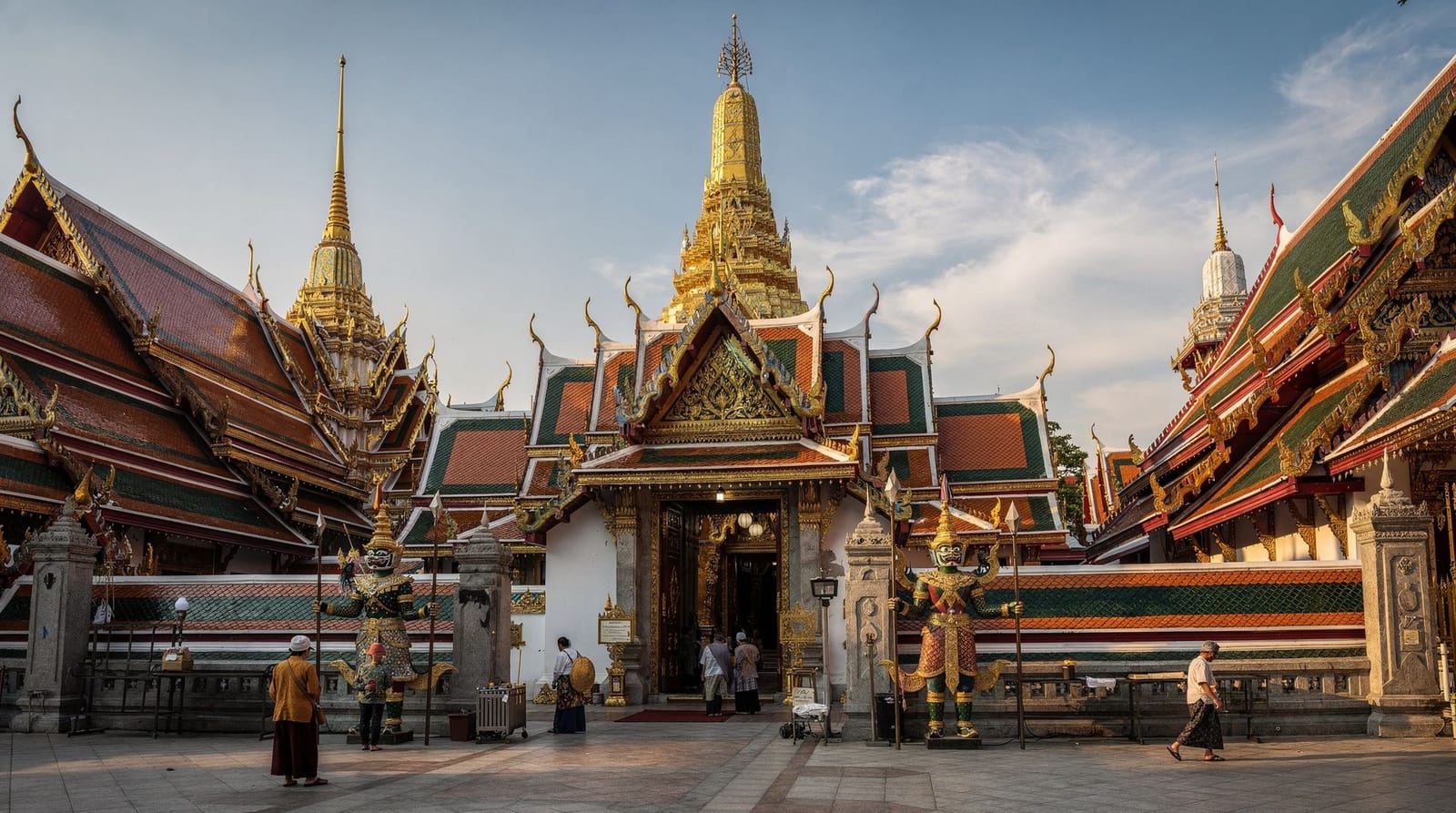
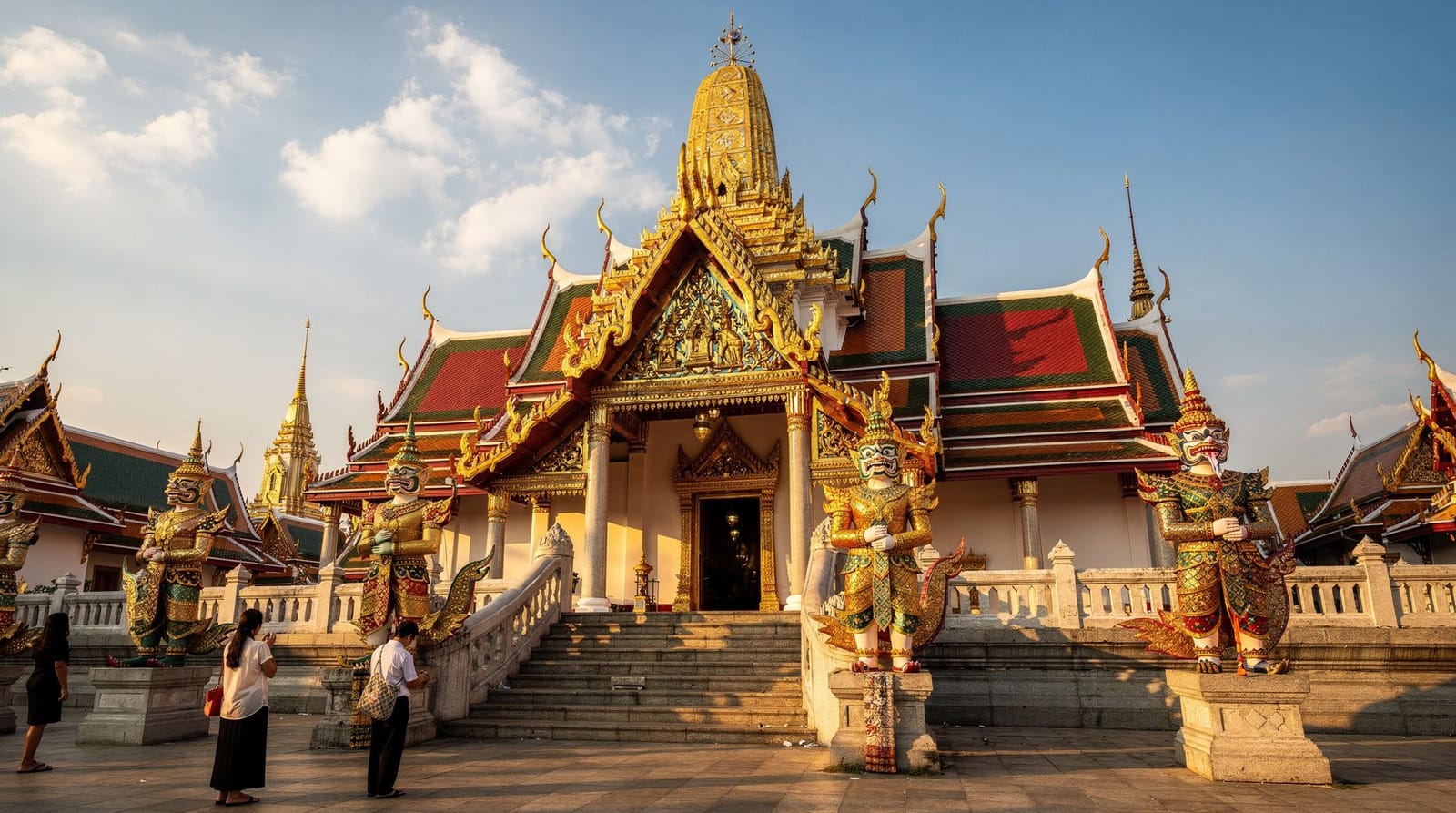
That history is also why Wat Paknam still draws serious pilgrims alongside photographers. Small shops near the entrance sell amulets, incense and flowers, and it is common to see worshippers making merit — a donation, a prayer, or lighting incense before a Buddha image — quietly alongside visitors queuing for the glass dome. If you want to take part respectfully, a modest donation in one of the collection boxes is welcomed and needs no explanation; just do so quietly and without disrupting anyone at prayer. It is a reminder that, viral ceiling aside, this remains one of Bangkok’s genuinely significant working monasteries, and treating it with the same respect you would show at Wat Pho or the Grand Palace goes a long way.
The green glass dome
The star attraction is on the top floor of the Maha Ratchamongkhon Chedi, the white pagoda. A large emerald-green glass dome arches overhead, painted with a Buddhist cosmology — a stylised map of the universe centred on a glowing green stupa, ringed with celestial imagery. Lit from below and from the surrounding windows, the green light is genuinely hypnotic.
The space is small, so it gets crowded on weekends and patience pays off for a clear shot. The dome itself is a modern creation (the pagoda dates to the 2010s), but the effect is timeless. It features in the Instagram spots in Bangkok guide and the best photo spots in Bangkok guide.
The giant Buddha and the rest of the compound
Towering over the surrounding rooftops is Phra Buddha Dhammakaya Thepmongkol, an enormous seated Buddha statue completed in recent years and one of the largest in Thailand. Its sheer scale is striking from the temple grounds and from across the neighbourhood, and it is illuminated after dark, remaining a visible landmark across Thonburi well into the evening.
The white pagoda itself has several floors of relics, Buddha images and exhibits that you pass on the way up to the glass dome, each worth a pause. The wider compound has ordination halls, meditation areas and a riverside edge, with monks and local worshippers going about daily life — a reminder that this is a living monastery, not a museum. For more under-the-radar finds, see the hidden gems in Bangkok guide.
Getting there: the MRT changed everything
Entry: free (donations welcome) Hours: roughly 8:00-18:00 daily Best route: MRT Blue Line to Bang Phai station, then a short walk or motorbike-taxi Also: taxi/Grab, or combine with a Thonburi canal trip
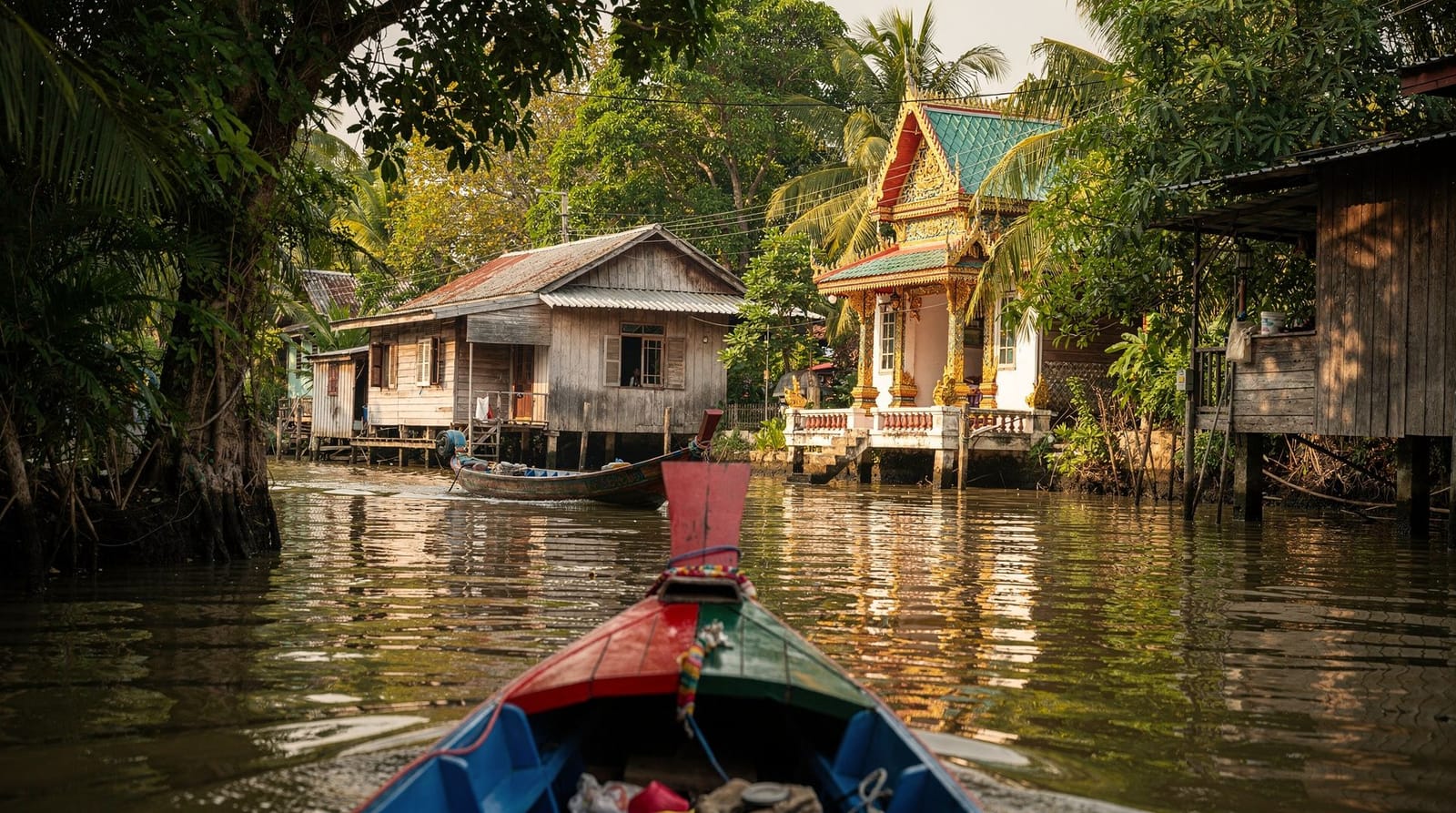
For years Wat Paknam was awkward to reach, deep in Thonburi with no rail link. The MRT Blue Line extension changed that — from Bang Phai station it is a short hop, making it an easy half-day from the city centre. See the Thonburi khlongs destination guide for the wider canal-laced district and the MRT subway guide for the metro.
Best time to visit
Go in late morning, when daylight through the pagoda’s windows lights the green glass evenly and adds depth to photos. Weekdays are far quieter than weekends, when the top floor can get crowded — arrive when it opens for the cleanest shots. As with all Bangkok sightseeing, avoid the midday heat of the hot season where you can.
Combining Wat Paknam with a Thonburi day
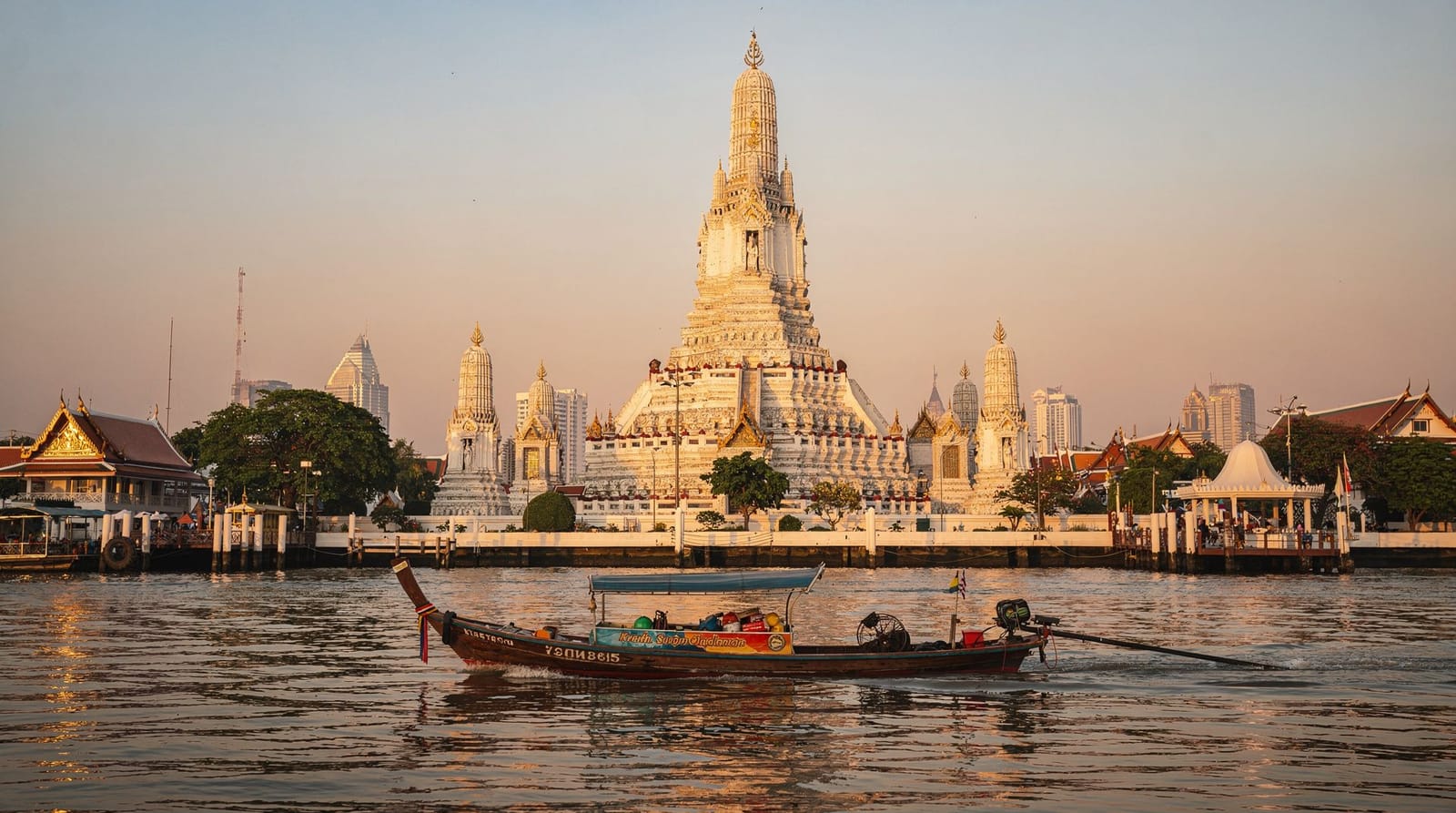
Wat Paknam pairs well with the Thonburi canals and Wat Arun, all on the western bank. A flexible private flexi temple tour can include Wat Paknam alongside other temples on a route you set, and an Instagram temple spots half-day tour targets the photogenic temples including the glass dome. For an evening plan that bookends historic temples with a rooftop sunset, a historical temples and rooftop sunset tour is a good alternative to a purely photo-focused itinerary. The temple-hopping route guide and best temples in Bangkok guide place it in context.
Dress code and how long to spend
Cover shoulders and knees; remove shoes before entering the pagoda and prayer halls. As a serious working monastery, Wat Paknam expects respectful dress — bring a scarf or sarong rather than relying on a cover-up at the door. Allow an hour to an hour and a half for the pagoda, the giant Buddha and the grounds, plus extra if you add a canal trip. The temple etiquette and dress code guide has the general rules.
Photography inside the dome
The top floor is small and often busy: skip the tripod (little room, and staff may ask you to stop), keep flash off since the dome is already lit, and wait for a gap rather than pushing forward. Shooting straight up from directly beneath the centre gives the most symmetrical result. If it’s packed, circle back after ten minutes — turnover is fairly quick.
Frequently asked questions about Wat Paknam guide: the green glass stupa of Thonburi
Is Wat Paknam free to visit?
What is the green glass ceiling at Wat Paknam?
How do you get to Wat Paknam?
When is the best time to photograph the glass ceiling?
What else is there to see at Wat Paknam?
What is the dress code at Wat Paknam?
How long do you need at Wat Paknam?
Is Wat Paknam worth the trip across the river?
Is Wat Paknam an old temple, or was it built for the glass dome?
Top experiences
Bookable activities with verified prices and instant confirmation on GetYourGuide.