Yaowarat and Chinatown food: eating Bangkok after dark
Bangkok: Chinatown Night Food Tour
Where should I eat in Yaowarat and Chinatown?
Walk Yaowarat Road after 6 pm for guay jub, grilled seafood, dim sum, durian and mango sticky rice. Headliners include Nai Ek Roll Noodle, T&K Seafood, Nay Hong fried noodles and Soi Texas stalls. Arrive via MRT Wat Mangkon, bring cash, and check seafood prices before ordering.
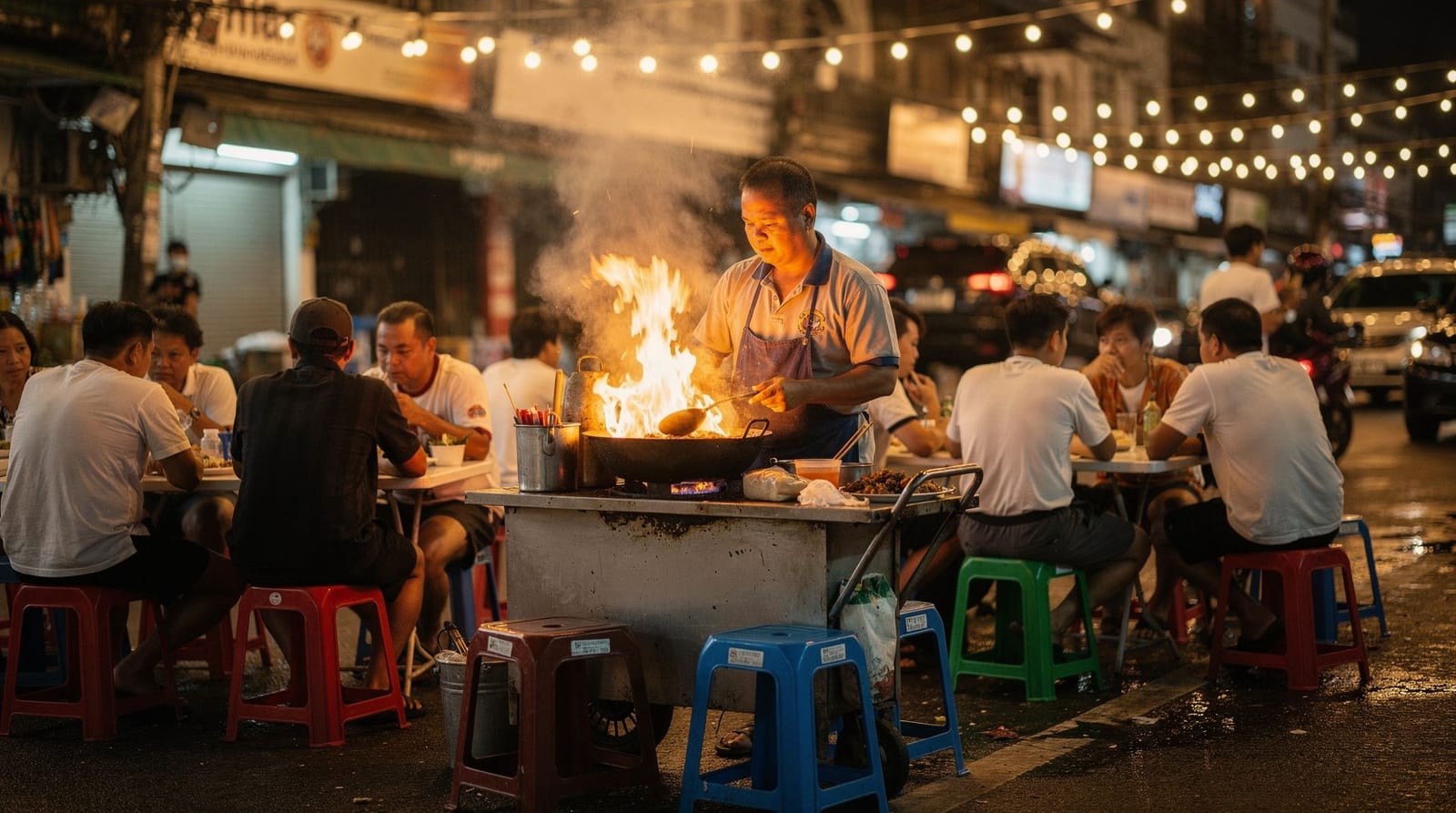
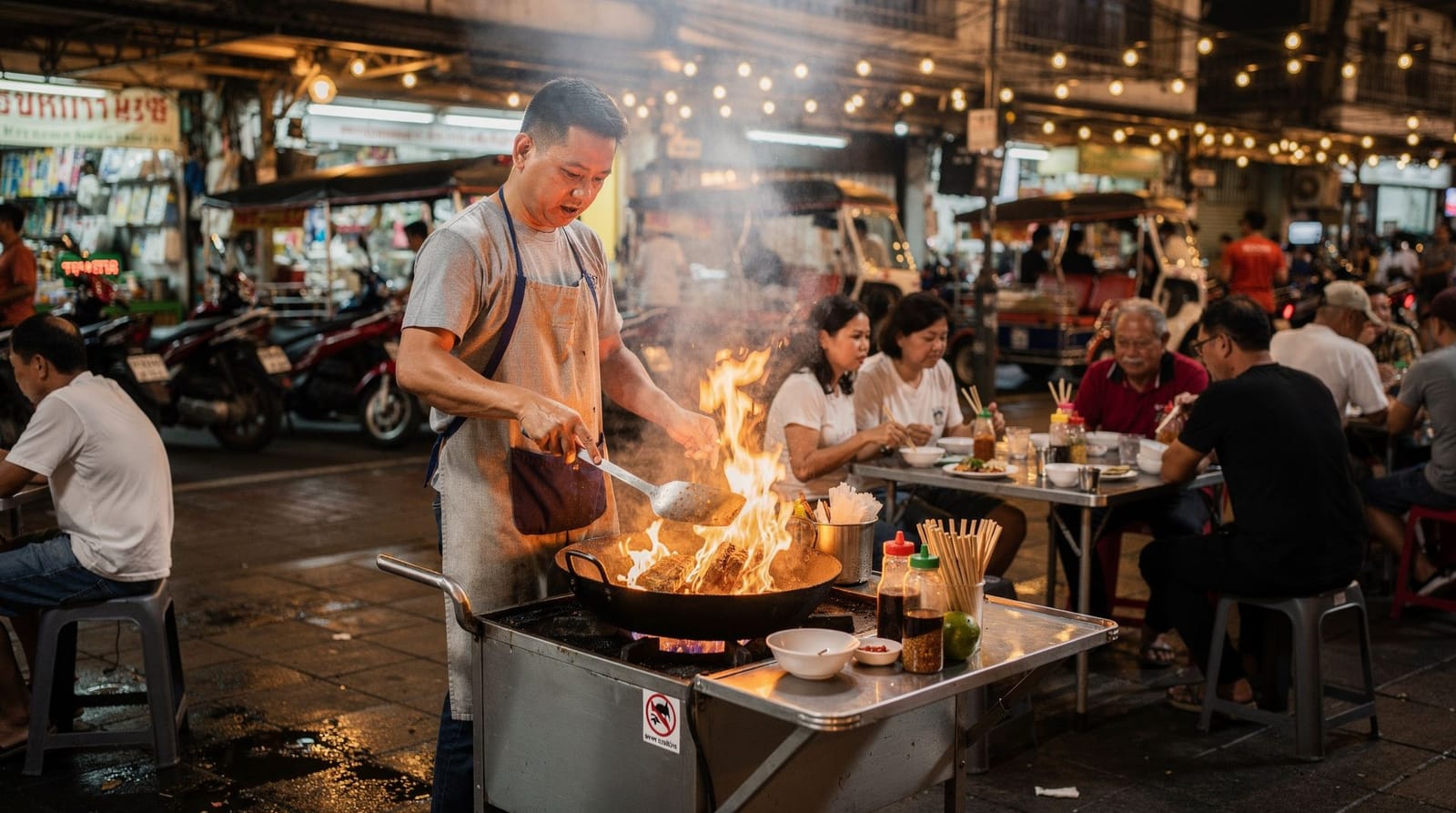
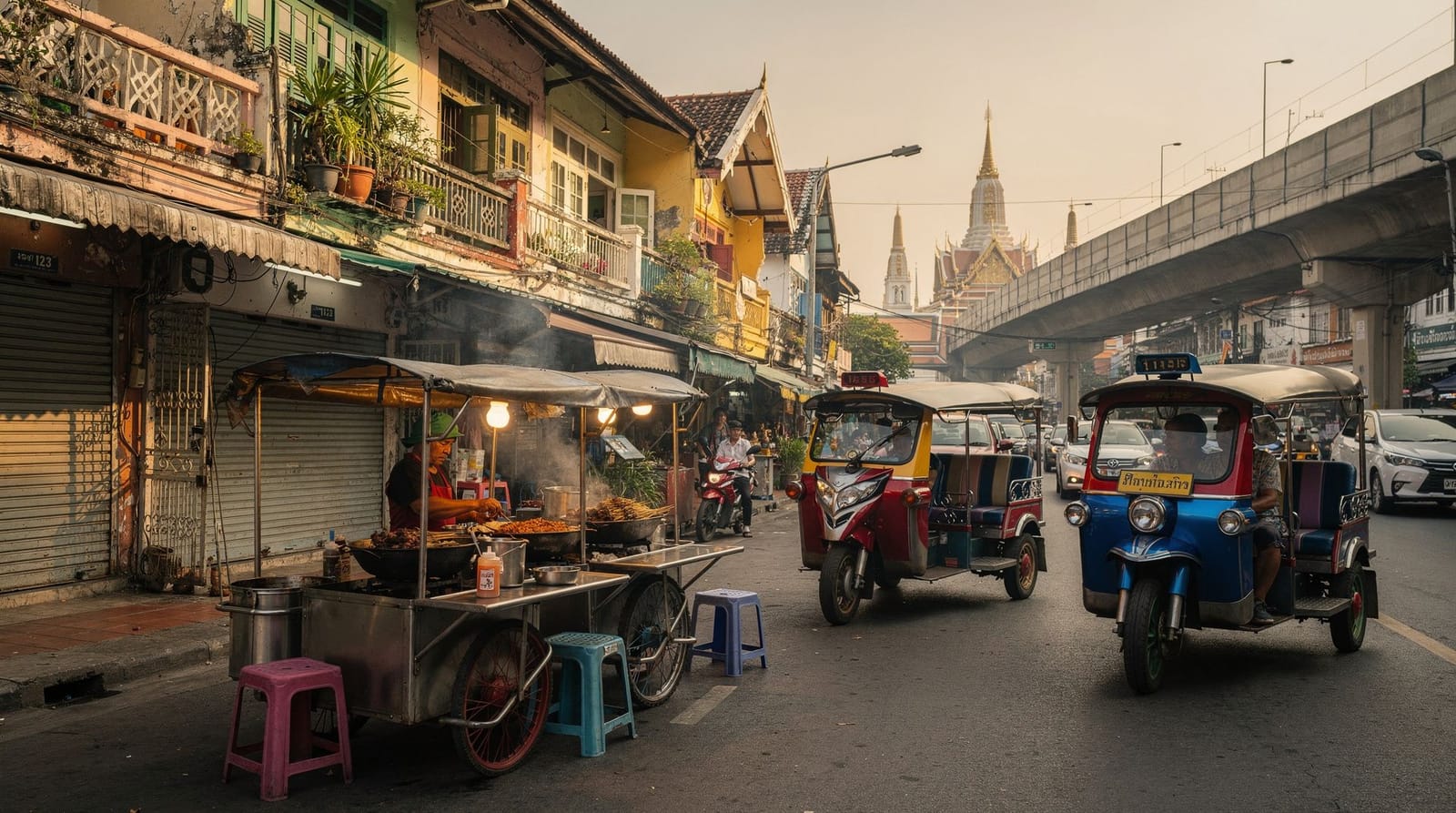
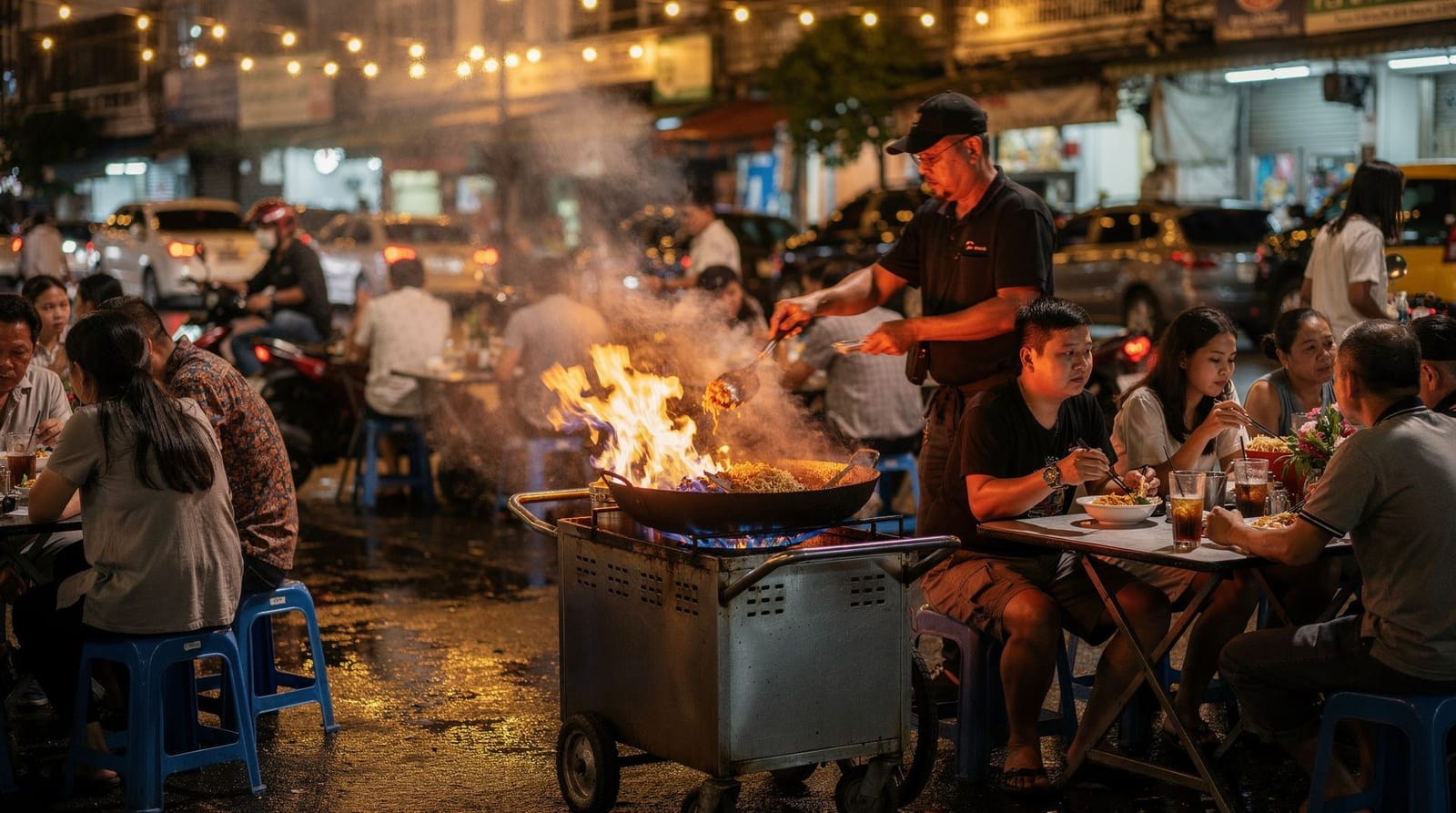
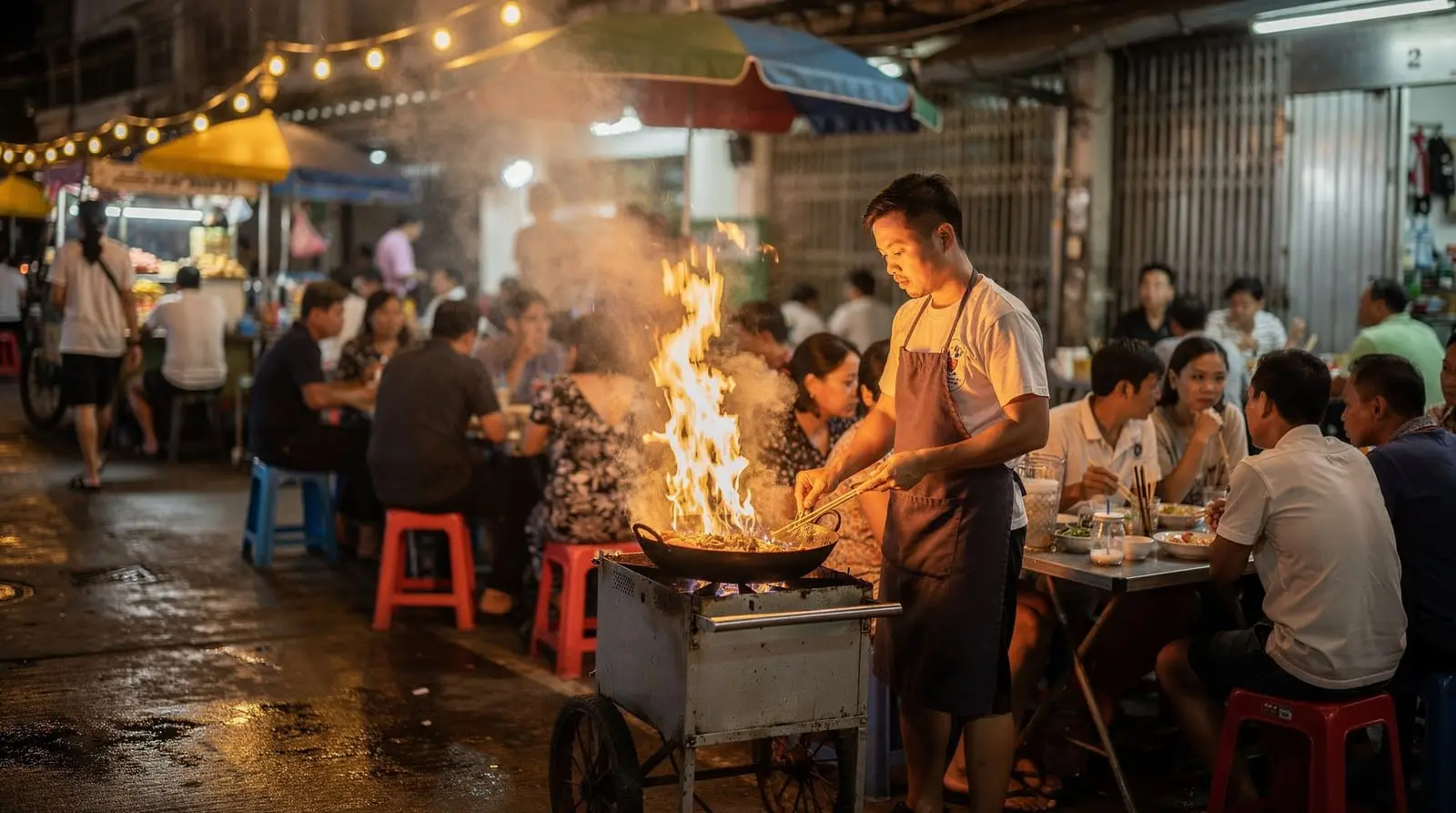
When the sun drops, Yaowarat Road transforms into the loudest, most delicious few hundred metres in Bangkok: neon signs blazing in Thai and Chinese, woks throwing flames onto the pavement, charcoal grills loaded with prawns, and dessert carts working past midnight. This is Chinatown, the city’s oldest immigrant quarter and its greatest open-air kitchen. Here is exactly what to eat, where, and how to avoid the handful of traps that catch first-timers.
| Where | Yaowarat Road, Chinatown |
| Cost | Most dishes 50-150 THB; seafood 200-500 THB |
| Time needed | 2-3 hours for a proper crawl |
| Getting there | MRT Wat Mangkon (Blue Line), exit 1 |
| Best time | 6:00-9:00 pm, closed Mondays at many stalls |
Getting there and getting your bearings
The single best decision you can make is to arrive by MRT Wat Mangkon (Blue Line). Take exit 1, which surfaces on Charoen Krung Road right at the edge of the food zone, a two-minute walk from Yaowarat Road itself; this spares you the legendary gridlock where a taxi can crawl for half an hour over a five-minute walk. From the exit, walk down toward Yaowarat Road, the neon-lit spine, where the action thickens around the Soi Texas (Soi Phadungdao) junction — about a 7–8 minute stroll — and runs west toward Wat Traimit and the Golden Buddha at Wat Traimit. The whole eating zone is barely 800 metres end to end, so you will cover it all on foot in an evening. For the neighbourhood’s full story, sights and layout, read the Chinatown Bangkok guide and the Chinatown-Yaowarat destination page. Just east lies the antiques-and-coffee quarter of Talat Noi, worth a daytime wander before dinner.
Timing matters: the street is an evening creature, roughly 6 pm to midnight, and many stalls shut on Mondays. Come hungry, come with cash.
The Yaowarat night walk, stall by stall
Guay jub at Nai Ek Roll Noodle
Start with the dish that defines Chinatown: guay jub, a peppery clear broth crowded with rolled rice noodles, crispy pork belly and offal. Nai Ek Roll Noodle (Nai Ek Roll Noodles), a Michelin Bib Gourmand shophouse near Soi 9 on Yaowarat, is the benchmark — a bowl is around 60–100 THB and the pepper hits clean and warming. Expect a short queue; it moves fast.
Soi Texas and Soi Phadungdao — the grill and seafood lane
The Soi Texas / Soi Phadungdao strip fills with pavement tables after dark. This is grilled-seafood territory: charcoal river prawns, grilled fish, oyster omelettes (hoy tod) and tom yum noodles. Two big operations anchor it. T&K Seafood (the green-shirt stall) is the famous, fast, reasonably priced choice for grilled prawns and stir-fried crab in curry powder; Lek & Rut Seafood (the red-shirt stall) directly across the way is its long-running rival and very similar in quality and price. A plate of grilled river prawns runs 200–400 THB (6–12 USD) depending on size, a whole steamed fish 300–500 THB, and stir-fried crab in yellow curry 300–450 THB, so this is a deliberate splurge zone. Both stalls have printed menus with prices — use them, and ignore any pavement seafood seller who will not show one.
Nay Hong — fried noodles down a back soi
Tucked in an unmarked-looking alley off the Yaowarat–Charoen Krung area, Nay Hong does a smoky, wok-charred kuay teow khua gai (chicken and egg fried over flat noodles with a crisp bottom) that food obsessives detour for. It is cheap (around 60–70 THB), atmospheric and runs late. Half the fun is finding the soi; if you reach a dead-end of parked motorbikes and a cluster of plastic stools under a single bright light, you have arrived.
Guay jub Mr Joe and the pepper-soup crowd
Nai Ek is not the only guay jub game in town. Guay Jub Ouan Pochana and the stall many call Guay Jub Mr Joe, on Yaowarat near the Soi Texas end, draw their own late-night queues for the same peppery rolled-noodle soup, often running well past midnight. If one has a wait, the other usually does not, and both are honest at 60–100 THB (2–3 USD) a bowl. This is the dish to anchor a Chinatown night around.
Nai Mong Hoi Tod and the oyster-omelette specialists
For the city’s most celebrated oyster omelette (hoy tod), head to Nai Mong Hoi Tod on Phlap Phla Chai Road, a short walk north of Yaowarat. The crispy-fried oyster version is around 100–150 THB, the softer or-suan style similar, and it is a Bib Gourmand regular, so expect a queue and an early-ish close (often by 9 pm, and it shuts some Mondays). Come before 8 pm to beat both the wait and the sell-out.
Jek Pui — the curry stall with no tables
One of Chinatown’s great oddities is Jek Pui, a corner curry stall near the Charoen Krung–Mangkon Road junction where there are deliberately no tables: you sit on small plastic stools along the wall, plate on your knees, and eat Thai-Chinese curries ladled over rice for around 50–70 THB (1.50–2.10 USD). Green curry, gaeng pa and a thick chicken curry are the staples. It opens late afternoon and runs into the evening, and it is cash only with a fast-moving local crowd.
Hua Seng Hong, Mangkorn Khao and the noodle institutions
Hua Seng Hong on Yaowarat Road is the area’s best-known sit-down Cantonese institution: dim sum, braised goose, congee and shark-fin soup across a long menu, with dim sum baskets from 60–120 THB and larger dishes well above. It is reliable and air-conditioned, a comfortable wet-weather fallback, though pricier than the street. For egg noodles, Mangkorn Khao (Mangkon Khao) near the Odeon Circle gate does springy wonton and roast-pork egg noodles at 60–90 THB, a long-running favourite that draws its own steady line.
Hoy tod, kuay teow and oyster omelettes
Scattered along Yaowarat and its sois are griddle cooks turning out hoy tod — crispy oyster or mussel omelettes with bean sprouts, around 80–120 THB — and bowls of kuay teow noodle soup. These are the connective tissue of a Chinatown crawl: cheaper than seafood, quicker than the queues, and good wherever locals sit.
Dim sum, kuay teow and roast meats
Daytime and early evening, Chinatown’s shophouses turn out dim sum by the steamer basket, roast duck and char siu over rice, and duck noodle soup, everyday-priced at 50–90 THB and a gentler way into the area than the night-market crush.
The desserts: mango sticky rice, durian, bird’s nest
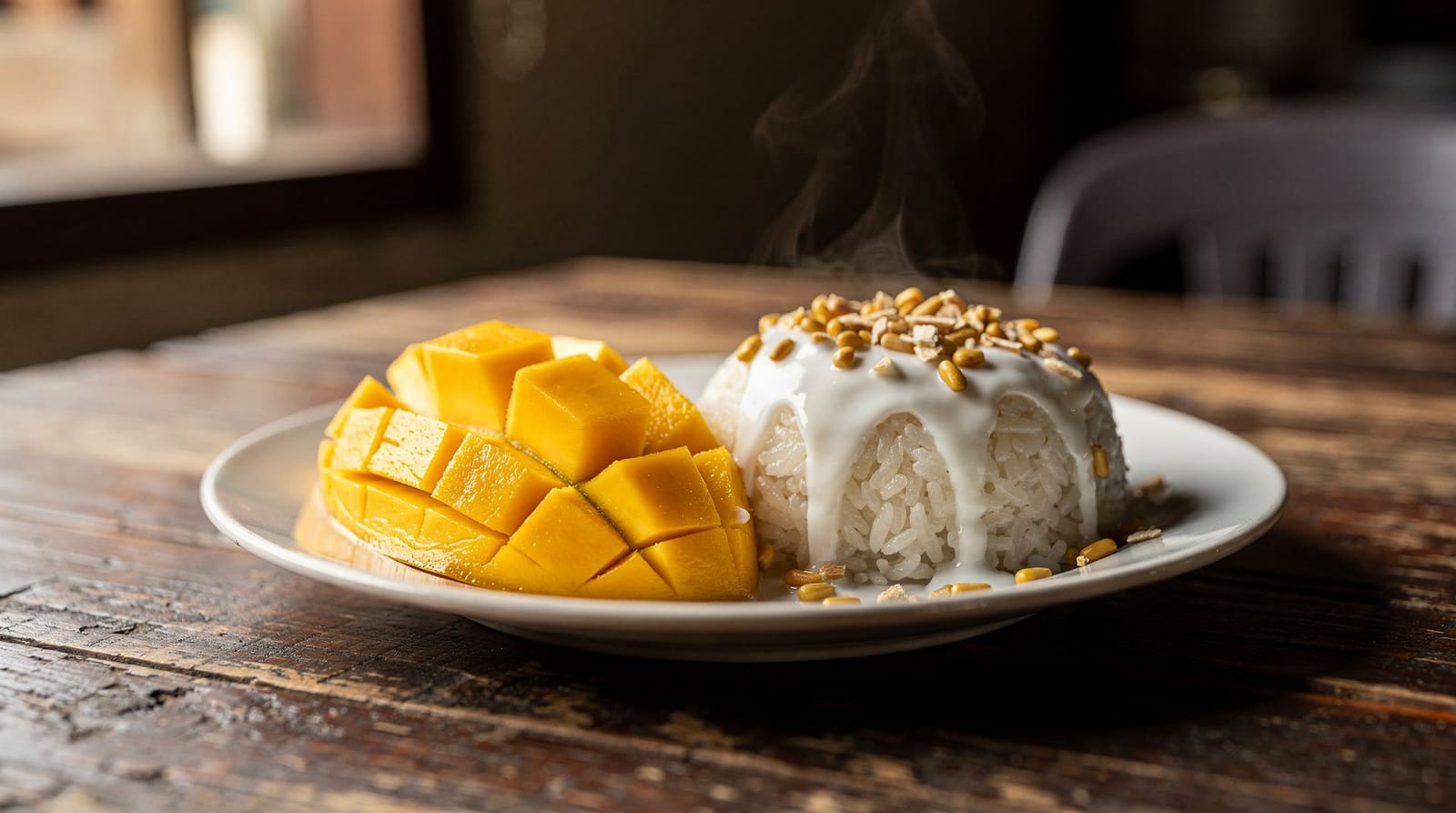
Save room. Chinatown has some of the city’s best mango sticky rice carts in season (March–June), around 60–100 THB; our mango sticky rice guide points to the standouts. Durian sellers line Yaowarat in the hot season — ready-cut and pungent, the “king of fruit” is a rite of passage; expect 100–200 THB for a portion of good monthong durian, and eat it on the spot since many hotels (and the MRT) ban it. Pa Tong Go Savoey, a long-standing stall near the Yaowarat–Plaeng Nam corner, fries crisp Chinese dough sticks (pa tong go) served with pandan or sangkhaya custard dip, around 30–50 THB a portion and running late into the night. Roti, grass jelly (chaokuay), tao suan and Thai-Chinese sweets round out the sugar trail at 30–60 THB each.
A word on the heritage tonics: Chinatown’s old bird’s nest and shark-fin shops, Eua Khuan among them, have traded here for generations. But both carry real ethical weight — shark finning is environmentally destructive and widely condemned, and bird’s-nest harvesting raises its own welfare concerns. Many travellers skip them on principle, and there is no shortage of guilt-free sweets a few steps away. We flag it so the choice is informed, not accidental.
A note on the side sois and Talat Noi
The drama is on Yaowarat Road, but some of the best eating hides one street back. The lanes toward Charoen Krung and the warren of Talat Noi hold old-school noodle shops, coffee houses and dessert spots with no tourists and no English signs. If a soi is full of locals on stools, follow your nose in.
Michelin in the lanes
Chinatown is the densest patch of Michelin Bib Gourmand street eating in Bangkok. Nai Ek Roll Noodle is the obvious one, but the guide recognises several noodle, congee and dessert stalls in these blocks, and crucially they charge normal prices — a Michelin nod here costs you 60–120 THB, not a fortune. The exception is Raan Jay Fai, the one-Michelin-star wok stall (recognisable by the chef in ski goggles) in the nearby old town, where the famous crab omelette is around 1,000 THB with long, slow queues; it is a deliberate splurge, not a Chinatown street snack. The full map is in the Michelin street food guide, and the broader dish context in what to eat in Bangkok and the Bangkok street food guide.
To taste a string of these without the guesswork, a small-group Chinatown food tour of Michelin stalls stitches the recognised spots into one walk. For sheer breadth, the 12-tasting hidden Yaowarat tour pushes into back sois most visitors miss.
Honest trap warnings
Chinatown is overwhelmingly fair, but a few things catch newcomers:
- No-price seafood. The biggest risk is a pavement seafood stall that quotes a vague “market price” and lands you a 600 THB bill for a few prawns. Confirm prices first; reputable stalls like T&K and Lek & Rut post or state them.
- Push-cart seafood touts. Roving carts piled with prawns and lobster wheel up to tourist tables and hard-sell by weight with no menu — politely wave them off and order only from a fixed stall with printed prices.
- Shark-fin ethics. Shark fin is on many old-shop menus here; finning is environmentally destructive, and most travellers now decline it on principle.
- The classic gem and tuk-tuk scams operate near Chinatown’s temples too: ignore anyone claiming a temple is “closed today” and offering a tuk-tuk to a “special” shop.
- Cash only, small notes. ATMs nearby charge a foreign-card fee; withdraw before you start. Few stalls can change a 1,000 THB note for a 70 THB bowl.
Eat where the Thai families and Chinese aunties are queuing and you will eat brilliantly for very little.
How to work the queues and the crush
Chinatown after dark is a contact sport, so a little strategy pays off. Arrive around 6 to 6:30 pm for a pavement seat before the rush; by 8 pm the famous stalls have queues and the tables are full. Eat standing or perched at the busiest carts rather than holding out for a seat — that is how locals do it. Split up to queue: send one of your group to hold a line at Nai Ek while another grabs grilled prawns. Carry tissues and hand gel, since stalls rarely have either, and keep small notes ready. If a queue looks immovable, the same dish almost always exists two doors down with no wait, because Chinatown clusters specialists. Finally, weekends and Thai holidays turn Yaowarat into a slow river of people; a weeknight is far more comfortable if your dates allow.
A walking-route mini-itinerary
If you want a plan rather than a wander, this loop hits the headliners in a sensible order and keeps the walking short. Start at MRT Wat Mangkon exit 1 around 5:30–6 pm. Walk to Nai Mong Hoi Tod first while it is still open for the oyster omelette, then drop onto Yaowarat Road for a peppery bowl at Nai Ek Roll Noodle before the queue builds. Detour to Jek Pui for a stool-side curry, then work east along Yaowarat grazing hoy tod and a bowl of egg noodles at Mangkorn Khao. Hit the Soi Texas / Soi Phadungdao seafood strip around 8 pm when it is in full swing — T&K or Lek & Rut, menu in hand. Finish on dessert: a Pa Tong Go Savoey dough stick, durian in season, and mango sticky rice. The entire loop is well under a kilometre and takes a leisurely three hours with plenty of stops. Prefer to have it all sequenced and ordered for you on a first visit? A guided night Michelin foodie walk of Chinatown covers the same ground without the navigation.
Where Chinatown sits in your trip
A Chinatown food night slots neatly into the Bangkok foodie itinerary, ideally as the headline evening. It ranks among the city’s best after-dark grazing and pairs with the broader Bangkok street food guide and the dish-by-dish what to eat in Bangkok. A good plan: the Golden Buddha in the late afternoon, then eat your way down Yaowarat as the lights come on. If you would rather have a local lead the way on a first visit — handling ordering, navigation and which queue is worth it — a guided Chinatown night food walk takes the pressure off; we weigh up the value honestly in is a Bangkok food tour worth it. And if your stomach is cautious, skim street food safety before you dive in.
Frequently asked questions about Yaowarat and Chinatown food: eating Bangkok after dark
How do I get to Yaowarat and Chinatown?
What time does Yaowarat street food start and end?
What are the must-eat dishes in Chinatown?
Is the seafood in Yaowarat a tourist trap?
Are there Michelin stalls in Chinatown?
Do Chinatown food stalls take cards?
Can I do Chinatown food without a guide?
Top experiences
Bookable activities with verified prices and instant confirmation on GetYourGuide.