Chinatown & Yaowarat
Bangkok's Chinatown turns Yaowarat Road into a legendary street-food strip after dark — neon, gold shops, Michelin stalls and the solid-gold Wat Traimit Buddha.
Bangkok: Chinatown Night Food Tour
Quick facts
- Nearest transit
- MRT Wat Mangkon (Blue Line) — exits right into the heart of Chinatown
- Character
- Dense, neon-lit Chinese quarter; gold shops by day, street-food mecca by night
- Key food
- Yaowarat night stalls — guay jub, oyster omelette, kuay teow, dim sum, durian
- Key sight
- Wat Traimit's 5.5-tonne solid-gold Buddha; Yaowarat Road itself after dark
- Best time
- Evening (6 pm onward) for street food and neon; Chinese New Year is spectacular
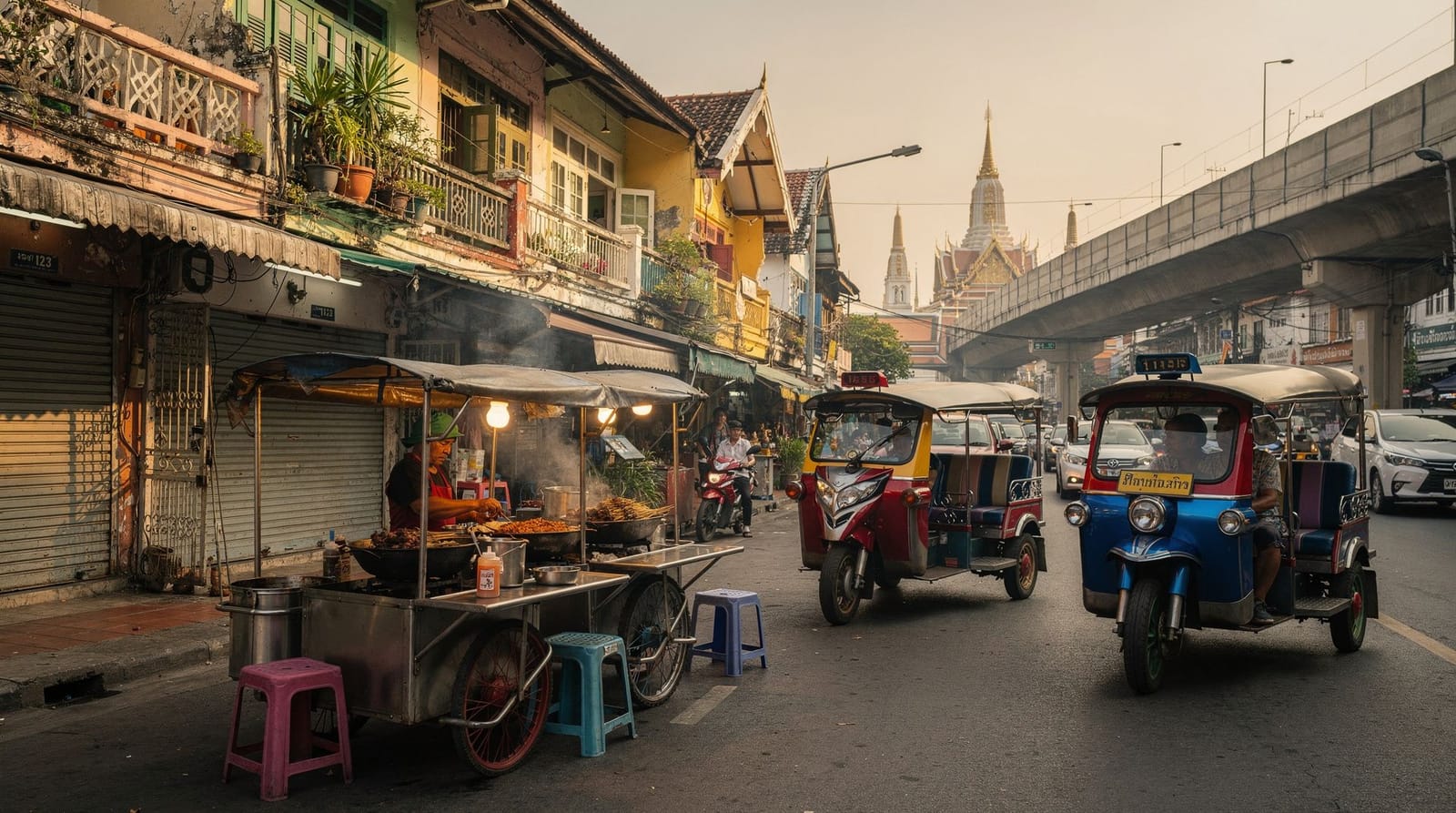
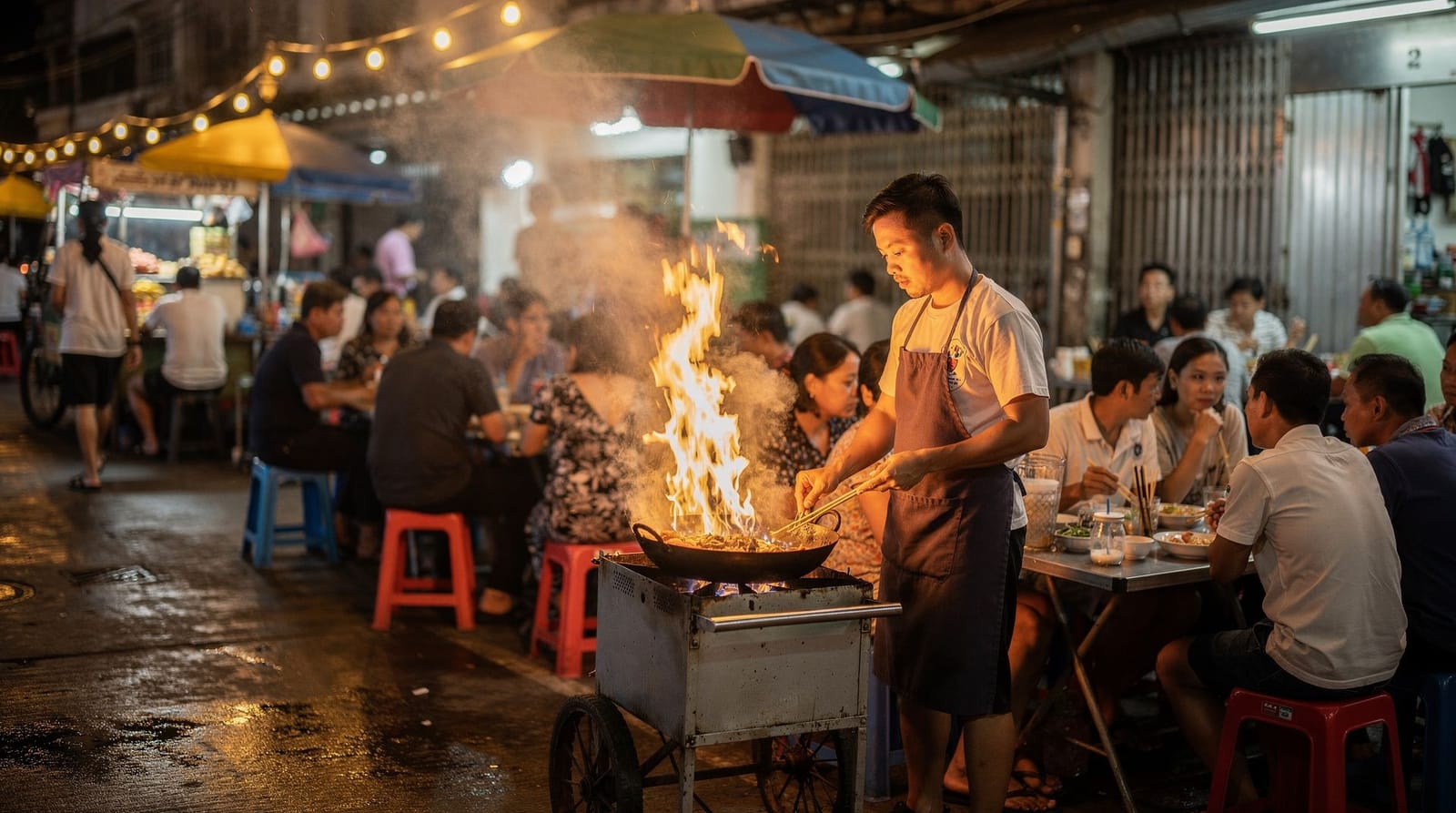
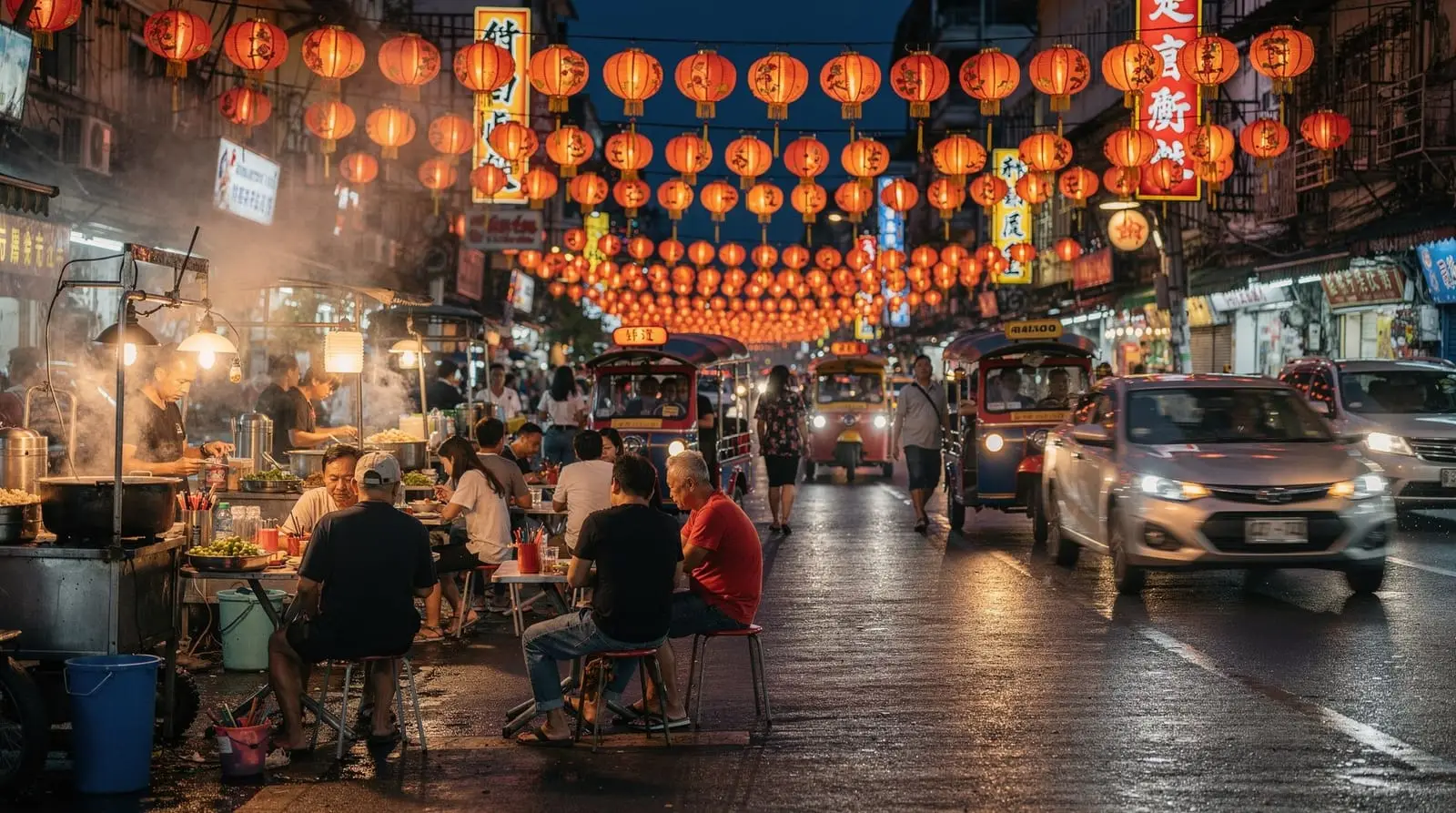
Bangkok’s Chinatown is one of the great street-food experiences on earth, and Yaowarat Road is its spine. By day this is a dense warren of gold shops, herbal pharmacies, dried-goods wholesalers and shrines, with traffic crawling under a forest of Chinese signage. After dark it transforms: the gold shops shutter, neon blazes, and the sidewalks and side-sois fill with hundreds of food stalls and pop-up restaurants serving some of the best — and best-value — food in Thailand. Founded by Chinese merchants when Bangkok became the capital in 1782, this is the oldest commercial district in the city and still its most intoxicating sensory overload.
| Where | Yaowarat Road, MRT Wat Mangkon |
| Grazing budget | Around 200–400 THB for an evening of street food |
| Time needed | An evening for food; a full day with temples and markets |
| Getting there | MRT Blue Line to Wat Mangkon — avoids the evening gridlock |
| Best time | From ~6 pm; Chinese New Year (17 Feb 2026) is the peak |
Why Chinatown sits exactly where it does
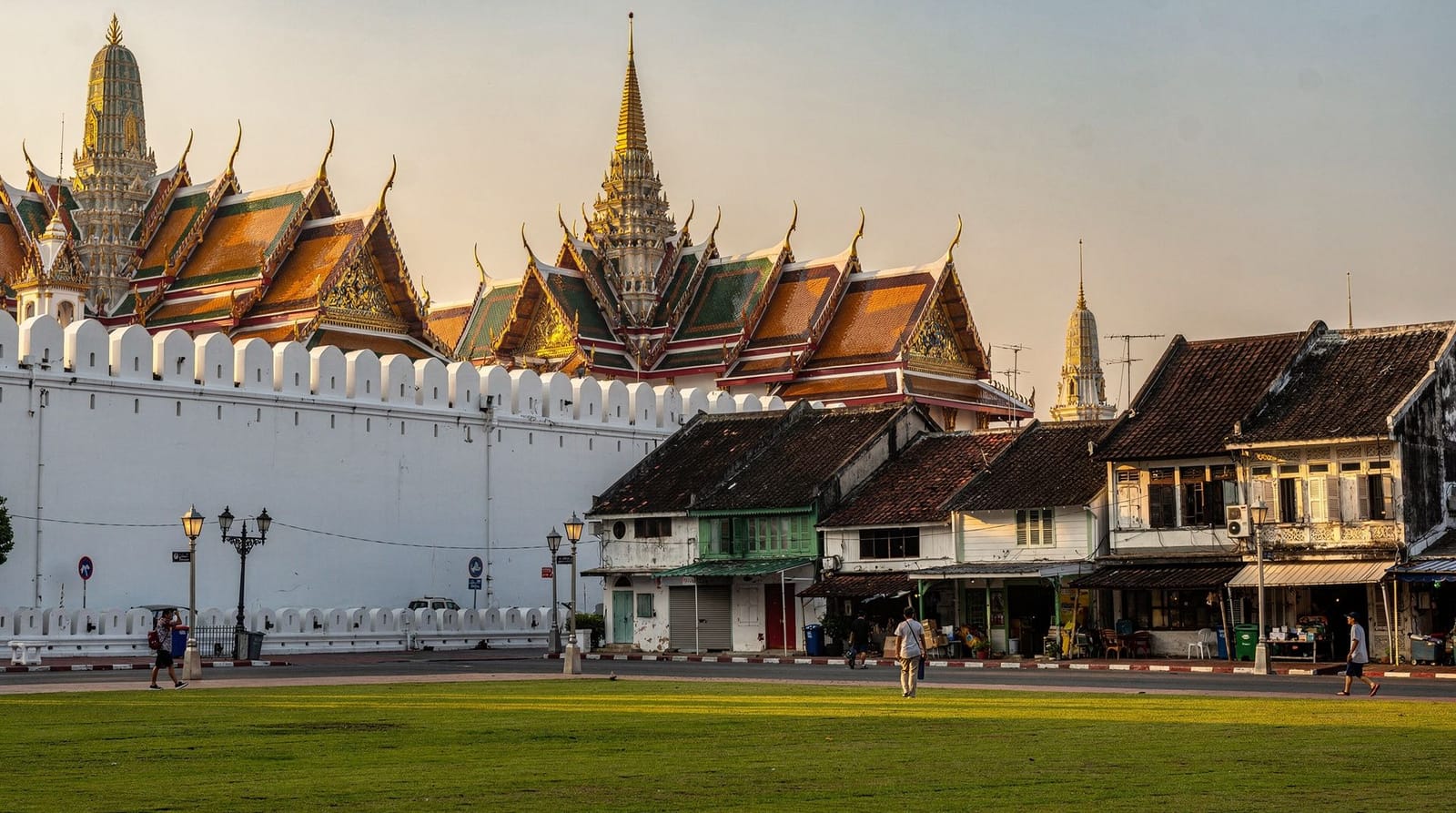
Bangkok’s Chinatown exists on Yaowarat because of a royal relocation. When King Rama I moved the capital across the river to found Bangkok in 1782, the Chinese merchant community that had traded on the site he chose for the new Grand Palace was resettled downstream, to the stretch of riverbank that became Yaowarat. Forced out of the palace zone, the community rebuilt and thrived, and within a few generations this was the beating commercial heart of the city — Bangkok’s main port of trade with China long before the mega-malls of Siam existed. That founding displacement is part of why Chinatown still feels like a separate, self-contained world today: dense, mercantile and slightly apart from the ceremonial old city just up the river.
Yaowarat after dark — the food
The evening street-food scene is the headline, and it lives up to every bit of its reputation. From around 6 pm, stalls set up along Yaowarat Road and pour into side streets like Soi Texas (Soi Phadungdao) and Soi Yaowarat 11. What to look for: guay jub (peppery rolled-noodle soup with crispy pork belly), grilled river prawns, oyster omelettes (hoy tod), fresh seafood cooked to order, kuay teow noodle soups, dim sum, bird’s-nest and shark-fin shops (skip the shark fin), Chinese-style dessert stalls, fresh fruit and, in season, durian.
The honest navigation tip: the most photographed stalls (the famous toad-stall seafood spots) are excellent but pricey and have long waits; some of the best food is at the unmarked, queue-of-locals stalls a few metres away. A guided food crawl is genuinely worth it here precisely because the density is overwhelming — the Chinatown night food tour and the hidden Yaowarat 12-tasting tour take you to the right stalls in the right order. For the full rundown of dishes and stalls, see the Yaowarat Chinatown food guide and the Michelin street-food guide.
Wat Traimit and the solid-gold Buddha
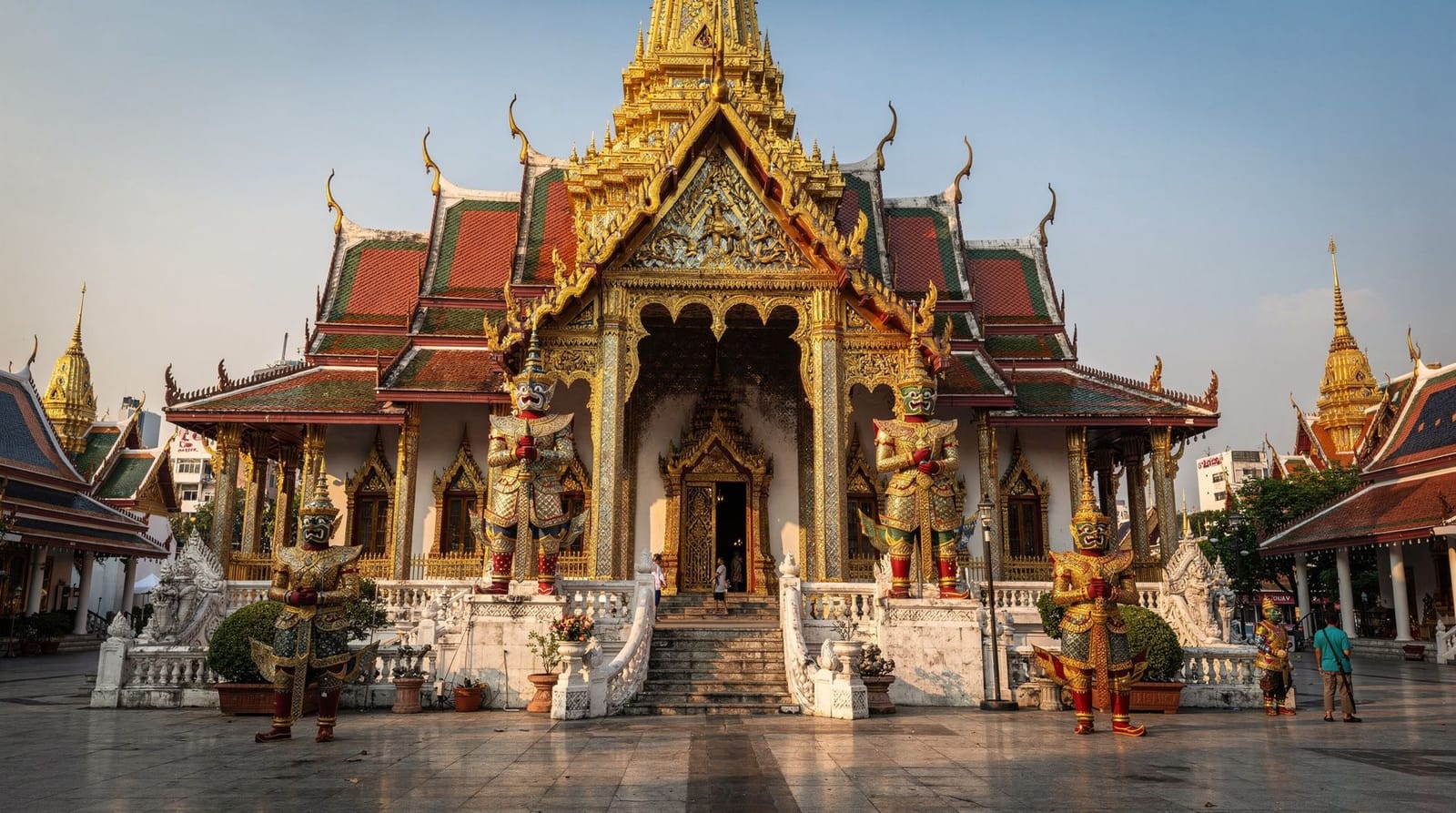
At Chinatown’s southeastern edge, near Hua Lamphong, Wat Traimit houses the world’s largest solid-gold Buddha image — 3 metres tall, 5.5 tonnes of solid gold, and worth a fortune. The remarkable backstory: for centuries it was hidden under plaster to disguise it from invaders, its true nature only discovered in 1955 when the plaster cracked during a clumsy move. There is a small museum on Chinatown’s history beneath the shrine. Entry is around 100 THB (about USD 3). It is a calm, worthwhile counterpoint to the chaos outside. The Chinatown Wat Traimit walking tour links the temple to the market lanes with historical context; see also the Wat Traimit golden Buddha guide.
Daytime Chinatown — gold, herbs and Sampeng Lane
In daylight, Chinatown is a working commercial district. The gold shops that line Yaowarat — their windows blazing with 96.5% gold jewellery — set the visual tone; gold is both adornment and savings in Thai-Chinese culture. Sampeng Lane (Soi Wanit 1) is a claustrophobic, hyper-busy wholesale alley selling everything from beads and fabric to toys and snacks. Wat Mangkon Kamalawat, the most important Chinese Mahayana temple in the city, fills with incense and gold-leaf offerings, especially during festivals. The secret food tour of Chinatown weaves daytime market eating with these landmarks.
Speakeasies and the new Chinatown nightlife
Layered on top of the old gold-and-noodle Chinatown is a newer scene: hidden cocktail bars and speakeasies tucked behind shophouse facades and up unmarked staircases, especially around Soi Nana (the Chinatown one, not the red-light Nana off Sukhumvit). After a street-food dinner you can climb into a dimly lit bar serving inventive cocktails, often with a Thai-Chinese twist. It is one of the city’s most atmospheric nights out. See the Chinatown speakeasies guide. A tuk-tuk adventure through Chinatown’s Michelin stalls combines the food and the after-dark energy with a driver who knows the lanes.
Chinese New Year in Chinatown
Chinese New Year (17 February 2026) is Chinatown’s biggest moment. Yaowarat is draped in red and gold, lion and dragon dancers wind through the crowds, firecrackers crackle, and the food stalls go into overdrive. It is spectacular and intensely crowded — go early in the evening, expect to move slowly, and embrace the chaos. Many members of the Thai royal family traditionally visit during the festival.
How Chinatown connects to its neighbours
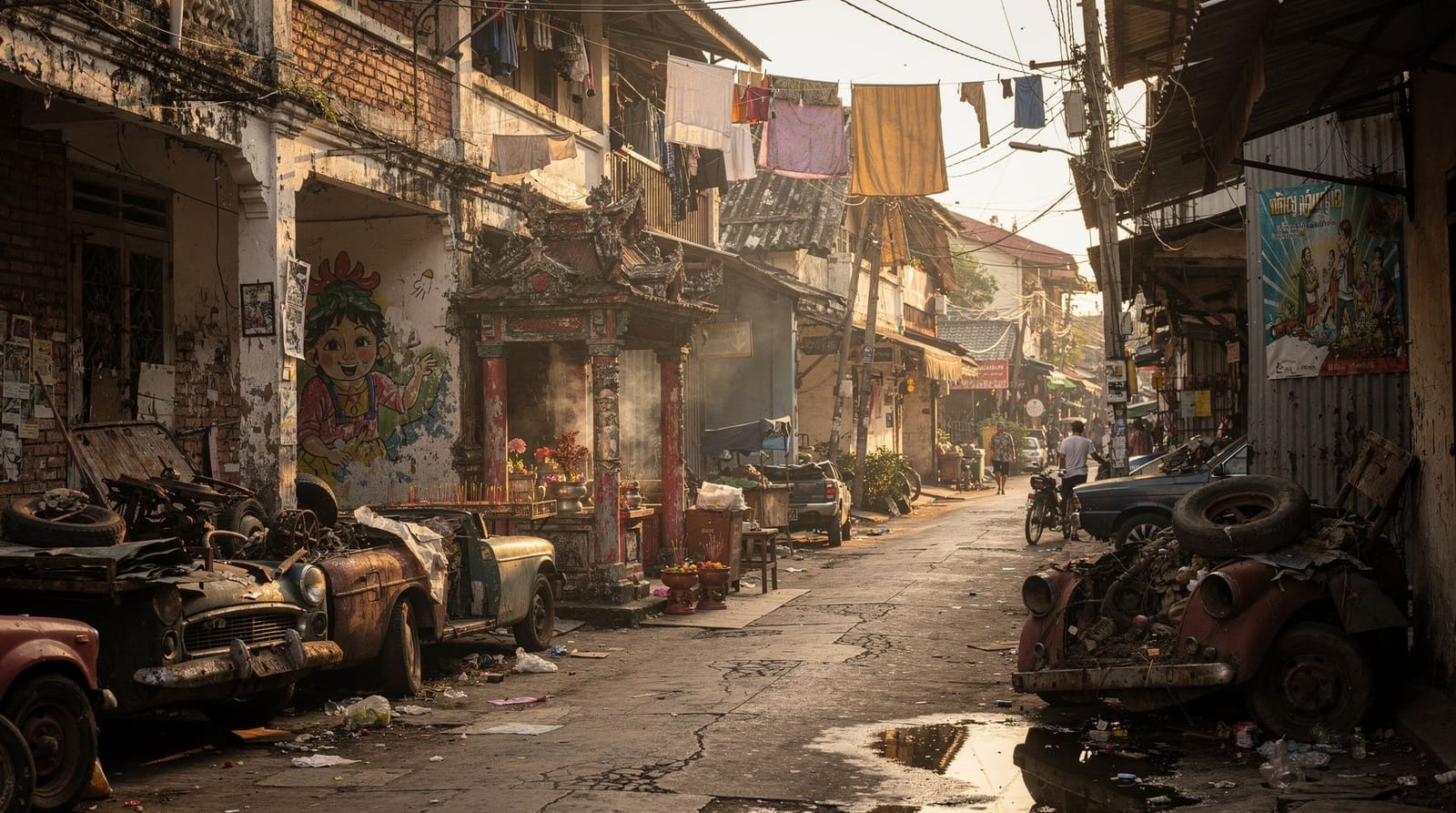
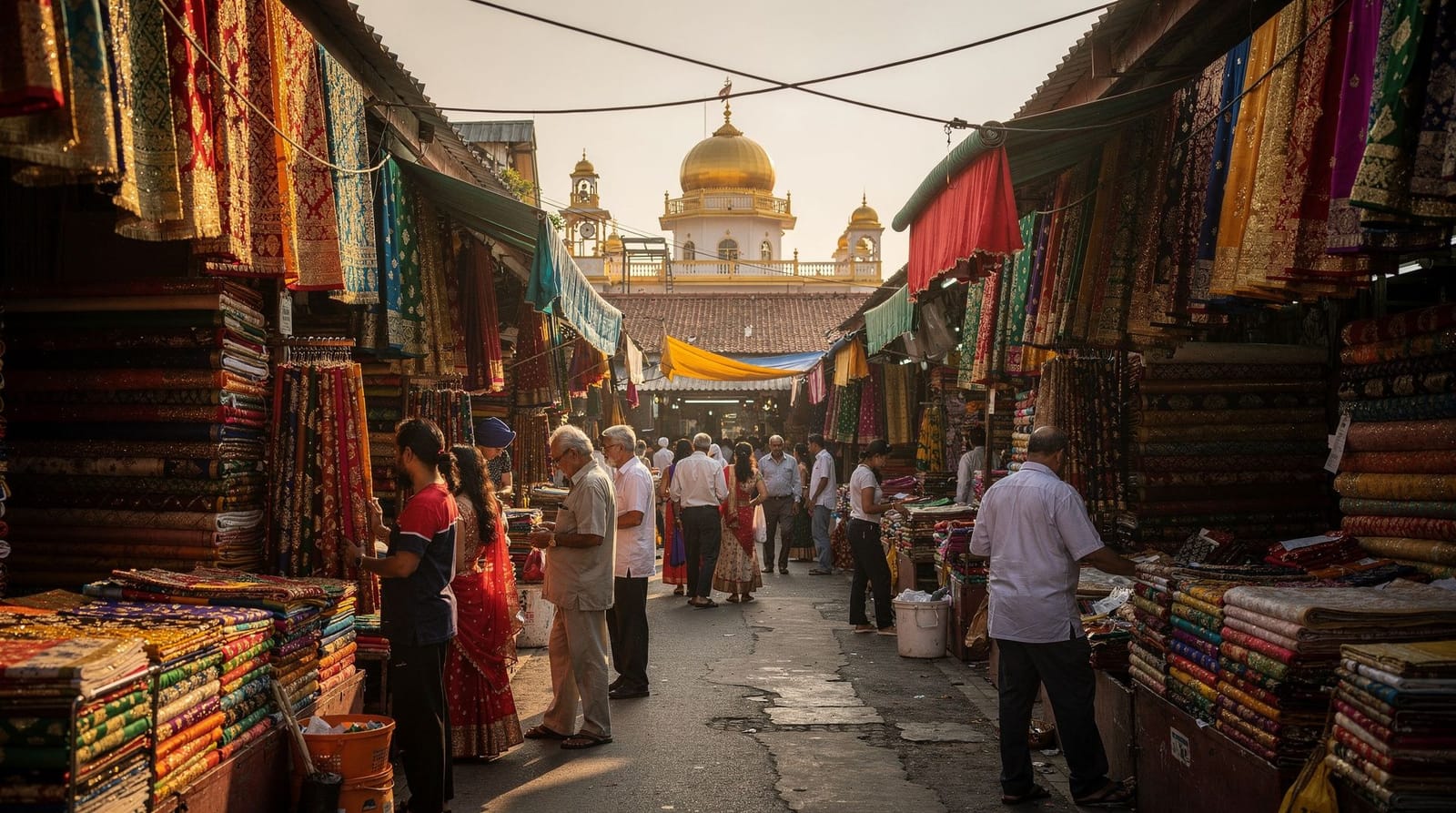
Chinatown sits in a fascinating cultural cluster. Just south, Talat Noi is the old riverside quarter of car-part workshops, street art and hidden cafes — a slower, more photogenic counterpoint. To the west, Phahurat (Little India) is the Indian and Sikh enclave with sari shops, the golden Sikh temple and superb Indian food. The Rattanakosin old city temples are a short ride northwest, and the Pak Khlong flower market is between them. A foodie evening here is the centrepiece of the Bangkok foodie itinerary. The Chinatown and Talat Noi walking tour links the food streets with the quieter riverside lanes in a single half-day route.
Chinatown by day vs by night
| Daytime | After dark | |
|---|---|---|
| Gold shops | Open, windows blazing | Shuttered |
| Streets | Traffic, wholesale trade, herb shops | Pedestrian-heavy, neon, food stalls |
| Best for | Wat Traimit, Sampeng Lane, photography of the trade | The famous street-food scene, speakeasies |
| Crowd | Working district, fewer tourists | Busiest, most touristy hours |
| Heat/comfort | Hot, airless market lanes | Cooler, more comfortable |
Practical tips and honest warnings
Chinatown is dense, hot and overwhelming — that is the point, but pace yourself. Cash is essential; most stalls do not take cards. Come hungry and graze across many stalls rather than filling up at one. Be alert for pickpockets in the evening crush, and ignore tuk-tuk drivers offering to take you to “special” gold or gem shops — the gem scam operates here too. Durian is banned in many hotels and on transit because of its smell — eat it on the street. For more on safe street eating, see the street food safety guide.
Getting there and around
By MRT: Wat Mangkon station (Blue Line) is the game-changer — it exits directly into the heart of Chinatown, a short walk from Yaowarat Road and Wat Mangkon temple. This is by far the easiest way in and the way to dodge the area’s notorious traffic. Hua Lamphong station (Blue Line) is near Wat Traimit at the eastern end.
By river boat: Ratchawong pier on the Chao Phraya puts you at Chinatown’s western edge — a scenic arrival from the riverside direction; see the Chao Phraya boats guide.
By Grab or taxi: Possible, but Chinatown’s streets gridlock badly in the evening — the MRT is faster and avoids the frustration. See the Grab and taxi guide.
For the deeper neighbourhood breakdown see the Chinatown Bangkok guide.
Frequently asked questions about Chinatown & Yaowarat
What time does the Chinatown street food start?
The big evening street-food scene on Yaowarat Road really gets going around 6 pm and runs late into the night, with many stalls busiest from 7 to 10 pm. Some shophouse restaurants open earlier for lunch, but the famous stall-lined-street experience is an after-dark one.
Is a Chinatown food tour worth it, or can I explore on my own?
Both work. The density of stalls is genuinely overwhelming for first-timers, so a guided food tour is a great way to find the best (not just the most photographed) stalls and learn what you are eating. Once oriented, returning independently for a second graze is easy and rewarding.
How do I get to Chinatown, and how do I avoid the traffic?
Take the MRT Blue Line to Wat Mangkon station, which exits straight into Chinatown — this completely bypasses the area’s notorious evening gridlock. Hua Lamphong station is handy for Wat Traimit. Arriving by Chao Phraya river boat to Ratchawong pier is another scenic, traffic-free option.
What should I eat in Chinatown?
Start with guay jub (peppery rolled-noodle soup with crispy pork), oyster omelette (hoy tod), grilled river prawns, kuay teow noodle soups, dim sum and, for dessert, Chinese sweets or in-season durian. Graze across many stalls rather than filling up at one. Bring cash — most stalls do not take cards.
Is Wat Traimit’s golden Buddha really solid gold?
Yes — it is the world’s largest solid-gold Buddha image, 5.5 tonnes and about 3 metres tall, made of roughly 80% pure gold. It was hidden under plaster for centuries to protect it and only rediscovered in 1955. A small museum beneath the shrine tells the story and the history of Bangkok’s Chinatown.
When is Chinese New Year in Bangkok’s Chinatown in 2026?
Chinese New Year falls on 17 February 2026, and Chinatown is the epicentre of the celebrations — red-and-gold decorations, lion and dragon dances, firecrackers and packed food stalls along Yaowarat. It is spectacular but extremely crowded, so arrive early in the evening and be prepared to move slowly.
Why is Bangkok’s Chinatown located on Yaowarat Road?
Because it was a royal relocation. When Rama I chose the site of today’s Grand Palace for the new capital in 1782, the Chinese merchant community already trading there was resettled downstream to what became Yaowarat. The community rebuilt and prospered, and the area has been Bangkok’s commercial and mercantile heart ever since — which is part of why it still feels like a distinct, self-contained world within the city.
Top experiences
Bookable activities with verified prices and instant confirmation on GetYourGuide.