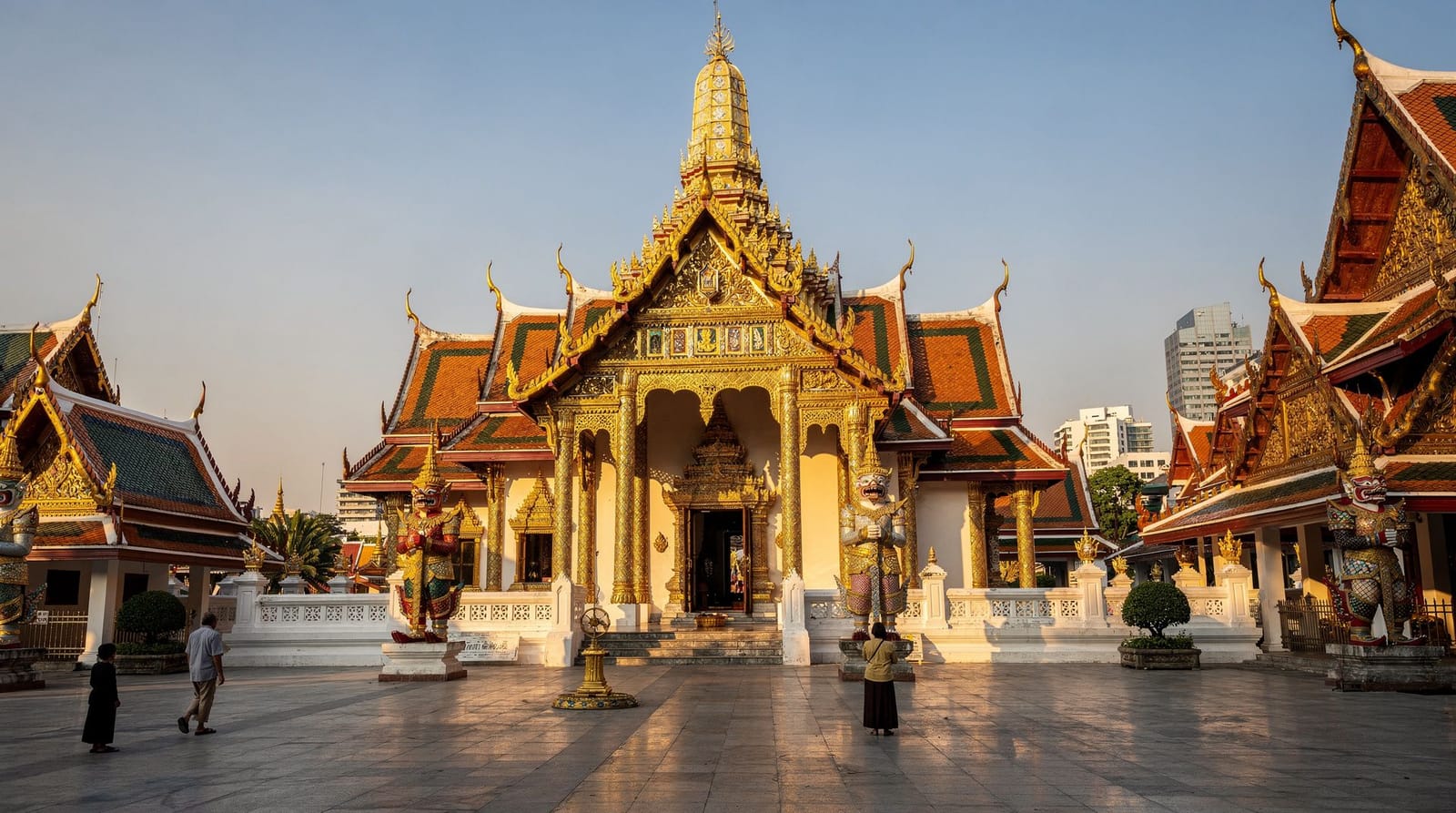
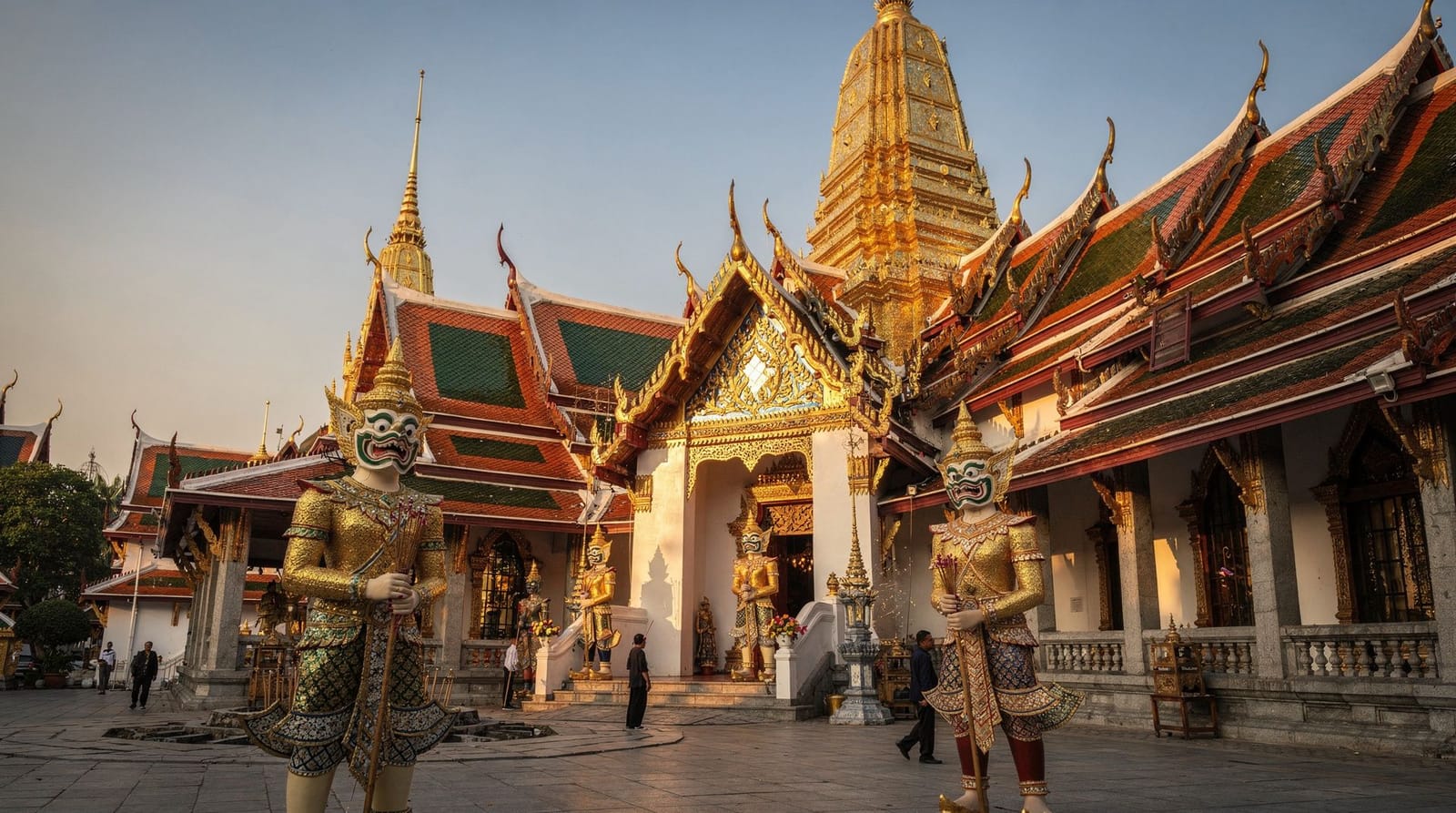
Bangkok temple-hopping route: the perfect one-day plan
Bangkok 3-Major Royal Temples Walking Tour
What is the best temple-hopping route in Bangkok?
Start at the Grand Palace and Wat Phra Kaew at 8:30 opening, walk 10 minutes south to Wat Pho and the Reclining Buddha, then take the 4-5 THB cross-river ferry from Tha Tien pier to Wat Arun. That core trio takes a morning. To extend into a full day, add Wat Saket (the Golden Mount) for the view and Wat Traimit in Chinatown. Go early, dress for the strict Grand Palace code, and carry cash for fees and ferries.
Bangkok’s great temples are clustered close together in the old city and along the river, which means you can see the essentials in a single, well-planned day — if you get the order and the timing right. This guide lays out the exact temple-hopping route, with walking times, ferry fares, entry costs and the smartest sequence to beat both the crowds and the heat. Follow it and you will see the city’s three icons by lunchtime, with energy to spare for more.
| Where | Rattanakosin old city, along the Chao Phraya river |
| Cost | ~1,000 THB entry for the core trio, plus a few baht ferry fare |
| Time needed | A morning for the core trio; a full day with extensions |
| Getting there | MRT Sanam Chai, or Chao Phraya boat to Tha Chang pier |
| Best time | Start 8:00-8:30, before tour groups and midday heat |
The golden rule is simple: start early, do the busiest and most sun-exposed temple first, and use the river. Everything else follows from that.
The core route: three icons in a morning
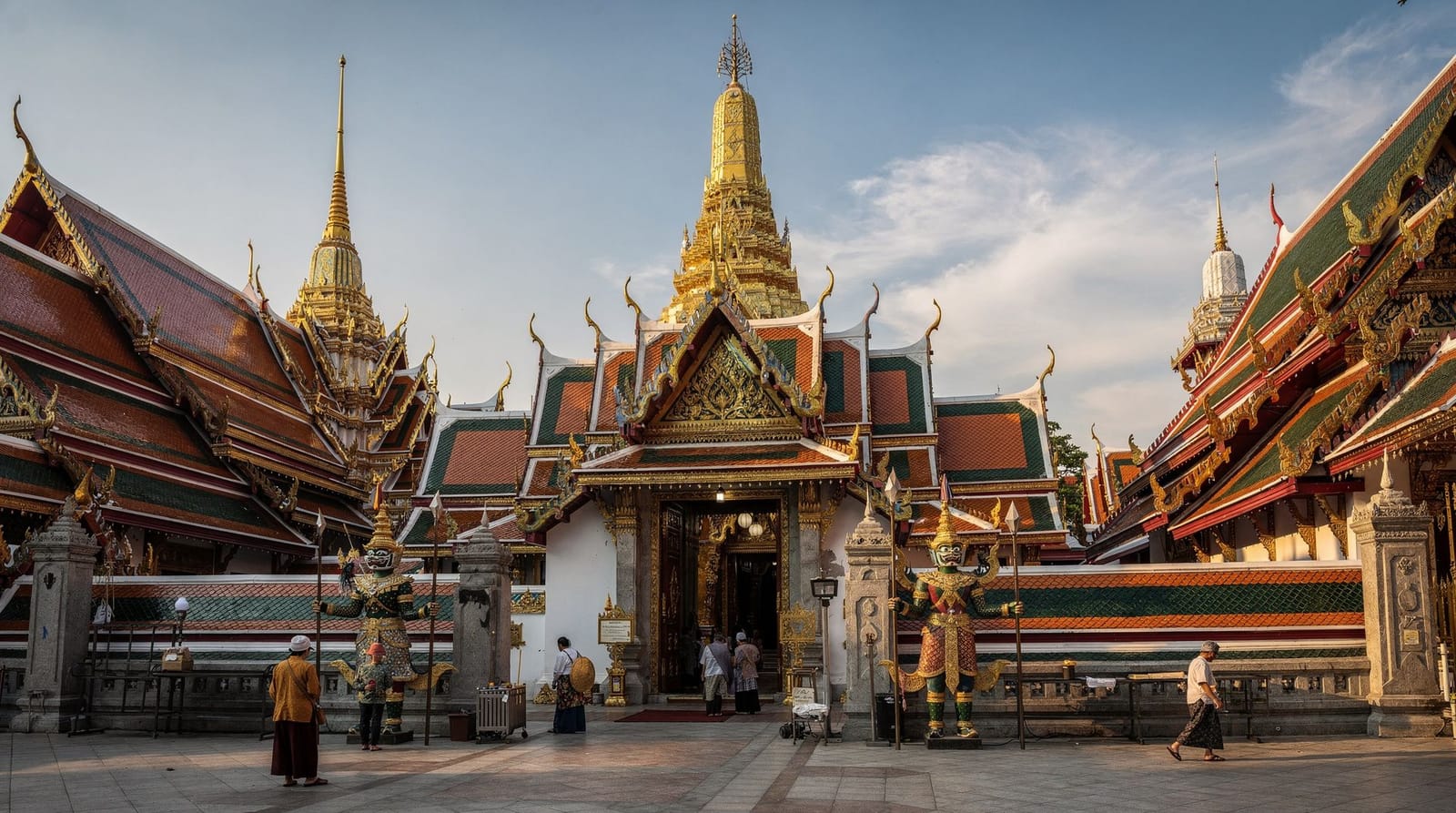
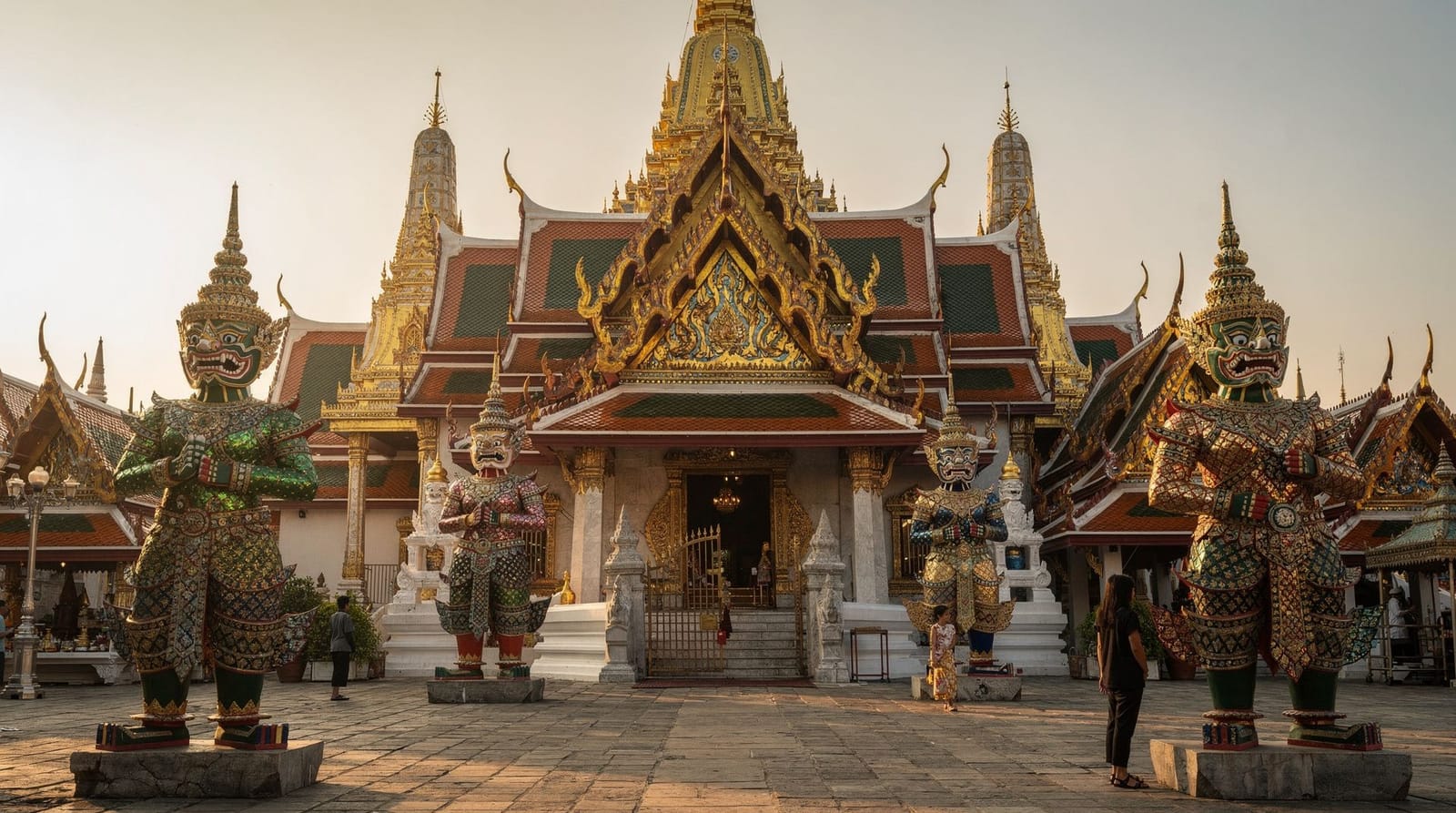
8:30 — Grand Palace and Wat Phra Kaew (500 THB)
Begin at the Grand Palace the moment it opens at 8:30. It is the busiest, priciest and most heat-exposed of the temples, so doing it first beats the tour groups (which pour in from 10:00) and the midday sun in the unshaded courtyards. Allow 1.5-2 hours for Wat Phra Kaew, the Emerald Buddha and the palace throne halls.
Dress correctly — this is the only temple in Bangkok that will turn you away for bare knees or shoulders. The full detail is in the Wat Phra Kaew and Emerald Buddha guide and Grand Palace guide. Ignore anyone outside telling you it is closed — that is the Grand Palace scam.
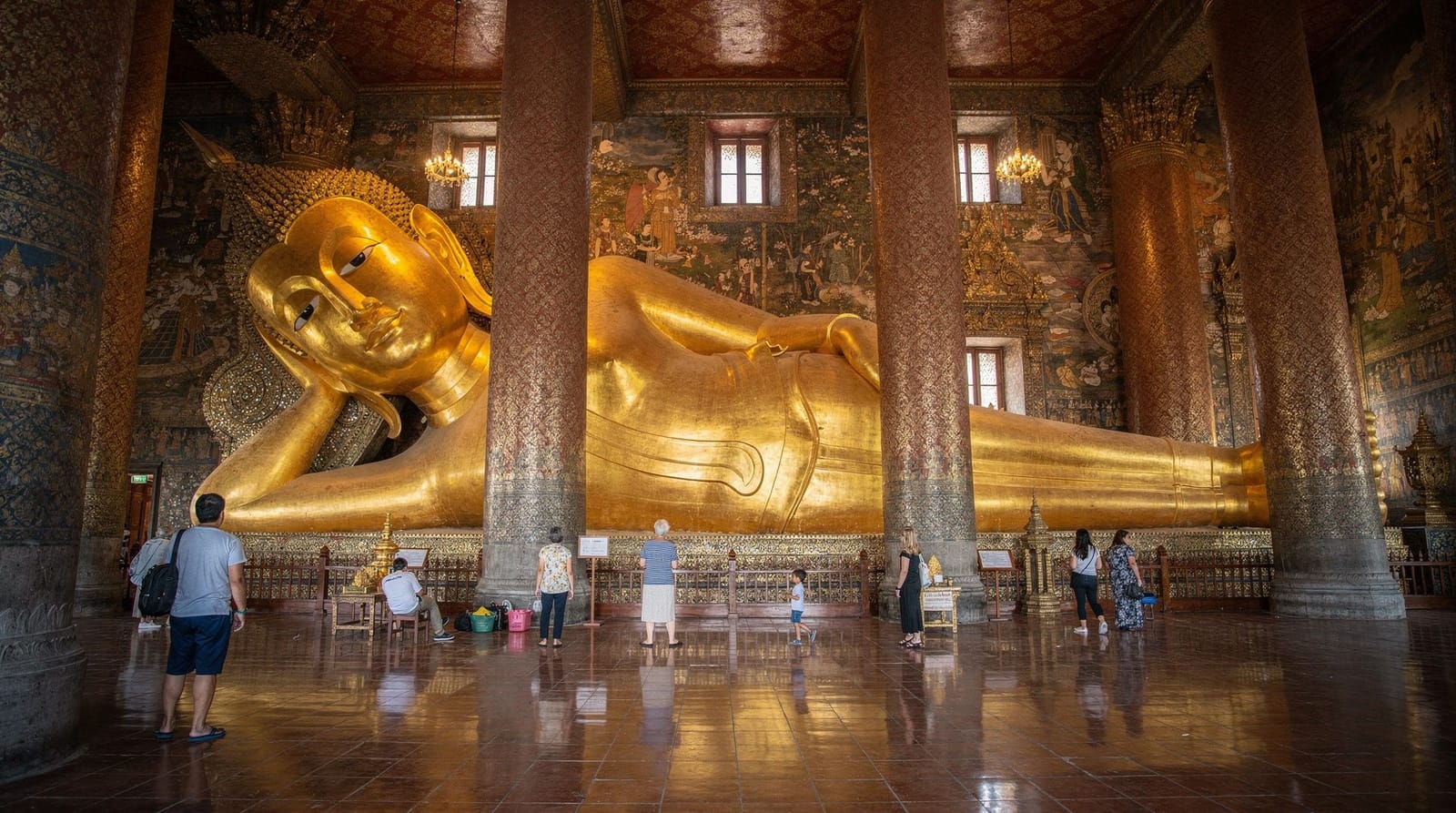
10:30 — walk to Wat Pho (300 THB)
From the Grand Palace exit, walk about 10 minutes south to Wat Pho. After the crowded palace, Wat Pho feels like a relief — larger, leafier and calmer, with the magnificent 46-metre Reclining Buddha and the chedi gardens. Allow an hour, or 1.5 with a Thai massage at the on-site school. See the Wat Pho guide.
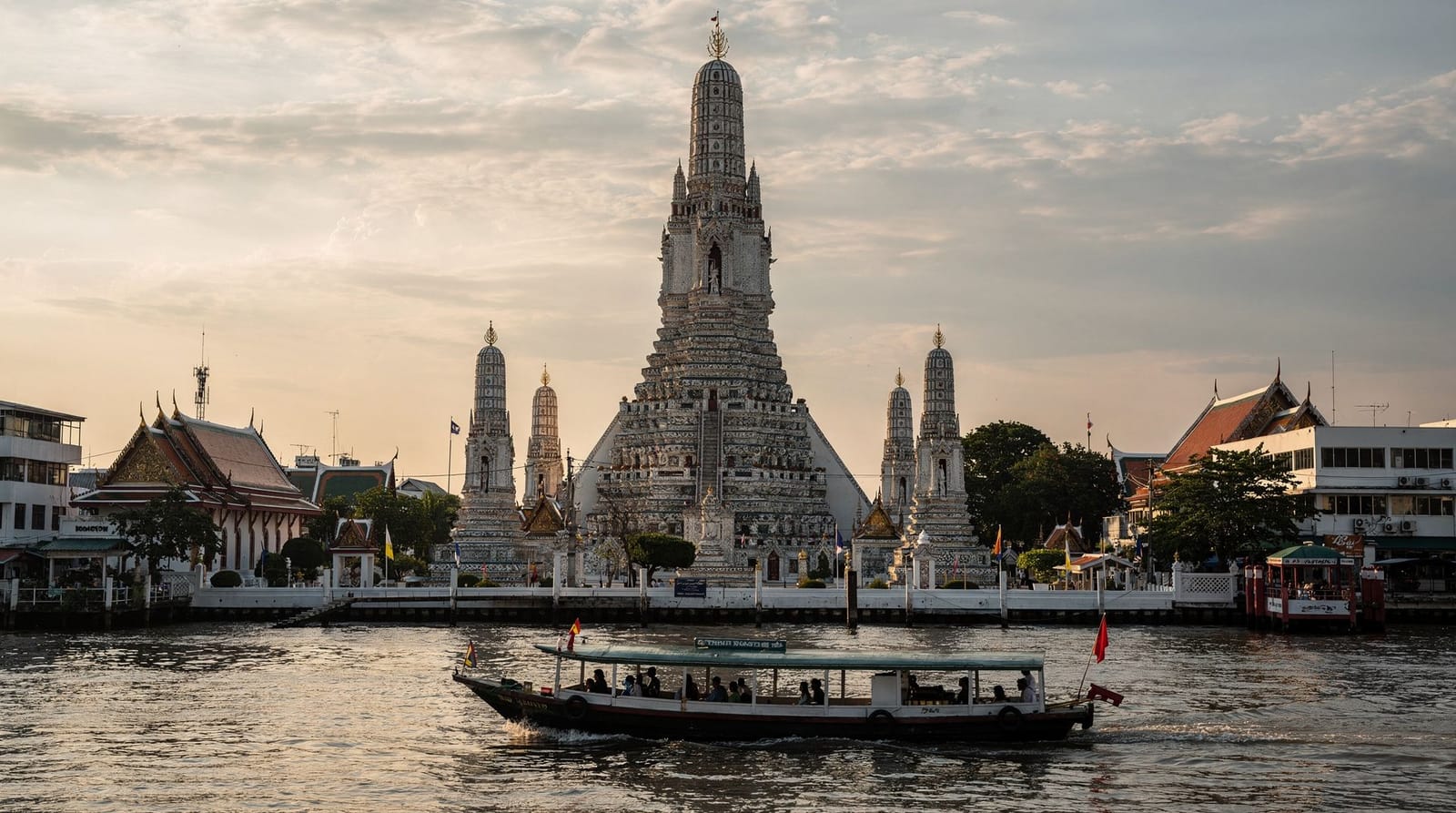
12:00 — ferry to Wat Arun
From Wat Pho’s river side, walk to Tha Tien pier and take the cross-river ferry to Wat Arun for 4-5 THB — a five-minute crossing and one of Bangkok’s great little journeys. Climb the lower terraces of the porcelain-covered prang for a river view. Allow 45 minutes to an hour. See the Wat Arun guide.
That is the essential trio done by early afternoon. A guided version — the three major royal temples walking tour — covers exactly this route on foot with the logistics handled, or the Grand Palace, Wat Pho and Wat Arun sacred tour adds transport and context.
Extending to a full day
If you still have energy and want more, add one or two of these clusters after a lunch break.
The Golden Mount cluster
A short taxi or canal boat from the old city brings you to Wat Saket and the Golden Mount, where 344 shaded steps lead to a 360° panorama of the city — a great view in Bangkok. Nearby sit Wat Suthat, the Giant Swing and Wat Ratchanatdaram. See the Wat Saket Golden Mount guide. The combined route is covered by a Grand Palace, Wat Pho, Wat Arun and Wat Saket tour.
The Chinatown cluster
A short ride to the edge of Chinatown reaches Wat Traimit and its solid-gold Buddha — a compact visit that pairs perfectly with an evening Yaowarat street-food crawl as the stalls fire up. See the Wat Traimit golden Buddha guide and the Yaowarat Chinatown food guide.
Across the river: Wat Paknam (free)
For a half-day on its own, the surreal green-glass dome of Wat Paknam in Thonburi is now an easy MRT trip and free to enter. Better as a separate excursion than tacked onto a busy old-city day. See the Wat Paknam guide.
The whole day, timed out
| Time | Stop | Entry | Notes |
|---|---|---|---|
| 08:00-08:30 | Grand Palace & Wat Phra Kaew | 500 THB | Arrive at opening; busiest, strictest dress code |
| 10:30 | Wat Pho | 300 THB | 10-min walk south; calmer, shaded courtyards |
| 12:00 | Wat Arun | See Wat Arun’s official site | Cross-river ferry from Tha Tien pier, 4-5 THB |
| 13:00-14:00 | Lunch break | — | Old-city or riverside spot before the extensions |
| 14:30 | Golden Mount (optional) | Check Wat Saket’s official site | Short taxi or canal boat; 344 steps for a city view |
| 16:00 | Chinatown / Wat Traimit (optional) | Check the current fee at the temple | Ties into an evening Yaowarat food crawl |
Rain, heat and adjusting the plan
Bangkok’s weather shapes this route more than most itineraries admit. In the hot season (March-May), the exposed terraces of the Grand Palace become genuinely punishing by 11:00, which is another reason to protect the 08:00-08:30 start rather than treat it as optional. In the rainy season (roughly June-October), afternoon downpours are common but usually brief — build in a covered lunch stop and treat the Golden Mount’s open steps and Wat Arun’s exterior terraces as the parts most likely to be rained off, saving the more sheltered Wat Pho and Wat Traimit for a wet afternoon. The cool season (November-February) is the most forgiving for this route and also the most crowded, so the early start matters just as much, for different reasons. See the best time to visit Bangkok guide and rainy season Bangkok guide for the fuller seasonal picture before you lock in a date.
Why this order works
The sequence is not arbitrary. Each stop sets up the next one. The Grand Palace is the most demanding site, in crowds, in dress code and in exposure to the sun, so it gets your freshest attention. Wat Pho follows because it is only a short walk away and it lets your pace slow down: more shade, more space, and a long reclining figure that rewards standing still. Wat Arun comes last in the core trio because the ferry crossing is a natural change of mood, and because the river temple looks its best when the light softens. If you want to understand what makes each of the three different, the best temples in Bangkok guide compares them side by side, and the Grand Palace vs Wat Pho comparison is useful if you are tempted to cut one of them.
Reversing the route is possible, but it rarely helps. You would cross the river first, climb in the sun, and arrive at the palace gates when the queues are at their longest. Treat the order above as the default and only change it if a closure or a ceremony forces your hand.
Pacing yourself between temples
Temple hopping is more tiring than it looks. You are walking on hot stone, taking your shoes on and off, standing in crowds and concentrating on unfamiliar art. A few habits make the day far more pleasant.
- Drink before you are thirsty. Refill at every shaded pause rather than waiting for a long stop.
- Use the shade deliberately. Cloisters, covered walkways and the edges of courtyards are where you recover. Plan your photos for the open areas and your rests for the covered ones.
- Sit down once an hour. Even five minutes on a bench resets your attention, and you will notice more details afterwards.
- Do not photograph everything. Pick one wide shot and one detail at each temple, then simply look. The temple photography tips explain where cameras are welcome and where they are not.
If you start to feel the heat building, cut an extension rather than a core stop. The three main temples are the reason to do this route; the extras are a bonus. The Bangkok weather month by month guide helps you judge how forgiving your travel dates will be.
Eating and resting along the way
The old city is not short of places to stop, and a proper break is part of a good temple day. Street stalls and small shophouse restaurants cluster close to the main sites, and the river piers have simple cafés with a breeze and a view. A cold drink and something light is usually better than a heavy meal in the middle of the day, especially if you plan to climb the Golden Mount afterwards.
If you want to turn lunch into part of the experience, the Bangkok street food guide explains how to order and what to look for, and the street food safety guide answers the usual worries. For a longer sit-down meal after the temples, the best Thai restaurants guide is a good starting point. Save the big food adventure for the evening in Chinatown, when the stalls are at their liveliest.
A massage is the classic reward after a morning on your feet. The Wat Pho massage school guide describes the traditional option on site, and the Thai massage guide covers the alternatives if the queue is long.
Getting between the stops
Most of the route is on foot, but the longer hops are where visitors lose time and sometimes money. The river is the most pleasant way to move, and the Chao Phraya river boats guide explains the different boats and piers so you board the right one. For the wider picture of buses, trains and taxis, see the getting around Bangkok guide and the MRT subway guide.
If you take a taxi or tuk-tuk between clusters, agree on how you will pay before you get in, and be wary of any driver who offers a cheap tour of “other temples” on the way. The tuk-tuk scams guide and the common Bangkok scams guide describe the usual tricks. A ride-hailing app is often the calmest option, and the Grab, taxi and tuk-tuk guide explains how it works.
Making it more than a checklist
The best temple days leave room to notice things. At Wat Phra Kaew, look at the guardian figures and the painted galleries rather than only the central hall. At Wat Pho, wander into the quieter courtyards behind the main crowd. At Wat Arun, look closely at the ceramic decoration up close before you take the long view from the river. Knowing a little about what you are seeing changes the visit, and the Buddhism in Bangkok guide and the Bangkok culture guide give a useful background in a few minutes of reading.
Respect also shapes the experience. Quiet voices, covered shoulders and a willingness to step aside for people who are praying go a long way. The Thai customs and etiquette guide and the monarchy respect guide explain the rules that matter most in royal sites.
Choosing a version of the day
Not everyone wants the same day. A few ways to adapt the route:
- First visit, short on time: do the core trio only and finish with a relaxed lunch. The one day in Bangkok itinerary shows how to fit it into a wider plan.
- Travelling with children: shorten the day, keep the ferry as a highlight and skip the steepest climbs. The Bangkok with kids guide has more ideas.
- Travelling with older relatives: pick fewer temples, take taxis between them and rest often. See the Bangkok with elderly travellers guide.
- Short on money: the temples are the main cost, so look at the free things to do in Bangkok guide for ways to balance the budget.
- Short on sleep: if you have just landed, the Bangkok for first-timers guide can help you decide how much to attempt on day one.
Costs and logistics at a glance
- Entry fees (core trio): 500 + 300 + 200 THB = 1,000 THB, plus the ferry
- Add Golden Mount: check Wat Saket’s official site · Add Wat Traimit: check the current fee at the temple
- Cash: essential — most temples do not take cards at the gate
- Transit: Sanam Chai MRT for the old city; Saen Saep canal boat for the Golden Mount; the cross-river ferry for Wat Arun
For a full day built around this route with food stops, see the Bangkok temples itinerary, and for the wider district the Rattanakosin old city destination guide. The best temples in Bangkok guide ranks every temple so you can swap in alternatives.
What to wear and bring
- Dress: shoulders and knees covered at every temple; the Grand Palace is strict.
- Shoes: slip-on, since you remove them in prayer halls.
- Carry: a scarf, sun protection, water, and lots of small cash.
- Timing: start at opening; save Wat Arun for late-afternoon or sunset light if you can.
The temple etiquette and dress code guide covers the behaviour rules — feet, heads, monks and photography — that apply at every stop.
Frequently asked questions about Bangkok temple-hopping route: the perfect one-day plan
How many temples can you visit in one day in Bangkok?
What order should I visit Bangkok's temples?
How much does a temple-hopping day cost in Bangkok?
Can you walk between Bangkok's main temples?
What time should I start temple hopping?
Do I need a guide for a temple-hopping day?
What should I wear and bring for temple hopping?
Is the temple-hopping route doable in half a day?
Top experiences
Bookable activities with verified prices and instant confirmation on GetYourGuide.