Bangkok for first-timers: the honest 4-day plan
Bangkok: Grand Palace, Wat Pho, Wat Arun Sacred & Local Tour
If this is your first time in Bangkok, the city can feel overwhelming — the heat, the traffic, the touts, the sheer scale. This four-day plan is built to remove that friction: it covers the unmissable temples, a market, a day-trip and the food, while explaining the things first-timers always get wrong — the dress codes, the scams, the transport and the pacing. Follow it and you will leave feeling you understood Bangkok rather than survived it. The single most important first-timer lesson: respect the heat and do not over-pack your days.
| Best for | First-timers, couples, solo travellers |
| Pace | Eases in day one, headline sights days two–four |
| Cost | Roughly 1,500–3,000 THB/person/day, excl. hotel |
| Getting around | Boats + Grab (old city), BTS/MRT (modern city) |
| Best months | November–February most comfortable for a first visit |
| Day | Focus | Highlights |
|---|---|---|
| 1 | Ease in | River boat orientation, Wat Arun, Yaowarat |
| 2 | The big one | Grand Palace, Wat Pho, rooftop sunset |
| 3 | Modern city | Chatuchak/Jim Thompson House, Siam, massage |
| 4 | Day-trip | Ayutthaya, or a floating market/cooking class |
What every first-timer needs to know first
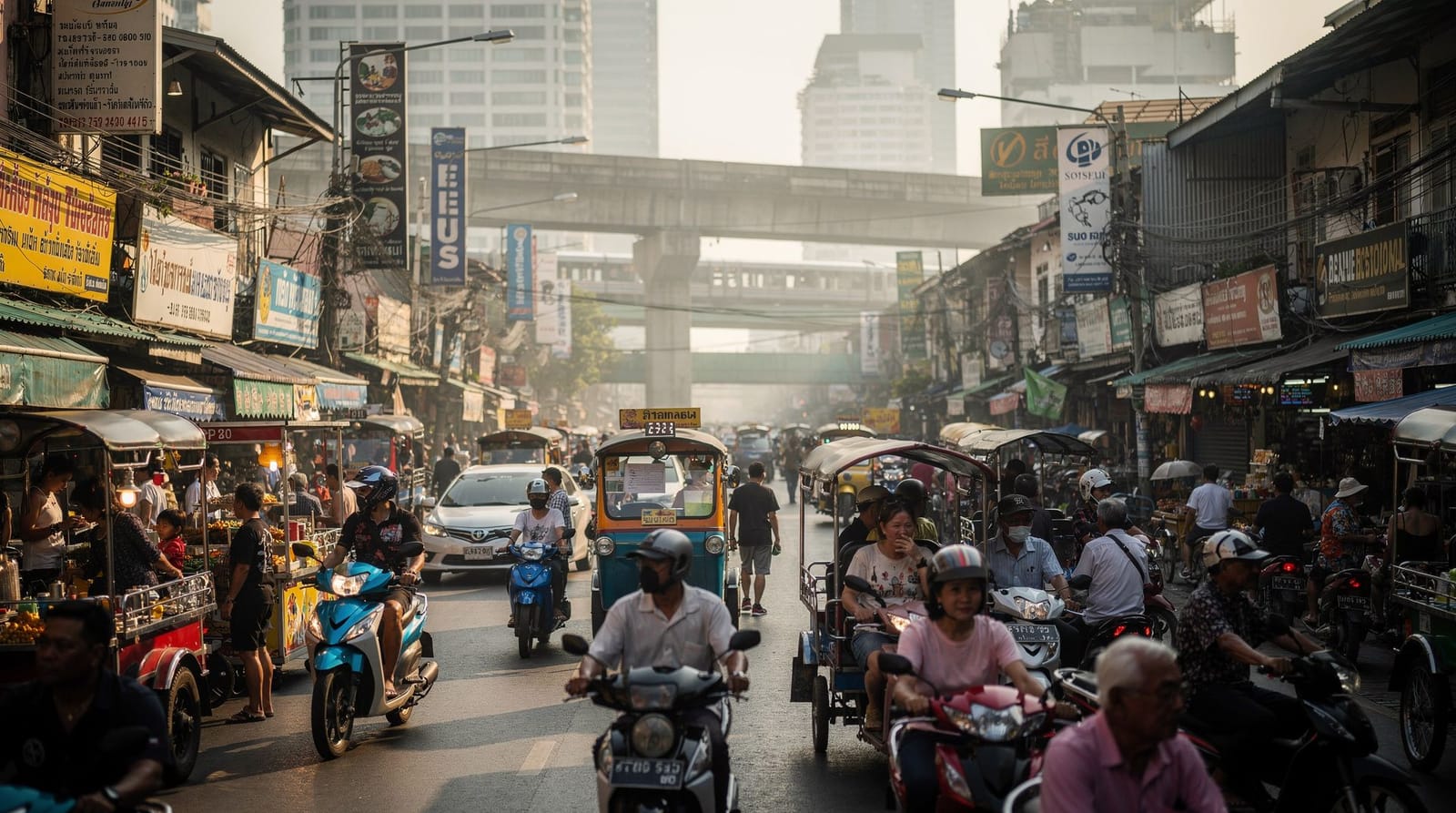
Three things will make or break your trip. First, the heat is the real constraint — 33–35 °C with humidity means mornings and evenings for sightseeing, hot afternoons for rest or air-conditioning. Second, the old city is not on a train line; you will use boats and Grab for the temples and the BTS/MRT for the modern city. Third, scams target tourists at the big sights — the “Grand Palace is closed today” trick, gem shops, dodgy tuk-tuks. None are dangerous, all are avoidable; read common Bangkok scams and Bangkok for first-timers before you go. With those three understood, Bangkok is a joy.
Day 1 — Ease in: river, one temple, Chinatown
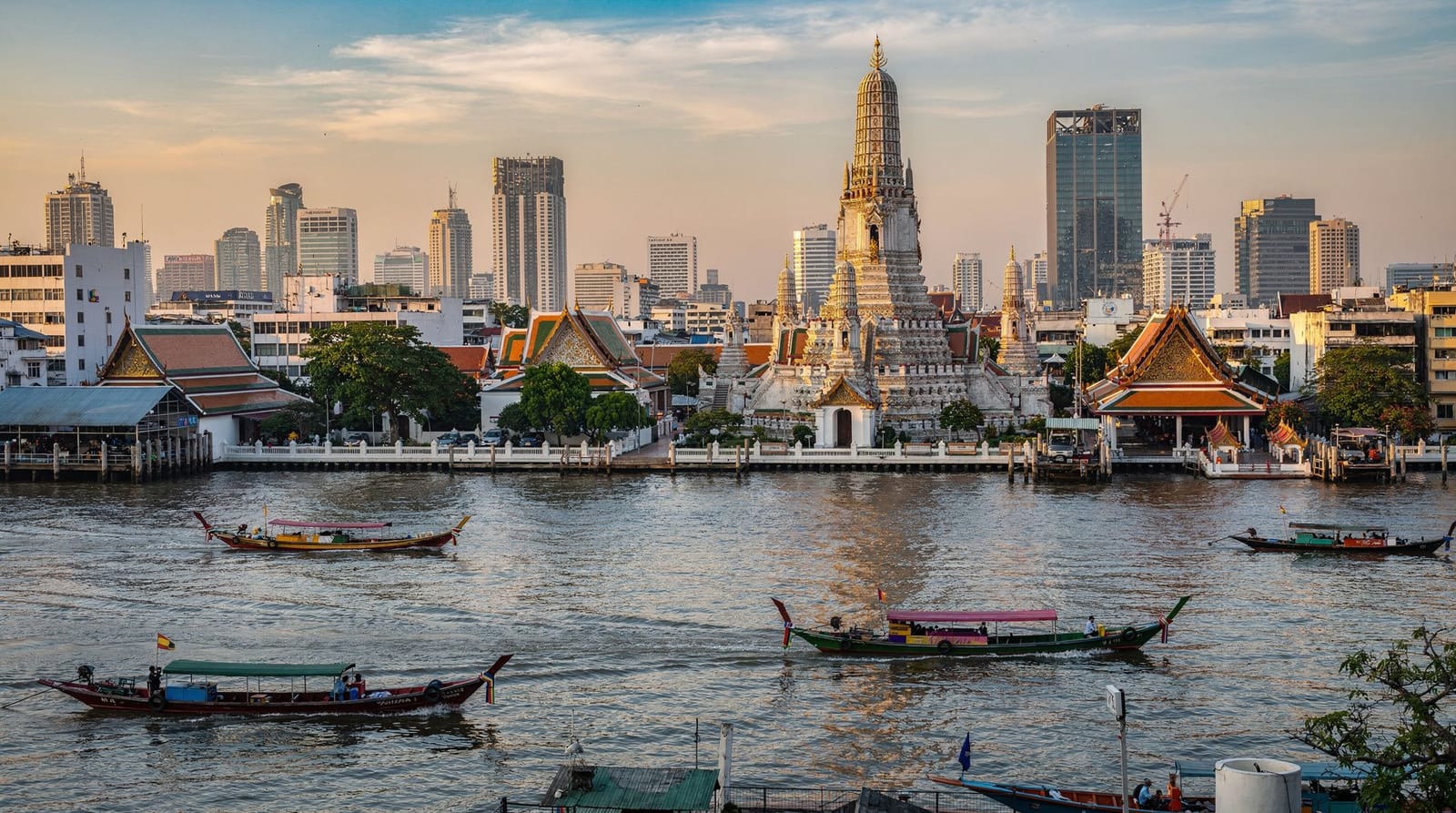
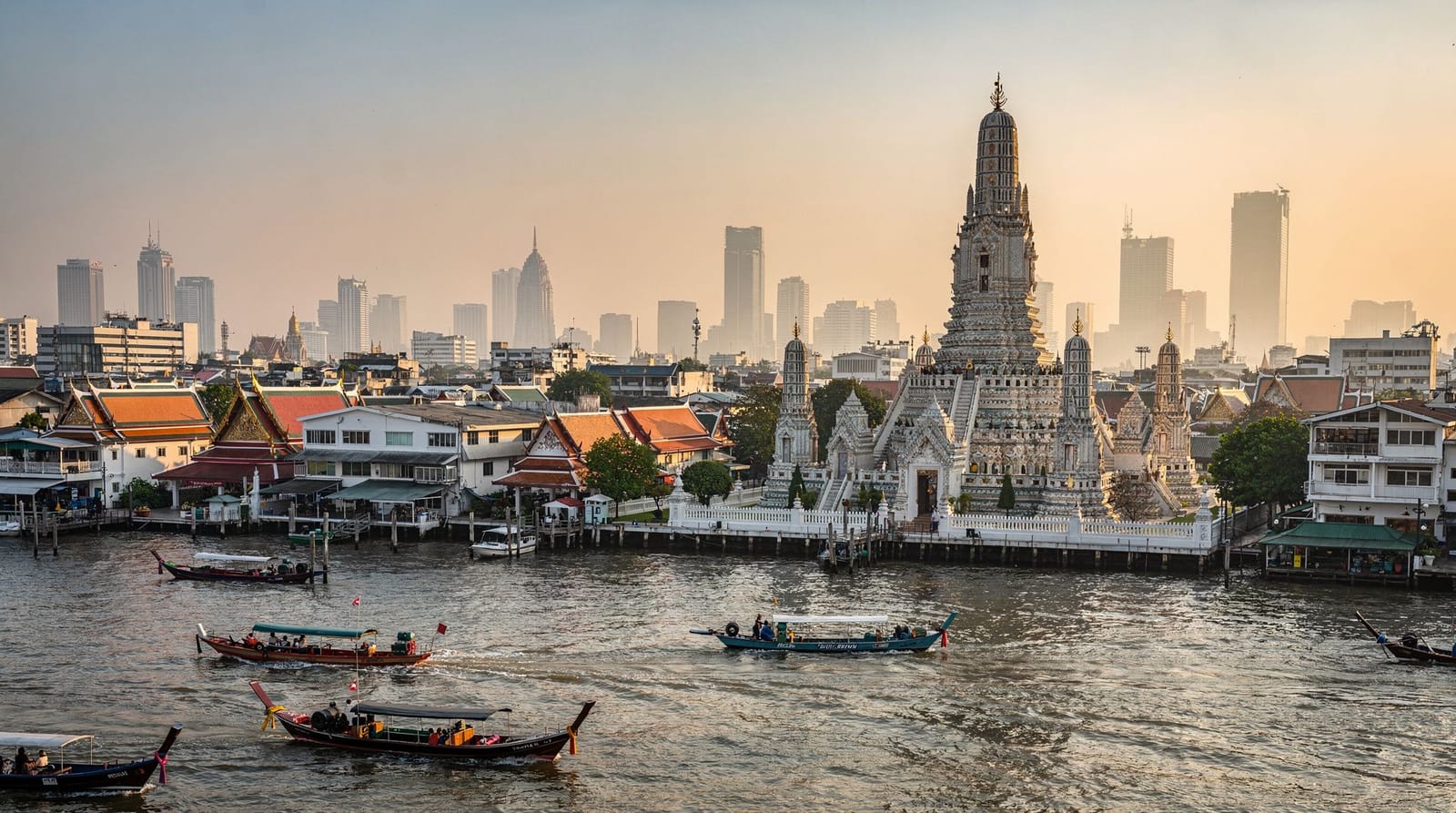
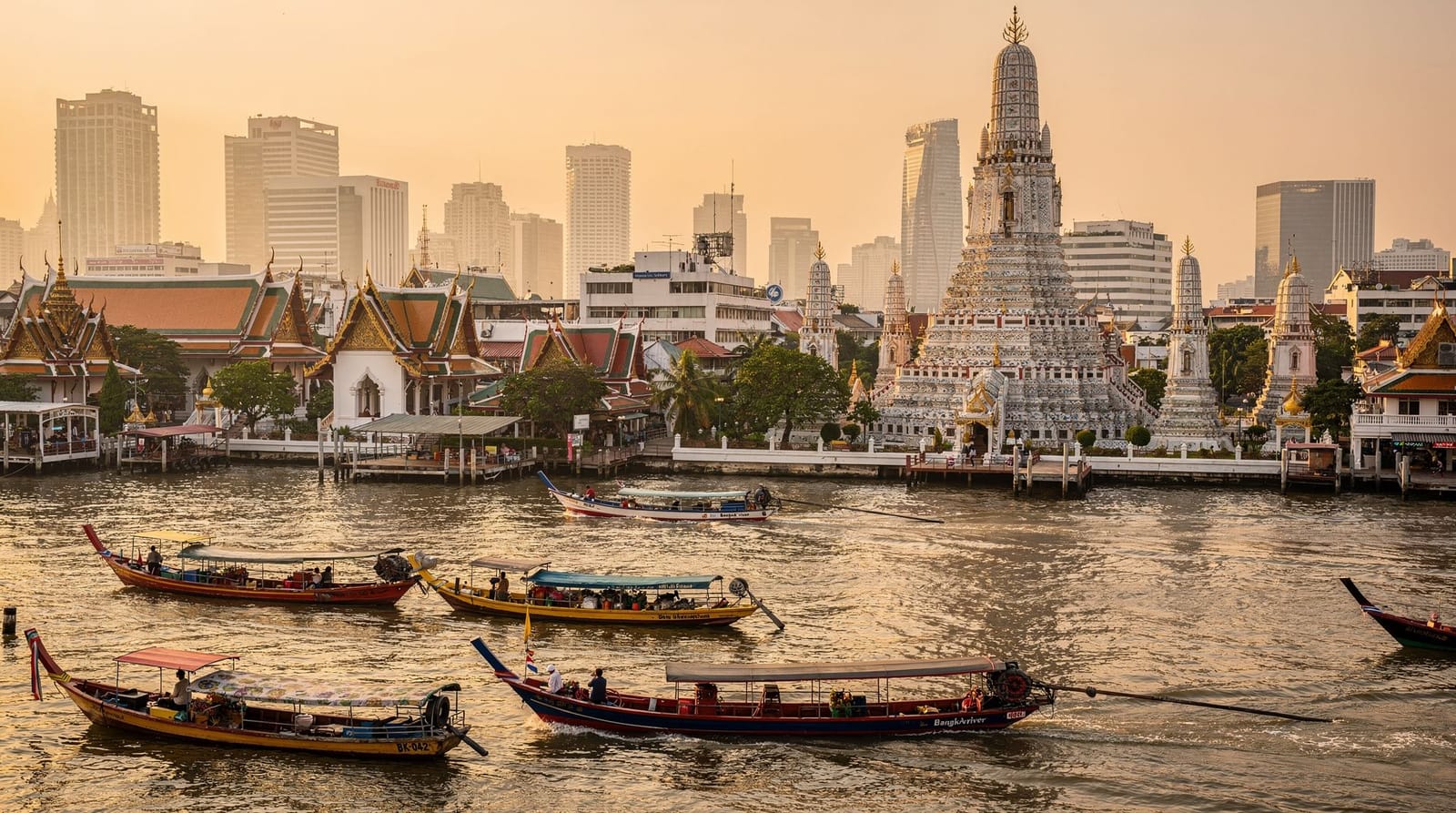
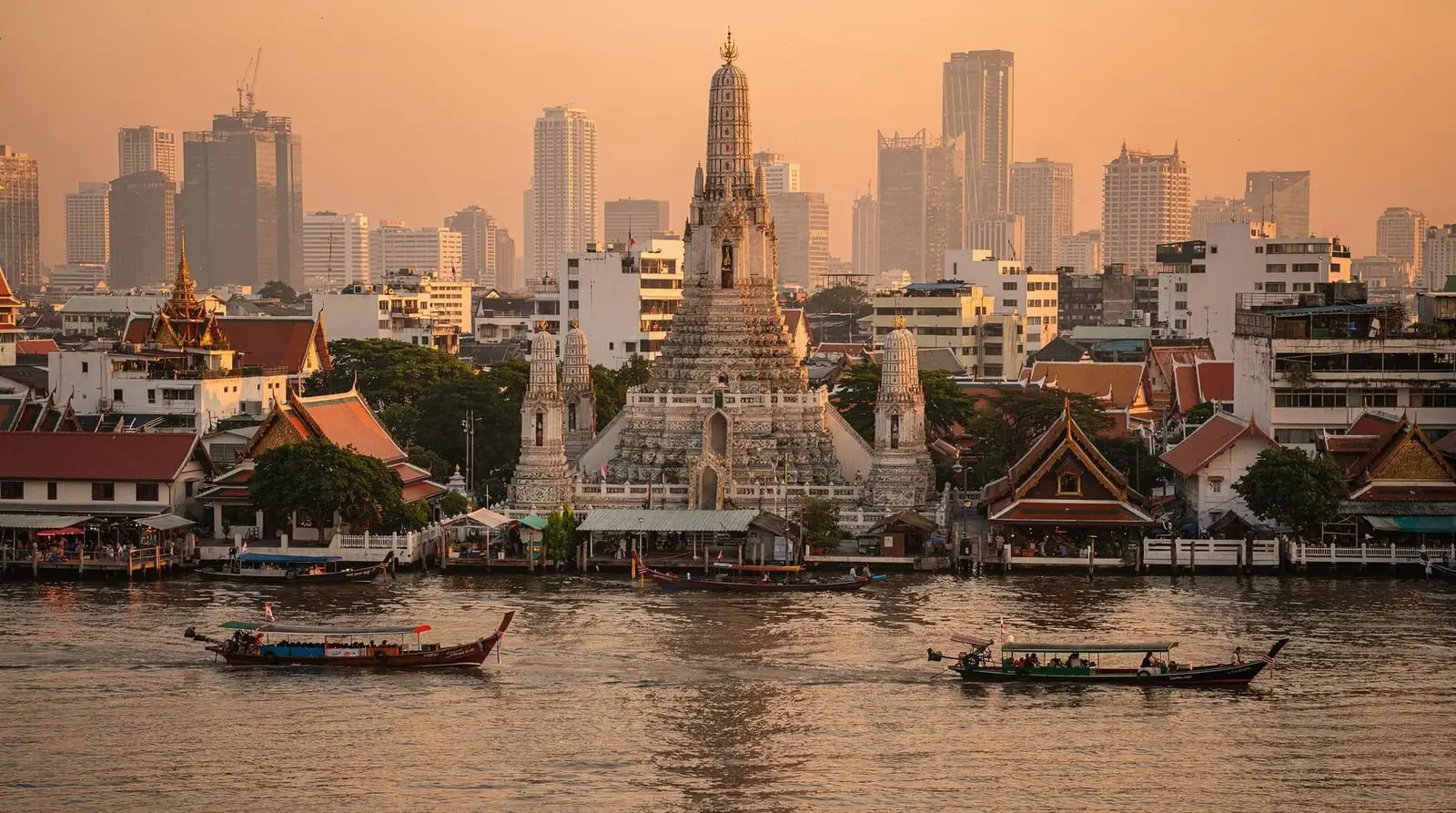
Do not start with the Grand Palace on a jet-lagged morning. Ease in instead. Take a morning Chao Phraya Express Boat up the river to get oriented — a hop-on hop-off river boat pass lets you sample the riverside sights from the water. Visit Wat Arun (200 THB), the most beautiful and least stressful temple, covered in the Wat Arun guide. Rest in the afternoon heat, then have your first Bangkok dinner on Yaowarat in Chinatown — a night food tour by tuk-tuk is the perfect gentle orientation, handling the stall-picking and the navigation. See the Yaowarat Chinatown food guide.
Day 2 — The big one: Grand Palace and Wat Pho
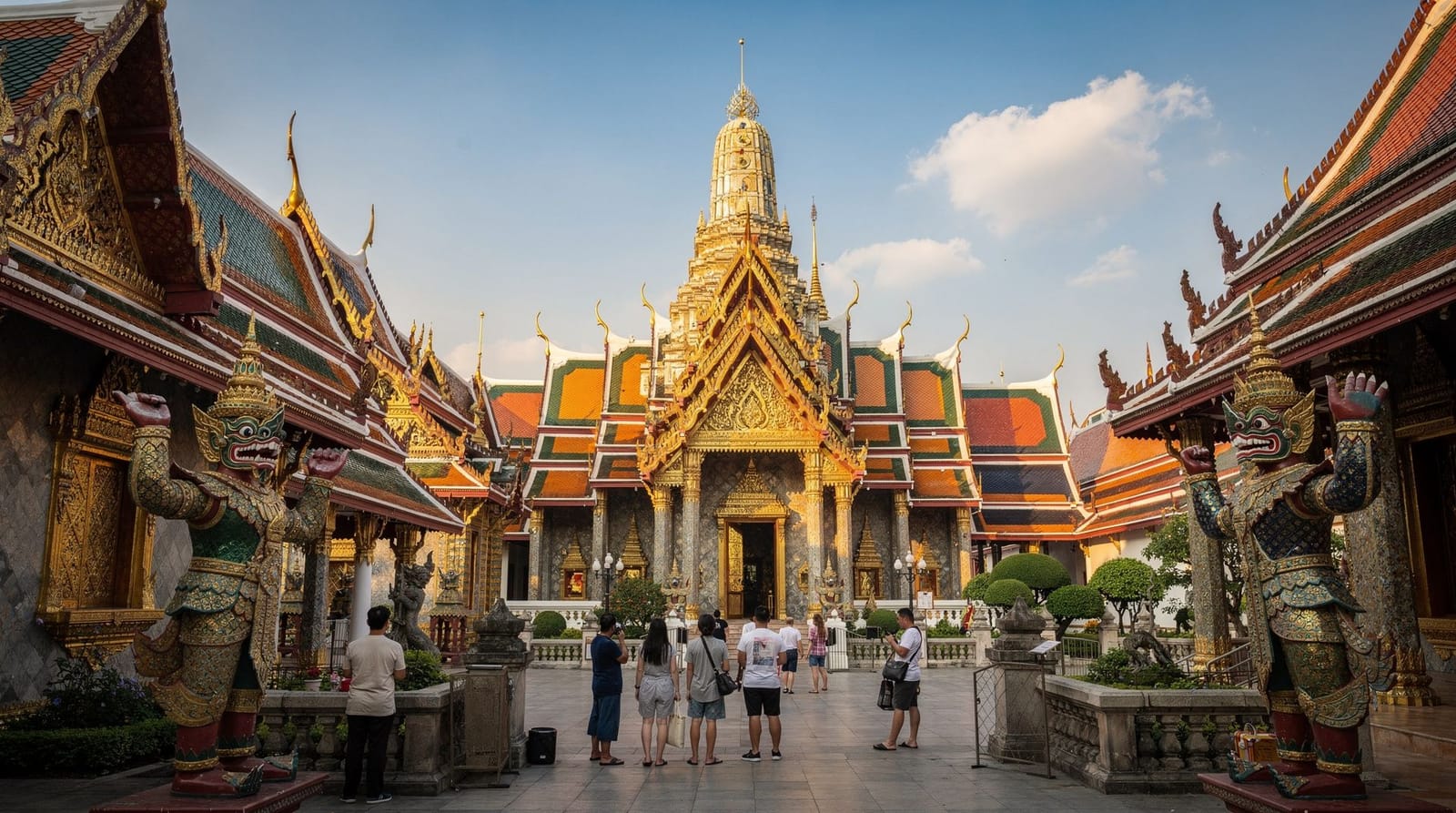
Now you are acclimatised, do the headline temples early. Be at the Grand Palace at 08:30 opening (500 THB). Dress to the code — covered shoulders and knees, no torn jeans, proper shoes; read the Grand Palace dress code so you are not turned away. Ignore the touts outside saying it is “closed for a ceremony” — that is the classic scam (Grand Palace scam warning). Then walk to Wat Pho (300 THB) for the giant Reclining Buddha. A guided Grand Palace, Wat Pho and Wat Arun tour is genuinely worth it for first-timers — it removes the scam risk, the queues and the navigation. See the Grand Palace guide and Wat Pho guide. Spend the evening at a rooftop bar for the skyline.
Day 3 — Modern Bangkok and a market
A comfortable, air-conditioned day on the BTS. If it is a weekend, start at Chatuchak Weekend Market (free, BTS Mo Chit; Chatuchak guide). On a weekday, do the Jim Thompson House (200 THB, BTS National Stadium; guide) instead. Spend the afternoon around Siam — malls, the free Erawan Shrine in Siam Ratchaprasong, and a Thai massage to recover (Thai massage guide). This is the easy day; let it be easy.
Day 4 — A day-trip to Ayutthaya
End with a taste of Thailand beyond the city. Ayutthaya, the ancient capital 80 km north, is the classic first-timer day-trip — UNESCO ruins, the Buddha head in the tree roots, and a sense of the history behind the modern city. A one-way Ayutthaya bus and river cruise is a relaxed way to do it without planning logistics; the Ayutthaya day-trip and the Ayutthaya destination page cover the alternatives. If you would rather stay in the city, swap in a floating market or a cooking class.
The first-timer transport cheat-sheet
- Old city and temples: Chao Phraya Express Boat (orange flag, 16 THB) and Grab cars. The old city has no train.
- Modern city (Siam, Sukhumvit, Silom): BTS Skytrain and MRT — fast, cheap (16–62 THB), air-conditioned, English signage. See the BTS Skytrain guide.
- Pay: single tickets, or a Rabbit Card if you ride a lot.
- Avoid: any tuk-tuk that quotes a flat “tour” price (commission scams — tuk-tuk scams) and unmetered taxis. Use Grab and you never haggle.
The getting around Bangkok guide is the full reference.
First-timer food, gently
Bangkok food is the best part, and street food is safe if you follow simple rules — busy stalls, freshly cooked, high turnover. Start with the what to eat in Bangkok essentials (pad thai, pad krapow, green curry, mango sticky rice) and read street food safety to eat with confidence. If you are nervous, the guided night food tour on day one breaks the ice and teaches you what to order for the rest of the trip.
Honest first-timer mistakes to avoid
- Over-packing the schedule — three sights a day in this heat is plenty.
- Doing the Grand Palace jet-lagged on day one — ease in first.
- Falling for the “temple is closed” scam — the palace is open daily 08:30–15:30.
- Haggling with unmetered taxis — just use Grab.
- Underdressing for temples — carry a light layer everywhere.
Where a first-timer should stay
Your base sets the tone. For a first visit, two areas are easiest. Sukhumvit (Asok, Phrom Phong, Nana) is the most convenient — the BTS and MRT cross here, hotels span every budget, and you are surrounded by restaurants, malls and pharmacies. Silom/Sathorn is the alternative, riverside-leaning with the famous rooftop bars and both train lines. Both put the old-city temples 20–30 minutes away by Grab and the modern sights minutes away by train. Avoid basing in the old city or on Khao San for a first trip unless budget is the priority — they are atmospheric but poorly connected, which eats your time. The where to stay in Bangkok and Bangkok neighborhoods guide lay out the choices.
Money, SIMs and the practical first day
A few things to sort on arrival that make everything smoother. Cash: Thailand is still largely cash-driven for street food, markets and taxis — withdraw baht from an ATM (expect a ~220 THB foreign-card fee) and carry small notes. Connectivity: buy a tourist SIM or eSIM at the airport or a 7-Eleven (a week of data runs 200–400 THB) so you can use Grab and maps; see Bangkok SIM and eSIM. Grab: download the app before you arrive — it is the single best tool for stress-free, no-haggle transport. Water: never drink the tap; bottled water is 7–15 THB everywhere. Visa: check your nationality’s entry rules and the TDAC arrival card requirement in advance (Thailand visa and TDAC). Getting these sorted on day one removes most of the friction that overwhelms first-timers.
A realistic first-timer timeline
Day 1 (ease in): river boat orientation; Wat Arun; afternoon rest; Yaowarat food tour.
Day 2 (the big one): 08:30 Grand Palace; Wat Pho; afternoon rest; rooftop bar.
Day 3 (modern city): Chatuchak or Jim Thompson House; Siam; a Thai massage.
Day 4 (day-trip): Ayutthaya, or a floating market, or a cooking class in the city.
The order matters: easing in on day one and saving the strict, crowded Grand Palace for day two when you are acclimatised is what separates a smooth first trip from a frazzled one.
The first-timer’s cultural cheat-sheet
A little cultural awareness goes a long way and earns warm responses. The wai (palms pressed together, slight bow) is the Thai greeting — you don’t need to initiate it, but returning one to hotel staff and elders is appreciated. The monarchy is deeply revered; never make jokes or critical remarks about the royal family — it’s both deeply offensive and actually illegal (monarchy respect). The head is sacred and the feet are lowly — don’t touch people’s heads or point your feet at people or Buddha images. Dress modestly at temples and remove your shoes when entering homes and some shops. Keep your cool — losing your temper publicly (“losing face”) gets you nowhere in Thailand; a smile and patience get you everywhere. The thai customs and etiquette and Bangkok culture guide cover the nuances. None of this is hard, and getting it roughly right transforms how locals respond to you.
Common first-timer worries, answered honestly
A few anxieties that keep first-timers up at night, addressed plainly. Is it dangerous? No — violent crime against tourists is rare; the real risks are scams and traffic, both manageable. Will I get sick from the food? Not if you eat from busy, fresh-cooking stalls and drink bottled water. Is the language a barrier? English is widely understood at sights, hotels and tourist restaurants; a translation app covers the gaps. Is it too overwhelming? Only if you over-pack the days — pace yourself, use the trains and Grab, and the chaos becomes navigable, even fun. Will I be hassled? At the big tourist sights, by touts and tuk-tuk drivers, yes — a firm “no thank you” and walking on handles it. Bangkok is one of the most rewarding cities in the world for a first-time Asia traveller precisely because it’s so well set up underneath the surface chaos. See solo travel in Bangkok if you’re going it alone.
Getting from the airport to your hotel
Your first hour in Thailand shapes your mood for the whole trip, so plan it. From Suvarnabhumi, the Airport Rail Link (about 35 minutes to Phaya Thai, 45 THB) connects to the BTS and is immune to traffic; a Grab car is faster door-to-door but risks getting stuck at rush hour. From Don Mueang, the budget-airline airport, use the A1/A2 airport bus or the SRT Red Line rather than a road taxi — see Don Mueang airport to city if that’s where you land. Either way, avoid the taxi touts who approach you inside the terminal — use the official metered taxi queue or book a Grab once you clear arrivals. The Suvarnabhumi airport to city guide has the full walkthrough.
What a first-timer should pack and budget
Pack light, breathable clothing plus one layer with covered shoulders and long trousers or a skirt for temples, comfortable walking shoes, and a compact rain layer if you’re travelling June–October — see what to pack for Bangkok for the complete list. On cost, a first-timer doing this four-day plan comfortably, including temple entries, street food, a day-trip and the odd rooftop drink, should budget roughly 1,500–3,000 THB per person per day (about USD 42–85) excluding flights and accommodation. See Bangkok travel costs for exactly where that money goes.
Frequently asked questions about visiting Bangkok for the first time
Is Bangkok a good first destination in Asia?
Yes — it is well set up for tourists, English is widely understood at the sights, the food is incredible and cheap, and getting around is easy once you know the boat-and-train split. The main adjustments are the heat and the tourist scams, both manageable.
How many days does a first-timer need in Bangkok?
Four days is the sweet spot: the temples, a market, the modern city and one day-trip, with rest built in. Three is the honest minimum (3-day itinerary); a single day (1-day itinerary) only suits a stopover.
What should a first-timer wear?
Light, breathable clothing for the heat, but always carry a layer with covered shoulders and long trousers or a long skirt for temples — the Grand Palace strictly enforces this. Comfortable shoes; you will walk and stand a lot.
Are the Bangkok scams dangerous?
No — they are commission and overcharging scams (gem shops, “closed” temples, dodgy tuk-tuks, unmetered taxis), not violent. Stay polite, walk away, use Grab and metered taxis, and verify opening times yourself. See common Bangkok scams.
Should a first-timer take guided tours?
For the Grand Palace cluster and a first food crawl, yes — a guide removes the scam risk, the queues and the guesswork, which is worth a lot on day one or two. The rest of the city is easy to do independently on the BTS.
Is the tap water safe to drink?
No — drink bottled or filtered water, which is cheap and everywhere (7–15 THB a bottle). Ice in established restaurants and cafes is made from purified water and is fine; carry water constantly in the heat. See Bangkok for first-timers.
Top experiences
Bookable activities with verified prices and instant confirmation on GetYourGuide.