Kanchanaburi
Kanchanaburi pairs WWII history — the Death Railway and Bridge over the River Kwai — with Erawan's waterfalls. How to visit from Bangkok, honestly.
Bangkok: Kanchanaburi, River Kwai & Death Railway Tour
Quick facts
- Distance from Bangkok
- ~130 km west (2–3 hr by minivan, train or car)
- Getting there
- Minivan from Bangkok, scenic SRT train via Nakhon Pathom, or organised tour
- Key sight
- Death Railway, Bridge over the River Kwai, Hellfire Pass, Erawan Falls
- Time needed
- A long full day; an overnight is far more relaxed
- Best time
- Nov–Feb; waterfalls fullest at the end of the rainy season (Oct–Nov)
Kanchanaburi is the day trip with a heavy heart. About 130 km west of Bangkok, this provincial town is where the Japanese army built the Thailand–Burma “Death Railway” during the Second World War, using Allied prisoners of war and tens of thousands of conscripted Asian labourers under conditions so brutal that an estimated 100,000 people died. The Bridge over the River Kwai — made famous by the film — still stands and still carries trains. Around it are war cemeteries, museums, and the haunting cutting at Hellfire Pass. An hour or so further on, the landscape turns green and gentle at Erawan National Park, where a seven-tiered waterfall cascades through emerald pools.
Is it worth the trip? Yes — but go for the right reasons. Kanchanaburi rewards travellers who want history with emotional weight and a beautiful natural counterpoint, not those after quick photo stops. It is a longer haul than Ayutthaya, and doing it justice in a single day is tight. This page covers the history honestly, flags the ethical issue around elephant attractions, and lays out how to get there.
The Death Railway and the Bridge over the River Kwai
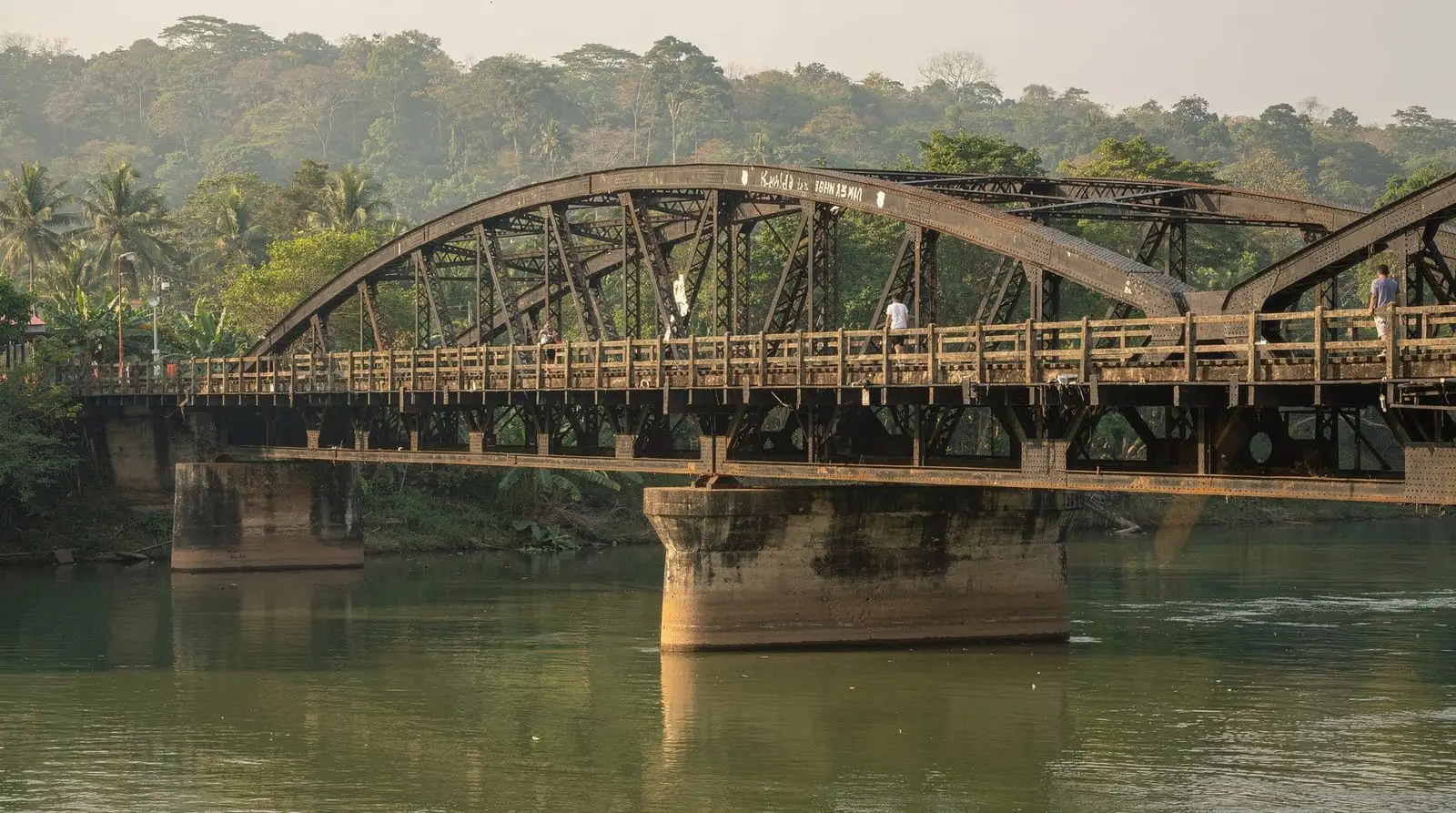
Between 1942 and 1943, the Japanese forced Allied POWs and Asian rōmusha labourers to build a 415 km railway through the jungle to supply their Burma campaign. The human cost was catastrophic. The Bridge over the River Kwai in Kanchanaburi town is the most famous surviving structure; you can walk across it (step into the refuges when a train passes — it is still a working line). It is busier and more commercialised than its reputation suggests, ringed by stalls and cafés, but it remains a genuine artefact.
The most moving way to engage with the railway is to ride a surviving stretch of it. The train from Kanchanaburi runs along the Wampo (Tham Krasae) viaduct — a wooden trestle clinging to a cliff above the river, built by prisoners — to Nam Tok. It is cheap, slow, and quietly powerful.
To understand what happened, two sites matter most. The Death Railway Museum (Thailand–Burma Railway Centre) in town and the adjacent Kanchanaburi War Cemetery, where nearly 7,000 Allied POWs are buried in immaculate rows, give the human scale. Further out, Hellfire Pass — a rock cutting dug by hand, named for the torchlit night shifts — has an excellent interpretive memorial museum (run with Australian support) and a walking trail through the cutting itself. For the full picture, see the Kanchanaburi Death Railway guide, and for a more reflective read, Death Railway reflections.
The standard guided format covers the bridge, the cemetery, the museum, and a ride on the railway: the Kanchanaburi, River Kwai and Death Railway tour is the most common. To include Hellfire Pass — which adds real depth and is awkward to reach without transport — the Death Railway and Hellfire Pass tour with lunch is the better history-focused choice.
Erawan National Park and the waterfalls
About 65 km northwest of town, Erawan Falls is the natural highlight: a waterfall that tumbles down seven tiers through jungle, with turquoise pools at several levels where you can swim. The colour comes from limestone (calcium carbonate) in the water. Tiers two and three are the most popular for swimming; the higher tiers require a sweaty uphill walk and close earlier in the day, so start the climb early. Wear water shoes — the rocks are slippery and small fish nibble at your feet in the pools.
Erawan is a national park, so a foreigner entry fee applies (around 300 THB). It can be combined with the war history on a long day or, better, spread across an overnight stay. The Erawan Park and Kanchanaburi small-group tour pairs the falls with the key historical sites in one day for those who only have one.
A serious note on elephants
Many Kanchanaburi tours and venues offer elephant experiences, and you should choose carefully. Elephant riding and venues that force performance or chaining cause real suffering; the spread of “sanctuaries” has also blurred the line, with some camps using the word while still allowing riding or bathing in stressful conditions. Our position, and the broadly accepted ethical guidance, is to avoid riding entirely and to favour observation-only or low-contact sanctuaries that prioritise the animals’ welfare. Read ethical elephant tourism before booking anything elephant-related, and see the ethical elephant sanctuary guidance for what good practice looks like. If you book a combined tour, check exactly what the elephant component involves.
Getting there from Bangkok
Minivan: the most common independent option. Minivans run from Bangkok (Mo Chit / Northern Bus Terminal and the Southern Bus Terminal) to Kanchanaburi in about 2 to 3 hours, costing roughly 120–150 THB. Frequent through the morning.
Train: the scenic and historically resonant choice. Trains leave from Bangkok’s Thonburi (Bangkok Noi) station — not the main terminal — and run via Nakhon Pathom to Kanchanaburi and on along the Death Railway to Nam Tok. Only a couple of services a day, slower than the minivan, but the journey is part of the experience. Cheap (tens of baht).
Car or tour: a private car or an organised tour removes the logistical friction of stitching together the spread-out sites — the bridge, cemetery, Hellfire Pass, and Erawan are not close together, and public transport between them is limited. This is the main practical argument for taking a tour here, more so than at Ayutthaya. For the full transport picture see Bangkok to day trips transport and day trips from Bangkok.
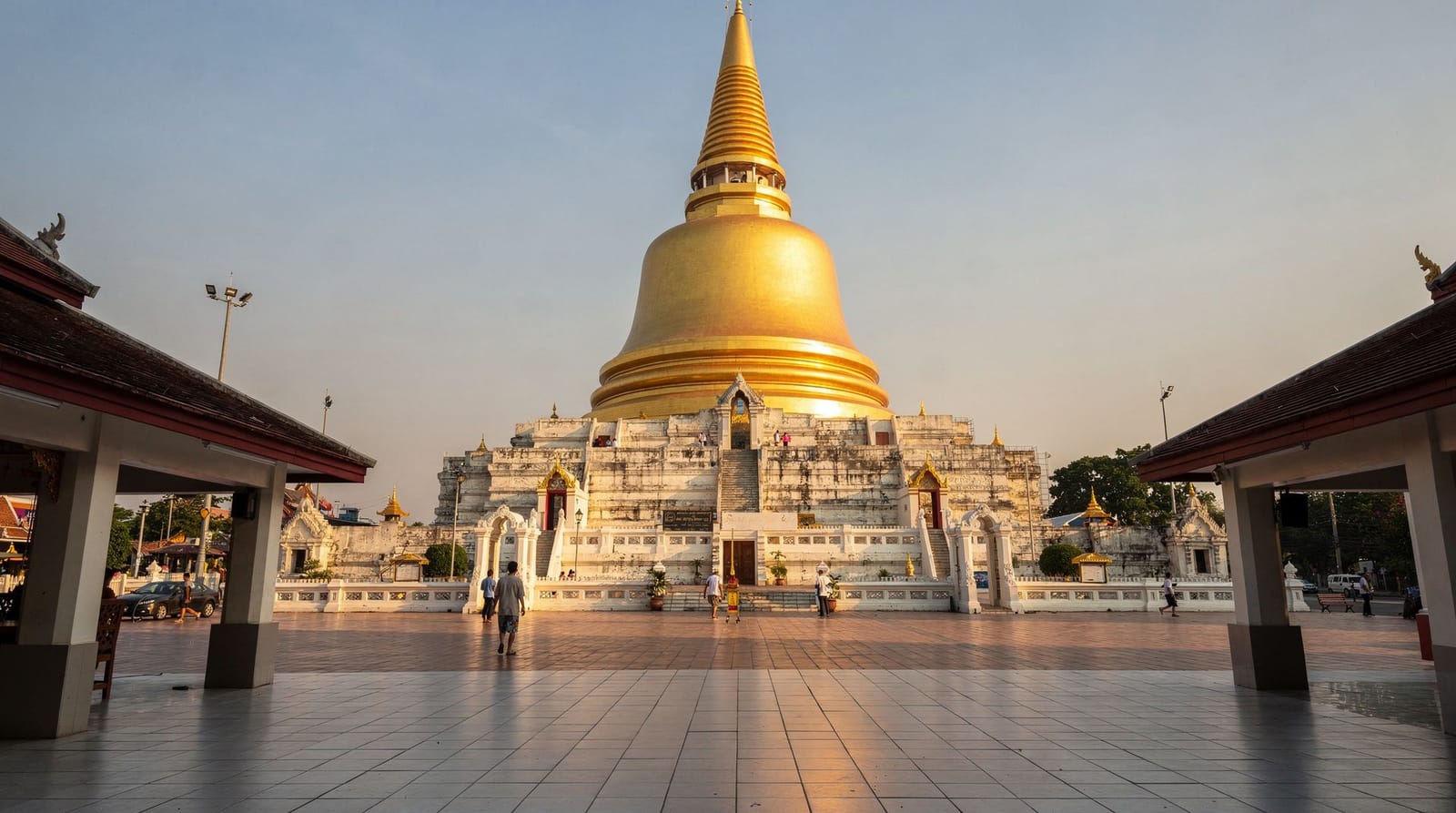
You can pass through Nakhon Pathom — home to the world’s tallest Buddhist stupa — on the way west, and it pairs naturally with the train route.
Day trip or overnight?
Honestly, Kanchanaburi is one of the day trips most improved by staying the night. A single day from Bangkok means roughly five hours of travel bookending a rushed circuit, and you will likely have to choose between the war history and the waterfalls. With one or two nights you can do the bridge and museums at a respectful pace one day and Erawan the next, plus enjoy the riverside guesthouses and floating raft houses that are part of Kanchanaburi’s appeal. If you only have a day, a tour that bundles the logistics is the most efficient way to fit it in — see the best Bangkok tours for context on choosing.
Practical information
Erawan entry: ~300 THB foreigner fee; bring water shoes and start the upper-tier climb early (higher levels close mid-afternoon).
The bridge: free to walk; it is an active railway, so use the refuge platforms when a train passes.
Hellfire Pass: the memorial museum is free (donations welcome) and excellent; the walking trail through the cutting is exposed — bring water and a hat.
Respect at the cemeteries: the war cemeteries are active memorials. Dress and behave appropriately; many visitors have personal family connections.
Heat and sun: the bridge, cemeteries, and Hellfire Pass are largely unshaded. The hot season makes this hard going — November to February is far more comfortable.
When to go: Kanchanaburi by season
| Season | Months | What to expect |
|---|---|---|
| Cool season | Nov–Feb | Most comfortable temperatures, clearest skies, easiest month for walking the unshaded war sites |
| Hot season | Mar–May | Exhausting heat at the bridge and cemeteries; the waterfalls also run at their lowest |
| Rainy season | Jun–Oct | Fewer crowds and lush green scenery, but the falls can run too swollen and muddy to swim safely, and Erawan’s upper tiers sometimes close |
The sweet spot for combining both halves of a Kanchanaburi trip — the history sites and Erawan’s pools — is the tail end of the rainy season into the cool season, roughly October to December, when the falls are still full but the heat has broken.
Where to stay: town centre or the river
Most day-trippers never see this side of Kanchanaburi, but if you stay the night you have a real choice. Kanchanaburi town, near the bridge, puts you within walking distance of the museums, the war cemetery and the bridge itself, with plenty of guesthouses and restaurants. Along the river, a string of floating raft houses and riverside resorts let you sleep almost on the water, with the current instead of traffic outside the window — a genuinely memorable way to break up the history with something calmer. Either works for a one-night stay; the riverside option is worth the slightly higher price if you want the classic Kanchanaburi experience rather than just a bed. Combine an overnight with the stop in Nakhon Pathom on the way out, as covered above.
Frequently asked questions about Kanchanaburi
Can I do Kanchanaburi as a day trip from Bangkok?
Yes, but it is a long day with a lot of travel, and you will usually have to choose between the war history and Erawan Falls rather than doing both well. An organised tour makes a single day feasible by handling transport between the scattered sites. If you can spare a night, an overnight stay is far more relaxed and lets you cover everything.
Is the Bridge over the River Kwai worth seeing?
Yes, as a genuine surviving artefact of the Death Railway, though it is more commercialised than visitors expect — surrounded by stalls and cafés. The deeper, more moving experiences are the war cemetery, the Thailand–Burma Railway Centre museum, Hellfire Pass, and a ride along the surviving railway over the Wampo viaduct.
Should I do an elephant experience in Kanchanaburi?
Be very cautious. Avoid any venue offering elephant rides or forced performances. If you want to see elephants, choose observation-only or genuinely low-contact ethical sanctuaries, and read our ethical elephant tourism guide first. The word “sanctuary” is used loosely, so check exactly what a tour’s elephant component involves before booking.
How do I get to Erawan Falls?
Erawan is a national park about 65 km from Kanchanaburi town. There are limited local buses from town, but most visitors reach it by tour, private car, or rented motorbike. A foreigner entry fee of around 300 THB applies. Start the climb to the upper tiers early, as the higher levels close in the afternoon.
Which is better for history, the museum or Hellfire Pass?
Both, ideally. The Thailand–Burma Railway Centre in town and the adjacent war cemetery give the human story and scale. Hellfire Pass, further out, lets you walk the hand-dug cutting itself and has an outstanding interpretive museum. If you have time and transport for only one beyond the bridge, the in-town museum and cemetery are the easiest; Hellfire Pass is the most powerful.
How long is the train ride on the Death Railway?
The surviving stretch from Kanchanaburi to Nam Tok takes roughly two hours and includes the dramatic Wampo (Tham Krasae) viaduct clinging to the cliff above the river. It is slow, cheap, and the most affecting way to physically experience what the prisoners built. Many tours include a short segment of this ride.
Top experiences
Bookable activities with verified prices and instant confirmation on GetYourGuide.