Ayutthaya
Ayutthaya is Bangkok's best day trip: a UNESCO city of crumbling temples 80km north. How to get there by train, minivan or tour, and what to see.
From Bangkok: Ayutthaya Temples Guided Tour with Lunch
Quick facts
- Distance from Bangkok
- ~80 km north (1.5–2 hr by train, minivan or car)
- Getting there
- SRT train from Hua Lamphong/Krung Thep Aphiwat (~20–65 THB), minivan, or organised tour
- Key sight
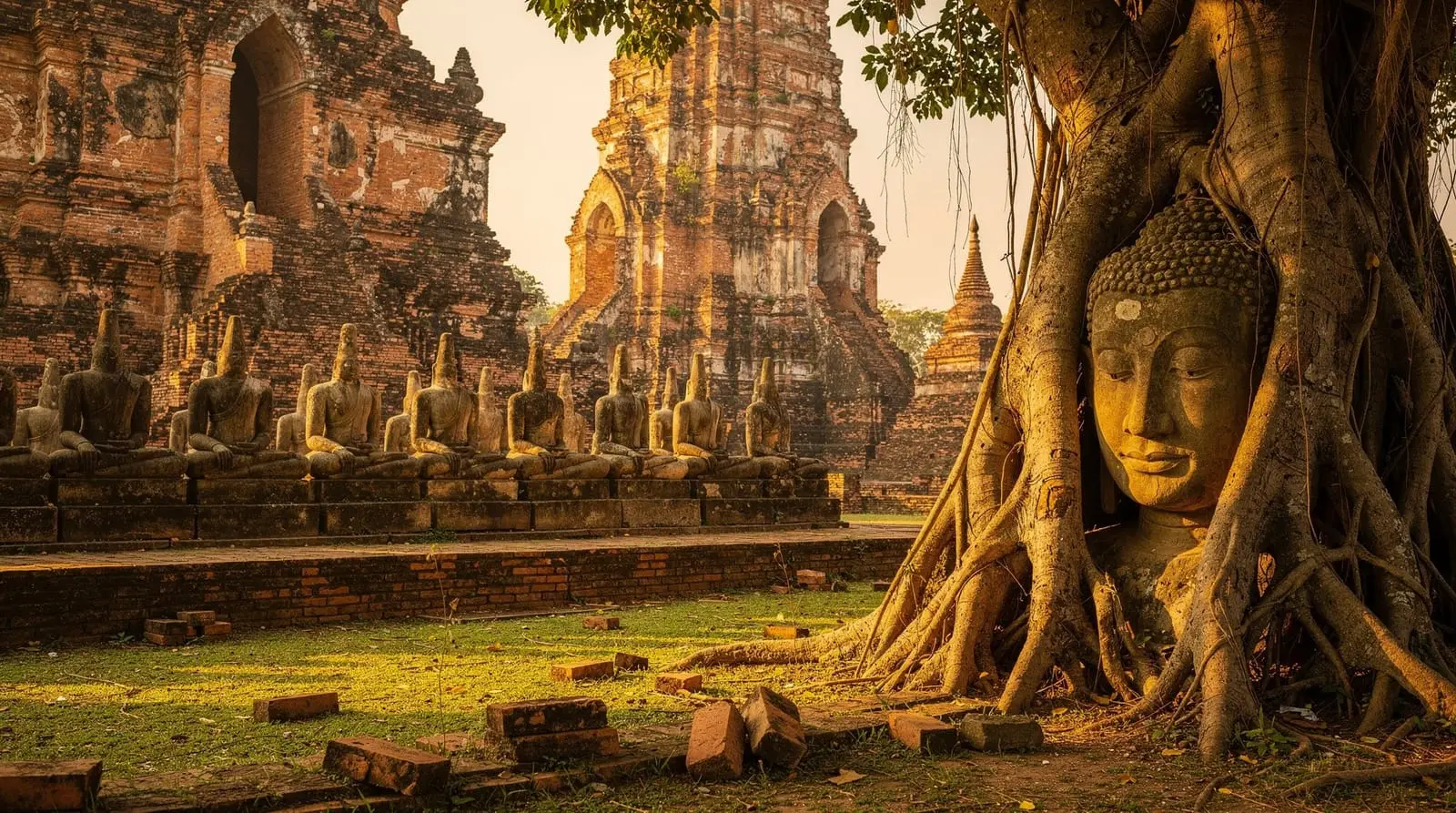
- Ayutthaya Historical Park — Wat Mahathat (Buddha head in tree roots), Wat Chaiwatthanaram, Wat Phra Si Sanphet
- Time needed
- A full day; 4–6 hours at the ruins is comfortable
- Best time
- Nov–Feb (cooler); start early to beat the midday heat
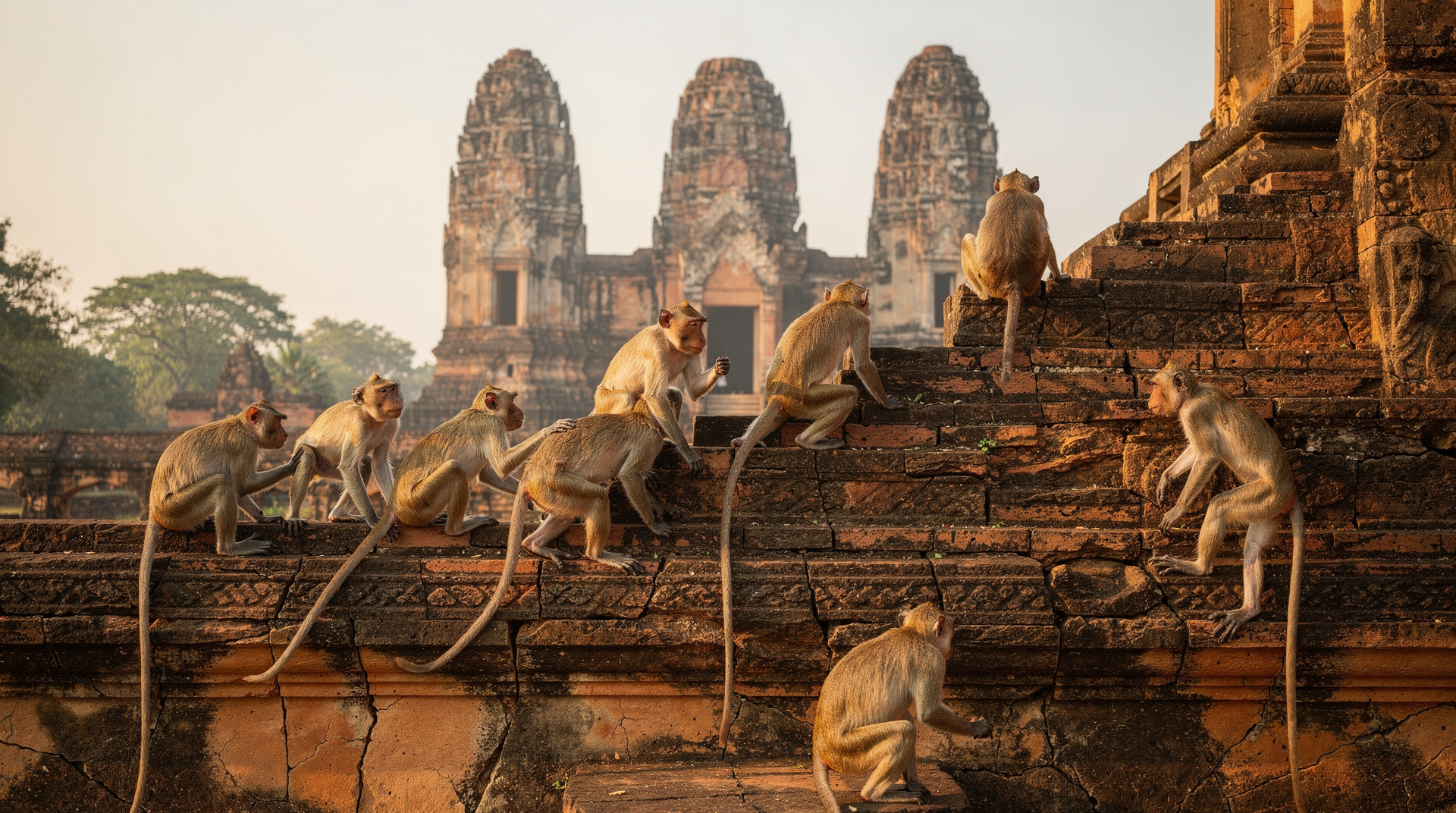
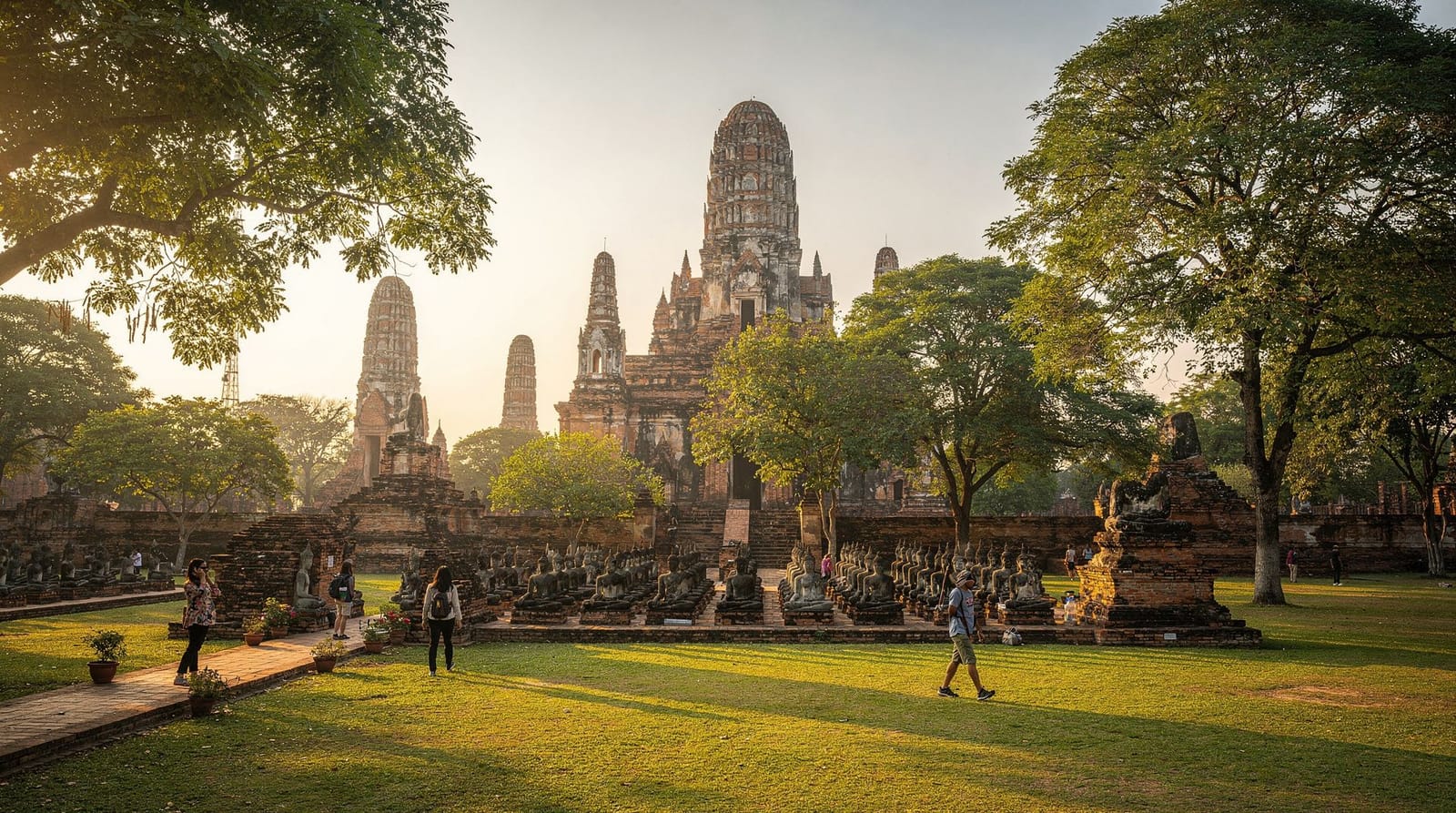
If you do only one day trip from Bangkok, make it Ayutthaya. For more than 400 years this was the capital of the Siamese kingdom — a moated island city of golden temples and royal palaces that European traders ranked among the great cities of the world. In 1767 a Burmese army sacked and burned it, and what remains is a sprawling field of brick prang towers, headless Buddhas, and roofless ordination halls, much of it protected as a UNESCO World Heritage Site. It sits about 80 km north of Bangkok, close enough that you can leave after breakfast and be back for dinner, and the journey itself — especially by train — is half the pleasure.
The honest verdict: Ayutthaya is worth the trip, and it is one of the few day trips near Bangkok that is genuinely easy and rewarding to do independently. You do not need a tour. But there are good reasons to take one too, and this page lays out both routes plainly so you can choose.
| Where | ~80 km north of Bangkok |
| Cost | A few dollars by train; ~USD 40–90 on a guided tour |
| Time needed | A full day; 4–6 hours at the ruins |
| Getting there | Train (cheapest), minivan, private car, or tour |
| Best time | Nov–Feb; start early regardless of season |
Why Ayutthaya is worth a day
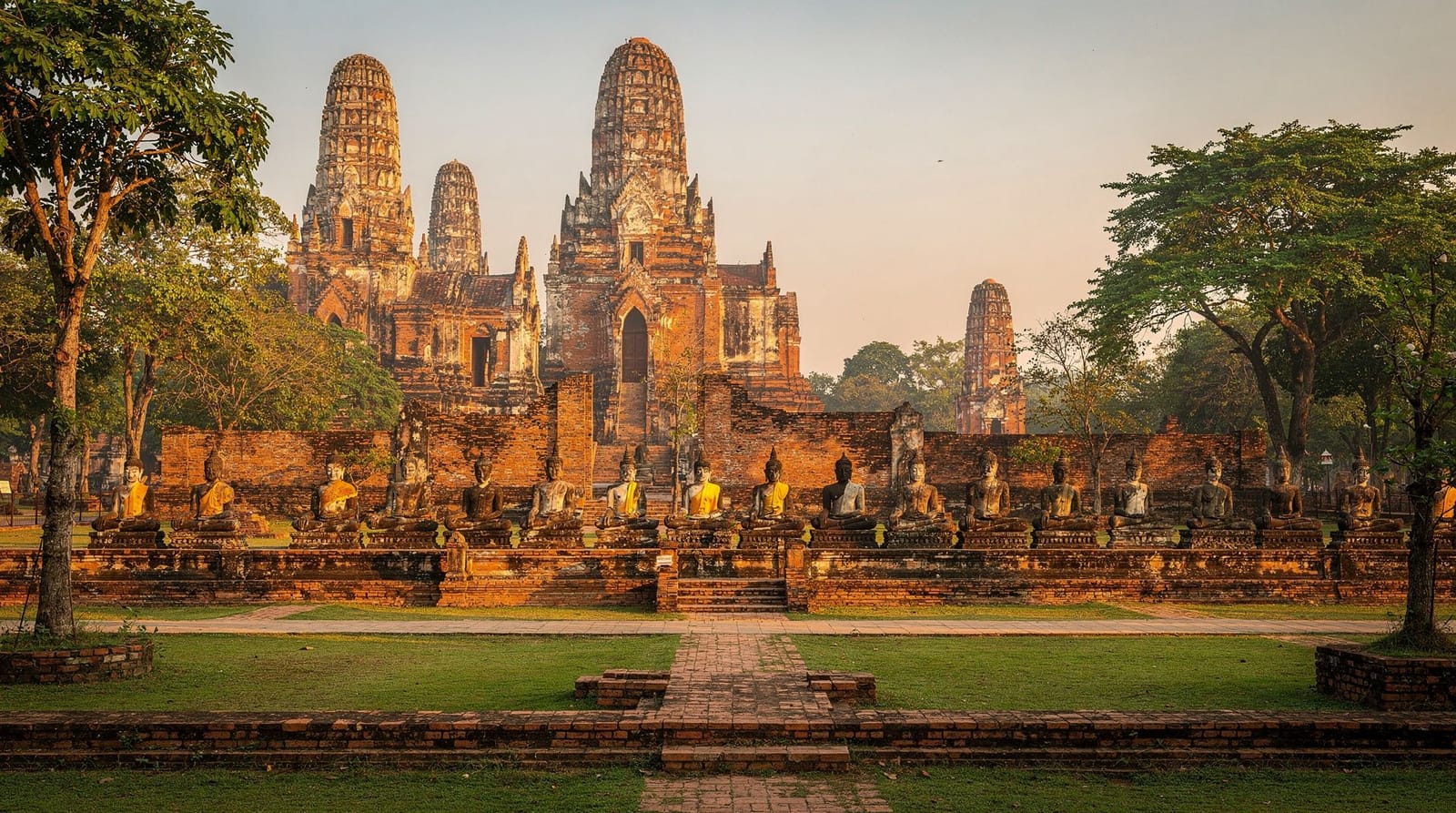
The ruins are not as immediately spectacular as Angkor in Cambodia, and first-time visitors sometimes arrive expecting more standing structures. What Ayutthaya offers instead is atmosphere and scale: a whole island laced with the remains of dozens of temples, some restored, many left as evocative shells. The famous image — a serene stone Buddha head cradled in the roots of a banyan tree at Wat Mahathat — is just one moment in a much larger landscape.
The three temples most people prioritise are Wat Mahathat (the Buddha head), Wat Phra Si Sanphet (three restored bell-shaped chedis, the spiritual heart of the old royal palace), and Wat Chaiwatthanaram (a riverside temple in Khmer style, glorious at sunset). Add Wat Lokayasutharam with its huge reclining Buddha and Wat Ratchaburana if you have time. Most sites in the historical park charge a 50 THB entry fee each, or you can buy a combined ticket (around 220 THB) covering the main six.
This is a place that rewards a little reading. The contrast with Sukhothai — Thailand’s earlier capital, further north — is a common question; see Ayutthaya vs Sukhothai if you are deciding between the two, and our dedicated Sukhothai destination page if you want the older, gentler ruins.
Getting there by train (the DIY favourite)
The train is the classic way to reach Ayutthaya and, for many travellers, the best. Ordinary third-class trains run from Bangkok’s Krung Thep Aphiwat Central Terminal (and some still from the old Hua Lamphong station) up the northern line, stopping at Ayutthaya in roughly 1.5 to 2 hours. Fares on the cheapest ordinary trains are absurdly low — often 15 to 65 THB (about USD 0.50–2) depending on class and train type. You do not normally need to book third class in advance; just turn up, buy a ticket, and board.
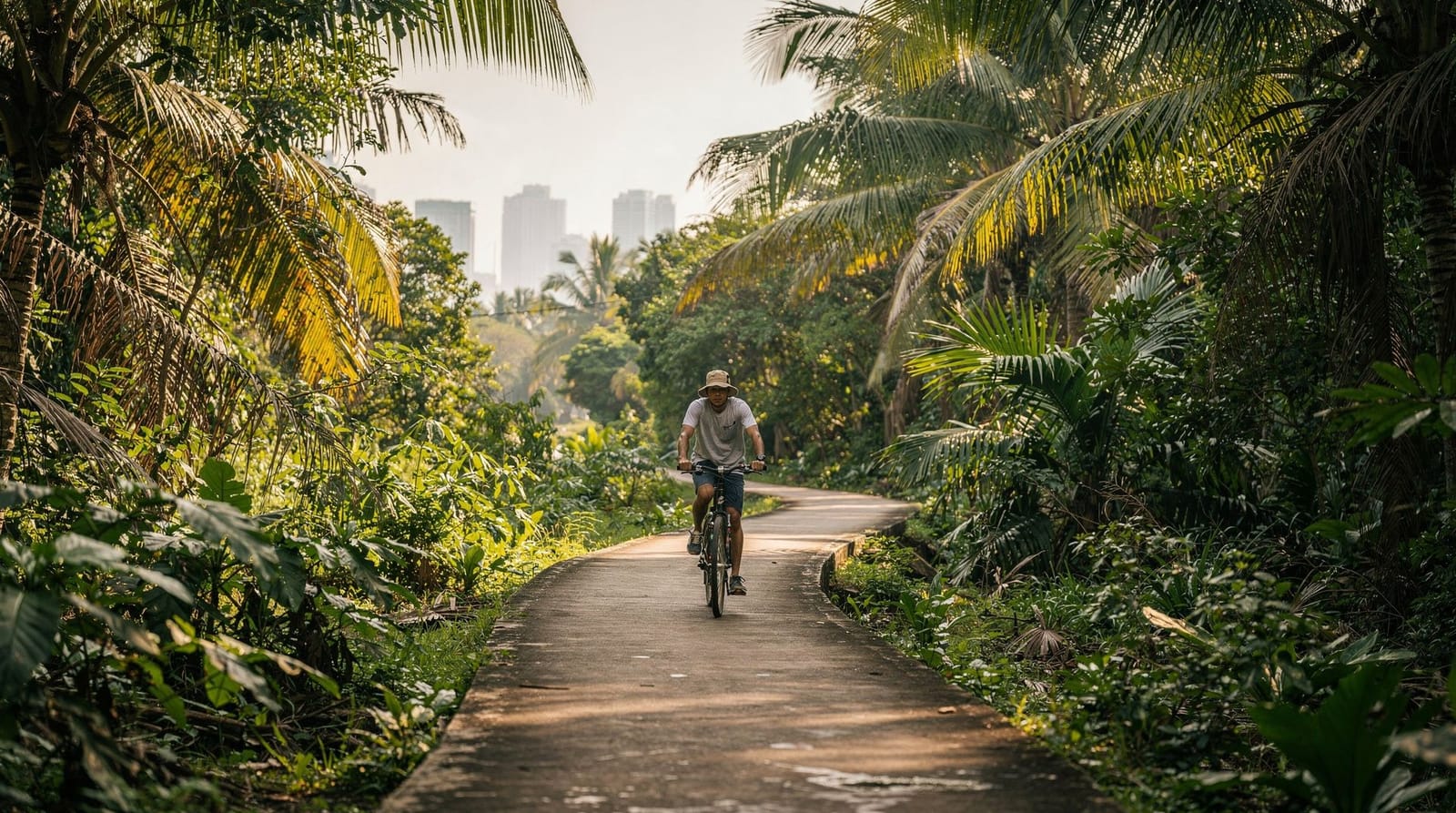
At Ayutthaya station you cross the river by a small ferry (a few baht) to reach the island, or hire a tuk-tuk or rent a bicycle. Renting a bicycle (around 50 THB per day) or a motorbike near the station is the cheapest and most flexible way to tour the ruins, which are spread out and flat — ideal cycling terrain. A tuk-tuk for a half-day temple circuit typically costs 700–1,200 THB; agree the price and the list of temples before you set off.
For a full walk-through of the independent train option — timetables, which station, what to do on arrival — see Ayutthaya by train (DIY) and the practical Ayutthaya day trip guide. The broader logistics of reaching all the day trips are covered in Bangkok to day trips transport.
Getting there by minivan or car
Minivans (rot tu) run from Bangkok to Ayutthaya and are faster than the ordinary train — around 1 to 1.5 hours — but less comfortable and less scenic. They depart from the Mo Chit / Northern Bus Terminal area and cost roughly 60–70 THB. A private car with driver (booked through Grab for the trip or arranged through your hotel) gives you door-to-door flexibility and is worth considering if you are a small group splitting the cost.
The tour option — when it makes sense
A guided tour makes sense if you want context without doing the planning, if the heat worries you, or if you want to combine Ayutthaya with something else — a river cruise, the floating market, or Bang Pa-In Palace. The trade-off is honest: tours are far more expensive than the train (often USD 40–90 versus a couple of dollars), and many large-group coach tours rush the temples and pad the day with a lunch stop and a shopping stop.
The most popular format is the guided day with lunch — the Ayutthaya temples guided tour with lunch hits the main ruins with a guide who explains what you are looking at, which genuinely adds to a site this ruined. A lovely variation returns to Bangkok by boat: the Ayutthaya day tour by bus with river cruise drives up in the morning and floats back down the Chao Phraya with lunch on board. For a more comprehensive small-group experience, the Ayutthaya five UNESCO temples small-group tour covers more sites at a less frantic pace.
For a head-to-head on cost, comfort and what you actually see each way, read Ayutthaya: DIY vs tour. A relaxed alternative to the bus-and-cruise combination is the full-day Ayutthaya cruise tour with lunch, which keeps the river journey as the centrepiece rather than a bolt-on.
| Train (DIY) | Minivan (DIY) | Guided tour | |
|---|---|---|---|
| Cost | ~15–65 THB | ~60–70 THB | USD 40–90 |
| Time | 1.5–2 hr each way | 1–1.5 hr each way | Varies, door-to-door |
| Effort | Low, but you plan the day | Low | None — fully organised |
| Context/guiding | None (bring your own reading) | None | Included |
| Best for | Budget travellers who enjoy the journey | Speed on a budget | First-timers wanting ease and explanation |
The other ruins worth the detour
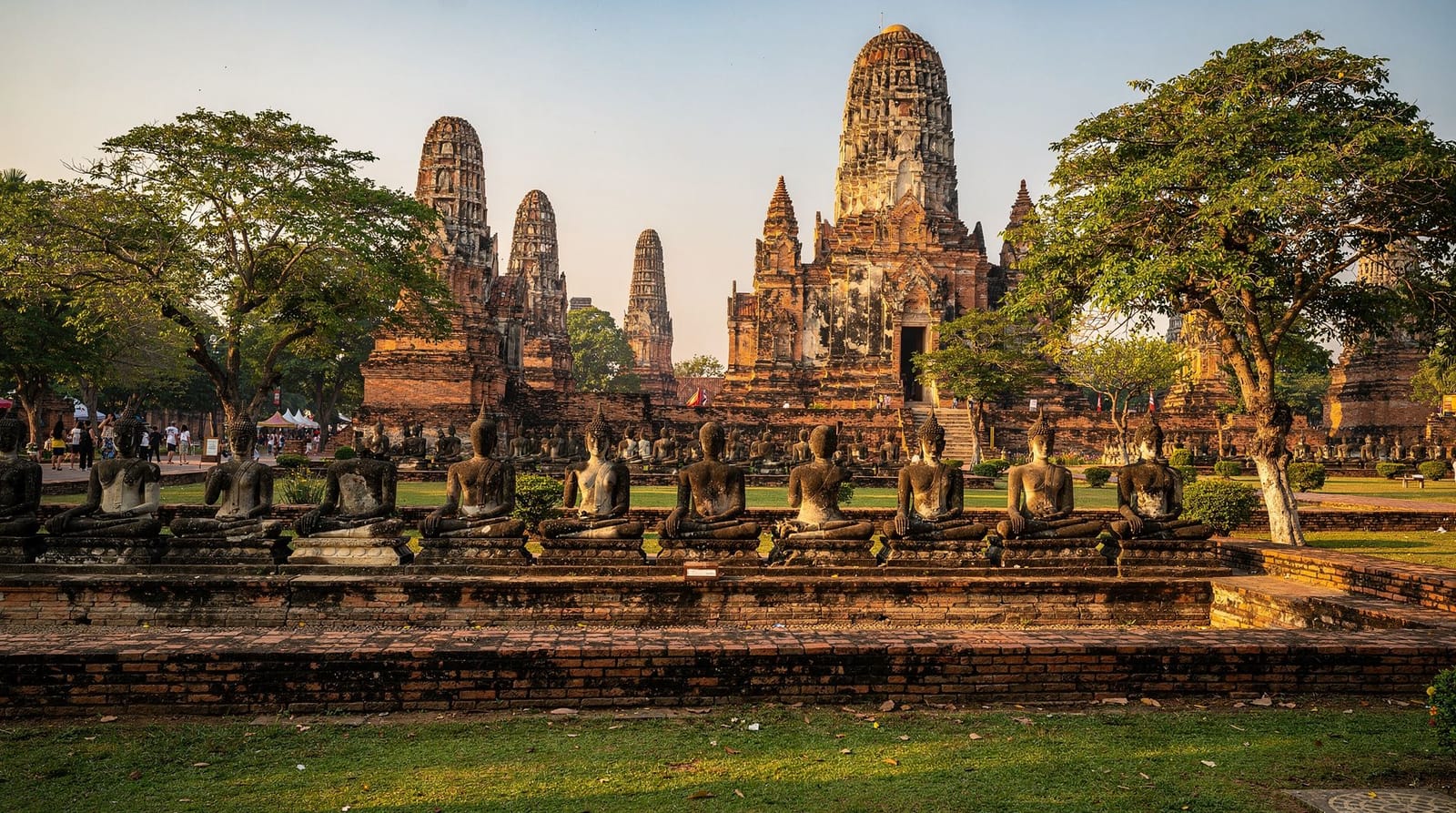
Beyond the headline three, a couple of sites reward travellers with a little more time. Wat Yai Chai Mongkhon, southeast of the main island, has a soaring, climbable prang and a long row of seated Buddha images wrapped in orange robes, plus a huge reclining Buddha in its own pavilion — genuinely photogenic and usually far less crowded than Wat Mahathat. It sits slightly apart from the main cluster, which is exactly why it keeps its calm. If you are cycling or have a tuk-tuk for the day, it is an easy add rather than a special trip.
Bang Pa-In Summer Palace
About 20 km south of Ayutthaya, on the way back toward Bangkok, sits Bang Pa-In Royal Palace — an eclectic riverside complex of pavilions blending Thai, Chinese, and European styles, used by Thai kings as a summer retreat. It is beautifully kept and a complete tonal contrast to the ruins: manicured gardens, ornate halls, and a fairy-tale Thai pavilion on a pond. Entry is around 100 THB; dress code applies (covered shoulders and knees). Many private tours add it on — the Bang Pa-In Palace and Ayutthaya private trip pairs the two cleanly. For details, see the Bang Pa-In Palace guide.
A sensible plan for the day
Start early. Aim to be at the ruins by 9 am while it is still bearable, do your temple circuit through the morning, take a long lunch in the shade, and use the late afternoon for Wat Chaiwatthanaram on the river — the light there is best as the sun drops. If you are on the train, catch a mid-to-late afternoon service back, or stay for sunset and take a later one.
A rough morning loop by bicycle or tuk-tuk: Wat Mahathat → Wat Ratchaburana (across the road) → Wat Phra Si Sanphet and the adjacent Viharn Phra Mongkhon Bophit (a large active hall with a huge bronze Buddha) → Wat Lokayasutharam (reclining Buddha) → lunch → Wat Chaiwatthanaram for the afternoon. That is a satisfying full day without rushing.
If you would rather build Ayutthaya into a longer Bangkok plan, the Bangkok with day trips itinerary shows how it slots in alongside the city sights.
What to eat and where
Ayutthaya has a famous local speciality: roti sai mai (literally “cotton-candy roti”) — thin pastel threads of spun palm-sugar candy wrapped in a soft crêpe-like roti. You will see stalls selling it near the station and around town; it is cheap and worth trying. The riverside restaurants and the floating market area (Ayothaya Floating Market, a modern tourist market rather than a working one) offer grilled river prawns, boat noodles, and standard Thai dishes. A simple lunch costs 80–200 THB.
Practical information
Entry fees: most major temples 50 THB each; combined ticket ~220 THB. Bang Pa-In ~100 THB.
Dress: Ayutthaya’s ruins are open-air and relaxed, but active temples and Bang Pa-In require covered shoulders and knees. Bring a hat, sunscreen, and plenty of water — shade is scarce.
Bicycle rental: around 50 THB per day near the station and around the island. Flat terrain; the most pleasant way to explore.
Heat: this is the single biggest practical issue. The ruins bake in the sun. Carry water, plan your hardest walking for the cooler hours, and do not underestimate March–May.
Respect: never climb on Buddha images or pose with your back to them, and never sit with feet pointing at a Buddha. The headless Buddhas are still sacred objects. See temple etiquette and dress code.
Frequently asked questions about Ayutthaya
Is Ayutthaya better as a DIY trip or an organised tour?
Both work. DIY by train is cheap, flexible, and genuinely enjoyable — ideal if you are comfortable navigating and happy to read a little about the temples yourself. A tour is better if you want a guide’s context, want to avoid planning, or want to combine the ruins with a river cruise or Bang Pa-In Palace. Cost is the main difference: a few dollars by train versus USD 40–90 on a tour.
How much time do I need at Ayutthaya?
A full day. Four to six hours at the historical park covers the main temples comfortably without rushing. If you also want Bang Pa-In Palace and a relaxed lunch, you will fill the whole day. Some travellers stay overnight to catch both sunrise and sunset at the temples.
Can I see Ayutthaya and a floating market in one day?
Yes, several tours combine them, since the floating market day trips run in a similar direction. It is a long day and both stops are necessarily shorter, but it is a common and workable pairing if you are short on time. Going DIY, combining the two independently in a single day is tight.
Which temples should I prioritise?
Wat Mahathat (the Buddha head in tree roots), Wat Phra Si Sanphet (the three restored chedis), and Wat Chaiwatthanaram on the river (best at sunset) are the three essentials. Add Wat Ratchaburana and Wat Lokayasutharam’s reclining Buddha if time allows.
Is the train to Ayutthaya difficult for first-timers?
Not at all. Ordinary trains are cheap, frequent, and you can usually just turn up and buy a third-class ticket on the day. The main things to know are which Bangkok station you are leaving from and that you cross a small river ferry on arrival to reach the island. Our DIY train write-up walks through it step by step.
When is the best time of day to visit?
Early morning and late afternoon. The midday sun on the shadeless ruins is brutal, especially in the hot season. Aim to start by 9 am, take a long midday break, and save Wat Chaiwatthanaram for the golden hour before sunset.
Are there ruins beyond the famous three temples worth seeing?
Yes. Wat Yai Chai Mongkhon, southeast of the main island, has a tall climbable prang, rows of orange-robed Buddha images, and a large reclining Buddha, and it sees noticeably fewer visitors than Wat Mahathat. If you have a bicycle or a tuk-tuk for the day, it is an easy and rewarding addition to the standard temple circuit.
Top experiences
Bookable activities with verified prices and instant confirmation on GetYourGuide.