Wat Arun guide: the Temple of Dawn on the Chao Phraya
Bangkok: Longtail Boat Canal Tour to Wat Arun
What is Wat Arun and when is the best time to visit?
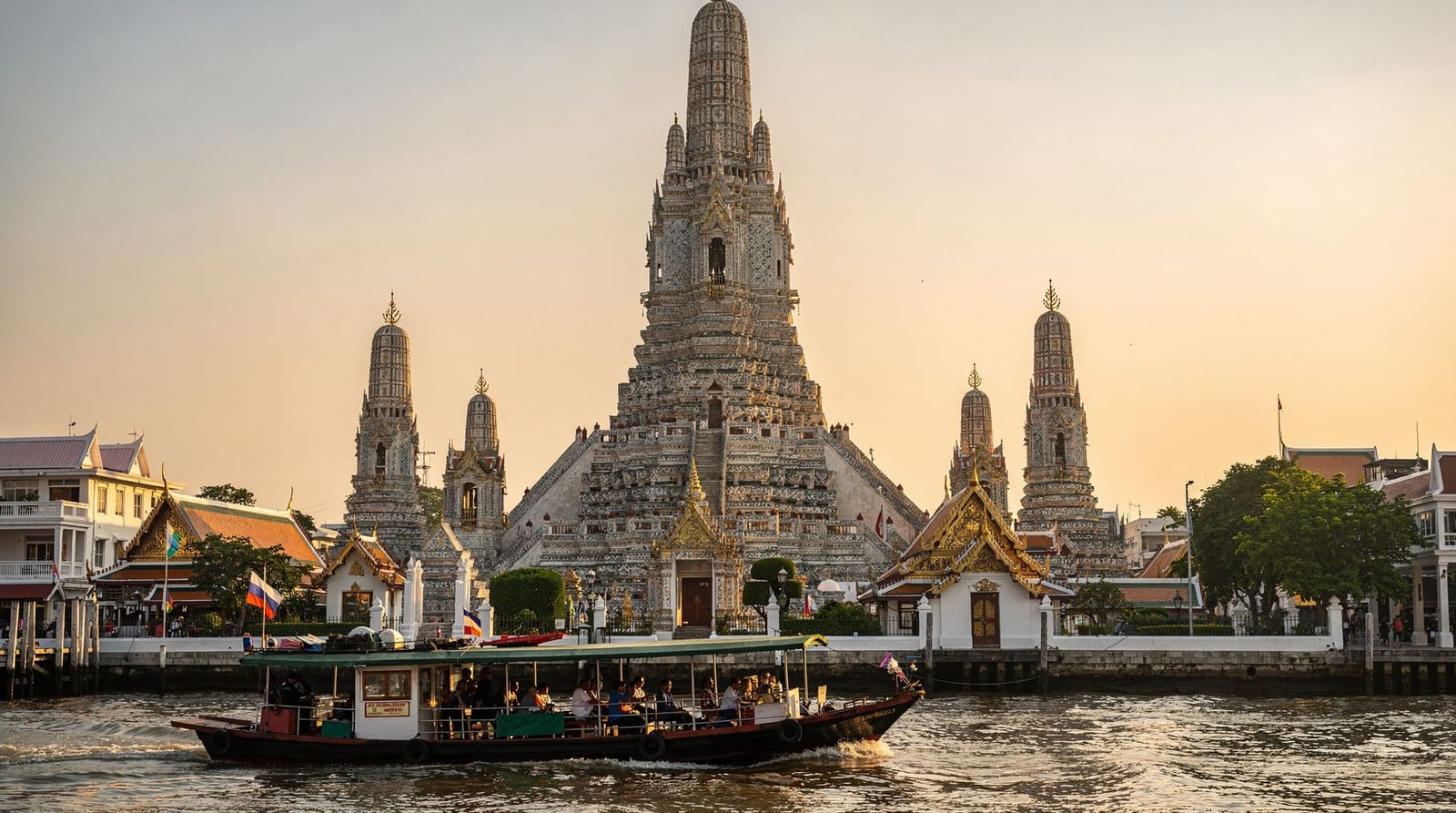
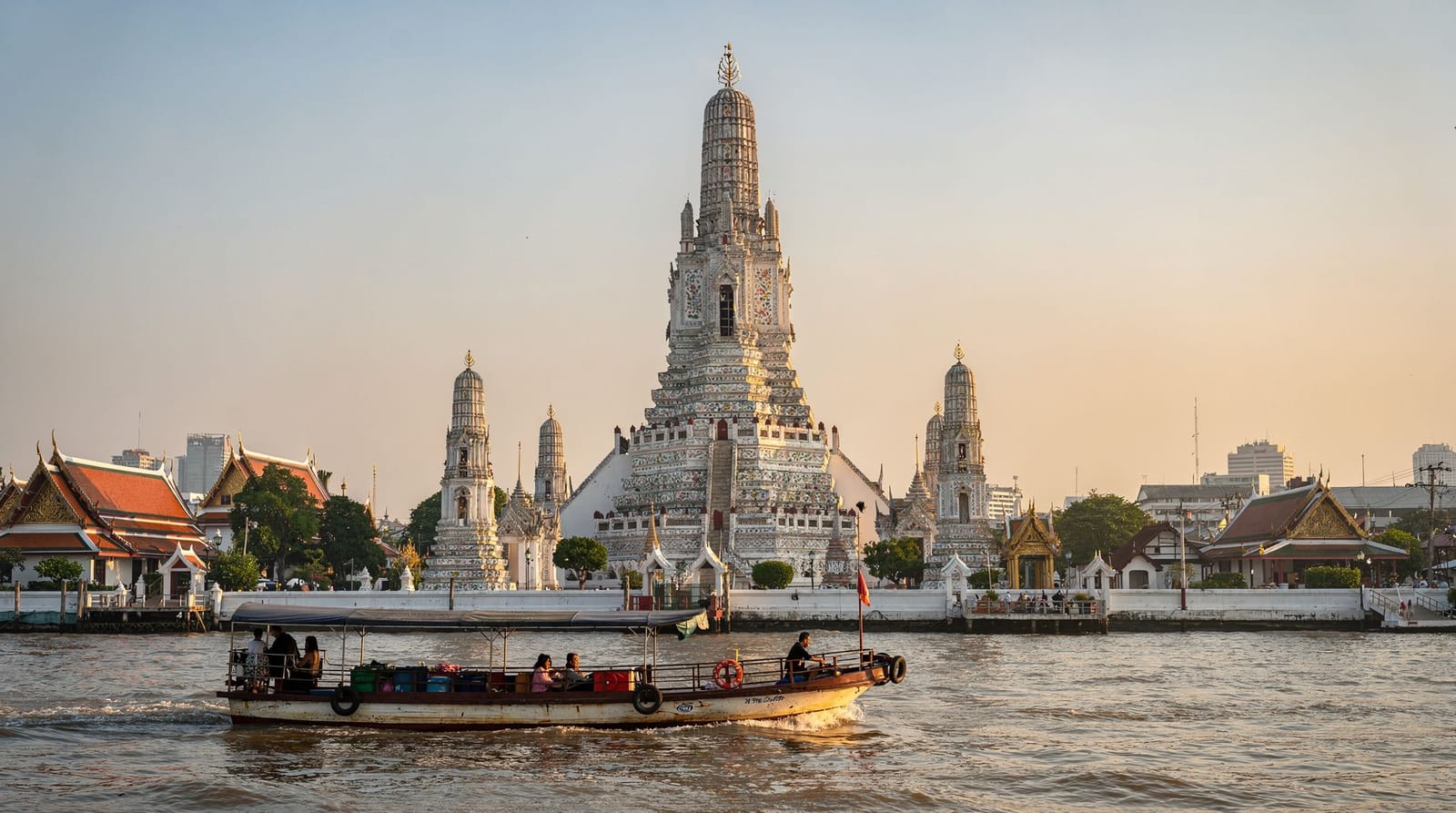
Wat Arun, the Temple of Dawn, is a riverside temple on the Thonburi bank of the Chao Phraya, famous for its 70-metre central prang covered in broken Chinese porcelain. It opens 8:00-18:00; see Wat Arun's official site for the entry fee. Despite the name, the best time is sunset — the temple glows gold, especially photographed from the opposite bank near Wat Pho. Reach it by a 4-5 THB cross-river ferry from Tha Tien pier.
Wat Arun, the Temple of Dawn, is the most photogenic temple in Bangkok — a 70-metre Khmer-style spire rising from the Thonburi riverbank, its whole surface encrusted with broken Chinese porcelain and seashells that shimmer in changing light. It opens 8:00-18:00 (see Wat Arun’s official site for the entry fee), and despite its name the magic happens at sunset. This guide covers tickets, climbing the prang, the famous ferry crossing, and exactly where to stand for the best photo.
| Tickets | 200 THB; Thais free |
| Hours | Daily, 8:00-18:00 |
| Getting there | Ferry from Tha Tien pier, 4-5 THB |
| Time needed | 45 minutes to an hour |
| Best time | Sunset, shot from the Wat Pho side |
The temple takes its name from Aruna, the Hindu personification of the rising sun, and dates in its current grand form to the early 1800s under Kings Rama II and III. The central prang represents Mount Meru, the centre of the Buddhist universe, surrounded by four smaller satellite prangs. The decorative porcelain came from broken ceramics used as ballast in Chinese trading ships — a thrifty origin for one of the world’s most beautiful temple surfaces.
The central prang — what to see and climbing it
The central prang dominates everything. Up close, the surface resolves into thousands of pieces of floral-patterned porcelain, tiny ceramic flowers, and mythological figures — kinnari (half-bird, half-human guardians) and demon-like yaksha holding up the terraces.
You can climb the steep lower steps of the prang for a view across the Chao Phraya to the old city and the Grand Palace. The upper levels are roped off to protect the structure, and the steps you can climb are genuinely steep — there is a handrail, and you should take particular care descending. Wear shoes with grip. The climb is short but the angle is dramatic enough to give a small thrill.
At the base, the ordination hall (shoes off) holds a fine seated Buddha and ceiling murals worth a look while you escape the sun.
Tickets, hours and getting there
Entry: 200 THB for foreigners; Thais free Hours: 8:00-18:00 daily Ferry: 4-5 THB cross-river from Tha Tien pier (near Wat Pho) Nearest MRT: Itsaraphap (Blue Line), about a 10-minute walk
The iconic way to arrive is the cross-river ferry from Tha Tien pier, beside Wat Pho. The crossing takes five minutes and drops you at Wat Arun’s own pier — it is one of Bangkok’s great cheap journeys, gliding past river traffic with the spire growing ahead of you. You can also arrive by Chao Phraya tourist boat or by taxi/Grab to the Thonburi side. See the Chao Phraya boats guide for the river-transport options.
The best photography: sunset from across the river
The single best shot of Wat Arun is taken not from the temple but from the eastern (Wat Pho) bank at sunset, when the low sun lights the porcelain gold and the spire reflects in the river. The riverside bars and restaurants on the Tha Tien side — several have rooftops or terraces — give an elevated view with a drink in hand. Arrive about an hour before sunset to claim a spot, especially in high season.
On the temple grounds themselves, early morning gives soft light and the fewest crowds. For exact viewpoints, lens choices and timing, see the dedicated Wat Arun photography guide and the broader best photo spots in Bangkok guide.
Beyond the temple: exploring the Thonburi side
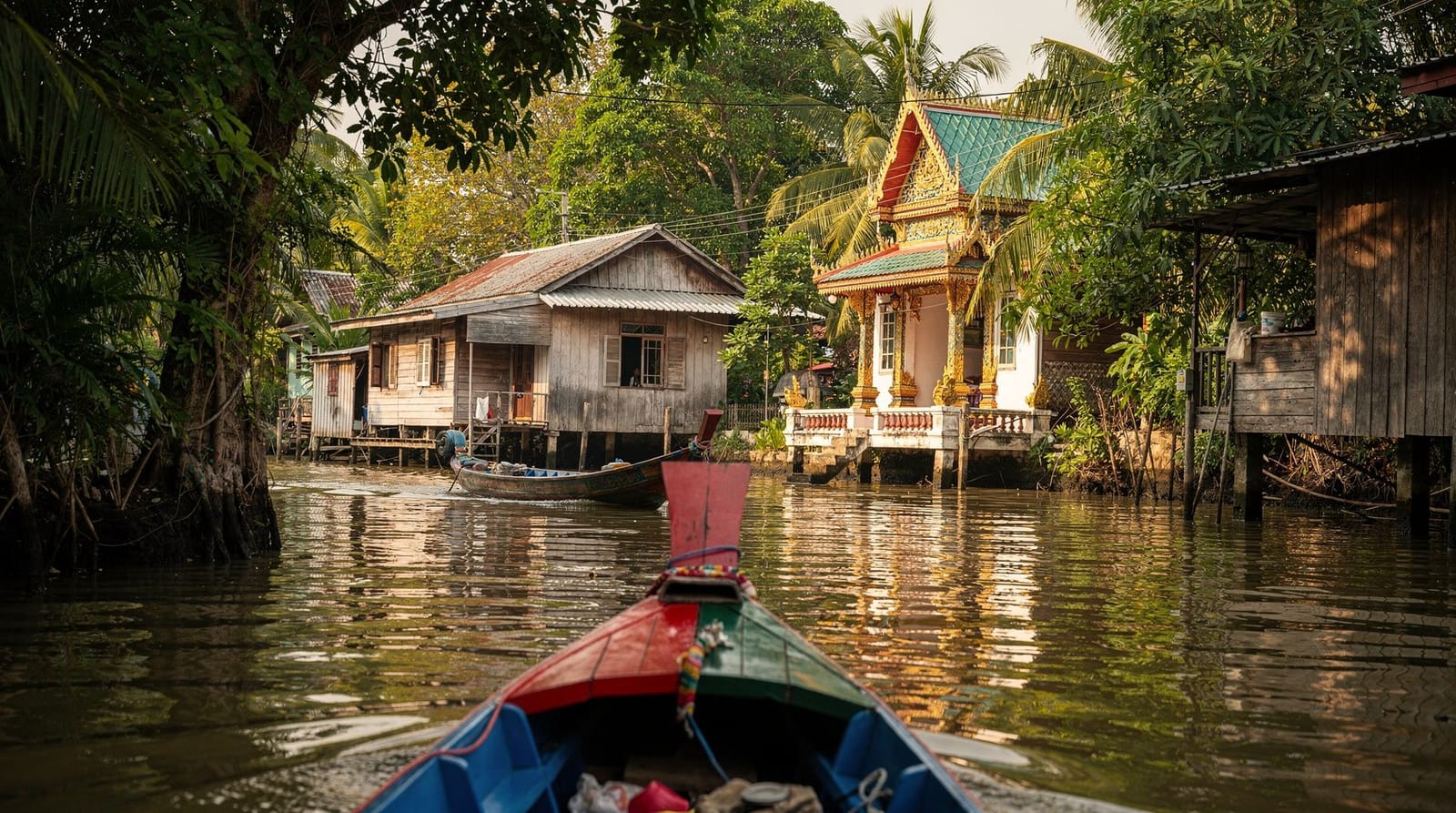
Wat Arun sits at the edge of Thonburi, the older, quieter bank of the river that most visitors only glimpse from a boat. Stepping a little further than the temple gates rewards you: the Thonburi khlongs canal network threads behind Wat Arun, explored by longtail boat past wooden stilt houses, small temples and riverside food stalls that see far fewer tourists than the old city across the water. Further along the Thonburi bank, Wat Paknam and its viral green-glass ceiling makes a good pairing if you have a half-day rather than just an hour at Wat Arun alone.
Wat Arun compared with the other river temples
Wat Arun is one of three essential riverside temples, and knowing how it differs helps you plan the order and the time you give each.
| Temple | Entry | Highlight | Crowds |
|---|---|---|---|
| Wat Arun | See Wat Arun’s official site | Porcelain prang, sunset views | Moderate, worse at sunset |
| Wat Pho | 300 THB | 46m Reclining Buddha, massage | Moderate, busiest 10:00-13:00 |
| Wat Phra Kaew / Grand Palace | 500 THB | Emerald Buddha, royal halls | Heaviest of the three |
Wat Arun is the cheapest and, outside sunset, generally the calmest of the three to walk around, since much of its appeal is the riverside setting rather than a single densely visited hall. For the full comparison and a suggested order for seeing all three, see the best temples in Bangkok guide and Wat Pho guide.
Combining Wat Arun with Wat Pho and a river trip
Wat Arun completes Bangkok’s essential temple trio. The natural plan is the Grand Palace first, then Wat Pho, then the ferry across to Wat Arun — all in a morning, or end at Wat Arun for sunset. The temple-hopping route guide maps the sequence and the best temples in Bangkok guide ranks the headline sites.
Wat Arun also pairs beautifully with the Thonburi canals on the same bank — a longtail-boat trip through the khlongs is a classic add-on. A longtail canal tour that includes Wat Arun combines the temple with the waterways, and for the area itself see the Wat Arun area destination guide and the Thonburi khlongs destination guide. For an evening visit, an evening Grand Palace, Wat Arun and Wat Pho tour catches the temples after the day crowds thin.
Dress code and etiquette
Cover shoulders and knees; remove shoes before entering the ordination hall. Wat Arun is relaxed about the prang terraces but the dress code applies to the grounds — bring a scarf, and sarongs can sometimes be rented near the gate. The usual temple rules apply: don’t point your feet at Buddha images, keep noise down inside halls, and women should not touch or hand things directly to monks. The temple etiquette and dress code guide covers it fully.
How long to spend and best time
Allow 45 minutes to an hour on the grounds. If you are staying for sunset across the river, factor in the ferry and finding a viewpoint. Early morning suits photographers and crowd-avoiders; late afternoon into sunset suits everyone who wants the golden light. Avoid harsh midday sun, when the white-and-porcelain surfaces glare and the open terraces bake.
A calm way to walk the grounds
Most visitors head straight for the prang, take the same photo as everyone else and leave. A better approach is to treat the temple as a slow loop. Start by circling the base of the central prang before you climb anything, because the detail is easiest to appreciate at ground level, where the porcelain flowers, the seashell inlays and the guardian figures sit at eye height. Then look up at the four smaller satellite prangs, which echo the main tower and help you grasp the Mount Meru idea the whole layout is built around.
Give the ordination hall a few quiet minutes as well. It is the cool, shaded part of the site, and it is a useful place to sit out the worst of the sun before you decide whether to climb. If you are travelling with a group where some people want to climb and others do not, the grounds are pleasant enough that the ones staying at the bottom will not feel they are missing out.
Making the ferry crossing part of the visit
The short ride from Tha Tien is more than a transfer. It is the moment the temple stops being a postcard and becomes a real building, with the spire growing larger as the boat swings across the current. Stand at the rail if you can and keep your camera ready, because the angle from the water is different from anything you will get on land. The crossing is brief, so decide before you board whether you want photos or simply want to watch.
On the way back, the ferry gives you the reverse view: the roofs of the old city and the skyline of Rattanakosin opening up ahead. If you are building a wider day around the river, the Chao Phraya river boats guide explains how the different boat services fit together, and the riverside Bangkok guide shows what else sits along the water. For the neighbourhood the ferry leaves from, see the Rattanakosin old city destination page and the riverside Chao Phraya destination page.
Planning a temple day around Wat Arun
Wat Arun works best as one stop in a longer sequence rather than a standalone trip. If you are new to the city, the Bangkok for first-timers guide and the must-see list for first-time visitors help you decide how much room the temples deserve. The Grand Palace guide and the Wat Pho guide cover the two neighbours that most itineraries combine with this one, and the Grand Palace dress code guide is worth reading beforehand because the palace is the strictest of the three about clothing.
For a ready-made schedule, the Bangkok temples itinerary lays the sites out in a sensible order, while the one-day Bangkok itinerary and the three-day Bangkok itinerary show where a river-temple morning or sunset slots into a fuller trip. Keep the day loose: the temples reward unhurried visits, and the sunset window is the one fixed point you will want to protect.
Pairing the temple with food and a rest
Temple days are tiring, and the sensible rhythm is sights in the cooler hours, a long lunch while the heat peaks, then the river again in the late afternoon. The area has plenty of places to stop, and the Bangkok street food guide and the what to eat in Bangkok guide will help you pick something local rather than defaulting to the nearest tourist restaurant. If your feet need a break, the massage school beside Wat Pho is a natural way to recover, described in the Wat Pho massage school guide.
Evening is the other option. After sunset the river takes on a different mood, with the temple lit against the dark water. A sunset cruise or a dinner cruise on the Chao Phraya lets you see the same spire from the water as the light fades, which is a good alternative if the riverside terraces are full.
Practical tips for a smoother visit
- Carry cash for the gate and the ferry, since the small crossing fare is paid on the spot.
- Wear shoes that are easy to slip off at the ordination hall but still grip on the steep prang steps.
- Bring water and a hat; the open terraces offer little shade.
- Keep valuables zipped away near the pier and the busier viewpoints, and read the common Bangkok scams guide before heading out, since temple districts attract their share of “the site is closed” stories.
- If your phone or camera is your main tool, the temple photography tips guide covers etiquette around photographing worshippers and monks.
Who will enjoy it most
Photographers and anyone who loves architecture will get the most from Wat Arun, because the craftsmanship up close is the real draw. Couples and solo travellers tend to enjoy the quiet corners and the sunset mood, and families with older children usually like the climb and the boat. Travellers who want context for what they are looking at can read the Buddhism in Bangkok guide and the Bangkok culture guide first, which make the symbolism of the prang and the guardian figures far more meaningful. For a wider list of what else is worth your time nearby, the best temples in Bangkok guide and the things to do in Bangkok guide are good next stops.
Frequently asked questions about Wat Arun guide: the Temple of Dawn on the Chao Phraya
How much is Wat Arun and what are the opening hours?
Can you climb Wat Arun?
What is the best time to photograph Wat Arun?
How do you get to Wat Arun?
What is the dress code at Wat Arun?
How long do you need at Wat Arun?
Is Wat Arun worth visiting?
Why is Wat Arun called the Temple of Dawn if it is best at sunset?
Is Wat Arun accessible for visitors with mobility issues?
Top experiences
Bookable activities with verified prices and instant confirmation on GetYourGuide.