Temple photography tips for Bangkok: shoot well and respectfully
Bangkok: Instagram Spots & Half-Day Temples Tour
How do you photograph Bangkok's temples respectfully?
Shoot in early-morning or late-afternoon light when the gold glows and the crowds thin. Cover your shoulders and knees, remove your shoes before prayer halls, and never use flash near Buddha images. Never climb on, sit beside, or pose disrespectfully with any Buddha image — Thailand enforces strict Buddha-image and lèse-majesté laws. Women must not touch monks. Keep tripods out of busy halls, and ask before close portraits of monks and worshippers.
Bangkok’s temples are among the most rewarding subjects in Asia — gilded prangs, mirror-mosaic walls, ranks of bronze Buddhas, monks in saffron against white marble. They are also living places of worship governed by strict cultural and legal rules, and a photographer who ignores those rules can cause real offence or, in the case of Buddha-image and lèse-majesté laws, real legal trouble. This guide covers both halves of the craft: how to make beautiful temple photographs, and how to do it respectfully and legally. Get both right and you come home with images you are proud of and a clear conscience.
The core principle is simple: shoot in good light, travel light on gear, and treat every temple as the sacred space it is. For a structured introduction that pairs photogenic temples with the angles locals know, a Bangkok Instagram spots and half-day temples tour is a good first day, and the best temples in Bangkok guide ranks where to point the camera in the first place.
| Best light | 08:00-10:00 and golden hour before sunset |
| Gear needed | Phone or mirrorless; wide-angle and fast lens optional |
| Cost | Same as any temple visit — no separate photography fee |
| Non-negotiable | No flash near Buddha images; never pose on or with one |
| Best day | Weekdays, arriving right at opening |
Get the light right
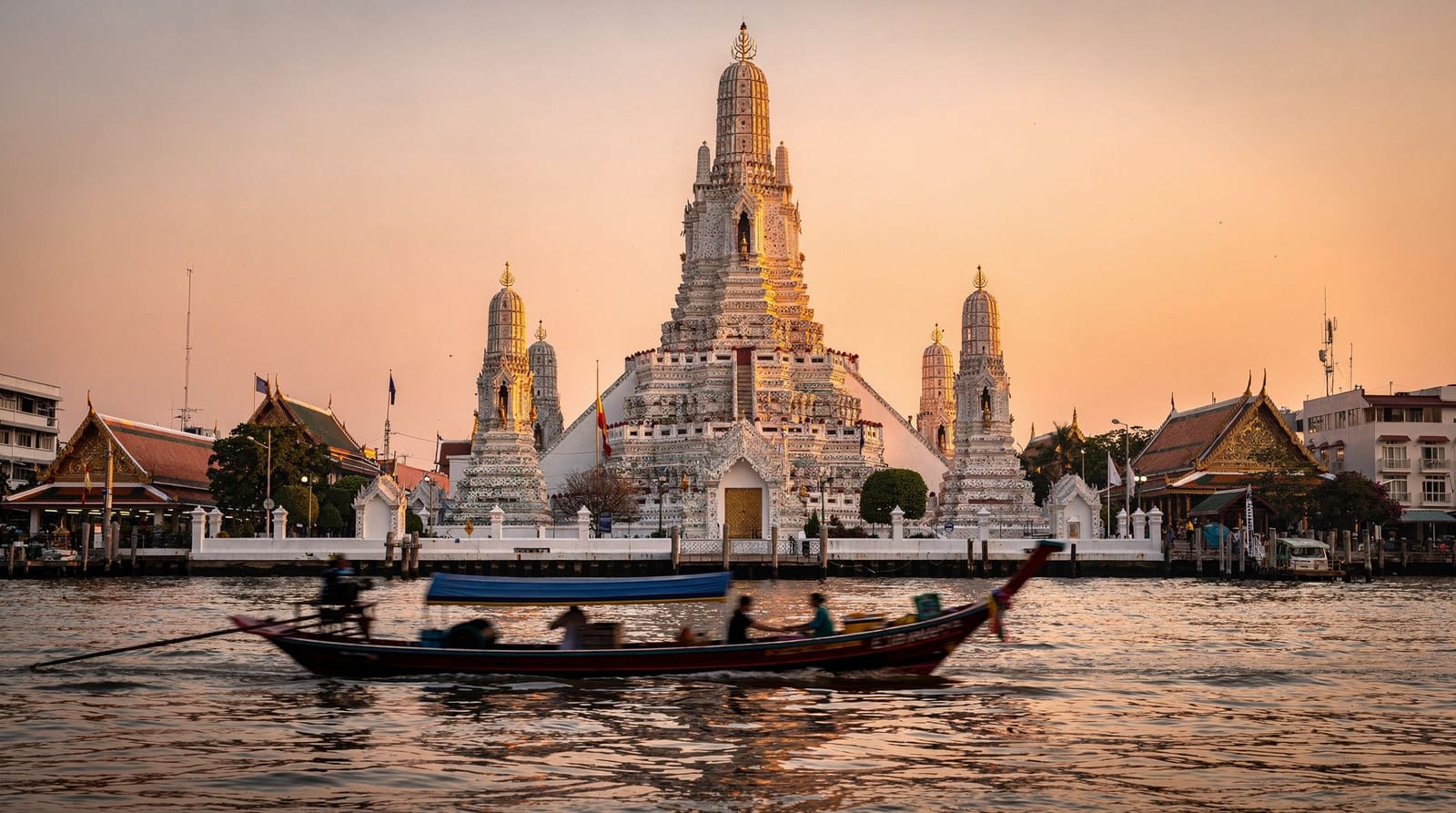
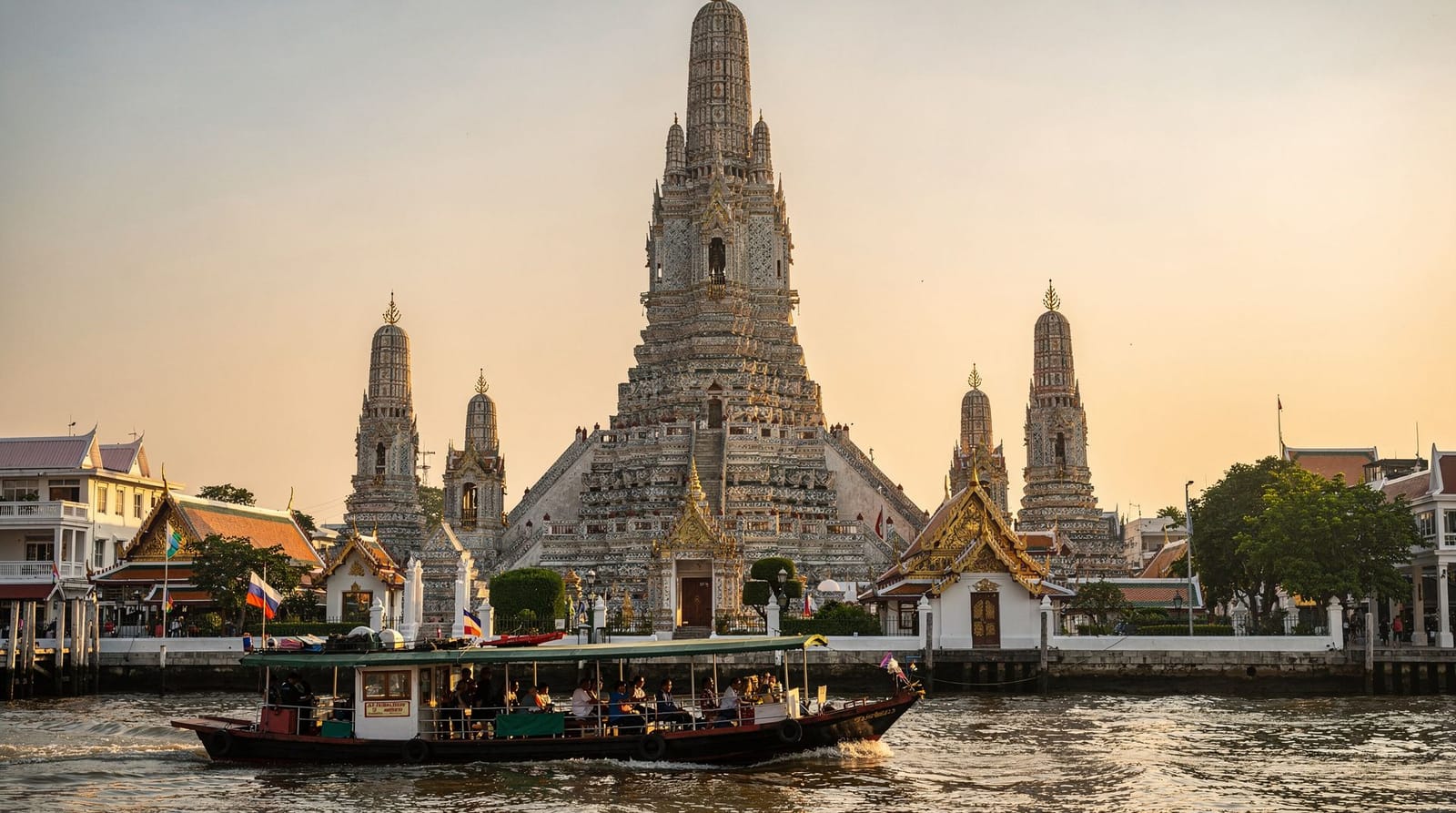
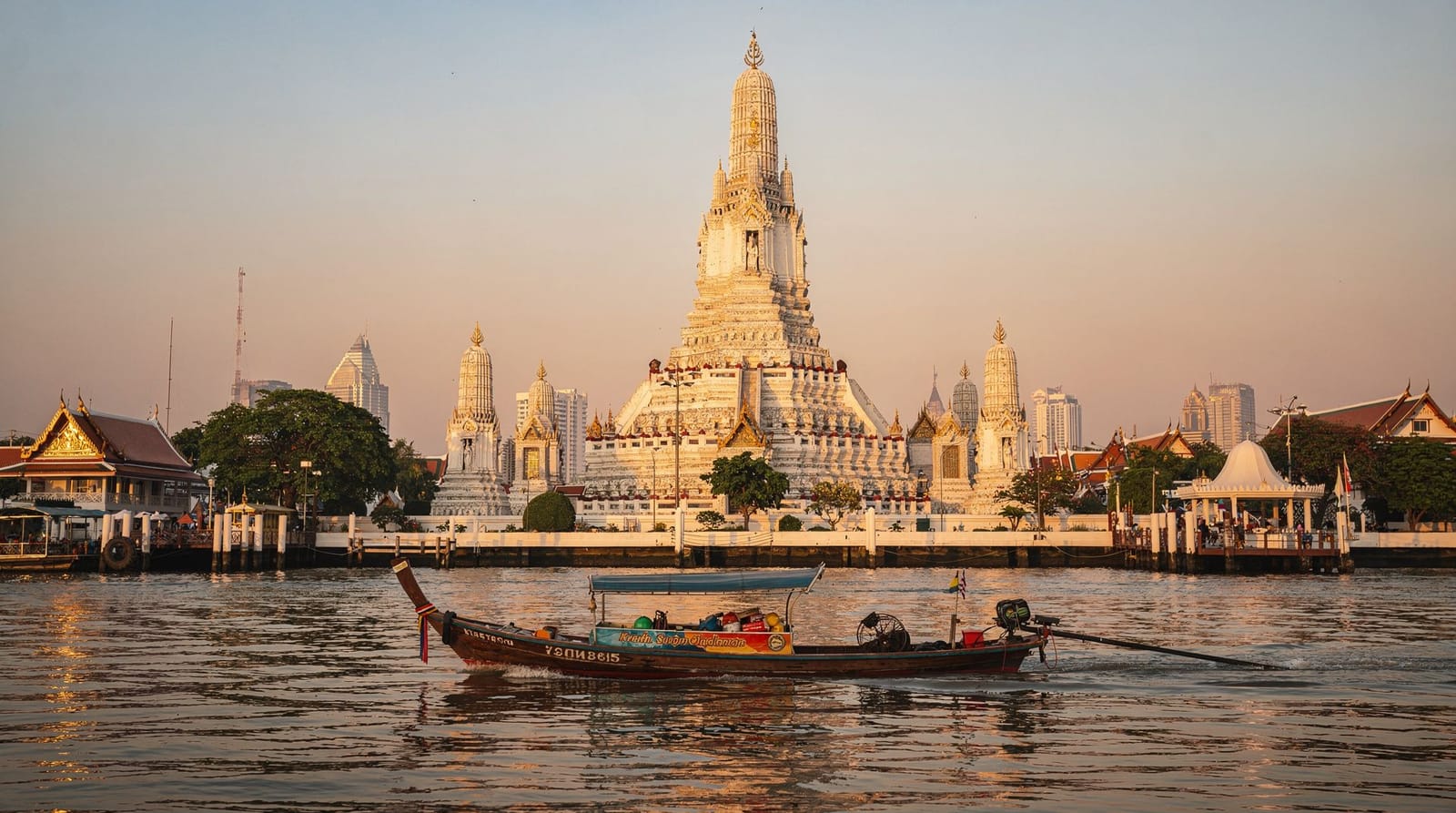
Light is everything in temple photography, and Bangkok’s gold rewards the patient. Early morning — from opening around 08:00-08:30 to about 10:00 — is the prime window: the low sun is warm and soft, gilded surfaces glow rather than glare, and you beat the tour groups that flood the major sites mid-morning. Late afternoon into golden hour is the other good window, especially for west-facing facades and for Wat Arun across the river at sunset.
Avoid harsh midday light, which flattens the gold, blows out highlights and casts ugly shadows; it is also when the heat is worst. From March to May, a heat haze settles over the city and washes out any wider or distant shot, so save the panoramas and skyline-temple frames for the clear-skied cool season, November to February. See the best time to visit Bangkok for the seasonal picture.
Travel light on gear
You need far less than the camera-bag forums suggest. A modern phone or a mirrorless body handles the vast majority of temple work. If you bring lenses, a wide-angle helps with cramped interiors and tall prangs you cannot step back from, and a fast lens (a low f-number) lets you shoot dim prayer halls in available light without flash. A small travel tripod or a beanbag helps with blue-hour exteriors and dim interiors where it is permitted.
Two small things matter disproportionately in Bangkok. Bring a lens cloth: the humidity fogs glass instantly when you move from air-conditioning into the heat, and a fogged lens ruins the first ten minutes of every interior. And wear slip-on shoes — you remove them constantly, and laces become a genuine nuisance. Keep the whole kit light; you are on your feet, in the heat, removing shoes and squeezing through crowds all day.
Composition inside and out
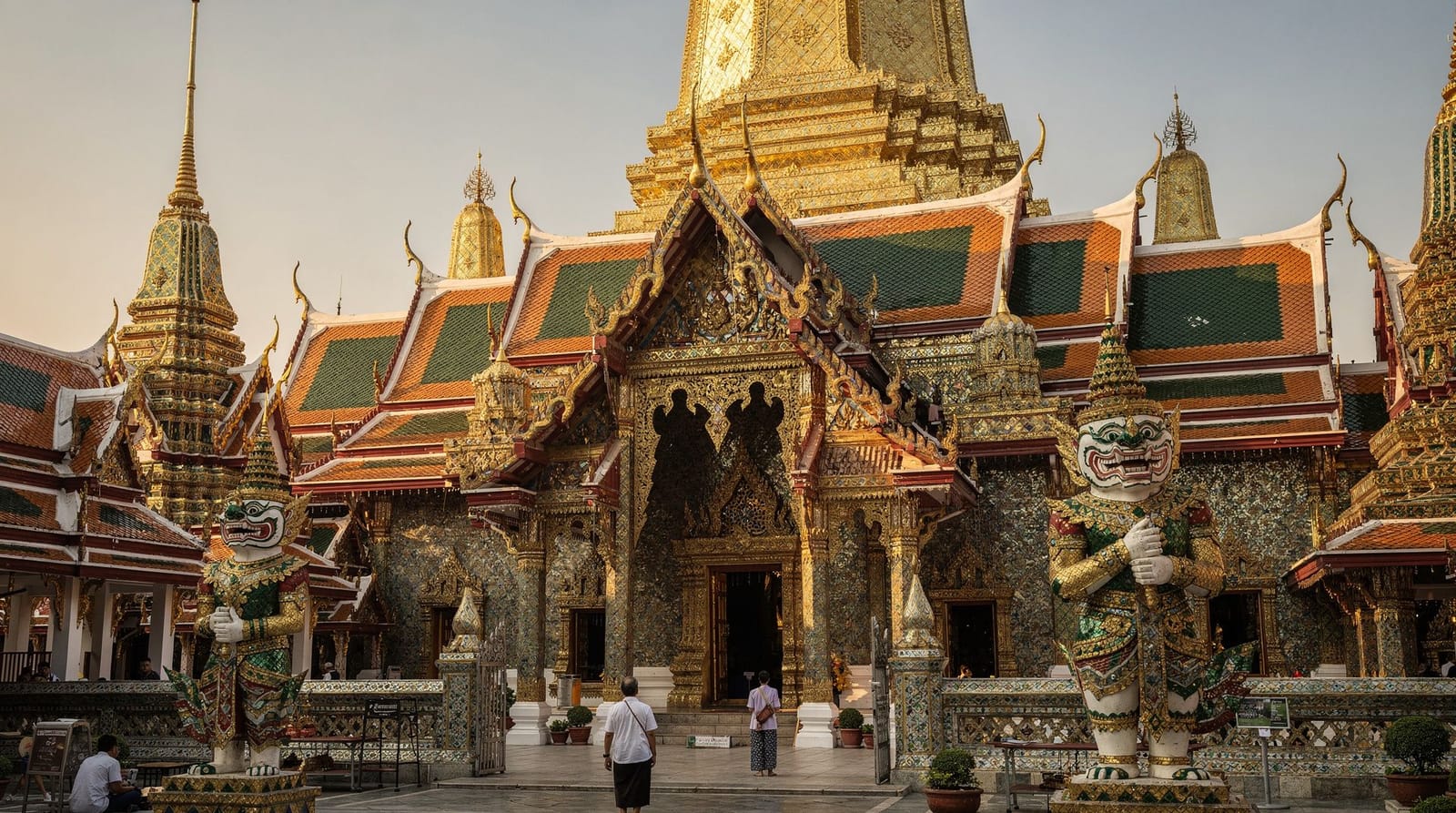
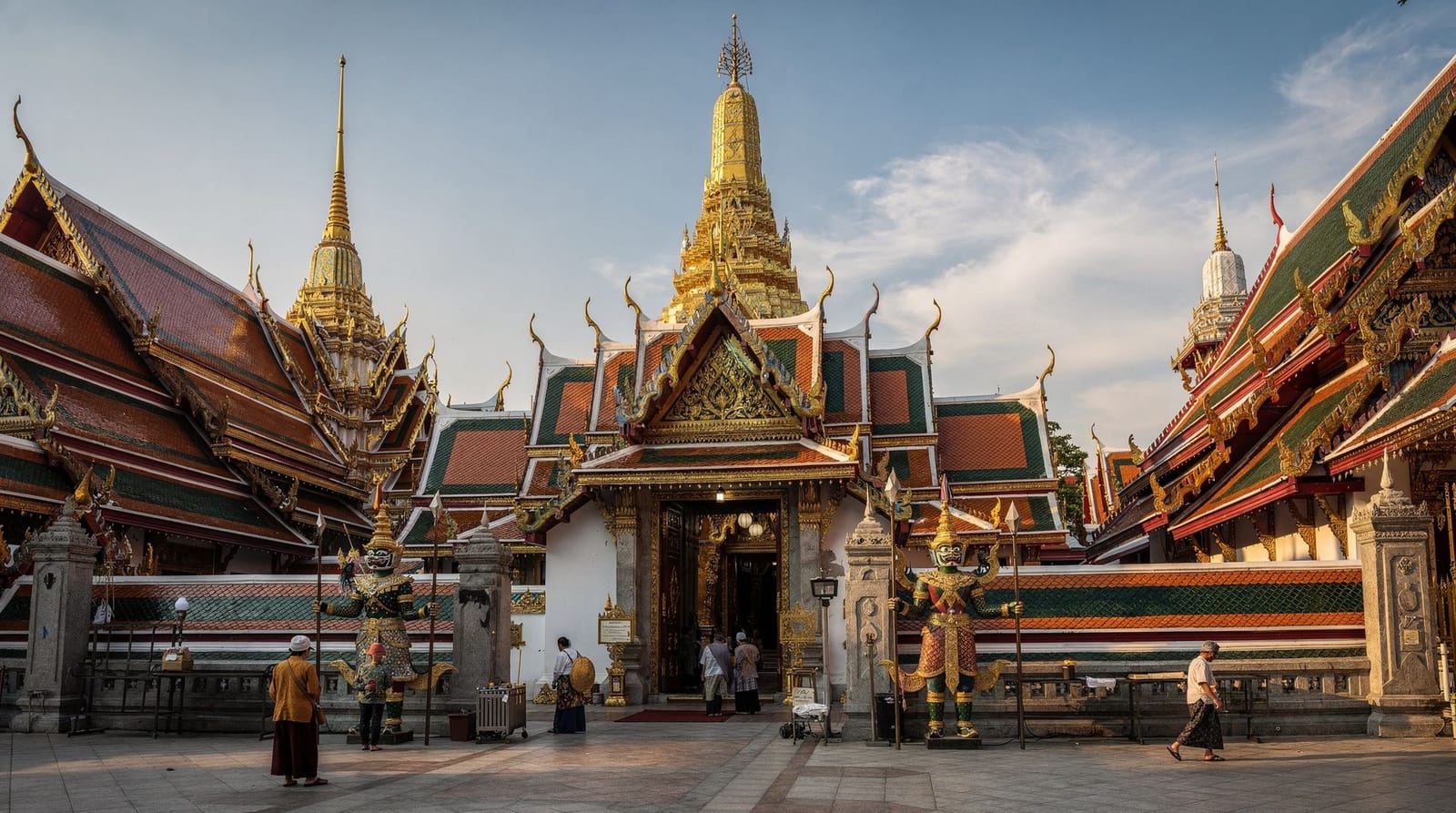
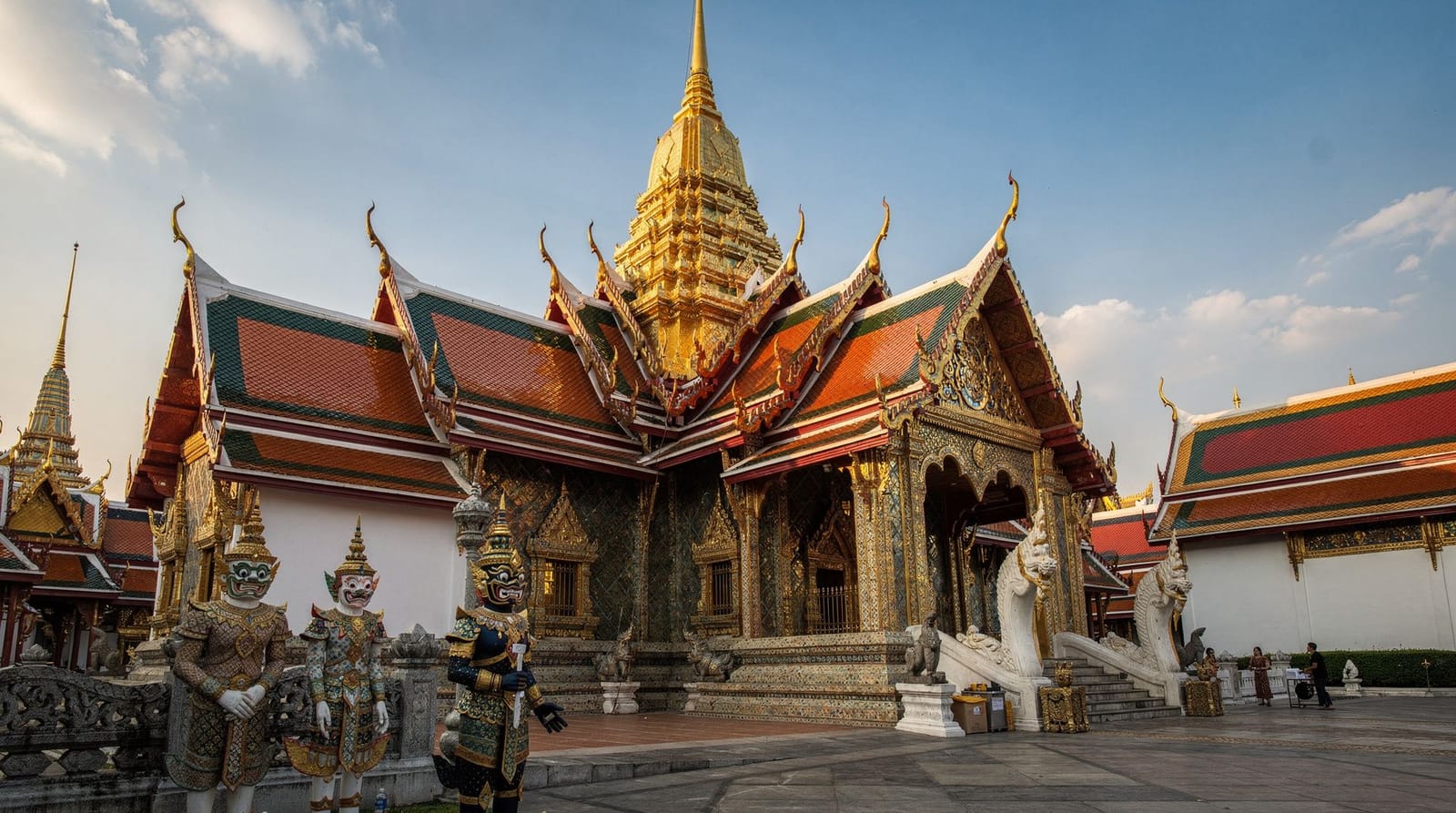
Exteriors: use foreground to give scale to the big structures — a doorway frame, a guardian statue, a worshipper’s silhouette, a row of bells. Tall prangs and chedis suit a vertical frame; the symmetrical facades of the marble temple, Wat Benchamabophit suit a dead-centre composition. Look for repetition — ranks of identical Buddhas, lines of golden chedis, rows of monk’s bowls — which the eye reads as rhythm.
Interiors: prayer halls are dim by design. Shoot in available light, raise the ISO, brace against a pillar, and let the warm gloom carry the mood — that atmosphere is the photograph, and flash destroys it. The standout interior in Bangkok is the green glass ceiling of Wat Paknam, best shot looking straight up in late-morning light; it is small and popular, so take your frame and step aside. At Wat Pho, the 46m reclining Buddha is too long for a single clean frame from most angles — shoot the details instead, especially the mother-of-pearl soles of the feet.
Details: the porcelain-and-seashell mosaics of Wat Arun, the mirror-glass and gold of the Grand Palace, the murals of the cloisters — tight detail shots often outlast the wide establishing frames in your final edit.
A note on white balance: Bangkok’s temple gold can come out either brassy and cold or warm and rich depending on how your camera reads the scene. In early light, lean slightly warm to let the gilding sing; in the blue cast of a shaded courtyard, correcting too far toward neutral can leach the warmth out of the gold entirely. If you shoot raw, you can decide later; if you shoot JPEG or phone, take a moment to check the back of the screen and adjust rather than trusting the auto setting blindly. The marble of Wat Benchamabophit is the opposite problem — it photographs cleanest when you protect the highlights and let the white stay white rather than grey.
The non-negotiable rules
This is the part you cannot skip. Bangkok’s temples are protected by both cultural convention and hard law.
- Buddha images are sacred and protected by law. Never climb on, sit beside, turn your back disrespectfully to, or pose flippantly with any Buddha image or statue, and never use one as a backdrop for a silly or sexualised pose. Thailand enforces strict Buddha-image and lèse-majesté laws; tourists have been detained and deported for disrespectful photos and for Buddha tattoos. Treat every Buddha image with the gravity you would a person.
- The monarchy is protected by lèse-majesté law, one of the strictest in the world. Do not photograph anything in a way that mocks or demeans the King or royal family. The monarchy respect and lèse-majesté guide explains the boundaries.
- No flash near Buddha images — disrespectful, often banned, and damaging to murals and gilding.
- At Wat Phra Kaew, photography of the Emerald Buddha itself inside the ubosot is prohibited. Photograph everything else freely; in that hall, put the camera away. See the Wat Phra Kaew guide.
- Dress code: cover shoulders and knees; remove shoes before entering prayer halls. The Grand Palace enforces this strictly — read the grand palace dress code. The full set is in the temple etiquette and dress code guide.
Photographing monks and worshippers
Monks make wonderful subjects, but they are not props. Ask or gesture for permission before a close portrait, shoot discreetly during ceremonies rather than disrupting them, and never use flash on a person at prayer. The single firm rule: women must never touch a monk or hand anything directly to one — pass an object via a man or place it down for the monk to pick up. Do not pose with your arm around a monk or treat him as a photo opportunity. A quiet, respectful approach almost always earns a warm, even amused, response; an intrusive lens in someone’s devotion is offensive everywhere and especially here.
The same respect applies to ordinary worshippers making merit, lighting incense or praying. Shoot from a respectful distance, or ask. The honest, human frames you get this way are worth more than a stolen one.
Tripods, crowds and timing
Tripods are awkward or banned in busy grounds and at the Grand Palace; use a small one considerately where tolerated, or switch to a beanbag or a pillar to brace against. Never block a worshipper, a queue or a doorway with a tripod.
Crowds are the enemy of clean temple photos. Arrive at opening — the Grand Palace, Wat Pho and Wat Arun are quietest from 08:00 to 09:30, before the tour buses land. Shoot the famous, crowded temples first and the calm ones — Wat Benchamabophit, Wat Saket and the Golden Mount — later in the day. Weekdays beat weekends. This sequencing is built into the Bangkok temples itinerary.
Editing: keep the gold honest
Post-processing decides whether a temple photo looks alive or artificial. The instinct with gold surfaces is to push saturation and warmth until they glow, but overdone it reads as fake almost instantly — a small warmth boost and a lift in shadow detail usually beats a heavy-handed filter. If you shoot raw, recover highlight detail in the brightest chedi surfaces first, since blown-out gold loses the texture that makes it interesting; if you shoot JPEG or phone, use the highlights slider rather than lowering overall brightness. For interior shots at Wat Phra Kaew or Wat Paknam, a touch of noise reduction is normal given the high ISO, but avoid smoothing away the mural or ceiling detail entirely. Crop carefully around yaksha guardians and mythological figures — cutting off a head or a hand changes the meaning of a figure that was placed deliberately by its sculptor.
A realistic one-day shot list
If you are dedicating a full day to temple photography rather than general sightseeing, this sequence uses the light and the crowds well:
| Time | Stop | What to shoot |
|---|---|---|
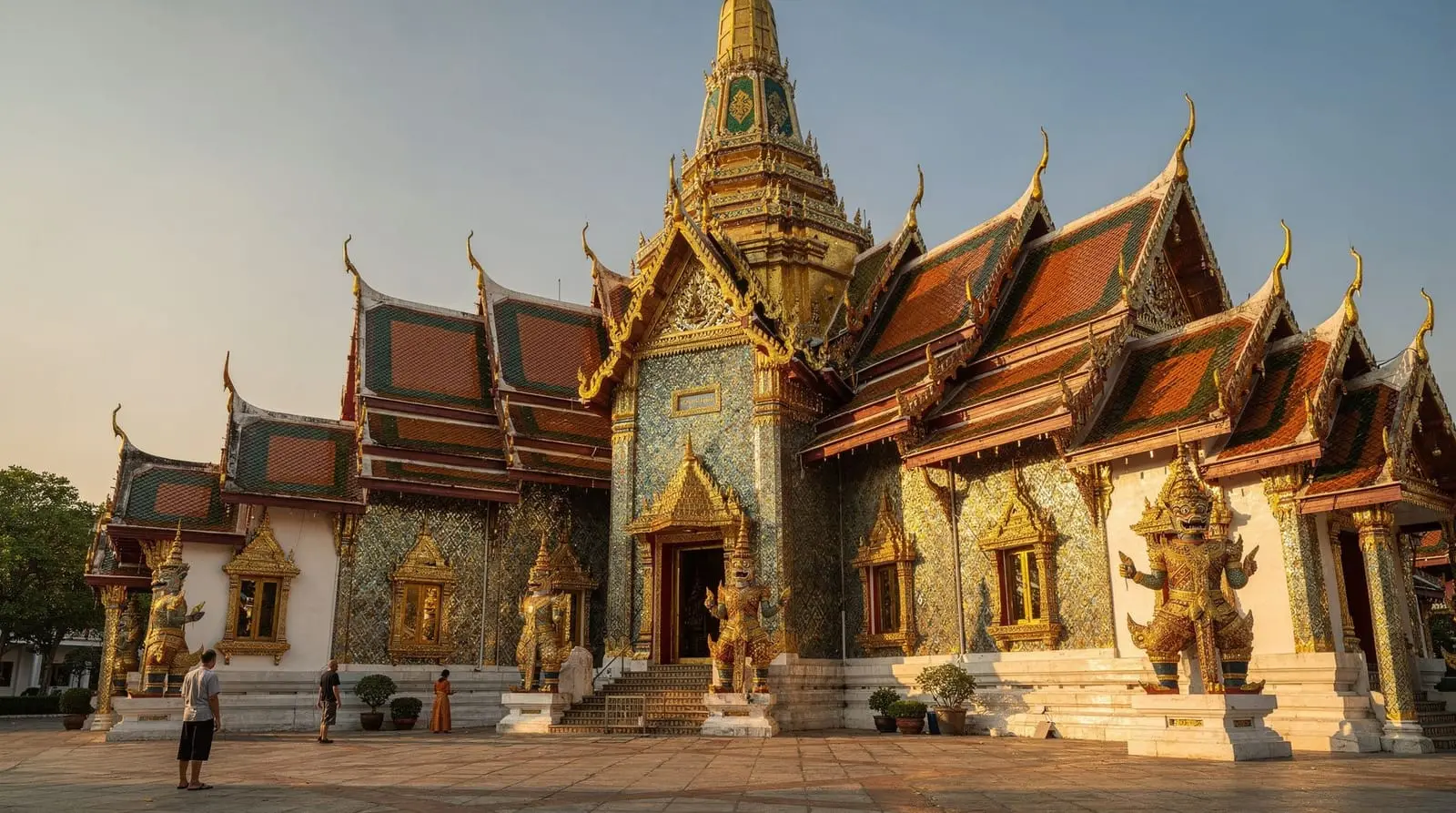
| 08:00-09:30 | Grand Palace | Wide shots of the golden chedi and yaksha guardians before crowds build |
| 10:00-11:00 | Wat Pho | Detail shots — mother-of-pearl feet, gilded chedi rows, the massage school |
| 12:00-13:00 | Wat Arun | Lower terraces and porcelain-mosaic detail in midday light |
| 15:00-16:00 | Wat Benchamabophit or Wat Saket | Calmer crowds, marble symmetry or the Golden Mount panorama |
| 17:30-18:30 | Wat Arun, from across the river | Sunset silhouette — the classic shot, from Wat Pho’s riverside or a rooftop |
This mirrors the temple-hopping route, with the photographer’s twist of saving Wat Arun’s exterior for both midday texture and a second, sunset visit from across the water.
Learn the city’s temples fast
If you have limited time and want to compress the learning curve, a guided experience earns its place. A photographer who knows each temple’s best light and least-crowded angle saves you days of trial and error, and if you want portraits of yourself in these settings, they handle the gear and the framing.
A Bangkok Instagram tour with a professional photographer is built around exactly this — iconic temple and city backdrops with someone who knows the angles. For the full shot list across the city, see the best photo spots in Bangkok and the Instagram spots in Bangkok guide. And before you point the camera anywhere, the best temples in Bangkok guide tells you which are worth the trip in the first place. Start your old-city explorations from the Rattanakosin old city destination guide.
Frequently asked questions about Temple photography tips for Bangkok: shoot well and respectfully
What time of day is best for temple photography in Bangkok?
Can I use flash inside Bangkok temples?
Are tripods allowed in Bangkok temples?
What should I wear to photograph temples in Bangkok?
Can I photograph monks in Bangkok temples?
What are the rules about photographing Buddha images in Thailand?
What camera gear do I need for Bangkok temples?
How do I avoid crowds when photographing Bangkok temples?
Top experiences
Bookable activities with verified prices and instant confirmation on GetYourGuide.