Bangkok foodie itinerary: the honest 3-day eating plan
Bangkok Night Food Tour By Tuk-Tuk
| Best for | Food lovers, couples, solo travellers |
| Pace | Graze, don’t dine — several small stops a day |
| Cost | Roughly 300–600 THB/day street food, plus classes/tours |
| Getting around | BTS, MRT and river boats between food zones |
| Best months | Year-round; go early or late to dodge the midday heat |
| Day | Focus | Highlights |
|---|---|---|
| 1 | Chinatown | Yaowarat street-food crawl, Talat Noi wander |
| 2 | Cook and hunt | Cooking class with market, Michelin-stall hunt |
| 3 | Markets and streets | Food market, boat noodles, Banthat Thong dinner |
Bangkok is, by a wide margin, one of the best eating cities on earth — and three days of focused grazing will teach you more about Thai food than a fortnight of restaurant meals anywhere else. This itinerary is built around the appetite, not the calendar: a Chinatown street-food crawl, a hands-on cooking class, a Michelin-listed stall hunt, boat noodles, a viral food street, and the markets that feed the city. The honest advice for foodies is the opposite of most Bangkok itineraries — here you should under-plan the sights and over-plan the eating, with hungry gaps left between meals and a flexible stomach. Read the Bangkok street food guide and what to eat in Bangkok before you go.
How to eat Bangkok over three days
The structure is simple: graze, don’t dine. Eat four or five small things at four or five places each day rather than three big sit-down meals. Carry cash in small notes (most stalls don’t take cards), pace your spice tolerance, and treat the heat as a reason to eat early and late and rest in the middle. Each day here has an anchor — a tour, a class, a food street — with free grazing around it. Spice-shy eaters should learn the phrase mai phet (not spicy). The street food safety guide takes the worry out of eating from a wok on the pavement: busy stalls, fresh cooking, high turnover.
Day 1 — Chinatown: the street-food crawl
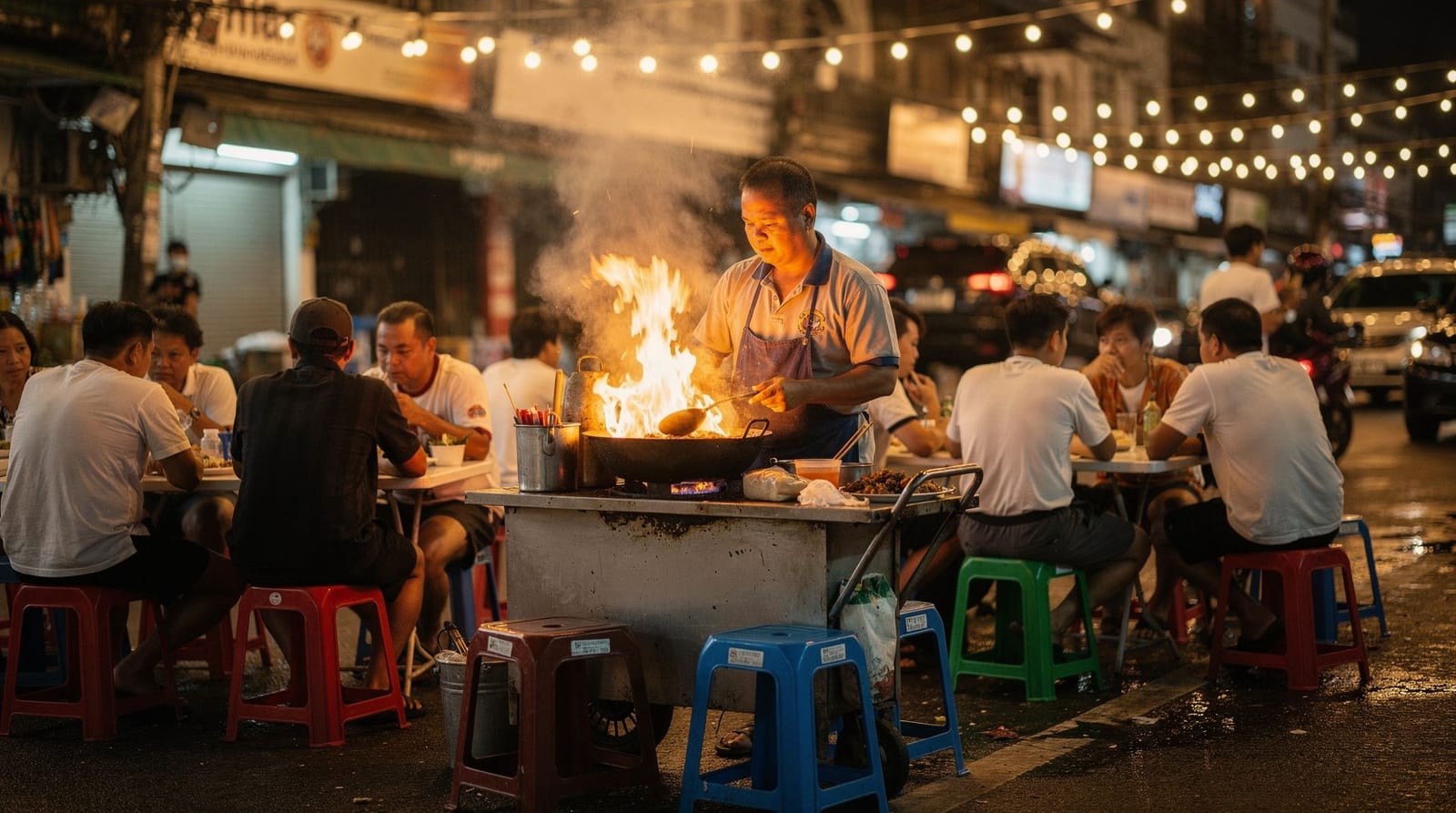
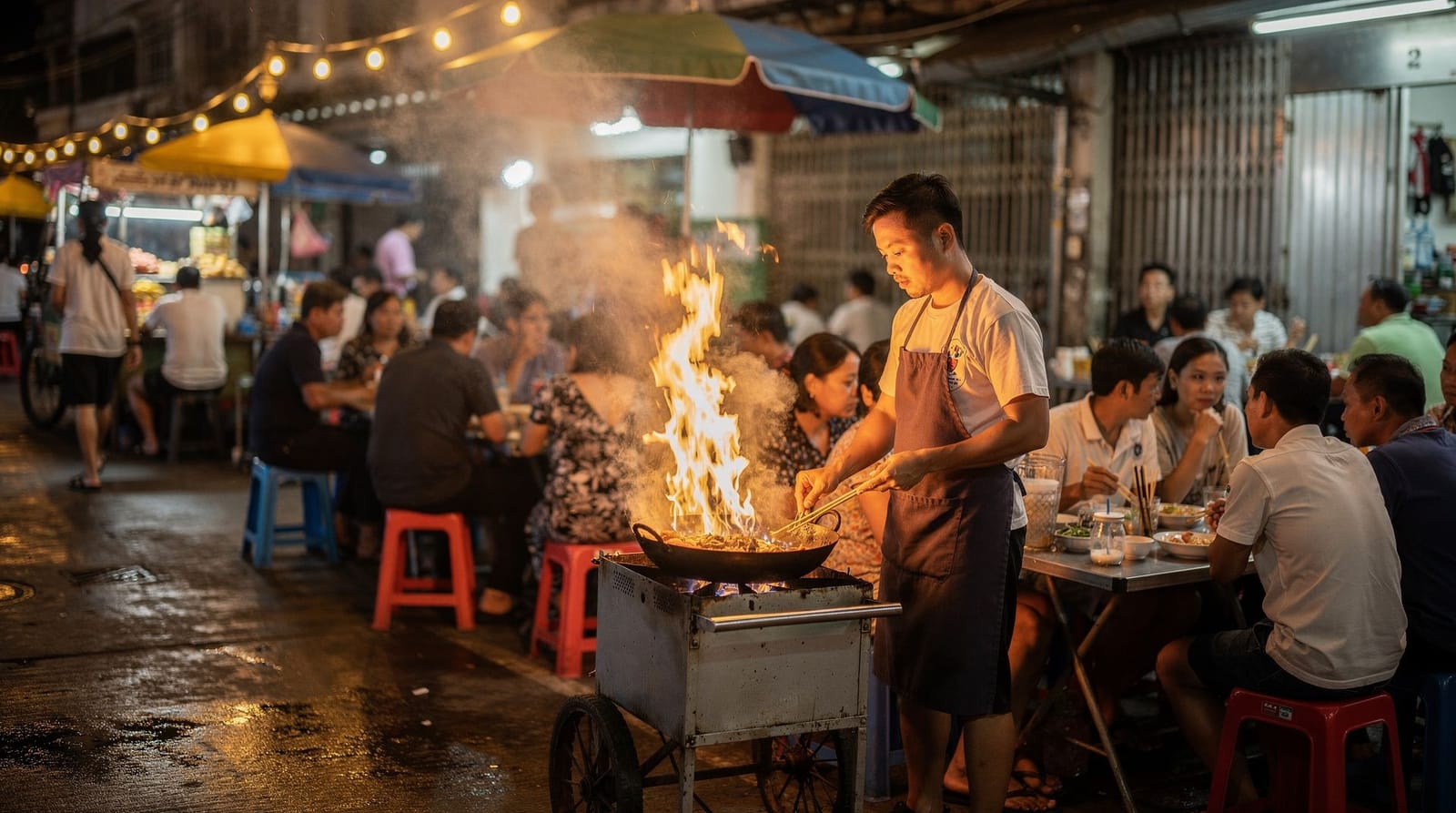
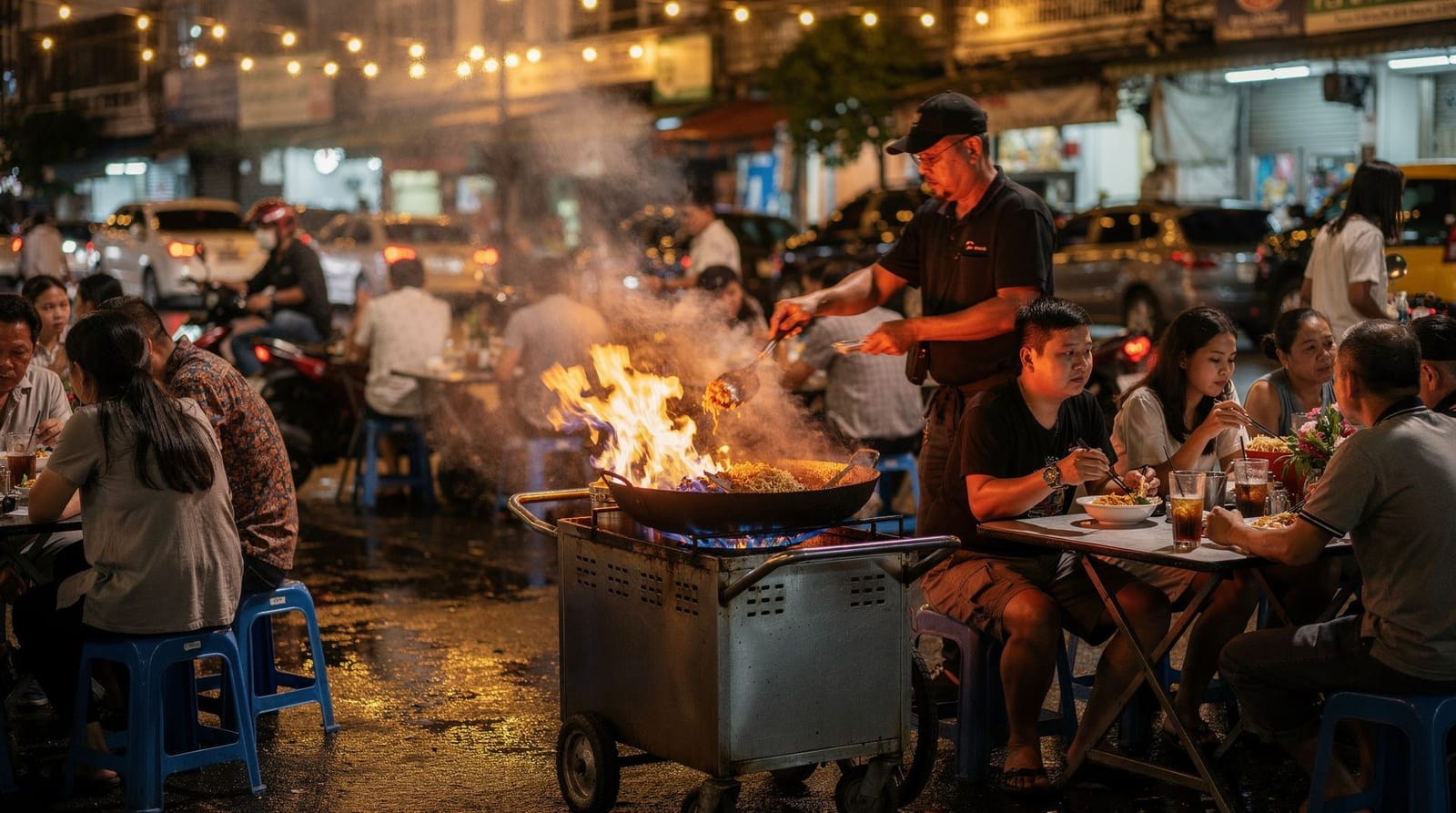
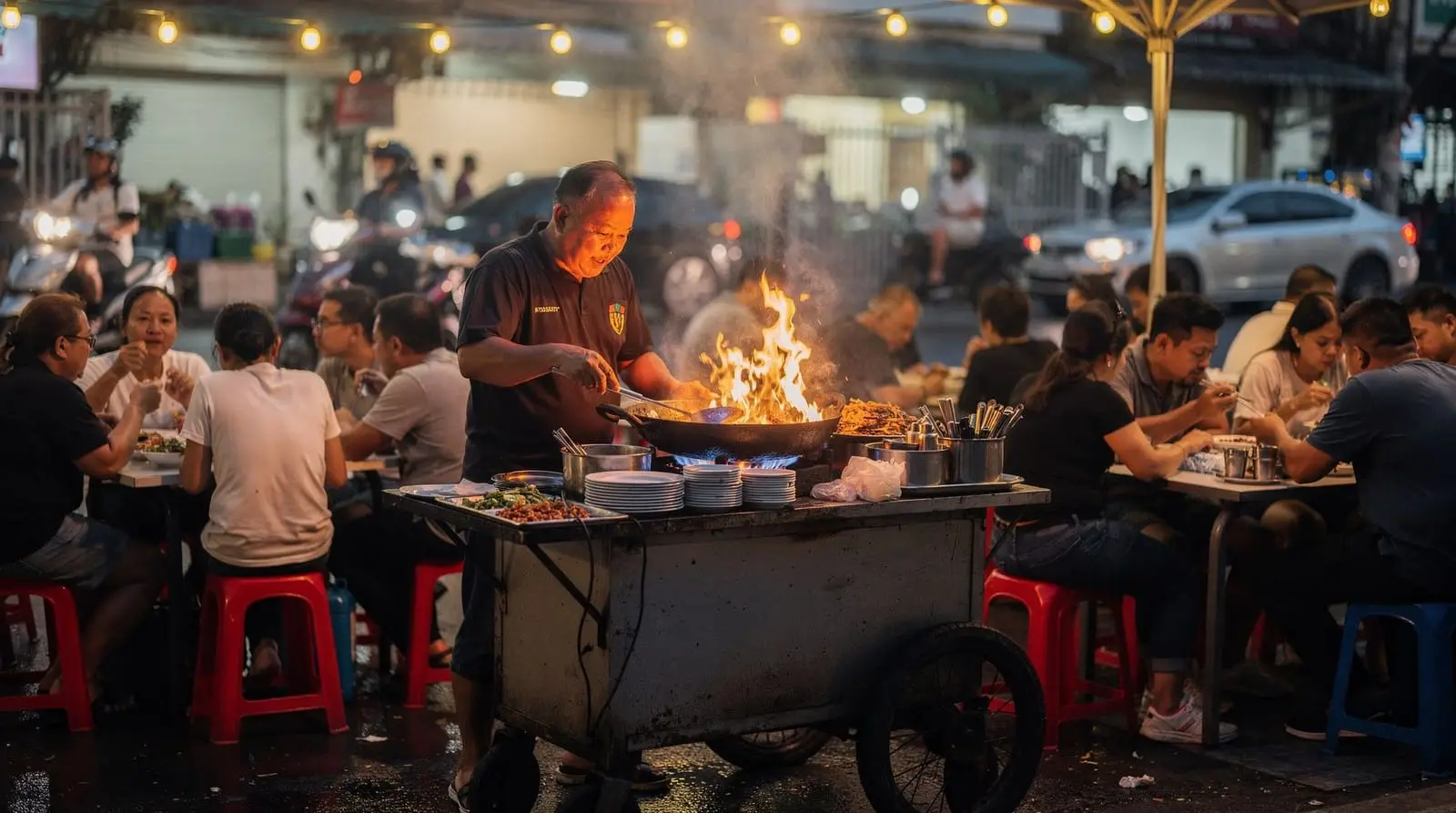
There is no better place to start than Yaowarat, Bangkok’s Chinatown and its greatest open-air kitchen. Spend the late afternoon and evening grazing the lanes: grilled river prawns near Soi Texas, kuay jab (peppery rolled-noodle soup), oyster omelettes, guay tiew boat noodles, toasted custard buns, fresh pomegranate juice, and mango sticky rice to finish — 250–450 THB will leave you very full. The Yaowarat Chinatown food guide maps the essential stalls. For a guided introduction that handles the choosing and the navigation — invaluable on your first Bangkok night — a night food tour by tuk-tuk weaves you through Chinatown’s best by tuk-tuk. Earlier in the day, explore the historic Talat Noi lanes nearby for cafes and street art (Talat Noi guide, Talat Noi destination).
Day 2 — Cook it yourself, then hunt Michelin stalls
Morning: a hands-on Thai cooking class. The best ones start with a guided market tour (you learn the ingredients) then teach you four dishes you cook and eat — green curry, pad thai, tom yum, mango sticky rice. It is the single most useful thing a foodie can do in Bangkok, and you take the recipes home. A cooking class with market and tuk-tuk is the classic format; the Thai cooking class guide and cooking class with market compare them.
Evening: go Michelin-stall hunting. Bangkok is the only city where you can eat at a Bib Gourmand or Michelin-listed stall for under 200 THB — Jay Fai’s famous crab omelette is the legend (and the queue), but there are dozens more across Chinatown and the old town. A Michelin street food tour by tuk-tuk takes the guesswork out; the Michelin street food guide lists the stalls you can find yourself.
Day 3 — Markets, boat noodles and a viral food street
A grazing day with no tour. Start at a food market — the best food markets guide ranks them — or the riverside Bang Rak / Charoenkrung district, an old-Bangkok food neighbourhood of Muslim curries, Chinese-Thai noodles and dessert shops (Bang Rak food, Bang Rak Charoenkrung destination). For lunch, hunt down boat noodles — tiny, intense bowls of dark, rich broth eaten three or four at a time, traditionally near Victory Monument (boat noodles guide). In the evening, head to Banthat Thong Road, the viral, neon food street near Chulalongkorn University packed with young-Bangkok favourites and Michelin picks — see Banthat Thong food street. Finish with a dessert crawl: mango sticky rice (guide), coconut ice cream, and Thai tea.
Essential dishes to tick off
Across three days, make sure you eat: pad thai (done properly, not the tourist version), pad krapow (holy basil stir-fry over rice with a fried egg), som tam (green papaya salad), tom yum goong (hot-and-sour prawn soup), green or massaman curry, boat noodles, khao man gai (chicken rice), moo ping (grilled pork skewers), and mango sticky rice. The what to eat in Bangkok and best pad thai guides go deeper on each.
Foodie practicalities
- Carry cash in small notes — stalls rarely take cards.
- Eat where locals queue — turnover means freshness and quality.
- Pace the spice — say mai phet if you’re unsure, and keep sticky rice handy to cool your mouth.
- Go early or late — stalls are freshest at opening and the heat is kinder.
- Use the BTS, MRT and river boats between food zones; the getting around Bangkok guide helps. Avoid tuk-tuk “tours” that detour to commission shops (tuk-tuk scams).
Bangkok’s food neighbourhoods, mapped
Part of eating Bangkok well is knowing which district does what. A quick map for foodies:
- Yaowarat (Chinatown) — the street-food capital: grilled seafood, noodle soups, Chinese-Thai classics, desserts. Best after dark.
- Bang Rak / Charoenkrung — old riverside Bangkok: Muslim curries, roast duck, dim sum and historic dessert shops (Bang Rak food).
- Banthat Thong — the young, viral food street near Chulalongkorn: hotpot, Michelin noodles, neon-lit and buzzing (guide).
- Victory Monument — boat noodles row, the intense little bowls eaten by the stack (guide).
- Thonglor / Ekkamai — the upmarket end: chef’s-table Thai, craft cocktails, modern cafes (Thonglor guide).
- Sukhumvit sois — everything from Michelin street stalls to halal eateries around Nana.
Choosing a hotel near one of these (Chinatown-adjacent or Bang Rak for a true foodie) means you can roll out for breakfast and home after a late dessert without a long commute. The best food markets and michelin street food guides go deeper.
A realistic foodie timeline
Day 1: afternoon Talat Noi wander; evening Yaowarat crawl (guided or solo).
Day 2: morning cooking class with market; evening Michelin-stall hunt.
Day 3: market or Bang Rak breakfast; boat-noodle lunch; Banthat Thong dinner and a dessert crawl.
The deliberate gaps between meals are the plan, not an oversight — Bangkok’s heat and its portion sizes mean you eat better grazing five small things across the day than forcing three big sit-downs. Leave room, stay curious, and follow the queues.
Dietary needs in Bangkok
Bangkok caters well to most diets if you know the words. Vegetarian/vegan: look for the yellow-and-red jay (เจ) flags, especially during the annual Vegetarian Festival, and see the vegetarian and vegan guide. Halal: the Bang Rak and Nana areas have strong halal scenes; the halal food guide maps them. Allergies and spice: carry a translation card for serious allergies (fish sauce and shrimp paste are in almost everything savoury), and use mai phet freely. Most stalls will adapt cheerfully if you ask clearly.
The dishes behind the hype, decoded
Bangkok’s food scene throws a lot of names at you; here’s what’s actually worth chasing and why. Pad krapow — minced pork or chicken stir-fried hard with holy basil and chilli, served over rice with a runny fried egg (kai dao) — is the true everyday soul food, far more revealing than tourist pad thai. Boat noodles are tiny, intense bowls of dark broth thickened traditionally with blood; you stack three or four empty bowls as you go. Khao soi, a northern curry-noodle soup, is increasingly easy to find and worth it. Guay tiew reua, kuay jab (peppery rolled noodles), moo ping (grilled pork skewers with sticky rice), som tam (pounded green papaya salad — order it mai phet if cautious), and khao niao mamuang (mango sticky rice) are the dishes that, eaten well, teach you Thai food faster than any restaurant menu. The what to eat in Bangkok, best pad thai, khao man gai and mango sticky rice guides go dish by dish.
Is a food tour worth it?
For a dedicated foodie, the honest answer is: one is, several aren’t. A single guided tour — ideally on your first night in Chinatown — earns its price by teaching you how to navigate the stalls, what to order, and which queues are worth joining; that knowledge then powers the rest of your independent grazing. A cooking class is the other clear win, sending you home with skills and recipes. Beyond those two, you’ll get more out of exploring solo with the food guides than booking tour after tour. The exception is the Michelin-stall hunt, where a guide who knows the opening hours and the queue tricks (Jay Fai’s notorious wait, for one) genuinely saves you time. The food tour worth it? guide weighs it honestly. Spend on one or two well-chosen experiences, then trust your own appetite.
Coffee and dessert stops worth the detour
Between the savoury crawls, Bangkok’s coffee and dessert scene deserves its own attention. Talat Noi and the riverside lanes near Bang Rak have a genuine wave of independent cafes in converted shophouses — good for a slow morning between a Chinatown crawl and the Michelin-stall hunt; see the Bangkok coffee scene for a first-person tour, and best cheap eats if you want the savoury equivalent of a good-value crawl. For dessert, chase khao niao mamuang (mango sticky rice, best from a stall that cuts the mango fresh in front of you), roti sai mai (candy floss wrapped in a thin crepe, a Chinatown speciality), and the toasted-bread-and-custard carts that appear on Yaowarat after dark. A mid-afternoon coconut ice cream or a Thai iced tea is also the honest antidote to the heat between meals.
Booking ahead for a foodie trip
Most of this itinerary is spontaneous — you simply walk up to a stall. Two things benefit from booking: the cooking class, since the better-reviewed ones (with a real market visit, not a supermarket stand-in) fill a day or two ahead in high season, and Jay Fai’s crab omelette, which involves either an infamous queue or booking a private tour that includes a table. Everything else — the Yaowarat crawl, the boat noodles, Banthat Thong — needs no reservation at all. Pack cash in small notes (what to pack for Bangkok) and a stomach-settling remedy just in case — new cuisines and new bacteria occasionally disagree even with careful eaters.
Frequently asked questions about a Bangkok foodie itinerary
Is three days enough to eat Bangkok properly?
Three days lets you cover the essentials: a Chinatown crawl, a cooking class, Michelin stalls, boat noodles and a viral food street. You will not exhaust the city — no one does — but you will leave understanding Thai food far better than most visitors. More days simply mean more grazing.
Is Bangkok street food safe?
Yes, if you choose well — busy stalls cooking fresh with high turnover are safe and often the best food in the city. Drink bottled water and avoid raw or long-sitting dishes. The street food safety guide explains how to eat with confidence.
Should I do a food tour or explore alone?
Both. A guided tour on day one is invaluable for orientation and stall-picking, especially in Chinatown’s maze. After that, you will have the confidence to graze independently using the food guides. The Michelin and cooking tours add real value on a short trip.
What is the most Bangkok dish I have to try?
Boat noodles (intense, tiny bowls), a proper pad krapow with a fried egg, and mango sticky rice for dessert. For the full Chinatown experience, the grilled river prawns and kuay jab on Yaowarat are non-negotiable.
How do I handle the spice?
Thai food can be very hot, but you control it — say mai phet (not spicy) when ordering, eat plain rice alongside, and keep something sweet or coconut-based nearby. Spice tolerance builds over a few days. Curries and noodle soups are generally milder than som tam and many stir-fries.
How much does a foodie day cost?
Eating brilliantly on street food costs 300–600 THB a day (USD 8–17). Add a cooking class (1,000–1,500 THB) and a food tour (1,200–1,800 THB) on the days you book them. It is astonishing value for the quality. See Bangkok travel costs.
Top experiences
Bookable activities with verified prices and instant confirmation on GetYourGuide.