Thai cooking class in Bangkok: the complete honest guide
Bangkok: Cooking Class with Market Visit & Tuk Tuk Ride
What should I look for in a Thai cooking class in Bangkok?
Decide first whether you want a class that includes a guided market visit (the most rewarding format, where you learn to shop for ingredients) or a studio-only class (more convenient, often slightly cheaper). Check how many dishes you cook hands-on (usually three to five), the group size (smaller is better), whether it caters to vegetarian or allergy needs, and the location and timing. Expect to pay roughly 1,000–2,500 THB for a half-day group class, more for private or premium classes.
A Thai cooking class is one of the most rewarding things you can do in Bangkok — and one of the most genuinely useful souvenirs you can bring home. Thai food is built on technique and balance rather than rare ingredients, which means a good half-day class can leave you genuinely able to recreate a green curry, a proper pad thai, or a tom yum in your own kitchen. But Bangkok has hundreds of cooking schools, and they vary enormously in quality, format, and value. This guide explains how to choose the right one: market-based versus studio, what you’ll cook, what it costs, how to handle dietary needs, and which type of class suits which traveller.
The single most important decision is format: do you want a class that includes a guided market visit, or a studio-only class? Get that right, match it to your time and budget, and a Thai cooking class becomes a highlight of the whole trip rather than a box ticked.
| Where | Silom/Sathorn, Sukhumvit, Old City, and quieter garden settings |
| Cost | Around 1,000–2,500 THB for a half-day group class |
| Time needed | 3–4 hours (studio); 4–5 hours (with a market visit) |
| Getting there | Most schools reachable by BTS, MRT, or a short Grab |
| Best time | Morning classes if a market visit is included |
Why a Thai cooking class is worth it
Thai cuisine is a masterclass in balance — the constant interplay of sweet, sour, salty, and spicy, layered with aromatics like lemongrass, galangal, kaffir lime, and Thai basil. The dishes look complex but the principles are learnable, and that is exactly what a good class teaches: not just recipes, but the technique of balancing flavours so you can cook intuitively afterwards. You pound your own curry paste, learn wok control, and understand why a dish tastes the way it does.
You also eat everything you cook, usually three to five dishes, so the class doubles as a generous meal. And unlike many tourist activities, the skill comes home with you. For the broader food context, see what to eat in Bangkok and the Bangkok street food guide.
The big decision: market visit or studio-only?
Classes with a market visit
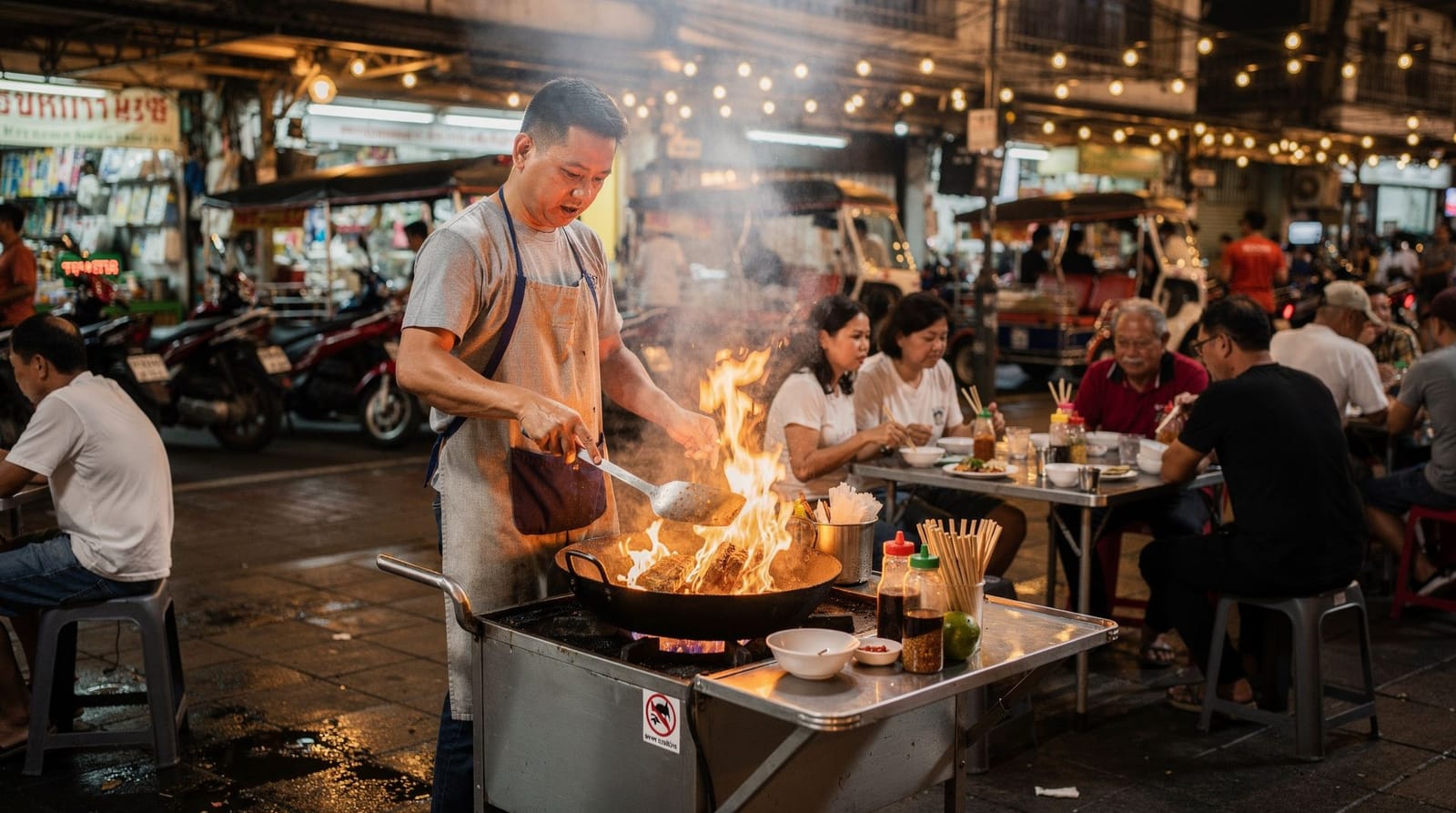
The most rewarding format includes a guided visit to a fresh market before cooking. A teacher walks you through the produce — identifying Thai herbs, vegetables, curry pastes, fruits, and proteins — and you shop for some of the ingredients you’ll cook with. This adds invaluable context: you learn how Thais shop, what to look for, and how the ingredients connect to the dishes.
It is often the highlight of the experience and the format we recommend for most travellers with the time. The trade-off is a longer, often earlier session (4–5 hours, sometimes starting around 08h00). The cooking class with market visit by tuk-tuk adds the fun of a tuk-tuk ride to the market run, while the half-day cooking class with market tour is a well-structured standard option. The dedicated cooking class with market guide goes deeper into this format.
Studio-only classes
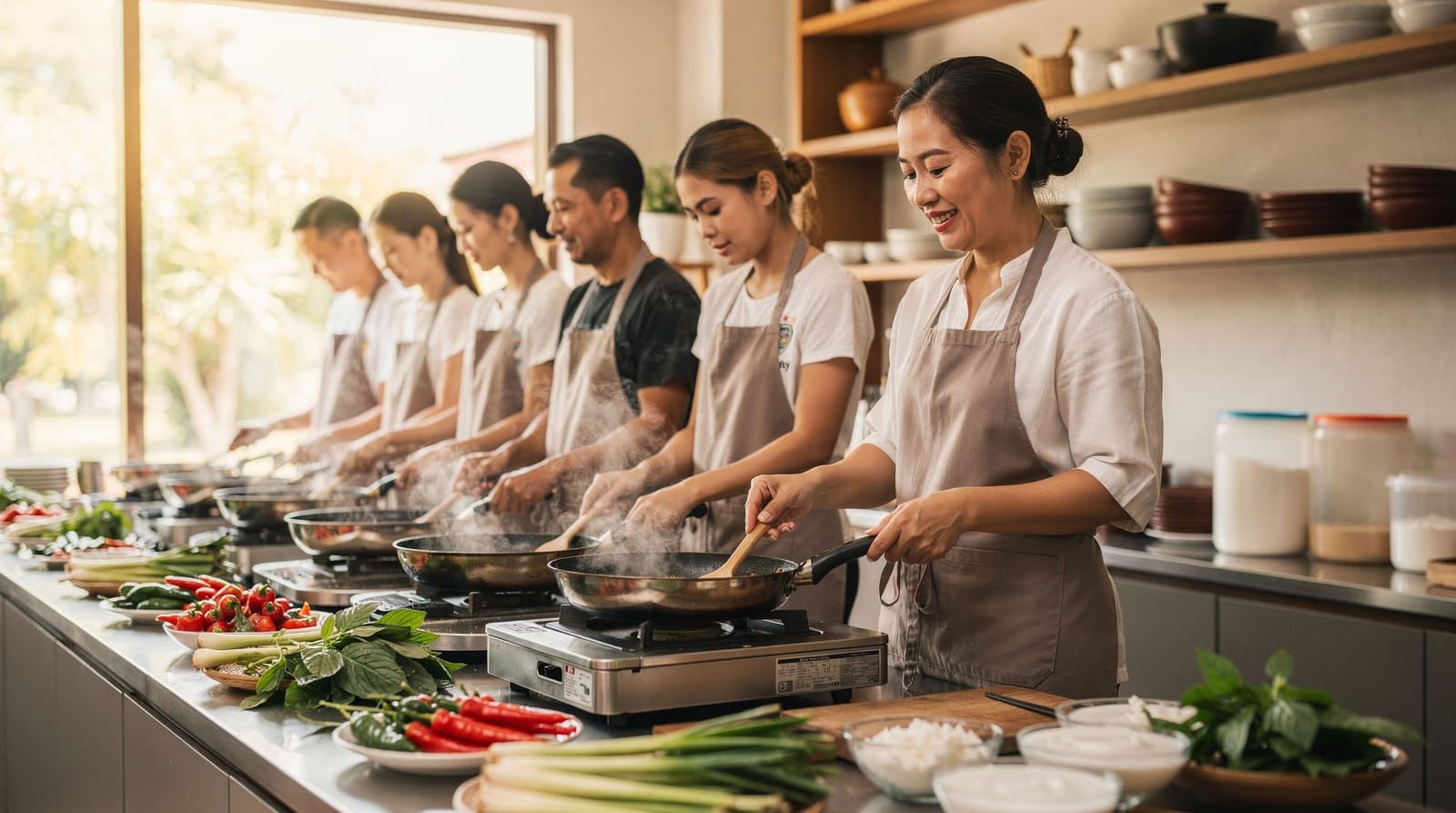
Studio-only classes skip the market and focus purely on the cooking. They are more convenient, often shorter, and sometimes slightly cheaper, and they still teach the dishes and techniques thoroughly. Choose this if you are short on time, prefer a relaxed pace, or simply want to focus on the cooking. The Silom cooking class in a garden setting with market offers a pleasant garden atmosphere, and many studios run morning, afternoon, and evening sessions for flexibility.
What you’ll cook
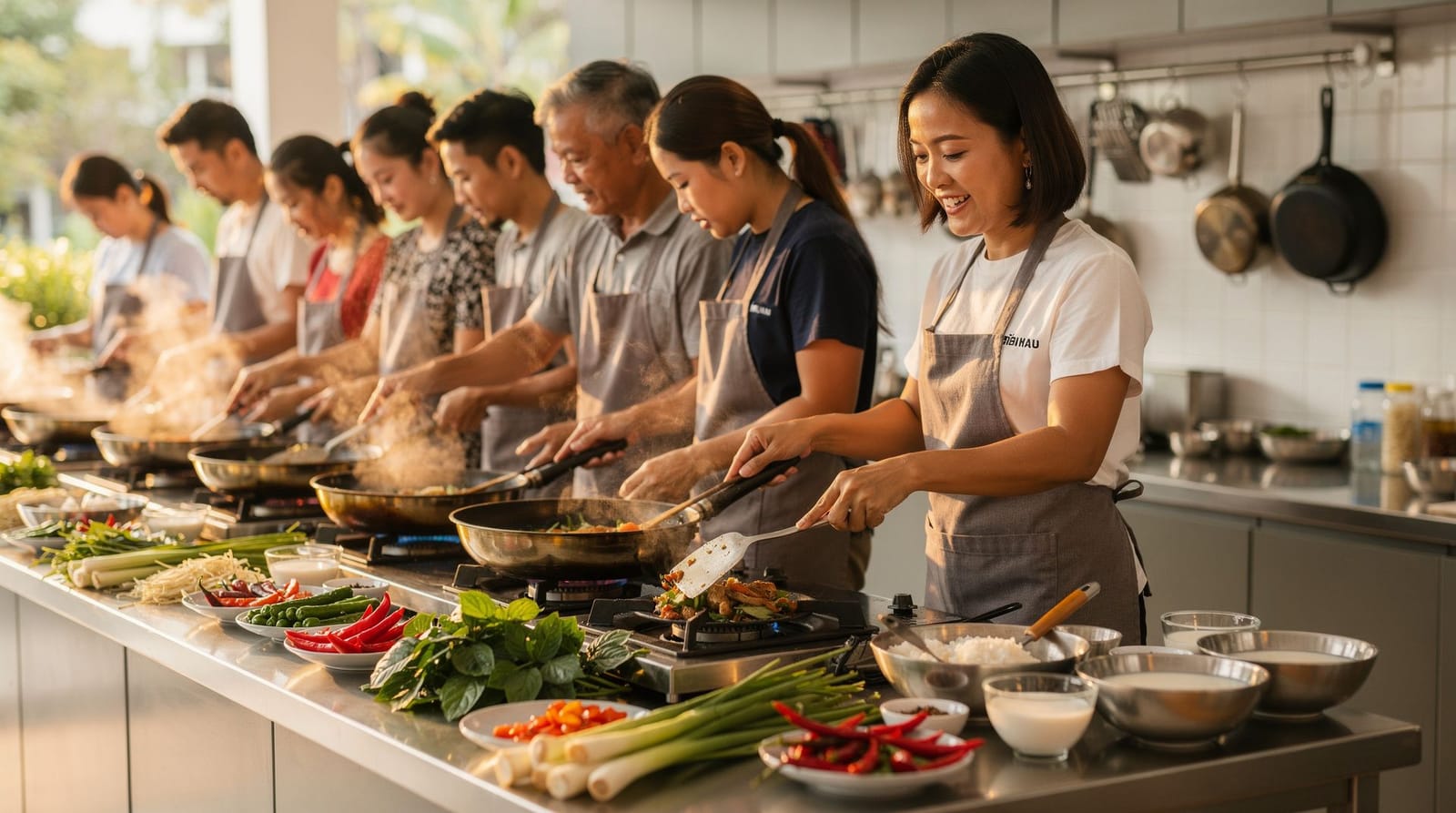
Most half-day classes have you prepare three to five dishes hands-on, typically spanning the core categories of a Thai meal:
- A curry: green, red, or massaman, with paste you pound yourself in a stone mortar.
- A stir-fry: pad thai, pad krapow (holy basil), or pad see ew.
- A soup: tom yum (hot and sour) or tom kha (coconut).
- A salad: som tam (green papaya) or larb.
- A dessert: mango with sticky rice or coconut custard.
Many schools let you choose from a menu, so you can pick the dishes you most want to learn. The best classes teach the underlying technique — how to balance the four flavours, how to control the wok, how to build a paste — so you leave able to improvise, not just follow a single recipe. For specific dishes, see must-try dishes and the best pad thai guide.
Cost and what’s included
A standard half-day group class costs roughly 1,000–2,500 THB (about USD 30–75) per person, which includes ingredients, instruction, the meal you cook, and usually a recipe booklet. Pricing notes:
- Classes with a market tour sit at the upper end.
- Premium classes at restaurant cooking schools such as Blue Elephant cost more (around 3,000 THB and up) but offer a refined setting and teaching. The Blue Elephant cooking class is the best-known of these.
- Private one-on-one classes cost considerably more but offer full personal attention.
Given you eat everything you make and take home a transferable skill, even mid-range classes are strong value. For budgeting your wider trip, see the Bangkok travel costs guide.
Dietary needs: vegetarian, vegan, allergies, halal
Almost all reputable Bangkok cooking schools accommodate dietary requirements — vegetarian, vegan, common allergies, and halal needs. They routinely substitute tofu and vegetables for meat, swap fish sauce for soy or vegetarian alternatives, and adjust the market shopping accordingly.
The crucial step is to inform the school when you book, not on the day, so they can prepare. Confirm serious allergies (shellfish, peanuts) directly and explicitly in advance. With notice, dietary needs are rarely a problem. See vegetarian and vegan Bangkok and halal food in Bangkok for the wider dining picture.
Timing and logistics
- Duration: group classes run about 3–4 hours; market classes 4–5 hours.
- Start times: market classes often start around 08h00–09h00; studio classes run morning, afternoon, and evening.
- Hunger: you eat as you cook, so the class is effectively a full meal — arrive hungry and plan your day around it.
- Location: schools are spread across Silom/Sathorn, Sukhumvit, the Old City, and quieter garden settings on the fringes. Choose for convenience to your accommodation; most are easy to reach by BTS, MRT, or a short Grab.
For getting around, see the getting around Bangkok guide.
What a typical class actually looks like, step by step
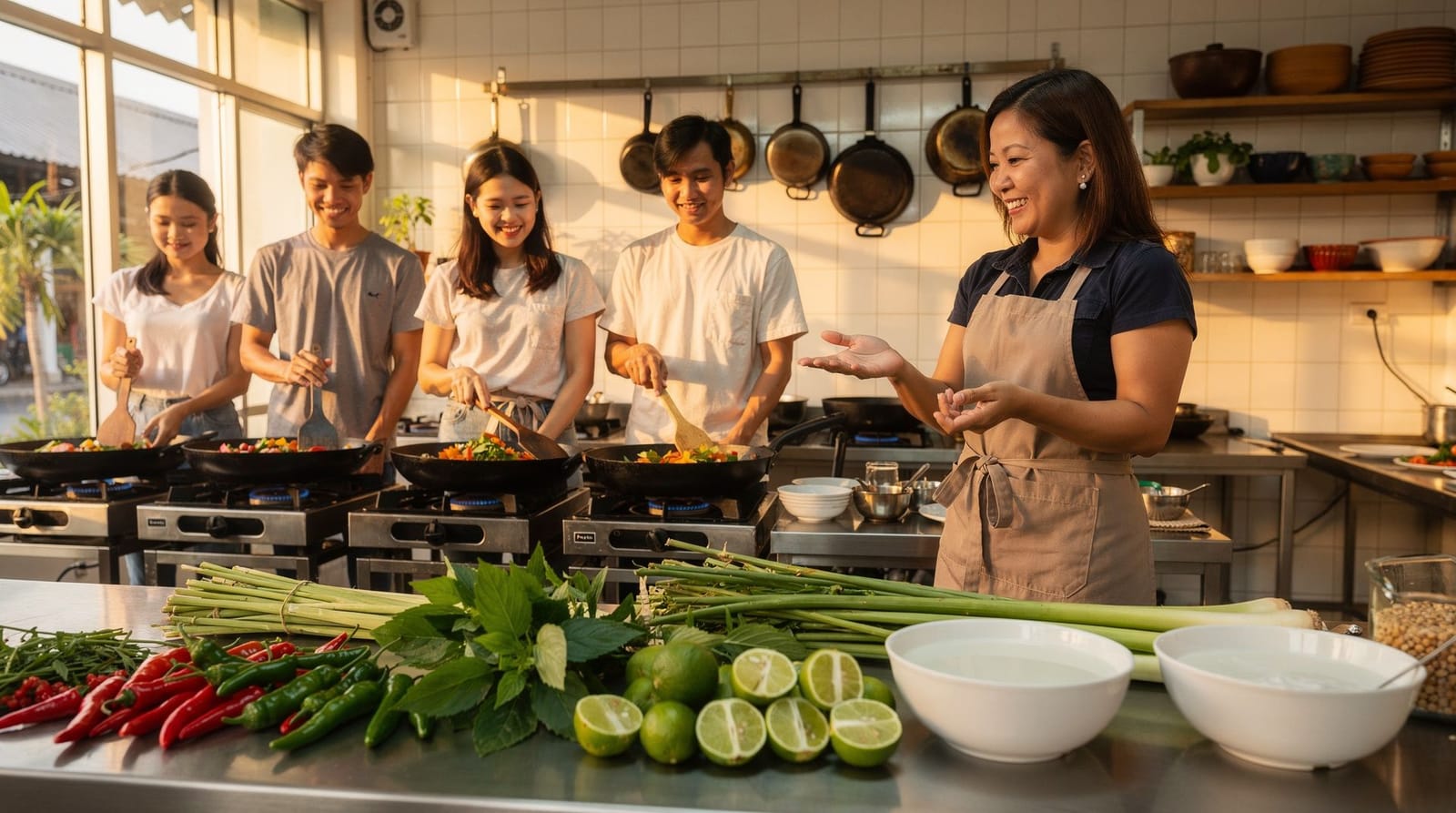
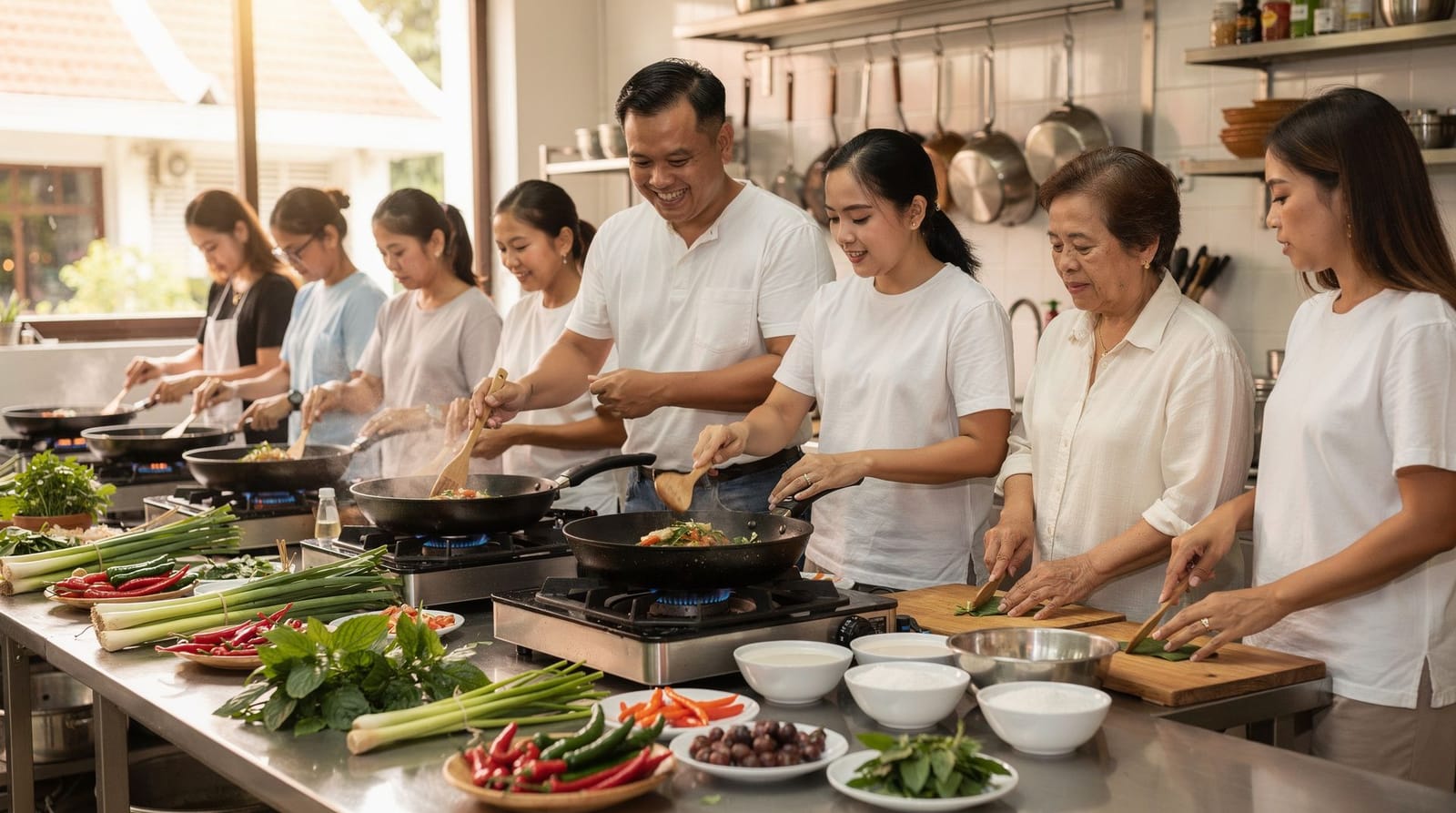
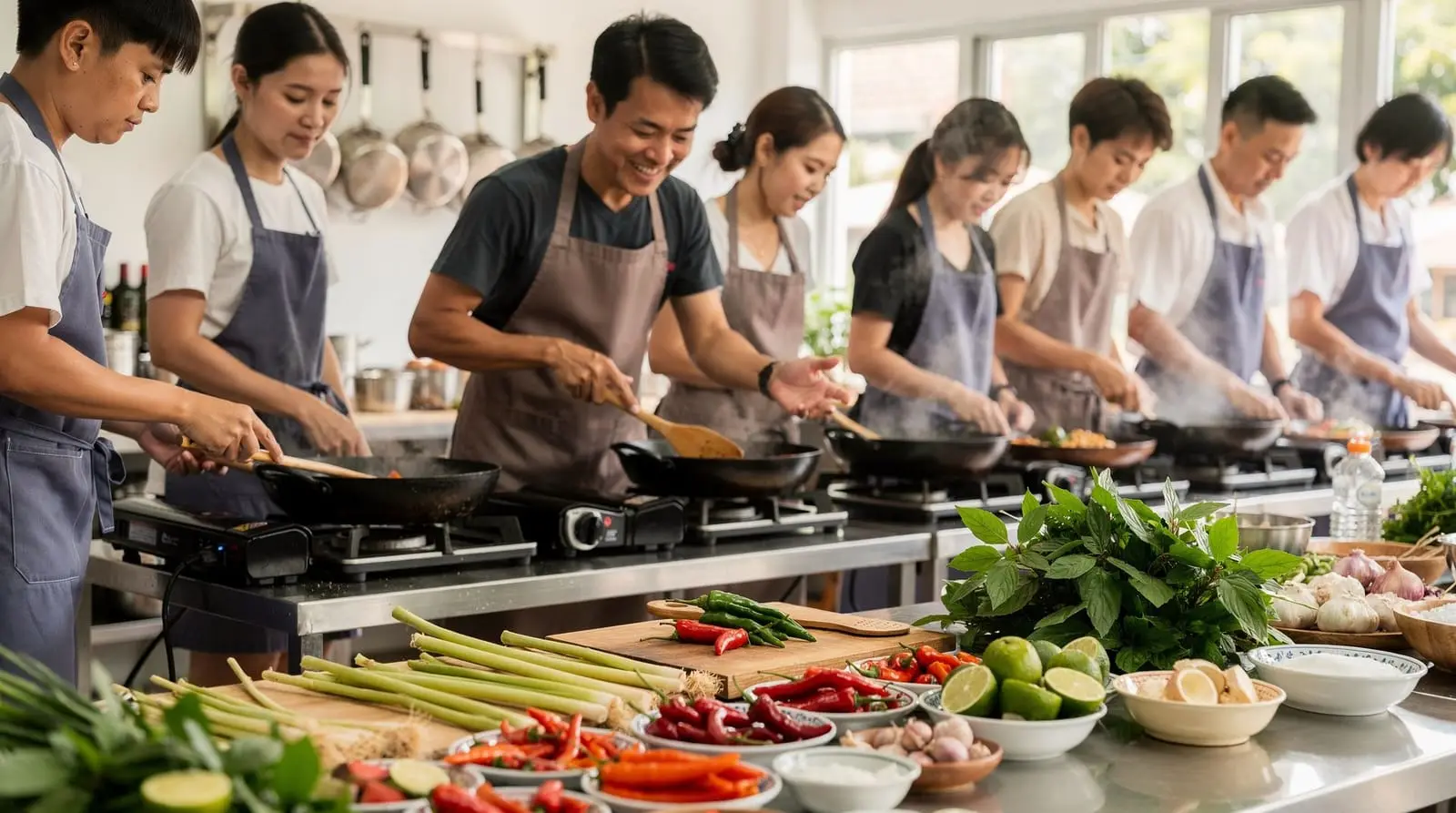
Knowing the shape of the day removes the guesswork. A market-inclusive class usually starts with a short welcome and introductions, then the group heads to a nearby fresh market with the instructor, who points out unfamiliar herbs, curry pastes and produce and explains what goes into which dish — this part runs 45 minutes to an hour. Back at the kitchen, you get an apron and a station, and the instructor demonstrates the first dish before you cook it yourself, usually starting with a curry paste you pound by hand in a stone mortar, since that technique underlies several other dishes. You cook and eat each dish as you finish it, moving through the menu one at a time rather than plating everything at the end, and the pace is unhurried — questions are encouraged throughout. A studio-only class follows the same demonstrate-then-cook rhythm without the market leg, so it compresses into the shorter 3-4 hour window. Either way, you leave with a printed or digital recipe booklet, and most schools let you photograph each step.
Market visit vs studio-only, side by side:
| Market-inclusive | Studio-only | |
|---|---|---|
| Duration | 4–5 hours | 3–4 hours |
| Typical cost | Upper end of 1,000–2,500 THB | Lower end, sometimes cheaper |
| Start time | Often 08h00–09h00 | Morning, afternoon, or evening |
| What you gain | Ingredient literacy, local market context | Convenience, flexibility, focus on cooking |
| Best for | First-timers with a free morning | Time-pressed travellers, afternoon/evening slots |
Who it suits
Thai cooking classes suit complete beginners (no experience needed — instructors guide every step), experienced cooks wanting authentic technique, solo travellers (they’re sociable), couples (a lovely shared activity), and families. The relaxed, hands-on atmosphere works for all ages. A hands-on class with full participation, such as the hands-on cooking class with market visit, is ideal for those who want to do everything themselves rather than watch a demonstration. For a curated comparison of the best classes, see the best cooking classes guide, and for the broader experience, cooking class experience.
The honest verdict
A Thai cooking class is among the best-value, most genuinely useful experiences in Bangkok — you eat well, learn a transferable skill, and gain real insight into the cuisine that makes Thailand famous. Decide first between a market-inclusive class (more rewarding, longer) and a studio-only class (more convenient), check the dish count and group size, flag any dietary needs at booking, and pick for location convenience. Get those right and you’ll leave Bangkok able to cook a proper Thai meal at home — the best souvenir there is. For specific recommendations, continue to the best cooking classes guide and, for a creative add-on, the fruit carving class guide.
Frequently asked questions about Thai cooking class in Bangkok: the complete honest
How much does a Thai cooking class in Bangkok cost?
Should I choose a class with a market visit?
What dishes will I cook in a Thai cooking class?
Do Thai cooking classes cater to vegetarians and allergies?
How long does a Thai cooking class take?
Are Thai cooking classes suitable for beginners?
What's the best area in Bangkok for a cooking class?
Top experiences
Bookable activities with verified prices and instant confirmation on GetYourGuide.