Vegetarian and vegan Bangkok: where to eat and how to order
Bangkok: Vegan Delights (Public Tour)
Is it easy to eat vegetarian or vegan in Bangkok?
Yes, increasingly so. Bangkok has a strong jay (Thai Buddhist vegan) tradition plus a wave of modern plant-based restaurants like Broccoli Revolution, May Veggie Home and Veganerie. The catch is hidden fish sauce and oyster sauce in most Thai dishes, so you must specify 'jay' for strict vegan or 'mangsawirat' for vegetarian when ordering.
Eating vegetarian or vegan in Bangkok is far easier than most visitors expect, thanks to a centuries-old Thai Buddhist vegan tradition called jay and a fast-growing wave of modern plant-based restaurants. The one real trap is that most Thai savoury dishes hide fish sauce, oyster sauce or shrimp paste even when they look entirely vegetable-based. This guide explains jay, the Vegetarian Festival, the best restaurants, the ordering vocabulary you need, and how to eat safely as a strict vegan. Prices are per dish, and 1 USD is roughly 33 THB.
| Key word | ”Jay” (เจ) — strict vegan, no animal products |
| Cheapest | Chinatown jay stalls, 40–80 THB |
| Easiest | Modern vegan restaurants, 150–400 THB, English menus |
| Peak season | Vegetarian Festival, late Sept–Oct, ~9 days |
| Densest area | Sukhumvit BTS corridor (Asok–Phrom Phong–Thong Lo) |
Understanding jay: Thailand’s vegan tradition
Jay (เจ) is Thai Buddhist vegan cooking. It excludes all meat, seafood, eggs and dairy, and traditionally also avoids the five pungent vegetables — garlic, onion, leek, chives and shallot. Because of this strictness, jay is the safest single word a vegan can learn in Bangkok. Food cooked jay is reliably free of animal products, full stop.
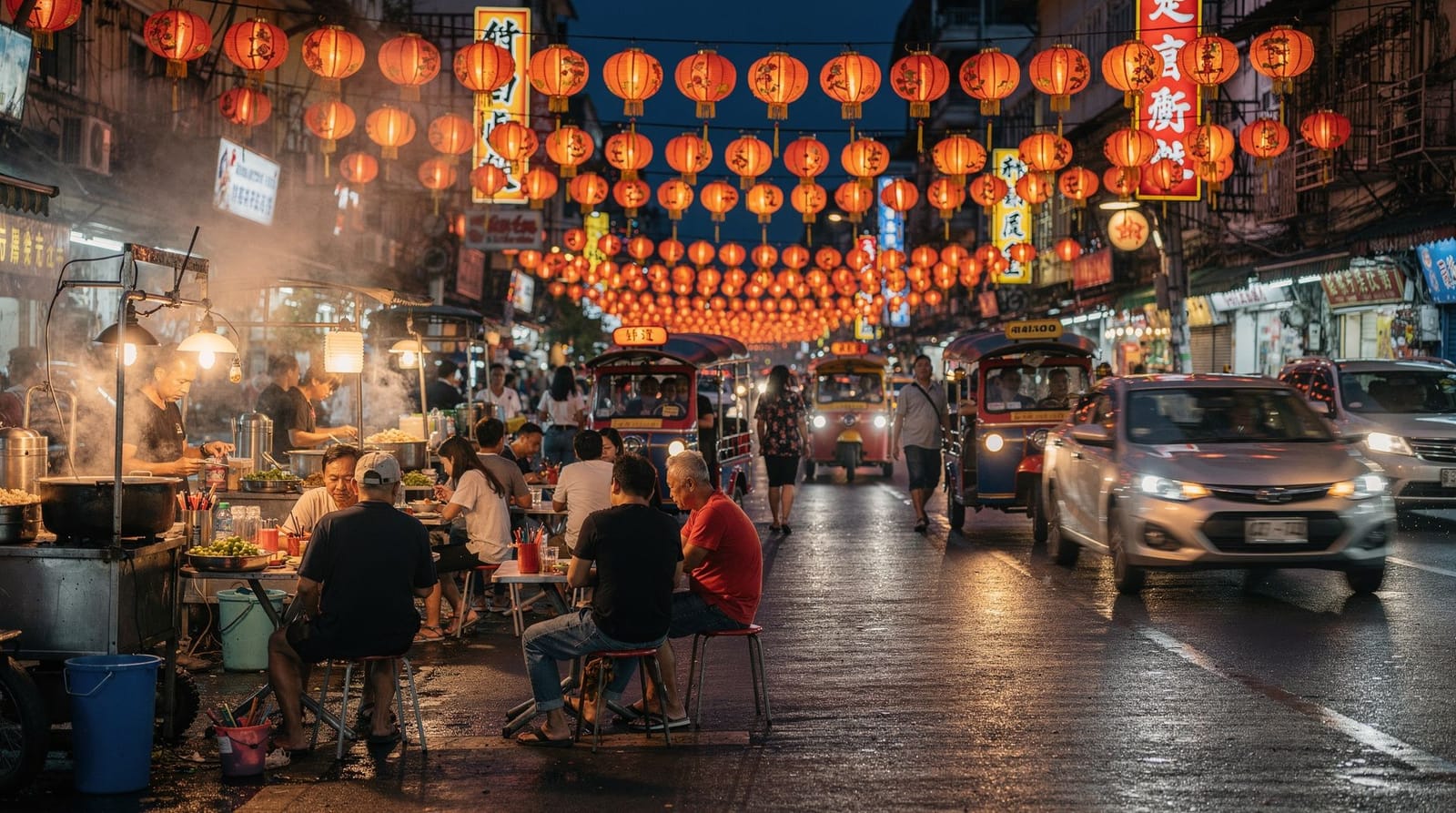
Look for the red-and-yellow jay symbol (the Thai character เจ in a red circle on a yellow flag or sign). When you see it on a stall, cart or restaurant, you can eat without interrogating the kitchen. Jay food clusters densely in Chinatown and Yaowarat, where Chinese-Thai Buddhist culture runs deepest.
The related word mangsawirat (มังสวิรัติ) means vegetarian. It usually excludes meat but may still include egg, dairy, fish sauce or oyster sauce. So if you eat egg and dairy, mangsawirat works; if you are vegan, always reach for jay instead.
The Vegetarian Festival: peak vegan season
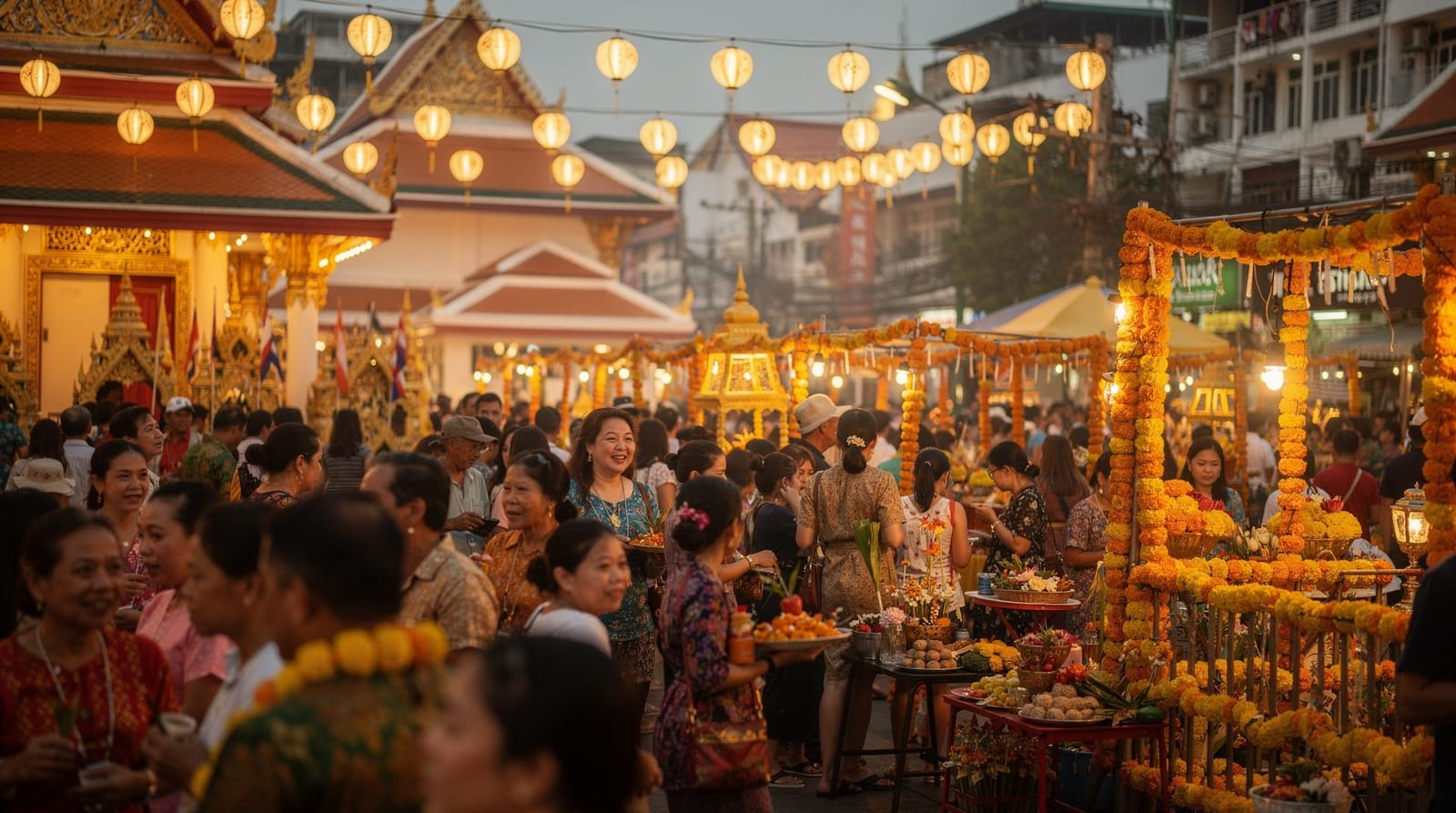
Once a year, Bangkok turns spectacularly plant-based for the Vegetarian Festival, or Tesakan Gin Je (เทศกาลกินเจ). It runs for about nine days in late September or October, following the lunar calendar, so check the Bangkok festivals calendar for the exact dates in 2026.
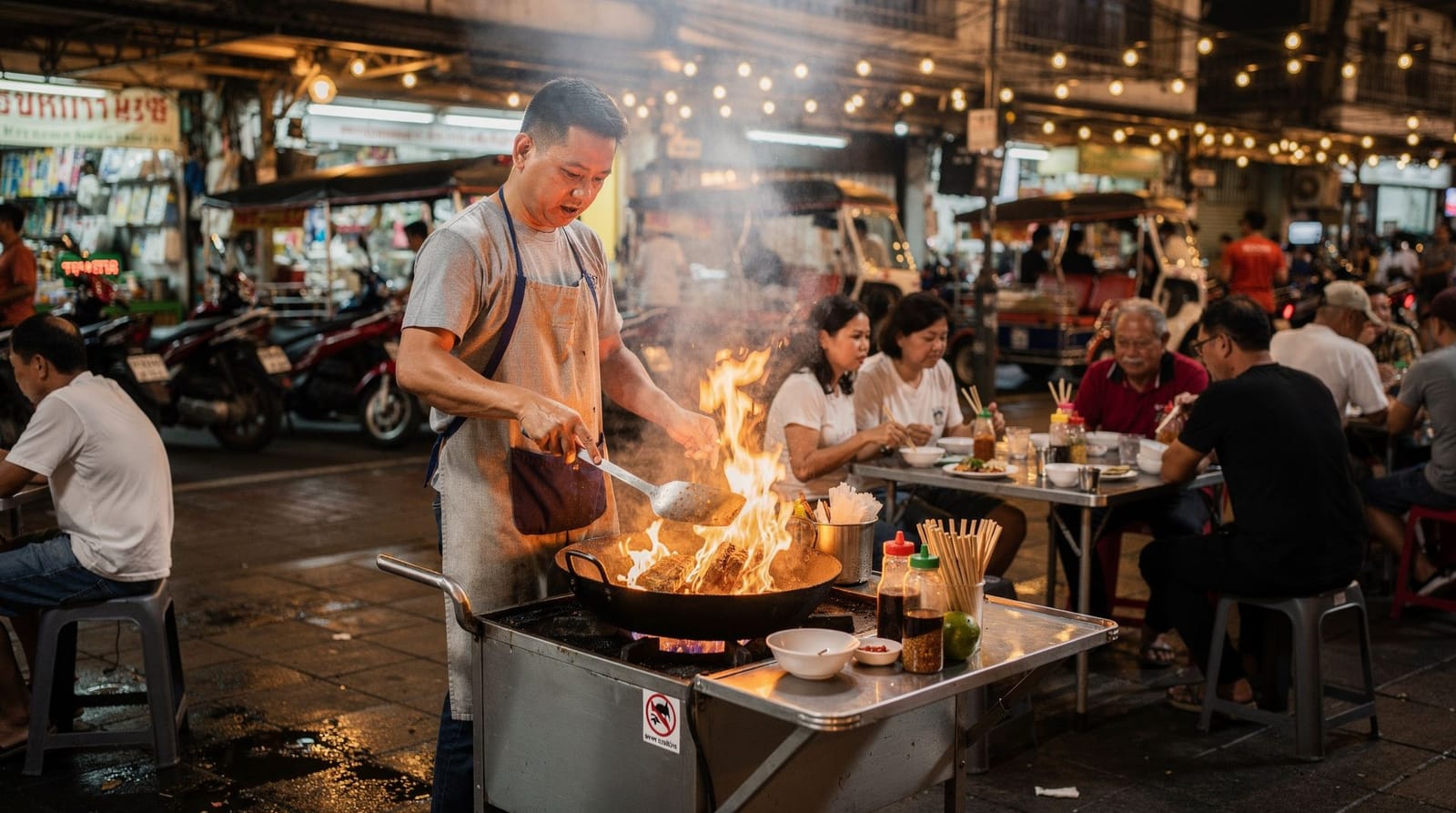
During the festival, Yaowarat in Chinatown erupts in yellow flags, and hundreds of street stalls serve jay versions of every Thai favourite — jay pad thai, jay dumplings, mock-meat curries, jay khao soi. Many regular restaurants across the city add jay menus too. If your trip overlaps these dates, it is the best vegan street-food window you will ever get in Bangkok, with everything clearly marked and astonishingly cheap at 40 to 80 THB a plate. Arrive via MRT Wat Mangkon.
Chinatown jay stalls year-round
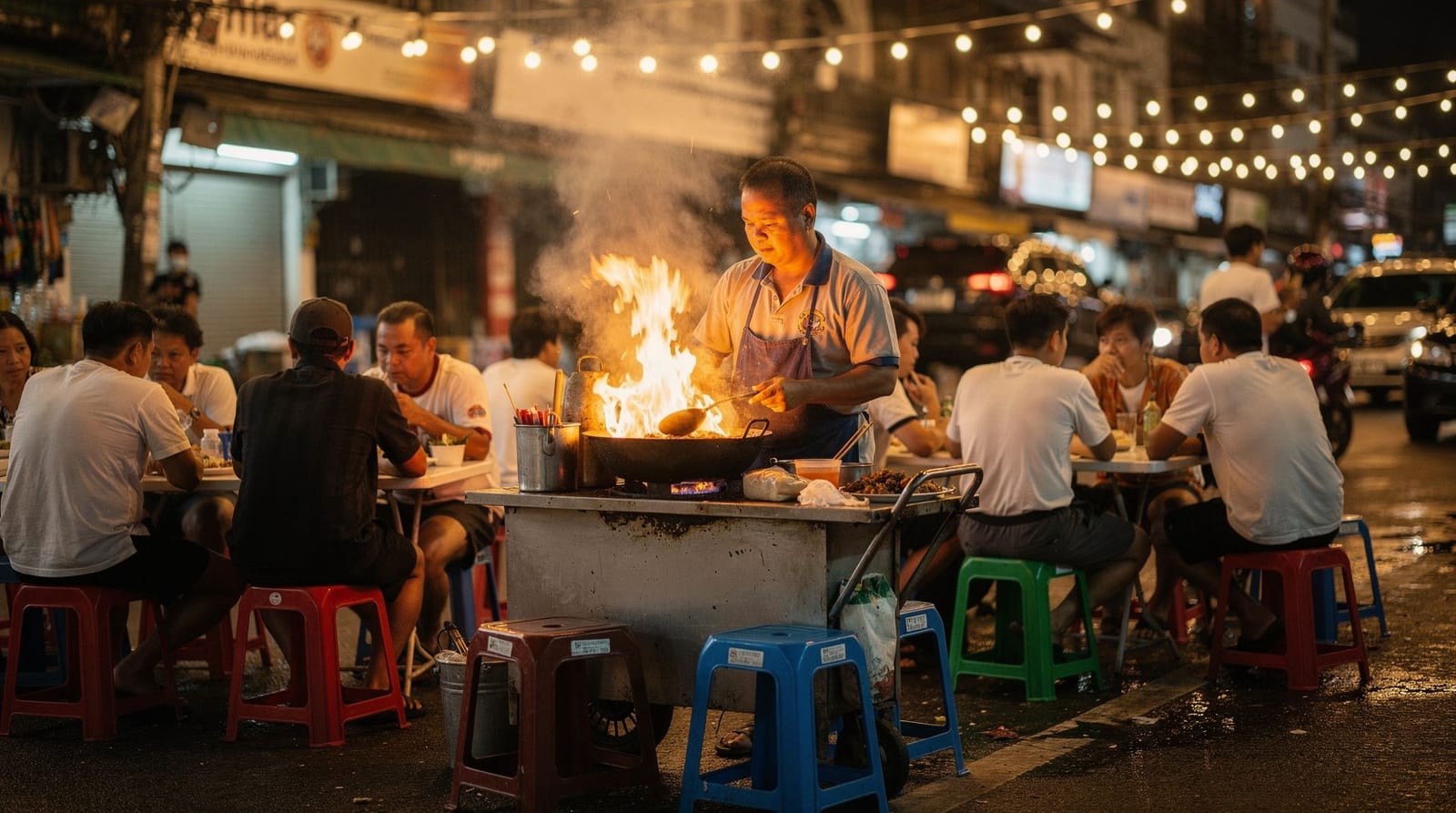
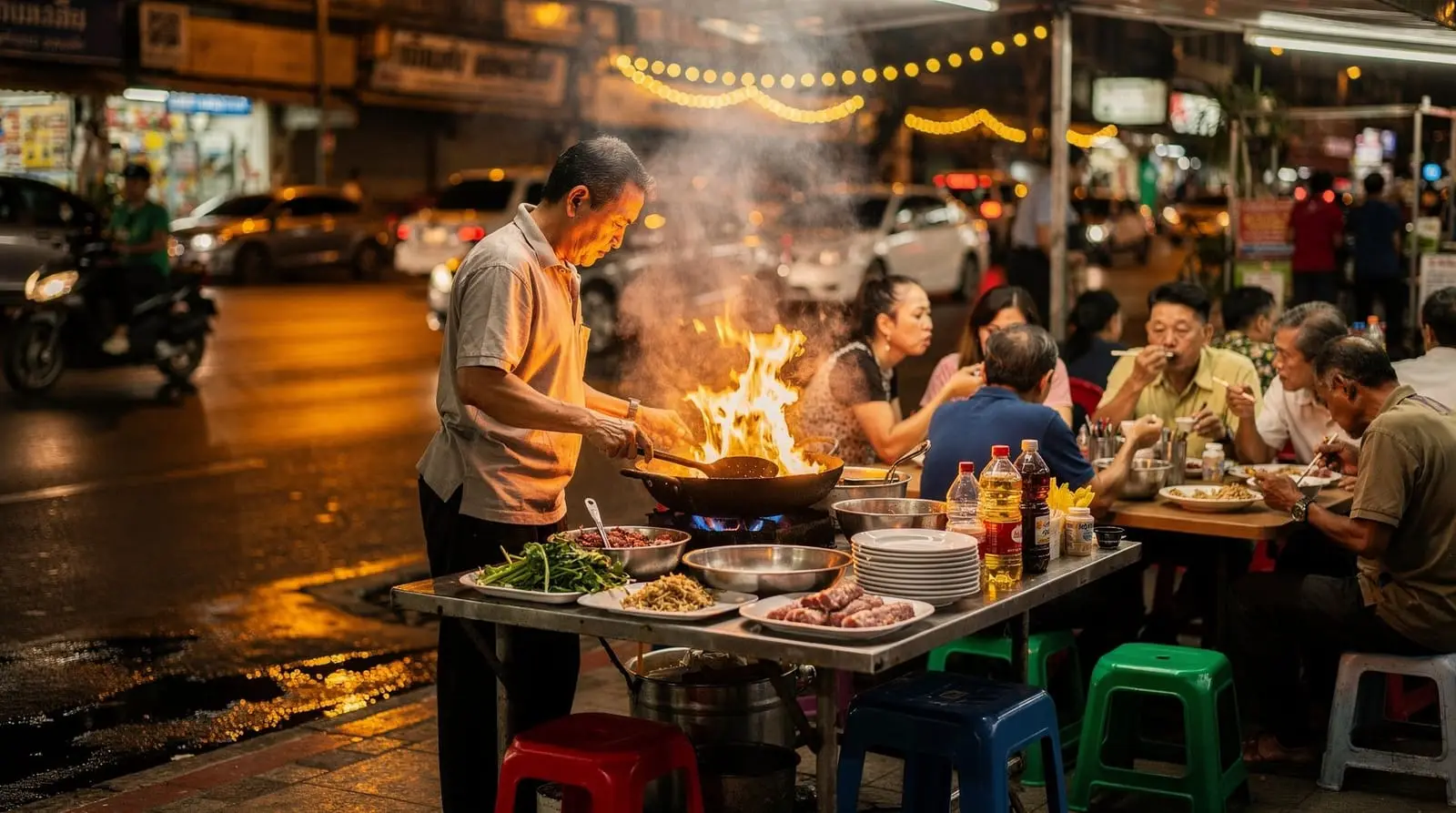
Even outside festival season, Chinatown keeps a steady supply of jay. Permanent jay shophouses and carts dot the side sois off Yaowarat Road, serving mock-meat noodle soups, stir-fries over rice and steamed buns for 40 to 70 THB. They are unglamorous, fast and entirely plant-based. Pair a jay lunch here with the wider Yaowarat Chinatown food crawl, simply choosing the jay-flagged stalls. For the broader picture of what is safe to eat at street level, the street food safety guide is worth a read.
Modern vegan restaurants: the easy option
If you want comfort, English menus and zero ordering anxiety, Bangkok’s modern plant-based restaurants are excellent. Everything below is vegan-friendly with clear labelling and air-conditioning.
Broccoli Revolution — the flagship
Broccoli Revolution is the city’s best-known plant-based restaurant, with branches on Sukhumvit (near BTS Phrom Phong) and in Thong Lo. It does smoothie bowls, vegan burgers, raw dishes and plant-based Thai classics for 180 to 400 THB. Stylish, reliable and a great first stop for nervous vegans. It anchors the Thong Lo and Ekkamai healthy-eating scene.
May Veggie Home — Thai plant-based done right
May Veggie Home, near BTS Asok / MRT Sukhumvit, serves fully vegan Thai and Asian dishes — mock-meat tom yum, vegan laab, plant-based curries — for 150 to 350 THB. It is one of the most authentic-tasting vegan Thai kitchens in the city and sits in the heart of Sukhumvit, Nana and Asok.
Veganerie, Bonita and Veggie comfort food
Veganerie (near BTS Phrom Phong) leans into vegan comfort food and decadent desserts — think plant-based cheesecakes and brunch plates — for 180 to 400 THB. Bonita Café and Social Club in Silom is a long-running vegan spot doing hearty Western and Thai dishes for 150 to 350 THB, near BTS Sala Daeng in Silom and Sathorn.
Ohkajhu and Govinda — salads and Italian
Ohkajhu is a wildly popular farm-to-table chain (not fully vegan, but with abundant plant-based and salad options) where the grilled-vegetable platters and fresh salads are the draw, around 200 to 450 THB. Govinda serves vegetarian and vegan Italian — pizza, pasta and gelato — a welcome change of pace for 200 to 400 THB.
To taste the plant-based side of the city with a guide handling all the ordering, a vegan delights food tour visits jay stalls and modern spots in one outing, while a vegetarian food tour by tuk-tuk covers more ground across neighbourhoods. For a private, customised version, the private vegan delights tour adapts to allergies and pace.
Restaurants compared at a glance
| Restaurant | Area | Price/dish | Style |
|---|---|---|---|
| Chinatown jay stalls | Yaowarat, MRT Wat Mangkon | 40–70 THB | Street, mock-meat noodles |
| Broccoli Revolution | Sukhumvit, Thong Lo | 180–400 THB | Smoothie bowls, plant-based Thai |
| May Veggie Home | Near BTS Asok | 150–350 THB | Authentic vegan Thai |
| Veganerie | Near BTS Phrom Phong | 180–400 THB | Comfort food, desserts |
| Bonita | Silom | 150–350 THB | Western and Thai |
| Ohkajhu | Multiple | 200–450 THB | Farm-to-table, salads |
| Govinda | Multiple | 200–400 THB | Vegetarian Italian |
How to order: the words that matter
Carry these phrases. They are the difference between a vegan meal and an accidental mouthful of fish sauce:
- “Jay” (เจ) — strict vegan, no animal products, no pungent veg. The gold standard.
- “Mangsawirat” (มังสวิรัติ) — vegetarian, may include egg and dairy.
- “Mai sai nam pla” — no fish sauce.
- “Mai sai nam man hoy” — no oyster sauce.
- “Mai sai kai” — no egg.
- “Mai sai nuea sat” — no meat.
- “Pho lae mangsawirat” / pointing at vegetables — helpful at non-specialist stalls.
The hidden-ingredient trap is real: plain-looking stir-fried morning glory, papaya salad, fried rice and pad thai almost always contain fish sauce, oyster sauce or dried shrimp unless you specify otherwise. Even “vegetable” curries often use shrimp paste. At dedicated jay and vegan restaurants none of this is a concern, which is why they are the stress-free choice. For context on Thai dining manners while you order, see the Thai customs and etiquette guide.
Why hidden animal ingredients are the real challenge
It is worth dwelling on this, because it trips up almost every first-time vegan visitor. Thai cooking treats fish sauce (nam pla), oyster sauce, shrimp paste (kapi) and dried shrimp as foundational seasonings, much as Western cooking uses salt. They appear in dishes you would never suspect: a “vegetable” stir-fry, a green papaya salad, a tofu noodle dish, even some curry pastes. A plate can look completely plant-based and still be built on fermented fish. This is not a stall trying to deceive you — it is simply how the food is seasoned by default.
That is why the two safest strategies are, first, to eat at dedicated jay or vegan restaurants where the whole kitchen is plant-based, and second, to learn the word jay and look for its red-and-yellow symbol. Ordering “no fish sauce” at a busy stall can work, but in the rush of a lunch service the message does not always land, and cross-contamination from shared woks is common. Strict vegans should lean on the dedicated venues; flexitarian vegetarians have far more freedom. The street food safety guide covers related hygiene basics for eating at stalls.
Vegetarian and vegan beyond restaurants
Two more useful options round out the picture. Indian vegetarian food is excellent and abundant in Phahurat, Bangkok’s Little India, where thalis, dosas and dairy-based sweets are made fresh; just specify vegan if you avoid ghee and paneer. And hotel breakfasts and malls increasingly offer plant-based options, plant milks and clearly labelled vegan dishes, making it easy to start the day without hunting. If you want to learn to cook plant-based Thai food yourself, several classes now offer vegan tracks — see the Thai cooking class in Bangkok guide for options that adapt recipes to remove fish sauce and egg.
Vegan-friendly Thai dishes and desserts
Some Thai staples are naturally easy to veganise or already plant-based:
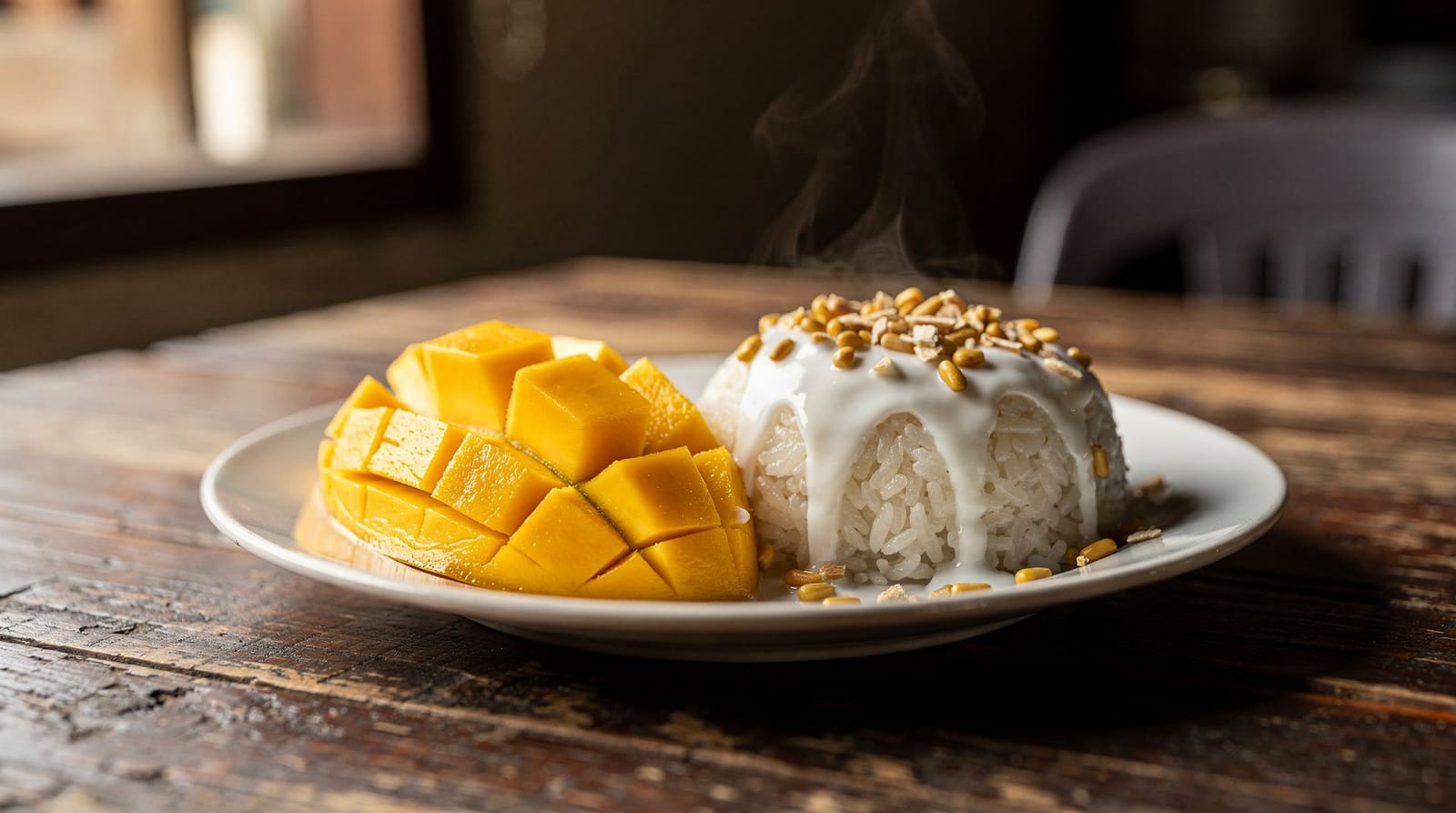
- Mango sticky rice — usually vegan (coconut milk, no dairy); see the mango sticky rice guide.
- Som tam jay — papaya salad made without fish sauce or dried shrimp.
- Pad pak ruam jay — mixed stir-fried vegetables, jay-style.
- Khao soi jay — vegan version of the northern curry noodle, common in festival season.
- Fresh fruit and coconut ice cream — abundant and safe at markets; the best food markets are full of options.
Getting around the vegan map
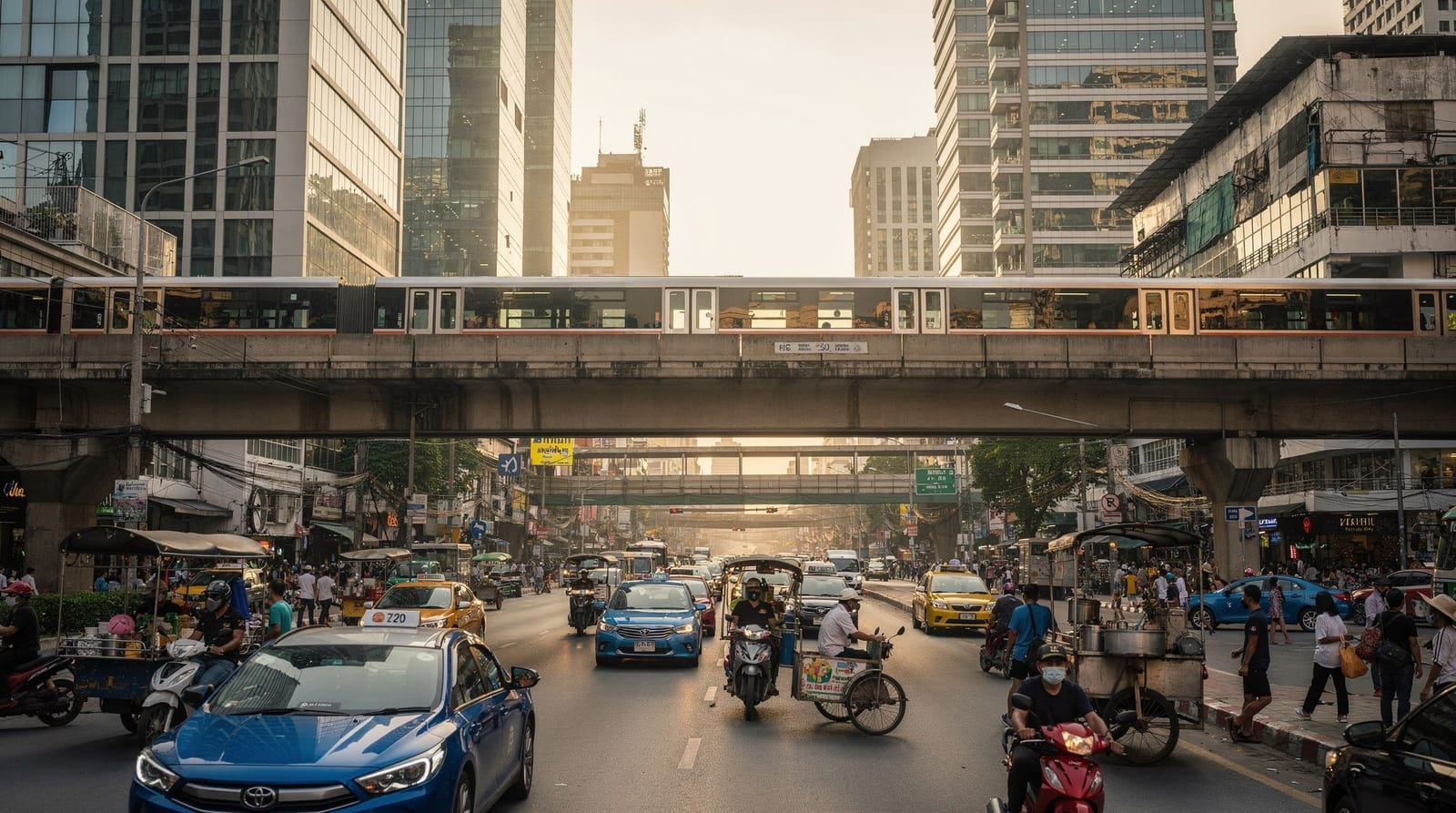
The densest cluster of plant-based dining runs along the Sukhumvit BTS corridor — May Veggie Home (Asok), Broccoli Revolution and Veganerie (Phrom Phong), Broccoli Revolution again (Thong Lo). Chinatown’s jay stalls sit at MRT Wat Mangkon, and Silom’s vegan spots are near BTS Sala Daeng. Use the BTS Skytrain guide and MRT subway guide to plan hops between them.
A final practical note: download an offline translation card or save the Thai script for “jay” (เจ) and “no fish sauce” on your phone, because showing the written words at a busy stall is far more reliable than pronouncing them. Carry small cash for street-level jay, since the cheapest and most authentic stalls rarely take cards, while the modern sit-down vegan restaurants accept them. Mornings and the early-evening rush are when the most jay options appear at markets, so time your grazing accordingly. With a little vocabulary, the jay symbol on your side, and a short list of go-to restaurants, vegan and vegetarian Bangkok in 2026 is genuinely one of Asia’s easiest cities to navigate.
Self-catering and convenience store options
If your hotel room has a fridge, self-catering fills the gaps between restaurant meals. Supermarkets in malls along the Sukhumvit corridor stock plant milks, tofu, instant jay noodle cups and a small but growing range of clearly labelled vegan snacks, and larger stores carry imported vegan staples at a premium over local produce. Fresh tropical fruit from any market stall — mango, papaya, rambutan, dragon fruit — is always a safe, cheap, vegan option and a good way to fill in around meals.
For a quicker bite, convenience stores such as 7-Eleven carry some reliably vegan items — plant-milk cartons, roasted seaweed snacks, boiled peanuts and plain rice items — but check labels closely, since many Thai packaged snacks add milk powder, fish flavouring or shrimp paste. Treat convenience-store food as a backup between proper jay or vegan meals rather than your main strategy, and lean on the restaurant list above when you have the choice. For picking accommodation with self-catering or nearby vegan options in mind, the where to stay in Bangkok guide covers the best neighbourhoods.
Frequently asked questions about Vegetarian and vegan Bangkok: where to eat and how to order
What does jay mean in Thai food?
What is the difference between jay and mangsawirat?
How do I avoid fish sauce and oyster sauce in Thai dishes?
When is Bangkok's Vegetarian Festival?
Where are the best vegan restaurants in Bangkok?
Can vegans eat street food in Bangkok?
Is tofu always vegan in Thailand?
Are vegan restaurants easy to reach by BTS or MRT?
Can I find vegan snacks at 7-Eleven or convenience stores in Bangkok?
Top experiences
Bookable activities with verified prices and instant confirmation on GetYourGuide.