Bangkok street food safety: how to eat well without getting sick
Bangkok: Street Food Tasting Tour at Night
Is Bangkok street food safe to eat?
Yes, for most travellers, if you choose busy stalls with high turnover where food is cooked to order in front of you. Avoid tap water, drink bottled or filtered water, and the tube-shaped factory ice with a hole through it is safe. Most upset stomachs come from a sudden change of diet and chilli, not contamination.
Bangkok street food has a reputation that scares some first-timers, and almost all of it is overblown. The honest reality is that street food here is, for most travellers, safe to eat, and skipping it would mean missing the best of the city’s cooking. This guide tells you how to pick a clean stall, the truth about ice and water, the spice phrases that save your evening, and what to do in the rare case your stomach rebels.
| Risk level | Low for most travellers who pick busy stalls |
| Main precaution | Bottled water only; ice is generally safe |
| Cost of caution | A few hundred THB for rehydration sachets, just in case |
| Time to adapt | 2–3 days for your gut to settle into the food |
| Best for | Almost everyone; extra care for sensitive stomachs |
Is Bangkok street food safe? Mostly, yes
Let us answer the headline question directly: yes, Bangkok street food is safe for the vast majority of visitors who use a little common sense. Plenty of travellers eat from stalls every day of a two-week trip without a single problem. The food is cooked fast and hot in front of you, the turnover is enormous, and the best vendors have served the same dish for decades because their neighbours hold them to a standard.
If you would rather have a guide vouch for the stalls on your first outing, our is a Bangkok food tour worth it guide weighs that option honestly. The fear usually comes from a misunderstanding of what causes traveller’s stomach upsets. Most so-called Bangkok belly is not food poisoning from filthy stalls. It is your gut meeting new bacteria, unfamiliar chillies and richer oils all at once, often compounded by jet lag, heat, dehydration and a few too many beers. That kind of upset is mild, passes in a day or two, and is not a reason to avoid street food. Treating Bangkok street food as dangerous is the single biggest mistake nervous eaters make. For the wider context on what you are eating, pair this with our Bangkok street food guide and what to eat in Bangkok.
How to pick a stall that will not make you sick
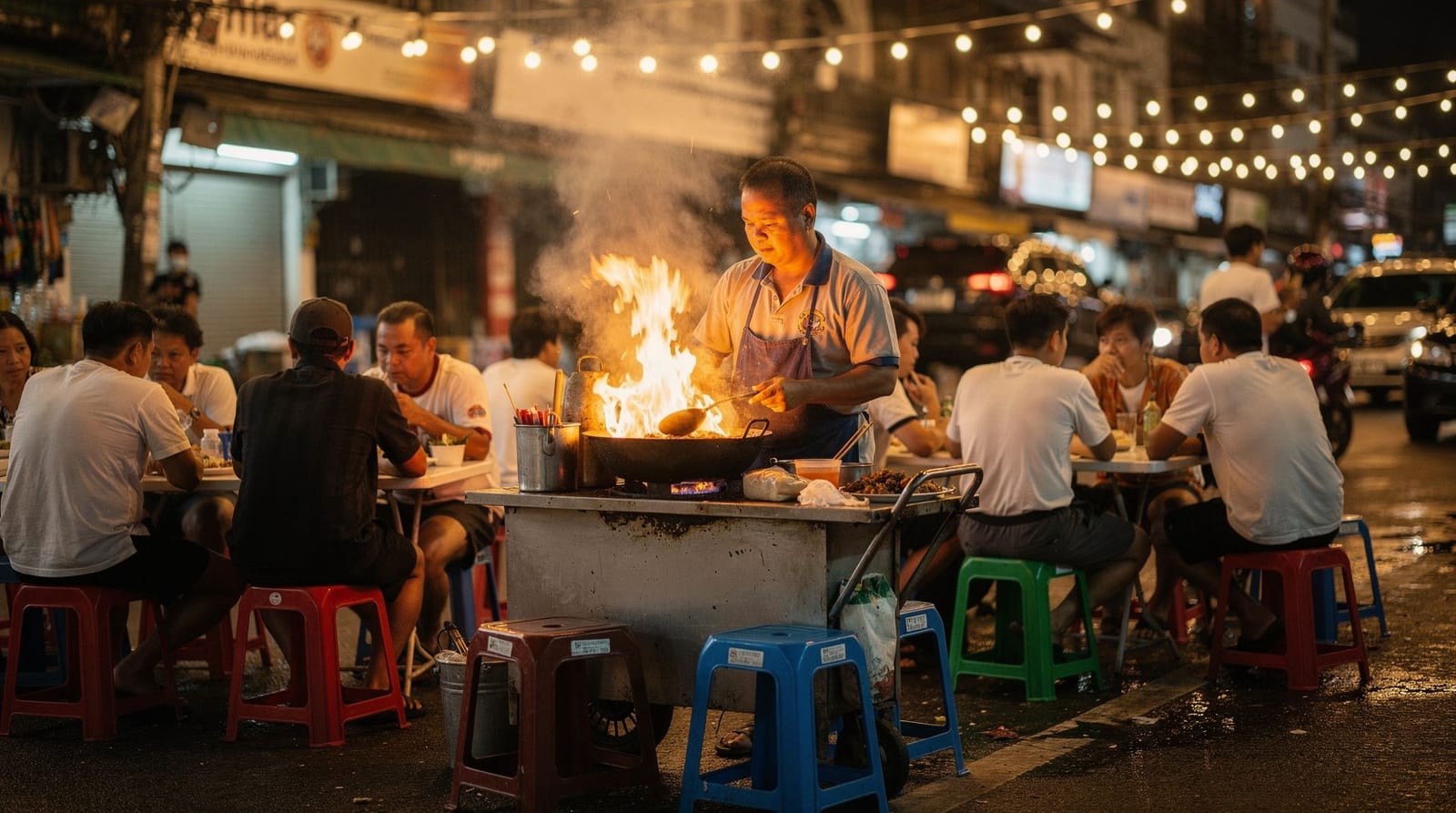
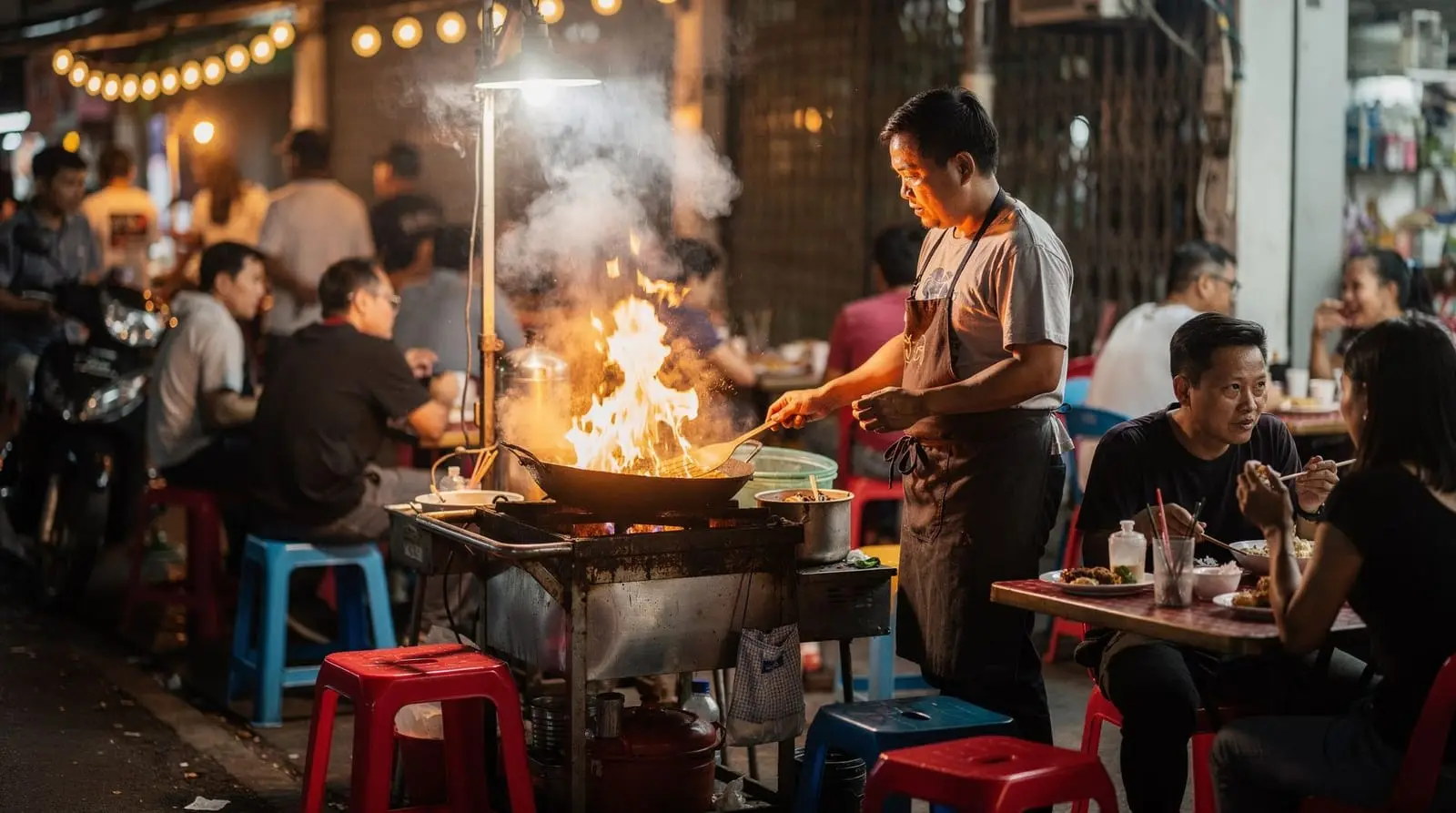
The single best safety rule in Bangkok is also the most pleasant: eat where the locals eat. A busy stall is a safe stall, because high turnover means the ingredients are fresh and nothing sits around. Here is what to look for.
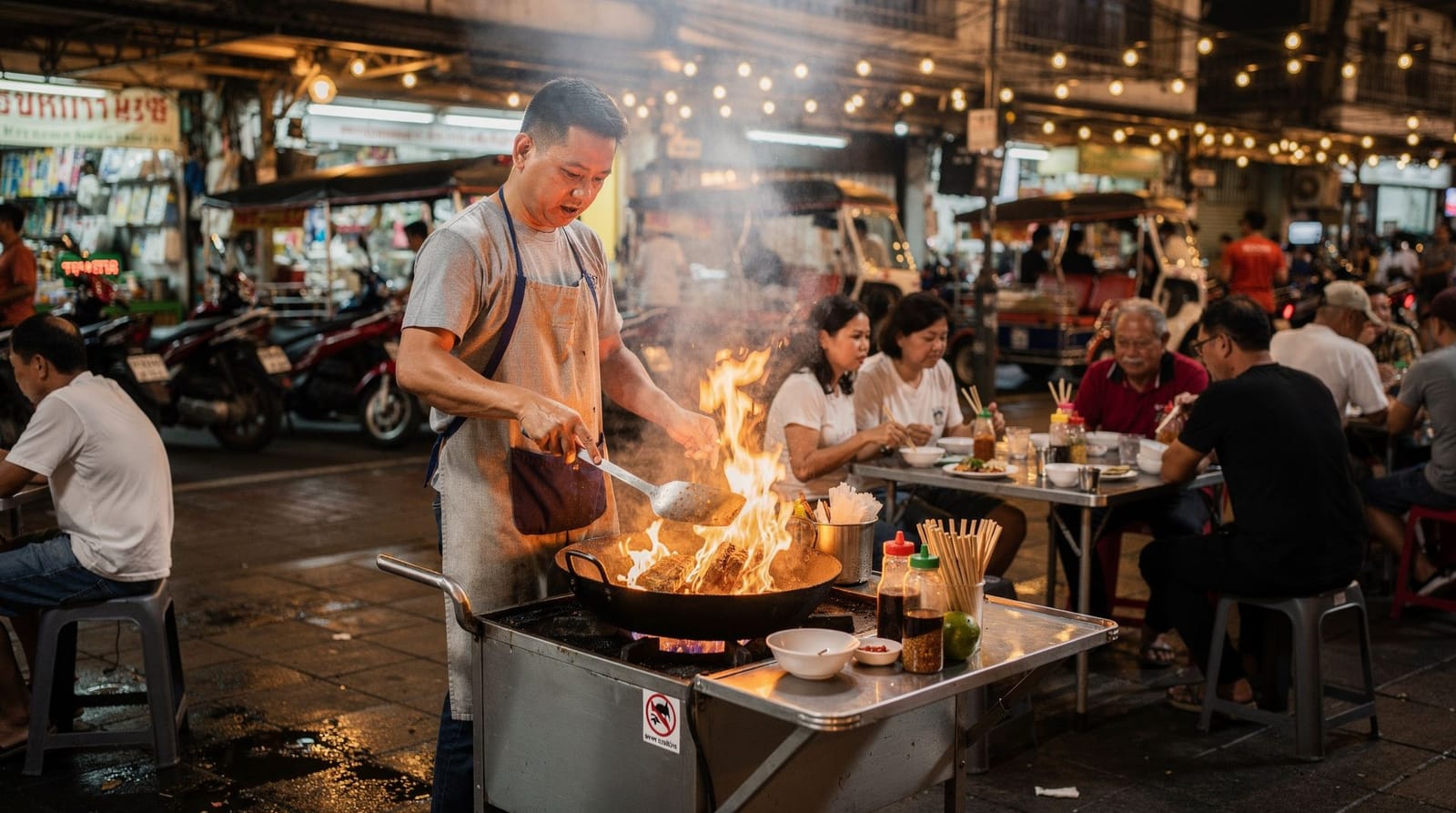
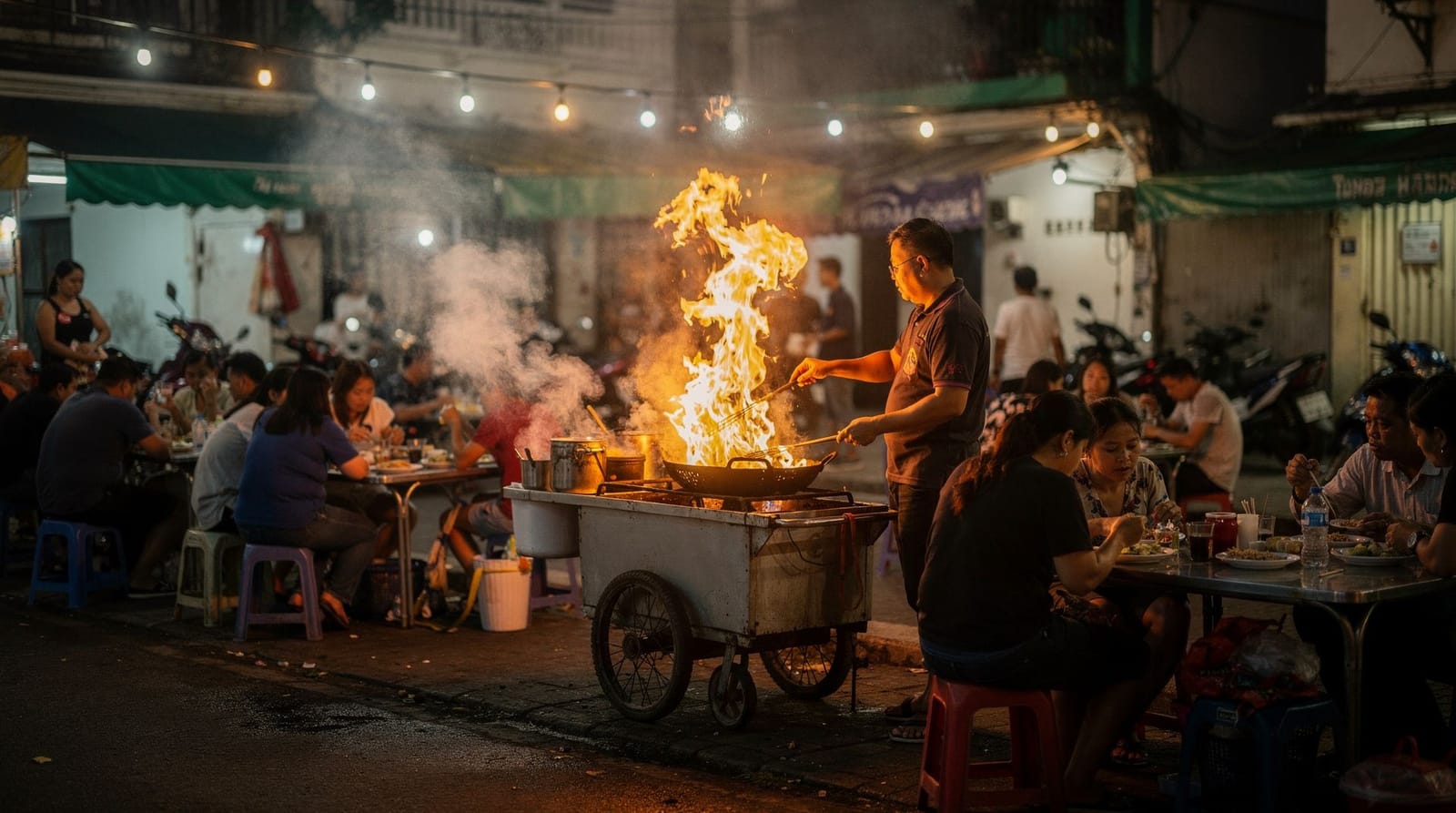
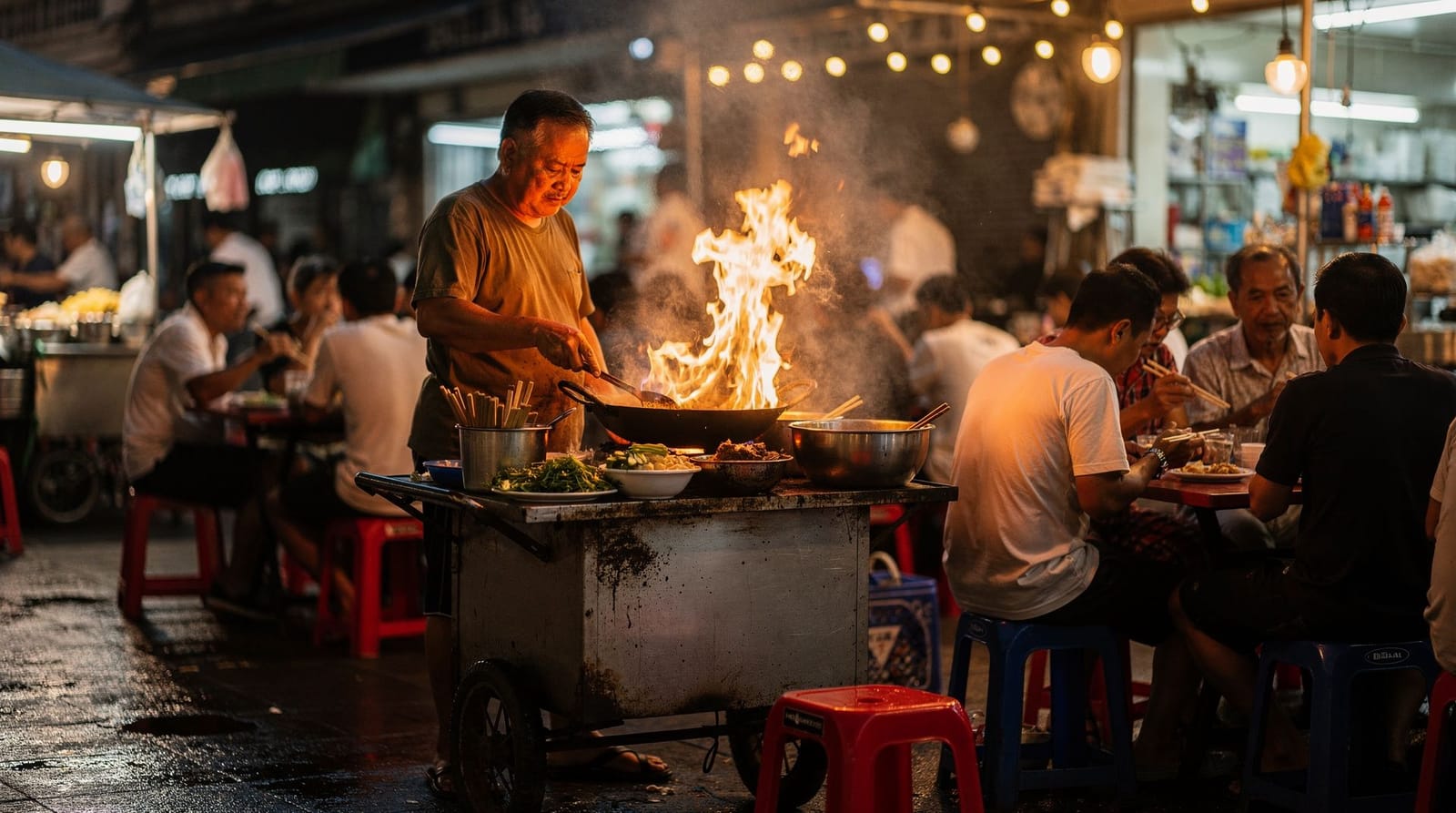
Choose stalls with a queue or a steady stream of local customers, especially office workers and families. Favour food cooked to order in front of you, sizzling out of the wok or off the grill while you wait, over pre-cooked dishes sitting in trays. When you do eat from a tray, such as at a rice-and-curry shop, pick the busy ones where the trays are clearly being replenished and emptied through the day, a tactic that also keeps costs down. Look for a vendor who handles money and food with separate hands or tools, and a workspace that looks ordered rather than neglected. Hot food should arrive genuinely hot.
What to be wary of: a stall with no customers in a busy area, where you wonder why everyone else is walking past. Food that has clearly been sitting out at room temperature for hours at a quiet vendor. And, mildly, the handful of tourist-zone seafood stalls that overcharge, which our Bangkok tourist traps guide covers, more a wallet risk than a health one. If you want a guided introduction to which stalls are trusted, a small-group street food tasting tour walks you to vetted vendors and is a confidence-builder for nervous first-night eaters.
The ice and water rules, explained simply
This is where most safety advice gets muddled, so here is the plain version.
Do not drink Bangkok tap water. It is treated but not considered safe to drink straight from the tap. Buy bottled water, which costs 7–15 THB for a large bottle at any 7-Eleven, or carry a filter bottle. Brushing your teeth with tap water is fine for most people. The ice, contrary to backpacker legend, is almost always fine. The uniform cylindrical ice cubes with a hole through the middle are factory-made from purified water and are safe everywhere they appear. Crushed and tube ice served in established restaurants, cafes and from drink carts comes from the same regulated commercial supply and is fine too. Ice is rarely what makes a traveller ill in Bangkok.
So you can order your iced coffee, your fresh fruit shake and your beer over ice without anxiety. Just keep drinking bottled water through the day, because the heat dehydrates you faster than you expect, and dehydration makes any minor stomach upset feel far worse.
Budgeting for bottled water is trivial compared with the rest of a Bangkok trip — even drinking three or four large bottles a day adds up to a few tens of baht, a rounding error next to the wider Bangkok travel costs. Buying a couple of large bottles each morning from a 7-Eleven and refilling a smaller bottle through the day is cheaper and creates less plastic waste than buying single bottles all day, and it removes any temptation to risk the tap out of thirst.
Spice, ordering and washing your hands
Thai food is hot, and a chilli level that locals find pleasant can floor an unaccustomed eater. The biggest “I got sick” stories are often really “I ordered som tam at full spice and my body objected”. So control the heat. Say “mai phet” for not spicy, or “phet nit noi” for a little spicy, adding “khrap” if you are male or “kha” if you are female. Salads like som tam, larb and yam are fired up by default, so always specify. Building your spice tolerance gradually over a few days is far kinder to your stomach than diving in at maximum on night one.
Wash or sanitise your hands before eating. Many dishes are eaten with shared serving spoons or by hand, and a small bottle of hand sanitiser is the cheapest insurance you can carry, worth packing per our what to pack for Bangkok guide. Most stalls provide a roll of tissue rather than napkins; use it.
First-timer tips to dodge Bangkok belly
A few simple habits dramatically cut your odds of a rough day.
Ease in rather than going all-out on arrival: your gut adapts within a few days, so spread the chilli and the richness across your trip instead of front-loading it. Stay hydrated with bottled water and the occasional rehydration sachet, especially after a sweaty day of sightseeing. Do not pair a giant boozy night with your first plate of raw-ish anything. Eat your most adventurous dishes earlier in the day, so if something disagrees with you it does so before bedtime rather than at 3 am. And keep eating at busy stalls; the temptation when nervous is to retreat to empty, tourist-facing places, which is exactly backwards. First-time visitors will find our Bangkok for first-timers guide a useful companion to all of this.
Pharmacies, 7-Eleven and what to do if it happens
If you do get Bangkok belly, it is rarely serious and Bangkok is extremely well set up to help. Pharmacies are everywhere, often staffed by English-speaking pharmacists, and 7-Eleven stores on practically every corner stock the basics: bottled water, rehydration salt sachets, and activated charcoal tablets that many travellers swear by for settling a mild upset. None of it costs much.
For a typical case, rest, drink plenty of bottled water with rehydration salts, eat plainly for a day, plain rice, toast, bananas, and let it pass, which it usually does within a day or two. Activated charcoal pills can ease symptoms; standard anti-diarrhoeal tablets are also sold over the counter. See a doctor or visit one of Bangkok’s excellent, affordable private hospitals if you have a high fever, blood in your stool, persistent vomiting, or symptoms lasting beyond three days. These are uncommon but worth knowing the line for. Private hospitals in the city are generally fast, English-speaking and far more affordable than equivalent care in Europe or North America, so do not hesitate to go if something feels genuinely wrong rather than toughing it out through a holiday; travel insurance covers most of these visits, and keeping receipts makes any claim straightforward afterward. A quick note to make on arrival: save your hotel’s address in Thai on your phone, since it speeds up any taxi or Grab ride to a hospital if you are unwell and struggling to communicate.
Where caution is genuinely warranted
Most street food is safe, but a few categories carry real, if small, risk and deserve a clear head.
Raw and undercooked meat dishes are the main one. Raw-beef larb and koi, where minced raw meat is “cooked” only by lime juice, are traditional but riskier than cooked versions; if you are unsure of the vendor, order the cooked larb instead. Raw or lightly cooked shellfish, including the raw blood cockles sometimes served with som tam, are another category to approach only at busy, trusted stalls, or to skip if your stomach is sensitive. Anything that has sat unrefrigerated for hours, particularly coconut-milk desserts and seafood at a quiet stall, is best avoided. A guided Chinatown night food tour is one low-stress way to try the more adventurous Yaowarat dishes from vendors a local guide already trusts, and our Yaowarat and Chinatown food guide and Chinatown-Yaowarat destination page cover the zone in detail.
And the famous warning that durian plus alcohol can kill you? Largely a myth. Both are heavy on the body and the combination may leave you feeling rough, so go easy, but there is no need to fear it. Durian from street vendors is perfectly safe and one of the city’s great experiences.
Allergies and dietary needs
Bangkok is harder than average for serious allergies, because peanuts, shrimp paste, fish sauce and egg appear in an enormous range of dishes, often invisibly. English at street stalls is limited, so do not rely on spoken explanations.
Carry a written Thai allergy card, either printed or saved on your phone, and ask your hotel to write your specific allergy in Thai if you can. For peanut allergies in particular, be aware that crushed peanut is a garnish on countless dishes and pad thai is built around it. Stick to dishes you can watch being made, and when in doubt, ask. Vegetarians and vegans face a related challenge with hidden fish sauce, which our vegetarian and vegan Bangkok guide addresses, and the phrase “jay” signals strict vegetarian food. Halal-conscious travellers should see the halal food in Bangkok guide for the Muslim-Thai stalls and restaurants that make this easier than it first appears. Once you have the safety basics down, our best cheap eats in Bangkok guide is the natural next read for eating well and confidently across the city.
Where the safest, best-vetted stalls cluster
Some Bangkok food destinations have effectively been pre-vetted by decades of daily footfall, which makes them a reassuring place to start if you are still building confidence. The Michelin-listed street food in Bangkok is a genuinely useful shortlist, since inspectors have already done the legwork of confirming quality and, indirectly, consistency of turnover. Yaowarat and Chinatown is the single densest concentration of trusted vendors in the city, many family-run for generations. The best food markets guide and the wider Bangkok markets guide round up the covered and semi-covered markets where turnover is highest and food safety concerns are lowest, useful if the idea of a random street corner still feels intimidating on your first night. The touts and inflated seafood-scale bills covered in the common Bangkok scams guide are a wallet risk rather than a health one, but they cluster around the same tourist-zone stalls worth being wary of on hygiene grounds too.
Frequently asked questions about Bangkok street food safety: how to eat well without getting sick
Will I get sick eating Bangkok street food?
Is the ice in Bangkok safe?
Can I drink the tap water in Bangkok?
How do I order food less spicy in Thai?
What should I avoid eating on the street in Bangkok?
What do I do if I get Bangkok belly?
Is it true you cannot mix durian and alcohol?
How do I handle food allergies in Bangkok?
Top experiences
Bookable activities with verified prices and instant confirmation on GetYourGuide.