Mango sticky rice in Bangkok: where to eat khao niao mamuang
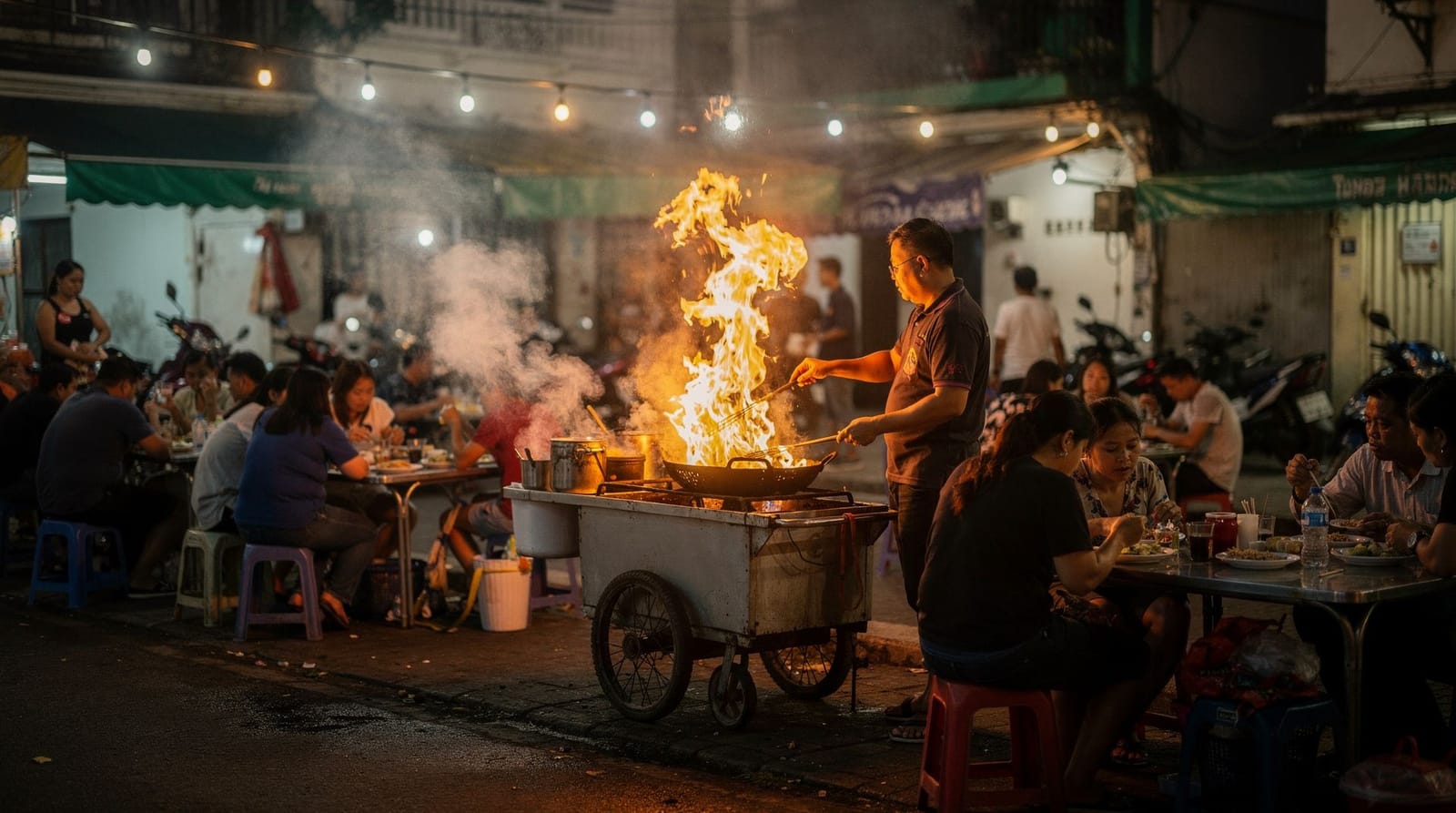
Bangkok: Street Food Tasting Tour at Night
Where is the best mango sticky rice in Bangkok?
Mae Varee in Thonglor (BTS Thong Lo) is the most famous, selling boxed mango sticky rice for roughly 120-150 THB. Kor Panich in the Old City and street vendors citywide do simpler versions from 80 THB. Peak mango season runs March to May.
Mango sticky rice, khao niao mamuang in Thai, is the dessert most visitors fall hardest for: warm glutinous rice soaked in salted coconut cream, served with slices of perfectly ripe golden mango. It is sold everywhere from polished department-store counters to wheeled carts, with prices from about 80 to 180 THB (2.50 to 5.50 USD). This guide covers where to eat the best versions, when mango is at its peak, the two varieties that matter, and how to spot a ripe mango yourself.
| Where | Citywide — Mae Varee (Thonglor), Kor Panich (Old City), markets, street carts |
| Cost | Around 80–180 THB depending on vendor and season |
| Best time | Peak mango season is March–May; available year-round |
| Getting there | BTS Thong Lo for Mae Varee; MRT Sam Yot for the Old City |
| Booking | None needed — walk up, though top spots can sell out by afternoon |
What makes mango sticky rice good
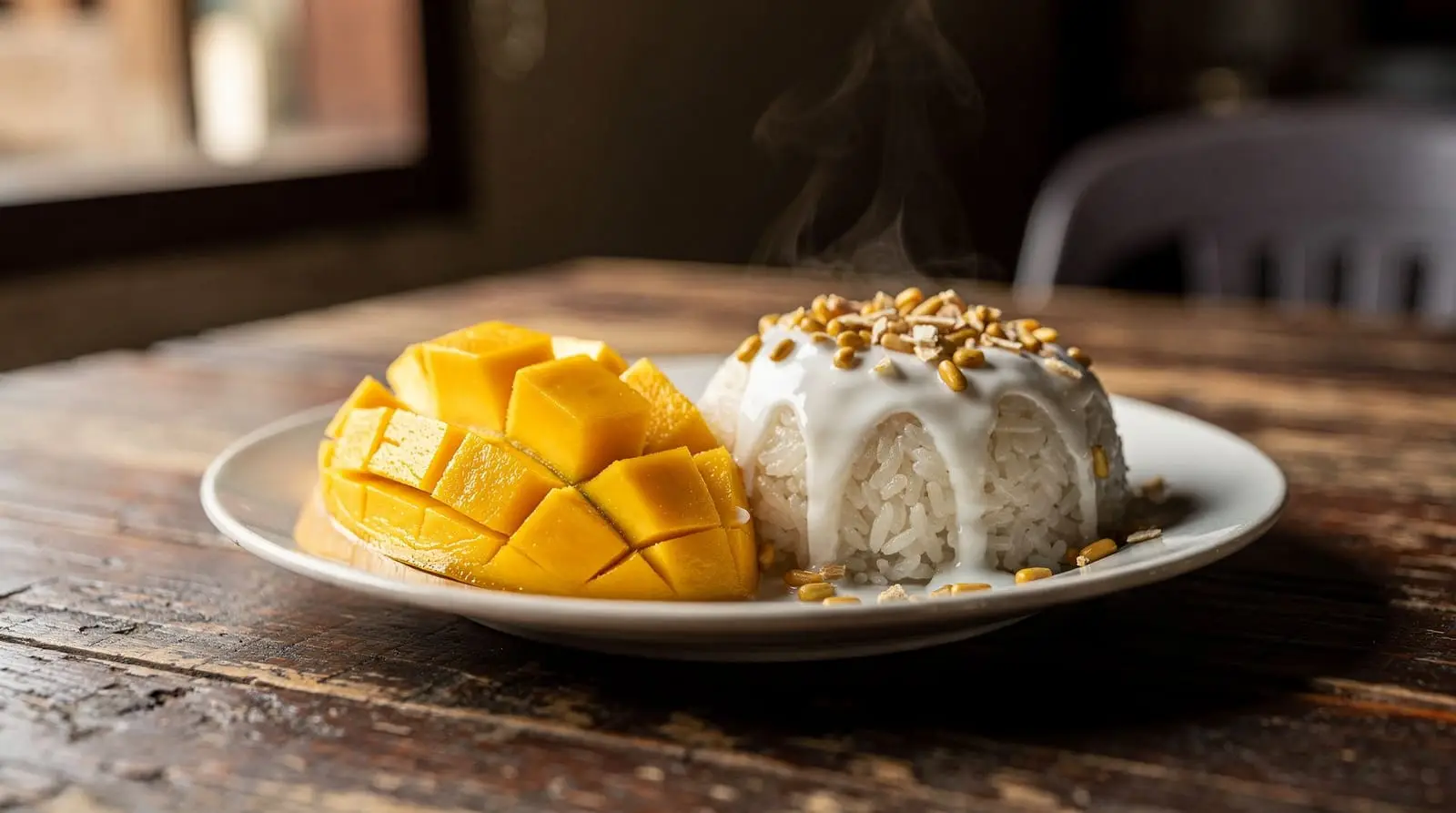
Three things separate a great plate from a forgettable one. First, the rice: it should be glutinous “sweet” rice, freshly steamed, slightly warm or at room temperature, and generously soaked in coconut cream so each grain glistens. Hard, fridge-cold rice is the most common failing. Second, the coconut cream, which should be rich and balanced between sweet and salty. That faint savoury edge is deliberate and is the mark of a kitchen that knows what it is doing. Third, the mango, which must be ripe to the point of fragrance, soft but not mushy, and free of fibre.
The crispy yellow crumbs sprinkled on top are toasted split mung beans, not nuts. A small drizzle of extra coconut cream poured over the rice at the moment of serving is the sign of a generous vendor. If the whole thing tastes one-dimensionally sweet with no salt, the coconut cream was cut corners on.
The anatomy of a proper plate
It helps to know exactly what you are paying for. The sticky rice is glutinous rice steamed, then folded through a hot mixture of coconut cream, sugar and a measured pinch of salt while still warm, so it absorbs the dressing rather than sitting in a puddle of it. The mango is sliced fresh to order, never pre-cut and browning. The cream spooned over at the end is a thinner, saltier “topping” coconut cream (sometimes called nam ga ti), deliberately more savoury than the rice’s dressing, and the contrast between the salty cream and the sweet fruit is the whole point. The toasted split mung beans add crunch and a faint nuttiness. Some vendors also offer blue (butterfly-pea) or pandan-tinted rice, which is mostly cosmetic, and durian sticky rice in season for those who want a stronger fruit. A vendor who seasons the cream properly and slices the mango in front of you is the one to trust.
How to spot a good vendor
The tells are quick. Look for high turnover so the rice is freshly made and still soft rather than hardening in a tray. Check that the mango is cut to order and a deep, even gold, not pale or browning at the edges. A good stall keeps the salty topping cream separate and ladles it over at the moment of serving rather than pre-mixing everything into sweet mush. Watch for the toasted mung-bean crunch on top; its absence often signals a corner-cutting cart. And be wary of any vendor selling visibly green-tinged or fibrous mango, which means unripe or the wrong cultivar.
The mango varieties that matter
Two cultivars dominate. Nam dok mai is the classic and the one almost every good vendor uses: slim, curved, deep golden when ripe, intensely sweet, and almost completely free of stringy fibre. Its flesh is smooth enough to slice cleanly, which is why it photographs so well next to the rice. If you only try one, try nam dok mai.
Ok rong is the rounder, more aromatic alternative. Some old-school Bangkok families swear it is the true pairing for sticky rice because of its perfume and slightly firmer flesh. It is less common on tourist-facing counters but worth seeking out at a proper fruit market. A third name to know is maha chanok, a larger, elongated, blushed orange-red mango that is firmer, less syrupy and beautifully fragrant; it is increasingly popular and some shops pair it with sticky rice for a slightly less sugary result. Both nam dok mai and ok rong are ripe, yellow, dessert mangoes, and maha chanok a firmer cousin. None should be confused with the hard green mango shredded into som tam salad, which is a different fruit experience entirely. If a counter lets you choose, nam dok mai for pure sweetness, ok rong for perfume, maha chanok for a firmer, less cloying bite.
When to come: the mango season
Thailand’s mango season peaks from March to May, and this is when the dessert is at its absolute best: nam dok mai is at its sweetest, most fragrant and cheapest, and street vendors are everywhere. If you visit Bangkok in this window, you can eat mango sticky rice almost anywhere and be happy.
Outside that window the dessert never disappears, because demand is constant and vendors use cold-stored, frozen or imported fruit to keep selling year-round. Off-season fruit can still be very good at a reputable shop, but it is pricier and occasionally less perfectly ripe. If you visit in the rainy season or cool season and the mango looks pale or tastes flat, that is the calendar, not the cook. A guided Bangkok street food tour will usually still find you a strong version regardless of month, because the better vendors stockpile good fruit.
Mae Varee: the famous one in Thonglor
The name most travellers arrive with is Mae Varee, a fruit shop at the mouth of Soi Thonglor (Sukhumvit Soi 55), a 2-3 minute walk from BTS Thong Lo exit 3. It is not a sit-down spot. It is a counter where staff box up mango sticky rice to take away, alongside whole mangoes and other tropical fruit. Boxed sets typically run 120-150 THB (about 3.60-4.50 USD), more for larger portions or premium grade fruit.
Is it worth the hype? The fruit quality is genuinely high and consistent, which is the main reason for the reputation. You are paying a Thonglor premium and partly for the name, but the mango itself rarely disappoints. Buy it, walk it back to your hotel or a nearby bench, and eat it within the hour. Mae Varee opens early, around 6am, and runs into the evening daily. The surrounding neighbourhood is covered in our Thonglor and Ekkamai guide if you want to make an afternoon of it.
Kor Panich and the Old City
In Rattanakosin, the Old City, the long-standing name is Kor Panich (also spelled K. Panich), a heritage sticky-rice shop near the Giant Swing and Wat Suthat area. This is the more traditional, less Instagram-driven choice. Kor Panich is known above all for its sticky rice itself, sold by weight in several styles including the salted coconut version, and you pair it with mango in season. Expect to pay less than Thonglor prices, often 80-120 THB for a portion depending on size and fruit grade.
Eating here is part of a wider Old City food crawl. Combine it with the temples and street eats covered in the Rattanakosin Old City guide, and you can walk off the sugar afterwards. Kor Panich sits a short walk from the Giant Swing and is roughly 12-15 minutes on foot from MRT Sam Yot, the most useful station for the Old City. It opens in the morning and can sell out of the best sticky rice by mid-afternoon, so treat it as a daytime stop rather than an evening one. The neighbourhood’s small-batch dessert shops are a highlight of any guided Old City tasting route, several of which build mango sticky rice in alongside savoury stalls.
More named spots worth a detour
Beyond the two headline names, a handful of vendors have a genuine following. Kim Heng, a long-running sticky-rice and Thai-sweets maker, is prized for the quality of its rice and salted coconut cream and turns up on Bib Gourmand-style local lists; portions run around 80-130 THB. Several Yaowarat (Chinatown) night carts sell excellent versions to the late-evening crowd for 80-120 THB, best eaten on the spot while the rice is fresh. For a convenient air-conditioned fix, the dessert chain After You sells a modern, richer “mango sticky rice” plated with extra coconut ice cream and toppings for roughly 200-300 THB; it is a comfortable mall experience but a dessert-shop interpretation rather than the classic street plate, so judge it on those terms. The honest take: the street and heritage-shop versions at 80-150 THB give you the truer, better-value experience, while the chain versions are pleasant but priced for the air-conditioning and the styling.
Street and market versions
You do not need a famous name to eat well. Mango sticky rice carts and market stalls are everywhere, and the best of them rival the headline shops at a fraction of the price. Look for 80-120 THB at markets and from carts. The trick is choosing a vendor with high turnover so the rice is fresh and the fruit has not been sitting out in the heat.
Some of the most reliable places to find good versions:
- Or Tor Kor Market (MRT Kamphaeng Phet), a premium fresh market where the fruit quality is exceptional. More on it in the best food markets guide.
- Wang Lang Market on the Thonburi side, a dense student-and-local food market with several dessert stalls.
- Dessert carts threaded through Yaowarat (Chinatown) at night, covered in the Yaowarat Chinatown food guide and the Chinatown Yaowarat neighbourhood guide.
- Hotel-area and BTS-adjacent carts in Pratunam for a convenient fix, covered in the Pratunam guide.
Department-store food halls (the basement of any big mall) also sell tidy boxed sets at fixed prices, usually 100-160 THB. They are reliable, air-conditioned and a good fallback in the heat, if not the most romantic.
How to choose a ripe mango yourself
If you want to buy whole mangoes to eat or pair with rice, a few quick checks help. Smell the stem end: a ripe nam dok mai is sweetly fragrant there, and no smell usually means no flavour yet. Press gently near the top; it should yield slightly, like a ripe avocado, without being soft or wrinkled. Colour should be a deep, even golden yellow with no green shoulders. Avoid fruit with dark sunken spots, sap leaks or a sour fermented smell, which signals it has gone over. A faint freckling of small brown speckles on the skin is normal and often a good sign of ripeness, not damage.
If you buy slightly underripe, leave the mango at room temperature out of the fridge for a day or two and it will continue to sweeten. Once cut, refrigerate and eat within a day.
Storing and eating a takeaway box
Most of the famous spots, Mae Varee included, sell to take away, so a little care preserves the magic. Eat the box within an hour or two while the rice is still soft; rice firms up fast once it cools, which is the single biggest reason a takeaway disappoints. If you must hold it, keep the rice out of the fridge and only refrigerate the mango, as cold turns the glutinous rice hard and chalky. Vendors usually pack the salty topping cream in a separate bag; pour it over only as you eat, or the rice goes soggy. If the rice has firmed up, a brief warm-up softens it back. Travelling with a box on a long flight is not advisable, as it does not keep past a day.
Prices and what to expect
To set expectations, here is the rough landscape in mid-2026:
- Street cart or market portion: 80-120 THB (2.50-3.60 USD)
- Mae Varee boxed set: 120-150 THB (3.60-4.50 USD)
- Kor Panich / Old City heritage shop: 80-120 THB
- Department-store food-hall set: 100-160 THB
- Off-season anywhere: add roughly 20-40 THB for imported fruit
Cash is king at every cart and most markets, so carry small notes. Bigger shops and malls take cards and QR payment.
Quick comparison: where should you actually go
| Price | Vibe | Best for | |
|---|---|---|---|
| Mae Varee (Thonglor) | 120–150 THB | Famous fruit-shop counter, takeaway only | Reliably top-tier fruit, worth the name premium |
| Kor Panich (Old City) | 80–120 THB | Heritage sticky-rice specialist | Traditional taste, pairs with a temple crawl |
| Street carts / markets | 80–120 THB | Local, no-frills, high turnover | Best value if you pick a busy vendor |
| Mall food halls | 100–160 THB | Air-conditioned, boxed, consistent | Reliable fallback in the heat |
None of these is a wrong choice — the honest difference is fruit quality and atmosphere, not a right and wrong answer. If your itinerary already has you in the Old City for temples, Kor Panich saves a special trip; if you are staying or shopping around Thonglor, Mae Varee is a two-minute detour rather than a mission. Only chase a specific name if you have time to spare — a good street cart, chosen using the freshness checks above, will satisfy most travellers just as well.
Eating it as part of a wider food crawl
Mango sticky rice rarely stands alone on a Bangkok food itinerary — it is usually the sweet finish to a savoury crawl. If you are building a broader street-food afternoon or evening, the best cheap eats in Bangkok guide and the Bangkok markets guide map out where the good vendors cluster, and the Chatuchak Weekend Market guide is worth checking if your trip includes a Saturday or Sunday, since Chatuchak’s food section sells excellent versions among its thousands of stalls. Vegetarian and vegan travellers can eat this dessert without any modification — see the vegetarian and vegan Bangkok guide for the rest of the plant-based street-food landscape. And if hygiene at street stalls is a concern, especially with fresh-cut fruit sitting in the heat, the street food safety guide covers what to look for in a trustworthy vendor.
Ordering it like a local
You do not need Thai to order, but a couple of phrases smooth the transaction and occasionally get you a warmer welcome. The dish itself is “khao niao mamuang” (ข้าวเหนียวมะม่วง); pointing works fine everywhere, but saying the name signals you know what you are after. If a vendor asks something and you are unsure, the safest answer is a smile and “an nee” (this one), pointing at the tray you want. Portions are usually fixed, but at a market stall you can sometimes ask for “phiseht” (extra/special) mango if you want a bigger fruit portion for a small top-up. Most vendors weigh or portion visually rather than negotiating, so haggling is not the norm here the way it might be for souvenirs — the price on the sign or spoken aloud is the price.
Make it yourself
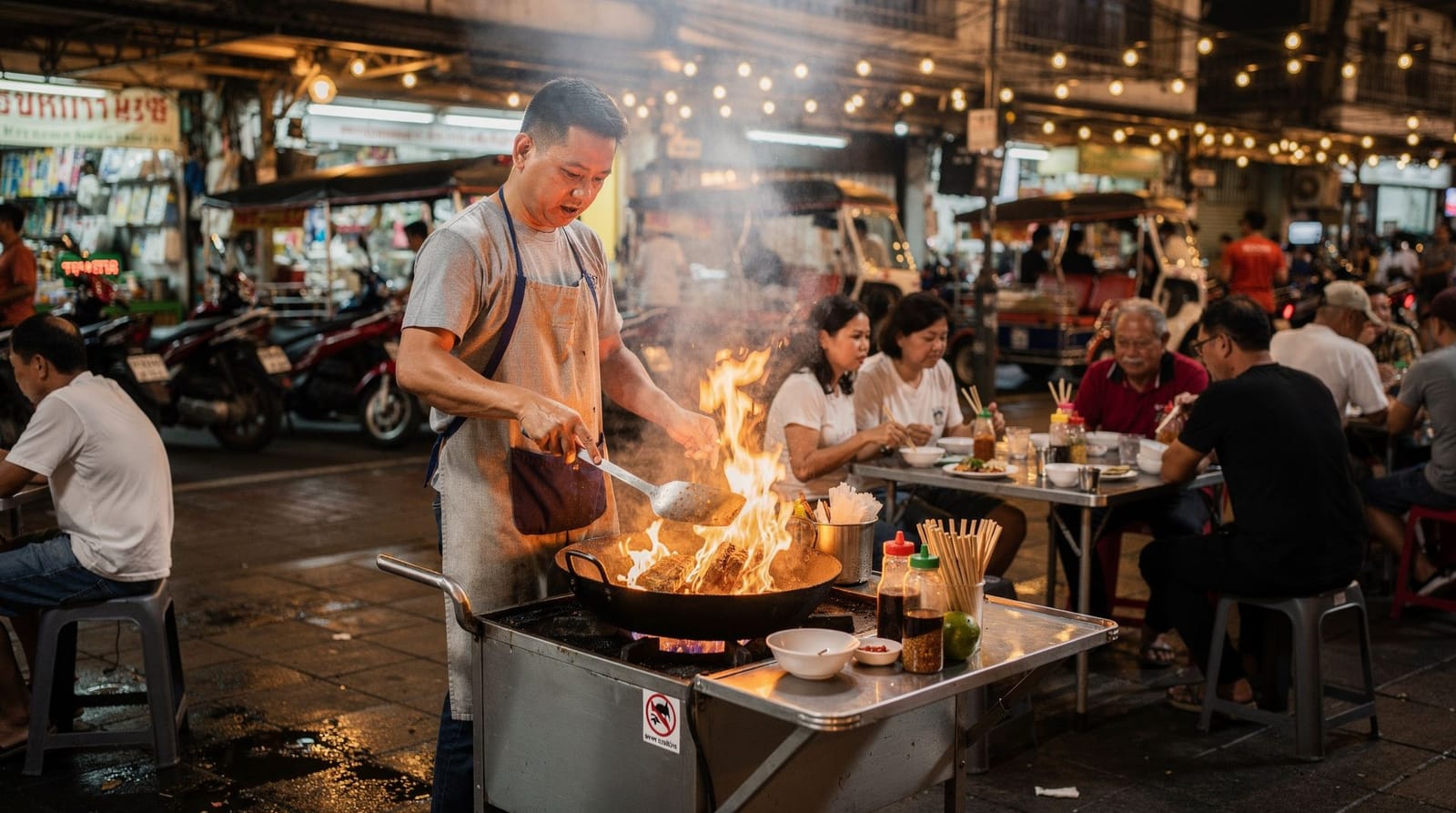
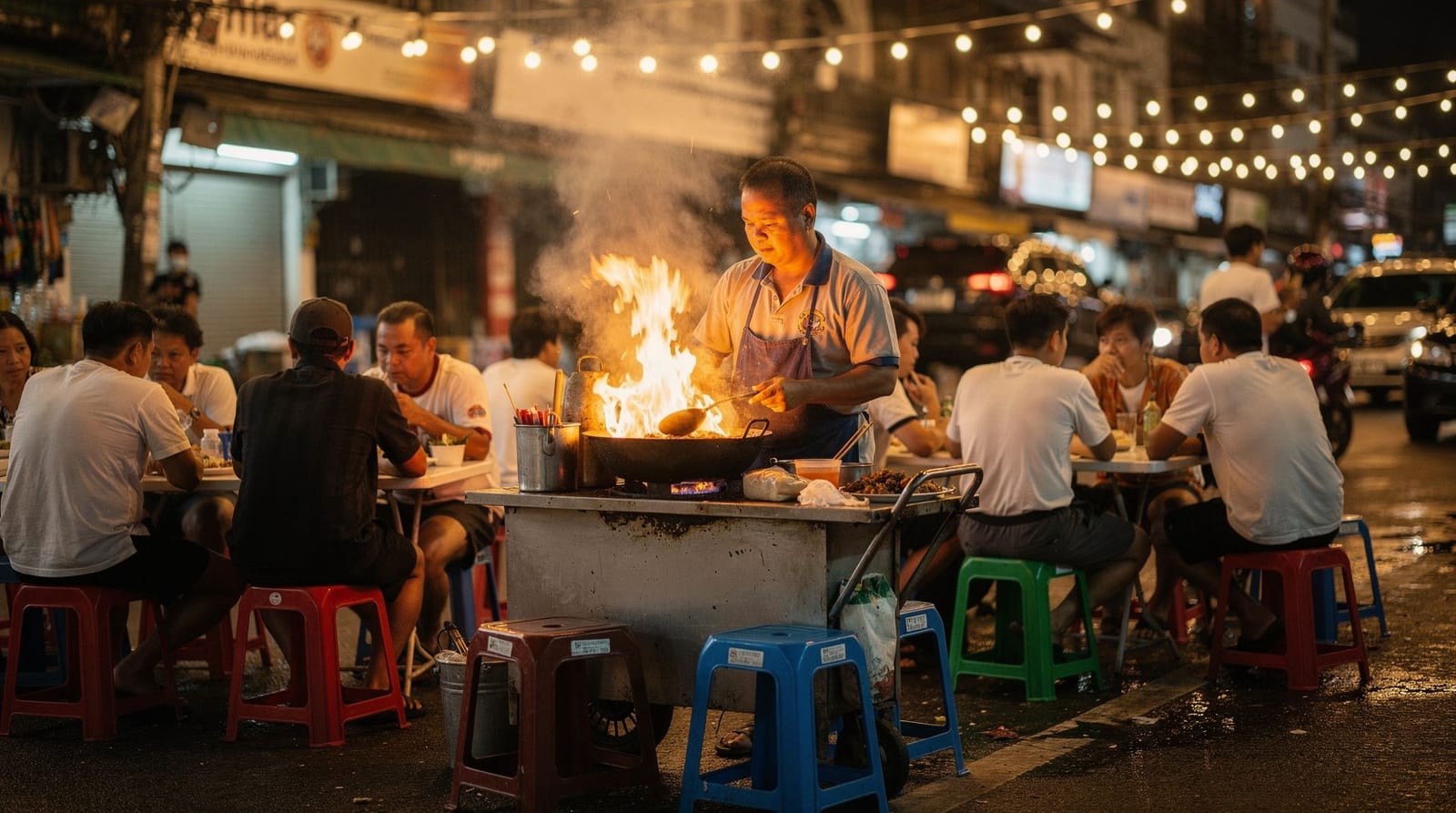
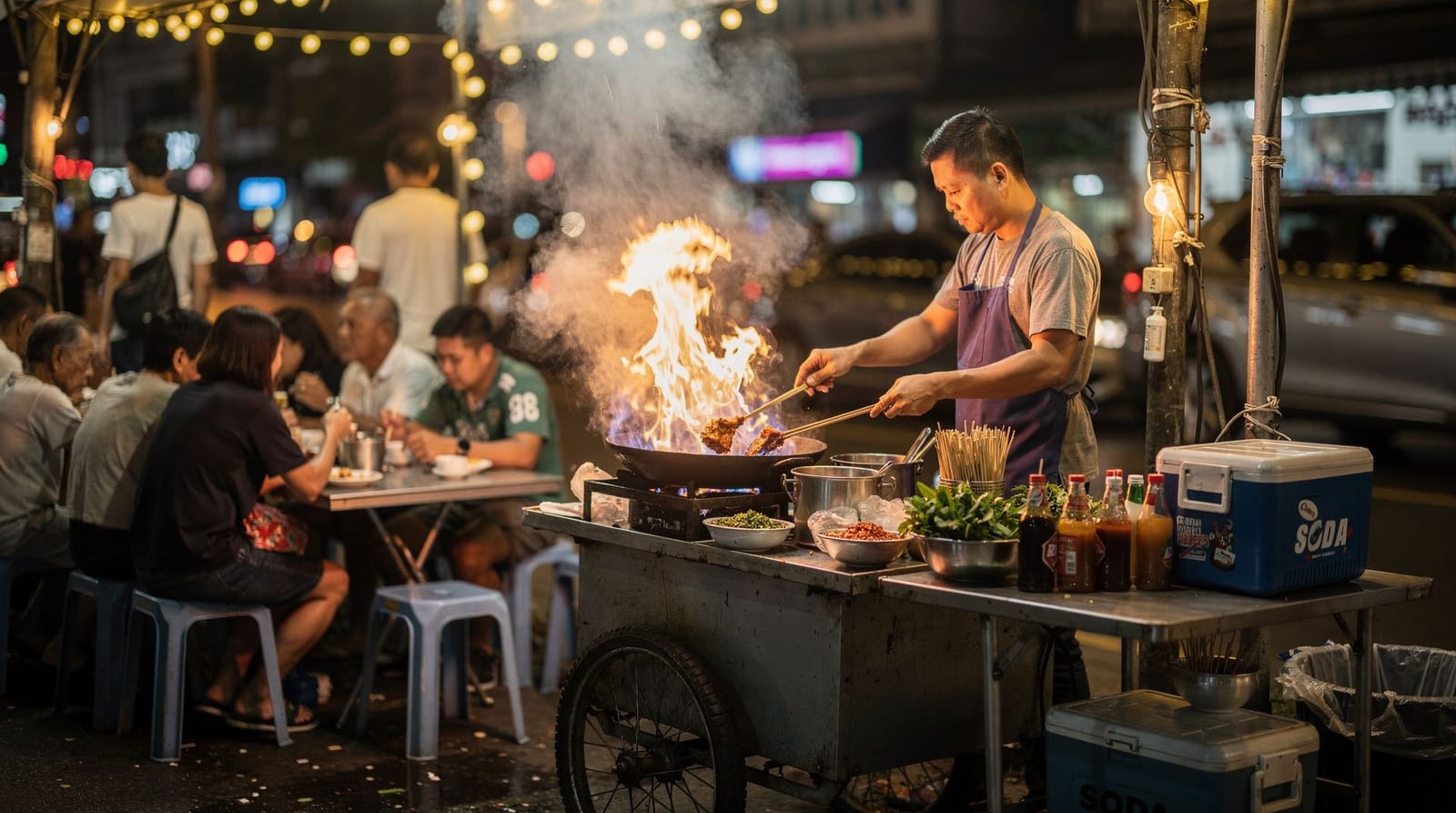
If the dessert has properly hooked you, the most satisfying souvenir is learning to make it. Most Bangkok cooking schools include mango sticky rice on the menu, teaching you to season the coconut cream correctly, which is the one step home cooks usually get wrong. A market-based class such as a half-day Bangkok cooking class with a market tour walks you through buying the right fruit before you cook. See the Thai cooking class guide for what a session actually involves. To taste your way around the city’s desserts and savoury stalls in one evening instead, a guided Bangkok street food tasting at night covers far more ground than you would alone.
For wider context on the city’s sweets and savouries, pair this with the what to eat in Bangkok guide and the broader Bangkok street food guide. If you are still deciding whether a guided tour earns its price, the honest take is in our food tour worth it guide.
Frequently asked questions about Mango sticky rice in Bangkok: where to eat khao niao mamuang
How much does mango sticky rice cost in Bangkok?
What is the best season for mango sticky rice?
What mango variety is used for mango sticky rice?
Where is Mae Varee and how do I get there?
Is mango sticky rice served warm or cold?
Can vegans eat mango sticky rice?
Why does my mango sticky rice taste salty?
Top experiences
Bookable activities with verified prices and instant confirmation on GetYourGuide.