Khao man gai: Thai chicken rice guide
Bangkok: Michelin Guide Street Food Tour by Tuk Tuk
Where is the best khao man gai in Bangkok?
Go-Ang Pratunam, the pink-uniform stall near Pratunam with a Michelin Bib Gourmand, is the most famous, with plates around 50 THB. The dish is poached Hainanese-style chicken on chicken-fat rice, and the real magic is the fermented soybean and chilli dipping sauce served on the side.
Khao man gai is the dish that quietly wins over more visitors than any other in Bangkok: poached chicken, glossy chicken-fat rice, a bowl of clear broth and a small dish of fierce, funky dipping sauce. It looks plain and tastes anything but. The most famous address is Go-Ang Pratunam, the pink-uniform stall holding a Michelin Bib Gourmand, where a plate costs about 50 THB. This 2026 guide covers where to eat it, the all-important sauce, the fried version (khao man gai tod), how it differs from Singapore’s chicken rice, and the prices and timing that matter.
| Where | Pratunam, Chinatown, and stalls citywide |
| Cost | ~50 THB standard plate |
| Time needed | 20–30 minutes for a meal |
| Getting there | BTS Chit Lom or Ratchathewi for Go-Ang Pratunam |
| Best time | Late morning to early afternoon, before stalls sell out |
What khao man gai is
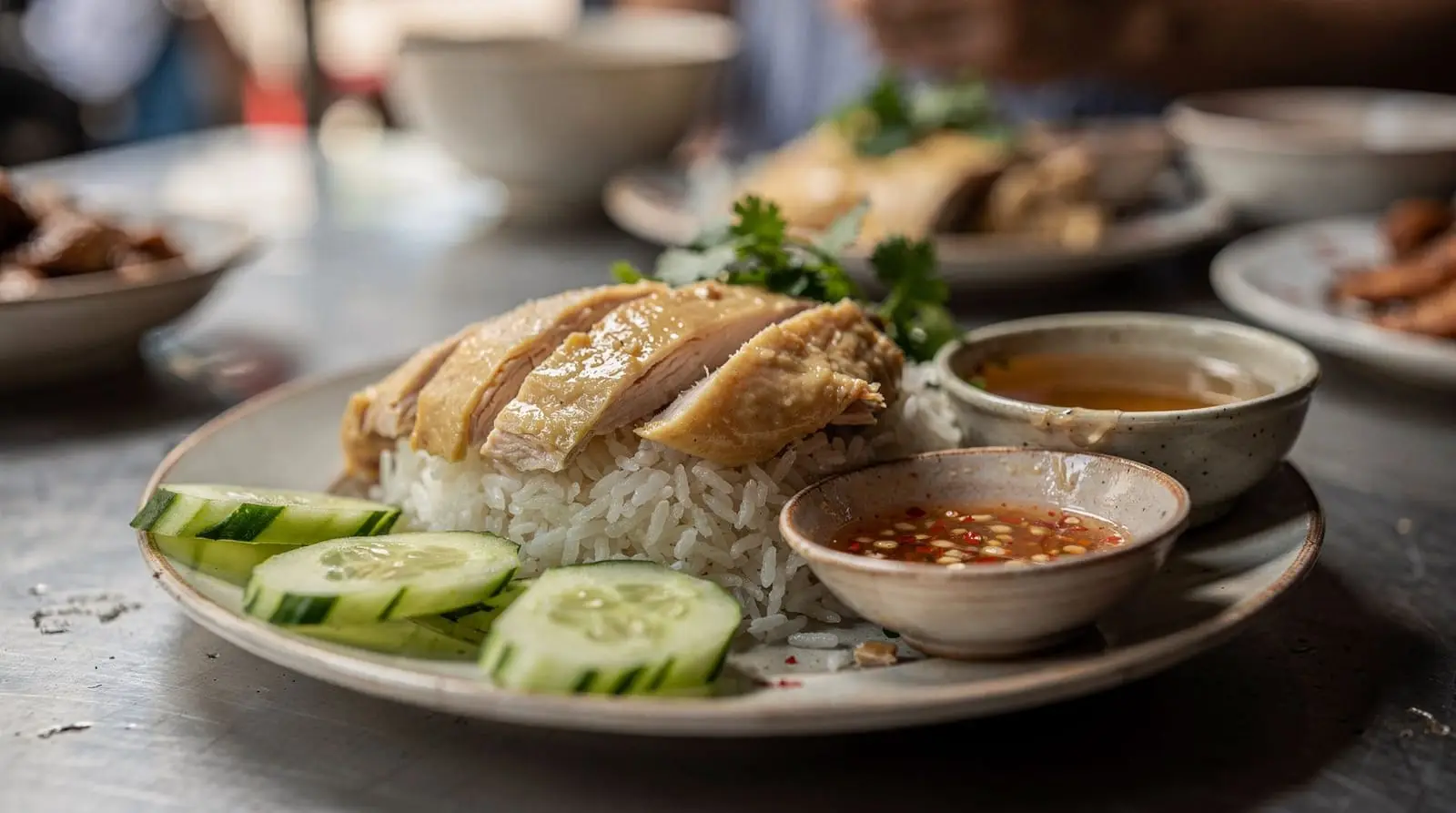
Khao man gai, literally “oily rice with chicken”, is the Thai take on Hainanese chicken rice brought by Chinese immigrants and adapted over generations. The chicken is gently poached so it stays silky and just-set, then sliced over rice cooked in the chicken’s fat and stock with garlic and ginger so the grains are fragrant and savoury on their own. A bowl of clear chicken broth, often with a few slices of bitter gourd or daikon, comes alongside, and a small dish of dipping sauce sits at the centre of it all. It is a complete, balanced, single-plate meal, which is why it earns a top spot in the what to eat in Bangkok guide.
Go-Ang Pratunam: the pink Michelin one
Go-Ang Pratunam Chicken Rice is the stall everyone photographs, instantly recognisable by the staff in bright pink uniforms. It earned a Michelin Bib Gourmand and has become a pilgrimage for chicken-rice fans, yet a standard plate is still around 50 THB, a reminder that Bangkok’s best food is rarely its most expensive. It sits in the Pratunam district, the busy garment-market quarter, and is walkable from BTS Chit Lom or Ratchathewi; the BTS Skytrain guide covers the stops, and the getting around Bangkok guide helps you plan the approach through the crowds.
A practical note: the pink branding has spawned several Go-Ang locations and lookalikes, including a daytime stall and an evening one, so the colours are a guide rather than a guarantee. Wherever you land, order the standard poached plate first, then judge it on the sauce.
The sauce is the whole point
Ask any Thai where the best khao man gai is and the answer comes down to the sauce. It is built on fermented soybean paste (tao jiao), with ginger, garlic, fresh chilli, a little sugar and a hit of vinegar or lime, sometimes deepened with thick dark soy. The balance of salty, funky, spicy and tangy is what separates a memorable plate from a forgettable one, and every stall guards its own recipe. Spoon it over the chicken a little at a time rather than drowning the plate. The dish itself is mild; the sauce is where the personality and the heat live. Say mai phet if you want a milder mix, and aroi to tell the cook it is delicious. For the broader street-eating etiquette, the Bangkok street food guide covers ordering, and the street food safety guide explains how to pick a high-turnover stall where the chicken is freshest.
Khao man gai tod and other variations
If poached chicken feels too gentle, order khao man gai tod, the fried version, where the same chicken-fat rice and sauce come with golden, deep-fried chicken instead of poached. Many stalls offer a half-and-half plate so you can compare both in one sitting, and it is the move worth trying at least once. You may also see khao man gai served with chicken liver or with extra skin and fat for richness. Whichever you choose, the rice and sauce stay constant; only the chicken changes. As a fast, satisfying plate it sits comfortably in both the best cheap eats guide and a crawl alongside the best pad thai in Bangkok and boat noodles at Victory Monument.
How to eat it like a local
There is no ceremony to khao man gai, but a few habits improve the plate. Spoon a little sauce over a bite of chicken and rice together rather than drowning the whole plate at once; the sauce is potent and you want to taste the chicken and the fragrant rice underneath it. Alternate mouthfuls with sips of the clear broth, which resets the palate between bites and is meant to be drunk throughout, not saved for the end. Some stalls add a wedge of cucumber and a few coriander sprigs on the plate; eat them with the chicken for freshness. If you order the fried version, the sauce works just as well, though many people add a squeeze of lime to cut the richness. None of this is essential, but it is how regulars get the most out of a plate that looks deceptively plain.
A small etiquette note: at busy lunchtime stalls, tables turn over fast, so it is normal to share a table with strangers and to order quickly. Have your 50 THB ready in cash, point at poached (tom) or fried (tod), and you are set.
How it differs from Singapore chicken rice
The two are cousins, both descended from Hainanese chicken rice, and both poach the chicken and cook the rice in chicken fat. The clearest difference is the sauce. Singapore’s version leans on a trio of separate condiments, a bright chilli-garlic sauce, grated ginger and dark sweet soy, while the Thai khao man gai folds the heat and funk into one fermented-soybean dipping sauce that you pour over the plate. Thai rice is often a touch lighter and the sauce spicier and more pungent. Neither is better; they are different expressions of the same idea, and tasting them back to back is a genuine pleasure for anyone who loves the dish.
| Thai khao man gai | Singapore chicken rice | |
|---|---|---|
| Sauce | One fermented-soybean, chilli and ginger sauce | A trio: chilli-garlic, grated ginger, dark sweet soy |
| Rice | Slightly lighter | Often richer, more garlicky |
| Heat | Spicier, funkier | Milder, sweeter accents |
| Typical price | ~50 THB | Higher, roughly SGD 4–6 |
Prices and timing
A standard plate runs about 50 THB (roughly 1.50 USD), with larger, mixed or fried plates a little more, and the clear broth is usually included. Cash is the rule at street stalls, so carry small notes. On timing, khao man gai is mainly a daytime dish: most stalls open for breakfast and lunch and sell out by mid to late afternoon, so aim for late morning to early afternoon. Go-Ang’s evening stall is the exception if you miss the lunch window. Eating early also means fresher poached chicken before the day’s batch runs low. Meals like this are what keep Bangkok food costs remarkably low, often under 150 THB a day if you stick to street stalls and skip the malls.
Eating it with a guide
Khao man gai is easy to order alone, but it shines on a guided crawl that explains the sauce, the timing and where the genuine stalls are versus the lookalikes:
Take a Michelin street food tuk-tuk tourA guide also helps you compare the poached and fried versions and points you toward the day’s best batch. For a slower, walking pace through several local dishes including chicken rice, an evening tasting route works well:
Join an evening street food tasting walkFitting it into your trip
Because khao man gai is a quick, light lunch, it slots neatly between shopping in Pratunam and an afternoon elsewhere. Build a full eating day with the Bangkok foodie itinerary, or fit a chicken-rice stop into a wider plan using Bangkok in 3 days. First-time visitors unsure how to navigate stalls and pay should start with the Bangkok for first-timers guide. Plain-looking and gently priced, khao man gai is one of those dishes that explains why so many travellers come to Bangkok hungry and leave planning their return around the food.
Where else to find great khao man gai
Go-Ang gets the headlines, but khao man gai is sold all over the city and many neighbourhood stalls rival the famous name for a fraction of the queue. Chinatown is a strong hunting ground given the dish’s Chinese-Thai roots; the Yaowarat Chinatown food guide and the wider Chinatown Yaowarat area both turn up excellent versions, often with longer hours than the Pratunam stalls. Office districts like Silom and Sathorn have reliable lunchtime stalls feeding workers daily, which is usually a sign of fair prices and fresh chicken, and fresh-market food courts almost always hide a khao man gai counter worth seeking out.
The practical advice is the same wherever you go: pick the stall with the steadiest local queue, order the standard plate first, and judge it on the sauce before deciding whether to come back for the fried version. A stall that sells out by early afternoon is usually a stall worth seeking out, because it means the chicken does not sit around.
How to spot a genuine stall
Because Go-Ang’s pink branding is so recognisable, imitators and loosely affiliated stalls have appeared. You do not need to stress about authenticity, the dish is good across the city, but if you specifically want the famous one, look for the official pink-uniformed staff and the established Pratunam locations rather than a random pink sign. More broadly, a good khao man gai stall shows its hand: whole poached chickens hanging or resting at the counter, a steady turnover, a pot of clear broth on the go, and a well-used jar of that dark dipping sauce. The general rules for reading a busy, trustworthy stall apply neatly here.
Ordering it without speaking Thai
You do not need any Thai to order well, but a few words speed things up at a busy stall. Point at the menu board or a plate someone else has and say “an nee” (this one). “Tom” gets you poached chicken, “tod” gets you fried, and “khrueng nai” adds extra liver and innards if you see it offered and want to try it. For spice control, “mai phet” means not spicy and “phet noi” means a little spicy — useful since the sauce arrives on the side and you control the heat yourself. Most stall owners are used to visitors pointing and nodding, so do not overthink it; the worst outcome is a slightly plainer plate, easily fixed with more sauce.
Pairing khao man gai with a wider tasting walk
If you want to taste khao man gai alongside a proper spread of other Bangkok dishes rather than a single plate, a walking-format tasting tour is a good way to do it without committing a whole meal to one stall. Join an authentic 10-tasting walking food tour covers a wider range of dishes across multiple stops, letting you sample chicken rice as one course among several rather than a standalone meal — a good option if you are also curious about what to eat in Bangkok more broadly.
Frequently asked questions about Khao man gai: Thai chicken rice
What is khao man gai?
Where is Go-Ang Pratunam and how much does it cost?
What is the khao man gai dipping sauce made of?
What is khao man gai tod?
How is khao man gai different from Singapore chicken rice?
When is the best time to eat khao man gai?
Is khao man gai spicy?
Can vegetarians eat khao man gai?
Top experiences
Bookable activities with verified prices and instant confirmation on GetYourGuide.