Eating in Bang Rak and Charoenkrung: Bangkok's oldest food quarter
Bangkok: Explore Bang Rak's Backstreets & Local Eats
What should I eat in Bang Rak and Charoenkrung?
Start with Prachak Pet Yang roast duck (running since 1909), then graze Charoenkrung's roti, satay and halal carts near Haroon Mosque, and finish at Talad Noi's old-shophouse cafes. Most street dishes run 50–120 THB (1.50–3.60 USD); take BTS Saphan Taksin.
Bang Rak means “village of love”, and the district wrapped around lower Charoenkrung Road is Bangkok’s oldest food quarter. This is where the city’s first paved street ran, where Chinese, Thai-Muslim, Indian and European traders settled side by side, and where a roast-duck shop has been serving the same noodles since 1909. It is walkable, cash-friendly and refreshingly un-touristy once you step off the main road, with most street dishes landing between 50 and 120 THB (about 1.50–3.60 USD at 33 THB to the dollar). Take BTS Saphan Taksin and give yourself an afternoon that drifts into the evening.
| Where | Lower Charoenkrung Road, BTS Saphan Taksin |
| Cost | Most dishes 50–120 THB; 300–500 THB for a grazing evening |
| Time needed | An afternoon into the evening (3–4 hours) |
| Getting there | BTS Saphan Taksin (Exit 3), or MRT Hua Lamphong for Talad Noi |
| Best time | Late afternoon (from ~16h00) into evening |
Why Bang Rak is Bangkok’s most underrated food neighbourhood
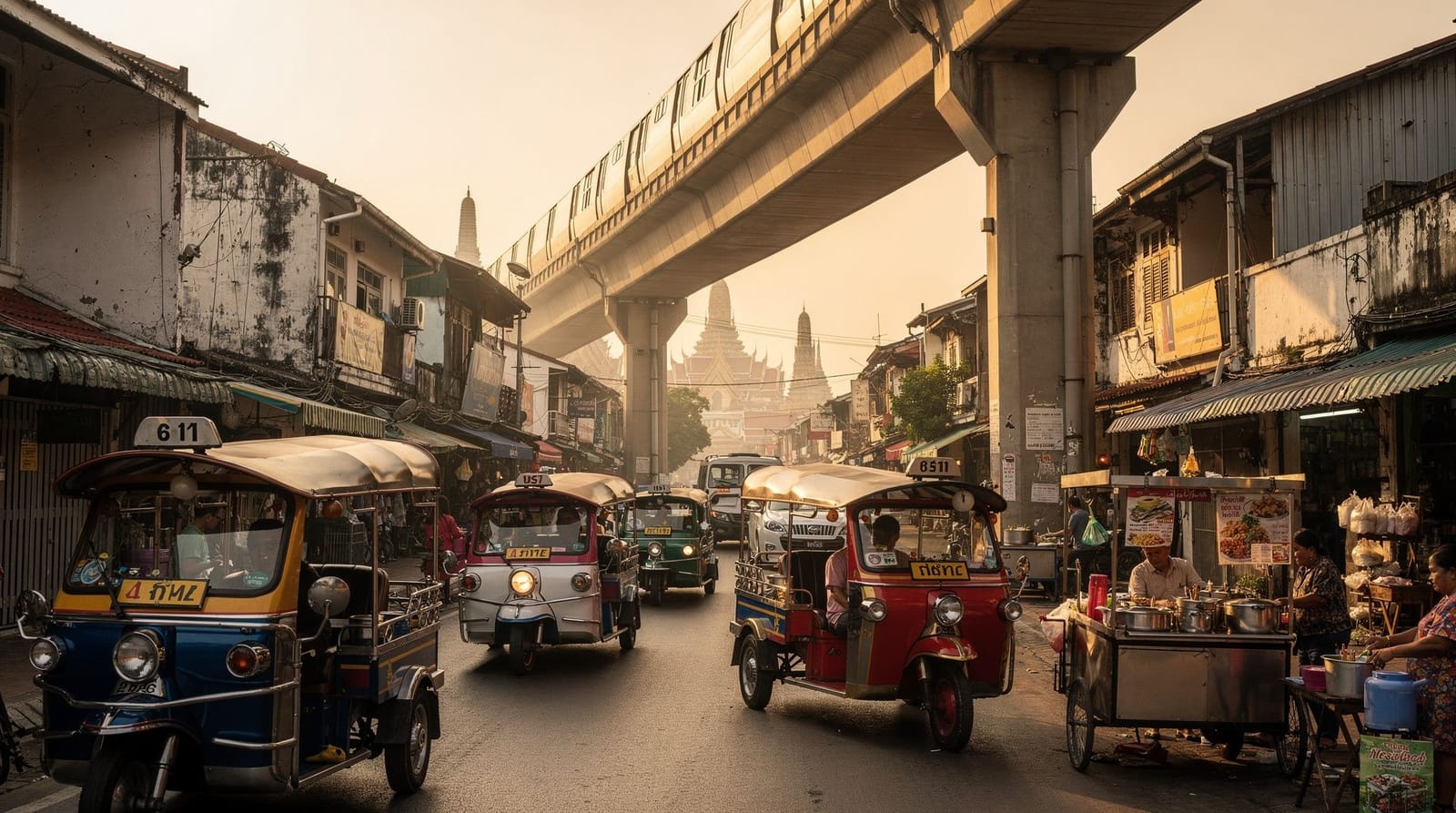
Most first-time visitors blow through Bang Rak on the way to a river boat without realising they have walked past a century of food history. The neighbourhood grew up around Charoenkrung Road, the first road in Bangkok built for wheeled traffic, and that early cosmopolitan mix still shows on the plate: Cantonese roast meats, Thai-Muslim curries near the mosque, Indian sweets, old Sino-Portuguese shophouses now full of coffee. Nothing here is engineered for tourists, which is exactly the appeal.
The district sits along the eastern bank of the river, threading north from the Bang Rak and Charoenkrung destination area up toward Talad Noi and the edge of Chinatown and Yaowarat. For the wider neighbourhood story, our Bang Rak and Charoenkrung guide and the riverside Bangkok guide set the scene. This page is about the food, and the order in which to eat it.
Prachak Pet Yang: roast duck since 1909
The anchor of any Bang Rak food walk is Prachak Pet Yang, a roast-duck shop that has been turning out lacquered, hanging ducks on Charoenkrung since 1909. Five generations on, it remains a no-frills, fluorescent-lit shophouse with shared tables, and it is still the standard against which Bangkok roast duck is judged.
Order the roast-duck egg noodles (ba mee pet yang), dry or in soup, for roughly 70–100 THB (2–3 USD). The duck is the point: glossy skin, tender meat, a savoury-sweet sauce, served fast. You can also get duck over rice, char siu pork, and roast pork (moo krob) with crackling. It is busy at lunch and dinner, the queue moves quickly, and it is cash or QR. Do not overthink it; just point, sit, and eat.
It sits a short walk from BTS Saphan Taksin (Exit 3), which makes it the natural first stop. A guided Bang Rak backstreets local-eats walk usually starts here too, because it is the easiest landmark in the district and a reliable opener.
A practical note on the duck shop: there is more than one branch and a few imitators trading on the name, but the original Charoenkrung shophouse is the one to target, and it is reliably busy with a local lunch crowd of office workers and nearby residents rather than tour groups. If you arrive at a dead moment with no queue at all, you may be at a copycat; the real Prachak almost always has a few people waiting. Tables are shared and turnover is fast, so do not expect to linger. It is an eat-and-go institution, not a destination dinner, and that briskness is part of why the quality has held for a century.
Charoenkrung’s carts: roti, satay and grilled everything
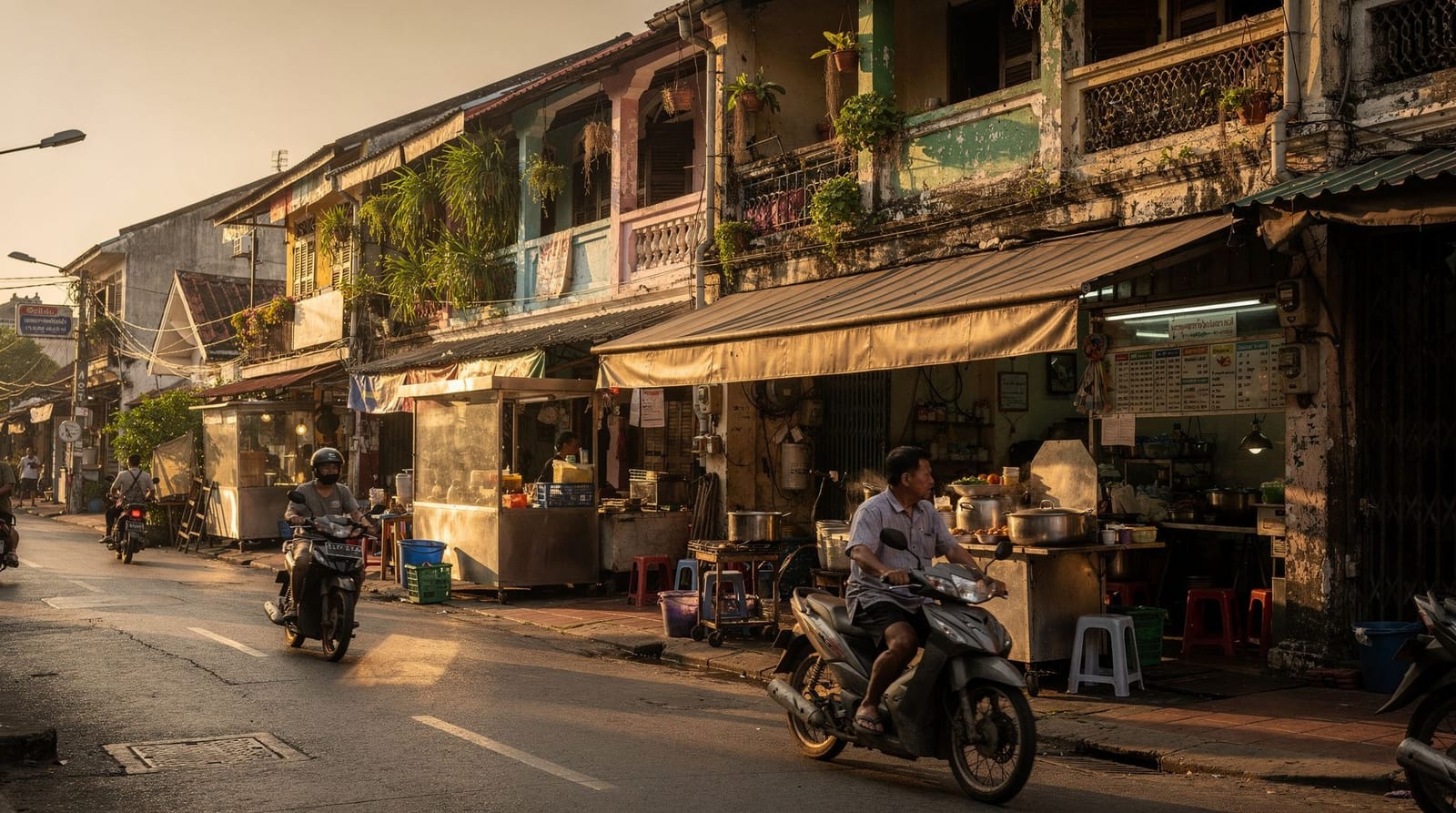
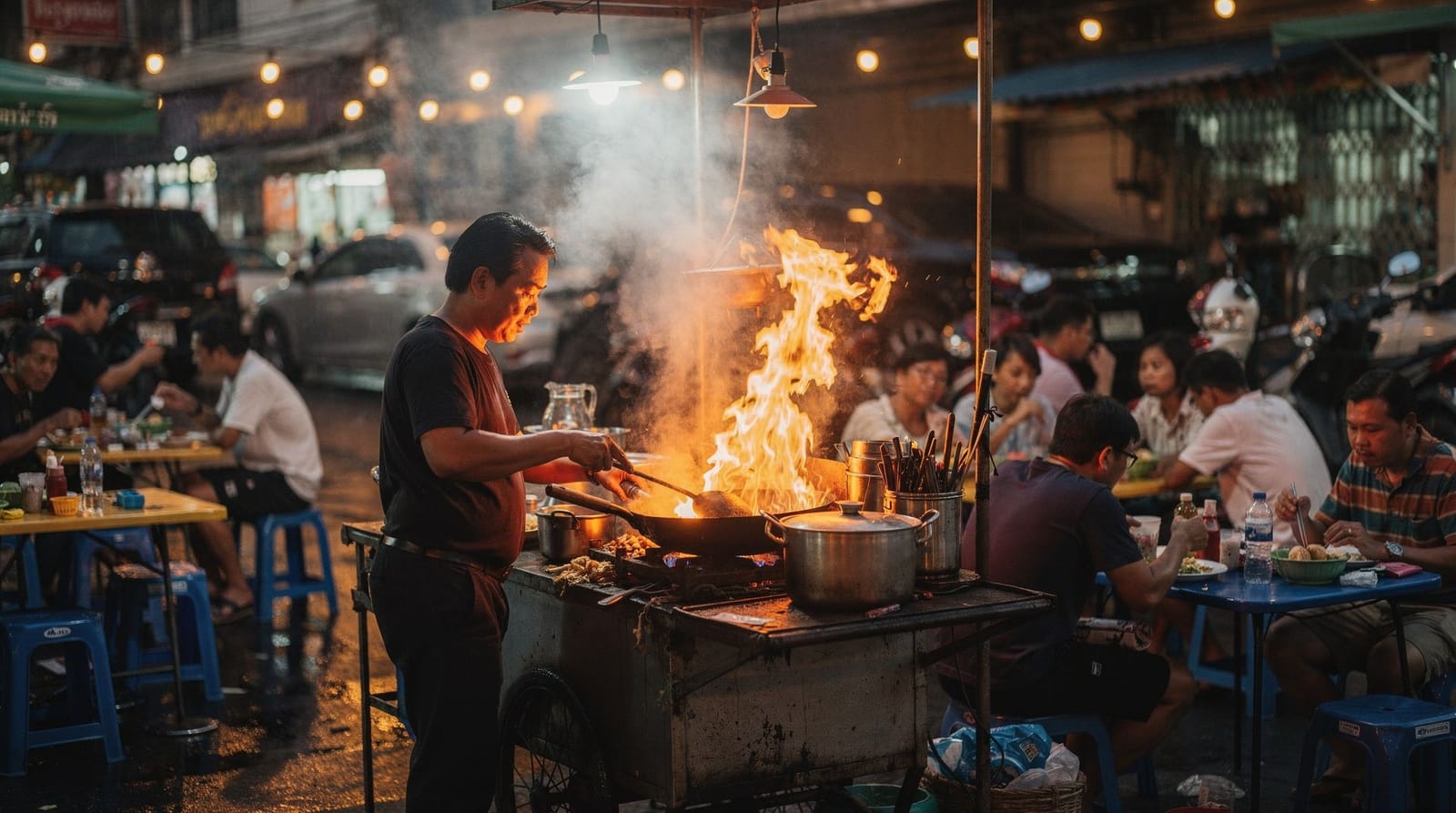
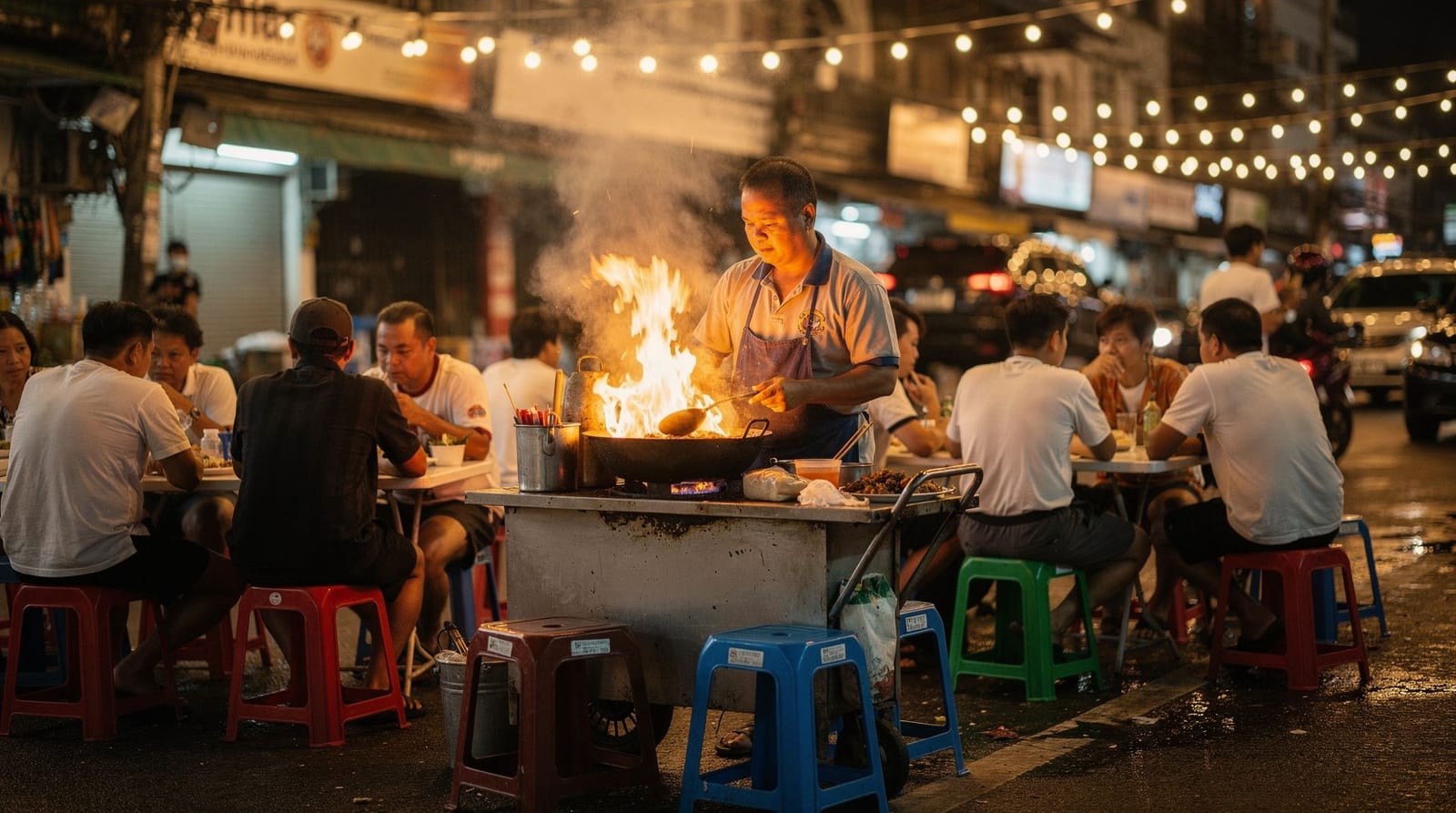
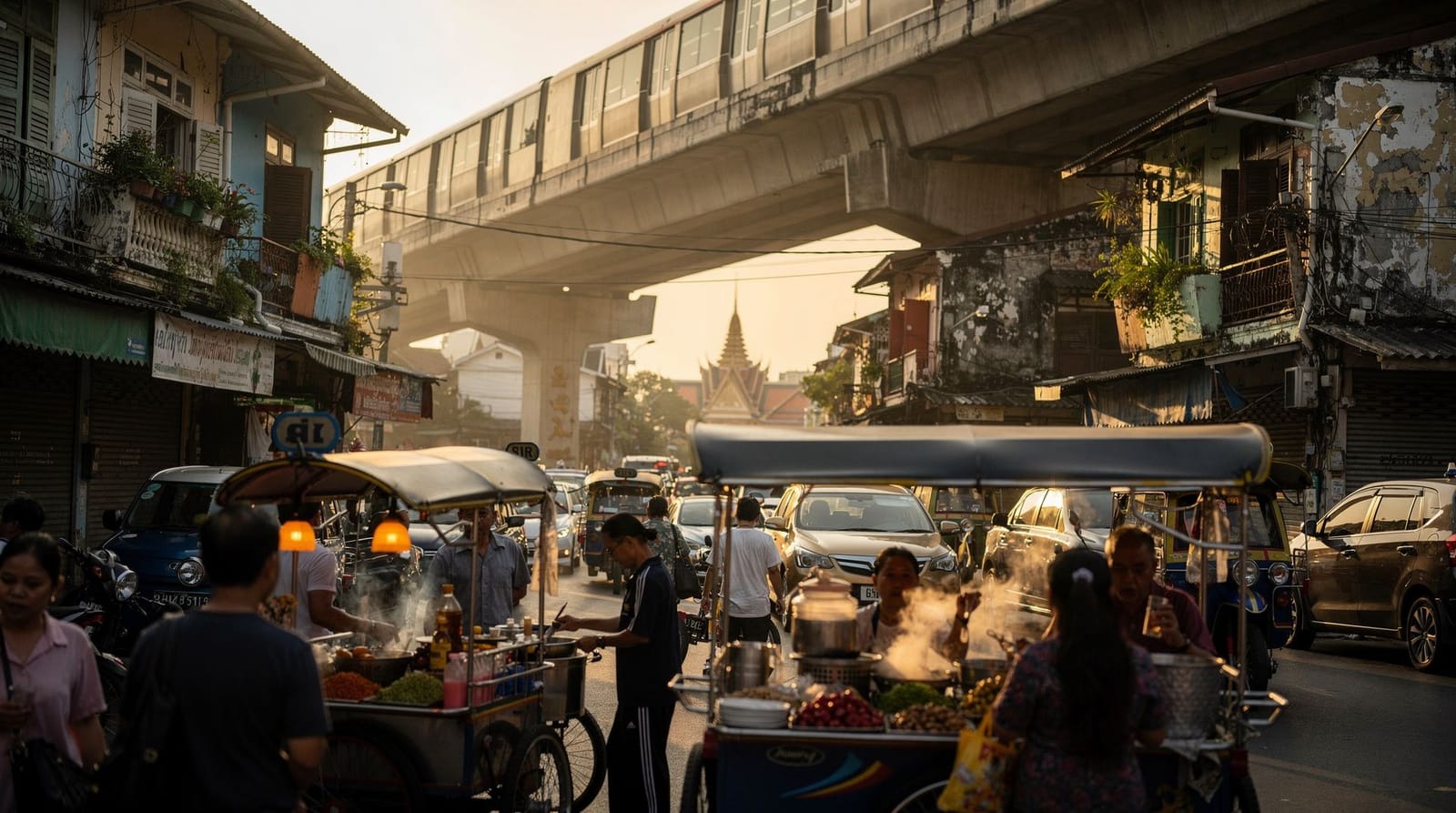
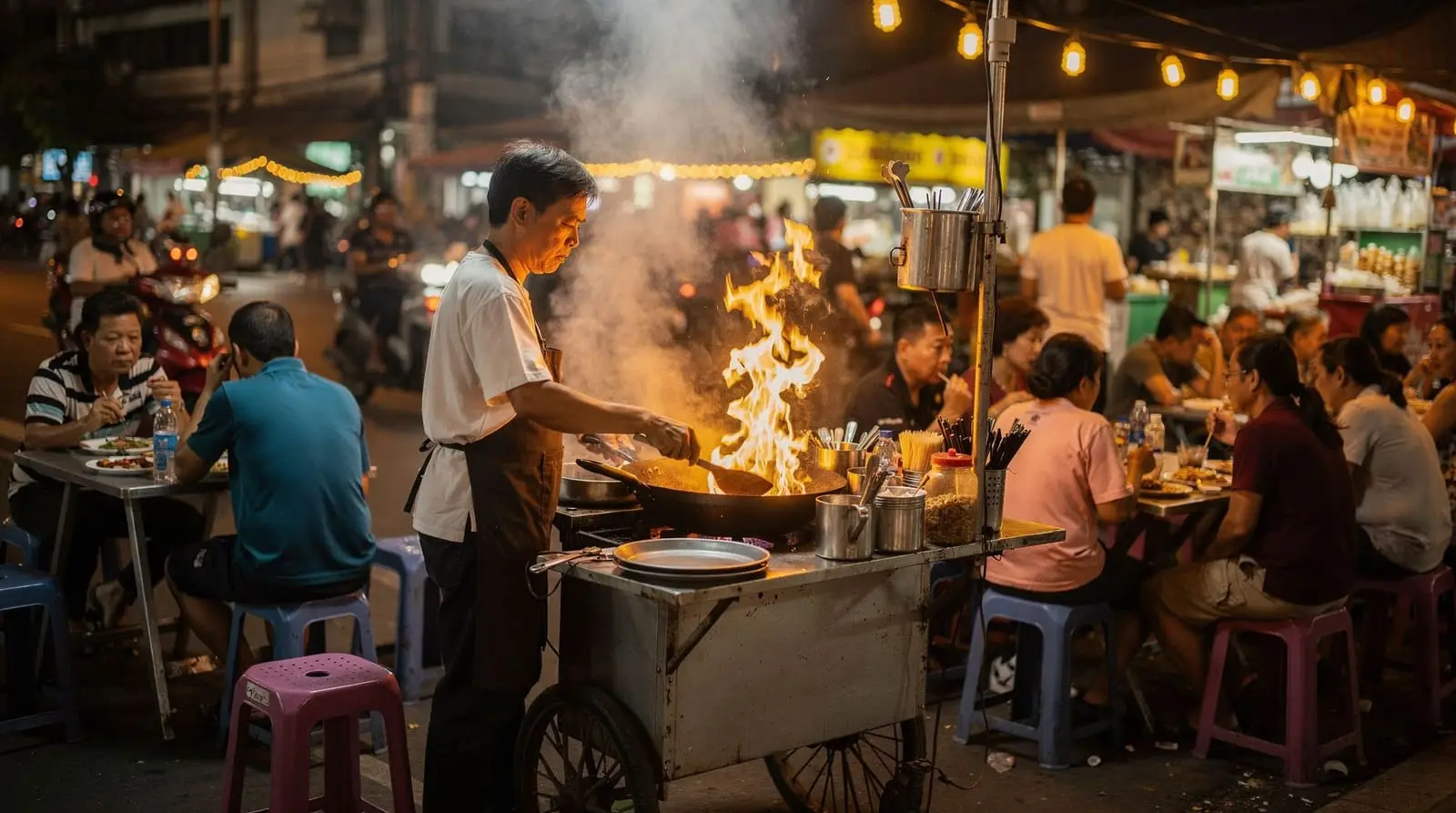
Walk north along Charoenkrung Road and the street-food rhythm picks up in the late afternoon. This is graze territory: satay grills sending up smoke, roti pans, grilled pork skewers (moo ping) with sticky rice, and Chinese-style braises in big shophouse pots. Most of it is 20–60 THB a portion, designed to be eaten standing or carried a few doors down.
Soi Charoen Krung 50 is one of the better lanes to dive into, with a tight cluster of carts and shophouse kitchens that locals actually use. Keep your eyes on turnover rather than signage; the cart with the office-worker queue is the cart you want. This stretch is the heart of the Bangkok street food guide experience without the Chinatown crowds, and a good place to practise the basics covered in our street food safety notes: busy stalls, cooked-to-order, bottled water.
Muslim food near Haroon Mosque
Tucked off Charoenkrung, a short walk toward the river, the lanes around Haroon Mosque hide one of central Bangkok’s oldest Thai-Muslim food communities. This is where the district’s “village of love” cosmopolitanism is most delicious. Look for roti and mataba (stuffed, folded roti), beef and chicken curries, biryani, and rich, slow-cooked stews that you rarely find at the generic tourist stalls.
Prices are gentle, mostly 50–100 THB a plate, and the atmosphere is quiet and residential, so be respectful around the mosque, dress modestly and ask before photographing people. This pocket deserves more attention than it gets; if halal food is a priority on your trip, pair this stop with our full halal food in Bangkok guide. A Bang Rak and Charoenkrung 15-tastings walk is the easiest way to find these backstreets without getting lost, since the best stalls are genuinely hidden.
Talad Noi: old shophouses, noodles and coffee
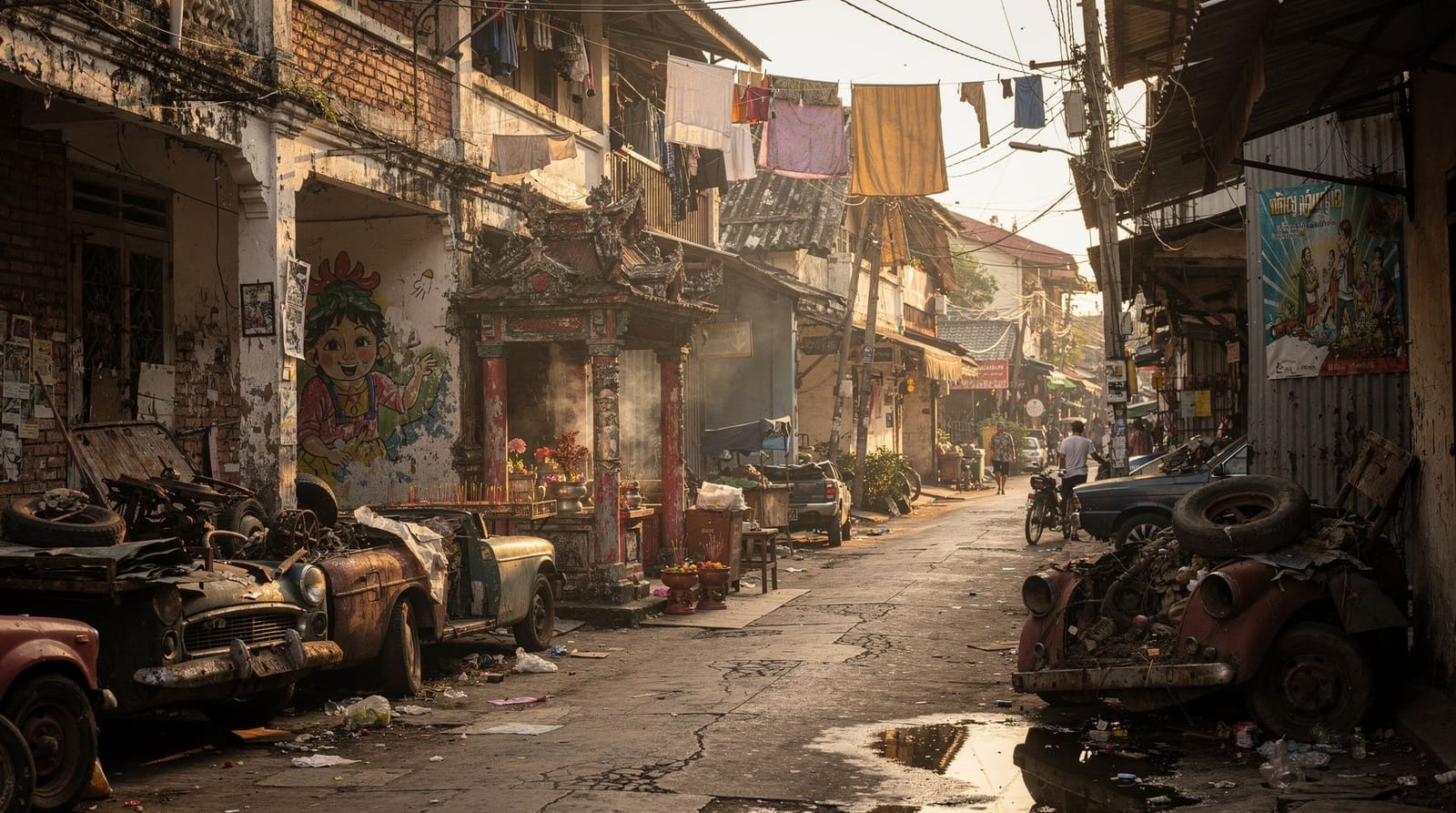
At the northern end of Charoenkrung, the lanes tighten into Talad Noi, a riverside maze of vintage car-parts workshops, peeling shrines, street art and old Sino-Thai shophouses. It is one of the most photogenic corners of Bangkok and an easy, atmospheric extension of a Bang Rak food walk. Our dedicated Talad Noi guide covers the wandering; here are the bites.
Mangkorn Khao is the local noodle institution, a long-running shophouse doing Chinese-style noodle soups and braises at honest prices, usually 50–80 THB a bowl. Around it, the neighbourhood’s old buildings have been quietly colonised by independent cafes and bars: Mother Roaster, hidden on an upper floor, is a cult specialty-coffee spot run by a long-time local roaster. Coffees here run roughly 90–150 THB, more than a street stall but part of the Talad Noi experience.
OneOunce, Warehouse 30 and the new Charoenkrung
Charoenkrung has also become a creative district, and the contrast is part of its charm. OneOunce in Ekamai-style cafe mode and the converted-warehouse complex Warehouse 30, a row of old godowns near the river, host design shops, galleries, specialty coffee and a couple of casual eateries. Expect coffees around 90–150 THB and brunch-ish mains around 200–350 THB.
This is the priciest end of Bang Rak eating, but it is honest pricing for sit-down cafe food, not a tourist trap. Use it as an air-conditioned breather between street stalls rather than a destination in itself. For the wider area context, the riverside Chao Phraya destination page covers how this stretch connects to the river and the boat piers. If you would rather finish the evening with a proper sit-down meal instead of grazing, the best Thai restaurants guide lists sit-down options nearby, and a riverside drink afterwards fits well into the wider Bangkok nightlife guide.
What makes this end of Charoenkrung interesting is the collision of eras on a single street. Within a couple of blocks you pass a hundred-year-old roast-duck shop, a working mosque with a Thai-Muslim kitchen tradition older than most of the city, vintage shophouses being reborn as third-wave coffee bars, and a former cargo warehouse now full of independent design studios. Bangkok’s Creative District designation accelerated the change, but unlike many gentrifying neighbourhoods the old food survived alongside the new, partly because the residential Muslim and Chinese communities never left. The result is a stretch where a 60 THB plate of roti and a 150 THB flat white live happily a few doors apart, and you can pick whichever suits the hour and your wallet.
A half-day walking route
Here is the order that works. Start at BTS Saphan Taksin (Exit 3) in the late afternoon. Eat first at Prachak Pet Yang for roast-duck noodles. Walk north on Charoenkrung, detouring into Soi Charoen Krung 50 for satay and grilled skewers, then cut toward Haroon Mosque for roti and Muslim curries. Continue north into Talad Noi for Mangkorn Khao noodles and a coffee at Mother Roaster, and finish around Warehouse 30 or with a sunset drink by the river.
The whole loop is about 2.5–3 km and you can stretch it over three or four hours, grazing as you go — finishing near MRT Hua Lamphong makes the trip home easy; see the MRT subway guide if the underground line is new to you. It links neatly into a broader Bangkok foodie itinerary or a day that ends in Chinatown and Yaowarat after dark, since the two districts almost touch. If you would rather not navigate the backstreets solo, a small-group village of love food walking tour covers the same ground with a guide who knows which carts are on which night.
Practical tips and prices
Budget roughly 300–500 THB (9–15 USD) per person for a full grazing evening across several stalls, more if you add cafe stops. Carry small notes; most street vendors are cash or QR only. The Muslim food area is quiet and residential, so keep noise and photography respectful, especially near the mosque. Daytime can be brutally hot along Charoenkrung, which is another reason to start late afternoon and finish by the cooler river. If you are combining Bang Rak with other neighbourhoods on the same day, the getting around Bangkok guide covers how the BTS, MRT and river boats connect. If you want to combine eating with the bigger picture of the area, the best food markets and what to eat in Bangkok guides round out the dishes you will meet here.
Bang Rak rewards slow walking and a willingness to eat where the locals queue. It is not a flashy night out, but it is the most honest food neighbourhood in central Bangkok, and the duck has been right for over a hundred years.
What it costs and how it compares
To set expectations against the rest of the city, Bang Rak sits firmly in the affordable-but-not-rock-bottom band. A plate of Prachak’s roast duck over rice runs roughly 60–90 THB (2–3 USD); a bowl with the egg-noodle version a little more. Charoenkrung’s roti and satay carts trade at 20–60 THB (under 2 USD) a portion, and the Muslim-quarter chicken biryani (khao mok gai) is usually 50–70 THB. Even the area’s third-wave cafes, which look boutique, mostly pour a flat white for 90–140 THB (3–4 USD) — dearer than a 7-Eleven coffee but a fraction of a hotel cafe. The honest read is that you can eat extremely well here for the price of one rooftop cocktail elsewhere in the city. If you are pacing a whole trip on a tight budget, cross-check the best cheap eats in Bangkok guide for the dishes that stretch the furthest, and the Bangkok travel costs breakdown for daily totals.
One caution worth repeating: a few riverfront and Asiatique-adjacent restaurants on the Charoenkrung strip lean on the tourist trade and price accordingly, with no-menu seafood and “market price” boards that can sting. The fix is simple — eat where the queue is Thai and the prices are chalked up clearly, and save the river view for a drink rather than a full meal. For a guided version that handles the ordering, a Bang Rak village-of-love food walk threads the best of these stalls together.
Dietary notes and staying safe
Bang Rak’s street stalls are mostly meat- and seafood-forward — Prachak’s duck, the satay carts, the Muslim-quarter curries — so vegetarians and vegans will need to look harder here than in some other districts; the vegetarian and vegan Bangkok guide has better-suited neighbourhoods and specific stalls. For general stall hygiene and what to avoid, the street food safety guide applies directly: busy stalls with high turnover, food cooked to order in front of you, and bottled or boiled drinks. Halal eaters are unusually well served here thanks to the Haroon Mosque cluster — see the dedicated halal food in Bangkok guide for more pockets around the city.
Is it worth it?
Frequently asked questions about Eating in Bang Rak and Charoenkrung: Bangkok's oldest food quarter
How do I get to Bang Rak and Charoenkrung?
How much does Prachak Pet Yang roast duck cost?
Is there good halal food in Bang Rak?
What is Talad Noi and is it worth visiting?
When is the best time to eat in Bang Rak?
Is Bang Rak food expensive?
Do the stalls take cards?
Can I do Bang Rak and Talad Noi in one trip?
Top experiences
Bookable activities with verified prices and instant confirmation on GetYourGuide.