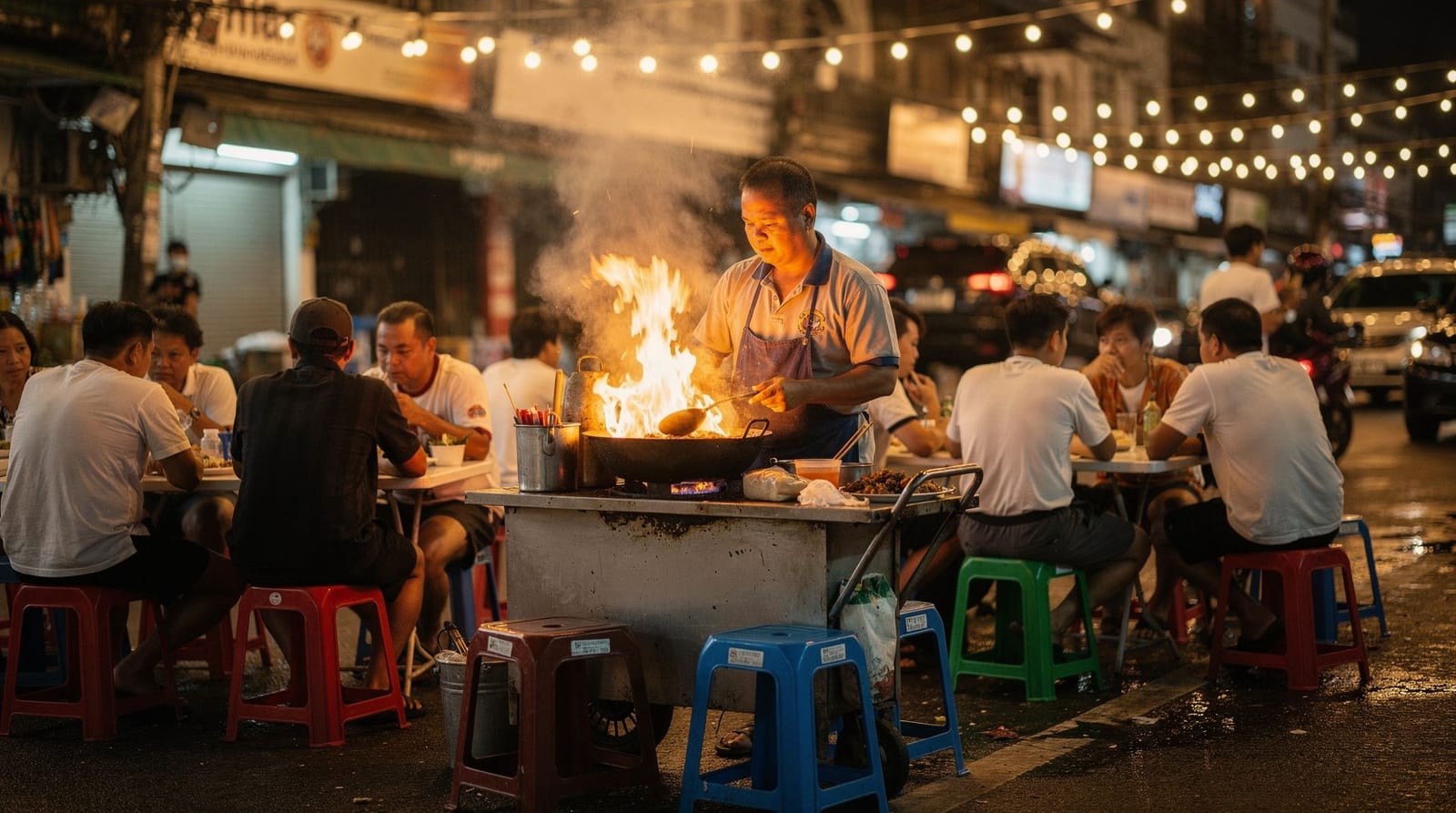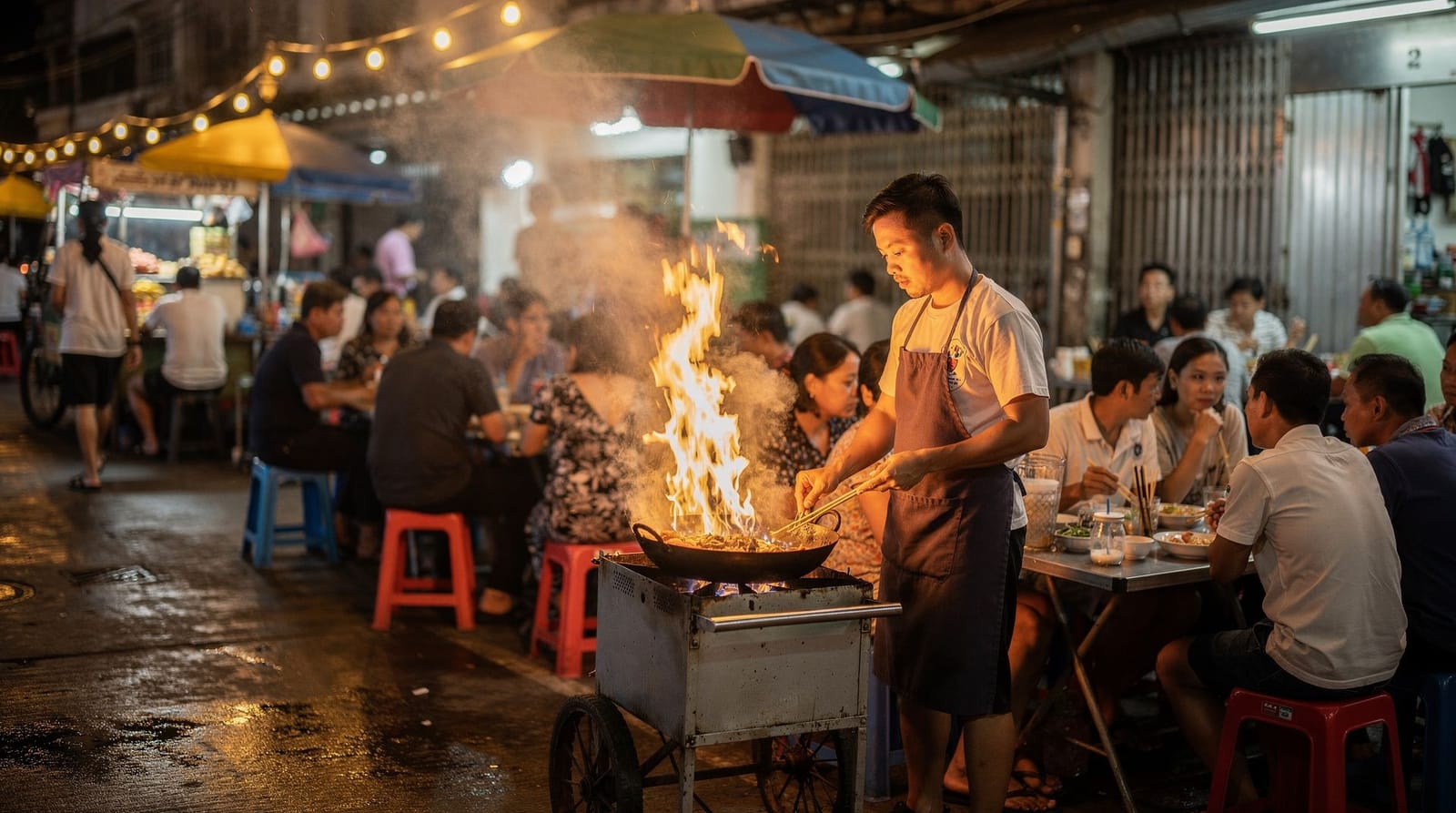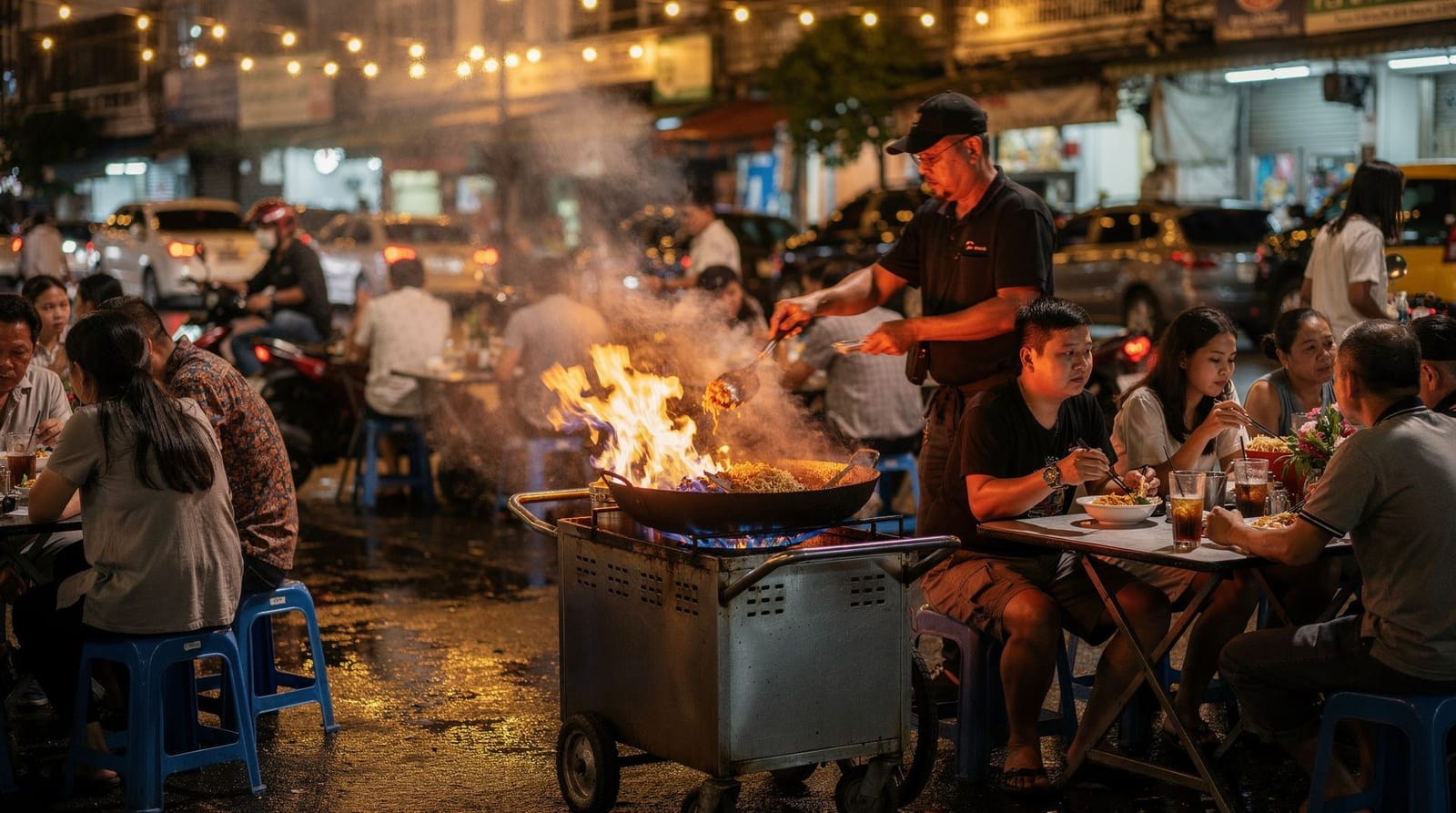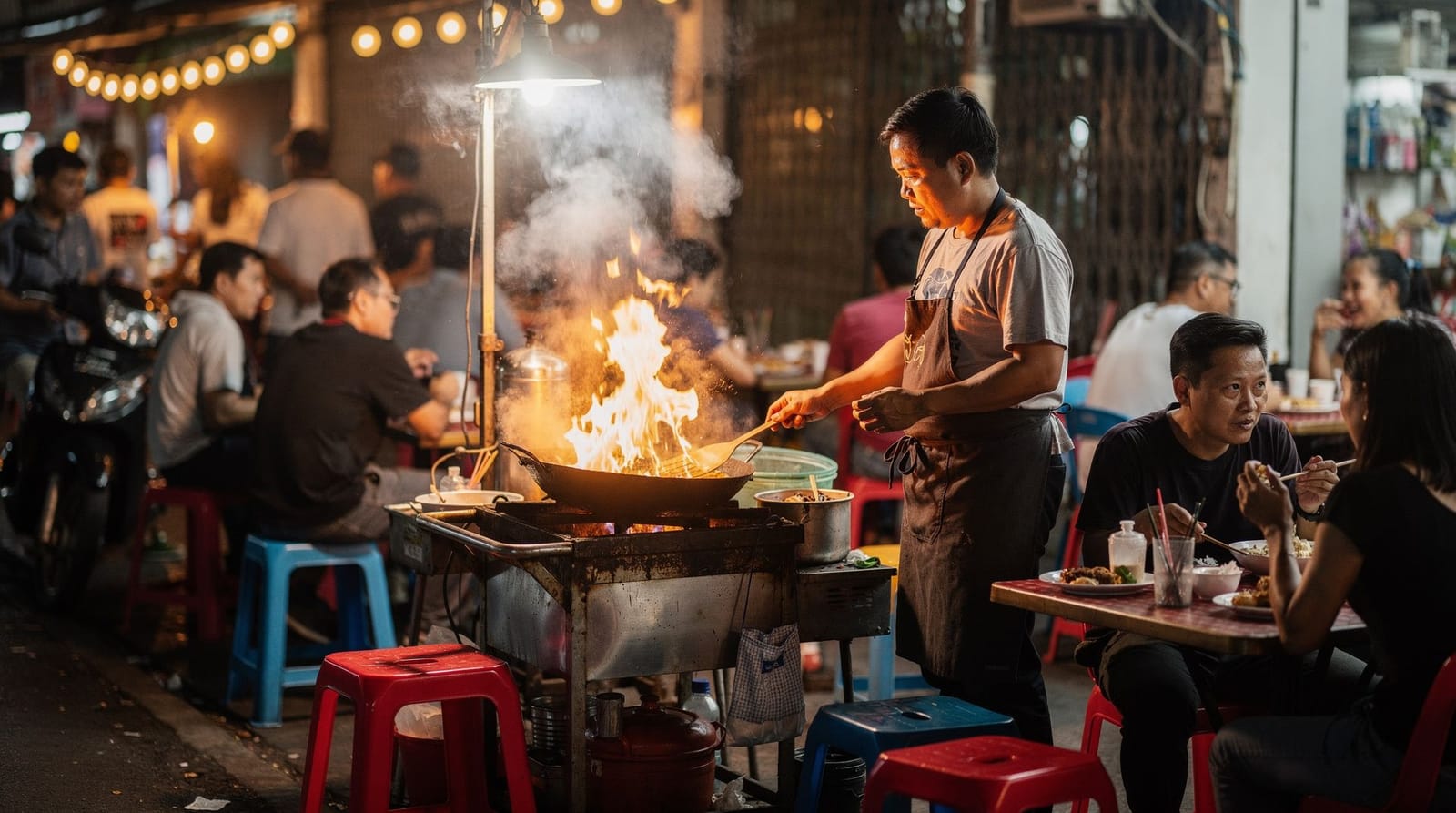
Is a Bangkok food tour worth it? An honest answer
Bangkok: Street Food Tasting Tour at Night
Is a Bangkok food tour worth the money?
For most first-timers, yes. A good walking or tuk-tuk tour costs roughly 1,200–2,500 THB (about 36–76 USD) and earns its keep on your opening night, in Chinatown's maze, or when you want to eat eight to twelve things without language friction. Confident, repeat visitors who research stalls can eat just as well solo for a fraction of the price.
A Bangkok food tour costs roughly 1,200–2,500 THB per person (about 36–76 USD at 33 THB to the dollar), which is a lot more than the 300–500 THB you would spend eating the same dishes yourself. So the honest question is not whether the food is good, because it almost always is, but whether the guide, the navigation and the curation are worth the premium. This guide answers that plainly, compares the main tour types, and tells you exactly who should book and who should save the money.
| Cost | Around 1,200–2,500 THB/person (group); 3,000–4,000+ THB private |
| Time needed | 3–4 hours, usually evening |
| Group size | Typically 6–12 (private tours are just you) |
| Best for | First-timers, Chinatown newcomers, dietary-restricted eaters |
| Booking | Advance recommended, especially weekend evenings |
| Getting there | Meeting points are usually BTS/MRT-adjacent; check the exact pin before you leave your hotel |
What you are actually paying for
The food on a Bangkok tour is rarely the expensive part. Eight to twelve tastings of street food, ordered solo, might total 300–500 THB. The other 700–2,000 THB buys you four things that genuinely matter on certain nights.
The first is navigation. Chinatown’s Yaowarat district is a maze of unmarked sois where the best stalls hide behind the obvious ones, and a guide walks you straight to them. The second is access to stalls you would never find or order from alone, including no-English carts and shophouse kitchens down alleys you would not wander into after dark. The third is language and ordering help, so you taste the off-menu items, get the spice level right, and never overpay. The fourth is context: why this noodle soup is peppery, what guay jub actually is, and which Michelin Bib Gourmand stalls earn the badge. For the dish-by-dish background a tour skims over, our Bangkok street food guide and what to eat in Bangkok go deeper than any guide has time for on the night.
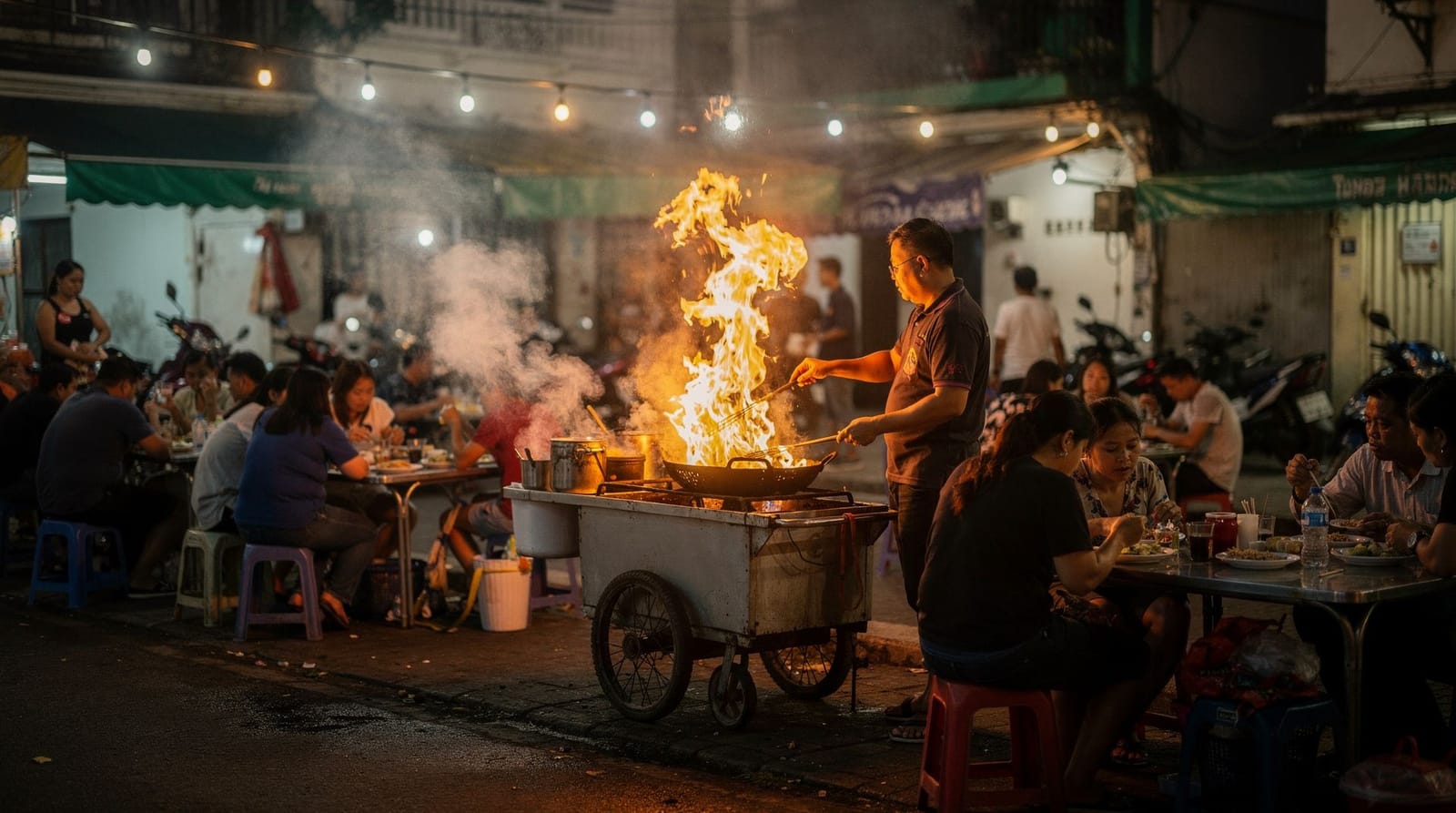
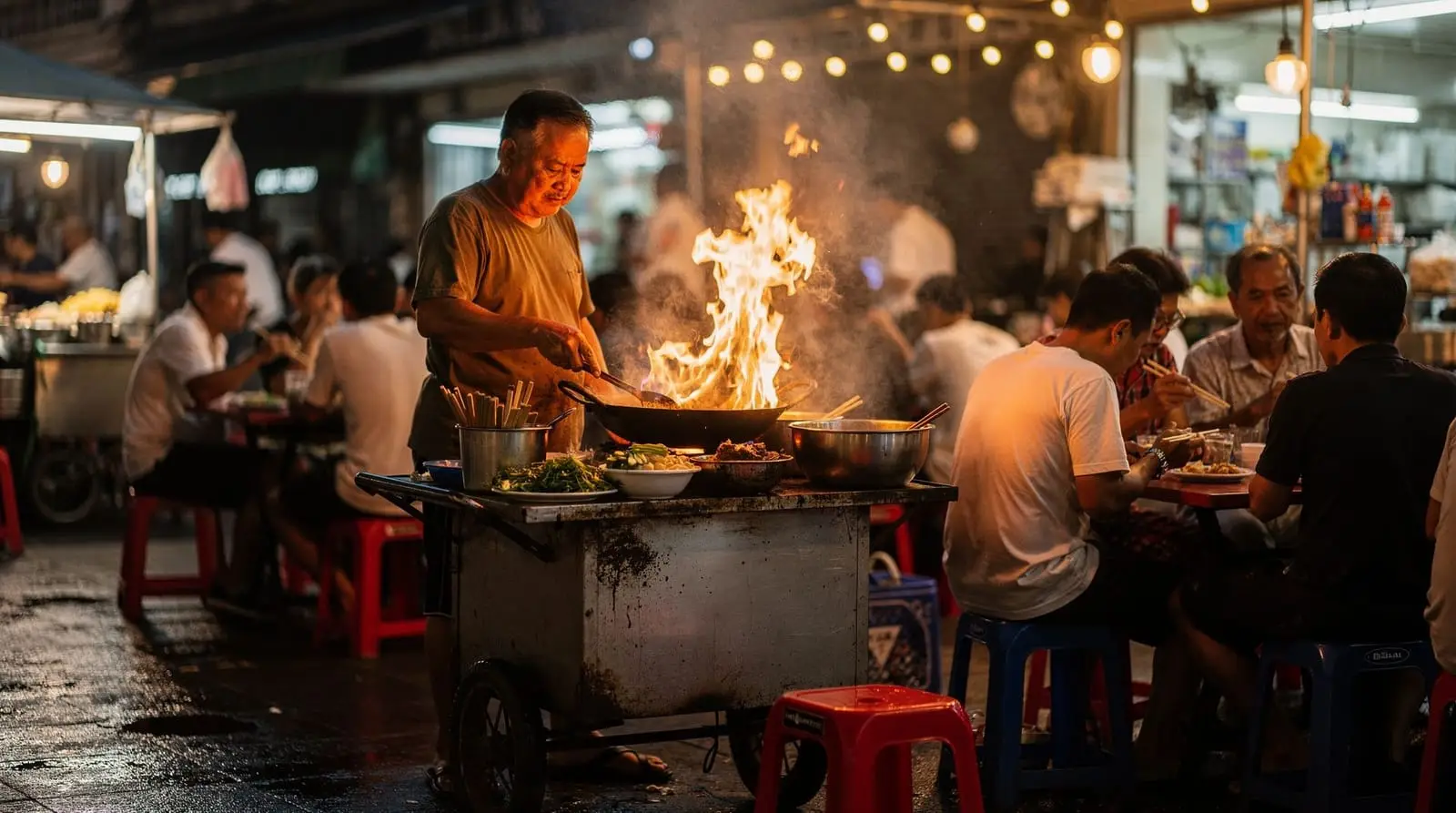
There is also a logistics dimension people underrate. Many of Bangkok’s best stalls only operate after dark, scattered across districts that are a hot, confusing walk apart. A tuk-tuk tour solves the evening-transport problem and turns the city’s chaos into part of the fun. That convenience is real, and on a first night it can be the difference between a great evening and a frustrated one.
The honest case against booking
A tour is not always the right call, and the people selling them rarely say so. Here is the other side.
The biggest mark against tours is simple maths. Bangkok street food is famously cheap, 40–80 THB a dish, and the whole joy of it is grazing freely. Pay 2,000 THB for a guided meal and you have spent four or five times what a self-guided street-food crawl would cost, on food that is not necessarily better than what you would find yourself. If your budget is tight, that money stretches across two or three days of independent eating. Our best cheap eats in Bangkok guide shows just how far 300–500 THB a day goes.
The second issue is pace and group dynamics. A group tour moves at the speed of its slowest eater and its fixed itinerary. You cannot linger at the stall you loved or skip the one you did not, and you eat what the guide orders. Independent eaters who like to follow their nose can find the structure constraining. The third, smaller issue is portion fatigue: twelve tastings sounds fun until stop nine, when you are genuinely full and the tour has three courses to go.
None of this means tours are a scam. It means they suit a specific moment in a trip, not every night of it.
Tour types compared
Bangkok’s food tours fall into a handful of recognisable formats. Pick by what you want from the evening.
| Tour type | Typical price | Duration | Best for |
|---|---|---|---|
| Chinatown night walking | 1,200–1,800 THB | 2–4 hrs | Depth, first-timers |
| Tuk-tuk Michelin | 1,800–2,500 THB | 3–4 hrs | Variety, atmosphere |
| Banthat Thong / viral eats | 1,300–2,000 THB | 3 hrs | Local, less touristy |
| Bang Rak backstreets | 1,500–2,200 THB | 3 hrs | Quiet, off the trail |
| Midnight / late-night | 1,500–2,500 THB | 3–4 hrs | Night owls |
| Vegan / vegetarian | 1,300–2,000 THB | 3 hrs | Plant-based diets |
Chinatown night walking tours
The classic. A two-to-four-hour walk through Yaowarat hitting noodle soups, guay jub, oyster omelettes, grilled seafood and dessert carts, all on foot so you can digest between stops. This is the deepest way to experience Bangkok’s most theatrical eating zone, and Chinatown is genuinely hard to navigate solo on a first visit. A small-group Chinatown night food walking tour is the safe default for a first-timer who wants depth over distance. For the self-guided version, our Yaowarat and Chinatown food guide and the Chinatown-Yaowarat destination page map the same ground. Expect roughly 1,200–1,800 THB.
Tuk-tuk Michelin tours
The crowd-pleaser. You ride a tuk-tuk between several districts in one evening, stopping at Michelin Bib Gourmand and viral stalls, often ending at a flower market or temple lit up at night. It covers far more ground than a walk and the tuk-tuk legs are half the fun. A Michelin street food tuk-tuk tour typically runs 1,800–2,500 THB and suits travellers who want variety, atmosphere and a few photogenic stops alongside the food. See Michelin street food in Bangkok for which stalls actually hold the badge.
Banthat Thong and viral-eats tours
Banthat Thong is the street Bangkok food obsessives talk about: student-priced, local-heavy, less touristy than Chinatown, and dense with Bib Gourmand noodle joints and Thai-Chinese desserts. A walk here feels more like eating with locals than performing tourism. Our Banthat Thong food street guide covers the standouts, and a guided Banthat Thong Michelin and viral eats tour is a fast way to hit them without guessing which queue is worth it. Expect around 1,300–2,000 THB.
Bang Rak backstreets tours
Bang Rak and Charoenkrung, the old riverside trading quarter, hide some of Bangkok’s best low-key eating in their lanes: Muslim-Thai roti, century-old noodle shops, and shophouse kitchens few tourists reach. A Bang Rak backstreets local eats tour trades Chinatown’s spectacle for quieter, more intimate discovery, and pairs well with our Bang Rak food guide and the Bang Rak-Charoenkrung destination page. Around 1,500–2,200 THB.
Midnight and late-night tours
For night owls. These start late, often 8 pm or 9 pm, and chase the stalls that only come alive after dark, when the office crowd has gone and the serious eaters appear. They are atmospheric and a little wild, best for travellers who do not mind a 1 am finish. Expect 1,500–2,500 THB.
Vegan and vegetarian tours
Thai cooking leans heavily on fish sauce and shrimp paste, so dedicated plant-based tours genuinely help. They route you to vendors who do meat-free versions properly rather than just leaving the protein out. If you eat this way, a vegan-focused tour is worth more to you than to anyone, because solo navigation is harder. Our vegetarian and vegan Bangkok guide covers doing it independently.
Typical prices, at a glance
Group walking and tuk-tuk tours cluster in the 1,200–2,500 THB band (36–76 USD), almost always including all food and water. Private versions run 3,000–4,000 THB and up, justified mainly if you want a tailored pace or you are a couple who values privacy. Anything advertised under 900 THB tends to mean fewer or smaller tastings, so read the inclusions. Most tours quote per person and expect cash or card on booking; on the night, the guide pays the stalls, so you carry nothing but a small tip.
What to expect on the night
Plan to walk three to four hours and eat the equivalent of a large dinner. Come hungry, skip lunch, and wear shoes you can stand in on hot pavement. Groups are usually six to twelve people; private tours, just you. Your guide handles every order, explains each dish, manages spice levels, and knows which stalls are clean and trusted, which dovetails with our street food safety guide if you want to keep eating confidently afterwards. Bring a few hundred THB in cash for anything extra you want to buy, plus a tip. Tell the guide about allergies or dietary limits at the start, not mid-tour.
Tipping is not required in Thailand but is welcomed for a good guide: roughly 100–200 THB per person (3–6 USD) is fair and unawkward. There is no percentage convention. If you booked a tuk-tuk night tour or a Bangkok street food tour and had a great evening, a tip is the cleanest way to say so.
DIY your own food crawl instead
If you decide a paid tour isn’t for you, building your own crawl is genuinely doable, especially after one guided night has taught you the ordering ritual. Pick a single dense zone rather than hopping the whole city: Yaowarat after dark, or the Banthat Thong strip, both concentrate enough stalls within a short walk that you don’t need transport help. Anchor the evening around two or three specific dishes you already know you want, such as khao man gai, a bowl of boat noodles near Victory Monument, or a plate of mango sticky rice for dessert, then let the queue length at each stall be your guide to quality. Bring small notes, arrive hungry, and treat getting slightly lost as part of the evening rather than a failure. Our street food safety guide covers the hygiene cues worth knowing before you go it alone.
A middle ground exists too: book only the neighbourhood you find most intimidating, such as Chinatown, and self-guide the rest of the trip. This way you pay the tour premium once, for the one district where getting lost genuinely costs you time, and you keep every other night’s budget for grazing freely. Cross-reference against our best pad Thai and best food markets guides once you feel confident enough to strike out on your own.
Fitting a food tour into the wider trip
A single evening tour rarely needs to stand alone. If eating well is the whole point of your trip, a dedicated Bangkok foodie itinerary sequences a tour night alongside market mornings and cooking classes so the days build on each other rather than repeat. Travellers with dietary restrictions should also check our halal food in Bangkok guide before booking, since not every tour route passes halal-certified stalls even when it can accommodate vegetarians. And if the tour is your first night in the city, pairing it with the Bangkok for first-timers guide turns one good meal into a framework for the rest of the week.
Who should book, and who should skip it
Book a food tour if you are a first-timer, if it is your opening night and you want to learn the dishes fast, if you find Chinatown intimidating, if you have dietary needs that complicate solo ordering, or if you simply want a guided, social evening with the logistics handled. For first-timers in particular, a tour pairs naturally with our Bangkok for first-timers guide as a confidence-builder.
Skip it, or at least do it just once, if you are a confident, repeat visitor who enjoys researching stalls, if your budget is tight, if you prefer to graze at your own pace, or if you have already done the orientation work yourself. You will eat just as well for 300–500 THB a day, and our best cheap eats and Bangkok on a budget guides show exactly how.
The verdict, by traveller type
For the first-time visitor, a food tour is worth it, full stop: do one early and let it pay off across the rest of the trip. For the budget backpacker, skip it and self-guide, or splurge on a single Chinatown walk and eat solo otherwise. For the nervous or dietary-restricted eater, it is the single best confidence purchase you can make. For the food-obsessed repeat visitor, do a niche tour you could not easily replicate, such as a deep Banthat Thong or midnight crawl, and eat independently the rest of the time. For the couple wanting a special, hands-off evening, a private tuk-tuk tour is the indulgence that delivers. Slot whichever you choose into a Bangkok foodie itinerary and you have your eating sorted.
Frequently asked questions about Is a Bangkok food tour worth it? An honest answer
How much does a Bangkok food tour cost?
Are Bangkok food tours actually good value?
Walking tour or tuk-tuk tour, which is better?
What time do Bangkok food tours run?
Do I need to tip on a Bangkok food tour?
Will I be hungry or stuffed after a food tour?
Can vegetarians and vegans do a Bangkok food tour?
Should I book a food tour on my first night in Bangkok?
Top experiences
Bookable activities with verified prices and instant confirmation on GetYourGuide.