What to pack for Bangkok: a practical 2026 packing list
Bangkok: Half-Day Temple and Grand Palace Group Tour
What should I pack for Bangkok?
Pack light, breathable clothing for the heat and humidity, but include items that cover shoulders and knees for temple visits, where a dress code is enforced. Bring sandals plus comfortable walking shoes, sun protection, a refillable water bottle, a light rain layer (especially June–October), and a power adapter. Leave heavy clothing, valuables and anything disrespectful of the monarchy or Buddhism at home. A small day bag and cash for street food complete the kit.
Packing for Bangkok comes down to balancing two things the city demands: clothing light enough for relentless heat and humidity, yet modest enough for the temples, where a dress code is genuinely enforced. Get that balance right, add a few practical extras for the rain, the sun and the air-conditioning, and you’ll be comfortable and culturally respectful without overpacking. This guide gives a practical, season-aware packing list for Bangkok in 2026, plus the things to deliberately leave at home.
| Climate | Hot and humid year-round, 30-40°C |
| Dress code | Shoulders and knees covered for temples |
| Rainy season | June-October — pack a light rain layer |
| Key extra | A scarf or sarong doubles as temple cover-up and air-con layer |
| Buy locally | Cheap clothes, umbrellas and toiletries widely available if you forget something |
This is a pure information page — no tours to sell, just what to put in your bag. It pairs with the temple etiquette and dress code guide and the best time to visit Bangkok guide.
The two-rule foundation: light but modest
Everything starts here:
- Light and breathable for the heat. Bangkok is hot and humid year-round, often 30–40°C with high humidity, so loose cotton and linen in light colours, plus quick-dry fabrics, are your friends.
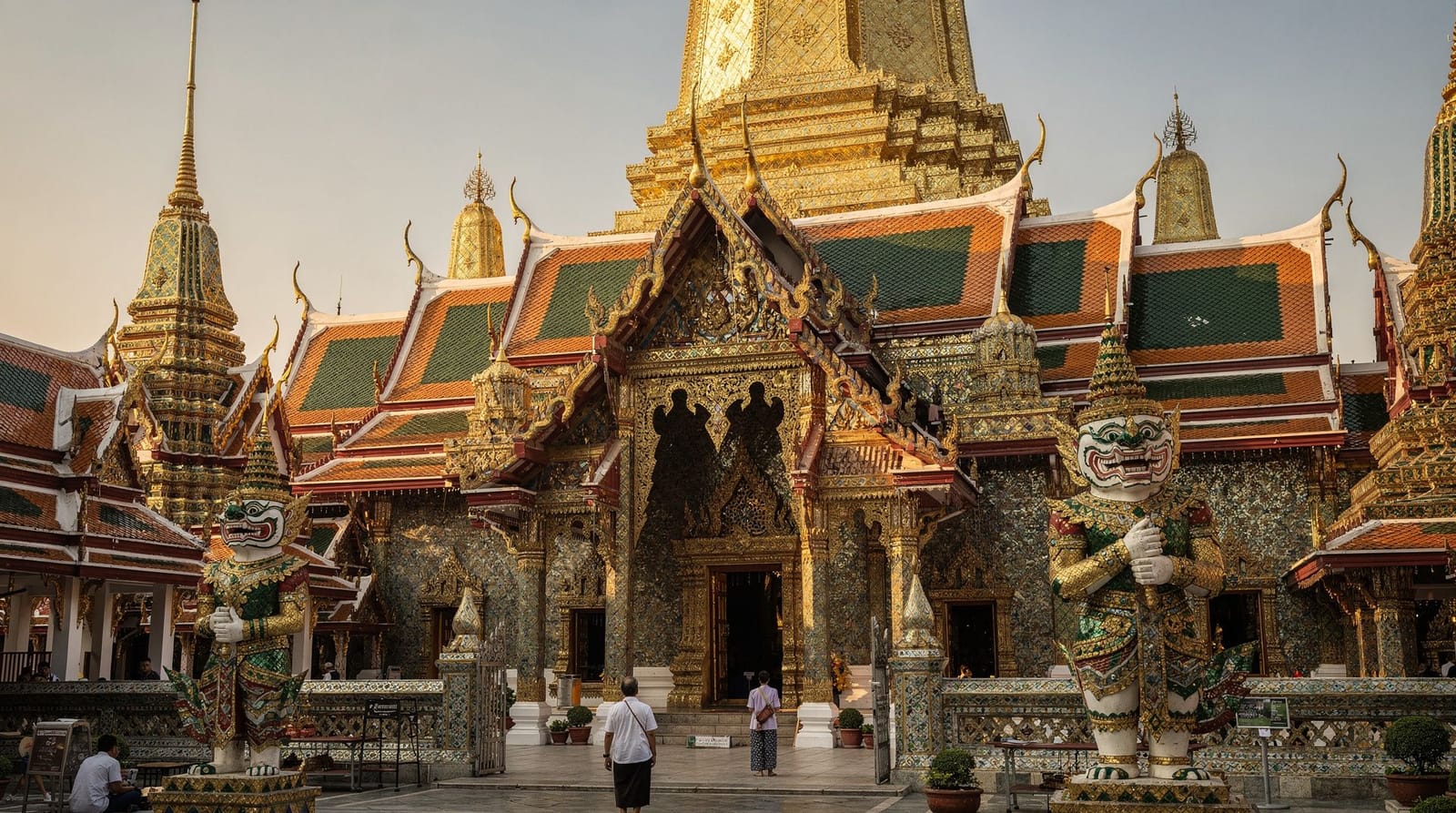
- Modest enough for temples. Temples — and especially the Grand Palace — require shoulders and knees covered for both men and women, and you remove your shoes inside. Improperly dressed visitors are turned away.
The smart solution is clothing that satisfies both: lightweight long skirts or trousers, tops with sleeves, and a light scarf or sarong you can throw on to cover up when entering a temple, then remove in the heat outside.
Clothing checklist
- Lightweight tops — breathable, light colours; include a few with sleeves for temples.
- Long, light trousers and/or a long skirt — temple-appropriate and cooler than they look in breathable fabric.
- A scarf or sarong — versatile temple cover-up, sun shade, and warmth in cold air-conditioning.
- Shorts and casual wear — fine for everyday city wandering and markets (just not temples).
- A light layer or cardigan — Bangkok’s malls, trains and restaurants are fiercely air-conditioned.
- Sandals or flip-flops — ideal for the heat and easy to slip off at temples.
- Comfortable closed walking shoes — you’ll walk a lot; markets and uneven streets reward proper shoes.
- Swimwear — for hotel pools and any beach day trip.
- Smart-casual outfit — for rooftop bars, some of which enforce a dress code (no shorts or flip-flops).
Why the dress code deserves a place in your bag
Temples in Bangkok are working places of worship, not just sights, and the dress code is a way of showing respect to the people who use them. Packing for it in advance saves you from buying something last-minute or being turned away at the entrance after a long journey across town. The simplest habit is to treat covered shoulders and knees as the default for any day that includes a temple, and keep a scarf in your day bag in case you change your mind on the way. The grand palace dress code guide goes into the detail for the strictest site, and the thai customs and etiquette guide explains the wider habits that go with the clothes, such as removing shoes and keeping a respectful manner.
Rainy-season and weather extras
If you’re visiting June to October (rainy season), or hedging year-round:
- Compact umbrella or packable rain jacket — downpours are sudden and heavy, though usually short.
- Quick-dry clothing and footwear that copes with wet streets.
- Waterproof phone pouch — useful in the rain and around the river.
The rainy season Bangkok guide explains how to travel around the showers. Even in the dry months, a small umbrella doubles as sun shade in the brutal hot season.
Sun, heat and health items
- Sunscreen (high SPF) and a hat — the sun is intense.
- Sunglasses.
- Mosquito repellent — dengue is present; cover up at dusk.
- Refillable water bottle — stay hydrated; don’t drink the tap water, but bottled refills are cheap.
- Personal medication with a copy of the prescription, plus basic stomach remedies and rehydration salts for the heat.
- Hand sanitiser and a small first-aid kit.
- A cooling towel or portable fan — small luxuries that make midday sightseeing bearable.
Electronics and adapters
- Universal travel adapter — Thailand uses 220V with outlets commonly taking two-pin flat and round plugs.
- Phone — essential for navigation, Grab and maps; sort connectivity with a SIM or eSIM.
- Power bank — long days out using maps and ride-hailing drain batteries fast.
- Charging cables and, if you photograph, your camera and spare storage.
Most hotels provide hairdryers and toiletries, so you can travel lighter on those.
Documents and money
- Passport valid 6+ months from entry, plus a copy stored separately. See the Thailand visa and TDAC guide.
- TDAC confirmation (the free arrival card), printed or digital.
- Travel insurance details with good medical cover.
- Debit/travel card (Wise or Revolut for low fees) plus a backup card.
- Some cash — local currency or USD to exchange; cash is essential for street food, markets and boats, as the Bangkok travel costs guide details.
- A secure pouch or money belt for crowds and markets.
What to leave at home
- Heavy or thick clothing you won’t wear in the heat.
- Anything disrespectful to the monarchy or Buddhism — including clothing bearing Buddha images, which is culturally offensive and can cause serious legal trouble.
- Excessive valuables and jewellery — keep a low profile in crowds.
- Revealing outfits for temples — save beachwear for the beach.
Thailand also enforces severe penalties for drugs — an absolute no. And since you’ll likely shop at the markets and malls, leaving room in your luggage is wise.
Packing by type of day
A single bag has to cover very different days in Bangkok, so it helps to think in outfits rather than in individual items. Most trips are made of the same four or five kinds of day, and each one asks for a slightly different mix.
A temple day. This is where the dress code matters most. Wear light trousers or a long skirt and a top with sleeves from the moment you leave the hotel, rather than changing at the gate. Slip-on sandals make the shoe removal painless, and a small tote or day bag keeps your hands free. If you are planning a full circuit, the temple hopping route and the best temples in Bangkok show how many stops fit into a day, which tells you how much walking your shoes need to handle. Photographers should read the temple photography tips before deciding which lens to carry.
If you would rather not navigate the temples alone, a guided outing such as a half-day group visit to the Grand Palace and the main temples still asks for the same covered shoulders and knees, so the clothing advice above applies unchanged.
A market or street-food day. Choose clothes you don’t mind sweating through or splashing with sauce. Closed shoes are worth it on wet or uneven ground, and a small cross-body bag is easier in a crowd than a backpack. Wet wipes or hand sanitiser come in handy, and so does cash in small notes. The street food guide and the markets guide explain what to expect and help you decide how much to carry.
A river and boat day. Surfaces are slippery and spray is possible, so quick-dry fabric and grippy sandals earn their place. Keep your phone in a waterproof pouch and your valuables zipped. The Chao Phraya boats guide covers how the boats work, which is useful context for deciding what to bring aboard.
An evening out. Pack one smart-casual outfit that works for a rooftop, a cocktail bar or a dinner cruise. Closed shoes and long trousers are the safest option if a venue enforces a dress code. See the nightlife guide and the rooftop bars guide for the kind of places where this matters.
A day trip. Day trips out of the city often involve more walking, more sun and fewer places to buy things if you forget them. Bring sun protection, water, a layer for the vehicle’s air-conditioning and shoes you trust. The day trips from Bangkok guide helps you pick, and the Ayutthaya day trip is a typical example of a day that combines temples, heat and a lot of walking. For a ready-made version, a guided temple tour of the ancient city of Ayutthaya asks for the same kit: sun protection, water and shoes you trust.
Fabrics, fit and laundry
The fabric matters more than the garment. Cotton and linen breathe well but can stay damp once soaked, while quick-dry synthetics dry fast but can feel clammy if they don’t wick well. Many travellers end up with a mix: natural fibres for sitting and sightseeing, technical fabrics for the days with the most walking or the likeliest rain.
Fit counts too. Loose cuts let air move and make the temple dress code easy to meet without feeling covered up. Tight, clingy clothing shows every drop of sweat and is warmer than it looks. Light colours reflect the sun, though they also show stains, so a darker top can be the practical choice for a street-food evening.
Because laundry is cheap and quick in the city, you do not need a fresh outfit for every day. Plan on a handful of tops, two or three bottoms and enough underwear and socks to bridge the gap between washes. Rinsing a shirt in the sink and hanging it in the hotel room works too, though in humid weather it can dry slowly, so don’t count on it for the night before an early start. If you intend to rely on laundry, pick items that don’t need ironing and that tolerate repeated washing.
Bags, shoes and small comforts
The main bag. A carry-on-sized bag is enough for most trips, and a soft bag is easier to squeeze into tight hotel rooms and onto boats and trains than a rigid case. Leave a little space empty, as you will probably come home with souvenirs, a point the souvenirs guide makes easy to believe.
The day bag. A small, lightweight bag with a zip is ideal. It should hold water, a rain layer, your phone and charger, and a scarf. Anything that can be opened from behind you in a crowd is a poor choice for markets and public transport, so favour a zip you can see or a cross-body style worn in front.
Shoes. Two pairs is usually the right answer: sandals for heat and temples, and comfortable closed shoes for long walking days. New shoes are a bad idea. Blisters in humid weather are miserable, so break in anything you plan to wear for hours. Socks are optional with sandals but handy with closed shoes, and a spare pair is useful when the weather turns.
Small comforts. A few items weigh almost nothing yet make a real difference: a hair tie or clip for the heat, a handkerchief or small towel for the sweat, a spare plastic bag for wet or dirty clothes, a pen for forms, and earplugs or an eye mask if you are a light sleeper in a busy neighbourhood. A lightweight scarf does a surprising number of jobs: cover-up, sun shade, pillow, and extra layer on a cold train.
Before you fly: a short checklist
A few things are worth doing at home rather than in the airport queue.
- Check the entry requirements and complete the arrival card, following the Thailand visa and TDAC guide.
- Sort out how you’ll get online once you land, using the SIM and eSIM guide, so that maps and ride-hailing work from the first minute.
- Think about your arrival route, since the Suvarnabhumi airport to city guide and the Don Mueang airport guide both affect what you carry in hand.
- Read up on the common scams in Bangkok, which is as much a mindset as a packing item.
- Tell your bank you are travelling, and keep a spare card in a separate place from your main wallet.
- Photograph your passport and insurance documents and store them somewhere you can reach offline.
- Decide where you will stay using the where to stay guide, because the hotel’s facilities (laundry, pool, hairdryer) affect how much you need to bring.
Packing for different travellers
Families. Children feel the heat sooner than adults, so bring hats, spare clothes and a way to keep them cool. Wipes, snacks and a small amount of familiar medication are worth carrying. See the Bangkok with kids guide for more on how the days go.
Solo travellers. Travelling alone means carrying everything yourself, so lean towards the lighter end. A secure pouch, a portable charger and a printed copy of your accommodation details are comforting. The solo travel guide covers the practical side.
Older travellers. Comfortable shoes, a light folding umbrella for sun and rain, and easy-to-wear clothing matter most, along with any regular medication in its original packaging. The Bangkok with elderly guide goes into pacing and comfort.
Budget travellers. You can pack even less, because inexpensive clothes and toiletries are easy to find. The budget guide shows where the savings are, and a modest bag leaves room to buy locally.
A minimalist packing philosophy
Bangkok rewards packing light. The heat makes you want minimal clothing, laundry is cheap and quick, and you can buy almost anything you forget — cheap clothes at the markets, toiletries at any 7-Eleven, an umbrella on any street corner during a downpour. A carry-on plus a small day bag is enough for most trips. Prioritise the temple-appropriate layer and the comfortable shoes; improvise the rest on the ground. First-timers should also read the Bangkok for first-timers guide for what to expect once you’ve landed with that well-packed bag.