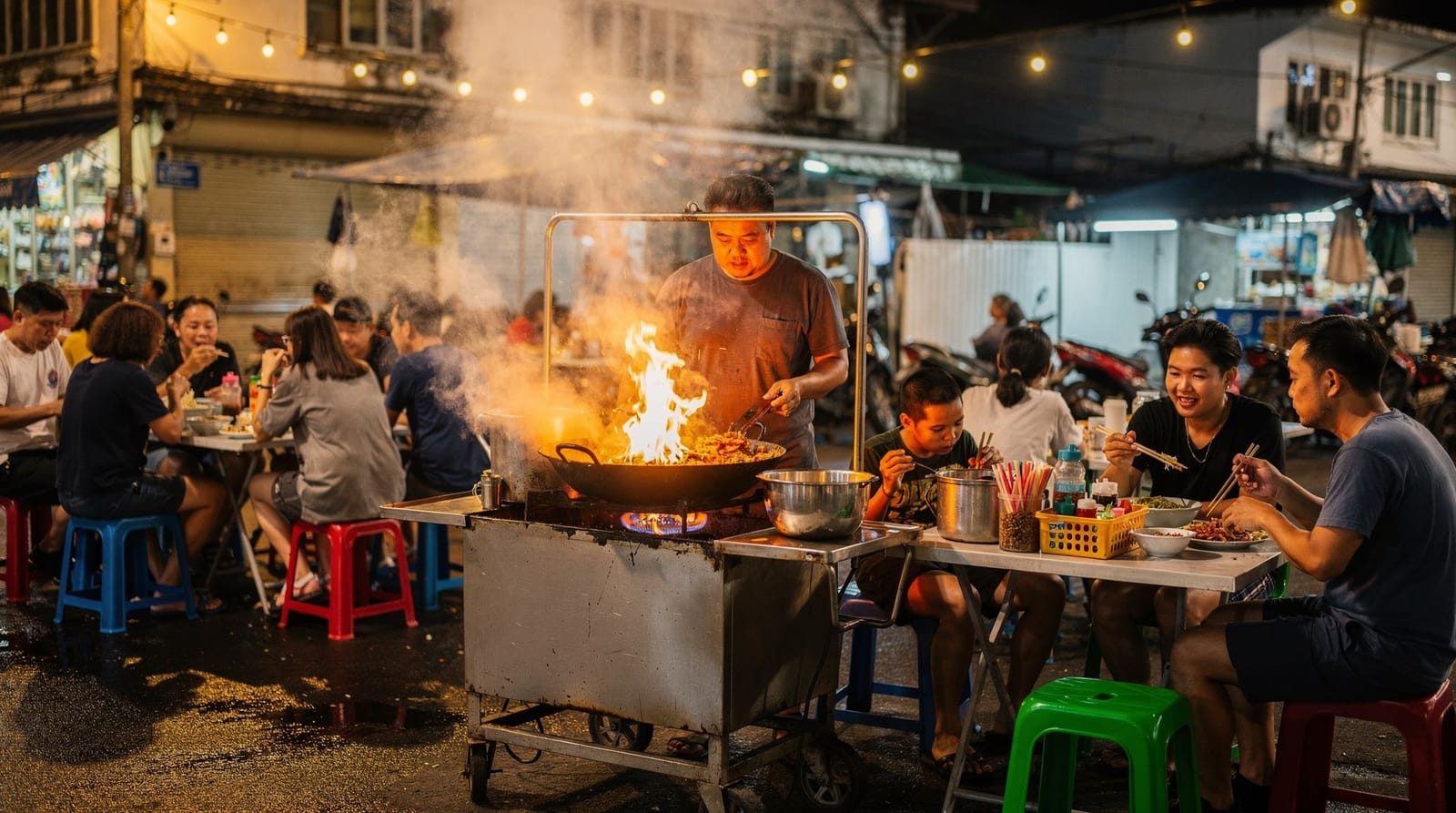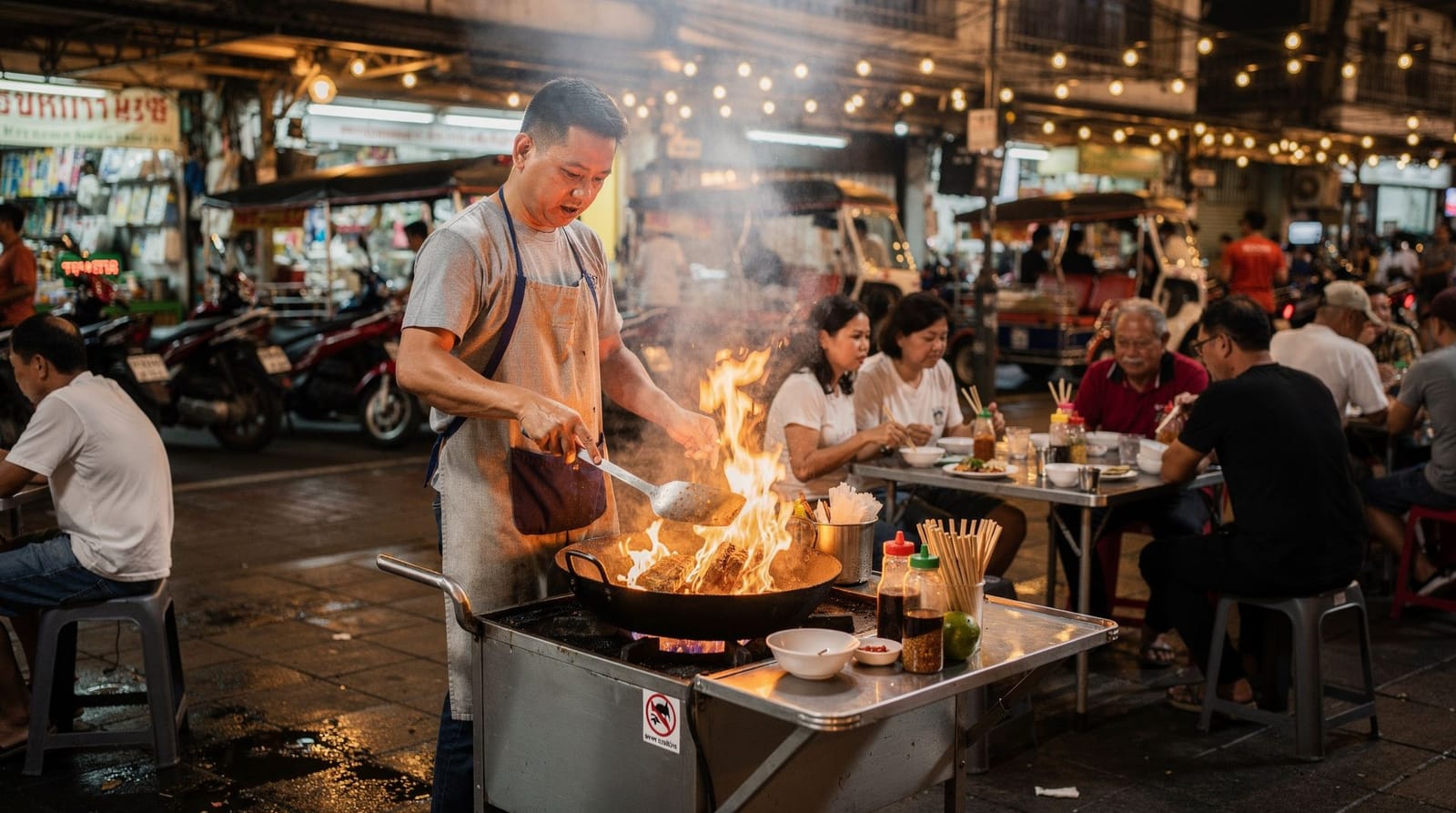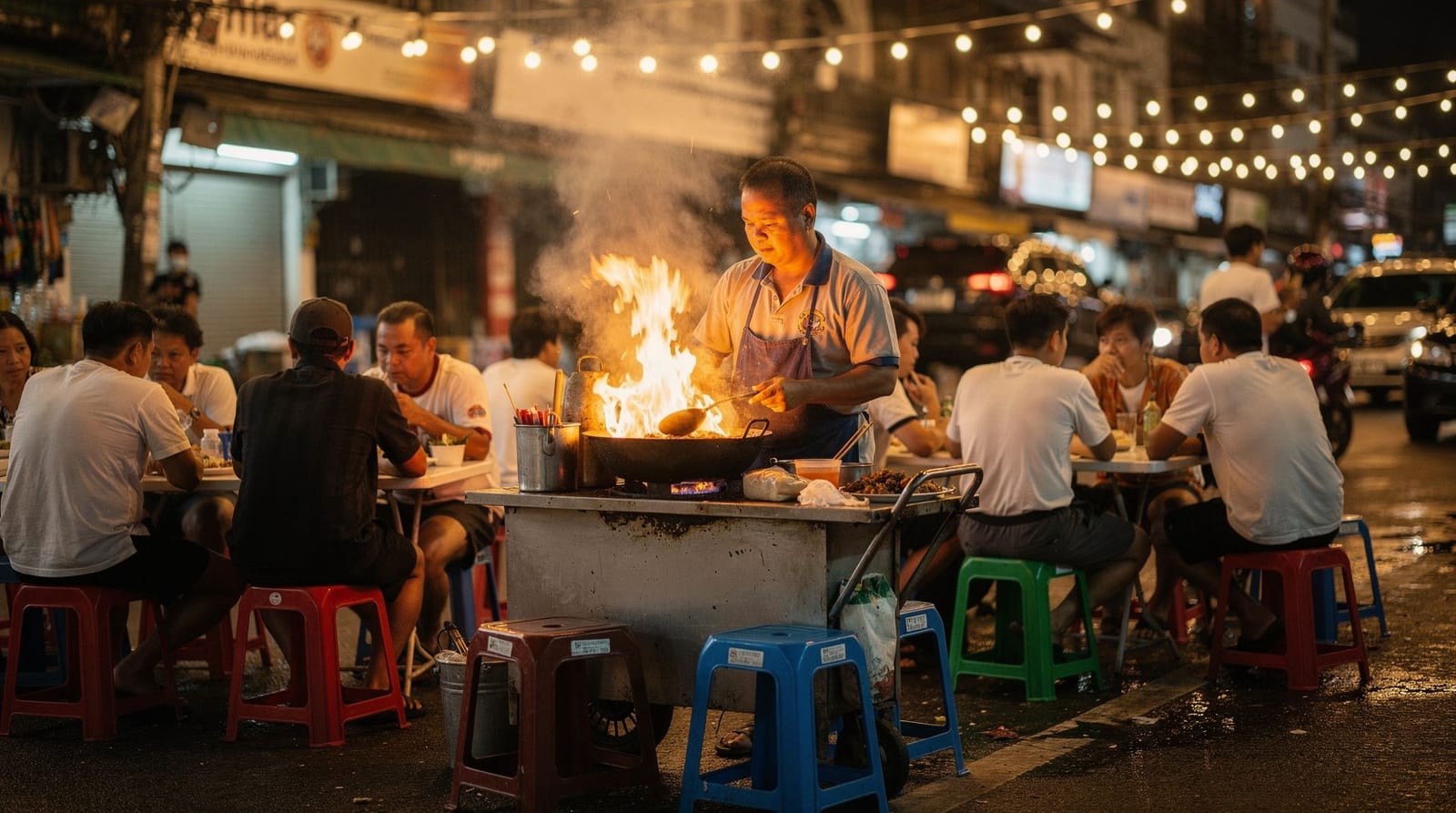
Where to eat the best pad thai in Bangkok
Bangkok: Street Food Tasting Tour at Night
Where do you find the best pad thai in Bangkok?
Thip Samai near the Golden Mount (Pratu Pi) is the famous one, opening around 17:00 with long queues and bowls from about 60 to 300 THB. Pad Thai Fai Ta Lu and Banthat Thong stalls are excellent, often cheaper alternatives that skip the wait.
Pad thai is the dish every visitor wants to tick off, and Bangkok has one address everyone names first: Thip Samai. It deserves its fame, but it is also queue-heavy, evening-only and not the only place doing this dish brilliantly. This guide covers where to eat the best pad thai in the city in 2026, what real pad thai actually is, the variations worth paying for, honest prices in THB, and a straight answer on whether the famous shop is overrated.
| Most famous | Thip Samai (Pratu Pi), Thanon Maha Chai |
| Best value | Street carts and Banthat Thong stalls |
| Typical cost | 40–70 THB street; up to 300 THB premium versions |
| Best time | Right at opening (17:00) or after 21:00 to dodge queues |
| Getting there | MRT Sam Yot, 10–12 minute walk to Thip Samai |
The main options compared
| Where | Price | Typical wait | Verdict |
|---|---|---|---|
| Thip Samai | 60–300 THB | 30–60 min at peak | Order the egg-wrapped or prawn-oil version |
| Pad Thai Fai Ta Lu | 80–150 THB | Shorter than Thip Samai | Smoky wok-char, a good second stop |
| Banthat Thong stalls | 50–80 THB | Minimal | Casual, late-night, no pilgrimage needed |
| Unbranded street carts | 40–70 THB | None | Best everyday value, cooked to order |
What pad thai actually is
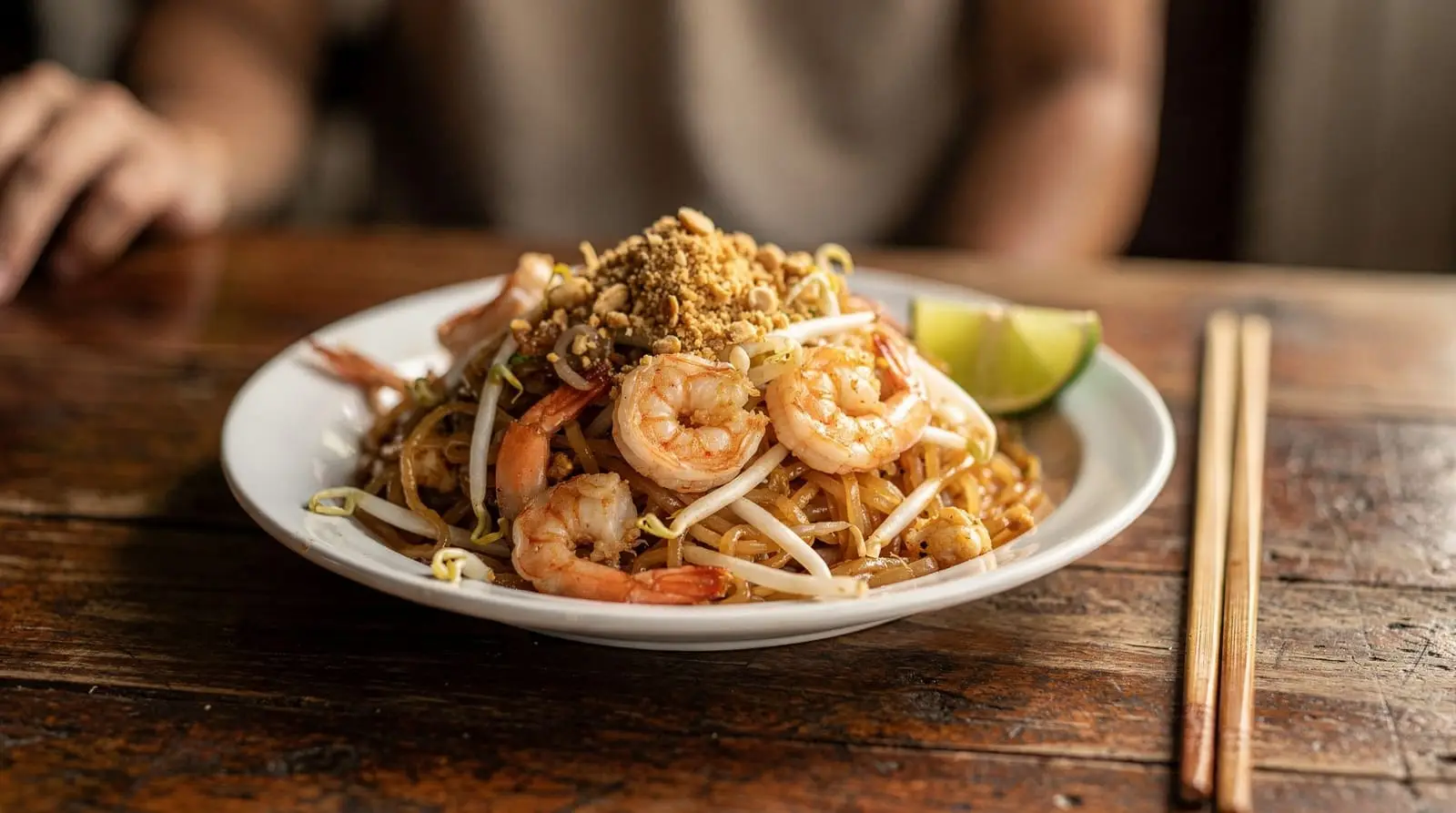
Pad thai is stir-fried rice noodles (sen chan) tossed in a sauce built from tamarind, palm sugar and fish sauce, with firm tofu, dried shrimp, garlic chives, bean sprouts and crushed peanuts. A good plate is glossy, not greasy, and balances sour, sweet and savoury without being sticky-sweet. It is finished with a wedge of lime and a small caddy of sugar, chilli flakes, fish sauce and peanuts so you adjust it to taste at the table.
It is worth knowing the dish is mild by default. If a stall hands you noodles that are searingly hot, that is unusual. Pad thai is about balance, and the chilli is yours to add. For the wider context of how it sits among other staples, the what to eat in Bangkok guide puts it in order of priority, and the Bangkok street food guide explains the stall etiquette that applies everywhere below.
Thip Samai: the famous one
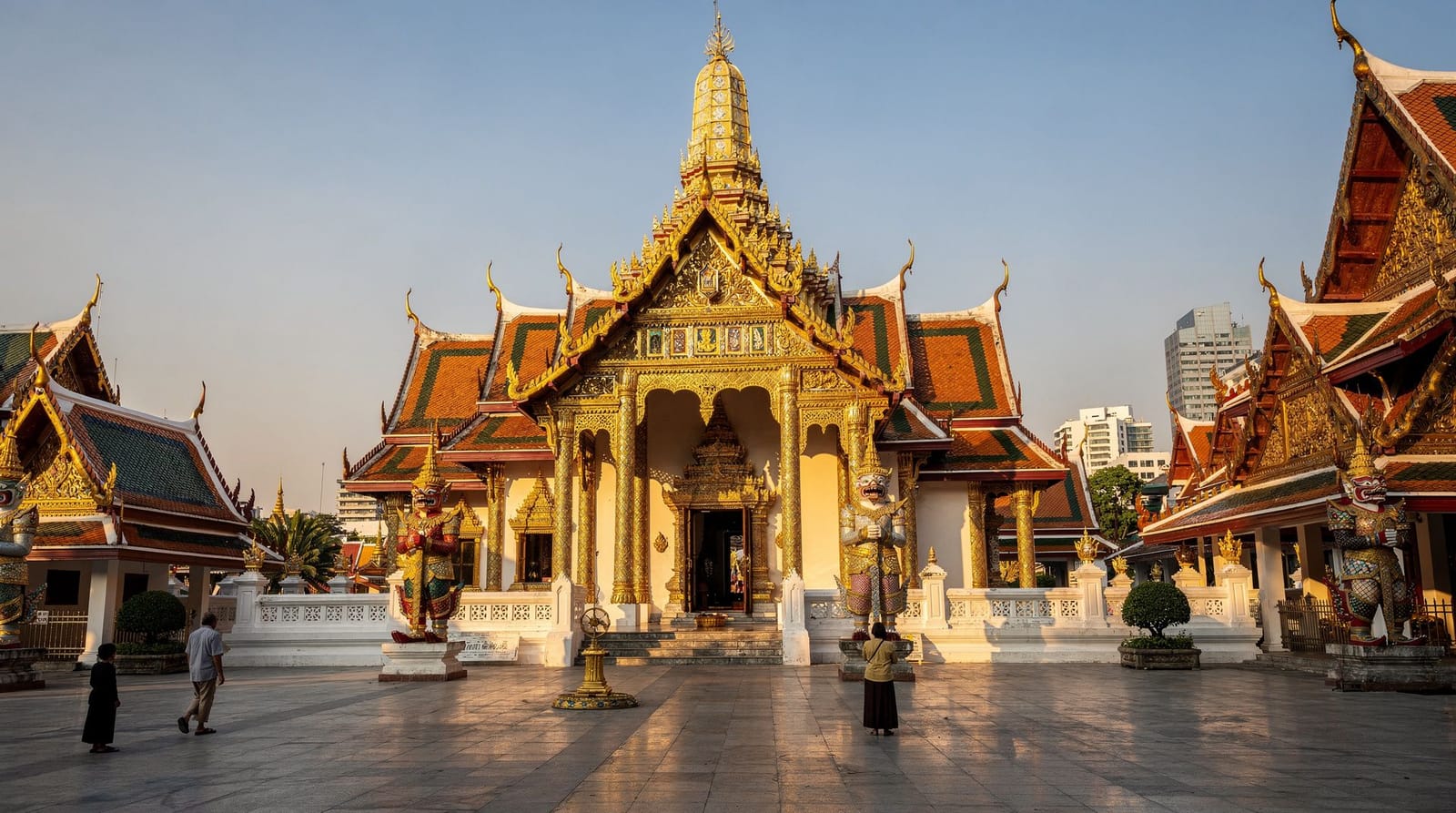
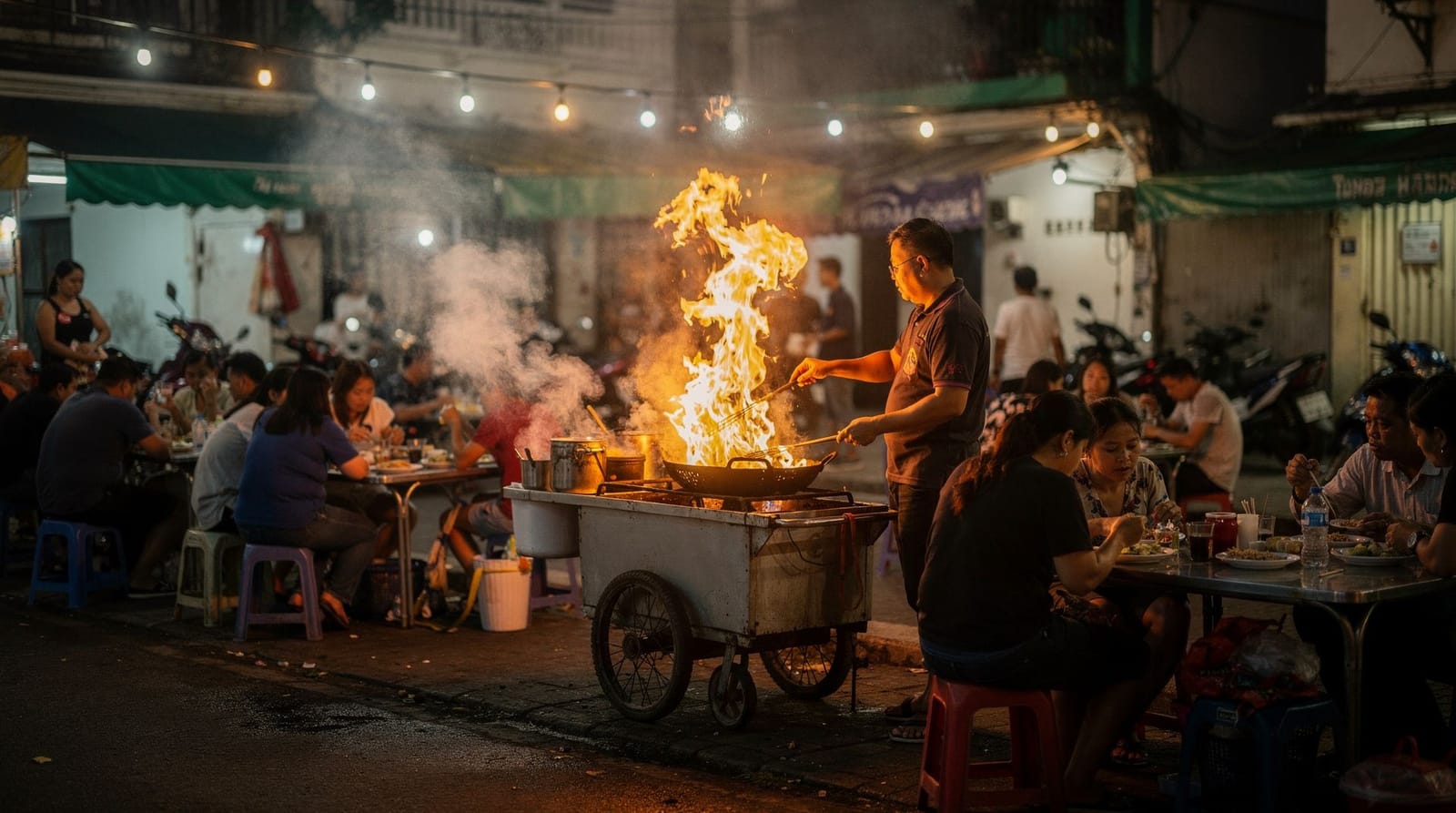
Thip Samai (sometimes called Pratu Pi, “ghost gate”, after the old cremation gate nearby) has been cooking pad thai on Thanon Maha Chai since 1966. It opens around 17:00 and runs late, and the cooks work over charcoal in the open front of the shop, which is half the spectacle. It sits a short walk from the Golden Mount at Wat Saket in the Rattanakosin old city, making it an easy pairing with a late-afternoon temple visit.
Getting there is simplest on the metro: MRT Sam Yot is about a 10 to 12 minute walk away. The signature plate is the pad thai hor kai goong sod, fresh prawns and noodles wrapped in a thin egg crepe, which is genuinely special and runs around 100 to 120 THB. The premium prawn-oil (man gung) and superior versions climb to 250 to 300 THB. A plain plate starts near 60 THB.
The honest catch is the queue. At peak (around 18:30 to 20:30) you can wait 30 to 60 minutes. Arrive at opening or after 21:00 and it eases considerably. Pair it with their famous orange juice if you want the full experience.
Is Thip Samai overrated?
Partly. The basic pad thai is good but not so far ahead of a strong street stall that it justifies an hour in line on its own. Where Thip Samai genuinely separates itself is the egg-wrapped and prawn-oil versions, which use techniques and prawn quality most stalls cannot match. So the honest verdict: order the special versions or skip it. If you only want a standard plate, a neighbourhood stall gives you 80 percent of the pleasure with zero wait and a third of the price. First-time visitors building a tight schedule should read Bangkok for first-timers before committing an evening to a single dish.
Pad Thai Fai Ta Lu and the modern challengers
Pad Thai Fai Ta Lu (“burning lava fire”) on Dinso Road, near Democracy Monument and walkable from Thip Samai, has built a strong reputation cooking over a ferociously hot wok, hence the name. Plates run roughly 80 to 150 THB depending on the protein, and the smoky wok-char is the selling point here. It also opens in the evening and draws queues, though usually shorter than Thip Samai’s. Doing both in one night is a fair “pad thai crawl” through the old city, and you can stitch it into a wider plan using the Bangkok foodie itinerary.
For a guided version that strings together several legendary stalls without you navigating the queues alone, an evening walk can be efficient:
Join an evening Bangkok street food tasting walkBanthat Thong: the late-night option
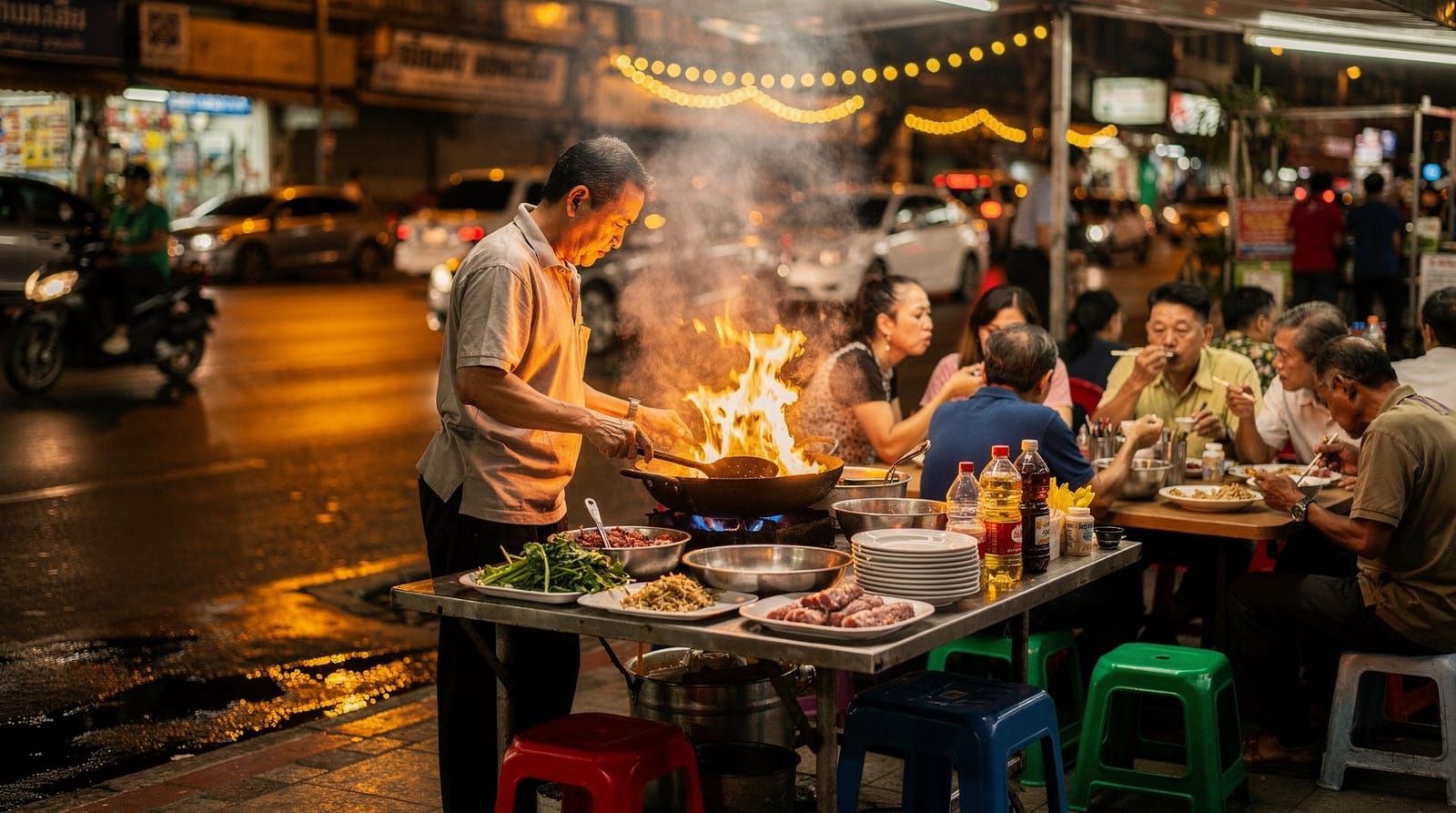
Banthat Thong, near Chulalongkorn University, has become Bangkok’s buzziest food street after dark, and several stalls there cook pad thai to a high standard for 50 to 80 THB. It is less of a pilgrimage and more of a wander: you can graze pad thai, grilled skewers, sweets and bubble tea in one stretch. The dedicated Banthat Thong food street guide maps the standout vendors, and a structured tasting walk covers a lot of ground:
Eat the viral Banthat Thong Michelin stallsStreet pad thai: the everyday best
The truth most food obsessives will tell you is that some of the best pad thai in Bangkok comes from unbranded carts that never make a list. Look for a vendor with a single wok, a steady queue of locals and a stack of fresh prawns or eggs on the side. Markets are a reliable hunting ground for these carts. A plate from a good cart costs 40 to 70 THB, and because it is cooked to order in front of you it is also one of the safer street choices; the street food safety guide explains how to read a clean stall.
Yaowarat, Bangkok’s Chinatown, is another strong zone, though it leans more toward Chinese-Thai noodles than pure pad thai and is worth a visit for those instead.
The variations worth knowing
When you order, the protein and add-ons define the dish. Goong sod is fresh prawn, the most popular upgrade. Hor kai (or hor khai) means wrapped in a thin egg crepe, the photogenic Thip Samai signature. Man gung is prawn-fat oil stirred through the noodles for deep richness, the priciest tier. Pad thai jay is the vegetarian version, with tofu and no fish sauce or egg, covered in the vegetarian and vegan guide. A plain pad thai (sai khai for “add egg”) is the cheapest and most common.
Prices and ordering at a glance
Expect 40 to 70 THB (about 1.20 to 2 USD) for a street plate, 80 to 150 THB at a known shop like Fai Ta Lu, and up to 300 THB for Thip Samai’s prawn-oil and crab versions. Cash is essential at stalls; few carts take cards. Point at the prawns or eggs you want, say goong sod for fresh prawn, and add chilli yourself from the caddy. None of this needs Thai, though aroi (“delicious”) goes a long way with a smiling cook.
If you would rather have a local string the best stalls together and explain each dish, a guided crawl weighs up well against eating solo, and a tuk-tuk route hits more ground after dark:
Take a Michelin street food tuk-tuk tourHow pad thai is actually cooked
Watching a good cook work is part of the pleasure, and understanding it helps you judge a plate. The wok goes searingly hot, the noodles (pre-soaked, never boiled to mush) hit the oil with garlic and firm tofu, then the tamarind-sugar-fish-sauce mix is added and reduced so it clings to every strand. Egg goes in to scramble against the side of the wok, sprouts and chives are folded through at the very end so they keep their crunch, and the whole thing is plated in under three minutes. If your noodles arrive pale, clumped or swimming in sauce, the cook rushed the reduction. The best stalls cook one or two portions at a time, never a giant batch, which is exactly why a single-wok cart with a queue beats a big pan churning out twenty plates at once.
This is also why pad thai is one of the safer street dishes for nervous eaters: it is cooked to order over fierce heat right in front of you, with nothing sitting out. The short version is that a busy stall with high turnover and a hot wok is a good bet.
Beyond the famous names
Chasing only the Michelin-listed and viral stalls means missing some of the city’s quiet champions. Old-city markets, the lanes around Bang Rak and Charoenkrung, and neighbourhood sois all hide carts that locals queue for daily. The Bang Rak food guide maps that area’s best if you want to explore beyond the famous names. A useful rule when wandering: follow office workers at lunch and families at dinner. Where Thais queue for pad thai, the price is fair and the wok is hot.
It is also worth resisting the pull of mall food courts and hotel restaurants for this particular dish. A 250 THB pad thai in an air-conditioned mall is almost never better than a 60 THB plate from a cart; you are paying for the seat, not the cooking. Save the mall for somewhere it earns its price and eat your pad thai where it is made.
Ordering phrases that actually help
You do not need Thai to eat well, but a handful of words speed up ordering and get you exactly the plate you want. Goong sod asks for fresh prawn instead of the default dried shrimp. Sai khai means “add egg” if it is not already included. Mai sai tua removes the crushed peanuts. Mai phet signals no chilli, though pad thai is mild by default so this is rarely necessary. Aroi mak (“very delicious”) is a small compliment that Bangkok cooks genuinely appreciate, and pointing at the dish you want on a neighbouring plate works everywhere if the words do not come. None of this is required — pointing and smiling gets you fed — but it removes any ambiguity about prawns, egg or peanuts.
Allergy and dietary notes
Pad thai hides a few common allergens that are easy to miss. Peanuts are almost universal, crushed on top or served in the condiment caddy — ask for “mai sai tua” (no peanuts) if that is a concern, though cross-contact in a shared wok is possible, so a severe peanut allergy warrants real caution rather than a simple request. Shellfish shows up even in “plain” versions, since dried shrimp is a base ingredient at most stalls, and fish sauce (also fish-based) is standard; a genuinely shellfish-free plate needs to be specifically requested. Egg appears in the classic scrambled style and is the whole point of the hor kai version, so say “mai sai khai” to leave it out. For anyone eating vegetarian or vegan, see the vegetarian and vegan Bangkok guide for stalls that reliably do a genuine pad thai jay without fish sauce, dried shrimp or egg.
How to build a pad thai night
A clean plan: arrive at the Golden Mount for sunset, walk to Thip Samai for the egg-wrapped prawn version at opening, then drift toward Banthat Thong or back into the old city for a second plate and dessert. Mango sticky rice makes the natural finish, and the mango sticky rice guide points you at the best vendors for it. Use the getting around Bangkok guide to time the MRT, and slot the evening into a longer trip with Bangkok in 3 days.
If you would rather learn to make the dish than just eat it, a market-to-wok class is a genuinely good half-day, and you leave able to cook a credible pad thai at home; the Thai cooking class in Bangkok guide compares the options. Either way, pad thai is worth chasing in Bangkok, but the best version is whichever one you eat hot, cooked to order, without resenting the wait to get it. Order the prawn or egg-wrapped version where a shop is known for it, eat street plates everywhere else, carry cash, and season the plate yourself.
Frequently asked questions about Where to eat the best pad thai in Bangkok
Is Thip Samai pad thai worth the queue?
How much does pad thai cost in Bangkok?
What is the difference between pad thai goong sod and the regular one?
When does Thip Samai open and where is it?
Is real pad thai spicy?
Can I get good vegetarian pad thai in Bangkok?
Is Banthat Thong good for pad thai?
Top experiences
Bookable activities with verified prices and instant confirmation on GetYourGuide.