Halal food in Bangkok: a Muslim traveller's eating guide
Bangkok: Explore Bang Rak's Backstreets & Local Eats
Where can Muslim travellers find halal food in Bangkok?
Bangkok has several Muslim quarters with halal food: Bang Rak and Charoenkrung around Haroon Mosque, the Phaya Thai area, and Soi Arab (Sukhumvit Soi 3 to 3-1, near BTS Nana) for Middle Eastern cuisine. Look for halal-certified signs and the green halal logo, and try halal Thai dishes like khao mok gai (chicken biryani), mataba, roti and satay.
Bangkok is surprisingly easy for Muslim travellers seeking halal food, thanks to long-established Thai-Muslim communities, several distinct halal districts, and a busy Middle Eastern street near BTS Nana. From turmeric-spiced chicken biryani at neighbourhood shops to shawarma at midnight on Soi Arab, this guide maps the quarters, the dishes, the certified restaurants and the prayer notes you need. Prices are per dish unless noted, and 1 USD is roughly 33 THB.
| Where | Bang Rak/Charoenkrung, Soi Arab (Sukhumvit Soi 3), Phaya Thai |
| Cost | Street dishes 40–100 THB; sit-down 100–300 THB; Soi Arab grills 150–500 THB |
| Time needed | A few hours per quarter, or a full evening for Soi Arab |
| Getting there | BTS Saphan Taksin (Bang Rak), BTS Nana (Soi Arab), BTS Phaya Thai |
| Best time | Lunch for Bang Rak; evening onward for Soi Arab |
Bangkok’s three halal quarters compared
Each halal district has its own character, so pick based on what you’re after rather than assuming they’re interchangeable.
| Quarter | Cuisine | Price range | Nearest BTS |
|---|---|---|---|
| Bang Rak / Charoenkrung | Thai-Muslim (khao mok gai, mataba, soups) | 40–250 THB | Saphan Taksin |
| Soi Arab (Sukhumvit Soi 3) | Middle Eastern (shawarma, grills, mezze) | 150–500 THB | Nana |
| Phaya Thai / Ramkhamhaeng | Thai-Muslim shophouses | 40–150 THB | Phaya Thai |
Bangkok’s Muslim quarters
Halal eating in Bangkok clusters in a handful of historic and modern districts. Knowing where they are saves you guesswork.
Bang Rak and Charoenkrung — Haroon Mosque area
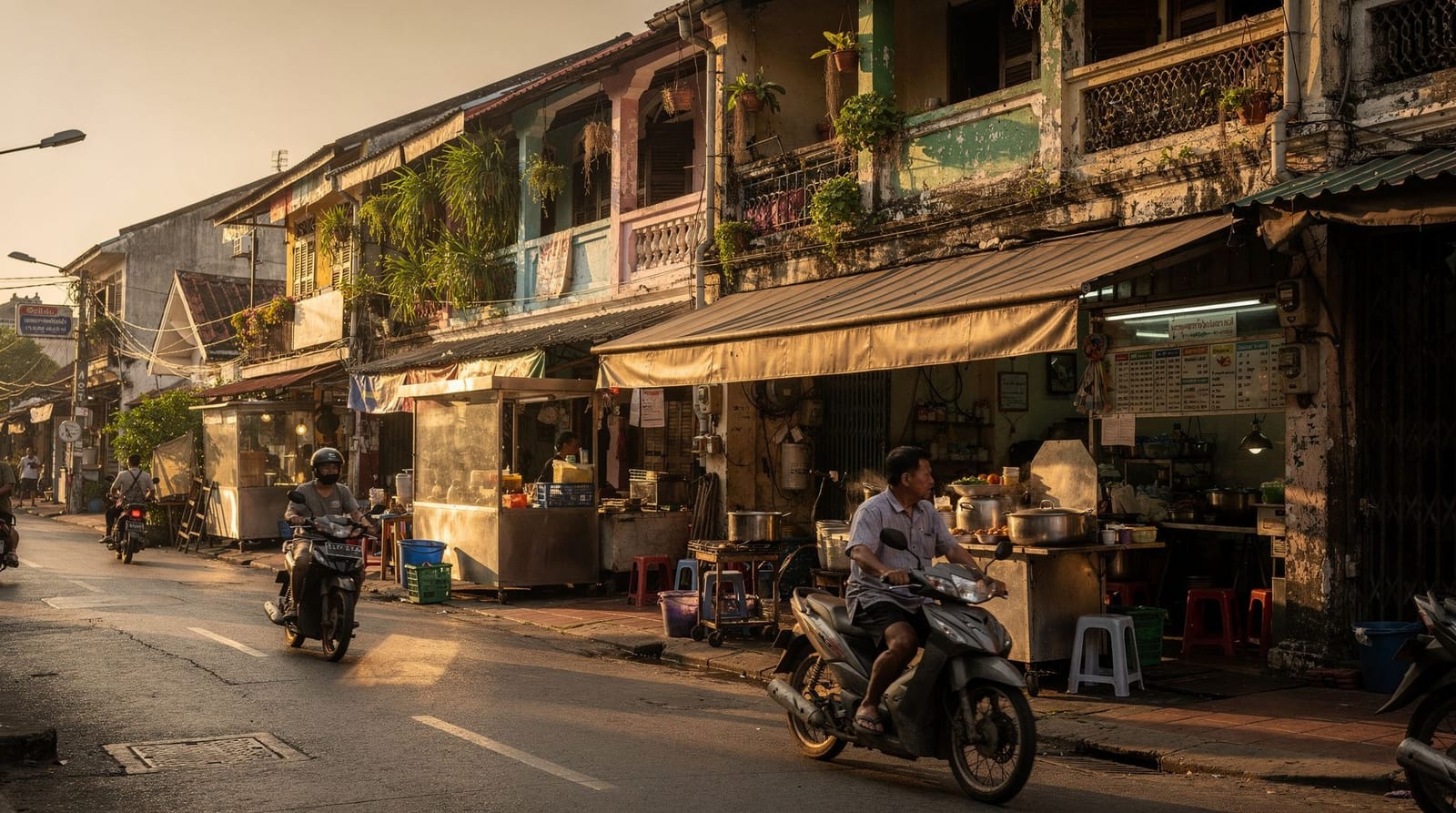
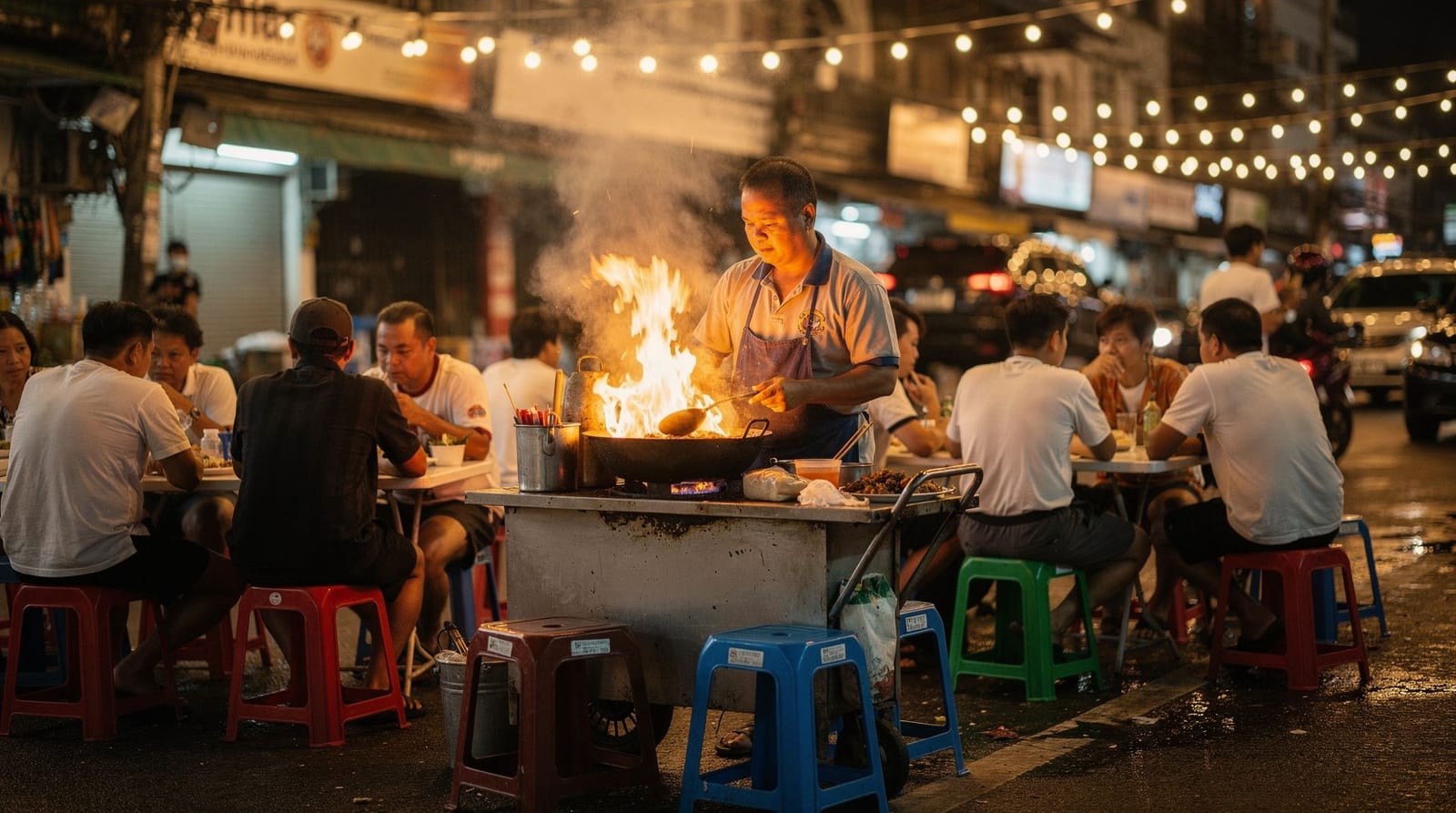
The riverside district of Bang Rak, around Charoenkrung Road and the Haroon Mosque, is one of the city’s oldest Muslim communities. The lanes near the mosque hide halal Thai-Muslim kitchens serving khao mok gai, mataba and rich soups. It is walkable from BTS Saphan Taksin and pairs naturally with the wider Bang Rak and Charoenkrung food crawl and the dedicated Bang Rak food guide. This area rewards slow wandering through its backstreets.
Soi Arab — Middle Eastern Sukhumvit
For Middle Eastern food, head to Soi Arab, the nickname for Sukhumvit Soi 3 and 3-1 (Soi Nana Nuea), a two-minute walk from BTS Nana. The strip is dense with Lebanese, Egyptian, Iranian and Turkish restaurants, shisha cafes and street stalls serving shawarma, kebabs, hummus, falafel, grilled meats and Arabic sweets, most of them halal. It comes alive in the evening and runs deep into the night. It sits within the broader Sukhumvit, Nana and Asok district.
Phaya Thai and Ramkhamhaeng
A smaller Muslim food pocket sits around Phaya Thai (near BTS Phaya Thai), with halal Thai shophouses, and the Ramkhamhaeng area to the east has its own concentration of halal and Middle Eastern eateries, though it lies off the main BTS lines and needs a taxi or the Airport Rail Link.
Halal Thai dishes to seek out
Thai-Muslim cuisine is a distinct and delicious tradition. These are the dishes to order:
- Khao mok gai — Thai chicken biryani, turmeric-spiced rice with chicken, a sweet dipping sauce and fried shallots. A staple, around 50 to 80 THB.
- Mataba (murtabak) — a savoury stuffed pancake filled with spiced chicken, beef or vegetables, 40 to 90 THB.
- Roti — flaky flatbread, sweet (with condensed milk and banana) or savoury, 30 to 70 THB.
- Satay — grilled marinated skewers with peanut sauce and cucumber relish, 10 to 20 THB a stick.
- Sup hang wua / suea rong hai — beef-tendon or grilled beef soups, hearty and aromatic, 60 to 120 THB.
- Massaman curry — a mild, spiced curry of Muslim origin, often halal in these quarters, 80 to 200 THB.
For the full menu of Bangkok dishes in context, the what to eat in Bangkok guide is a useful companion.
Reading halal certification in Thailand
Knowing how to verify halal saves a lot of uncertainty. Thailand operates a formal certification system run by the Central Islamic Council of Thailand, and certified businesses display a distinctive green diamond logo with Arabic and Thai script. When you see this mark on a restaurant window, packaged product or food-court counter, the kitchen and supply chain have been inspected. This matters because mainstream Thai food leans heavily on pork and on seasonings that may not be halal, so certification removes the guesswork at non-Muslim-quarter venues.
In the dedicated Muslim quarters — Bang Rak, Soi Arab, Phaya Thai — virtually everything is halal by default, and you can relax. Outside those areas, treat the green logo as your green light, and when it is absent at a general Thai stall, ask plainly whether the food contains pork (mu) or whether the meat is halal. Most vendors understand the question. The same care applies to packaged snacks and convenience-store items, many of which carry the certification mark so you can shop with confidence.
Certified halal restaurants
Beyond street stalls, several sit-down restaurants are reliable for Muslim travellers. Look for the green Thai halal certification logo issued by the Central Islamic Council of Thailand.
- Sila and Home Cuisine Islamic Restaurant, both in the Bang Rak / Charoenkrung area, are long-standing halal Thai-Muslim kitchens beloved for khao mok gai, mataba and curries, with dishes around 80 to 250 THB. Near BTS Saphan Taksin.
- Saneh Jaan, a refined halal-friendly Thai restaurant in the Silom area near BTS Sala Daeng, plates elegant, well-spiced Thai cooking for around 300 to 600 THB per person — a good choice for a special meal. Confirm current halal status when booking, as menus evolve.
- Mall food courts across the city, especially in central shopping centres, increasingly carry certified halal counters marked with the green logo, handy when you are sightseeing in Siam and Ratchaprasong.
To eat through the Bang Rak backstreets with a guide who knows which shops are halal, a Bang Rak backstreets local eats tour covers the district’s old kitchens, and a Bang Rak and Charoenkrung fifteen-tasting walk threads the Charoenkrung lanes near Haroon Mosque. Confirm halal specifics with the guide when booking, as tours mix vendors.
Soi Arab street food in detail
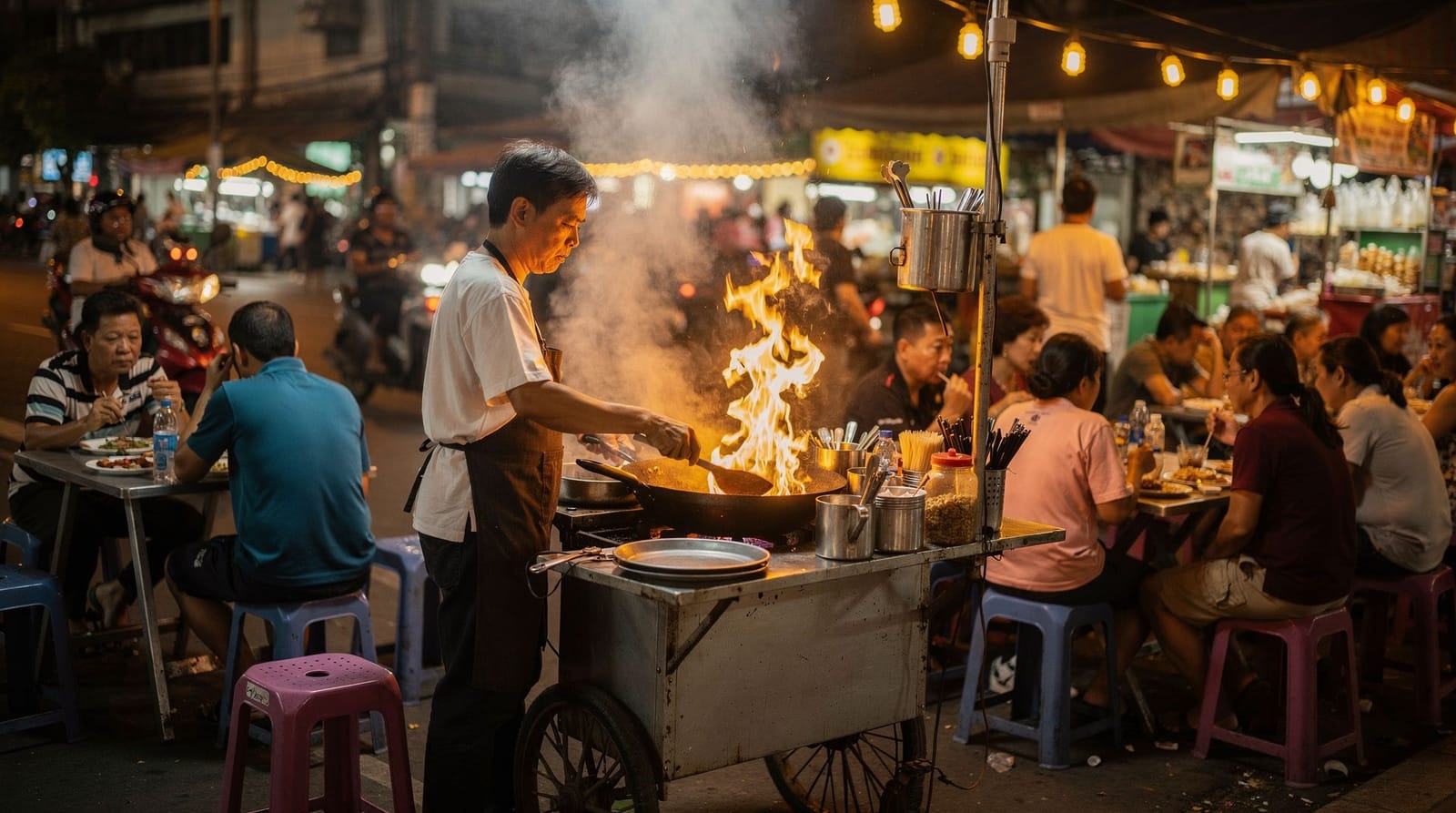
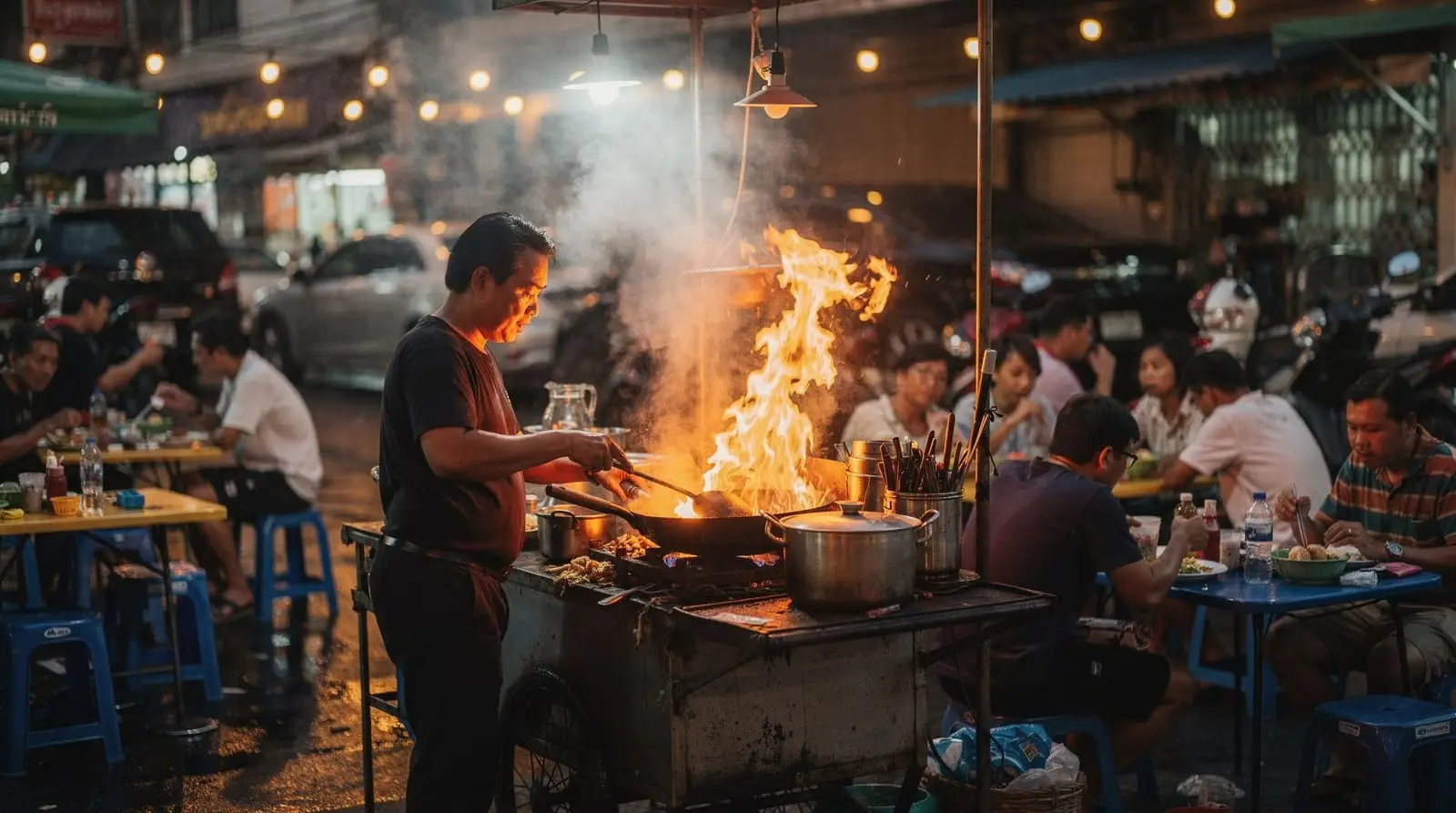
Soi Arab (Sukhumvit Soi 3 / 3-1) deserves its own visit. The street-food stalls and small restaurants here serve some of the best shawarma, grilled lamb, kebabs and fresh khubz bread in the city, with mezze plates of hummus, baba ganoush and tabbouleh. Expect 150 to 500 THB for a full grill-and-mezze spread, less for a single shawarma wrap. Sweet shops sell kunafa, baklava and fresh juices. The atmosphere is unlike anywhere else in Bangkok — Arabic signage, shisha smoke and late-night energy. It is right beside BTS Nana, so it could not be easier to reach. For getting between districts efficiently, see the getting around Bangkok guide.
Prayer and mosque notes
Bangkok has many mosques, so prayer is rarely difficult to arrange:
- Haroon Mosque in Bang Rak, near Charoenkrung, anchors the riverside Muslim quarter.
- The Soi Arab / Nana area has nearby prayer facilities serving its Middle Eastern community.
- Phaya Thai and several Sukhumvit sois have neighbourhood mosques.
- Larger shopping malls increasingly provide prayer rooms; ask at the information desk.
Friday prayers draw crowds at the main mosques around midday, so plan your meals and visits around prayer times. Dress modestly when visiting mosques, and remove shoes before entering prayer halls. The Thai customs and etiquette guide covers broader courtesy norms that apply across the city.
A short history of Thai-Muslim food
Thai-Muslim cuisine is not a recent arrival — it is woven into the city’s culinary DNA. Persian and Indian Muslim traders settled in Ayutthaya and later Bangkok centuries ago, bringing the spice-layered cooking that became massaman curry, biryani-style rice and roti. Southern Thailand’s large Muslim population added grilled meats, rich soups and fermented techniques. The result is a distinct tradition that sits comfortably alongside Bangkok’s Buddhist-majority street food, which is why halal Thai dishes taste recognisably Thai yet carry their own spice signature. Understanding this helps explain why the Bang Rak / Charoenkrung quarter, settled by Muslim communities generations ago, remains such a deep well of halal cooking today. For the broader food story of the city, the Bangkok street food guide sets the scene.
Sample halal eating day
If you want a ready-made plan, a satisfying halal food day might run like this. Start with khao mok gai and roti for breakfast in the Bang Rak and Charoenkrung lanes near Haroon Mosque, reached via BTS Saphan Taksin. Spend the afternoon sightseeing, then ride the BTS to Nana for an evening on Soi Arab, working through shawarma, grilled lamb and mezze before finishing with kunafa and fresh juice. It is an easy, two-station day that showcases both halves of halal Bangkok — Thai-Muslim and Middle Eastern. To slot this into a wider visit, the Bangkok in three days itinerary shows how to balance food with temples and markets.
Practical tips for halal eating
Cash is king at street level — carry small notes, as many stalls in Bang Rak and on Soi Arab do not take cards, though sit-down restaurants usually do. Look for the green halal logo rather than assuming, since plenty of general Thai food contains pork or non-halal seasonings. When in doubt at a non-certified Thai stall, ask directly, and stick to the dedicated Muslim quarters for total peace of mind. For street-level safety and hygiene pointers that apply everywhere, the street food safety guide is worth a quick read.
It also helps to save a few key Thai words on your phone: “halal” (ฮาลาล), “no pork” (mai sai mu / ไม่ใส่หมู) and “khao mok gai” for ordering biryani by name. Timing matters too — the Bang Rak lanes are liveliest at lunch, while Soi Arab peaks late in the evening, so plan around the rhythm of each quarter. Ramadan brings extended evening hours and special iftar spreads to the Muslim districts, a wonderful time to visit if your trip overlaps. With three well-defined halal districts, certified options scattered citywide, and an easy BTS Nana gateway, Bangkok in 2026 is a genuinely comfortable and rewarding city for Muslim travellers.
Arriving hungry: halal food near the airports
If you land hungry, both of Bangkok’s airports have some certified halal options among the food courts, marked with the same green logo used citywide, though choice is more limited than in the Muslim quarters themselves — treat it as a stopgap rather than the main event. Suvarnabhumi and Don Mueang both sit some distance from the city centre, so if your flight timing allows, it is often better to hold out for a proper meal in Bang Rak or at Soi Arab once you have checked in. See the Suvarnabhumi Airport to city and Don Mueang Airport to city guides for the transfer options, both of which pass reasonably close to the halal districts described above.
Halal-safe snacks, desserts and markets
Away from dedicated restaurants, several everyday Bangkok treats are naturally halal-friendly, which widens your options considerably. Fresh fruit stalls, coconut ice cream and mango sticky rice — rice, mango and coconut milk, with no meat or alcohol involved — are safe bets almost anywhere in the city; our mango sticky rice guide covers where to find the best versions. Packaged snacks in convenience stores frequently carry the green halal certification mark, so a 7-Eleven run is not off-limits. At Chatuchak Weekend Market, look for stalls with the halal logo among the food section, since the market draws vendors from across the city, Thai-Muslim ones included. When budgeting a full day of eating, the best cheap eats in Bangkok guide is a useful companion, though always confirm halal status dish by dish outside the dedicated quarters.
Frequently asked questions about Halal food in Bangkok: a Muslim traveller's eating
Is it easy to find halal food in Bangkok?
What are the best halal Thai dishes to try?
Where is Soi Arab in Bangkok?
Are there halal-certified restaurants in Bangkok?
Where can Muslim travellers pray in Bangkok?
What is khao mok gai?
How much does halal food cost in Bangkok?
Which BTS or MRT stations are best for halal food?
Top experiences
Bookable activities with verified prices and instant confirmation on GetYourGuide.