Bangkok travel costs: real 2026 prices for everything
Bangkok: Grand Palace Skip-the-Line Entry Ticket
How much does a trip to Bangkok cost?
Excluding flights and accommodation, daily budgets per person run roughly 700–1,200 THB (USD 21–36) for budget travel, 2,500–5,000 THB for mid-range, and 8,000 THB+ for luxury. Street food costs 40–70 THB a dish, public transport 16–62 THB a ride, and many attractions are free or cheap, while malls, rooftop bars and Western dining cost much more. Cash is essential for street food and markets; cards work at malls and hotels.
Knowing what things actually cost in Bangkok lets you set a realistic budget and avoid both overspending and the false economy of skipping the experiences worth paying for. This guide gives real 2026 prices in THB (with rough USD equivalents at about 33 THB to the dollar) for food, transport, attractions, drinks, accommodation and day trips, plus honest daily budgets for every type of traveller. Exchange rates shift, so verify the live rate, but the relative prices hold.
It pairs with the Bangkok on a budget guide for money-saving tactics and the plan a trip to Bangkok guide for the wider picture.
Daily budgets at a glance
Per person, per day, excluding flights and accommodation:
| Style | Daily budget | What it covers |
|---|---|---|
| Budget | ~700–1,200 THB (USD 21–36) | Street food, public transport, free/cheap sights |
| Mid-range | ~2,500–5,000 THB (USD 76–151) | Restaurants, some taxis, paid attractions, a few drinks |
| Luxury | 8,000 THB+ (USD 240+) | Fine dining, rooftop bars, spas, private transport |
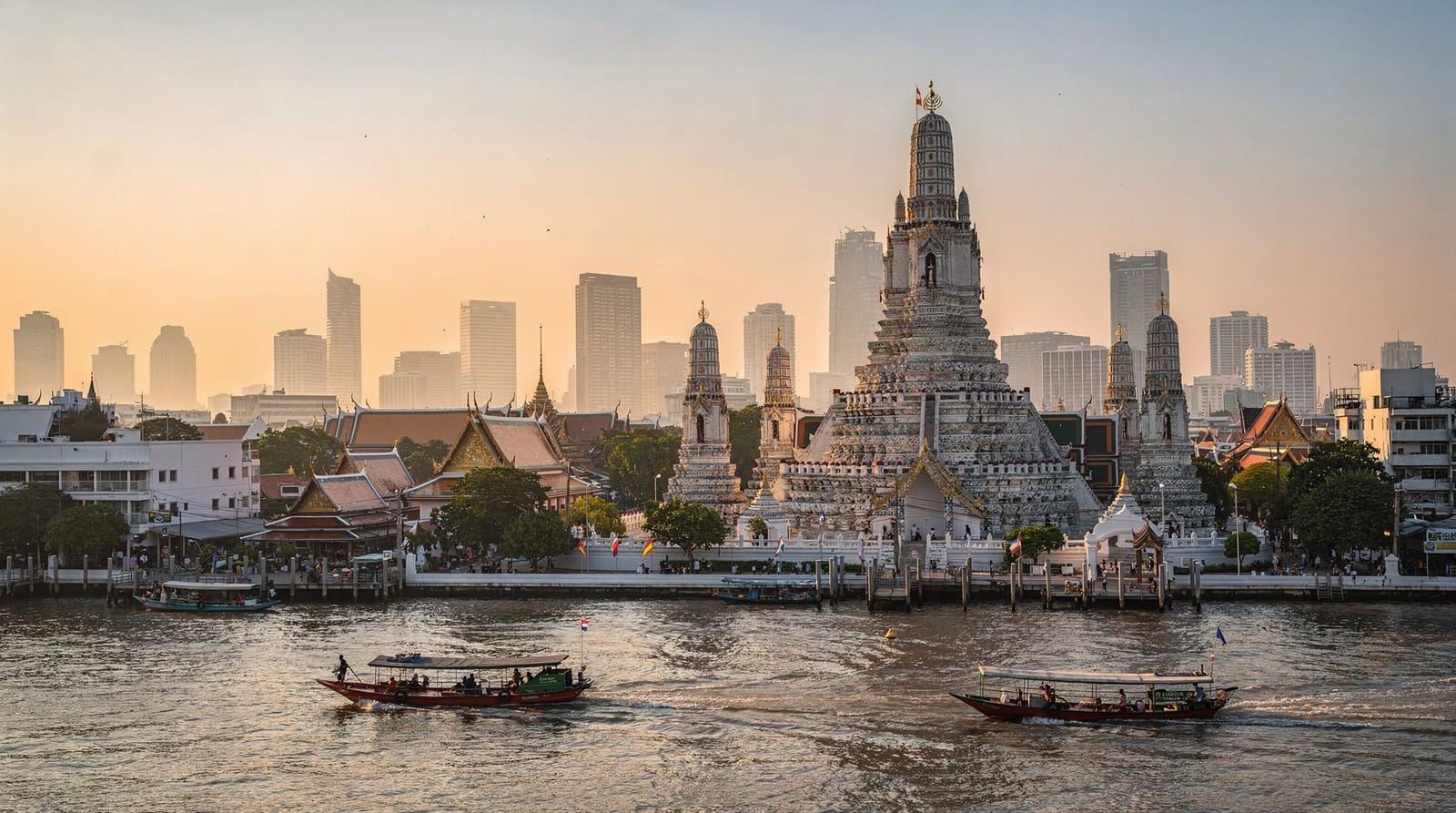
Bangkok’s enormous price range means your daily spend is largely a choice — the same city offers a 50 THB noodle bowl and a 600 THB rooftop cocktail, a 16 THB river boat and a private car.
Food prices
Food is where Bangkok’s value is most striking:
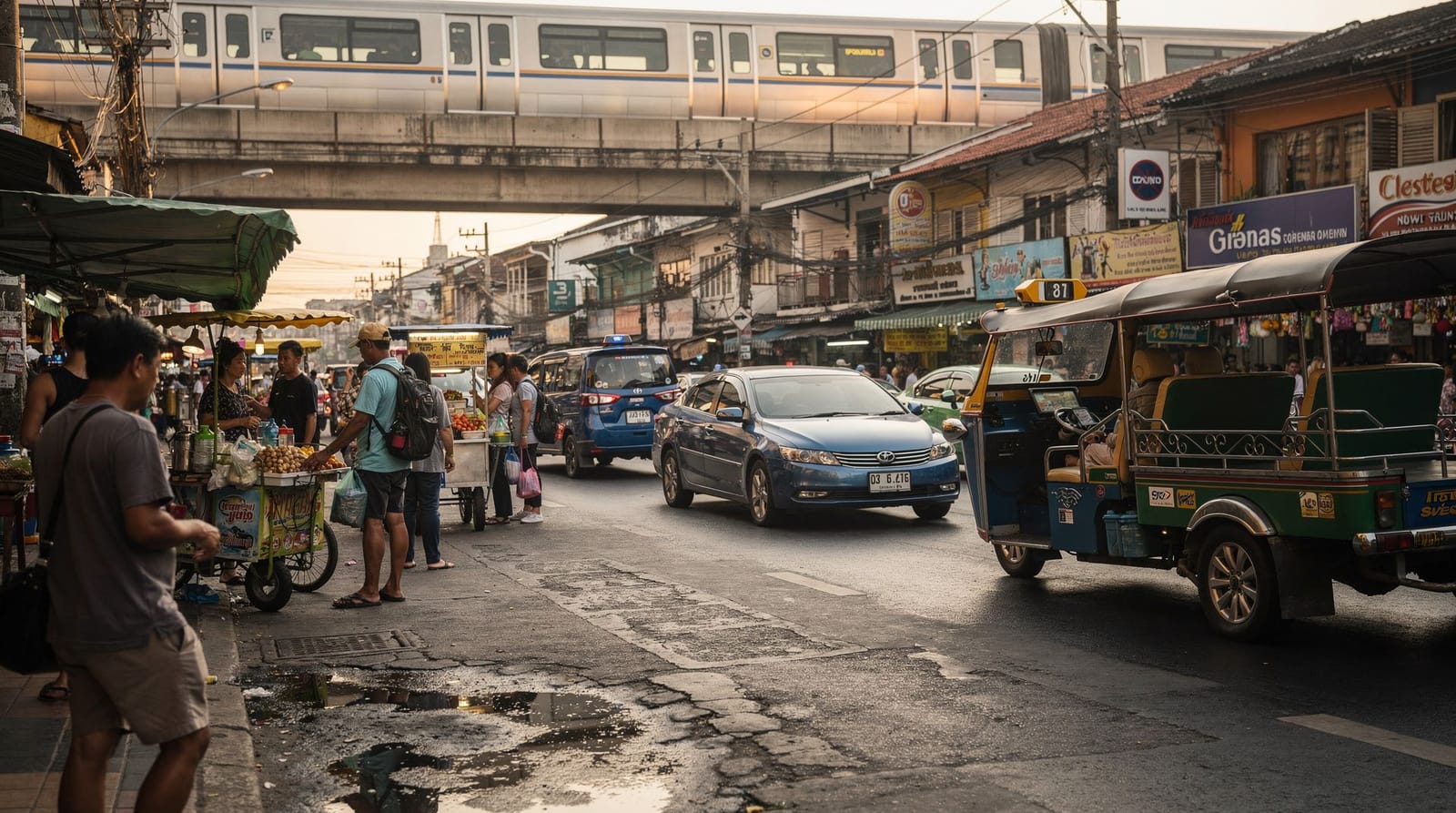
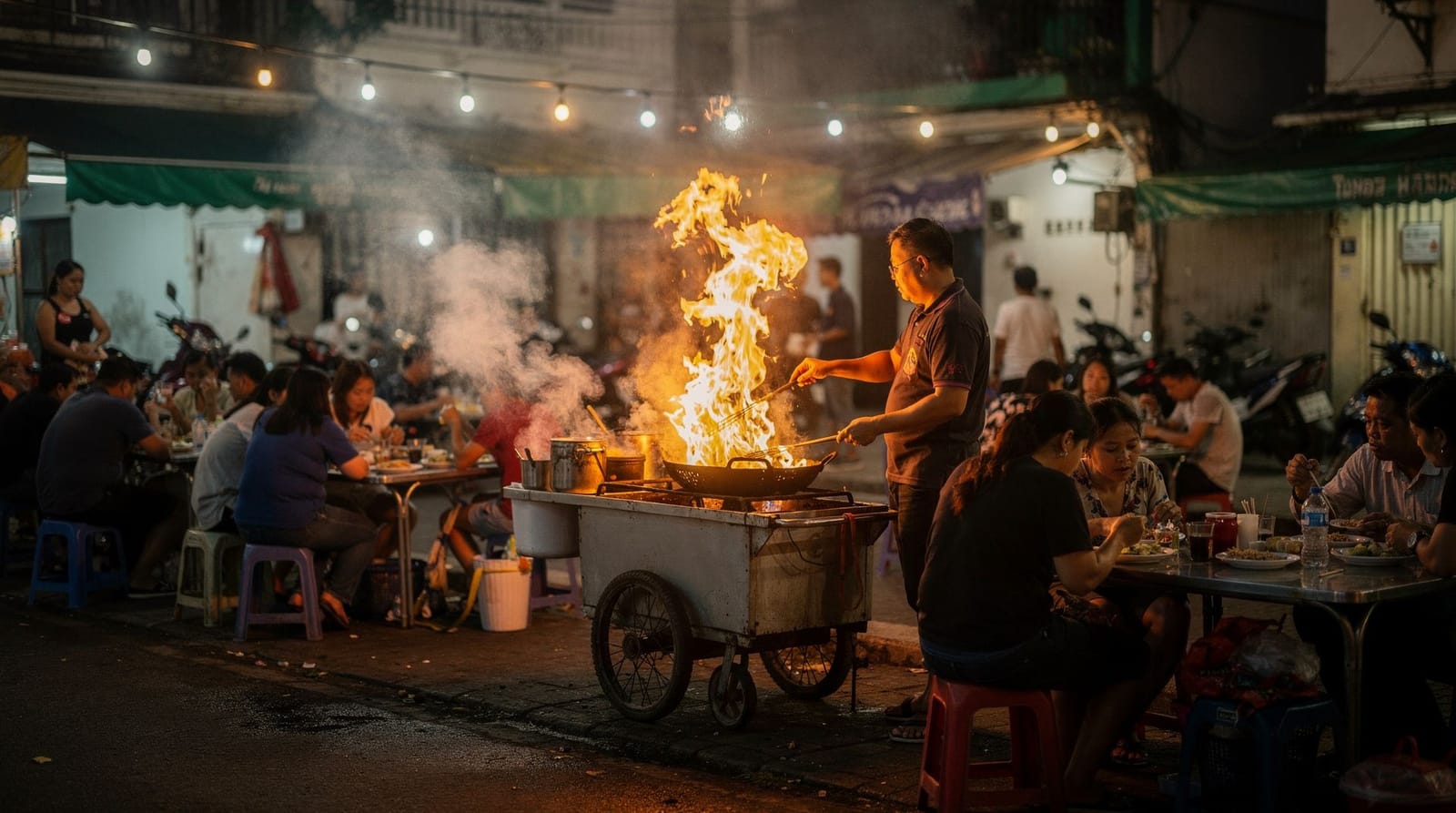
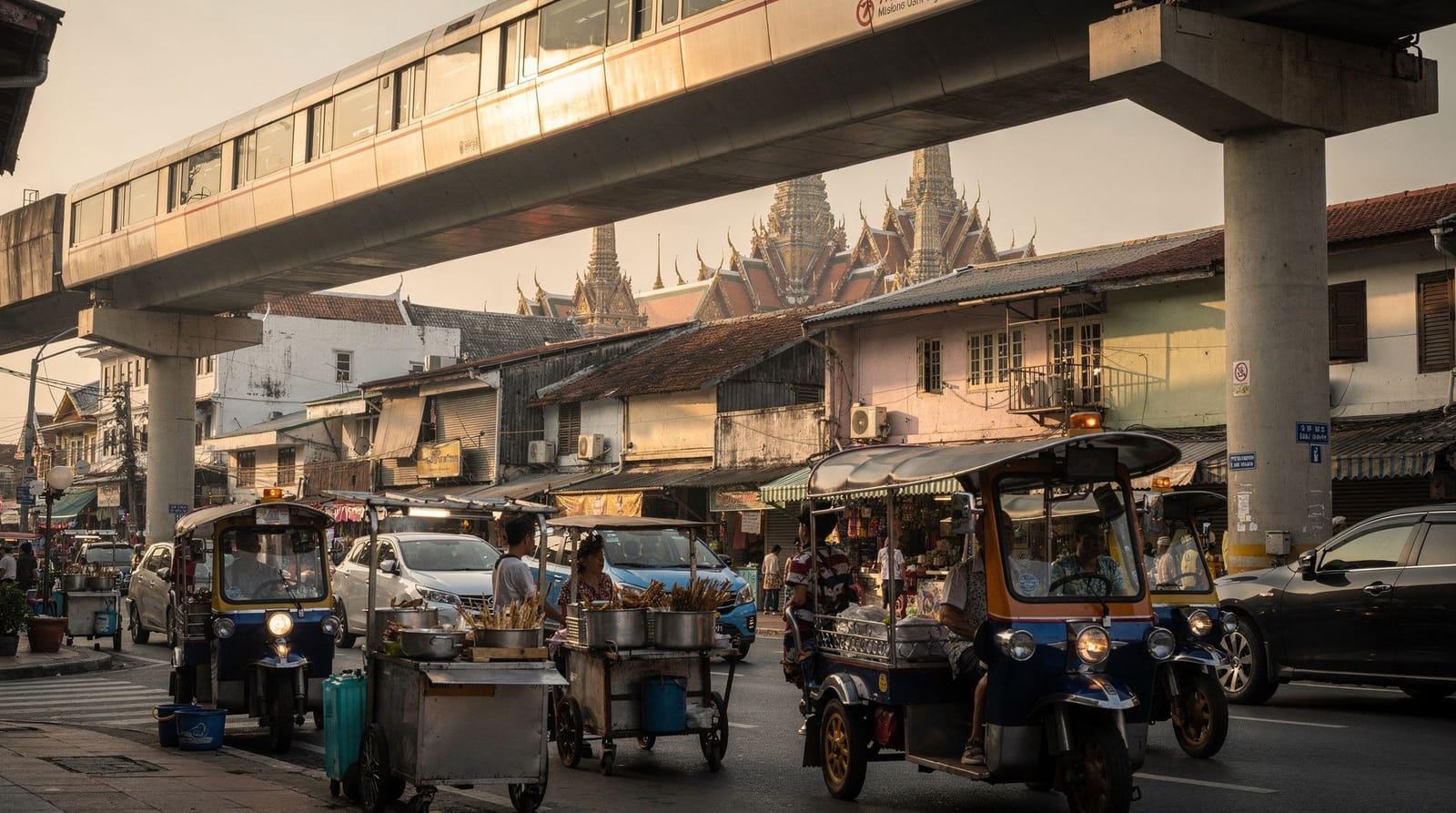
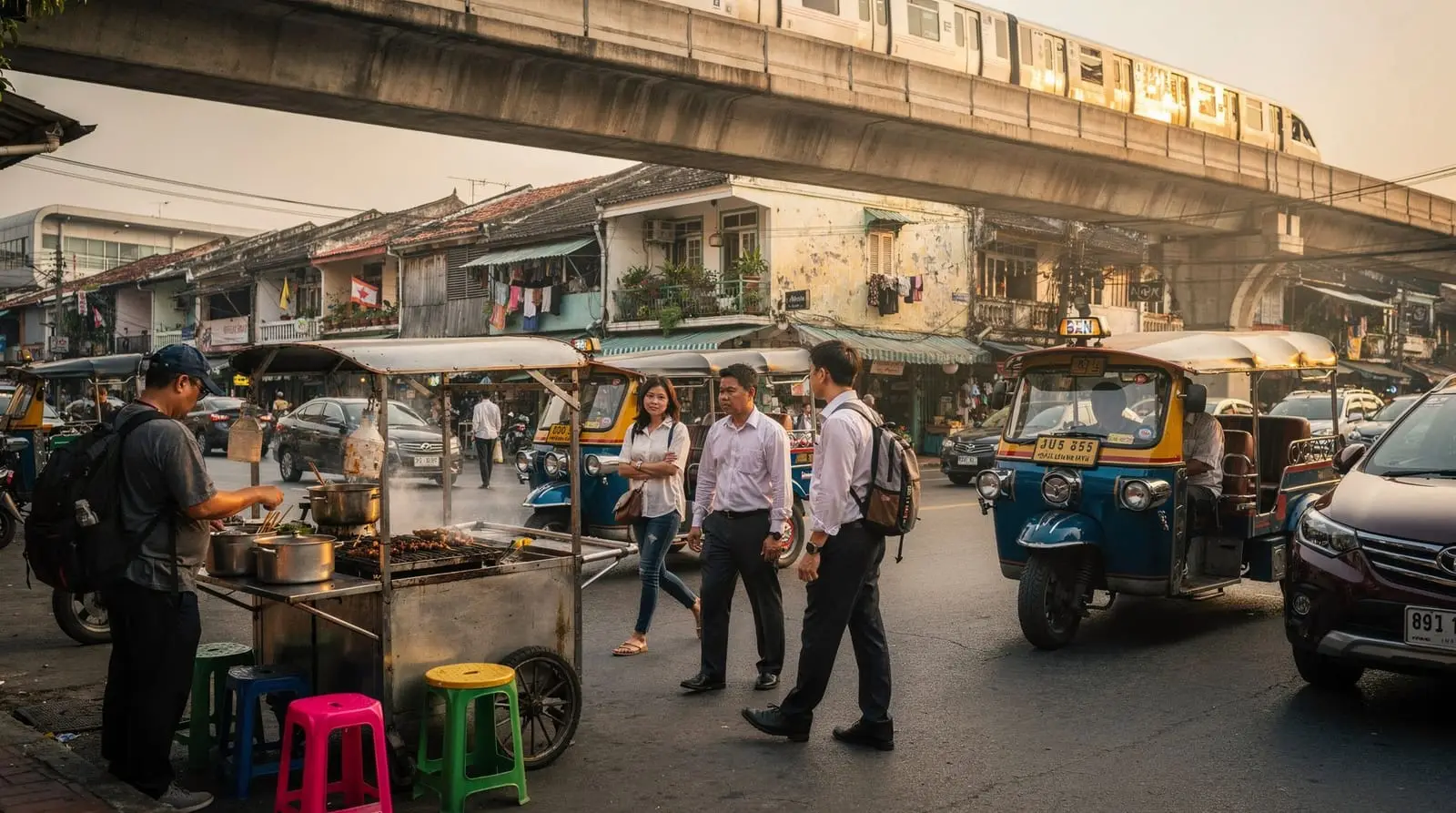
- Street-food dish: ~40–70 THB (USD 1.20–2.10) — pad thai, boat noodles, chicken rice.
- Mall food court meal: ~60–120 THB, air-conditioned and cheap.
- Mid-range restaurant main: ~150–400 THB.
- Upscale / Western dining: ~500–1,500 THB+ per person.
- Coffee at a café: ~60–120 THB.
- Local beer: ~60–90 THB from a shop, ~120–250 THB at a bar, more at a rooftop.
Eating street food and at markets keeps daily food spend low; restaurants and rooftop bars are where it climbs. The cheap end is covered in the best cheap eats guide.
Transport prices
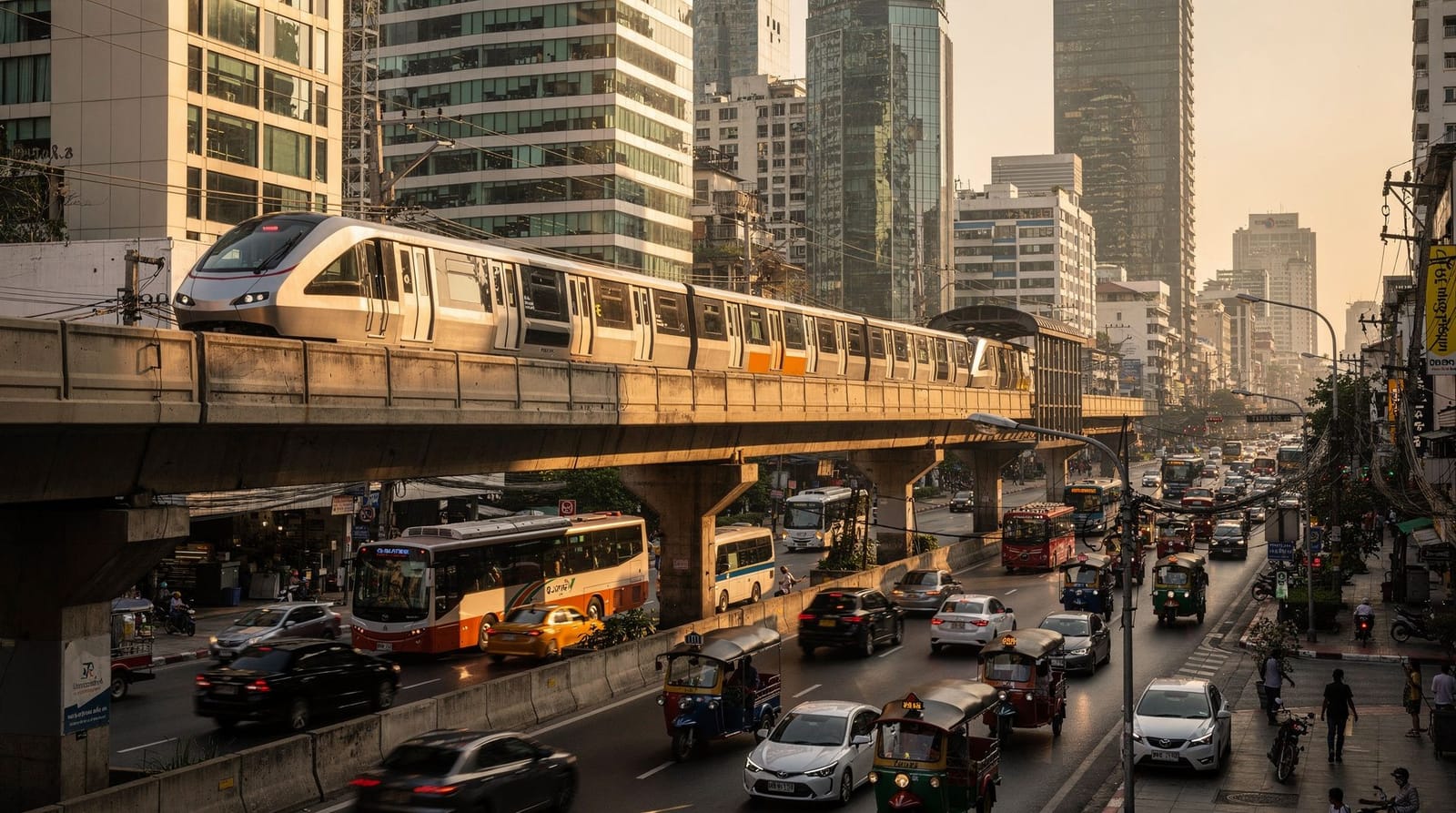
- BTS Skytrain / MRT: 17–62 THB per journey.
- Chao Phraya orange-flag river boat: ~16 THB flat; tourist boat day pass ~150–200 THB.
- Grab car across town: ~80–250 THB depending on distance and traffic.
- Metered taxi: flagfall 35 THB, often a little cheaper than Grab if the meter is used.
- Public bus: 8–25 THB.
- Tuk-tuk: negotiated, usually more than a taxi for the same trip.
- Airport: Airport Rail Link ~35 THB; airport taxi ~350–500 THB all-in.
A typical sightseeing day’s transport runs 150–350 THB mixing trains, boats and a Grab or two. The full strategy is in the getting around Bangkok guide.
Attraction and experience prices
- Temples: many free or a small fee; the Grand Palace is the big-ticket sight and worth budgeting around.
- Observation decks, museums, shows: ~100–1,000+ THB.
- Markets and parks: free to wander.
- Cooking class: typically several hundred to ~1,500 THB.
- River dinner cruise: from a few hundred to over 1,000 THB depending on the boat.
- Guided day trip: from several hundred to a couple of thousand THB.
For the most-visited sight, pre-booking saves queue time, which has its own value. A Grand Palace skip-the-line ticket is the one entry most worth securing in advance. For an evening experience, a Chao Phraya dinner cruise with hotel transfer bundles dinner, the boat and the pickup.
Accommodation prices
Per night:
- Hostel bed: ~250–600 THB.
- Budget guesthouse / hotel: ~600–1,500 THB.
- Mid-range hotel: ~1,500–4,000 THB.
- Luxury / five-star: ~4,000 THB to well over 10,000 THB.
The rainy season (June–October) brings rates down 30–50%. Staying near a BTS station or the river costs a little more but saves on transport and time. Accommodation is usually the largest single line of a Bangkok budget, so it’s where season and location matter most.
Day-trip costs
Day trips add a one-off cost per outing:
- Independent (train/bus): the transport itself is cheap — Ayutthaya by train is a low fare, Pattaya by bus modest — but you handle logistics.
- Guided tour: typically several hundred to a couple of thousand THB, bundling transport, a guide and entries.
Whether to go independently or on a tour depends on the destination, as the Bangkok to day trips transport guide explains. Easy ones (Ayutthaya, Pattaya) suit DIY; harder ones (floating markets, Khao Yai) favour a tour.
Money practicalities
- Cash vs card: cash for street food, markets, tuk-tuks; cards at malls, hotels and upscale dining.
- ATM fees: ~220 THB per foreign-card withdrawal — withdraw larger amounts, less often.
- Travel cards: Wise or Revolut reduce fees and give good rates.
- Tipping: not mandatory; round up fares, ~10% for good restaurant service, 20–50 THB for porters.
- Exchange rate: roughly 1 USD ≈ 33 THB, 1 EUR ≈ 38 THB — verify live before you travel.
How costs shift by season
Prices in Bangkok are not flat across the year — accommodation moves the most, but tours and even some attractions follow the same pattern:
| Season | Accommodation | General feel |
|---|---|---|
| Cool, dry (Nov–Feb) | Peak rates, book ahead | Busiest, priciest, most comfortable weather |
| Hot (Mar–May) | Rates soften slightly | Shoulder pricing, punishing midday heat |
| Rainy (Jun–Oct) | ~30–50% below peak | Cheapest and quietest, with afternoon downpours |
Food, transport and street-level attraction prices barely change with season, since they’re driven by the local economy rather than tourist demand. The best time to visit Bangkok guide and the Bangkok weather month by month guide help you weigh comfort against cost, and the rainy season Bangkok guide has more on travelling well during the cheapest window.
A family day, worked example
Costs scale differently with kids, since many attractions offer child pricing and a family typically eats and moves as a group rather than splitting costs finely. A family of four (two adults, two children) doing a fairly full day might spend: street-food or food-court breakfast (200–250 THB total), BTS or Grab rides (250–400 THB), a paid attraction with family or child pricing (1,200–2,500 THB for four), a sit-down lunch (500–800 THB), snacks and drinks through the afternoon (200–300 THB), and a simple dinner (600–1,000 THB) — landing around 3,000–5,000 THB for the day, excluding accommodation. That comfortably fits a mid-range family budget, and drops further by leaning on street food and free attractions like parks. The Bangkok with kids guide and the family itinerary for Bangkok build full days around costs like these.
A worked example: a mid-range day
A typical mid-range day might run: street-food breakfast (60 THB), BTS rides (100 THB), Grand Palace entry, a restaurant lunch (250 THB), a couple of river-boat rides (40 THB), a café break (100 THB), a sit-down dinner (400 THB), and two rooftop drinks (500 THB) — landing comfortably within the 2,500–5,000 THB mid-range band before accommodation. Swap the rooftop for street beers and the restaurants for markets, and the same day drops into budget territory; add a spa and fine dining and it climbs to luxury. That flexibility is Bangkok’s defining cost feature. For squeezing it down, see the Bangkok on a budget guide; for whether the city is “expensive”, the honest answer is in the is Bangkok expensive blog post.