Talat Noi: Bangkok's old Teochew riverside quarter, a walking guide
Bangkok: Chinatown and Talat Noi Guided Walking Tour
What is Talat Noi and why visit it?
Talat Noi is an old Teochew Chinese quarter wedged between Chinatown (Yaowarat) and the Chao Phraya River, a maze of narrow lanes lined with vintage car-part workshops, weathered shophouses, vivid street art, hidden shrines and riverside landmarks like the 19th-century So Heng Tai mansion and the Holy Rosary Church. It has almost no formal sights — its appeal is atmosphere and photography. It is one of Bangkok's best walking and photo neighbourhoods, reached on foot from Chinatown or by MRT to Wat Mangkon or Hua Lamphong.
Talat Noi is the quiet, atmospheric counterpoint to the neon roar of Chinatown next door. An old Teochew Chinese quarter squeezed between Yaowarat and the Chao Phraya River, it is a maze of narrow lanes where vintage car-part workshops, weathered shophouses, hidden Chinese shrines and vivid street-art murals press together against the water. There is almost nothing to buy a ticket for here — Talat Noi’s appeal is pure atmosphere and photography — which is exactly why it has become one of the best walking neighbourhoods in Bangkok for travellers who like to wander, look and shoot.
| Where | Samphanthawong district, riverside, south of Yaowarat |
| Cost | Free to walk; So Heng Tai entry ~100 THB (drink minimum) |
| Time needed | 2–3 hours for a relaxed loop |
| Getting there | MRT Wat Mangkon or Hua Lamphong, then 5–10 min walk |
| Best time | Early morning (before 09h00) or late afternoon into Chinatown |
Where Talat Noi sits, and how to reach it
Talat Noi lies along the Chao Phraya River in the Samphanthawong district, immediately south of Yaowarat (the main Chinatown drag) and just north of the grand old Hua Lamphong railway station. The name means “little market,” a reference to its origins as a trading settlement of Teochew Chinese migrants who arrived by river generations ago.
Getting there is easy. The simplest route is the MRT Blue line to Wat Mangkon or Hua Lamphong station, then a 5-to-10-minute walk down toward the river. You can also reach it on foot from the heart of Chinatown in 10–15 minutes, or arrive by Chao Phraya boat to the nearby Marine Department pier and walk in from the water. The MRT subway guide, the Chao Phraya boats guide and the getting around Bangkok guide cover the options, and the Talat Noi destination page maps the area.
The character: rust, faith and paint
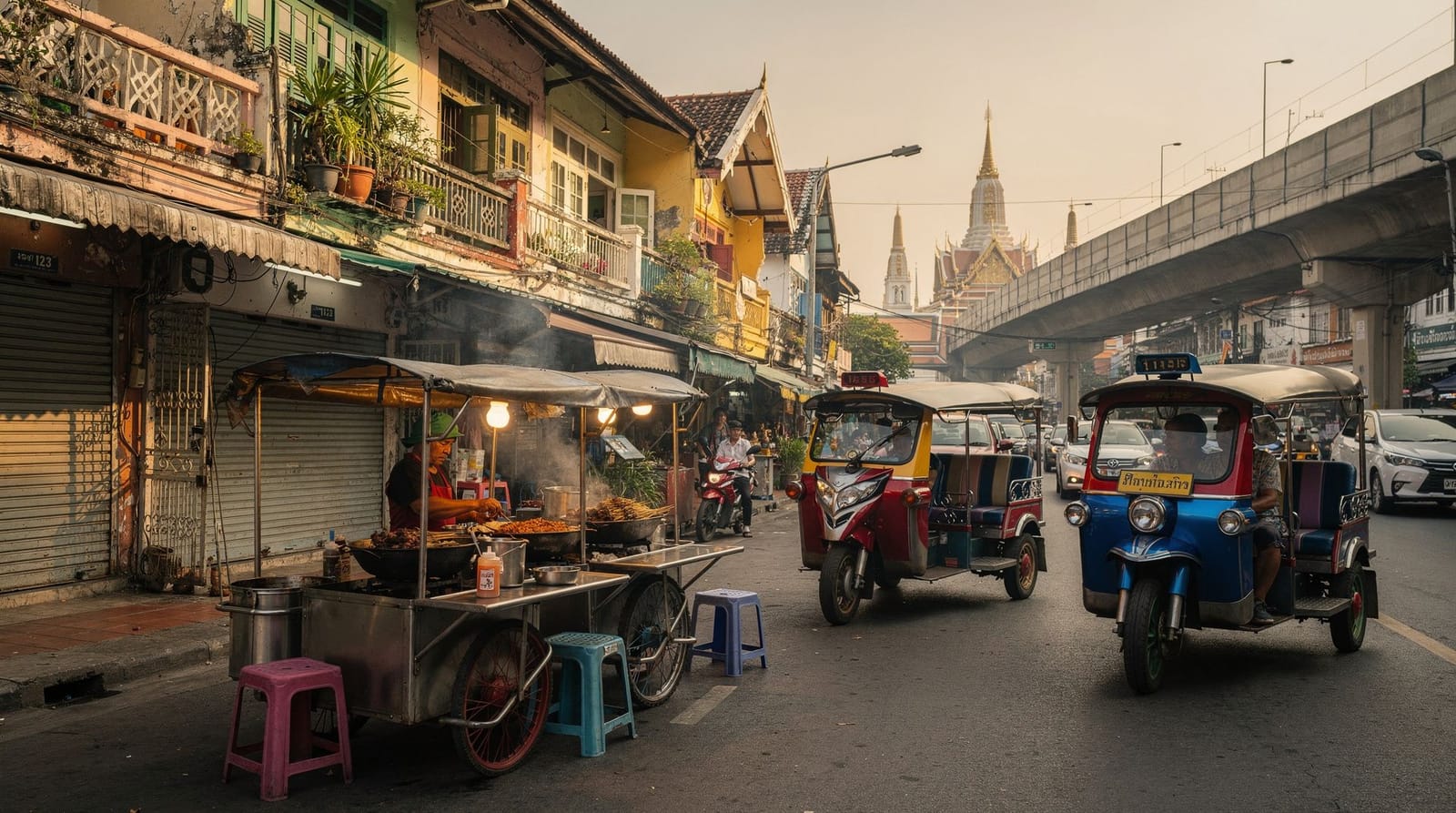
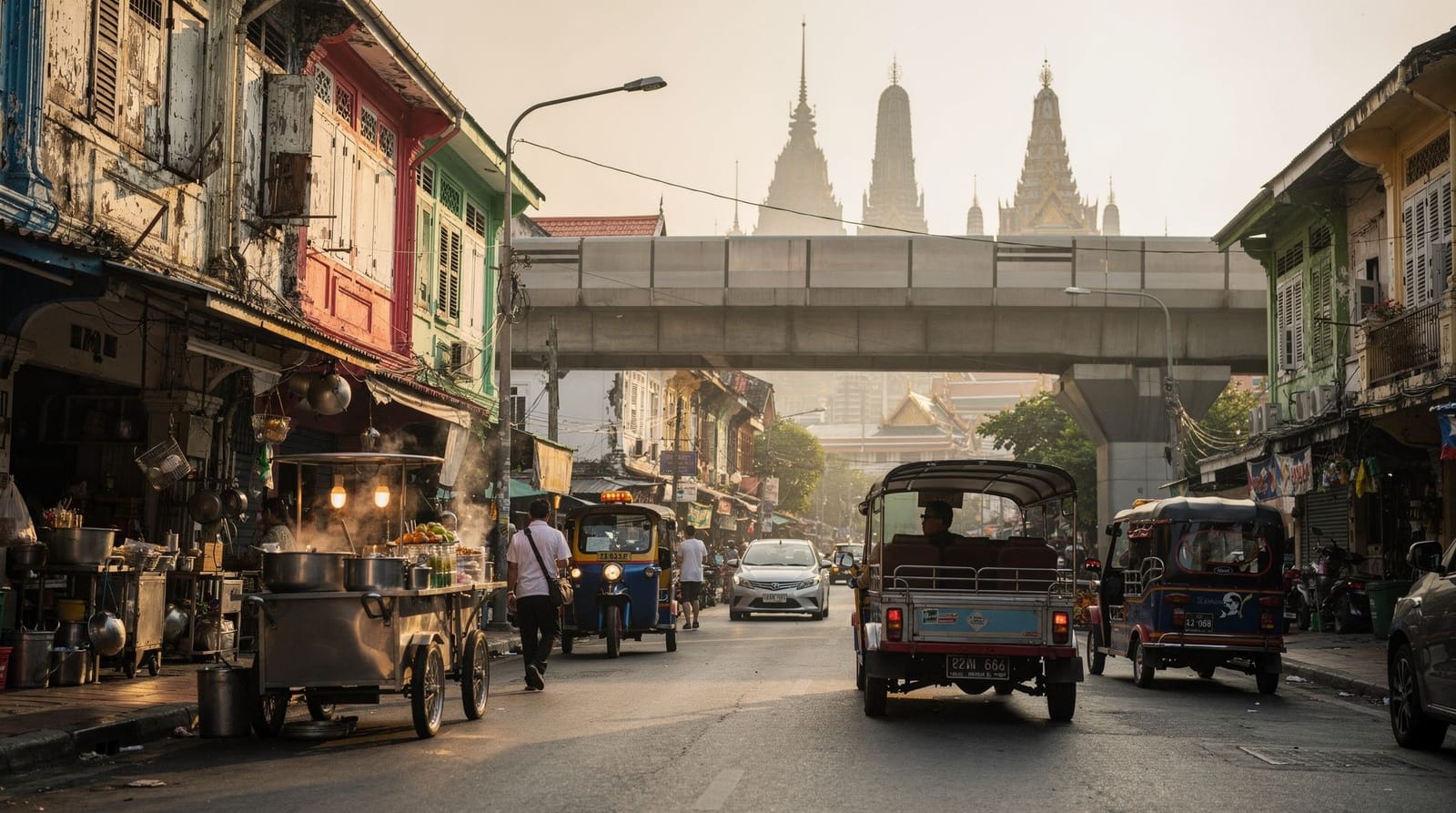
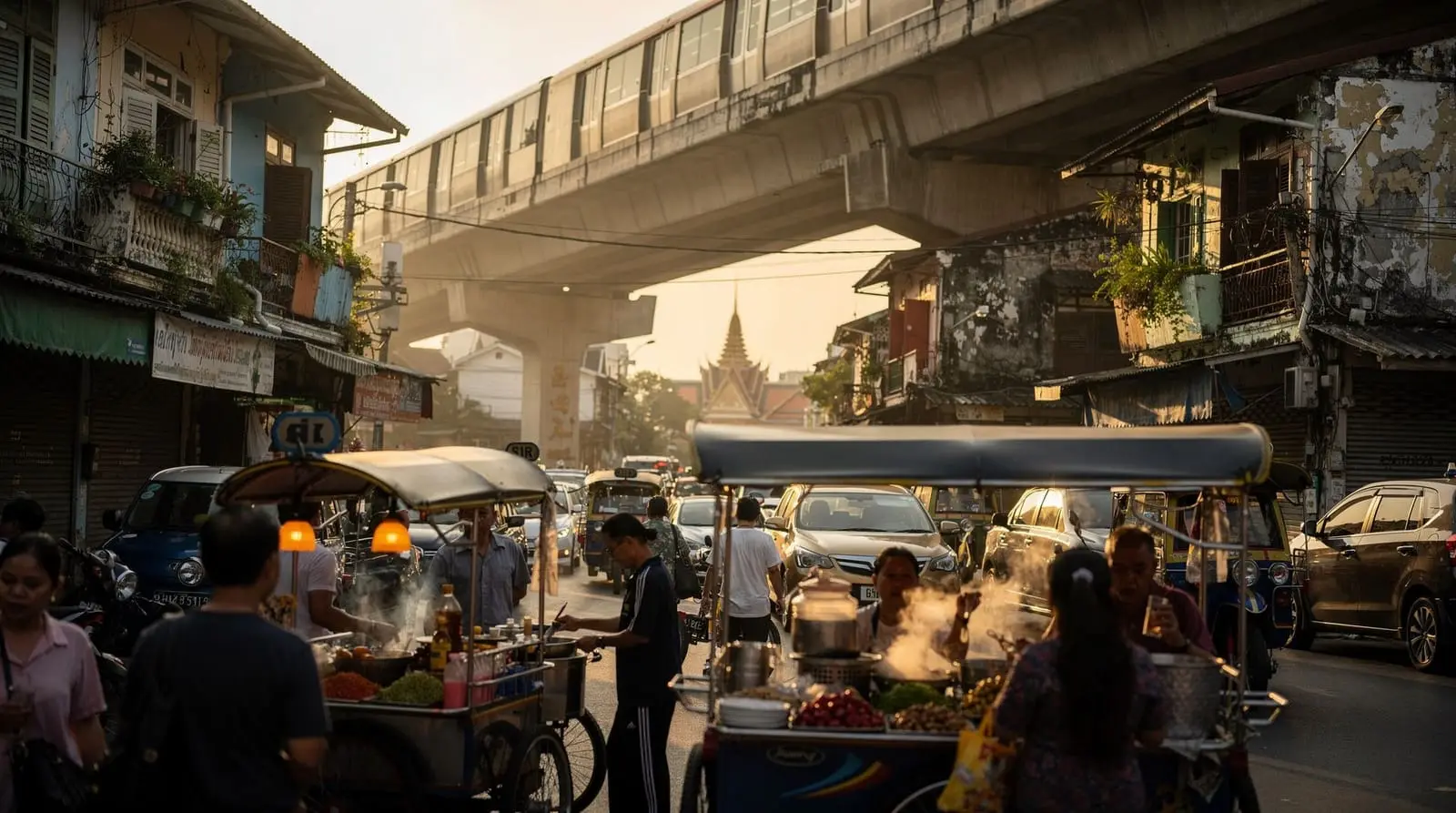
What makes Talat Noi unlike anywhere else in Bangkok is the layering. Walk a single lane and you pass a workshop with a mechanic up to his elbows in a disassembled engine, a 150-year-old shophouse with carved wooden shutters, a tiny red-and-gold Chinese shrine thick with incense smoke, and a wall covered in a mural that was not there last year. The neighbourhood is simultaneously a working light-industrial district, a living Teochew community, and an open-air gallery.
The car-part workshops are central to its identity. For decades Talat Noi has been Bangkok’s hub for salvaged and reconditioned automobile and engine parts — alleys stacked with gearboxes, pistons, hubcaps and chrome, a rusting mechanical aesthetic that photographers adore. Threaded through and over all of it is the street art: a dense, ever-shifting collection of murals, large and small, that has turned the lanes into one of the city’s most-photographed corners. The Bangkok neighbourhoods guide places Talat Noi in the wider city, and for travellers chasing this kind of off-script Bangkok, the hidden gems guide points to more.
The landmarks worth finding
Talat Noi rewards drifting, but a handful of fixed points anchor a walk.
So Heng Tai mansion is the neighbourhood’s signature building — a roughly 200-year-old Teochew courtyard house, one of the oldest surviving Chinese mansions in Bangkok, built by a wealthy merchant family. Its weathered timber galleries enclose a central courtyard that now, improbably, holds a diving pool used by a scuba school. A courtyard cafe lets you sit inside; entry is usually tied to a minimum drink purchase of around 100 THB (3 USD). It is the closest Talat Noi comes to a formal sight, and it is genuinely special.
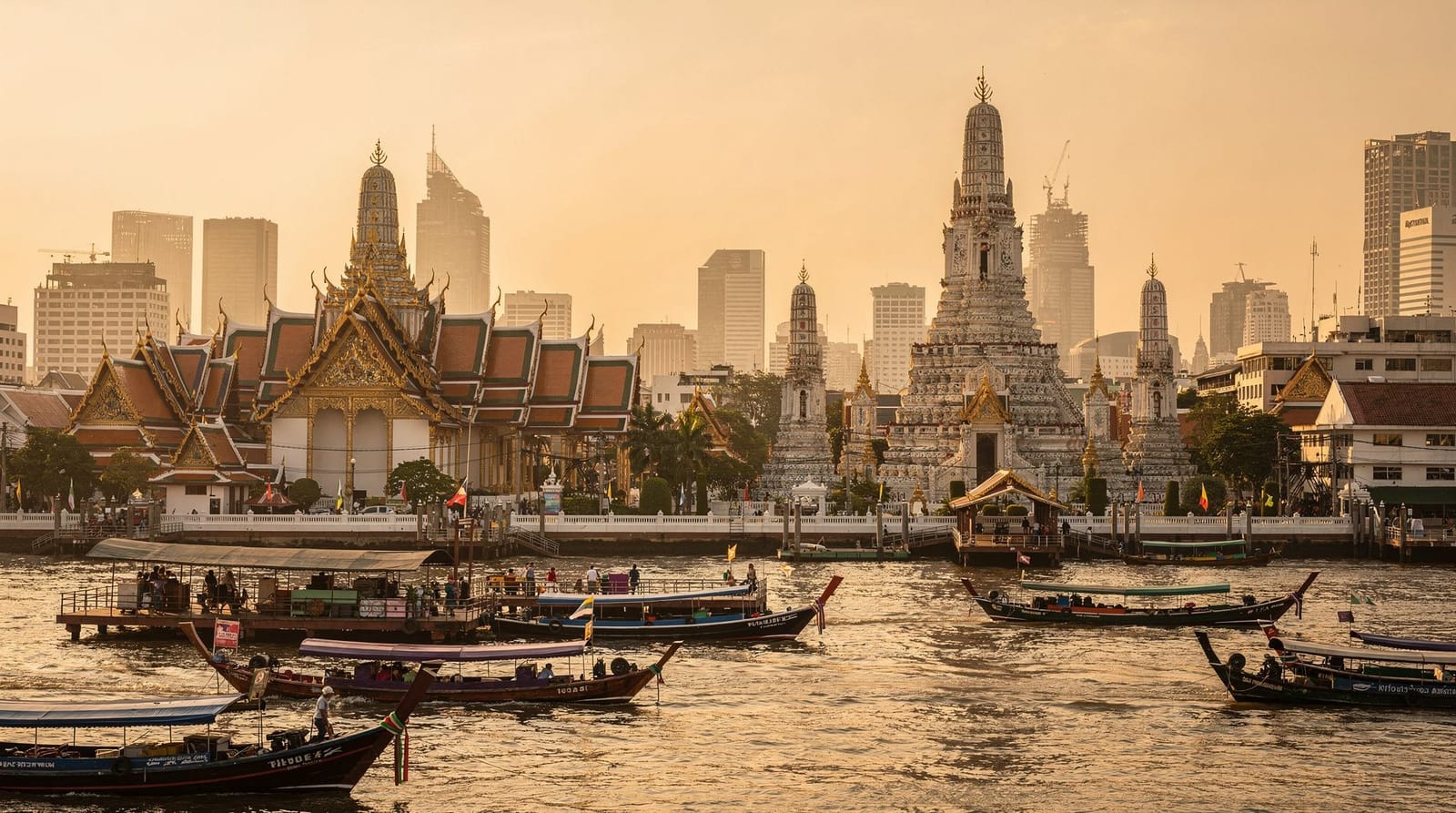
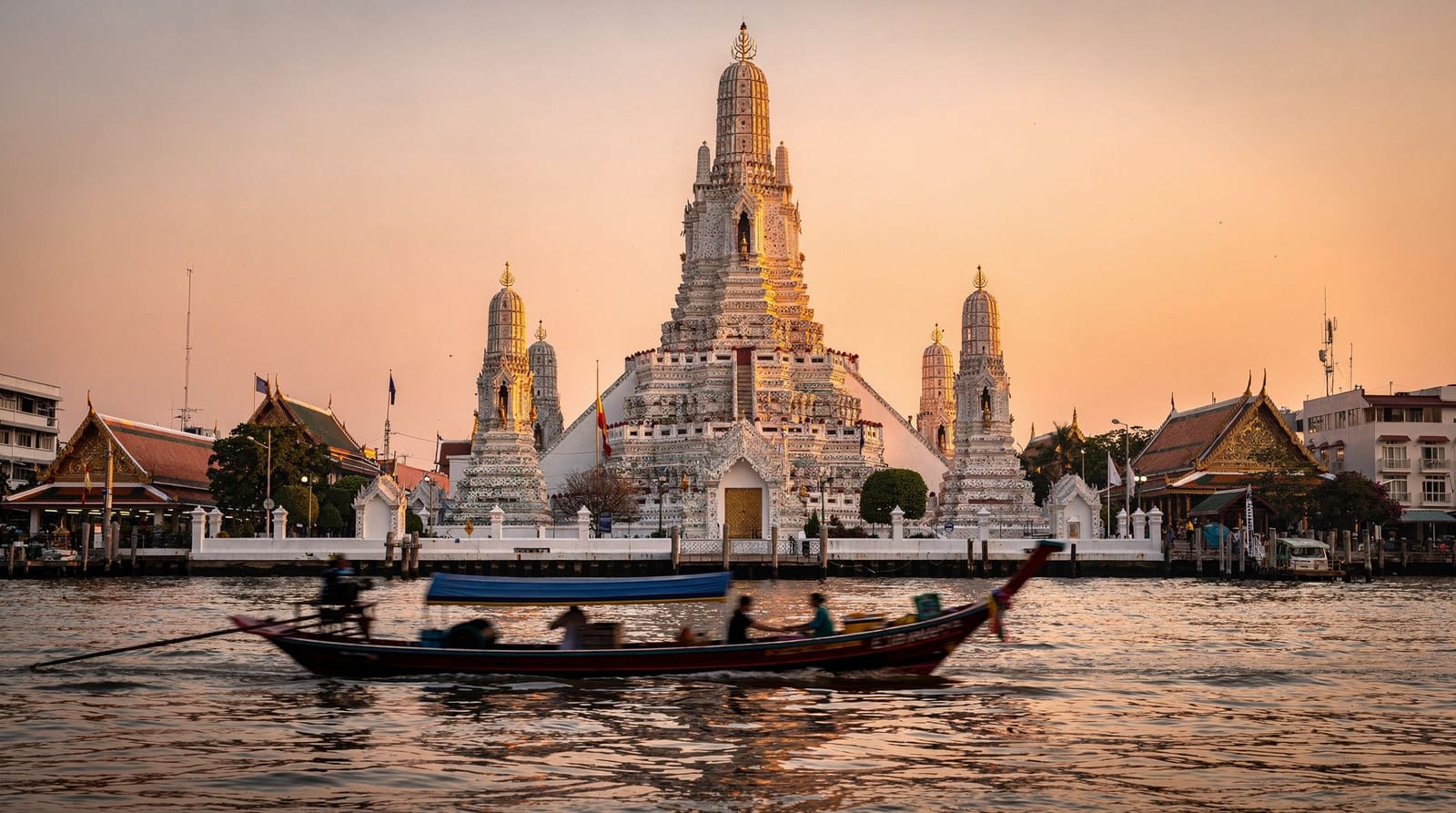
The Holy Rosary Church (known locally as Kalawar) sits on the riverbank — a Portuguese-rooted Catholic church first founded in the 18th century, its current Gothic-Romanesque building a reminder that this stretch of river was home to Portuguese and other Christian communities long before the skyscrapers. Its riverside setting and quiet interior make a striking contrast with the Chinese shrines a few lanes inland.
Those Chinese shrines — San Chao Rong Kueak and other small temples tucked into the lanes — are the spiritual heart of the Teochew community, draped in red lanterns and gold, busiest around Chinese New Year. Together with the church and the river, they give Talat Noi a layered religious geography in a remarkably small space. For more of the wider area’s temples and shrines, the Chinatown Bangkok guide and the Wat Traimit golden Buddha guide are close at hand.
A short history of the quarter
Talat Noi’s character is not an accident — it is the residue of two centuries of river trade. The Teochew Chinese who settled here arrived by water, drawn to the riverbank below the city’s Chinatown core, and built the shophouses, family businesses and clan shrines that still define the lanes. For generations this was a working trading and craft district, and that working identity never left: where some old quarters have been hollowed out and prettified for tourism, Talat Noi still earns its living, most visibly through the automobile and engine-part trade that took over many of the old godowns and workshops in the 20th century.
The presence of the Portuguese-rooted Holy Rosary Church on the riverbank is another historical fingerprint — evidence that this stretch of the Chao Phraya was a meeting point of Chinese, Thai and European communities long before the modern city grew up around it. Walking the lanes, you are reading that layered history directly off the buildings: clan shrine, godown, church, shophouse, workshop, all pressed together. For the wider story of Bangkok’s Chinese quarter, the Chinatown Bangkok guide and the Bangkok culture guide give context, and the iconic landmarks guide frames where Talat Noi sits among the city’s set-pieces.
A photography neighbourhood
Talat Noi is, quite simply, one of the best places to take photographs in Bangkok. The peeling shophouse facades, the rusting machinery, the incense-hazy shrines, the riverside light and the murals combine into a setting that photographers and Instagrammers return to again and again.
For the best results, come early in the morning, before about 09h00, when the light is soft, the lanes are quiet and the heat is bearable. By midday the shadeless riverside stretches become punishing, and on weekends the most famous mural corners draw queues of local photo-takers. Bring a wide lens for the lanes and something longer for detail in the workshops. The best photo spots in Bangkok guide and the Instagram spots guide put Talat Noi alongside the city’s other photogenic corners, and the temple photography tips guide helps with the shrines.
Walking it: a practical loop
A relaxed Talat Noi loop takes two to three hours. Arrive at Wat Mangkon or Hua Lamphong MRT, walk down toward the river, and let the lanes lead you — Talat Noi is small and easy to circle on foot, and getting mildly lost is part of the pleasure. Aim to take in So Heng Tai, the Holy Rosary Church on the river, a Chinese shrine or two, the car-part alleys, and as much street art as you can find, with a coffee stop at one of the small riverside or courtyard cafes that have opened among the old shophouses.
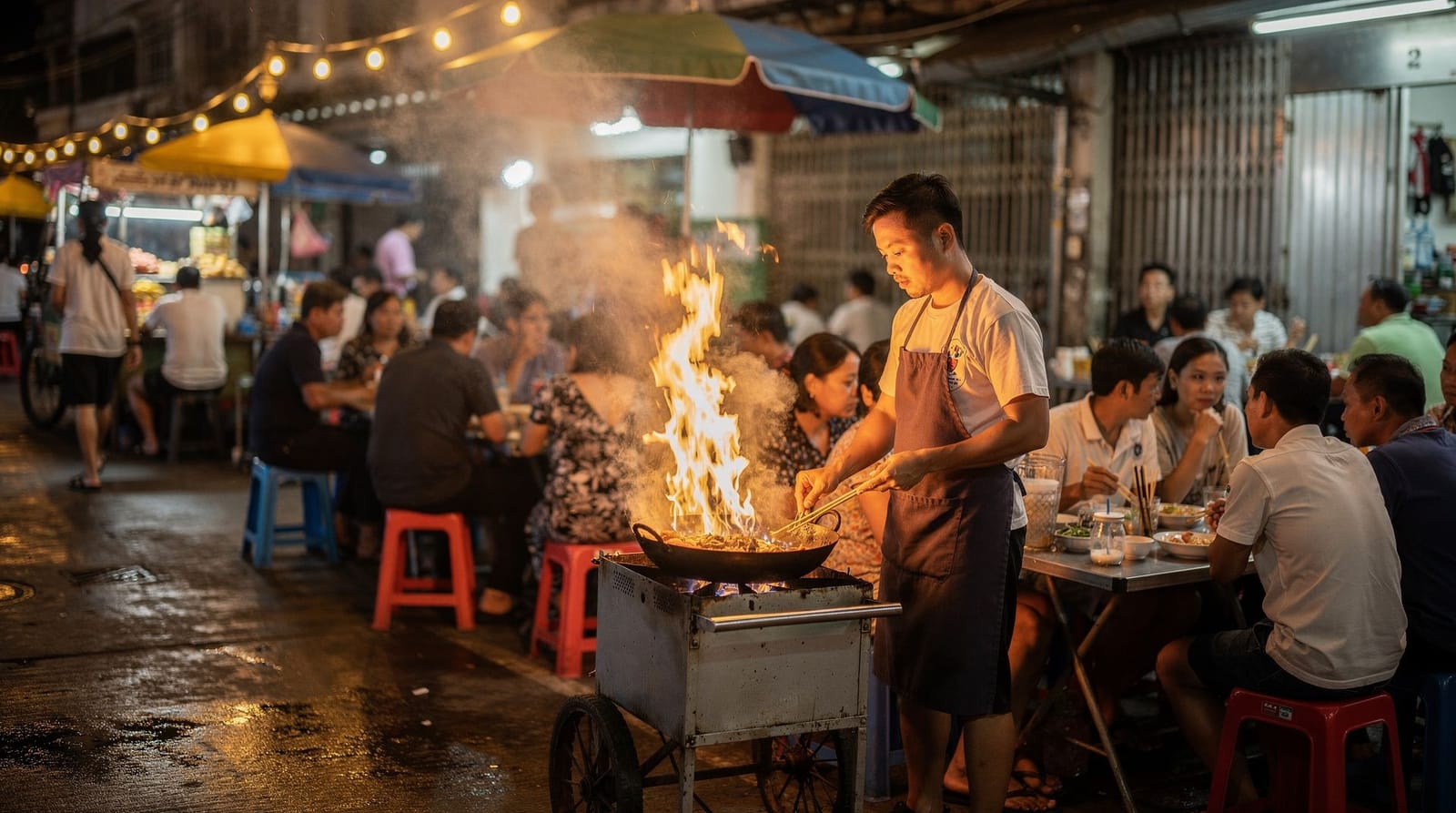
Because the area is so compact and so close to Chinatown, the smartest plan is to walk Talat Noi in the late afternoon and then roll straight into Yaowarat as the street-food stalls fire up after dark — a near-perfect Bangkok evening that pairs quiet atmospheric wandering with the city’s most famous street food. The Yaowarat Chinatown food guide and the Bangkok street food guide cover what to eat next door, and the Bangkok at night guide frames the evening.
A guided walk is a strong option here, because a knowledgeable local unlocks the history behind the shophouses, finds the shrines and murals you would walk past, and explains the Teochew heritage that gives the neighbourhood its meaning.
Chinatown and Talat Noi walking tour — backstreets, shrines and old shophousesFor travellers who want to push deeper into the tangle of lanes behind Yaowarat, a dedicated back-alleys walk goes further off the main streets than most visitors ever venture.
Explore the back alleys of Chinatown — hidden lanes, markets and local lifeCafes and the new Talat Noi
In the last decade Talat Noi has gained a small but distinct cafe scene, and it is part of why the neighbourhood now draws younger Thais alongside the photographers. A handful of design-conscious coffee shops have opened inside old shophouses and along the river — including spaces that lean hard into the area’s industrial-heritage aesthetic, with bare concrete, salvaged machinery and river views. The So Heng Tai courtyard cafe is the most atmospheric place for a drink, but the riverside spots offer the better outlook over the water and across to Thonburi.
These cafes have arrived without overwhelming the quarter, which remains a working district first and a hangout second. The result is a pleasant balance: you can break a walk with a good coffee and air-conditioning, then step straight back into the rust-and-incense lanes. It is a more authentic version of the cafe-meets-heritage formula than you find in more polished neighbourhoods. If coffee culture is your thing, the leafy Ari neighbourhood guide covers Bangkok’s denser cafe enclave to the north.
Extending the walk south: Bang Rak and the river
Talat Noi does not have to be a dead end. Immediately south, the lanes give way to Bang Rak and Charoenkrung Road, Bangkok’s old “New Road” — the city’s first paved street and once its main commercial artery, now home to antique shops, fading trading houses and a fast-growing food and design scene. It is a natural continuation of the same riverside, pre-skyscraper Bangkok that Talat Noi represents, and it is an easy 15-to-20-minute walk further along the water. The Bang Rak and Charoenkrung destination guide and the Bang Rak food guide cover this stretch, which rewards the same slow, camera-ready wandering as Talat Noi itself.
For a bigger contrast, the glass-and-marble ICONSIAM mall sits almost directly across and slightly south along the river — a striking juxtaposition of old riverside Bangkok and its ultramodern opposite, reachable by a short shuttle boat from the Talat Noi area. See the ICONSIAM and Khlong San destination guide. Either extension turns a two-hour Talat Noi loop into a half-day riverside itinerary; the riverside Bangkok guide and the riverside Chao Phraya destination page frame how this whole waterfront stretch connects.
Talat Noi versus Yaowarat: which to prioritise
Travellers short on time sometimes have to choose. Here is how the two compare:
| Talat Noi | Yaowarat (Chinatown) | |
|---|---|---|
| Atmosphere | Quiet, faded, residential | Loud, neon, commercial |
| Best for | Photography, wandering, calm | Street food, shopping, energy |
| Busiest time | Weekend mornings (photographers) | Every evening from 18h00 |
| Time needed | 2–3 hours | 3+ hours, especially at night |
| Ticketed sights | Almost none (So Heng Tai only) | Almost none — it’s a street experience |
In practice you do not have to choose: they sit five to ten minutes apart, and the classic plan — Talat Noi in the late afternoon, Yaowarat after dark — gives you both in one outing. The Chinatown Bangkok guide covers Yaowarat in full.
Old town photo walk — Talat Noi, Chinatown and the river’s atmospheric backstreetsHonest expectations
Be clear about what Talat Noi is and is not. It is not a polished tourist attraction with signage, facilities and a ticket office. It is a real, slightly scruffy working neighbourhood where you wander, photograph and absorb — and where the “sights” are an old mansion, a church, some shrines and a lot of atmosphere. If you need a structured, box-ticking experience, you may find it underwhelming. If you love peeling-paint character, street art, river light and the texture of an old Chinese quarter, it is one of the most rewarding couple of hours in Bangkok.
Manage the heat (it is shadeless and humid by the river), respect the working mechanics whose alleys you are photographing, and treat the shrines and church as living places of worship rather than backdrops. Do those things and Talat Noi delivers one of the city’s most authentic walks. To fit it into a wider plan, the Chinatown Bangkok guide and the Bangkok neighbourhoods guide show how it slots beside the headline areas.
Frequently asked questions about Talat Noi: Bangkok's old Teochew riverside quarter, a walking
Where is Talat Noi and how do I get there?
What is there to see in Talat Noi?
Is Talat Noi good for photography?
How long do you need in Talat Noi?
Is it free to visit Talat Noi?
Is Talat Noi safe to walk around?
When is the best time to visit Talat Noi?
Can I combine Talat Noi with Chinatown?
Top experiences
Bookable activities with verified prices and instant confirmation on GetYourGuide.