Boat noodles at Victory Monument: the full guide
Bangkok: Authentic Tasting Thai-Chinatown Walking Food Tour
Where do you eat boat noodles in Bangkok?
The boat-noodle alley off Soi Phaya Thai near BTS Victory Monument is the classic spot, with canal-side shops serving tiny bowls for about 15 to 20 THB each. You order several bowls, stack the empties, and choose beef or pork in a dark, blood-enriched broth.
Boat noodles, or kuay teow ruea, are one of Bangkok’s great cheap thrills: tiny bowls of dark, intense broth eaten by the half-dozen until your empties tower beside you. The spiritual home for visitors is the boat-noodle alley near Victory Monument, a cluster of canal-side shops where bowls cost about 15 to 20 THB each. This 2026 guide explains what boat noodles are, the blood broth that scares some people off, beef versus pork, exactly how to order and stack, and the prices and etiquette that make the meal work.
| Where | Soi Phaya Thai alley, near BTS Victory Monument |
| Cost | ~15–20 THB/bowl; 100–200 THB for a full meal |
| Time needed | 30–45 minutes |
| Getting there | BTS Victory Monument, 3–5 min walk |
| Best time | any time the shops are open; lunch and dinner busiest |
What boat noodles are
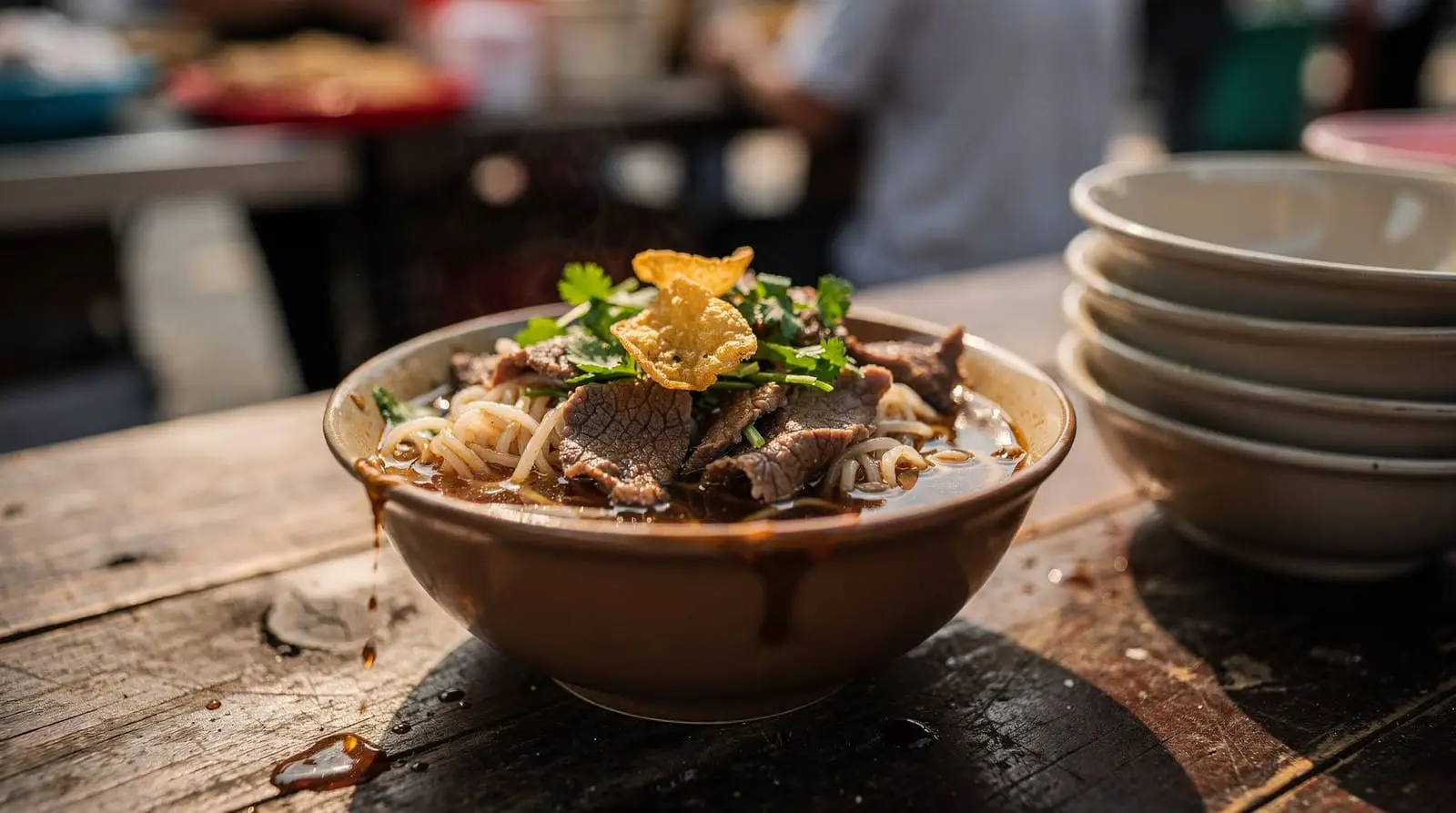
The name comes from the vendors who once paddled the canals of central Thailand selling noodles from boats. To stop broth sloshing over the side, they served small portions in small bowls, and that tradition stuck. A bowl holds a few mouthfuls: rice noodles or egg noodles, thin-sliced beef or pork, a meatball or two, morning glory, and a ladle of concentrated dark broth, finished with crispy garlic and coriander.
The point is variety and heat retention. Because each bowl is tiny, the broth stays scalding and you can sample beef at one shop and pork at the next without filling up too fast. It is among the best-value meals in the city, which is why it features in both the best cheap eats guide and the Bangkok on a budget guide.
The blood broth, explained
The thing newcomers ask about most is the colour. Boat noodle broth is dark brown, almost black, and that depth comes partly from a small amount of pig or cow blood stirred in near serving. It thickens the broth and adds a rich, faintly metallic, savoury depth, balanced by cinnamon, star anise, galangal and other spices simmered for hours. It is fully cooked and entirely safe at the busy, high-turnover shops in the alley, where the broth is constantly replenished. If it is not for you, ask for nam sai, a clear broth without the blood, and you still get a delicious bowl. The Bangkok street food guide covers how to judge a clean, busy stall, and the street food safety guide goes deeper on what to look for.
Beef versus pork
Boat noodles come in two camps. Beef (nuea) is the older, deeper, gamier version, prized by purists, with tender slices and beef balls. Pork (moo) is milder and a gentler entry point. Many shops specialise in just one, so the classic move is to eat a few beef bowls at one stall and a few pork bowls next door. Neither is “correct”; trying both in a single sitting is the whole appeal of the alley. Pair them with crispy pork rinds (khaep moo) for crunch, a staple side you will see on most tables.
How to find the alley
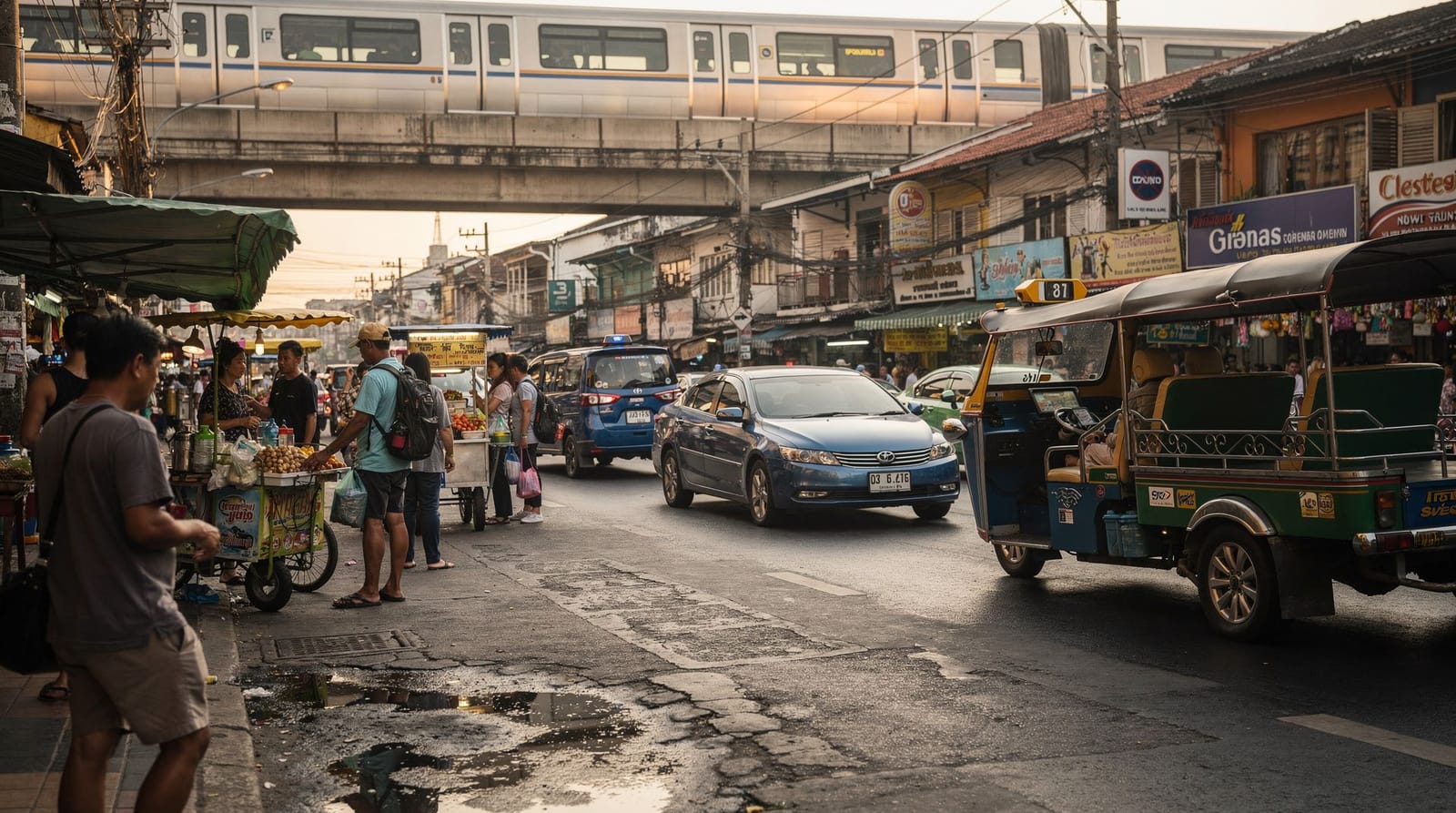
Take the BTS Skytrain to Victory Monument station, exit toward Soi Phaya Thai and the Anusawari circle, and walk 3 to 5 minutes to the narrow canal-side lane lined with boat-noodle shops. You will know it by the stacks of empty bowls on the tables and the steam rising from the broth pots. It sits north of the main shopping districts, an easy add-on if you are already moving between Siam and Ratchaprasong and points north; the getting around Bangkok guide helps you time the BTS hop.
How to order and stack
The system is wonderfully simple. Sit down at any shop and staff often bring bowls quickly without a long menu dance. Point at beef or pork, or say moo for pork and nuea for beef. Eat a bowl, set the empty aside, and keep ordering in small rounds. At the end, the staff count your stack of empty bowls to tally the bill, which is why the towering pile of bowls is both a tradition and a scoreboard. Locals routinely clear 10 or more; first-timers usually manage 5 to 8.
Season at the table from the caddy of dried chilli, chilli vinegar, sugar and fish sauce, adding a little at a time. The broth is savoury rather than fiery on its own. Say mai phet if you want a vendor to keep it mild, and aroi if you want to tell them it is delicious. Cash is essential; most shops do not take cards. For a wider sense of how this dish ranks among the city’s must-eats, the what to eat in Bangkok guide sets the priorities.
Prices and what a full meal costs
Each bowl runs about 15 to 20 THB (roughly 0.50 to 0.60 USD). Because they are small, a satisfying meal of 6 to 10 bowls plus a side of pork rinds and a Thai iced tea lands around 120 to 200 THB total, still one of the cheapest proper meals in the city. Be a little wary of any shop quoting much higher “tourist” pricing per bowl; the genuine local rate is in that 15 to 20 THB band, and the busiest shops with the most locals are usually both the cheapest and the best.
Doing it with a guide
Boat noodles are easy to eat solo, but if you want them woven into a wider crawl of local dishes with the ordering and etiquette handled for you, a tasting walk is a relaxed way in:
Try an authentic 10-tasting Bangkok walking tourA guide also explains the broth, points you to the best beef versus pork shops, and stops you over-ordering on the first bowl. For an evening that combines boat noodles with other street staples across the city, an after-dark tasting route covers more ground:
Book an evening street food tasting walkPairing it into your day
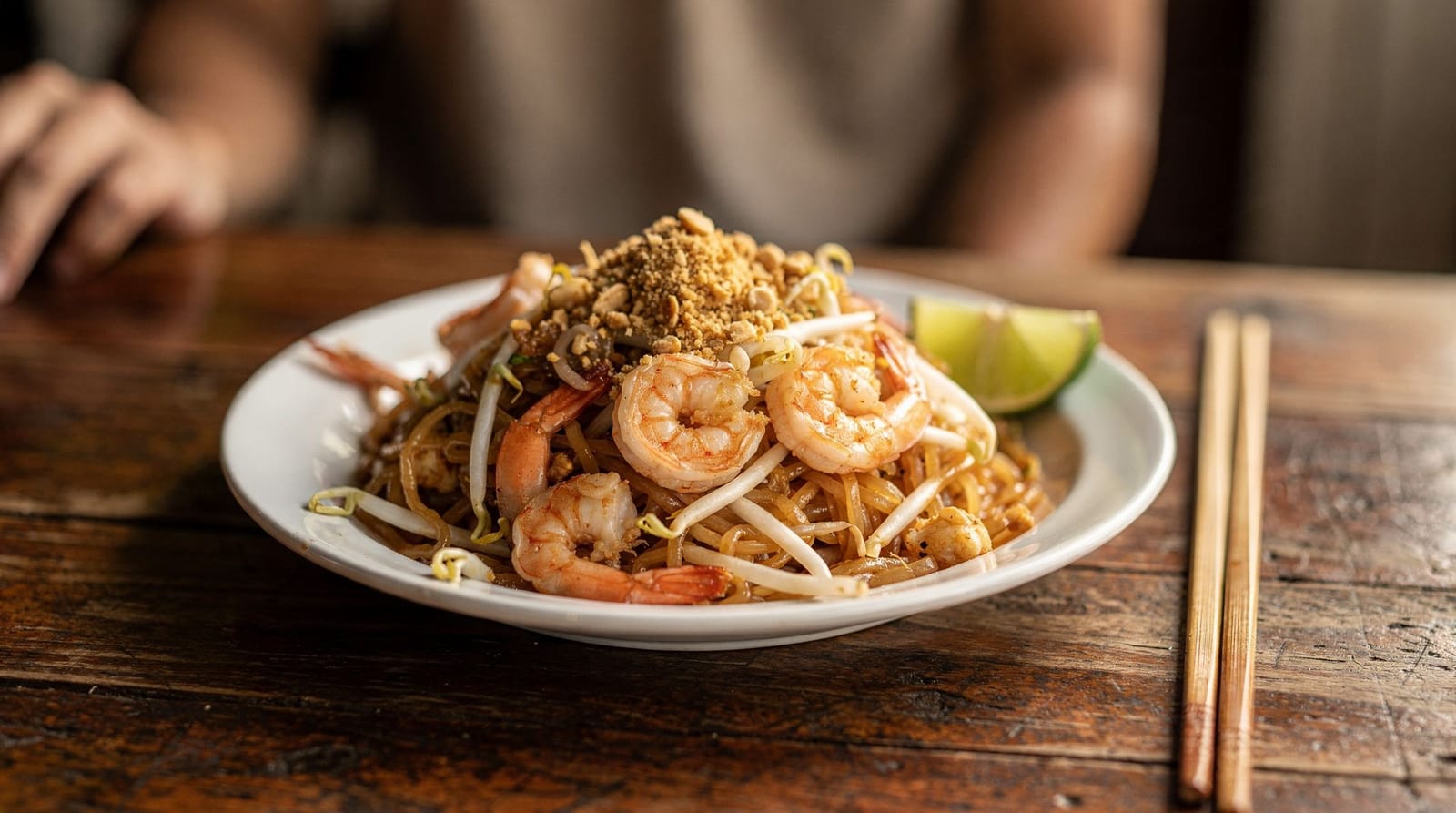
Boat noodles are a perfect light, fast meal between sightseeing blocks rather than a sit-down feast, so they slot neatly into a busy itinerary. Combine the Victory Monument alley with a noodle-and-pad-thai crawl using the best pad thai in Bangkok guide, or build a full eating day with the Bangkok foodie itinerary. If you are still planning the shape of your trip, the Bangkok in 3 days plan shows where a quick boat-noodle stop fits between temples and markets, and the Bangkok for first-timers guide covers the basics of eating cheaply and well across the city.
A short history of the dish
Boat noodles trace back to the canals (khlongs) of central Thailand, particularly Ayutthaya province, where vendors rowed flat boats laden with charcoal stoves and broth pots, selling bowls to people along the water and at floating markets. The cramped, rocking boats forced two habits that survive today: tiny portions so the broth would not spill, and a concentrated, heavily spiced broth that stayed flavourful even as it was topped up through a long day. As Bangkok grew and the canals were paved over, the boats came ashore and clustered into shophouses, and the Victory Monument alley became the most famous landing point for visitors. The dish you eat today is a direct descendant of that canal trade, which is why a canal-boat and market food experience pairs so naturally with it.
Knowing this helps explain the format. The small bowl is not a gimmick or a way to charge more; it is a genuine inheritance from boat-bound cooking. Eating many small bowls is the authentic way, not a tourist twist.
What to look for in a good shop
The Victory Monument alley has a dozen-plus shops, and quality does vary. The best signs are obvious once you know them: a constant churn of local customers, a broth pot that is clearly being topped up rather than ladled from a thin, cooling base, and staff moving fast. Beef specialists and pork specialists often sit side by side, so you can hop. Avoid any shop quoting noticeably higher per-bowl prices or pushing large set menus at tourists; the genuine rate sits in the 15 to 20 THB band. A long stack of empty bowls on neighbouring tables is the clearest endorsement you will get. Food obsessives rank this alley among the best-value meals in the whole city for exactly this reason.
If the alley feels overwhelming, it helps to remember there is no wrong order. Sit anywhere with a crowd, eat a few bowls, and move next door if you want to compare. The shops are used to grazers.
Dietary considerations
Traditional boat noodles are built around beef or pork in a blood-enriched broth, so they are not suitable for vegetarians, vegans or diners avoiding pork and blood products — there is no plant-based version of the classic dish at these shops. If that rules boat noodles out for you or your group, the vegetarian and vegan Bangkok guide points to dishes and restaurants that work instead, and the halal food Bangkok guide covers where to eat if pork and blood broth are a concern for religious reasons. Everyone else can simply ask for nam sai (clear broth) if the blood specifically is the hesitation, while keeping the beef or pork.
Comparing boat noodles to other cheap noodle classics
Boat noodles are one entry point into Bangkok’s wider noodle culture, and it’s worth knowing how the dish sits alongside the other essentials. Pad thai is stir-fried and sweet-savoury rather than broth-based, and a completely different eating experience. Khao man gai (Hainanese chicken rice) is not a noodle dish at all but shares the same cheap, fast, one-plate appeal and is a good contrast if someone in your group wants something milder than the intense boat-noodle broth. Trying two or three of these dishes in the same day, rather than filling up on one, is the best way to get a feel for how varied Bangkok’s everyday food really is.
What a boat-noodle afternoon costs
Because portions are so small and shops so cheap, boat noodles are one of the best-value meals to build a budget day around. A full stop (6–10 bowls, a side and a drink) rarely exceeds 200 THB per person, which the Bangkok travel costs guide can help you weigh against the rest of a day’s spending. Finish the meal the local way with a plate of mango sticky rice from a nearby stall — sweet, cold and the classic palate-cleanser after a savoury, spice-laden bowl.
Beyond Victory Monument
While Victory Monument is the headline location, boat noodles turn up across the city: in markets, on suburban sois and at canal-side stalls elsewhere. If you are exploring the riverside and Chao Phraya area or working through the markets in the best food markets guide, keep an eye out for the tell-tale stacks of small bowls. The Victory Monument alley remains the easiest single place to eat your fill, but the dish is genuinely everywhere once you start noticing it, and some of the best bowls are at unmarked neighbourhood shops with no sign in English at all. The beauty of boat noodles is how low-stakes they are: a few baht a bowl, no reservation, no fuss, and a pile of empty bowls to photograph at the end. Eat until you are happy, count the stack, pay in cash, and move on.
Frequently asked questions about Boat noodles at Victory Monument: the full
How much do boat noodles cost at Victory Monument?
Why are boat noodle bowls so small?
What is the blood in boat noodle broth?
Beef or pork boat noodles, which is better?
How do you order boat noodles?
How do I get to the boat noodle alley?
Are boat noodles spicy?
What should I order alongside boat noodles?
Top experiences
Bookable activities with verified prices and instant confirmation on GetYourGuide.