Thai cooking class with a market tour: the full guide
Bangkok: Cooking Class with Market Visit & Tuk Tuk Ride
What does a cooking class with a market tour involve?
A cooking class with a market tour begins with a guided walk through a Thai fresh market, where the instructor teaches you to identify herbs, vegetables, curry pastes, fruits, and proteins, and you shop for some of the ingredients you'll cook with. You then head to the kitchen to prepare several dishes hands-on and eat them. It is the most immersive cooking-class format, typically running 4–5 hours, and is widely considered the most rewarding way to learn Thai cooking in Bangkok.
Of all the ways to take a Thai cooking class in Bangkok, the one that includes a guided market visit is the most rewarding. Before you ever touch a wok, an instructor walks you through a Thai fresh market — teaching you to identify the herbs, pastes, vegetables, and produce that define the cuisine — and you shop for the ingredients you’ll cook with. It turns a cooking lesson into a genuine cultural experience, and for many travellers the market walk is the single best part of the day. This guide explains exactly what the market-tour format involves, what you’ll learn, how long it takes, and how to choose the right one.
If you want the broad overview of Bangkok cooking classes first, see the Thai cooking class guide; for the ranked picks across all formats, the best cooking classes guide. This page is dedicated to the market-inclusive format specifically.
| Where | A fresh market plus a teaching kitchen, central Bangkok |
| Cost | Included in the class price, typically 1,000–2,500 THB |
| Time needed | 4–5 hours total |
| Getting there | Most schools are BTS/MRT-reachable or include pickup |
| Best time | Morning start (08h00–09h00), when markets are freshest |
Which market, compared
| Market type | Feel | Best for |
|---|---|---|
| Or Tor Kor | Large, polished, one of the city’s best | Produce variety, easy browsing |
| Klong Toey | Vast, working wholesale market | Scale and authenticity |
| Neighbourhood fresh market | Small, local | An intimate, everyday feel |
| Flower market (Pak Khlong Talad) | Colourful, fragrant | A different sensory angle on Thai ingredients |
What the market tour involves
A market-tour cooking class typically unfolds in two parts:
-
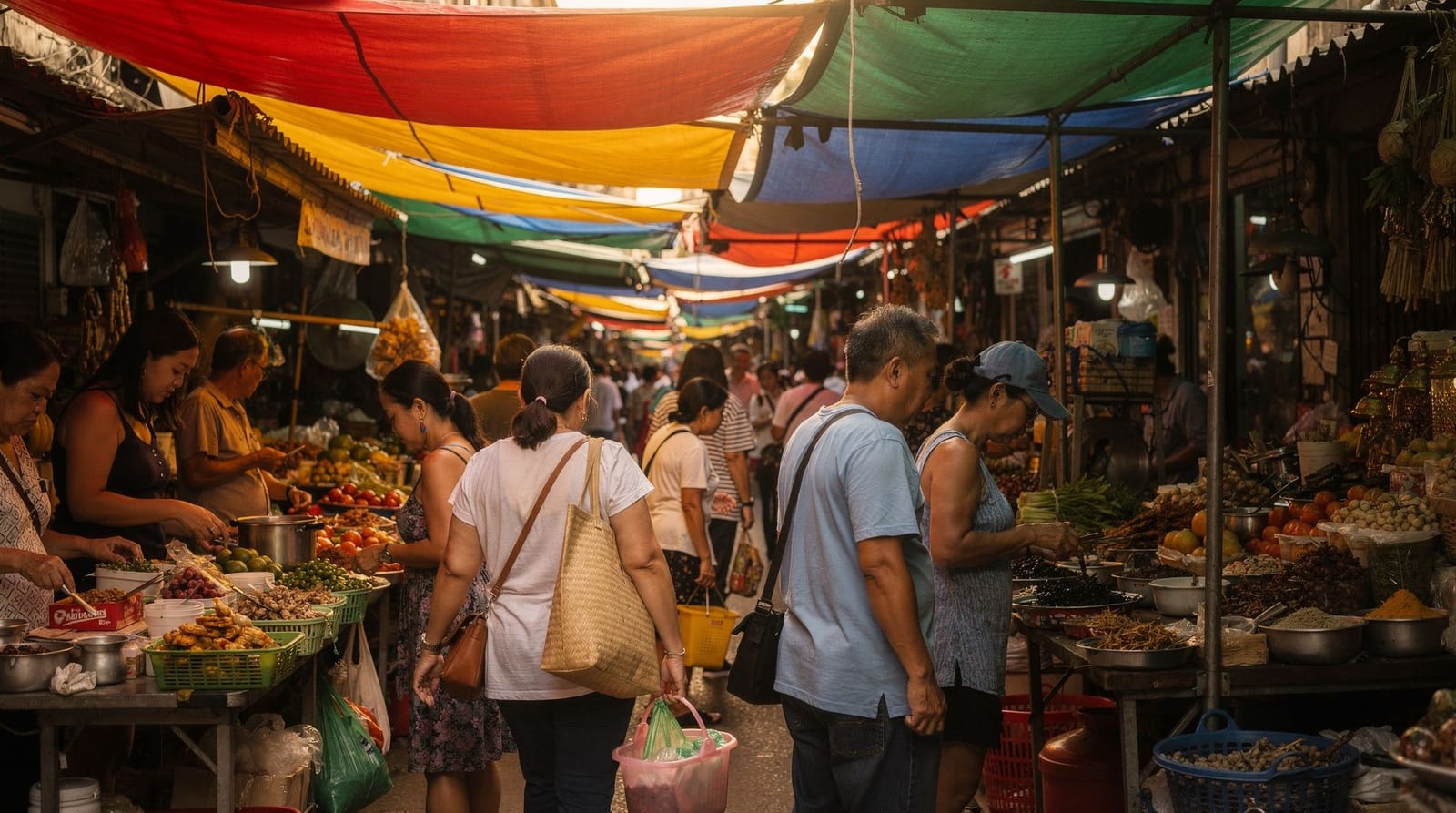
The market visit (around 30–60 minutes): You meet your instructor and head to a fresh market, sometimes by tuk-tuk. There, the teacher walks you through the produce, naming and explaining the ingredients, showing you how to select them, and helping you shop for some of what you’ll cook. You taste, smell, and handle the real thing.
-
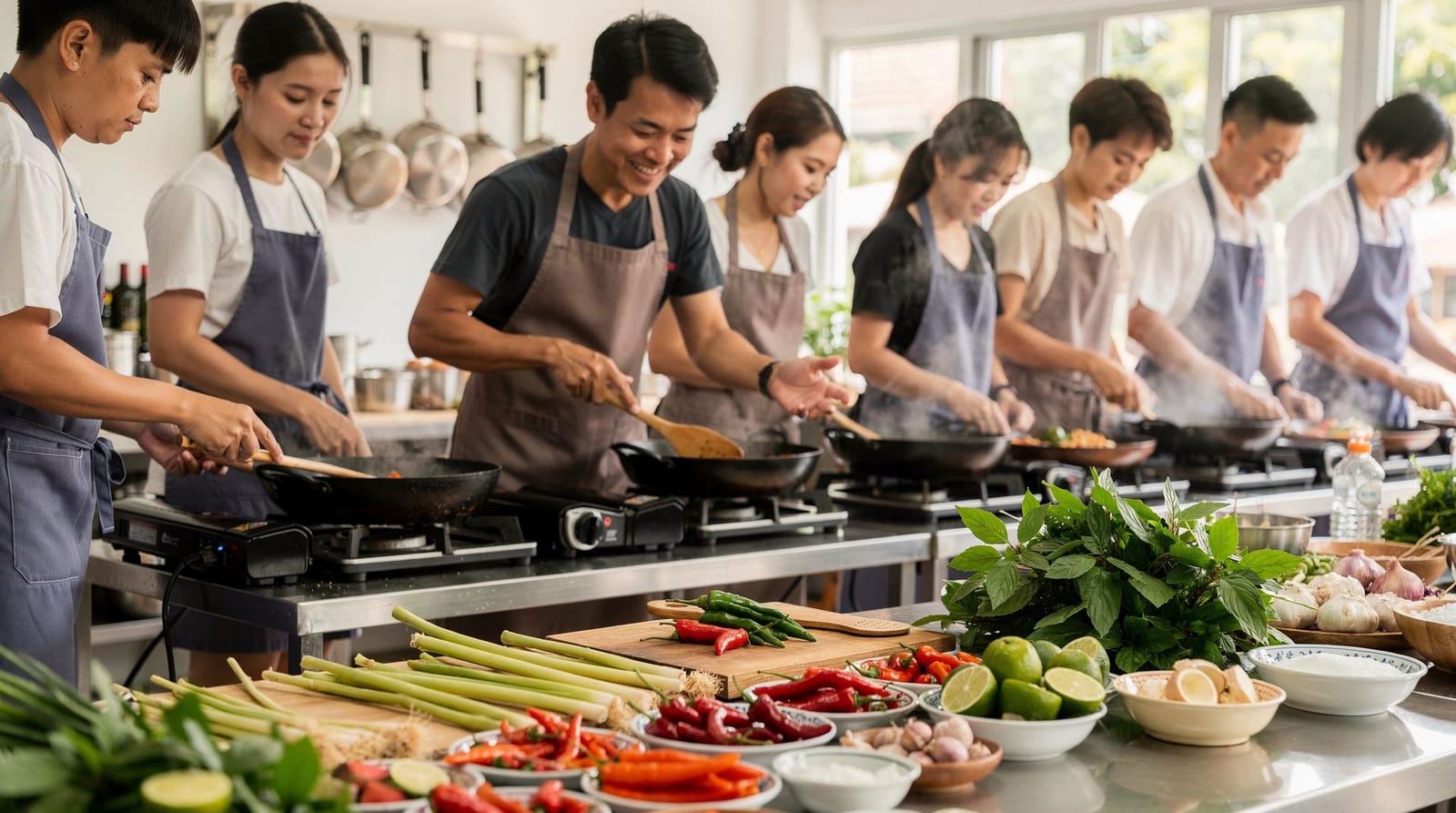
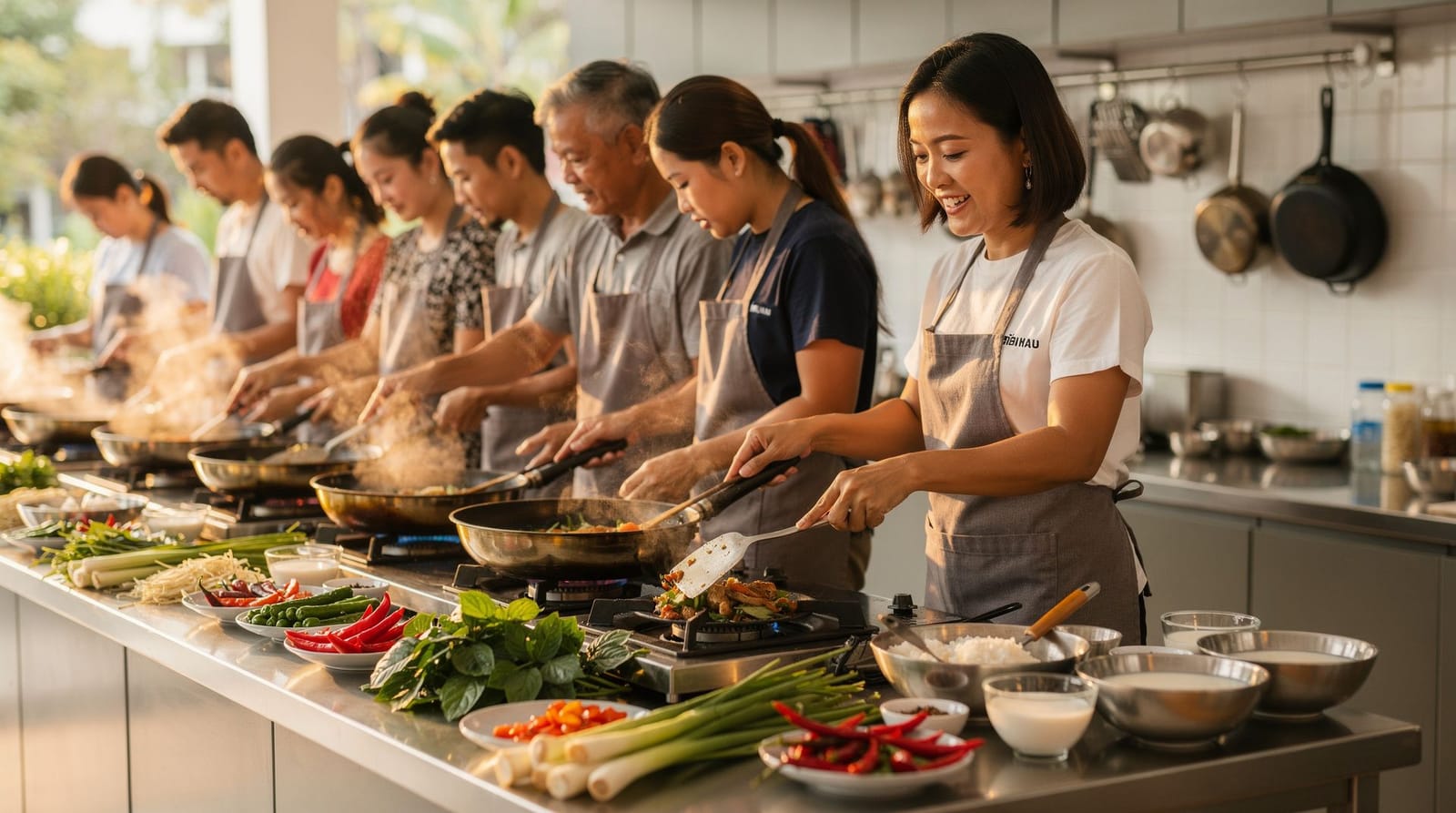
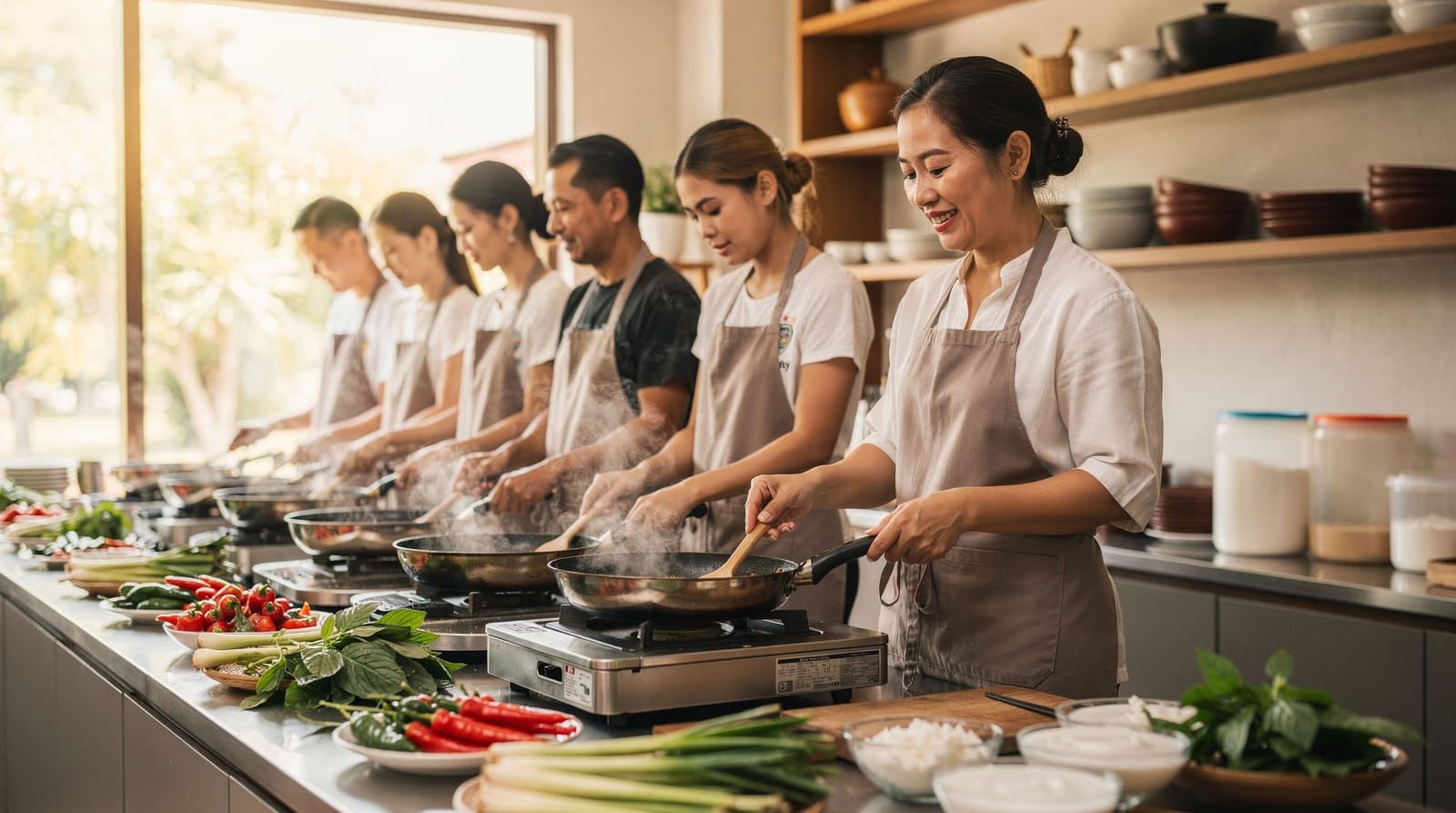
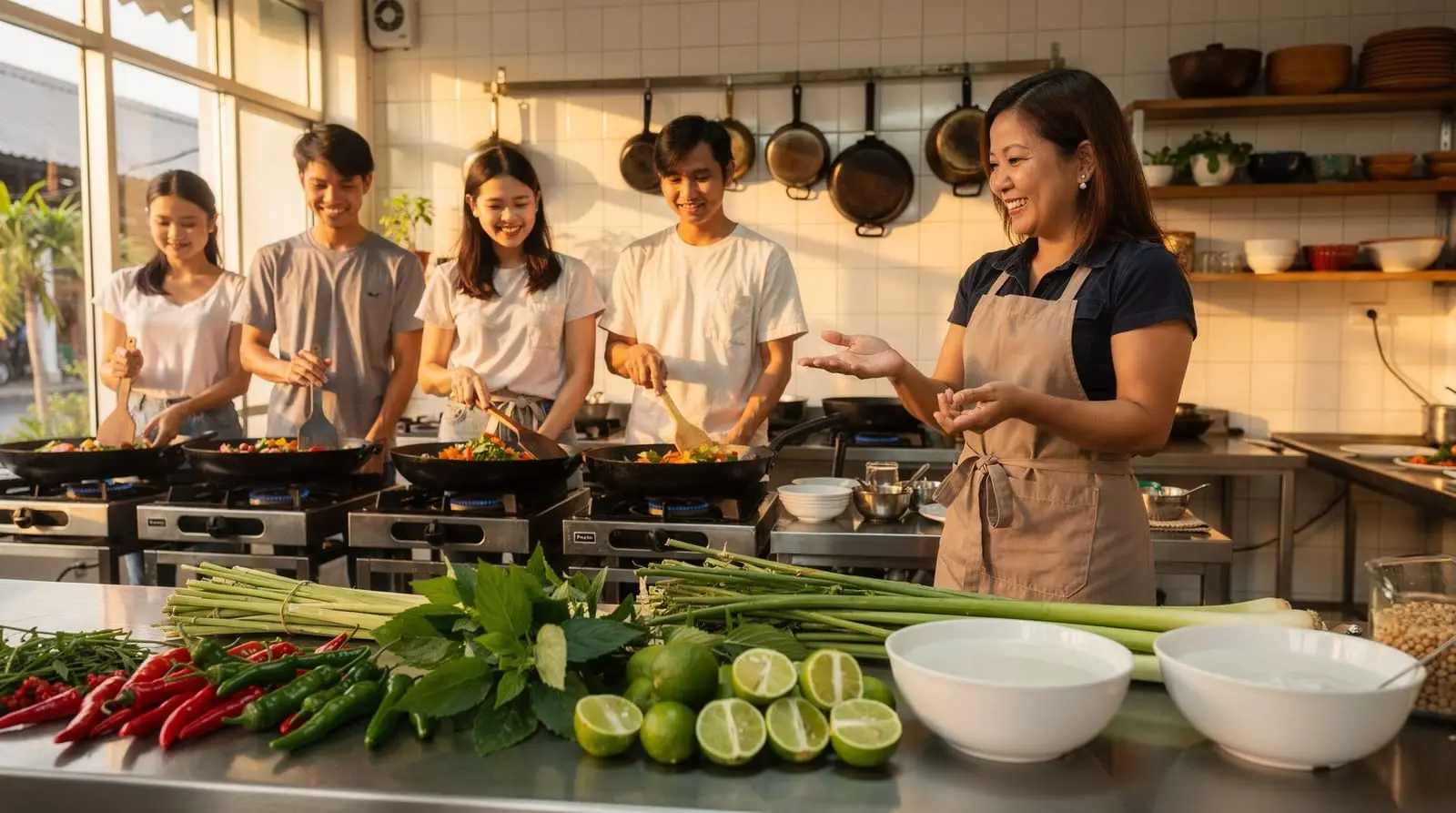
The cooking (2–3 hours): Back in the kitchen, you prepare several dishes hands-on — usually a curry with paste you pound yourself, a stir-fry, a soup, a salad, and a dessert — then eat everything you’ve made.
The total runs about 4–5 hours, often starting in the morning when markets are freshest. The cooking class with market visit by tuk-tuk adds the fun of a tuk-tuk ride to the market run, while the half-day cooking class with market tour is a well-organised standard version.
Why the market visit is worth it
The market walk is what elevates this format. Thai cuisine is built on a specific palette of ingredients, and learning to recognise them is genuinely useful:
- Aromatics: galangal (not ginger), lemongrass, kaffir lime leaves, Thai basil, coriander root.
- Curry pastes: the differences between green, red, massaman, and panang.
- Vegetables: Thai aubergines, long beans, morning glory, banana blossom.
- Pastes and sauces: fish sauce, shrimp paste, palm sugar, tamarind.
- Fruits and proteins in their seasonal, market context.
You come away understanding not just recipes but how Thais shop and select — knowledge you can apply at an Asian grocer back home. A good instructor brings the market to life, and the sensory experience of a Thai fresh market is unforgettable in its own right. For the markets themselves, see the Bangkok markets guide and best food markets guide.
Which markets do classes visit?
The specific market varies by school. Some use large, excellent produce markets like Or Tor Kor (one of Bangkok’s best) or the vast Klong Toey wholesale market; others visit a local neighbourhood fresh market, and a few incorporate the famous flower market. The market matters less than the quality of the guiding — a skilled instructor makes any market fascinating. If you have a preference, check which market a class uses, but prioritise teaching quality and reviews.
Timing and what to expect
- Duration: about 4–5 hours total.
- Start time: often morning (08h00–09h00), when markets are freshest and liveliest; some afternoon options exist.
- On your feet: the market portion involves walking and standing, so wear comfortable shoes and bring water — Bangkok is humid.
- Weather: most markets are covered or semi-covered, so the tour is comfortable in heat or light rain; heavy downpours may shorten the walk but markets stay open.
- Logistics: ingredient costs are included; the school handles getting everything to the kitchen — you don’t fund the shopping or carry heavy bags.
Plan a market-tour class as the main activity of your day given its length and early start. You eat the dishes as you cook, so it doubles as a substantial meal. See the getting around Bangkok guide for reaching the school.
Dietary needs on a market-tour class
Schools accommodate vegetarian, vegan, halal, and allergy needs in market-tour classes just as in studio classes, adjusting both the shopping and the recipes. Inform the school when you book so they can plan the market visit accordingly. The market tour can be especially valuable for those with dietary restrictions, since you learn to identify suitable ingredients and substitutes to seek out when cooking at home. See vegetarian and vegan Bangkok and halal food in Bangkok.
Market-tour vs studio-only: which to choose
For most travellers with the time, the market-tour format is the better choice — it adds context, education, and cultural depth, and is often the highlight. But a studio-only class is perfectly good if you’re short on time, prefer convenience, or want to focus purely on the cooking. The market tour is enrichment, not essential; both teach the cooking well.
Choose the market format if you want the fullest, most immersive experience and have a half day. Choose studio-only if convenience and brevity matter more. For maximum participation within the market format, the hands-on cooking class with market visit has every student cook each dish individually. For a calmer setting, the Silom garden cooking class with market pairs the market with a relaxed garden kitchen.
Solo travellers and photographing the market
The market walk is an easy, low-pressure way for solo travellers to spend a morning — you’re guided the whole time, there’s built-in conversation with the instructor and fellow students, and no one eats alone since the meal is shared at the end. See the solo travel in Bangkok guide for more on structuring solo days around guided activities like this one. The market itself is also genuinely photogenic — stacked produce, steam off the noodle carts, the colour of a curry-paste stall — and a market-tour class effectively hands you a local guide through one of the best photo opportunities in the city. The best photo spots in Bangkok guide and Instagram spots in Bangkok guide cover more locations if the market whets your appetite for street photography.
What to wear and bring
Dress for heat and a little mess: light, breathable clothing, closed comfortable shoes for the market walk, and something you don’t mind smelling of wok smoke and market produce afterward. Bring a reusable water bottle, since the market portion involves standing and walking in Bangkok’s humidity, and a phone or camera for the ingredients and dishes you’ll want to remember. Sun protection matters even for a morning start, particularly if your market visit runs later into a hot-season late morning.
For the broader options, see the best cooking classes guide and the Thai cooking class guide, and for a creative complement, the fruit carving class guide.
Frequently asked questions about Thai cooking class with a market tour: the full
Why is the market visit worth it?
Which markets do cooking classes visit?
How long does a cooking class with a market tour take?
Do I need to carry the ingredients or pay for them?
Is the market tour suitable in hot weather or rain?
Can I do a market-tour cooking class with dietary restrictions?
Is a market-tour class better than a studio-only class?
Top experiences
Bookable activities with verified prices and instant confirmation on GetYourGuide.