What to eat in Bangkok: the dish-by-dish guide
Bangkok: Old Siam Food Tour with 15+ Tastings
What dishes should I eat in Bangkok?
Start with pad kaprao, khao man gai, boat noodles, som tam, moo ping and mango sticky rice — cheap, ubiquitous and brilliant. Add pad thai, tom yum, satay and roti. Most cost 40–80 THB (1.20–2.40 USD) at street stalls, and the best versions are found at specialist vendors, not all-rounder restaurants.
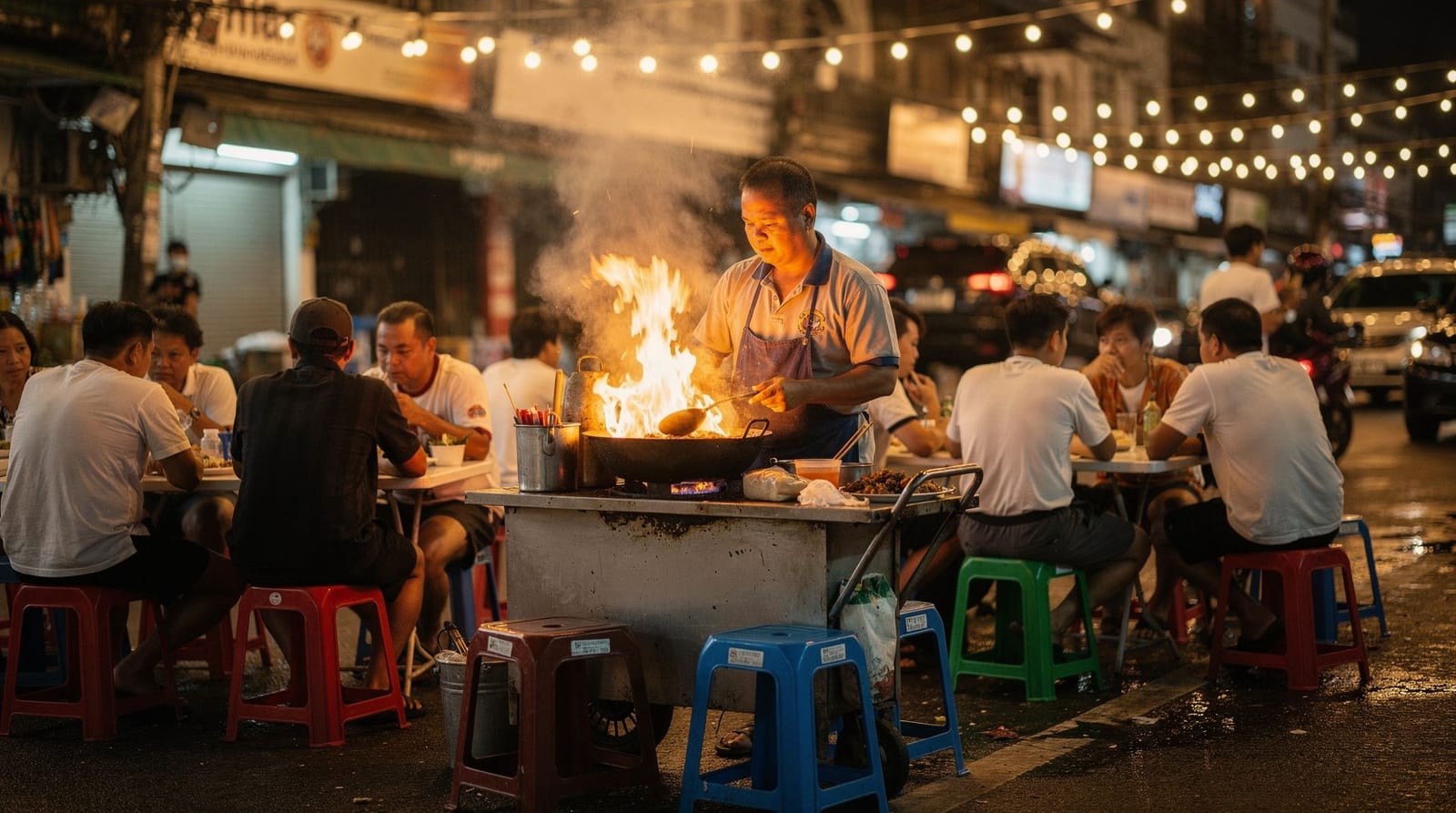
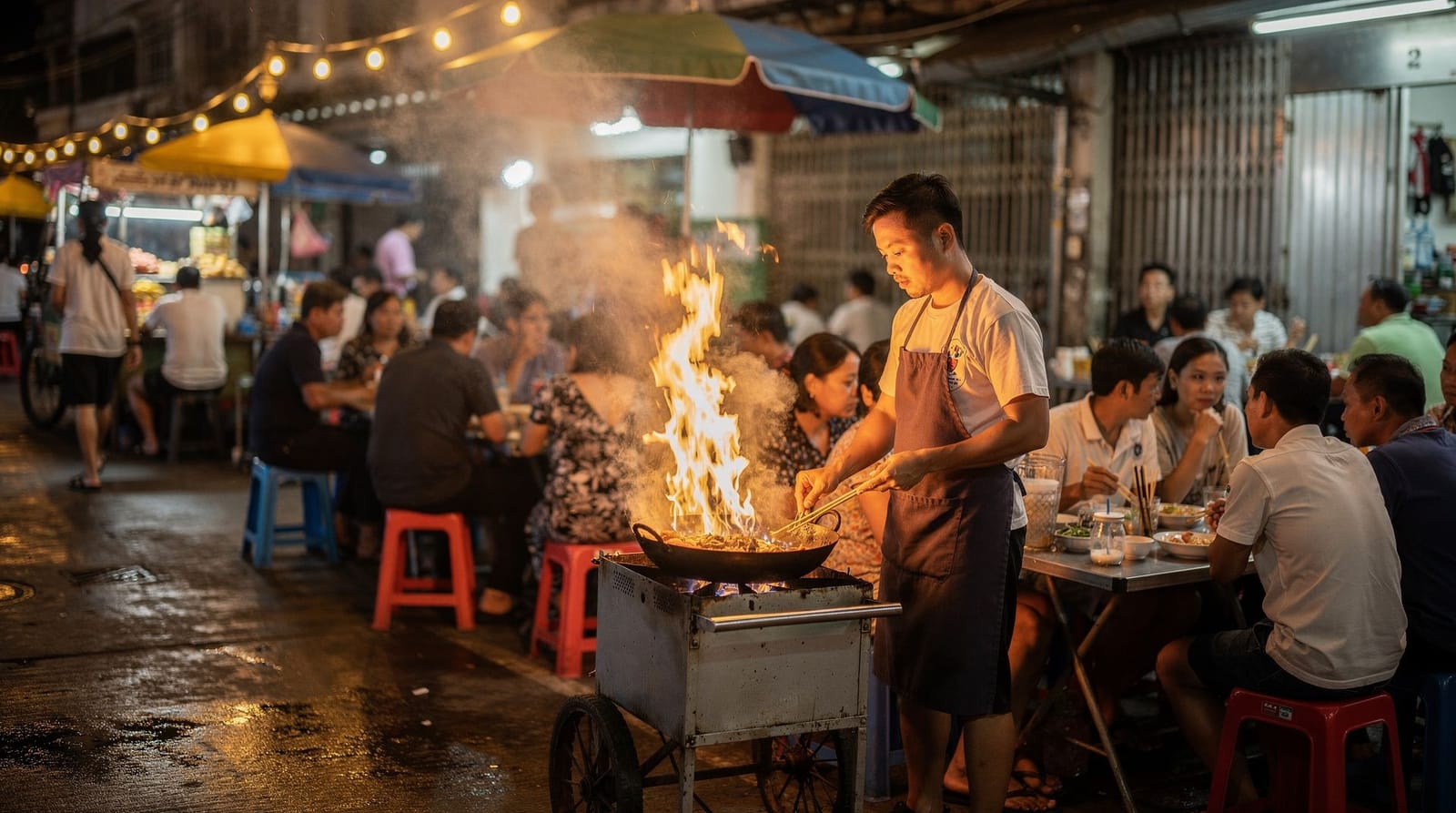
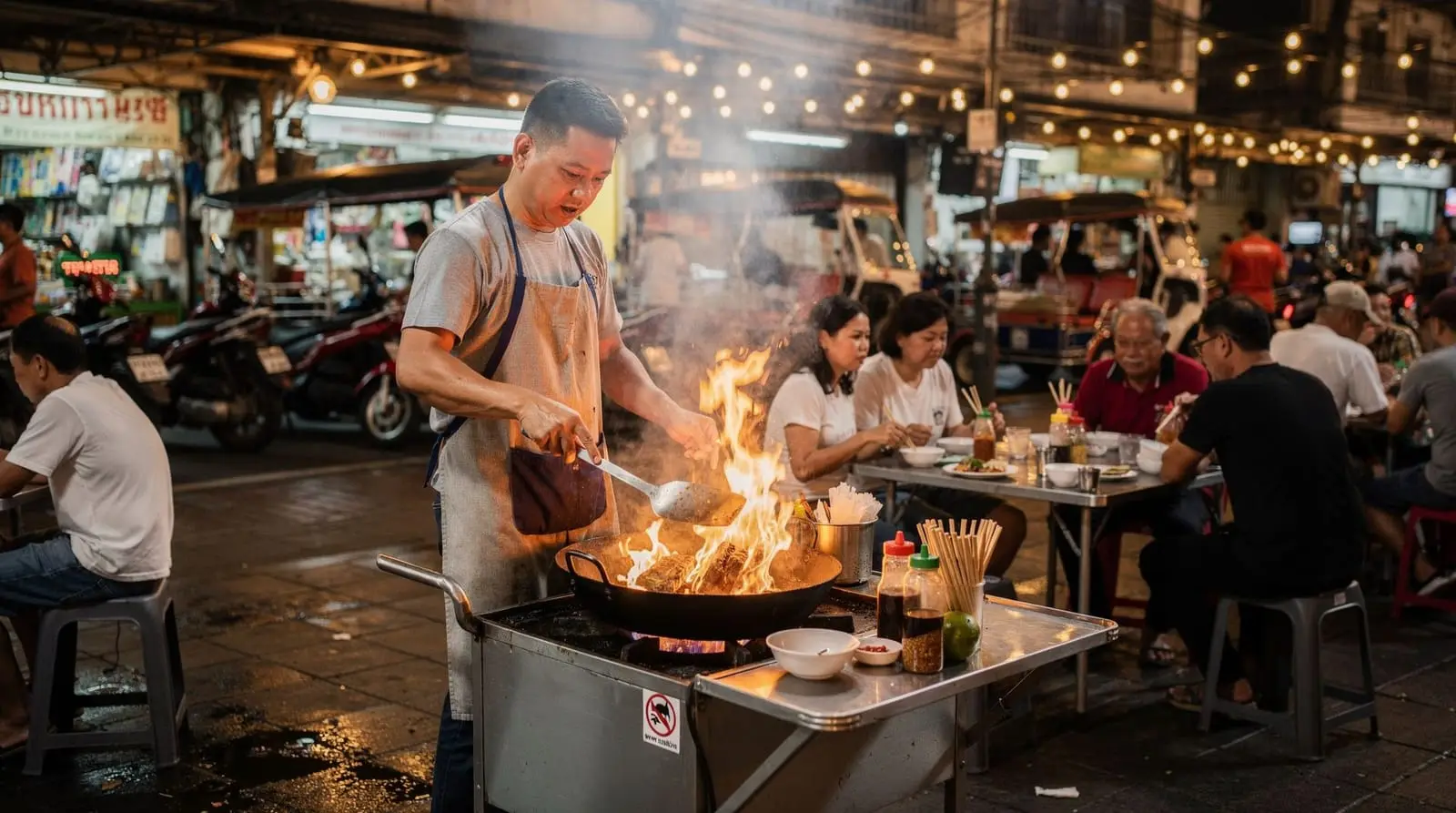
Bangkok can overwhelm a hungry visitor with choice, so this is the cheat sheet: the dishes worth crossing the city for, what they taste like, what they cost, and where each is done best. Most are 40–80 THB (about 1.20–2.40 USD at 33 THB to the dollar), cash only, and almost always better at a specialist stall than at a do-everything restaurant. Pair this with the Bangkok street food guide for the geography of where to find it all.
| Dish | Typical price | Best found |
|---|---|---|
| Pad kaprao | 50-60 THB | Any rice-and-noodle stall, everywhere |
| Khao man gai | ~50 THB | Chains and stalls citywide |
| Boat noodles | 15-20 THB/bowl | Victory Monument |
| Som tam | 50-70 THB | Isaan food stalls, markets |
| Pad thai | 60-90 THB | Dedicated pad thai stalls |
| Mango sticky rice | 60-100 THB | Chinatown, Tor Kor market, March-June |
A few words before you order
Thai eating is about balance and specificity. A good first phrase is aroi (delicious); the indispensable one is mai phet (not spicy), because som tam, curries and many stir-fries arrive fierce by default. Want a little heat? Say phet nit noi. Finish with khrap (men) or kha (women). Vendors are patient with pointing and broken Thai, so do not be shy. Cash in small notes keeps everything smooth.
A useful frame for the whole cuisine: a Thai meal chases four tastes at once — spicy, sour, salty and sweet — often within a single dish, and umami from fish sauce underpins almost everything. That is why a plate of som tam can be simultaneously sour with lime, salty with fish sauce, sweet with palm sugar and searing with chilli. You are not meant to like every element equally; you are meant to feel the tension between them. Knowing this makes the menu less random and helps you order complementary dishes: a fiery salad wants plain sticky rice and a cooling soup alongside it. The other useful frame is that Thai food is built around rice (khao) or noodles (kuay teow / sen), and most dishes are described as “this thing, over rice” or “this thing, as a noodle soup”. Decode those two patterns and you can read almost any stall.
The savoury essentials
Pad kaprao — the everyday champion
If Bangkok has a national fast meal, it is pad kaprao: minced pork or chicken stir-fried hard with garlic, chilli and holy basil, served over rice and crowned with a crisp-edged fried egg (khai dao). Order it “pad kaprao moo, khai dao” and you have lunch for 50–60 THB. It is everywhere, and the test of any rice-and-noodle stall.
Khao man gai — gentle, perfect comfort
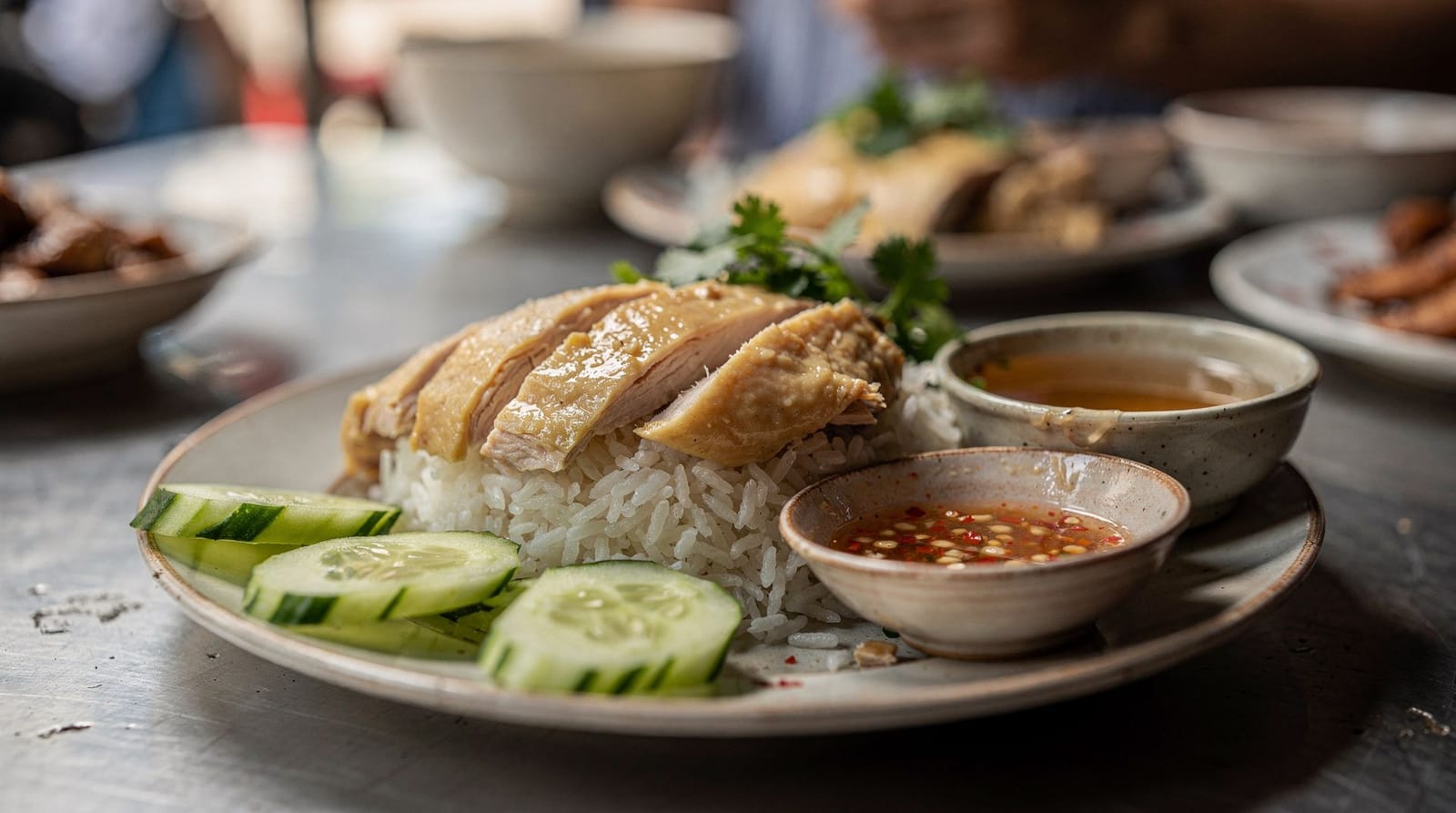
Poached Hainanese-style chicken sliced over rice cooked in chicken fat, with a clear soup and a ginger-chilli-soybean sauce that makes the dish. Mild, soothing and around 50 THB. The famous green-uniformed chains and countless stalls do it; our khao man gai guide finds the standouts. A close cousin, khao mu daeng (red pork and crisp pork belly over rice), is equally beginner-friendly.
Guay teow and kuay teow — noodle soups
The backbone of Thai street eating. Pick a noodle (sen lek thin rice noodle, sen yai wide, sen mee vermicelli, bamee egg noodle), a protein, and dress it yourself from the four-pot caddy: fish sauce, chilli flakes, sugar and chilli vinegar. Tom yum noodle versions add a sour-spicy kick. About 50–70 THB.
Boat noodles (kuay teow ruea)
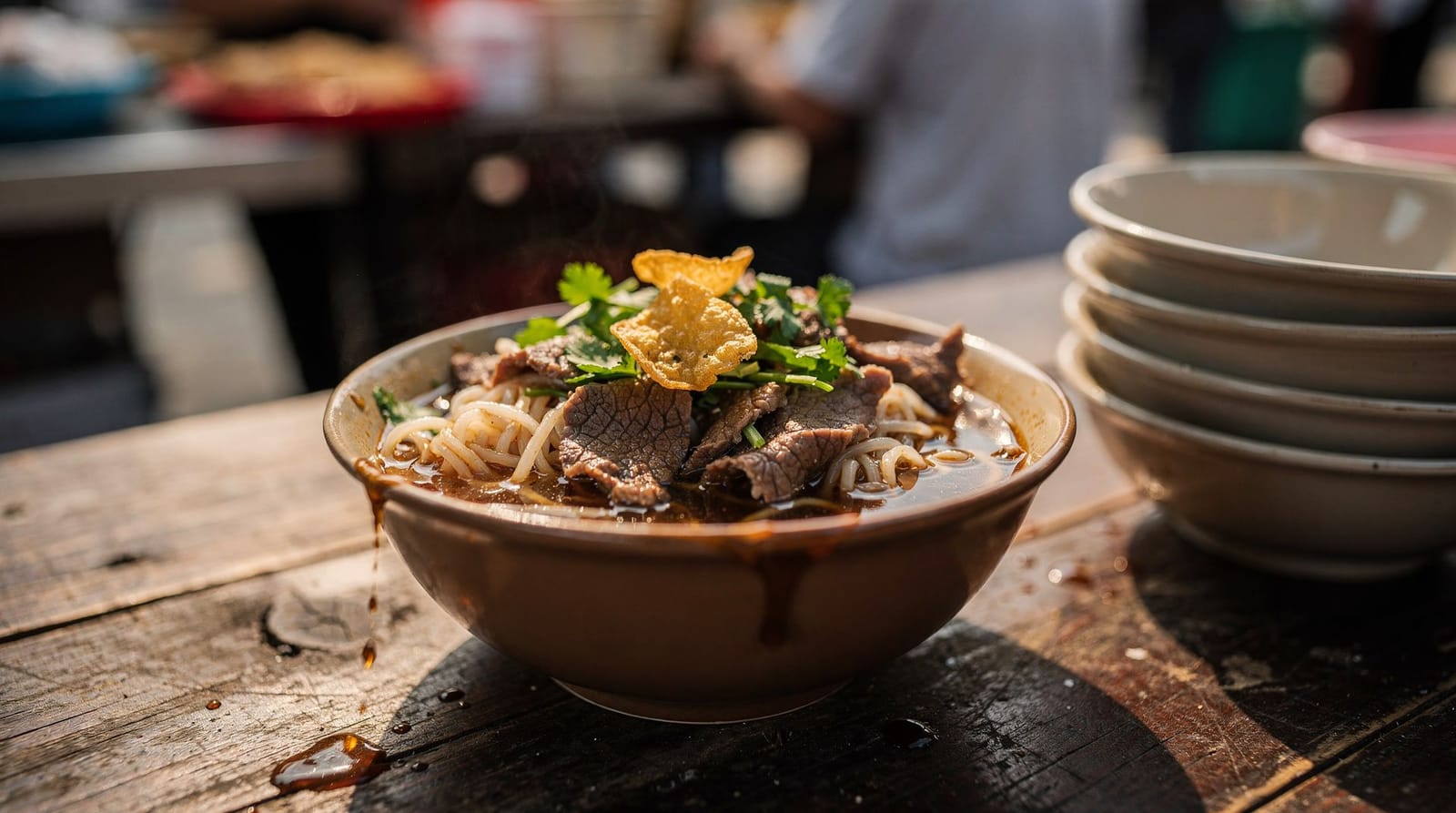
A Bangkok specialty: tiny, intense bowls of dark, spiced beef or pork broth, traditionally served from canal boats. Portions are deliberately small at 15–20 THB, so the sport is stacking bowls — ten high is normal. Victory Monument is the home of the genre; see the boat noodles at Victory Monument guide.
Pad thai
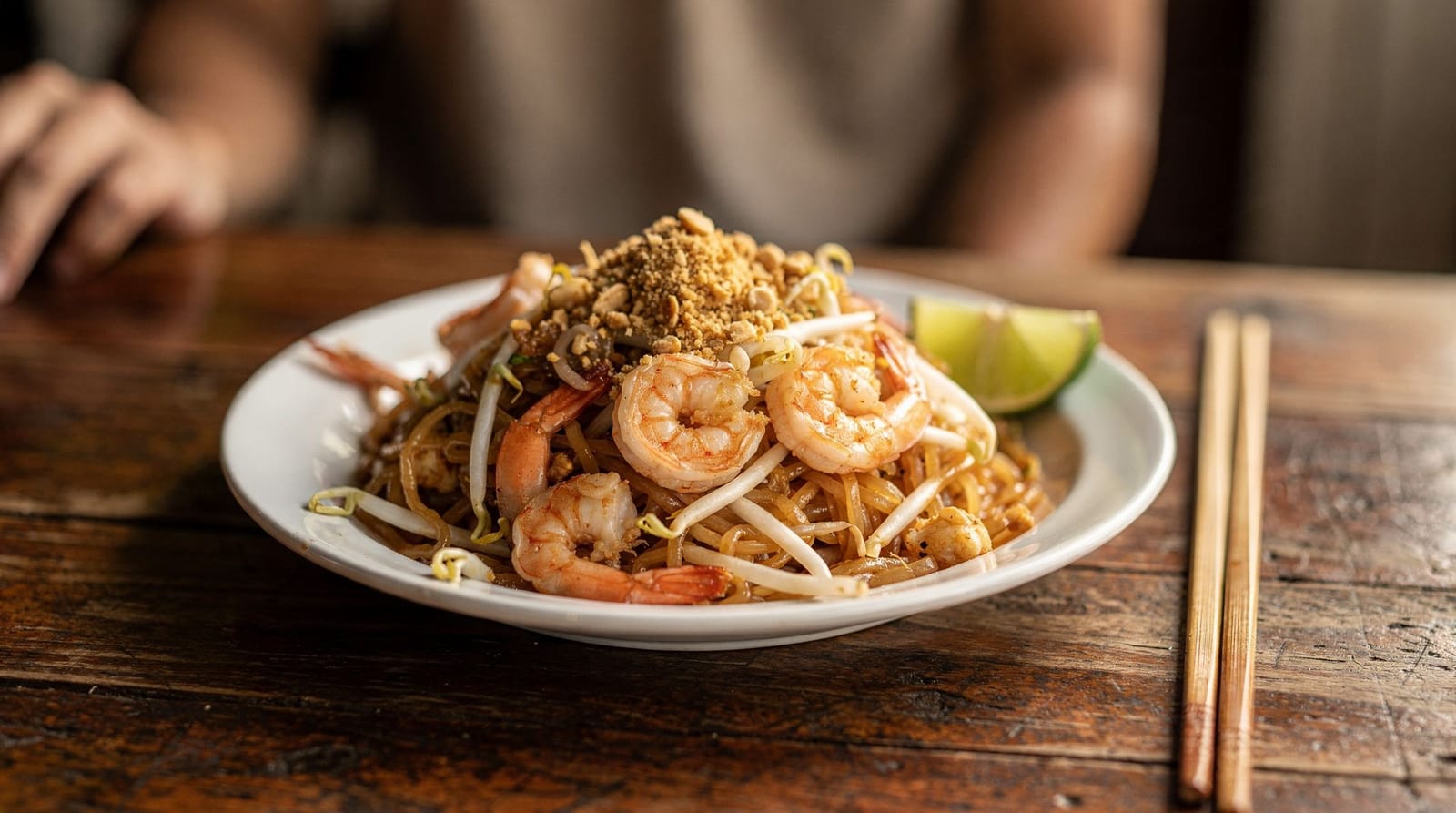
The world-famous stir-fried rice noodle with tamarind, egg, tofu, dried shrimp, peanuts and a wedge of lime. On a Bangkok street, made to order over fierce heat, it is a different dish from the gluey overseas version. Best at dedicated pad thai stalls, 60–90 THB; the legends are in our best pad thai in Bangkok guide. The wok-fired soy noodle pad see ew and the chilli-and-basil pad kee mao are worthy stablemates.
Som tam — green papaya salad
Pounded fresh in a mortar: shredded unripe papaya, lime, fish sauce, palm sugar, tomato, long beans, dried shrimp and a frightening quantity of chilli. The default heat will surprise you, so ask for fewer chillies. Eaten with sticky rice and grilled chicken (gai yang), it is the heart of Isaan food, around 50–70 THB.
Moo ping and grilled skewers
Sweet, charcoal-grilled marinated pork skewers (moo ping), 10–12 THB each, are the great Bangkok snack — grab a few with a bag of sticky rice from a morning stall. Sai krok Isan (sour fermented sausage) and grilled squid join the grill-cart lineup.
Tom yum and tom kha
Tom yum goong, the hot-and-sour prawn soup with lemongrass, galangal, lime leaf and chilli, is Thailand’s most famous soup — bright, fiery, fragrant. Its milder, coconut-rich sibling is tom kha gai. Best at proper Thai kitchens; see our best Thai restaurants guide.
Satay and roti — the Muslim-Thai thread
Bangkok’s Thai-Muslim food, strongest in Bang Rak and around Charoenkrung, gives you satay (grilled marinated skewers with peanut sauce and cucumber relish), khao mok gai (Thai chicken biryani), beef and goat curries, and roti (flaky fried flatbread, served savoury with curry or sweet with banana and condensed milk). The sweet roti — griddled until shattering-crisp, slathered with condensed milk and sugar, around 40–70 THB — is one of the city’s great street desserts and worth crossing town for. Explore the savoury side in the Bang Rak food guide, and find the city’s halal options in halal food in Bangkok.
Khao kha moo and curry-rice stalls
Khao kha moo — slow-stewed pork leg in five-spice gravy over rice with pickled greens and a soft egg — is glorious, cheap (around 50–60 THB) and a favourite at markets like Ratchawat. The point-and-choose curry-rice stall (khao gaeng), where you pick two or three dishes over rice for 50–70 THB, is the most efficient way to taste several Thai curries at once: massaman (mild, peanutty), green curry (gaeng keow wan, fragrant and often the hottest), red curry, and the southern curries that bring real fire. Point at what looks good in the trays; you can always ask the price first.
Hoy tod, kuay teow khua and the wok specials
Two more worth hunting down. Hoy tod is a crispy oyster or mussel omelette cooked on a flat griddle with bean sprouts — savoury, crunchy, around 60–100 THB and a Chinatown favourite. Kuay teow khua gai is flat noodles fried hard with chicken and egg until the bottom crisps, smoky and addictive. Both reward seeking out a specialist rather than ordering off a general menu.
Jok and rice congee for breakfast
Start a Bangkok morning the local way with jok, a silky rice congee topped with minced pork, ginger, spring onion and a raw or soft egg stirred through, around 40–60 THB. It is gentle, warming and the city’s classic recovery breakfast. Patongo (Thai dough sticks) dunked in pandan custard or soy milk is the carb-and-sugar companion.
The sweets and the wild card
Mango sticky rice (khao niao mamuang)
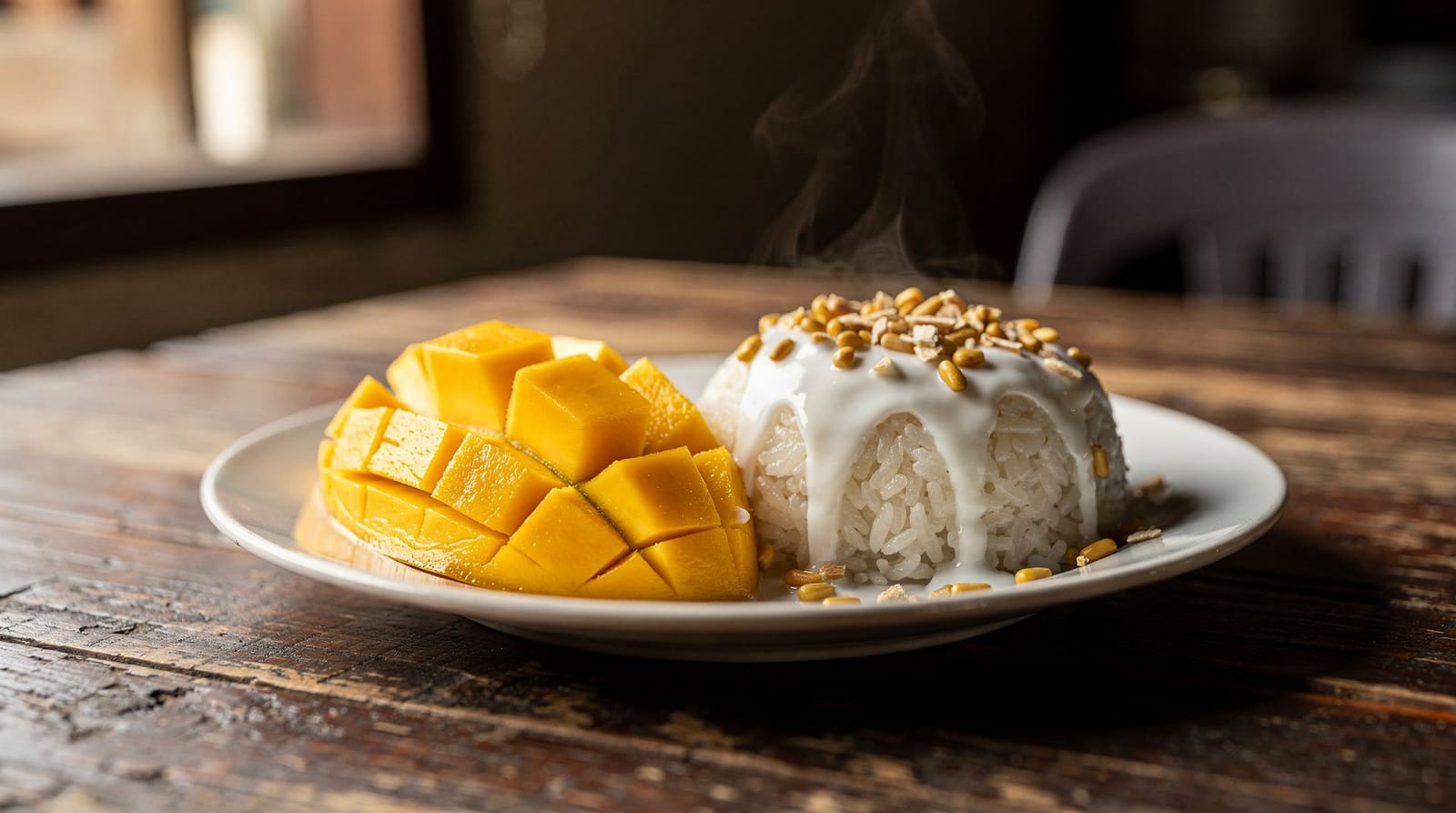
Sweet sticky rice, ripe nam dok mai mango and salted coconut cream: the dessert everyone remembers, 60–100 THB and best in mango season, roughly March to June. Or Tor Kor market and a few Chinatown stalls do exemplary versions; our mango sticky rice guide ranks them.
Durian and tropical fruit
Bangkok’s fruit is a meal in itself. Durian — the spiky, custardy, divisive “king of fruit” — peaks in the hot season and is sold ready-cut in Chinatown; love it or not, it is worth a try. Mangosteen, rambutan, rose apple and pomelo round out the fruit-cart haul, mostly 20–40 THB a bag.
Kao soi — a note, not a Bangkok native
Khao soi, the coconut curry egg-noodle soup topped with crisp noodles, belongs to Chiang Mai and the north, not Bangkok’s streets. You can eat very good versions at northern-Thai restaurants here, but seek it out deliberately rather than expecting it from a corner cart.
Vegetarian and vegan options
Thai food leans heavily on fish sauce, shrimp paste and meat stock, so vegetarians need to ask, but Bangkok caters well. Look for the yellow-and-red jay (เจ) flags marking vegan Buddhist stalls, especially during the annual Vegetarian Festival, and learn “gin jay” (I eat vegan) and “mai sai nam pla” (no fish sauce). Tofu, morning glory stir-fry (pad pak bung), vegetable som tam and fruit are easy wins. Our vegetarian and vegan Bangkok guide maps the reliable spots.
Where to taste a lot, fast
If you want to graze ten or fifteen of these in one evening without decoding the city, a structured walk helps. The Old Siam food walk with 15 tastings and the authentic 10-tasting walking tour both pack the essentials into a couple of hours, which is a low-stress way to calibrate your palate on night one. We weigh up whether that is worth your baht in is a Bangkok food tour worth it. Prefer to learn by cooking? A Thai cooking class in Bangkok demystifies pad kaprao and curry pastes for good.
Eating it all on a budget
None of this needs to be expensive. A day of eating brilliantly across stalls can land under 400 THB (about 12 USD) per person. Keep to specialist vendors and markets, carry cash, and lean on the best cheap eats guide and Bangkok on a budget. To weave these dishes into a route, the Bangkok foodie itinerary sequences them by neighbourhood, and Chinatown lovers should head straight to the Yaowarat and Chinatown food guide.
A sample day of eating
Here is how the dishes above fit together across one Bangkok day. Morning: jok or khao man gai near your hotel, with a moo ping skewer and sticky rice grabbed from a BTS-station cart. Lunch: join the office crowd at a khao gaeng curry-rice stall or a pad kaprao cart — fast, fierce, under 70 THB. Afternoon: mango sticky rice or a fruit bag, and a cha yen iced tea to beat the heat. Evening: head to Chinatown or Banthat Thong and graze — guay jub, grilled seafood, boat noodles, a som tam with gai yang — then close with roti or durian. Spread across specialist stalls, the whole day rarely tops 400 THB and you will have eaten ten of Thailand’s greatest hits. For the full guide to where these stalls cluster, read the Bangkok street food guide, and if your stomach runs cautious, skim street food safety first.
Frequently asked questions about What to eat in Bangkok: the dish-by-dish
What is the most famous Thai dish to eat in Bangkok?
What should I eat in Bangkok if I do not like spicy food?
How do I say delicious and not spicy in Thai?
What is the best Bangkok street dessert?
How much does a Thai dish cost in Bangkok?
Is it safe to eat raw papaya salad and other street dishes?
What is kao soi and can I get it in Bangkok?
Top experiences
Bookable activities with verified prices and instant confirmation on GetYourGuide.