Chinatown Bangkok: an honest guide to Yaowarat
Bangkok: Chinatown and Talat Noi Guided Walking Tour
What is Bangkok's Chinatown (Yaowarat) and what should I do there?
Yaowarat is Bangkok's century-old Chinatown, a dense grid of gold shops, herbalists, market lanes and shrines that transforms into the city's most famous street-food corridor after dark. By day, see the solid-gold Buddha at Wat Traimit and explore Sampeng Lane and Talat Noi; from around 18h00, the food stalls along Yaowarat Road take over. The nearest stations are MRT Wat Mangkon (in the heart of Chinatown) and MRT Hua Lamphong.
Bangkok’s Chinatown — known by its main artery, Yaowarat Road — is one of the oldest and densest Chinatowns in the world, founded when Chinese traders were moved here in 1782 as Bangkok was built. By day it is a working district of gold shops, herbalists, dried-goods wholesalers and shrines; after dark it becomes the city’s most famous street-food corridor, with charcoal grills and noodle carts spilling across the pavements until late. The MRT Blue Line, with Wat Mangkon station right in the heart of the district, has made it far easier to reach than it used to be. This guide covers both Chinatowns — the daytime and the night — honestly, with real prices and the traps to avoid.
| Where | Yaowarat Road, central Bangkok |
| Cost | Free to walk; street food ~50–120 THB a dish, temple entry ~40 THB |
| Time needed | Half a day, or a full afternoon-into-night for the complete experience |
| Getting there | MRT Wat Mangkon (centre) or MRT Hua Lamphong (south, near Wat Traimit) |
| Best time | Late afternoon into evening, from around 17h00 |
Day versus night, side by side
| Daytime Chinatown (~09h00–16h00) | Night Chinatown (~18h00–24h00) | |
|---|---|---|
| Focus | Wat Traimit, gold shops, Sampeng Lane, Talat Noi | Street food along Yaowarat Road |
| Crowd | Shoppers and commerce, few tourists | Dense, tourists and locals both |
| Best for | Photography, temples, quiet wandering | Eating, atmosphere, the classic Chinatown scene |
| Watch out for | Heat, crush inside Sampeng Lane | Seafood-stall pricing, Monday closures |
The two faces of Yaowarat: day versus night
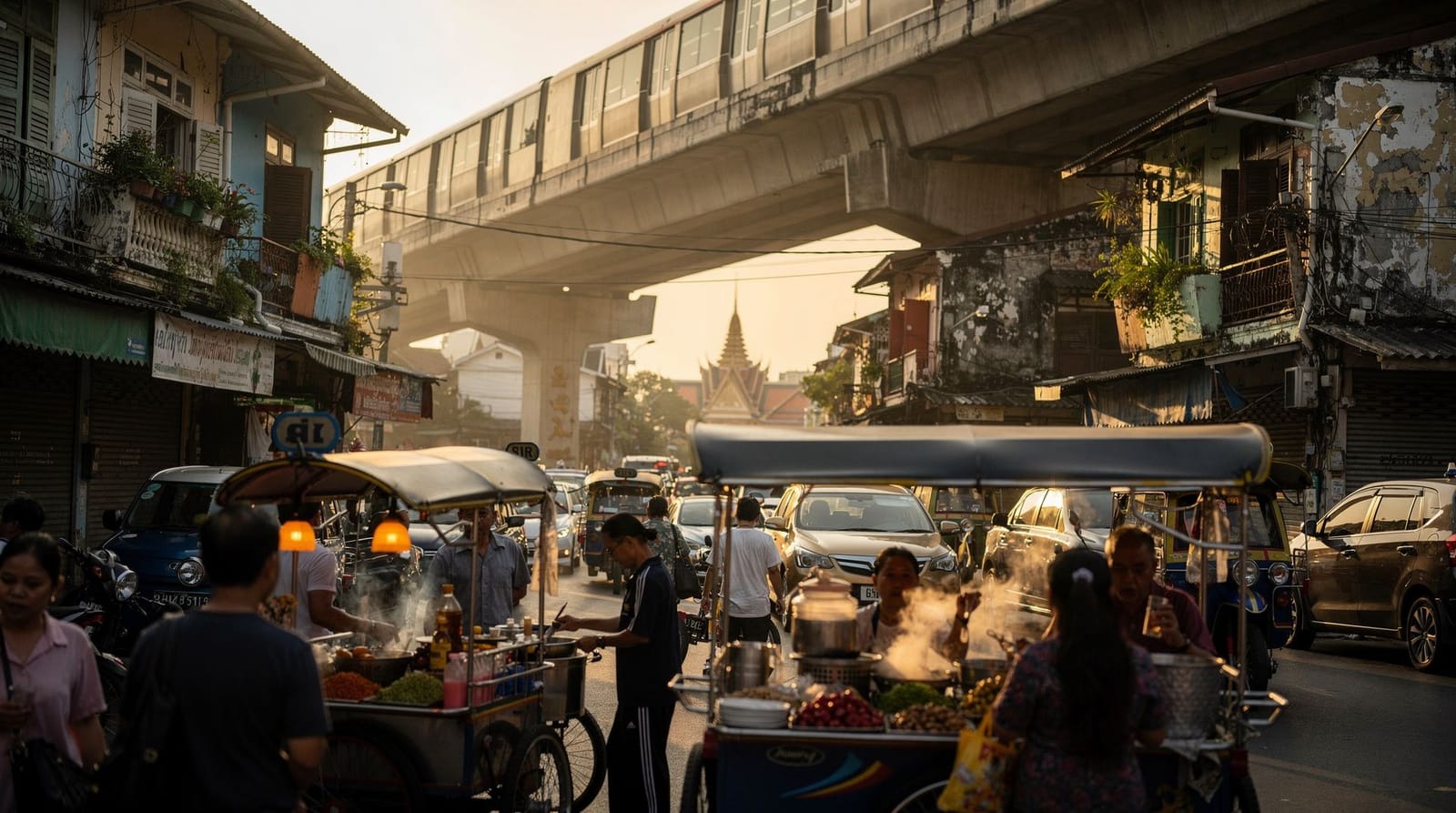
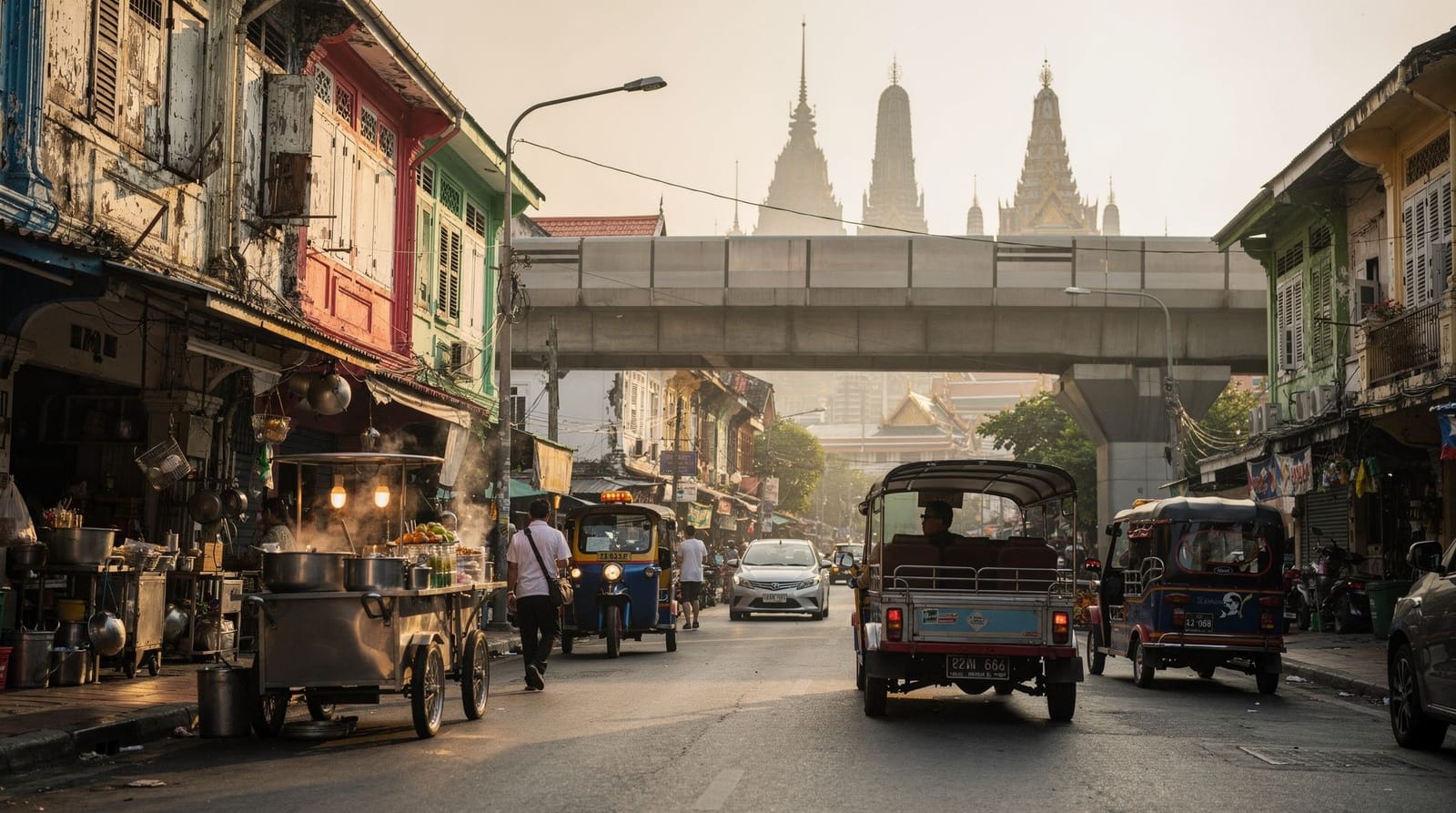
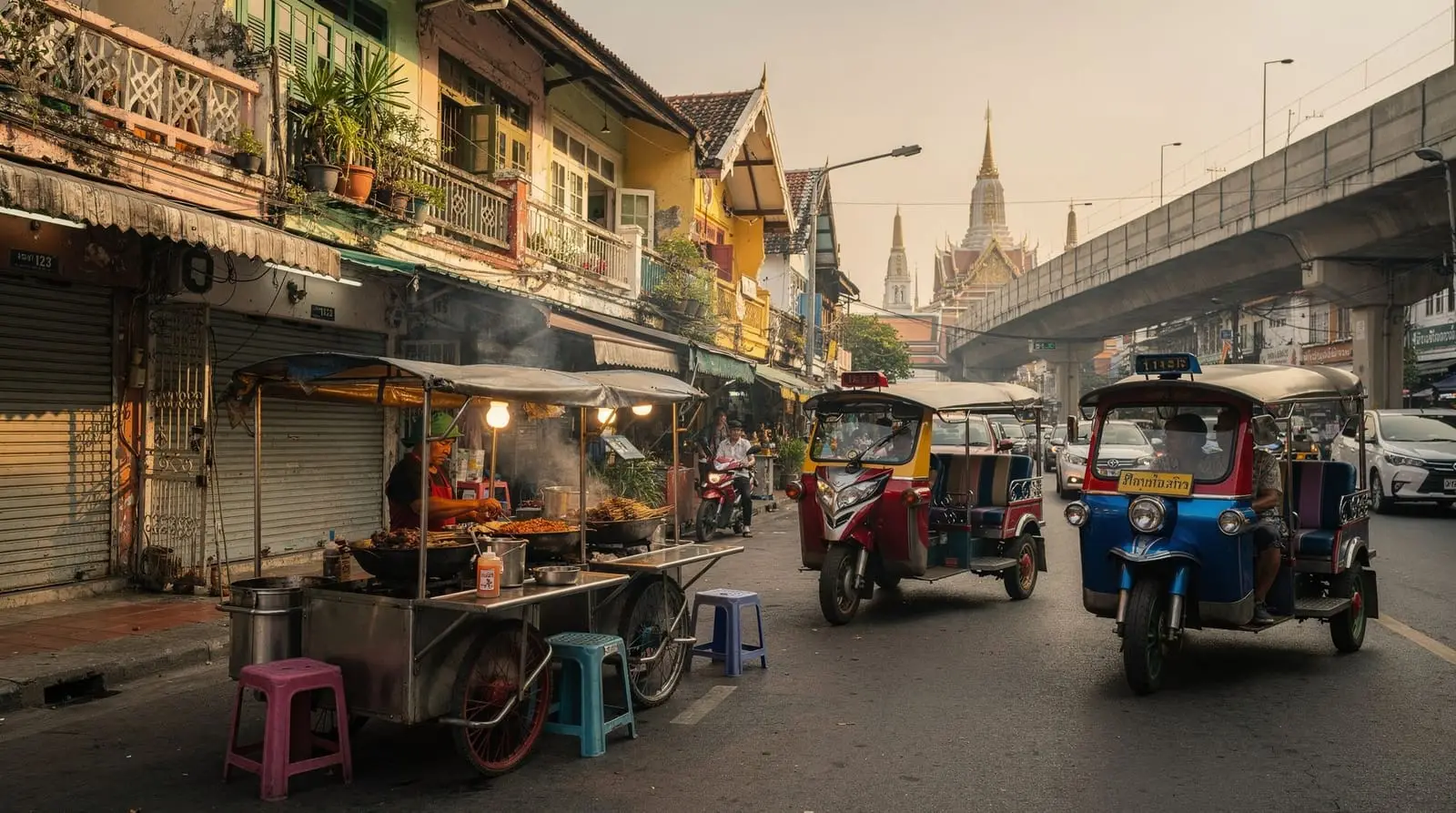
The single most useful thing to understand about Chinatown is that it is effectively two different neighbourhoods depending on the hour. The daytime Chinatown (roughly 09h00–16h00) is for sightseeing: the solid-gold Buddha at Wat Traimit, the gold shops glowing along Yaowarat Road, the medicinal-herb sellers, and the market lanes of Sampeng and Talat Noi. It is hot, crowded with shoppers and full of commerce rather than tourists.
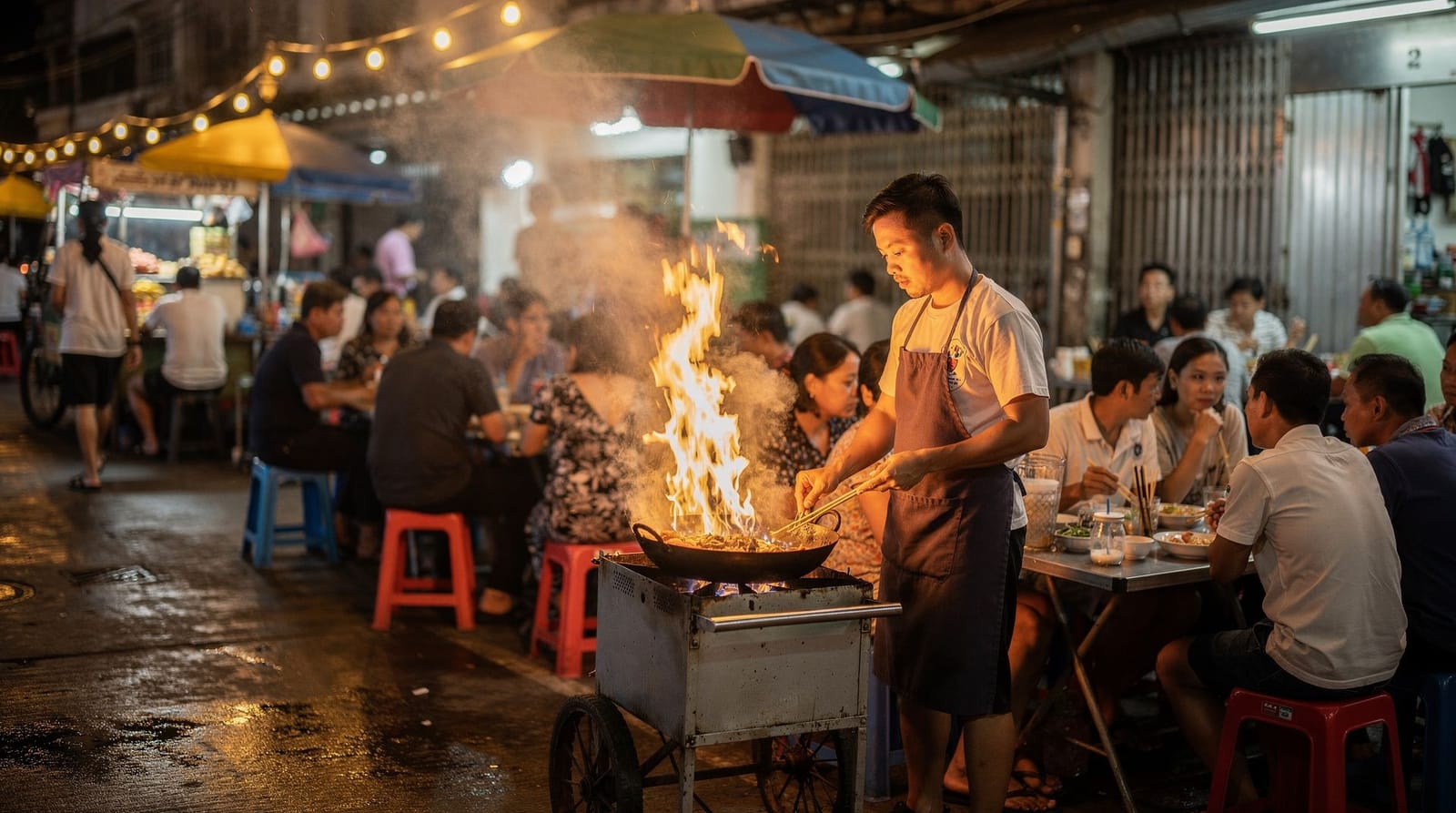
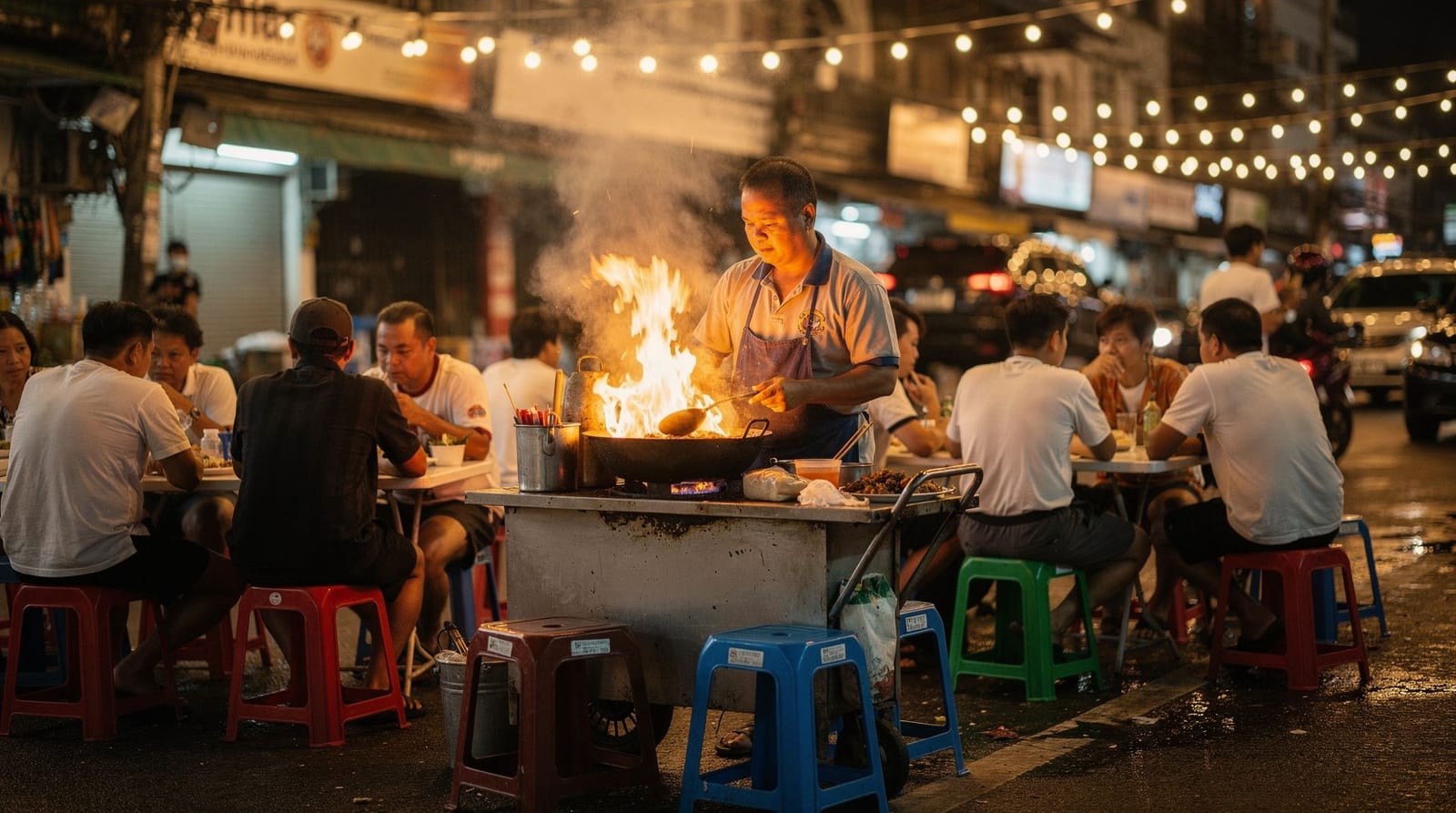
The night-time Chinatown (from about 18h00 until midnight, later at weekends) is the one most visitors come for: the food. As the shops shutter, the street vendors set up, and Yaowarat Road becomes a river of smoke, neon and grilling seafood. If you only have one window, come in the evening — but a combined late-afternoon-into-night visit lets you see both. Note that many stalls close on Mondays, so avoid that night for a food crawl.
Because the district is compact and the traffic is appalling, walk. Arriving by MRT to Wat Mangkon and exploring on foot is faster and far more pleasant than crawling in by taxi. The Chinatown-Yaowarat destination page maps the area, and the Bangkok neighbourhoods guide places it in the wider city.
Wat Traimit and the world’s largest gold Buddha
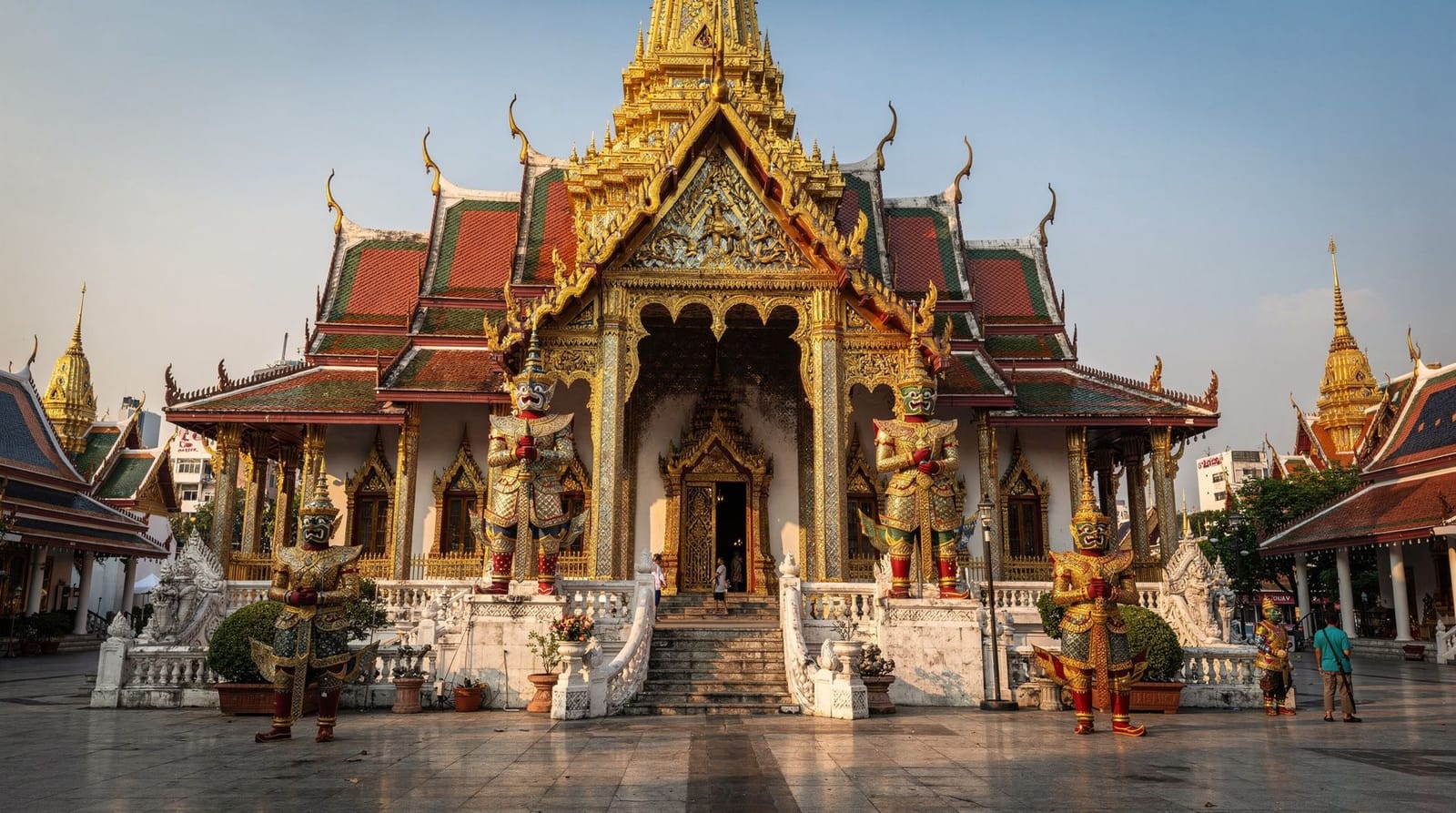
Start at the southern gateway. Wat Traimit, beside Hua Lamphong MRT and the ornate Chinatown Gate (Odeon Circle), houses the Phra Phuttha Maha Suwan Patimakon — the world’s largest solid-gold Buddha image, about 3 metres tall and weighing roughly 5.5 tonnes of gold. Its story is genuinely remarkable: for centuries it was disguised under a thick layer of stucco, presumably to hide it from invaders, and was only revealed in 1955 when the plaster cracked as workers moved it.
Entry to the Buddha hall is about 40 THB (around USD 1.20), with a small but well-done museum on the history of Chinese migration to Bangkok for a little more (combined ticket around 100 THB). It is calm, genuine and gloriously uncrowded compared with the Grand Palace — an easy 15-minute stop. The dedicated Wat Traimit golden Buddha guide covers the visit in detail. Dress modestly: shoulders and knees covered, as at any Thai temple — see the temple etiquette and dress code guide.
Gold shops, herbalists and the commerce of Chinatown
Walk north into Yaowarat proper and the gold shops dominate — dozens of them, fronts blazing red and gold, where Bangkok’s Chinese-Thai community buys gold by weight at the regulated daily price. They are entirely legitimate; this is real commerce, not a tourist trap. You won’t be hassled to buy.
Branching off Yaowarat are the herbalist and dried-goods lanes, particularly around Charoen Krung and the soi near Wat Mangkon. Here you’ll find traditional Chinese medicine shops with walls of wooden drawers, dried mushrooms and seafood, birds’ nest, ginseng and shark fin (the latter increasingly controversial). Even without buying, the sensory density — the smells, the calligraphy signage, the century-old shopfronts — is the experience.
Wat Mangkon Kamalawat, the most important Chinese Mahayana Buddhist temple in the city, sits a short walk from its namesake MRT station. Smoky with incense, hung with lanterns and especially vivid during Chinese New Year and the annual Vegetarian Festival (October), it is free to enter and worth ten minutes.
Sampeng Lane and the market labyrinth
Sampeng Lane (Soi Wanit 1) is a narrow, kilometre-long wholesale market alley running parallel to Yaowarat — a claustrophobic, fascinating tunnel of stalls selling fabric, ribbon, toys, accessories, stationery and cheap goods by the bagful. It is primarily a wholesale market for Thai shopkeepers, not a souvenir bazaar, which is precisely what makes it interesting. Go in the morning to mid-afternoon; expect to be jostled, and watch your bag in the crush. For organised shopping, the Bangkok markets guide and the broader Bangkok shopping guide compare options.
Because the lanes are unmarked and the best shrines and shops are easy to miss, a guided walk pays off here. A small-group tour threads the back alleys, explains the history and finds the corners you’d never spot alone.
Chinatown and Talat Noi guided walking tour — backstreets, shrines and history Explore the back alleys and hidden gems of Chinatown Bangkok — a small-group walkTalat Noi — the photogenic quarter by the river
Tucked between Chinatown and the Chao Phraya, Talat Noi is an old Teochew Chinese neighbourhood that has become one of Bangkok’s most beloved walking and photography districts. Its narrow lanes are crammed with vintage car-part workshops and stacks of rusting engine blocks, interrupted by vivid street art, riverside shrines, the historic timber So Heng Tai mansion (a 200-year-old Chinese courtyard house with a diving pool in its centre), and the Holy Rosary Church at the river’s edge.
Talat Noi is quiet, slow and a complete tonal contrast to the noise of Yaowarat — best explored in the late afternoon when the light softens the old shophouses. It is a short walk from the southern end of Chinatown. The dedicated Talat Noi guide maps a walking loop, and the Talat Noi destination page covers the highlights. It pairs perfectly with a Chinatown day before the food comes out at dusk.
The evening: Yaowarat street food
This is the headline act. From around 18h00, the stretch of Yaowarat Road and its tributary sois fill with food vendors, and the district becomes Bangkok’s most concentrated and atmospheric street-food experience. The smoke, the neon, the queues and the sheer density of cooking make it unforgettable.
What to eat: charcoal-grilled satay and pork skewers (10–20 THB a stick); guay jab (peppery rolled rice-noodle soup with crispy pork); kuay teow (noodle soups, 50–80 THB); oyster omelettes; toasted bread with custard; pomegranate juice; and the famous mango sticky rice. Several long-running stalls have genuine reputations — the Texas-named soi (Soi Texas / Soi Phadungdao) is a hub for seafood, and a couple of Michelin Bib Gourmand vendors (a noodle stall and a well-known charcoal-grill seafood spot) draw long queues.
Honest pricing warning: the seafood stalls are where bills balloon. Grilled river prawns, crab and steamed fish are priced by weight and can run 400–800 THB or more per plate. This is not a scam in itself — it is genuinely premium seafood — but a few tourist-facing operators are vague about prices and pile on. Always confirm the price per item or by weight before they cook, and don’t let staff upsell you to the largest prawns without quoting a figure. The noodle and snack stalls, by contrast, are cheap and honest.
For a full breakdown of stalls and dishes, see the Yaowarat Chinatown food guide, the Bangkok street food guide and the Michelin street food in Bangkok guide. If you’d rather taste widely without ordering blind, a private street-food tour is the efficient route on a first visit.
Chinatown street food private tour — taste the best of Yaowarat with a localAfter the food: Chinatown’s hidden speakeasies
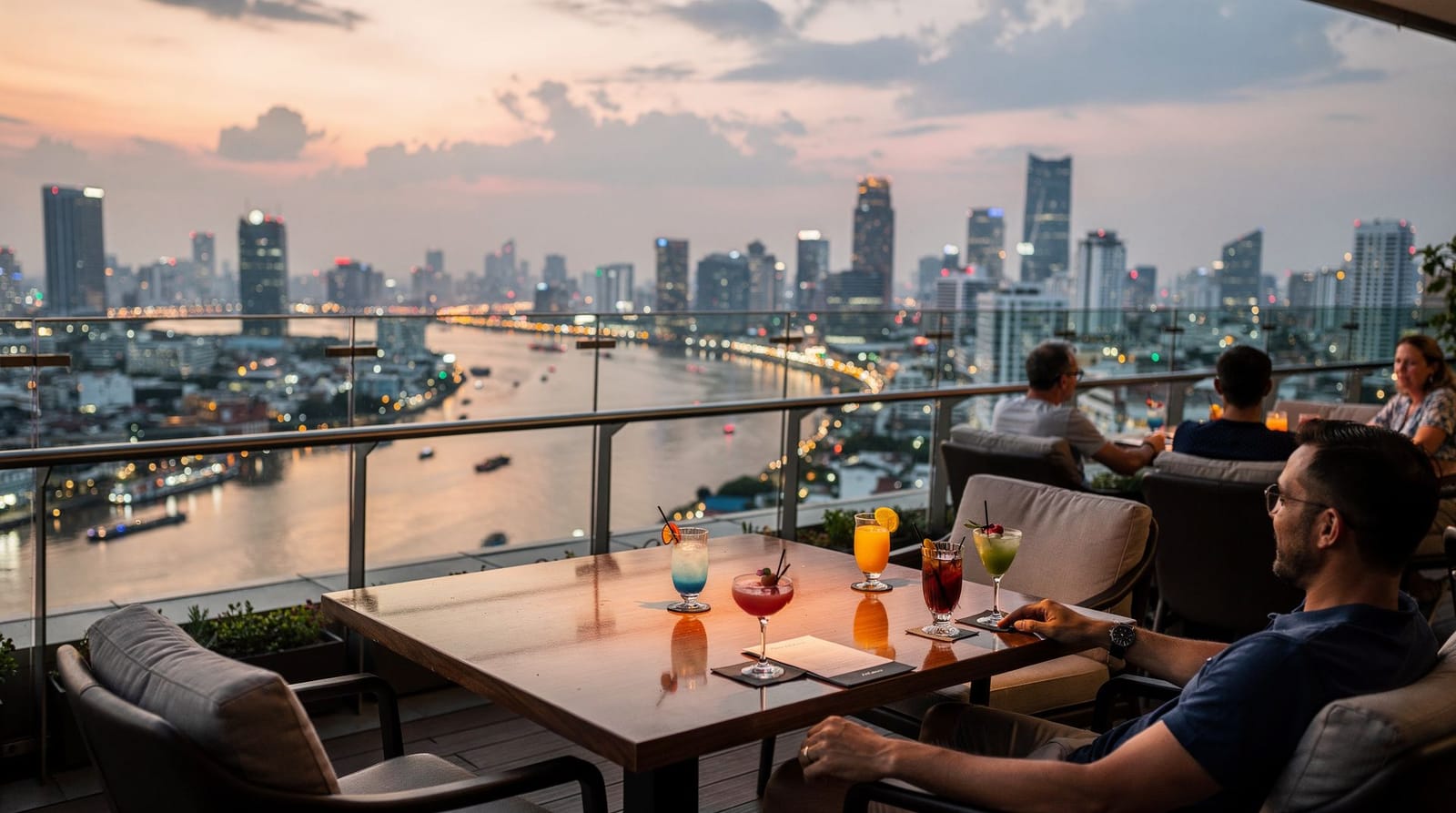
Chinatown is not only about eating. In recent years, a layer of hidden bars and speakeasies has opened above and behind the shophouses — cocktail dens reached through unmarked doors, vintage-Chinese rooftop bars and natural-wine spots, especially around the Soi Nana of Chinatown (not to be confused with Sukhumvit’s Nana). They make a stylish nightcap after a food crawl. The Chinatown speakeasies guide lists the best, and the city-wide Bangkok nightlife guide and Bangkok at night guide put them in context.
Getting around and timing
Chinatown’s appeal is that it is walkable and rail-connected. MRT Wat Mangkon drops you in the centre; MRT Hua Lamphong is near Wat Traimit at the south. From the river, the Chao Phraya Express stops at Ratchawong pier — the Chao Phraya boats guide explains the routes. The getting around Bangkok guide and the MRT subway guide cover the network.
Do not rely on tuk-tuks in the evening — Yaowarat traffic is near-stationary, and the cheap-tour-to-a-gem-shop routine is a known nuisance. The tuk-tuk scams guide and the common Bangkok scams guide explain what to watch for.
A sensible plan: arrive mid-afternoon by MRT, see Wat Traimit and the gold-shop lanes, walk Sampeng and Talat Noi, then loop back to Yaowarat as the food stalls open at dusk. Chinatown fits neatly into a Bangkok 3-days itinerary or a dedicated foodie evening on the Bangkok foodie itinerary.
Festivals: when Chinatown peaks
Two events transform the district. Chinese New Year (late January or February) is the single most spectacular time to visit — Yaowarat is draped in red and gold, lion dances fill the street, dignitaries attend, and the crowds are immense. The annual Vegetarian Festival (Tesagan Gin Je, usually October) turns the whole neighbourhood meat-free for nine days, with yellow flags marking participating stalls and a wave of excellent vegetarian street food. The Bangkok festivals calendar lists the dates. For plant-based eating year-round, see the vegetarian and vegan Bangkok guide.
Should you stay in Chinatown?
Chinatown makes an atmospheric but niche base. There are genuinely characterful boutique hotels tucked into old shophouses, and waking up a short walk from the food stalls has real appeal. But the trade-off is real too: only two MRT stations serve the district, it is loud and smoky at night, and the wider transport convenience of Sukhumvit or Silom-Sathorn is hard to match. The honest recommendation is to stay elsewhere and visit Chinatown for an evening, unless the neighbourhood’s character is specifically what you’re after. The where to stay in Bangkok guide compares the options.
Chinatown with kids or limited mobility
Chinatown is walkable but not always easy going: pavements narrow into the crowd at night, Sampeng Lane is a genuine squeeze, and the footing on some backstreets is uneven. Families generally do well with an early-evening visit before the peak crush, sticking to the main Yaowarat Road stalls rather than diving into the narrowest lanes — see the Bangkok with kids guide for wider tips on managing crowds and heat with children. For visitors with mobility limitations, the daytime visit (quieter, more space) is considerably easier than the packed evening food crawl.
Practical notes: money, restrooms and getting out
Cash is essential for the street stalls; only the sit-down restaurants and larger shops reliably take cards. Public restrooms are limited — the temples and a handful of cafés are the most reliable options, so plan around them rather than counting on finding one mid-crawl. Getting a Grab out at the end of the night can take patience, since Yaowarat’s traffic is dense and drivers sometimes struggle to reach the pickup pin exactly; walking a block or two off the main road toward Charoen Krung often gets a faster pickup than waiting streetside.
The things to do in Bangkok guide and the hidden gems guide round out the surrounding options.
Pairing Chinatown with the riverside
Chinatown sits directly against the Chao Phraya riverside, and the two make a natural half-day-into-evening combination: walk the river piers and the Bang Rak and Charoenkrung side by daylight, then loop back into Yaowarat as the food stalls open at dusk. It also means a Chinatown evening slots easily onto the end of a river-boat day, since the boats stop directly at Ratchawong pier in the heart of the district — no separate transport leg required.
Frequently asked questions about Chinatown Bangkok: an honest guide to Yaowarat
When is the best time to visit Chinatown in Bangkok?
How do I get to Chinatown in Bangkok?
Is Chinatown street food safe to eat?
How much does street food cost in Yaowarat?
Is Wat Traimit's golden Buddha worth visiting?
Are there scams in Chinatown Bangkok?
What is Talat Noi and is it worth visiting?
Can I do Chinatown with a guide?
Top experiences
Bookable activities with verified prices and instant confirmation on GetYourGuide.