Thai massage in Bangkok: the complete honest guide
Bangkok: Klai Thai Traditional Massage & Workshop Experience
What is Thai massage and how much does it cost in Bangkok?
Traditional Thai massage (nuad phaen boran) is a clothed, oil-free treatment performed on a floor mat, combining firm acupressure with assisted yoga-like stretching. In Bangkok, a one-hour traditional Thai massage costs roughly 250–400 THB (about USD 8–12) at a neighbourhood shop, 800–1,500 THB at a mid-range spa, and 3,000 THB and up at a luxury hotel spa. It is therapeutic and entirely non-sexual — completely separate from the 'soapy massage' sex trade found in certain nightlife sois.
Thai massage is one of the few experiences in Bangkok that is genuinely world-class, genuinely affordable, and genuinely everywhere — a one-hour treatment that costs less than a sandwich in most Western cities. But “massage” in Bangkok covers everything from a therapeutic temple tradition with a 2,500-year lineage to outright sex work hiding behind the same word, and the difference matters enormously to anyone planning where to walk in and lie down.
This guide explains what traditional Thai massage actually is, what it should cost in real THB and USD, where to get it across the price spectrum, how tipping and etiquette work, and — importantly — how to tell a legitimate therapeutic shop from the neon-lit “soapy massage” parlours that have nothing to do with wellness. It is written for the traveller who wants the real thing and wants to make a confident, informed choice.
| Where | Neighbourhood shops citywide; spa chains in Thonglor/Sukhumvit; hotel spas; Wat Pho |
| Cost | around 250 THB (shop) to 6,000 THB+ (luxury spa) per session |
| Time needed | 60–90 minutes for a full treatment |
| Booking | Walk-in fine at shops; book spa chains a day ahead |
| Best for | Sore muscles, jet lag, a cheap daily habit |
What traditional Thai massage actually is
Traditional Thai massage — nuad phaen boran (นวดแผนโบราณ), literally “ancient-style massage” — is not a gentle, oiled, sleep-inducing spa treatment. It is a vigorous, clothed, oil-free therapy performed on a padded mat on the floor. The therapist works along the body’s energy lines, called sen, using palms, thumbs, forearms, elbows, knees and even feet to apply deep, rhythmic pressure, then folds and stretches your limbs into positions that resemble assisted yoga.
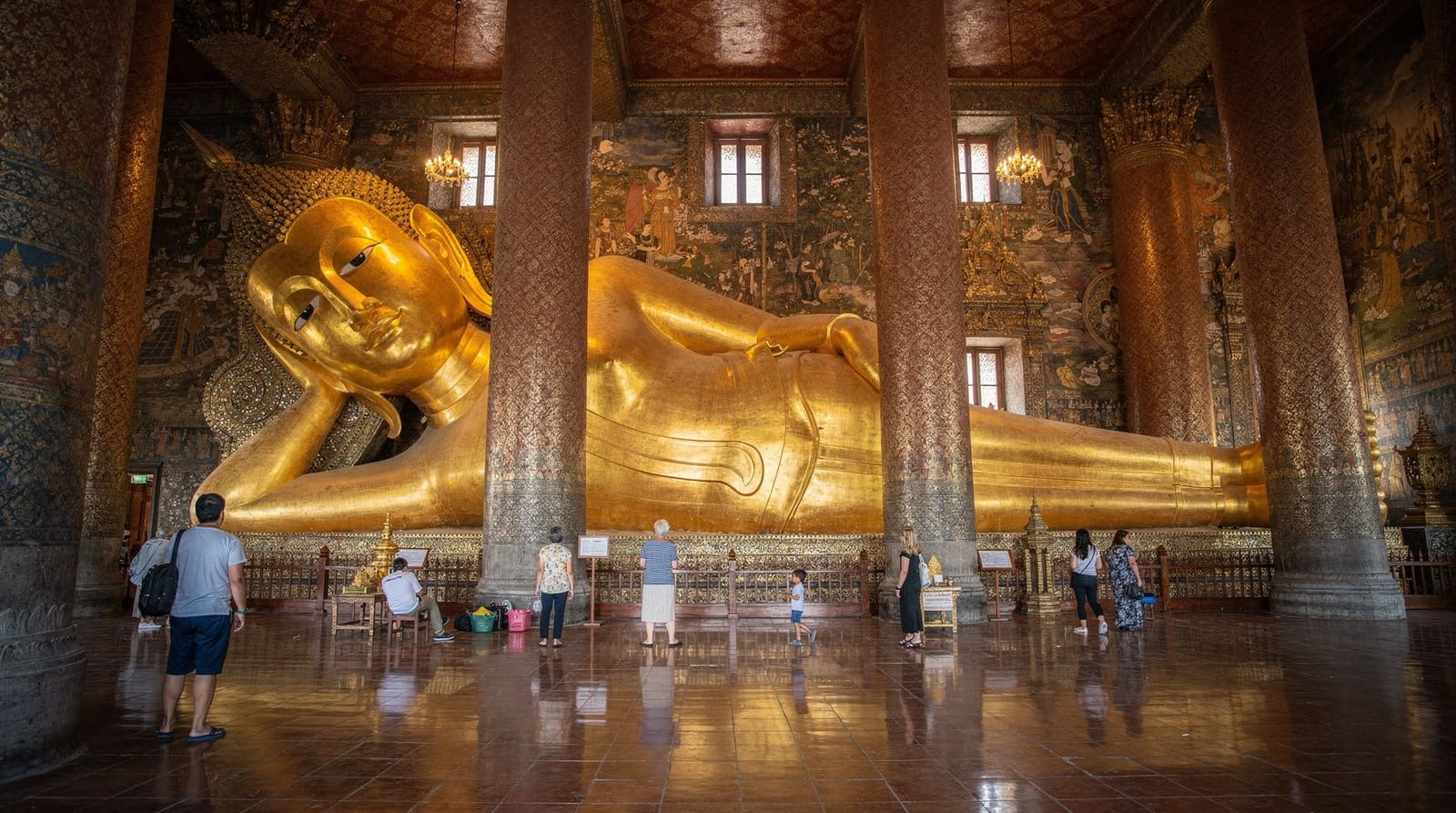
The tradition is woven into Thai Buddhism and is officially considered to have its spiritual and educational home at Wat Pho, the temple that runs Thailand’s most famous massage school. UNESCO inscribed nuad Thai on its Intangible Cultural Heritage list in 2019, which tells you something: this is a recognised cultural practice, not a tourist novelty. For the full story of the temple itself, see the Wat Pho guide, and for the school specifically, the Wat Pho massage school guide.
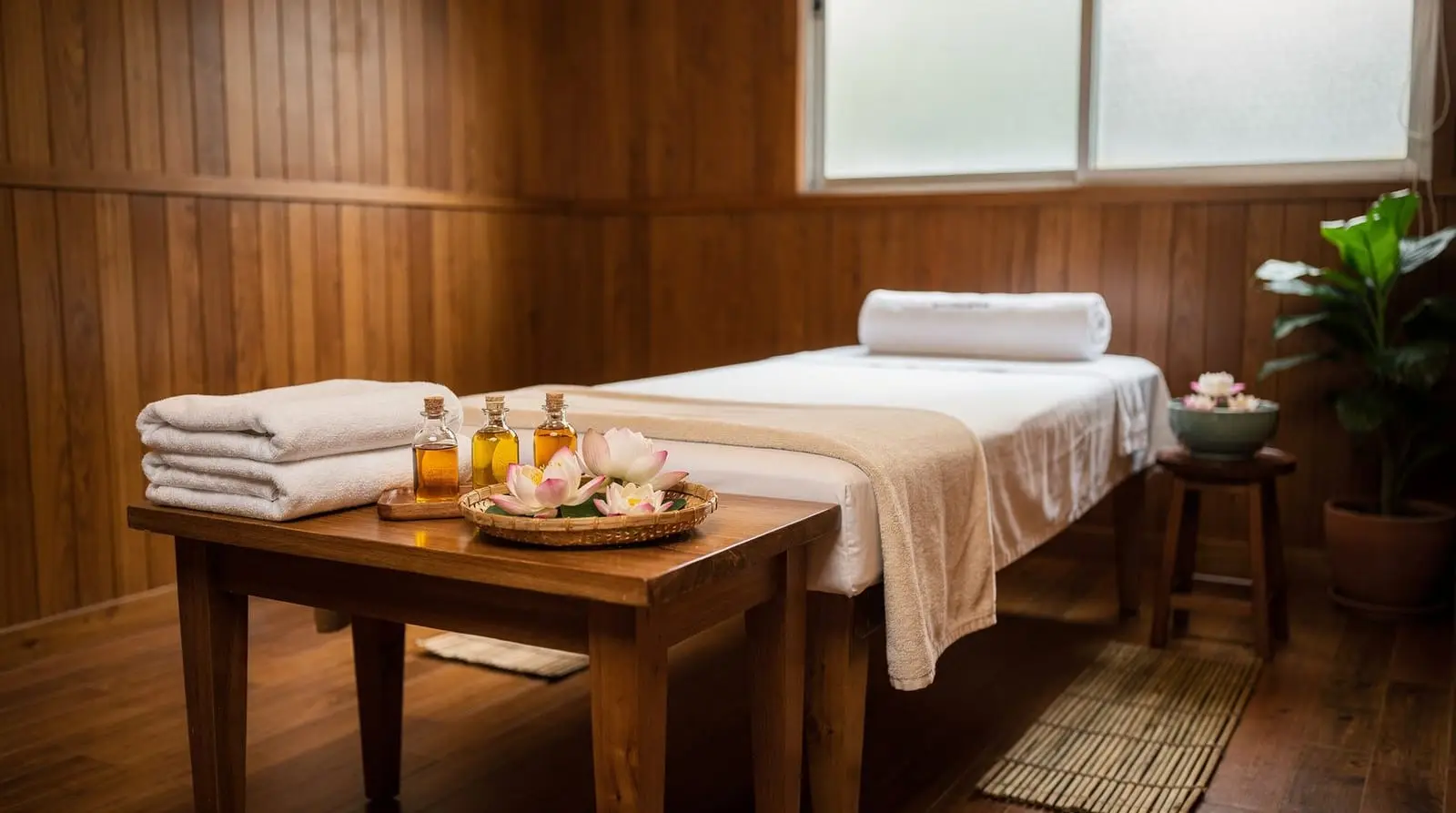
Crucially, traditional Thai massage uses no oil and you stay fully clothed — usually in loose cotton pyjama-style clothing the shop provides. If a place offers you oil for a “Thai massage”, they actually mean an oil or aromatherapy massage, which is a different (and also legitimate) service. Knowing the difference helps you order what you actually want.
The price ladder — what you should really pay
Bangkok massage prices stack into clear tiers. Knowing the bands stops you from either overpaying at a hotel when a neighbourhood shop would do, or wondering why a luxury spa costs ten times the street rate.
| Tier | Price (1hr, THB) | Style |
|---|---|---|
| Neighbourhood shop | around 250–400 | No-frills, fast, excellent value |
| Mid-range day spa | around 800–1,500 | Air-conditioned, herbal compress, private rooms |
| Luxury hotel spa | around 3,000+ | Ritual-length treatments, elaborate settings |
| Wat Pho pavilion | around 480 (30 min) | Cultural setting, first-come first-served |
Neighbourhood / street-front shops — 250–400 THB per hour (USD 8–12). These are the small shops with reclining foot-massage chairs visible through the window, found on practically every soi. A one-hour traditional Thai massage runs 250–350 THB; a foot massage similar; an oil massage perhaps 350–500 THB. This is the everyday Thai price point and the best value on earth for competent bodywork. Quality varies shop to shop, but a clean place with a posted price list and a Ministry of Public Health certificate on the wall is a safe bet.
Mid-range day spas — 800–1,500 THB (USD 24–45). Chains like Let’s Relax, Health Land and RarinJinda offer a calmer, air-conditioned, more polished experience: herbal compresses, tea on arrival, private rooms, and consistent standards. A 90-minute Thai or aromatherapy massage typically lands at 1,000–1,500 THB. This is the sweet spot for most visitors who want reliability without hotel pricing. Branches cluster in Thonglor and Ekkamai and around Sukhumvit, Nana and Asok.
Luxury hotel and destination spas — 3,000 THB and up (USD 90+). The Sukhothai’s Spa Botanica, the Mandarin Oriental Spa, BHAWA and the Divana group sit at the top. Expect 3,000–6,000 THB or more for a signature 90–120 minute treatment, in serene surroundings with elaborate rituals, steam rooms and impeccable service. Worth it as an occasional splurge; not necessary for a good massage.
Wat Pho temple pavilion — around 480 THB per 30 minutes. Massage at the temple’s own pavilion is a cultural experience rather than the cheapest option; current pricing is roughly 480 THB for 30 minutes of traditional Thai or foot massage. You are paying for the setting and the lineage. The traditional versus luxury massage guide breaks down which tier suits which traveller.
All prices reflect 2025–2026 conditions at roughly 33 THB to the US dollar; treat them as approximate.
Klai Thai traditional massage and workshop — learn the technique, then receive a full treatmentThe reputable chains fill their evening slots days ahead, and walking in after six usually means a wait or a worse room: a Let’s Relax Sukhumvit Soi 39 e-voucher holds the slot, which is the part that actually runs out.
The honest warning: therapeutic massage versus the sex trade
This is the single most important thing for a first-time visitor to understand, and most guides tiptoe around it. In Bangkok, the word “massage” attaches to two entirely different industries.
On one side is therapeutic massage — the Thai massage, foot massage, oil and aromatherapy services described above, offered at day spas, neighbourhood shops, hotel spas and the temple. This is what you want, and it is overwhelmingly the norm.
On the other side is the “soapy massage” (ab ob nuat) trade — large, garishly lit “massage parlours”, often several storeys high with mirrored facades and rows of women visible behind glass, that are effectively brothels. These cluster in specific nightlife zones, notably parts of Ratchadaphisek (“Ratchada”) and certain sois branching off Sukhumvit near the entertainment districts. The Nana and Soi Cowboy explainer covers those areas honestly.
How to tell them apart, instantly:
- A legitimate shop has a posted price list and a normal storefront, often with foot-massage chairs visible from the street.
- It is brightly and normally lit, not bathed in red or pink neon.
- It does not have touts at the door, glass display windows of seated women, or numbered seating.
- Staff wear ordinary uniforms and there is no pressure, no “menu” of unusual services, no negotiation about “extras”.
If you walk into a normal day spa, a window-front foot-massage shop, a mall spa, or a hotel spa, you will never encounter the sex trade — these worlds barely overlap. The confusion only arises in the handful of nightlife sois where the soapy parlours operate, and those are obvious once you know what to look for. Trust your instincts; if a place feels oriented toward nightlife rather than wellness, walk back out.
Where to go, by neighbourhood
Good massage is genuinely everywhere, but a few areas concentrate the best options.
Old City / Rattanakosin. The obvious anchor is Wat Pho itself — see the Wat Pho guide — where you can combine a temple visit with a treatment at the on-site pavilion. The surrounding Rattanakosin old city lanes also hide simple, honest shops.
Sukhumvit, Nana and Asok. The densest cluster of mid-range spas and reliable street shops. Health Land’s flagship near Asok is a local institution; Let’s Relax has multiple branches. Convenient if you are staying central — see the Sukhumvit guide.
Thonglor and Ekkamai. The boutique-spa heartland, leaning upmarket and design-forward. Divana’s Divine Spa and several Let’s Relax branches are here, set among the area’s cafés and bars. The Thonglor and Ekkamai guide maps the neighbourhood, and the destination page covers logistics.
Silom and Sathorn. A mix of office-worker foot-massage shops and serious hotel spas along the riverside. The Silom and Sathorn guide has the lay of the land.
Let’s Relax Ekkamai — a reliable mid-range spa session in Thonglor’s spa districtEtiquette, tipping and what to expect
A first massage in Bangkok runs more smoothly if you know the small customs.
Arrival. Show up a few minutes early. For a traditional Thai massage you will be given loose clothing to change into; for an oil massage you undress to your underwear and are kept draped with a towel throughout. Either way, mention any injuries, recent surgery, pregnancy, high blood pressure or back problems before you start — a competent therapist will adapt.
During. Communicate. The two phrases worth knowing are bao bao (softer) and nak nak or simply gesturing for harder. Thai massage is meant to be firm, and a little discomfort during deep pressure or a big stretch is normal — but sharp pain is not, so speak up. You are never obliged to endure anything.
Feet and head. Thai culture treats the head as the most sacred part of the body and the feet as the lowest; therapists understand this in the massage context, but as a guest, avoid pointing your feet at the Buddha image many shops keep, and don’t touch the therapist’s head.
Tipping. Not mandatory, but customary and genuinely appreciated. Budget 50–100 THB at a neighbourhood shop and 100–200 THB (or roughly 10 percent) at a spa, handed directly to your therapist. Carry small notes — change can be awkward otherwise.
Hygiene check. Fresh linen for each client, clean mats and towels, a tidy room, and ideally a Ministry of Public Health certificate on the wall are all good signs. If the towels look reused or the place is grubby, leave.
Booking, vouchers and value
Walk-in is the norm for neighbourhood shops and you will rarely wait. For the popular spa chains, evenings and weekends fill up, so booking a slot a day ahead is smart — and pre-paid e-vouchers frequently come in cheaper than the walk-in rate while locking in your time. The Divana group and Let’s Relax both sell vouchers this way, which is handy if you want to plan a wellness day in Bangkok around a fixed treatment time.
Divana Divine Spa Thonglor e-voucher — a luxury treatment at a pre-locked rateIf you are after the upper end of the scale, a destination spa within a luxury hotel — such as Spa Botanica at The Sukhothai — turns a massage into a half-day ritual with steam, plunge pools and elaborate signature treatments.
Spa Botanica at The Sukhothai — a luxury garden-spa experience for a special occasionBeyond Thai massage: other styles worth trying
Once you have had a traditional Thai massage, the rest of the menu opens up. Foot massage (usually 250–350 THB per hour) focuses on the feet and lower legs while you sit in a reclining chair — the easiest, most walk-in-friendly option after a long day of temple-hopping, and genuinely good for tired feet from the BTS-and-pavement circuit. Oil or aromatherapy massage swaps the stretching for slow, gliding strokes with scented oil, closer to a Western-style relaxation massage; it costs slightly more than traditional Thai (350–500 THB at a shop, more at a spa) and suits anyone who found a first Thai massage too intense. Herbal compress massage (nuad luk pra kob) presses a hot bundle of steamed herbs — lemongrass, turmeric, camphor — into sore muscles alongside the massage strokes; it is widely available at mid-range spas and is particularly good for muscle stiffness after a long-haul flight or a day trip to Ayutthaya or Kanchanaburi. Some shops also offer a four-hands massage, with two therapists working in sync — a novelty at mid-range spas that costs roughly double a solo session.
Health precautions and who should be cautious
Thai massage’s deep pressure and full-body stretches are not automatically safe for everyone. Pregnant travellers should seek a therapist trained specifically in prenatal massage, or skip it and opt for a gentle foot massage instead. Anyone with a herniated disc, recent surgery, a fracture, deep-vein thrombosis, uncontrolled high blood pressure or a bleeding disorder should disclose this before starting and may be better served by a soft oil massage than the full traditional stretches — a good therapist will adapt or decline politely rather than push through. Older travellers or anyone with joint issues can still enjoy Thai massage but should ask for a gentler session; the Bangkok with elderly guide has more on pacing a trip around physical limits. When in doubt, say so at the door — reputable shops would rather adjust the treatment than risk hurting a client, and there is no shame in asking for “soft” pressure throughout.
Common mistakes to avoid
Confusing the two industries. Already covered, but worth repeating: stick to day spas, window-front foot-massage shops, mall spas, hotel spas and the temple, and you will never wander into the sex trade by accident.
Expecting Thai massage to be gentle. It is therapeutic and firm. If you want a soft, oiled, drift-off treatment, ask specifically for an aromatherapy or oil massage, not a traditional Thai massage.
Overpaying at hotels by default. A 250 THB neighbourhood Thai massage is often performed by someone with decades of experience. The hotel spa buys you ambience and consistency, not necessarily better hands.
Skipping the health disclosure. The big stretches and spinal twists are not for everyone. If you have back, neck or circulatory issues, say so and ask for a gentler session — or stick to foot and shoulder work.
Booking through random touts. Ignore anyone on the street pulling you toward a “special” massage place. Choose your own shop.
For broader planning, the wellness in Bangkok guide covers yoga, meditation, herbal saunas and more, and the best spas in Bangkok guide ranks specific venues. If you are weaving massage into a wider trip, the things to do in Bangkok guide puts it in context.
Frequently asked questions about Thai massage in Bangkok: the complete honest
What exactly is traditional Thai massage?
How much should a Thai massage cost in Bangkok?
Is Thai massage painful?
What is the difference between Thai massage and a 'soapy massage'?
Do I need to book a Thai massage in advance?
How much should I tip for a massage in Bangkok?
What should I wear and expect during a Thai massage?
Is Thai massage safe and hygienic in Bangkok?
Top experiences
Bookable activities with verified prices and instant confirmation on GetYourGuide.