Grab, taxis and tuk-tuks in Bangkok: which to use and when
Bangkok: Tuk Tuk Day Pass App & Boat Chao Phraya River
Should I use Grab, a taxi or a tuk-tuk in Bangkok?
Use Grab for most road trips — you see the price upfront, pay by card or cash, and avoid meter disputes. Use metered street taxis when one's handy and the driver agrees to run the meter, since they're cheap. Treat tuk-tuks as a one-off novelty, not transport: they cost more than a taxi, expose you to heat and fumes, and are linked to the gem-shop commission scam. For beating traffic, trains and river boats still win.
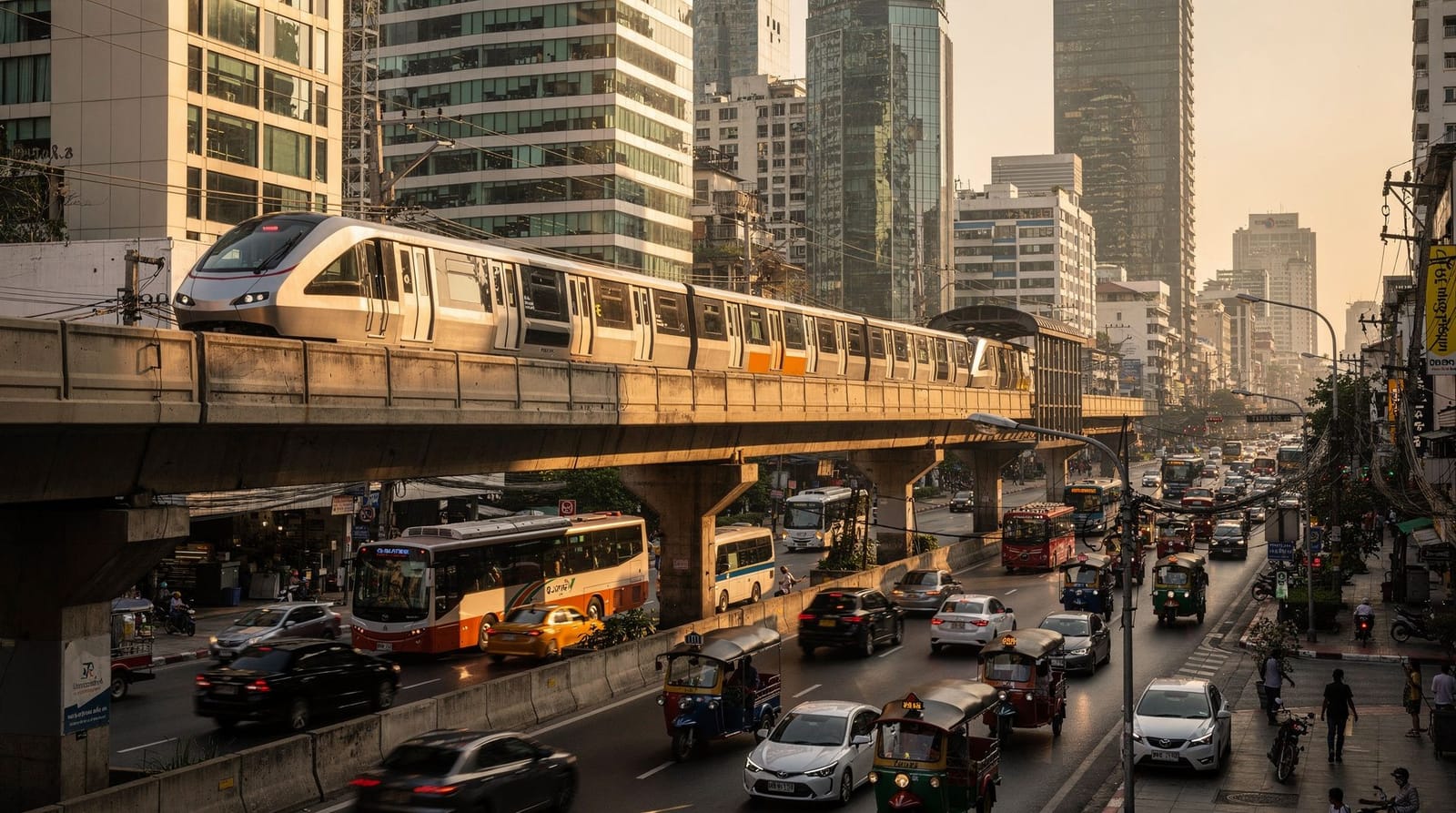
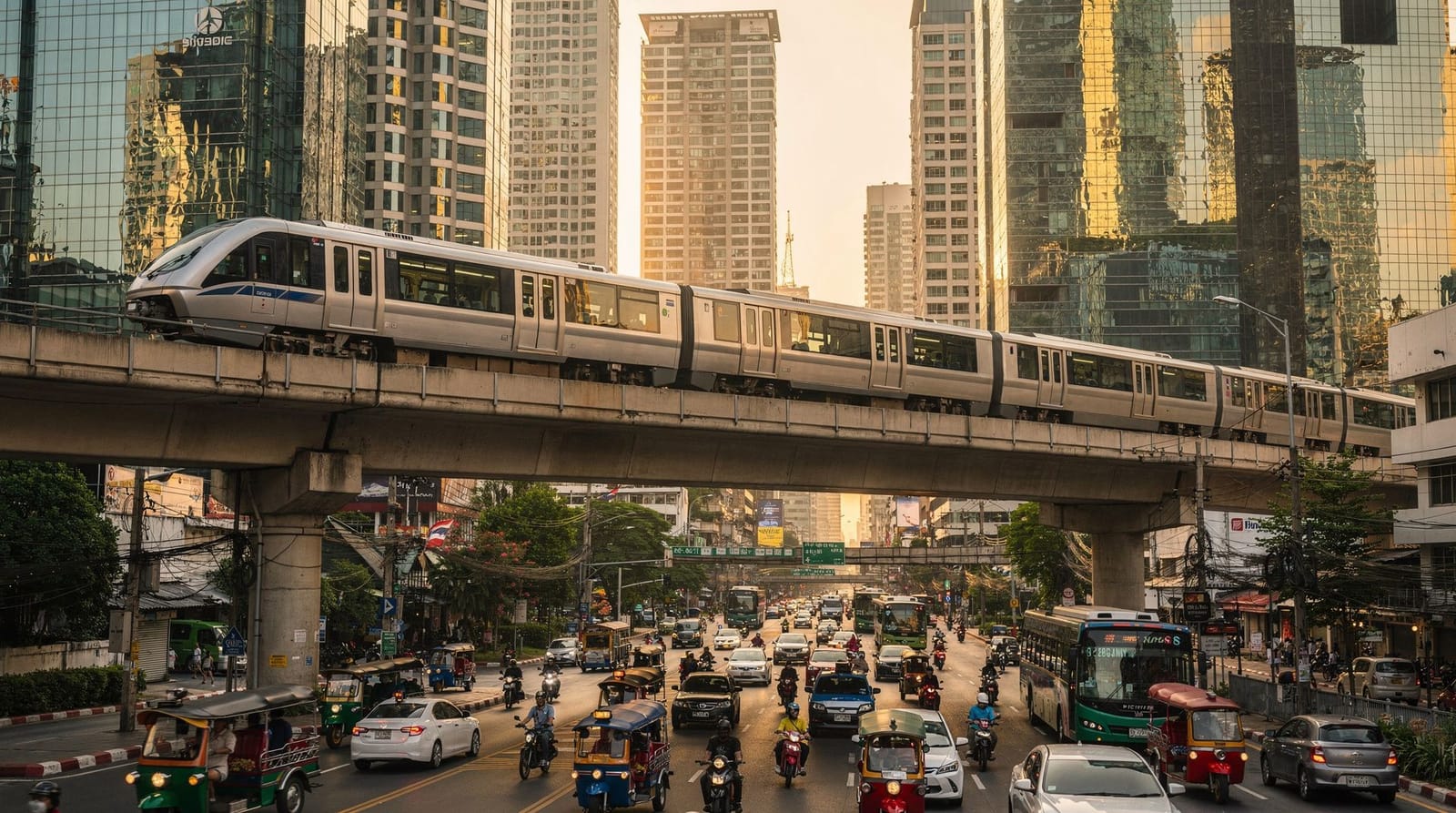
Once you step off the trains and boats, Bangkok’s road transport comes down to three choices: the ride-hailing app Grab, the city’s metered taxis, and the iconic tuk-tuk. They’re not equivalent — they differ sharply on price, reliability and the risk of being scammed. This guide ranks them honestly for real-world use, with the actual fares and the specific cons to sidestep, so you spend your money on the right rides and your novelty budget on the fun ones.
For the bigger picture of when to use road transport at all versus the traffic-proof rail and river network, start with the getting around Bangkok guide.
| Default choice | Grab (fixed upfront price, no meter disputes) |
| Typical fare | 80–250 THB central Bangkok; more in rush hour |
| Cash needed | Yes, some — a mix of card and cash is safest |
| App required | Grab (install and load a card before you land) |
| Watch for | Taxi meter refusal; the “cheap” tuk-tuk tour |
Grab — your default for road trips
Grab is Southeast Asia’s ride-hailing super-app and the single most useful thing to install before you arrive. You set pickup and destination in English, see the exact fare upfront, choose to pay by saved card or cash, and ride with the driver tracked by GPS. There’s no meter argument, no language barrier over the route, and a record of every trip.
GrabCar fares across central Bangkok typically run 80–250 THB, climbing in rush-hour traffic because the fare includes a time component, not just distance. The certainty is the killer feature: you know the price before you commit, which removes the single biggest friction of Bangkok road transport. For late nights after the nightlife districts, for reaching restaurants tucked deep in residential sois, and for solo travellers wanting a tracked ride, Grab is the obvious choice. The solo travel Bangkok guide explains why.
Two Grab variants are worth knowing:
- GrabCar — a standard private car, the everyday choice.
- GrabBike — a motorbike-taxi pillion ride, faster and cheaper in gridlock, for confident riders comfortable on the back of a bike (wear the offered helmet).
Bolt is a rival app, often a little cheaper than Grab; locals keep both and compare prices before booking. Note you’ll still want some cash, as some drivers prefer it and cash rules everything off the apps.
Metered taxis — cheap when honest
Bangkok’s brightly coloured taxis are genuinely cheap when the meter is used. Flagfall is 35 THB and the meter climbs gently, so a cross-town ride can undercut Grab. The catch is consistency: at tourist hotspots, outside hotels, and late at night, drivers frequently refuse the meter and quote an inflated flat fare, or claim they’re “going home” to avoid an inconvenient destination.
The defence is a simple habit. Before you sit down, say “meter, please” and make sure the driver agrees and starts it. If they refuse or quote a fixed price, close the door and wave them off — there’s always another taxi seconds away. Crucially, avoid the taxis idling outside attractions and big hotels, which are the most likely to overcharge; walk half a block and flag a moving cab, whose driver is just working the meter.
On expressways, you pay the tolls (25–70 THB) on top of the meter, and they’re usually worth it to skip surface gridlock. Keep small notes, as drivers often can’t change large ones. Honestly handled, the metered taxi is excellent value — the scams are about meter avoidance, not the meter itself.
Tuk-tuks — novelty, not transport
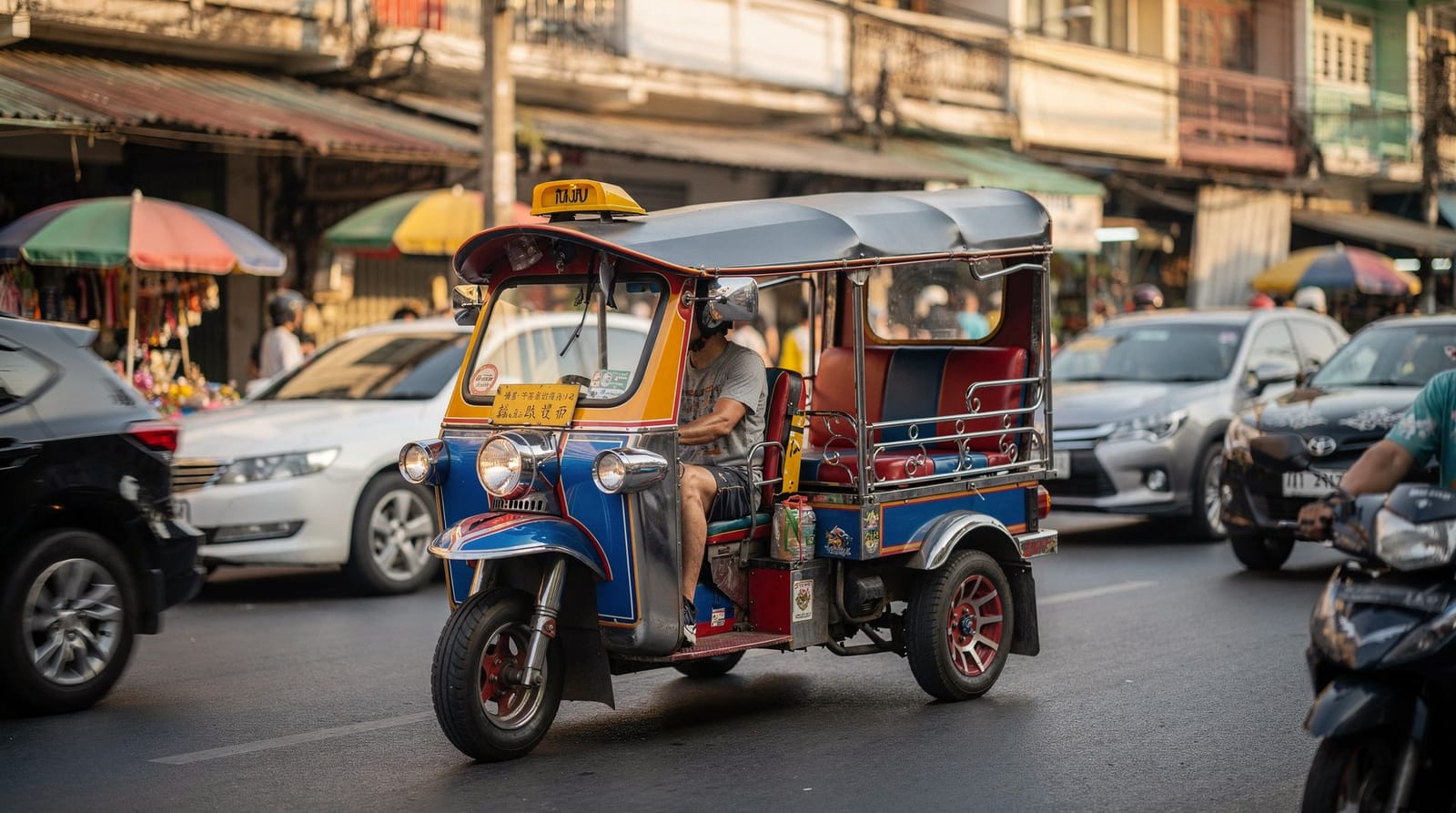
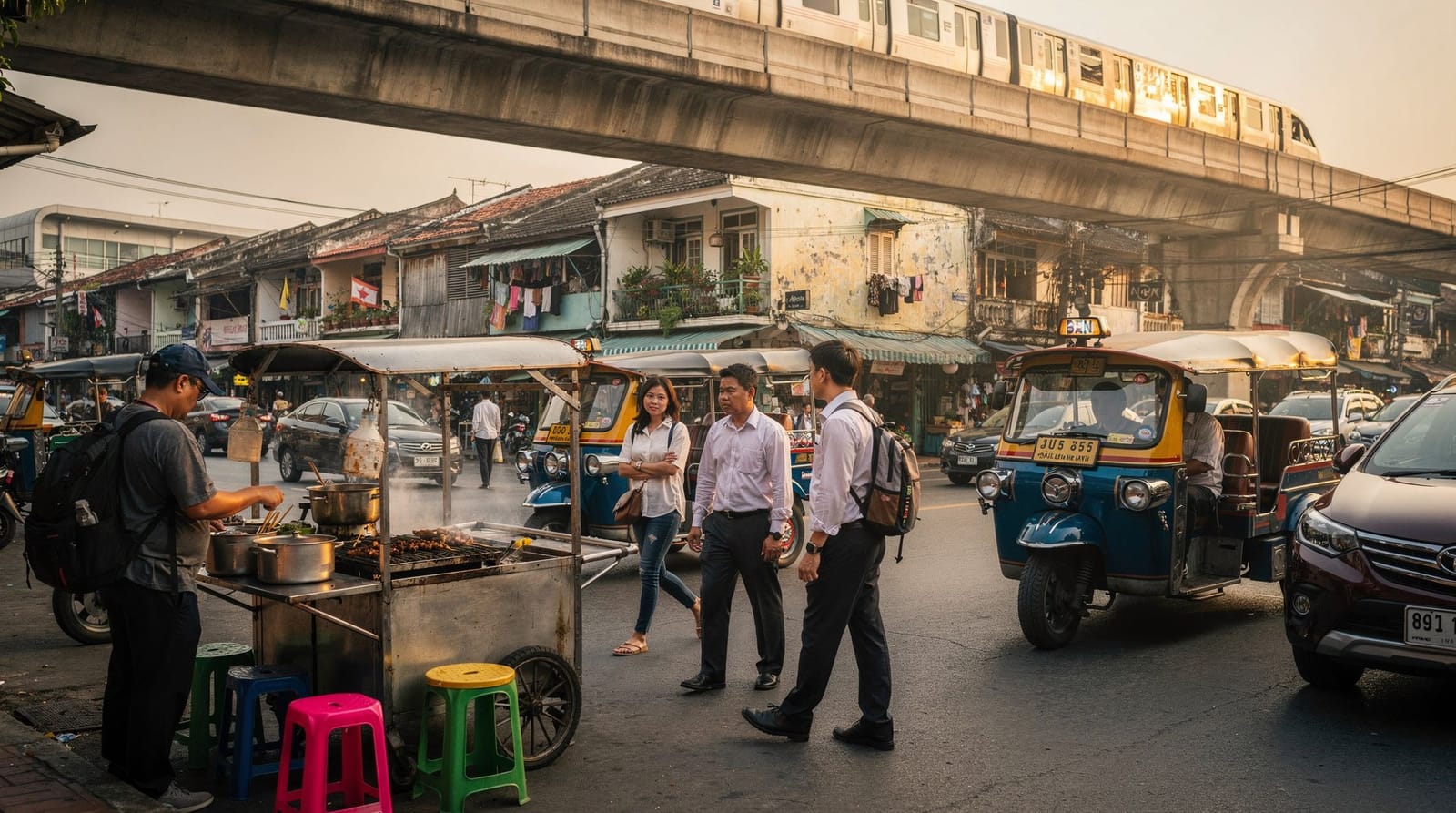
The three-wheeled tuk-tuk is a Bangkok icon, and one short ride through the Old City at dusk, engine snarling, wind in your face, is a genuine experience worth having once. As actual transport, though, it’s the weakest option on every practical measure: no air-con, full exposure to heat and exhaust, no meter, and a negotiated fare that’s almost always higher than a metered taxi for the same trip.
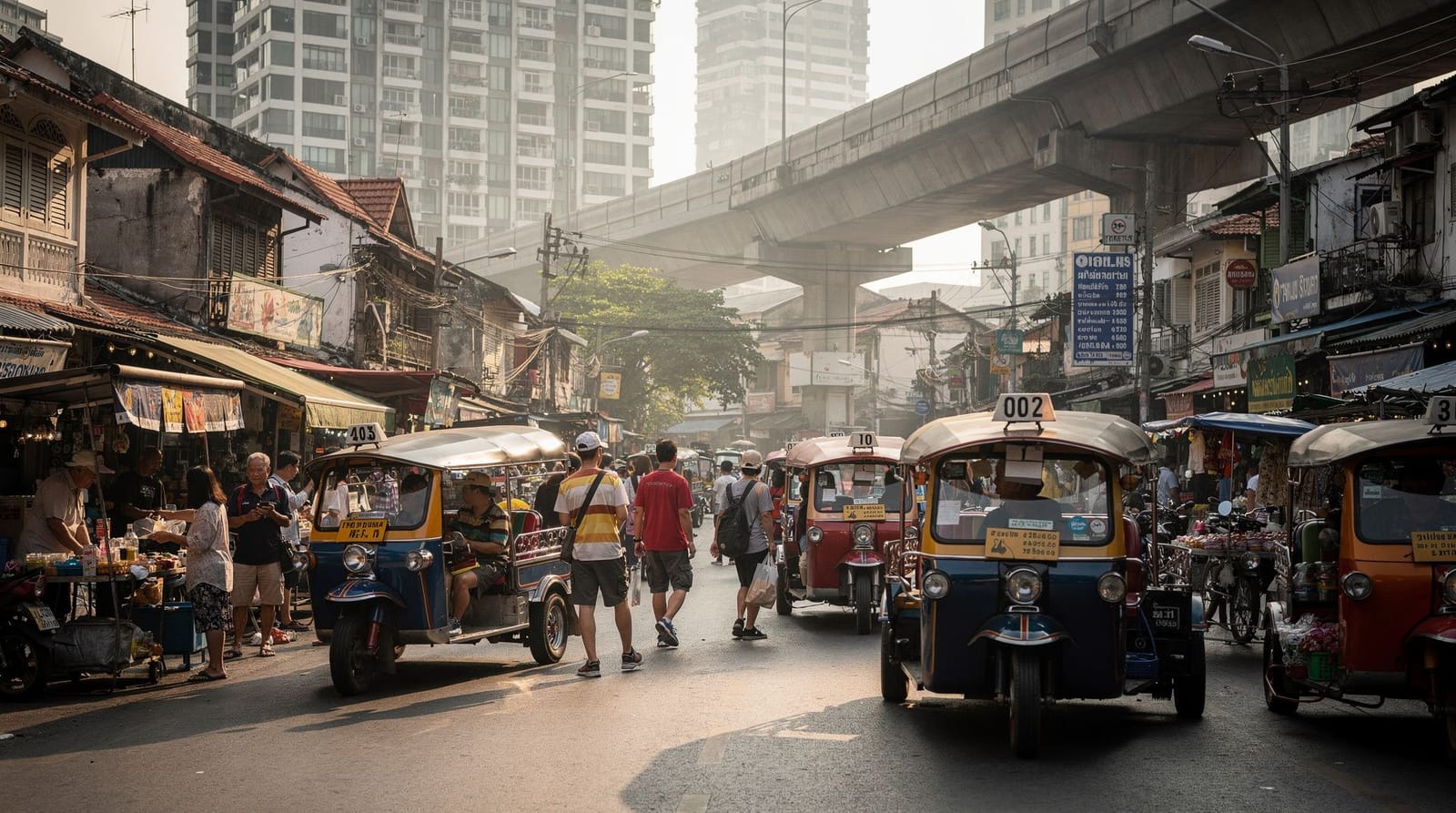
And tuk-tuks are the vehicle for one of Bangkok’s classic cons. A driver offers a suspiciously cheap “20-baht tour” of the city, or tells you your destination is “closed today” (a favourite near the Grand Palace). Either way he then hauls you to gem shops, tailors and “government” emporiums where he collects commission and you face high-pressure sales of overpriced or fake goods. The rule is absolute: never buy gems as an “investment”, decline the cheap tour, and verify any “closed” claim yourself. The full anatomy of these cons is in the tuk-tuk scams guide and the gem scam guide.
If you do want a tuk-tuk ride, agree the price before you get in, keep it to a short hop, and don’t let the driver redirect you to shops. Or take the haggling out of it entirely: a tuk-tuk day pass with app booking and a river-boat ride gives you the icon experience on fixed, transparent terms — no negotiating, no commission stops.
Which to use for which trip
- Short hop to a station or nearby restaurant? Grab, or a metered taxi if one’s right there.
- Late night home from the bars? Grab — tracked, fixed price, no meter games.
- Deep into a residential soi? Grab, which knows the address; taxis and tuk-tuks often don’t.
- Beating gridlock for a short distance? GrabBike or a street motorbike taxi.
- One fun ride through the Old City? A tuk-tuk, price agreed first — or the app-based pass.
- A full day of scattered sights or a day trip? A private car and driver.
For that last case, when you have a packed itinerary, a family, or elderly travellers, hiring a private car and driver in Bangkok and nearby removes all the per-trip friction and covers day trips too.
Airport pickup: Grab vs the official taxi queue
Arriving jet-lagged is exactly when meter disputes and unclear pricing hurt most, so both major airports handle this differently. At Suvarnabhumi and Don Mueang, the official public taxi queue on the ground floor uses the meter plus a fixed airport surcharge, and it’s a reliable, well-regulated option if you’re happy to queue. Grab also operates at both airports, though pickup points are sometimes a short walk from arrivals rather than curbside, and the app shows you the fare before you commit — useful when you’re too tired to negotiate anything. Whichever you choose, ignore anyone inside the terminal who approaches you offering a “special” taxi or car service; legitimate airport transport comes from the marked queue or the app, never a tout. Make sure your phone has data working before you land — see our Bangkok SIM and eSIM guide — so the Grab app actually functions the moment you clear immigration. Our Suvarnabhumi Airport to city and Don Mueang Airport to city guides cover both airports’ exact pickup points and train alternatives.
Safety, especially solo and at night
Grab’s GPS tracking and driver ratings add a real layer of safety that street taxis and tuk-tuks don’t offer in the same way, which is part of why it’s the default recommendation for solo travellers and late-night trips in this guide. Share your trip status with someone if you’re travelling alone and returning late, sit in the back seat, and trust your instincts if a driver behaves oddly — cancelling and rebooking costs you nothing. This same GPS-tracked reliability is why Grab is the safer default when you’re navigating home from the nightlife districts late, and why the wider common Bangkok scams guide keeps pointing back to transport with a fixed, upfront price as the single easiest scam to avoid. None of this should read as Bangkok being unusually dangerous — it isn’t — but the habits are easy and worth building regardless.
Cost comparison at a glance
| Mode | Typical cross-town fare | Pricing | Best for |
|---|---|---|---|
| Grab / Bolt | 80–250 THB | Fixed, upfront | Default; nights; deep sois |
| Metered taxi | often less, if metered | Meter (watch refusal) | Cheap when honest, plentiful |
| GrabBike / moto-taxi | low | App / negotiated | Beating gridlock, short hops |
| Tuk-tuk | higher than taxi | Negotiated | Novelty ride only |
| Private car + driver | premium | Hourly / day | Full days, families, day trips |
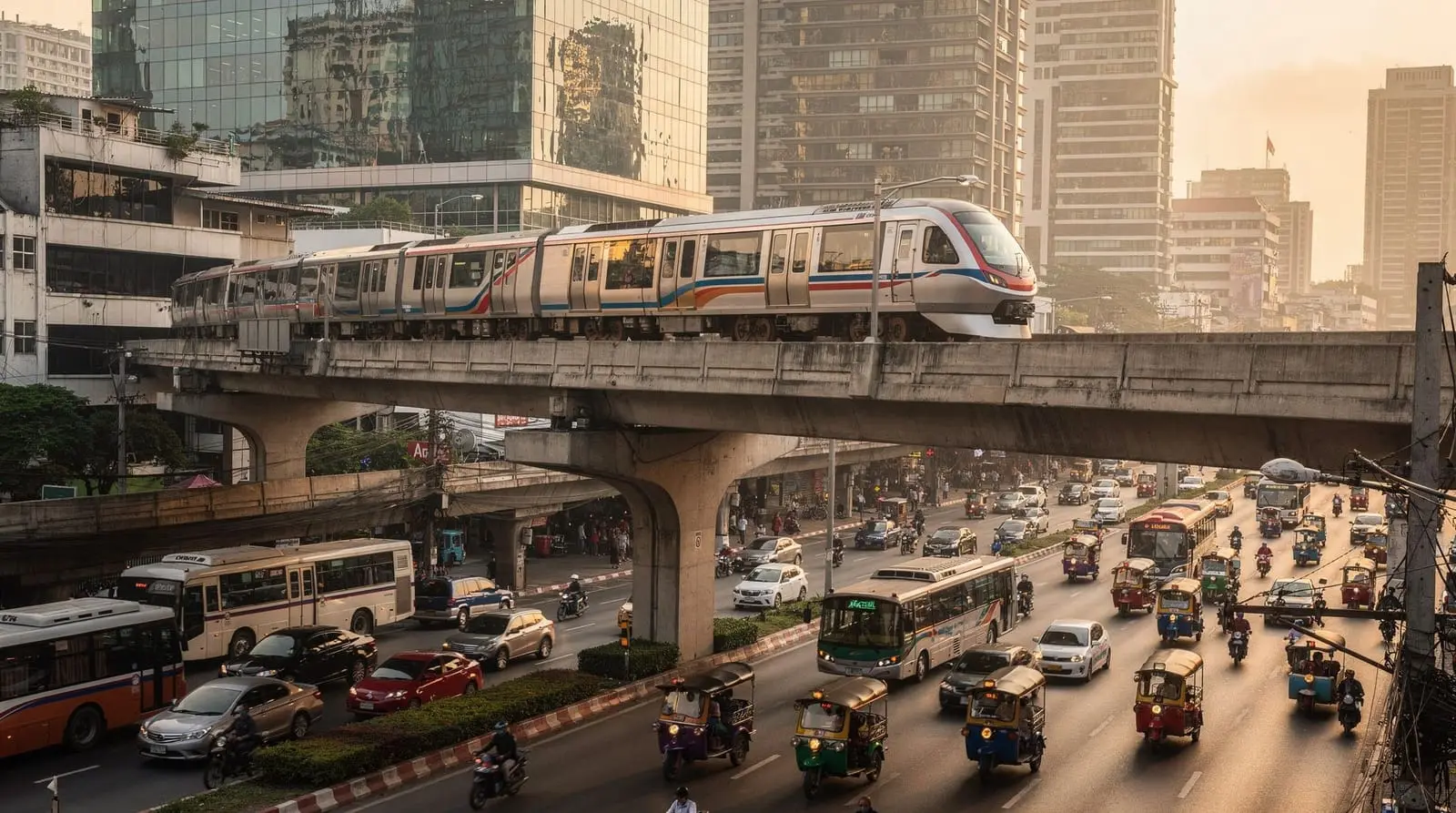
Remember the bigger picture: for distances the BTS, MRT and river boats cover, the rails and water beat all of these by skipping traffic entirely — see the getting around Bangkok guide. Road transport is for the gaps the network can’t fill. Budgeting for all of it is covered in the Bangkok travel costs guide.
Frequently asked questions about Grab, taxis and tuk-tuks in Bangkok: which to use and when
Is Grab cheaper than a taxi in Bangkok?
How do I avoid the taxi meter scam in Bangkok?
What is the tuk-tuk gem scam?
Do I need cash for Grab in Bangkok?
Are tuk-tuks dangerous in Bangkok?
What is GrabBike and is it safe?
Can I tip taxi and Grab drivers in Bangkok?
Top experiences
Bookable activities with verified prices and instant confirmation on GetYourGuide.