MRT subway guide: Bangkok's underground explained
Bangkok: Chao Phraya River Hop-On Hop-Off Boat Pass
How does the Bangkok MRT subway work?
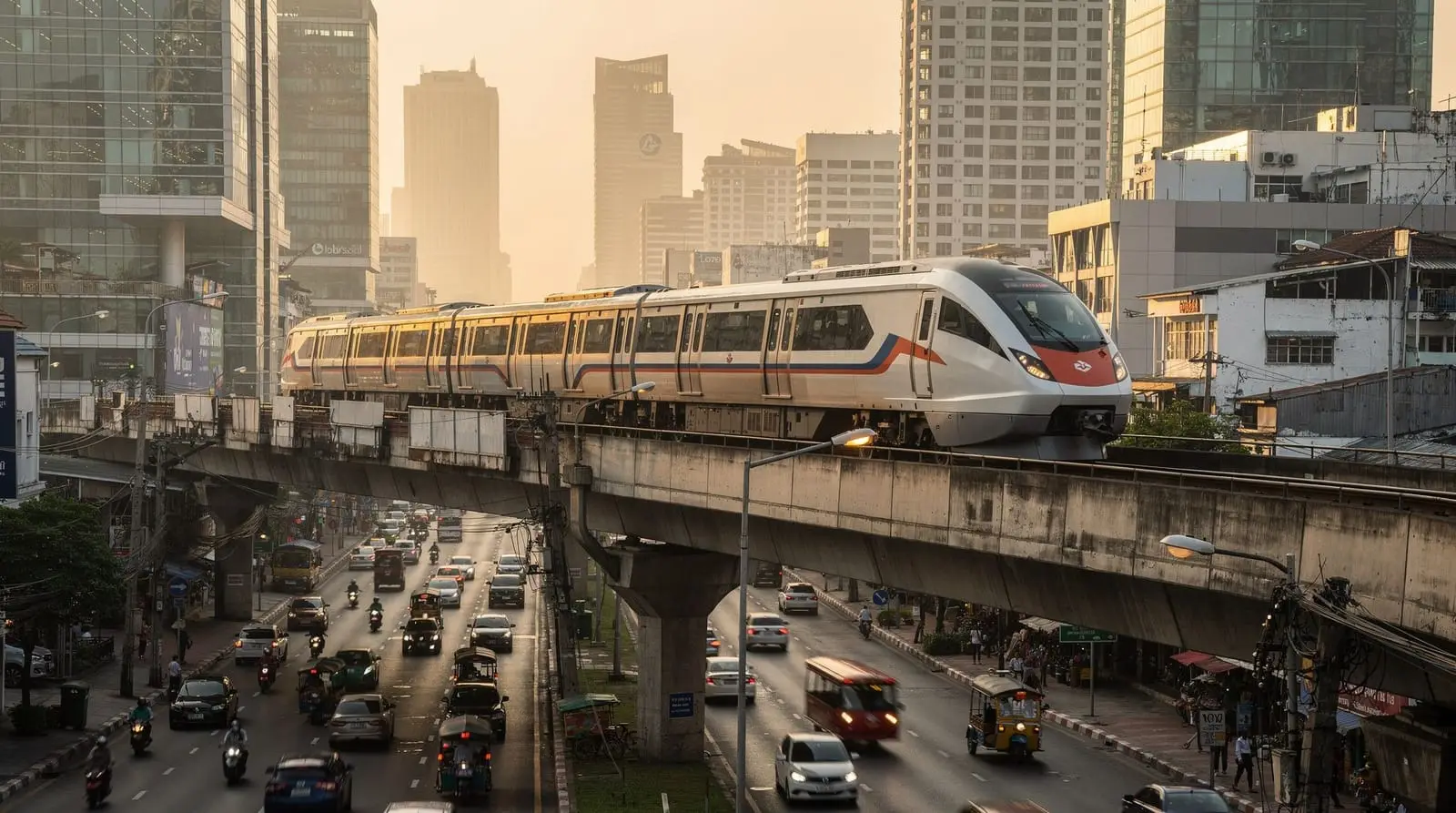
The MRT is Bangkok's underground and elevated metro, separate from the BTS Skytrain. The main Blue Line loops through the city centre and reaches places the BTS misses — most usefully Chinatown (Wat Mangkon station) and Chatuchak Weekend Market. Fares run 17–43 THB by token or stored-value card, and the MRT interchanges with the BTS at Asok/Sukhumvit, Sala Daeng/Si Lom and Mo Chit/Chatuchak.
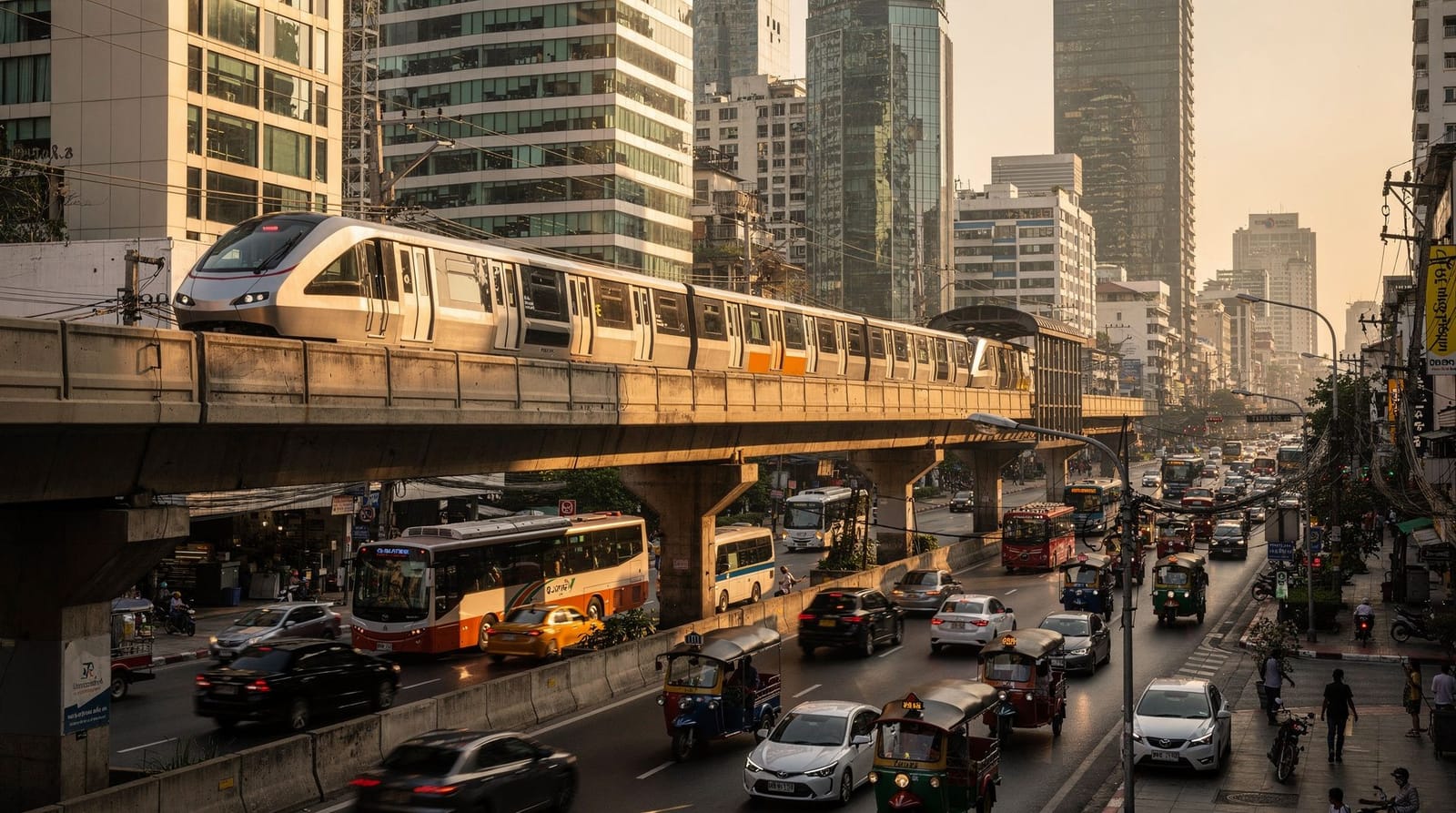
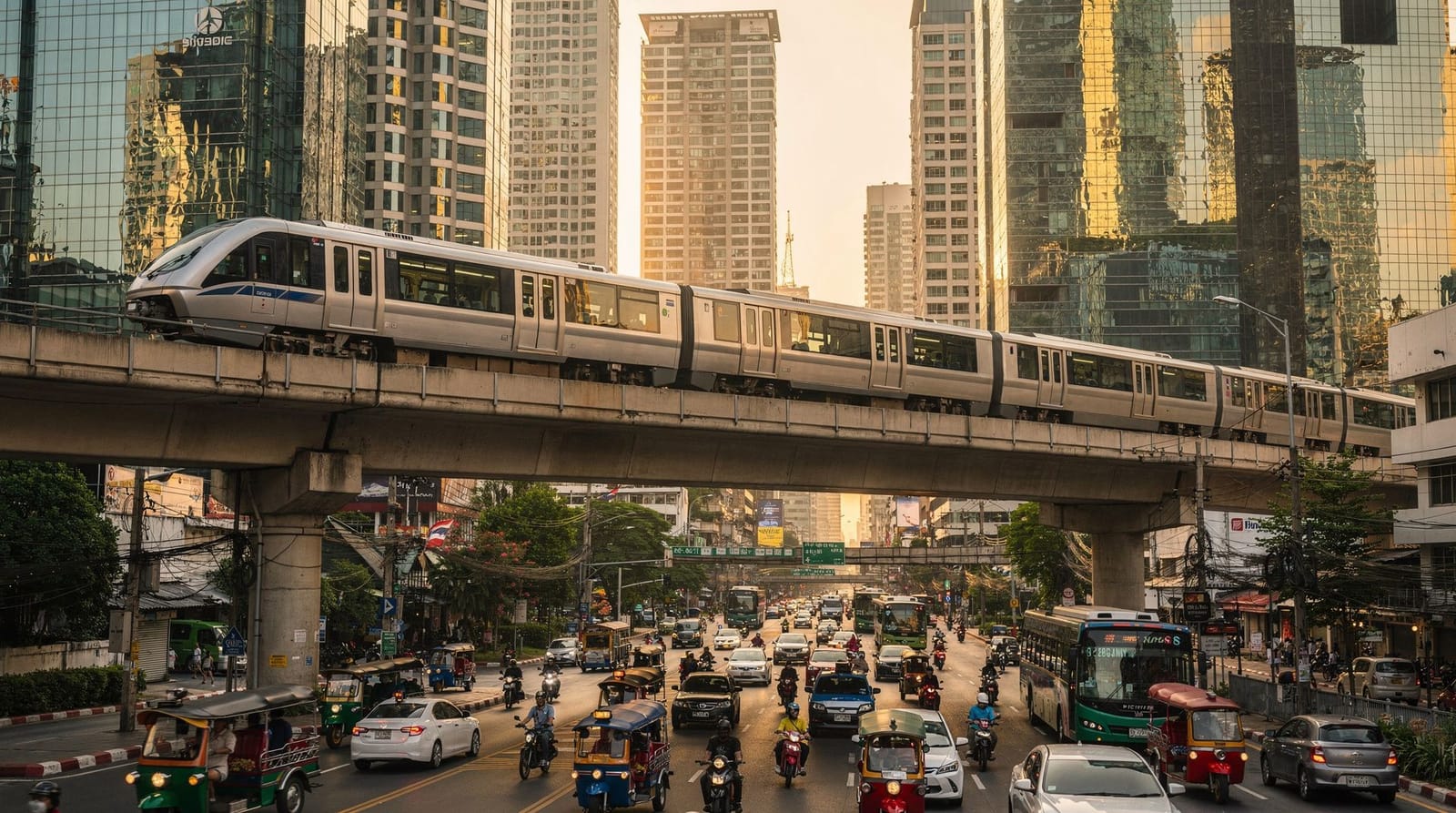
The MRT is the half of Bangkok’s metro that first-timers often overlook — and that’s a mistake, because it reaches some of the city’s best sightseeing that the BTS Skytrain simply doesn’t. Chinatown, the old railway-station district, and Chatuchak Weekend Market are all MRT, not Skytrain. Treat the MRT and BTS as one combined network and you can cross the whole city above and below the traffic.
This guide explains the MRT’s lines, ticketing quirks, the stations that matter for visitors, and how it dovetails with the BTS. It pairs with the broader getting around Bangkok guide and the BTS Skytrain guide.
| Cost | 17–43 THB per trip, distance-based |
| Hours | Roughly 06h00 to midnight |
| Key line | Blue Line — Chinatown, Chatuchak, the Old City edge |
| Fare card | MRT token or MRT stored-value card (Rabbit Card not valid) |
| Best for | Reaching sights the BTS Skytrain doesn’t cover |
Two lines, one that matters most
The MRT has two main lines for visitors, and you’ll spend nearly all your time on one of them.
The Blue Line is the workhorse. It forms a long loop through the city, linking the suburbs in the north and west with the centre. The stretches visitors actually use run through Chatuchak Park and Kamphaeng Phet (for the weekend market), down through Hua Lamphong (the grand old central railway station, now a heritage landmark), and crucially to Wat Mangkon — the station that opens directly onto Chinatown. The Blue Line also passes Sam Yan, Si Lom (interchange to the BTS) and Sukhumvit (another BTS interchange).
The Purple Line runs out to Nonthaburi province in the north-west and meets the Blue Line at Tao Poon. Most visitors never need it — it’s a commuter line for the suburbs — unless they’re staying out that way or heading toward Koh Kret.
There are newer extension lines (Yellow, Pink) creeping into the suburbs too, but for sightseeing the Blue Line is the one to know.
Tickets, tokens and the security check
The MRT runs its own ticketing, entirely separate from the BTS. For a single trip you buy a small black plastic token from a machine or the booth: choose your destination station, pay, and you get a token that you tap on the gate to enter and drop into the slot to exit. Fares are distance-based, roughly 17–43 THB (USD 0.50–1.30).
If you ride the MRT a lot you can buy a stored-value MRT card, but for most short visits the tokens are simpler. The important thing to remember: your Rabbit Card does not work here. The Rabbit Card is BTS-only, and the MRT card is MRT-only. There’s no single card that covers both networks, so plan to buy tokens on the MRT regardless of what you use on the Skytrain — the Rabbit Card guide explains the divide.
One small surprise for newcomers: the MRT has airport-style bag checks at the entrances, where staff may glance inside larger bags. It’s quick and routine, but allow a moment at busy times. The BTS has no such check.
The stations that unlock the best sightseeing
The MRT’s value for visitors is concentrated in a handful of stations:
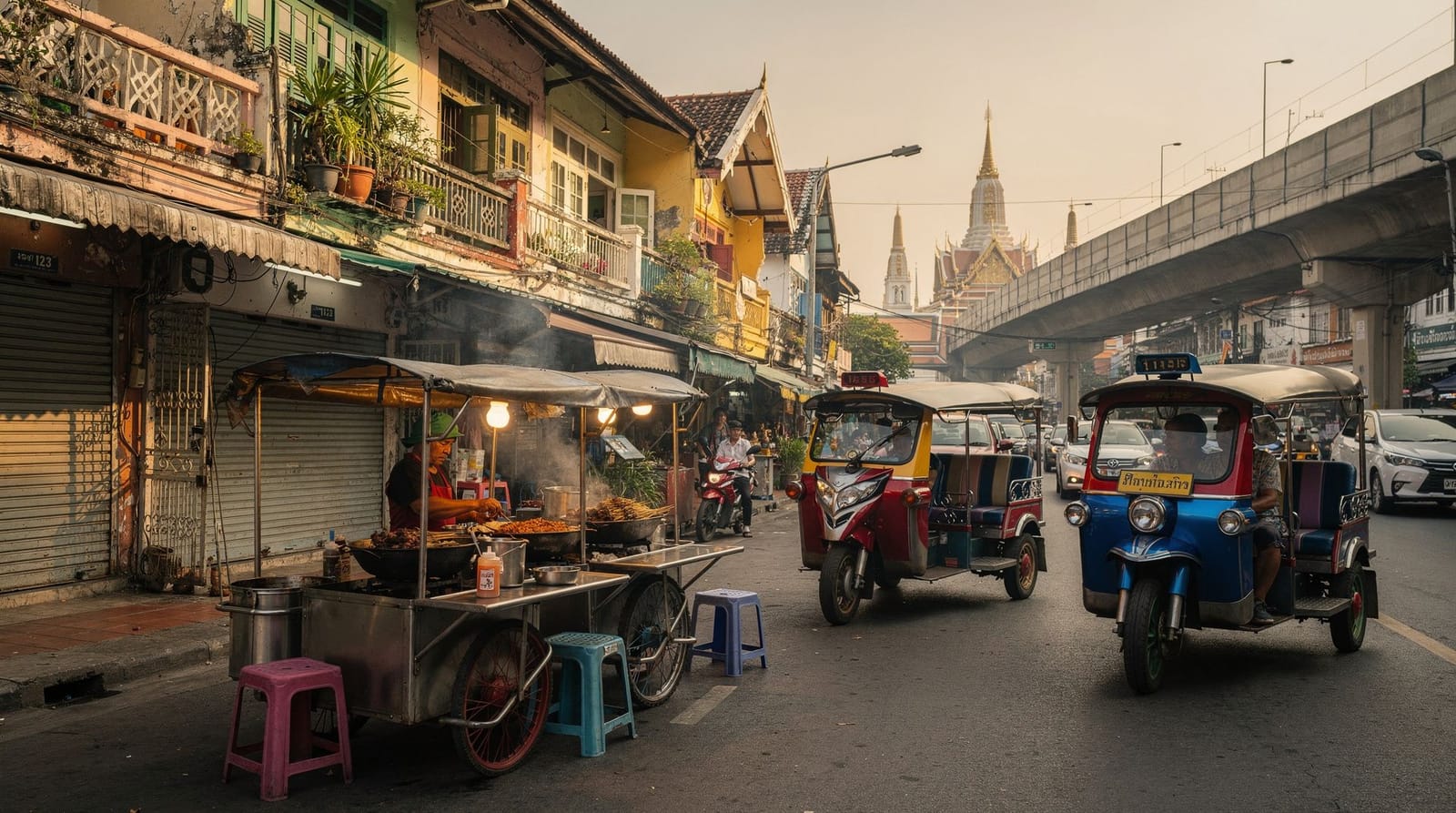
- Wat Mangkon — the gateway to Chinatown (Yaowarat). Exits open onto the gold shops, the Chinese shrines, and the legendary street-food streets. This single station transforms an evening Chinatown food crawl from a taxi gamble into a five-minute walk from the platform.
- Sanam Chai — for the southern edge of the Rattanakosin Old City, within walking distance of Wat Pho and a beautifully designed station themed on Thai art and the nearby museums.
- Chatuchak Park / Kamphaeng Phet — the two stations that bracket Chatuchak Weekend Market. Kamphaeng Phet exits put you right into the market lanes.
- Hua Lamphong — the magnificent old central railway station, a heritage building worth a look, and a useful node for the southern Old City.
- Lumphini / Silom — for Lumphini Park and the southern end of the Silom–Sathorn business district.
- Sukhumvit — interchange to the BTS at Asok, and access to the Terminal 21 mall.
How the MRT links to the BTS
The two networks meet at three interchanges that you should commit to memory:
- Sukhumvit (MRT) ↔ Asok (BTS) — the busiest crossover, linking the MRT Blue Line to the BTS Sukhumvit Line in the heart of the hotel district.
- Si Lom (MRT) ↔ Sala Daeng (BTS) — linking the MRT to the BTS Silom Line for the business district and Patpong.
- Chatuchak Park (MRT) ↔ Mo Chit (BTS) — at the northern end, by the weekend market and the northern bus terminal.
At each interchange you tap out of one system and into the other, paying both fares — there’s no single through-fare, because the operators are different. It’s a minor friction but the combined coverage is excellent: between the two networks you can reach almost every modern destination in the city, and the MRT adds the Old City and Chinatown that the BTS lacks.
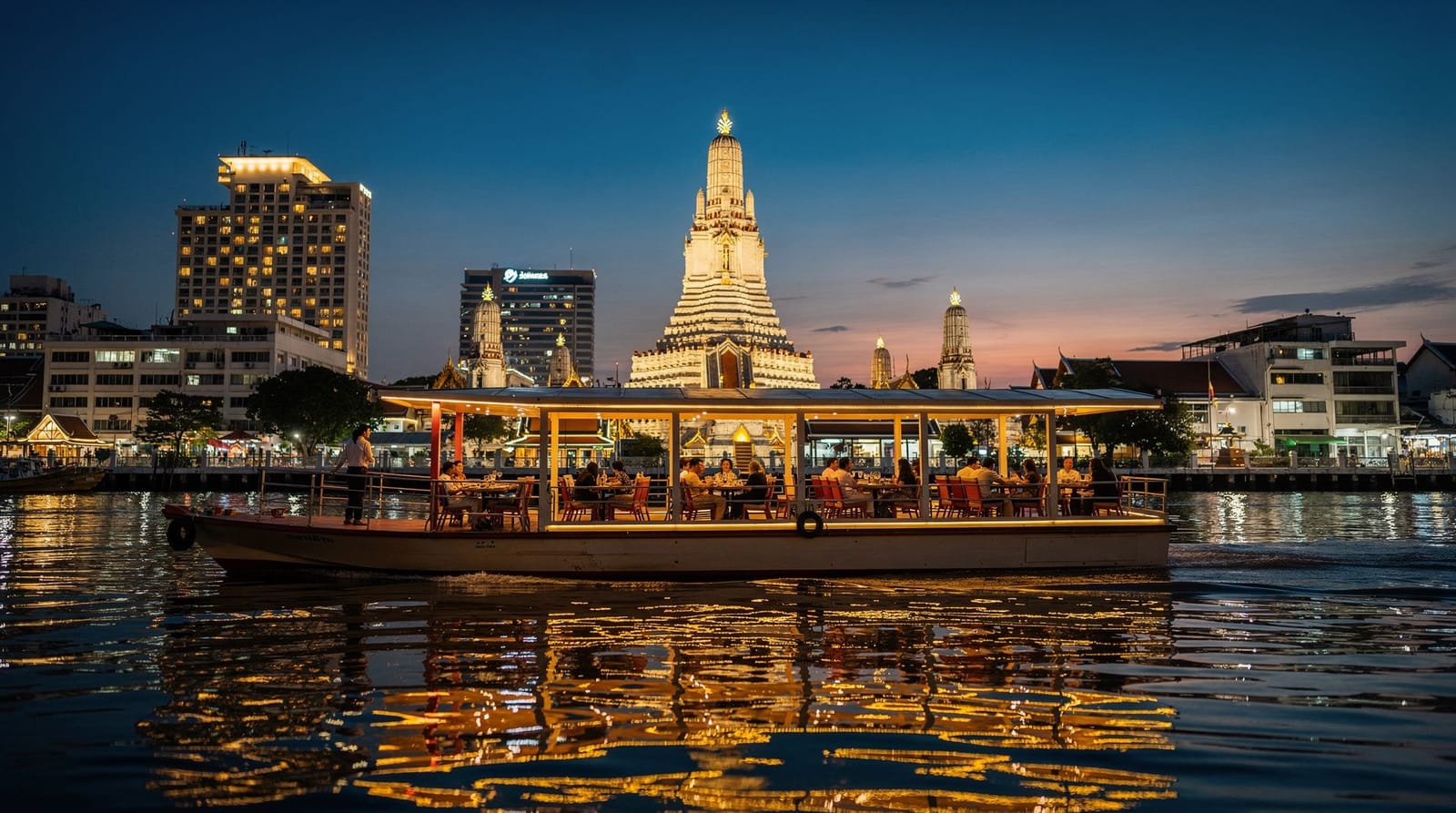
For the riverside temples, neither train goes all the way — you ride to the river and switch to a boat. From the Old City MRT stations (Sanam Chai), Wat Pho and the Grand Palace are walkable; for a relaxed water-based tour, a Chao Phraya hop-on-hop-off river boat pass connects the temple piers, as covered in the Chao Phraya boats guide.
Practical riding tips
The MRT shares the same etiquette as the BTS: let passengers off first, stand clear of the doors, give up priority seats, and no eating or drinking on trains or platforms. It runs roughly 06h00 to midnight, with the same rush-hour crush (07h00–09h30 and 16h30–19h30) at the central interchanges.
The MRT is strongly air-conditioned and the underground stations are cool and clean — a pleasant escape from the heat. Because much of the Blue Line is underground, you lose mobile signal between some stations, so download your route or maps offline if you’re navigating as you go.
For luggage, the MRT is workable but, like the BTS, relies on escalators and sometimes-distant lifts; with big suitcases a Grab to the hotel is gentler. The full mode-by-mode comparison, including when to skip the trains entirely, is in the getting around Bangkok guide.
MRT vs BTS at a glance
| MRT | BTS Skytrain | |
|---|---|---|
| Layout | Mostly underground | Elevated |
| Covers | Chinatown, Old City edge, Chatuchak, Hua Lamphong | Siam, Sukhumvit, Silom, modern core |
| Ticketing | Own tokens/card, separate system | Rabbit Card or single tickets |
| Security | Airport-style bag check at entry | None |
| Interchange | 3 stations link to the BTS | Same 3 stations link to the MRT |
Neither network is “better” — they are two halves of one system, and most visitors end up using both in a single day without thinking twice about it.
Accessibility: lifts, escalators and step-free travel
The MRT is generally accessible, with lifts at most stations alongside the standard escalators and stairs, though lifts are sometimes located away from the main entrance and can involve a longer walk than the escalator route. Platforms are step-free from the lift, and staff are typically available to help if you ask. For travellers with mobility considerations, strollers, or heavy luggage, the MRT’s escalator-heavy design still means some planning is wise — the Bangkok with kids guide and the Bangkok with elderly travellers guide both cover which parts of the city are easiest to navigate on wheels, and when a Grab is simply the more relaxed choice than the trains.
Budgeting a day on the MRT
Because fares are distance-based and low, the MRT rarely makes a dent in a travel budget. A day of hopping between three or four MRT stations typically costs well under 200 THB in tokens, cheap even stacked against a BTS-heavy day. For how transport fits into an overall daily spend, see the Bangkok travel costs guide. If your day also includes river transport, for instance combining a Wat Mangkon Chinatown stop with the boats along the Chao Phraya, a combined tuk-tuk, app-transport and boat day pass can simplify hopping between systems without juggling separate tickets for each mode.
A combined-network sightseeing route
Here’s how the MRT slots into a real day. Start at Chatuchak Weekend Market via Kamphaeng Phet in the morning; ride the Blue Line south to Wat Mangkon for a Chinatown lunch and a wander among the shrines; continue to Sanam Chai to walk to Wat Pho and the river; then in the evening loop back to Sukhumvit, change to the BTS at Asok, and head out to the Thonglor bars. Almost the entire day on rails, almost none of it in traffic. It is exactly the kind of low-stress, high-coverage day that makes the things to do in Bangkok guide so easy to act on once you understand the trains. If you would rather cover some of the same ground above-ground for the views, the hop-on-hop-off bus guide is a slower, more scenic complement for a day with less of a fixed plan.