Bangkok Art and Culture Centre (BACC): the complete guide
What is the Bangkok Art and Culture Centre?
The Bangkok Art and Culture Centre (BACC) is the city's main contemporary art hub, a striking spiral-galleried building beside MBK and Siam Discovery in central Bangkok. It hosts free rotating exhibitions of Thai and international art across nine floors, alongside indie bookshops, design boutiques, cafés and small cinemas. Entry to the building and most exhibitions is free, it opens 10:00-20:00 (closed Mondays), and it connects directly to National Stadium BTS.
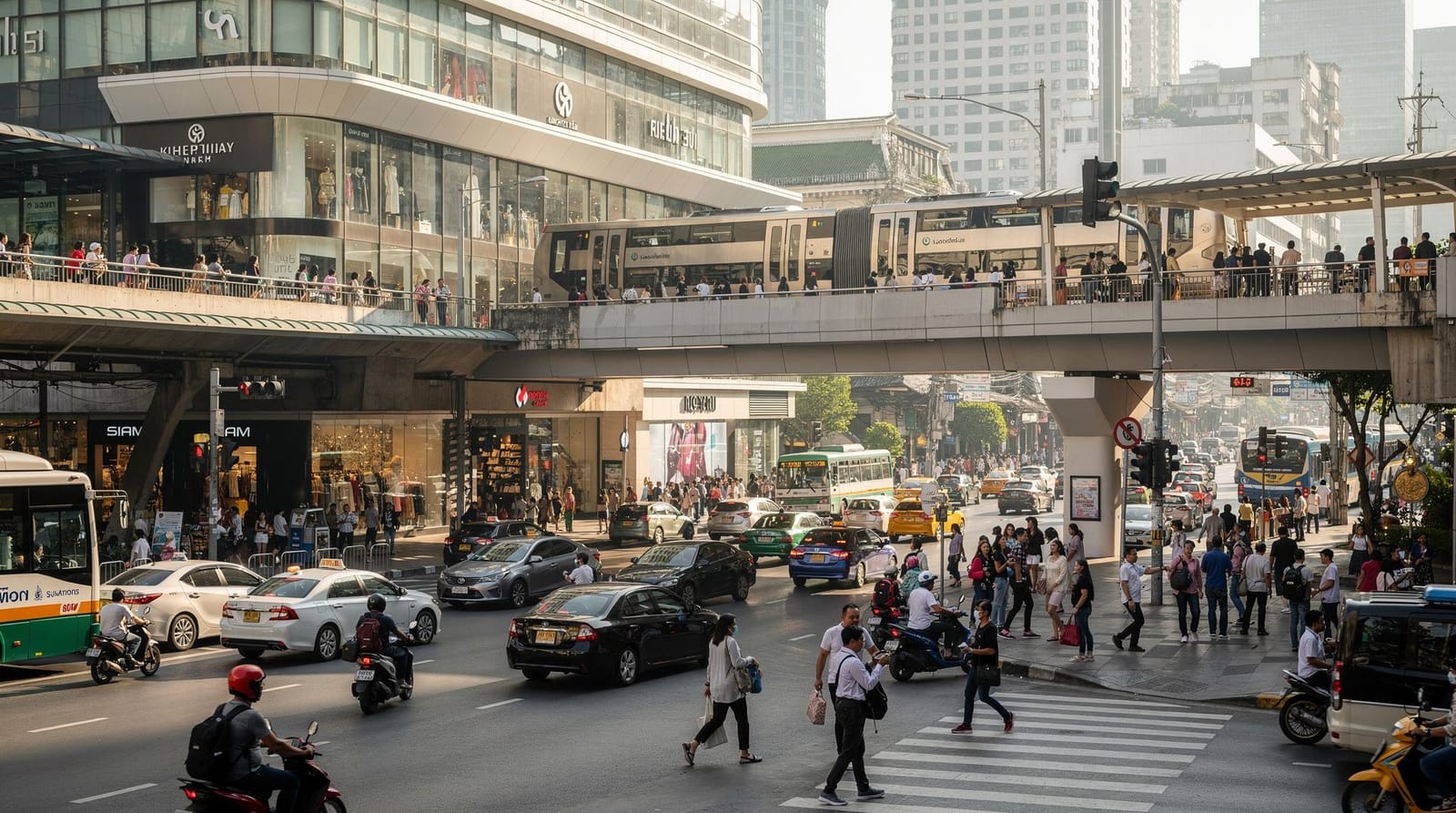
The Bangkok Art and Culture Centre — BACC to everyone — is the city’s free contemporary art hub, a striking spiral of white galleries rising over the busy Pathumwan intersection at Siam. Nine floors of rotating Thai and international exhibitions, indie bookshops, design boutiques, cafés and small cinemas, all air-conditioned and connected straight to the BTS, make it one of central Bangkok’s best free, weather-proof days out. This guide covers what to see, the architecture, and how to fit it into a Siam day.
The BACC opened in 2008 after a long campaign by Bangkok’s arts community for a dedicated public art space. It sits opposite MBK Center and beside Siam Discovery, deliberately placed in the heart of the consumer district as a free, non-commercial cultural counterweight to the surrounding malls.
BACC at a glance
| Entry | Free (occasional ticketed exhibitions cost extra) |
| Hours | 10:00-20:00, Tuesday-Sunday, closed Mondays |
| Getting there | National Stadium BTS (skywalk), or a short walk from Siam BTS |
| Time needed | 45 minutes to 2 hours |
| Best for | Free rainy-day or hot-afternoon culture, indie shops, architecture |
The architecture
The building is the first thing that impresses. Inside, a tall white atrium is wrapped by curving, spiralling ramps that wind up nine floors, lit from a skylight above — the design draws frequent comparisons to New York’s Guggenheim. Walking the ramps is a pleasure in itself, and the curved galleries flow into one another, so even between major exhibitions the space rewards a wander. It is one of the more elegant modern public buildings in Bangkok.
What’s inside
- The main exhibitions occupy the upper three floors, with a programme that rotates every few months — contemporary Thai art, international shows, photography, design and occasional large-scale installations. Quality varies with the calendar, so check what’s on.
- The middle and lower floors are full of independent bookshops, art-supply and design stores, craft boutiques, small private galleries, a library, and cafés.
- A small cinema and performance spaces host indie film screenings, talks and events.
This mix means even when the headline exhibition does not grab you, the indie shops and café culture make the visit worthwhile. For unusual, locally made souvenirs, the BACC shops beat the malls — see the best souvenirs in Bangkok guide for context, and the Bangkok culture guide for the wider creative scene.
Free, central and weather-proof
Entry to the building and most exhibitions is free, which lands the BACC firmly in the free things to do in Bangkok guide. It is fully air-conditioned and covered, making it one of the best options when the afternoon heat or a rainy-season downpour hits — see the Bangkok in the rain guide.
Hours and getting there
Entry: free (occasional special exhibitions may charge a small fee) Hours: 10:00-20:00, Tuesday-Sunday; closed Mondays Nearest transit: National Stadium BTS (Silom Line), connected by skywalk; a short walk from Siam BTS
The skywalk link to National Stadium BTS makes the BACC one of the easiest attractions in the city to reach, and its position opposite MBK and beside Siam Discovery means it pairs effortlessly with a Siam shopping day. See the Siam-Ratchaprasong destination guide, the BTS Skytrain guide, the best malls in Bangkok guide and the Bangkok shopping guide.
How long to spend
Allow 45 minutes to two hours, depending on the current shows and how much you browse the shops and cafés. Art lovers can lose two hours when the upper-floor exhibitions are strong; a quick look at the building and headline show takes under an hour. Since it is free and flexible, there is no pressure either way — it is an easy, civilised break from the consumer intensity of Siam.
Best time to visit
The BACC is rarely genuinely crowded, even on weekends, which is part of its appeal against the packed malls next door. Weekday afternoons are the quietest, with a slow, gallery-hush atmosphere on the upper floors. Weekend afternoons draw more local families and students browsing the bookshops and cafés, though it never approaches the crush of the Chatuchak weekend market or the Grand Palace. Because it is fully indoors and air-conditioned, it works as a lunchtime or late-afternoon detour regardless of weather, and it stays open until 20:00 — later than most Bangkok museums, so it also suits an early-evening visit after a day of sightseeing.
Combining BACC with a Siam day
Because it sits right in the middle of the Siam shopping district, the BACC slots easily into a half-day plan without much detour. A simple sequence that works for most visitors:
| Time | Stop |
|---|---|
| Morning | Jim Thompson House or a Rattanakosin temple visit |
| Midday | Lunch at MBK Center’s food court or a Siam Center restaurant |
| Early afternoon | BACC exhibitions, shops and cafés (allow 1-2 hours) |
| Late afternoon | Siam Discovery or the wider malls for shopping, or the BTS onward to another district |
This keeps the BACC as an air-conditioned midpoint in the day, rather than a rushed add-on, and avoids doubling back across the Pathumwan intersection. See the things to do in Bangkok guide if you want ideas for stretching the day further in either direction.
Is the BACC good for a family visit?
It works well for families with older children and teenagers who can handle a gallery pace, less so for toddlers who need to move constantly. The open ramps and atrium give young children room to walk rather than sit still, and the free entry means there is no pressure to make everyone stay for a set amount of time — wander for twenty minutes and leave if interest fades. It is a solid option on the Bangkok rainy day with kids list, and pairs well with the wider Bangkok with kids planning guide for building it into a family itinerary alongside livelier stops.
Accessibility and facilities
The BACC is one of the more accessible attractions in central Bangkok. Lifts run alongside the main spiral ramps to every floor, so wheelchair users and anyone who finds nine floors of ramp walking tiring do not need to rely on stairs. Restrooms are on multiple floors, the whole building is air-conditioned, and free wifi is available inside. There is no cloakroom for large bags, so keep luggage light if arriving straight from a hotel checkout. The gentle ramps and lift access also make it a comfortable stop for the Bangkok with elderly guide, which flags it as one of the easier landmarks for travellers who cannot manage a lot of standing or stairs, and the flat ramp surfaces are also easy going with a pushchair, unlike many older Bangkok buildings that rely on stairs alone.
Photography at the BACC
The white spiral ramps and the tall central atrium are one of the most photogenic interiors in Bangkok, and the building is a regular feature on Bangkok photo-spot lists — see the best photo spots in Bangkok and Instagram spots in Bangkok guides for how it compares to the city’s other striking backdrops. Midday brings the strongest natural light through the top skylight, while a quieter weekday visit means fewer people crossing your shot on the ramps. Some ticketed exhibitions restrict photography inside the galleries themselves, so check signage before shooting artwork rather than the architecture. The atrium view from the top floor looking straight down the spiral is the single most photographed angle, and it is usually far less crowded than the equivalent shot at the malls next door.