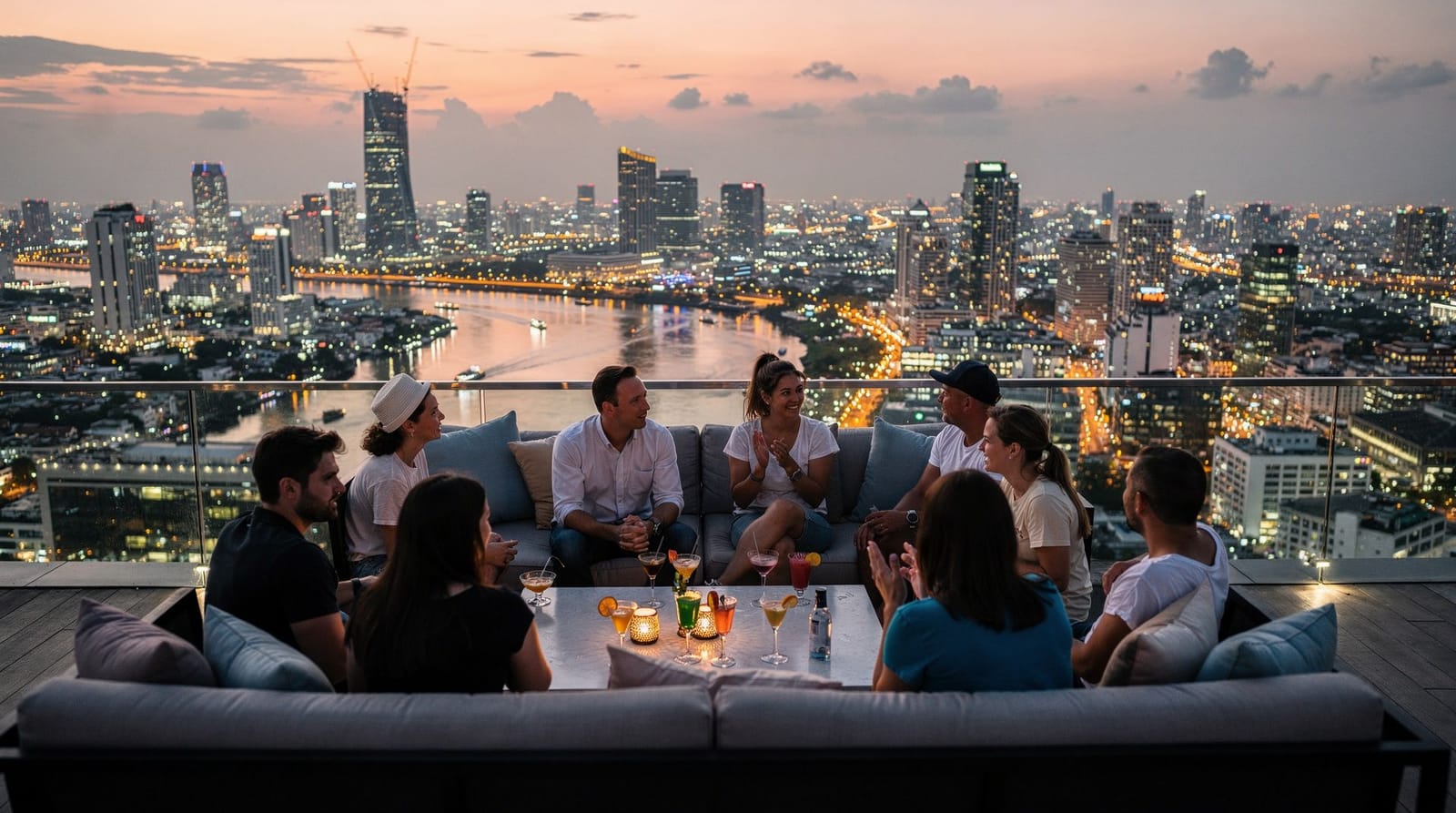
Silom & Sathorn
Silom and Sathorn are Bangkok's business heart — skyscraper offices and rooftop bars by day, Patpong and buzzing nightlife after dark.
Bangkok: Mahanakhon SkyWalk Observation Deck Entry Ticket
Quick facts
- Nearest transit
- BTS Sala Daeng & Chong Nonsi (Silom Line); MRT Si Lom & Lumphini connect here
- Character
- Bangkok's financial district — offices and rooftops by day, nightlife by night
- Key food
- Silom Soi food streets, Convent Road stalls, Indian Tamil eateries, rooftop dining
- Key sight
- Mahanakhon skywalk, Patpong night market, Sri Mariamman (Maha Uma Devi) Temple
- Best time
- Evening for rooftops and nightlife; weekday lunchtimes for office-worker street food
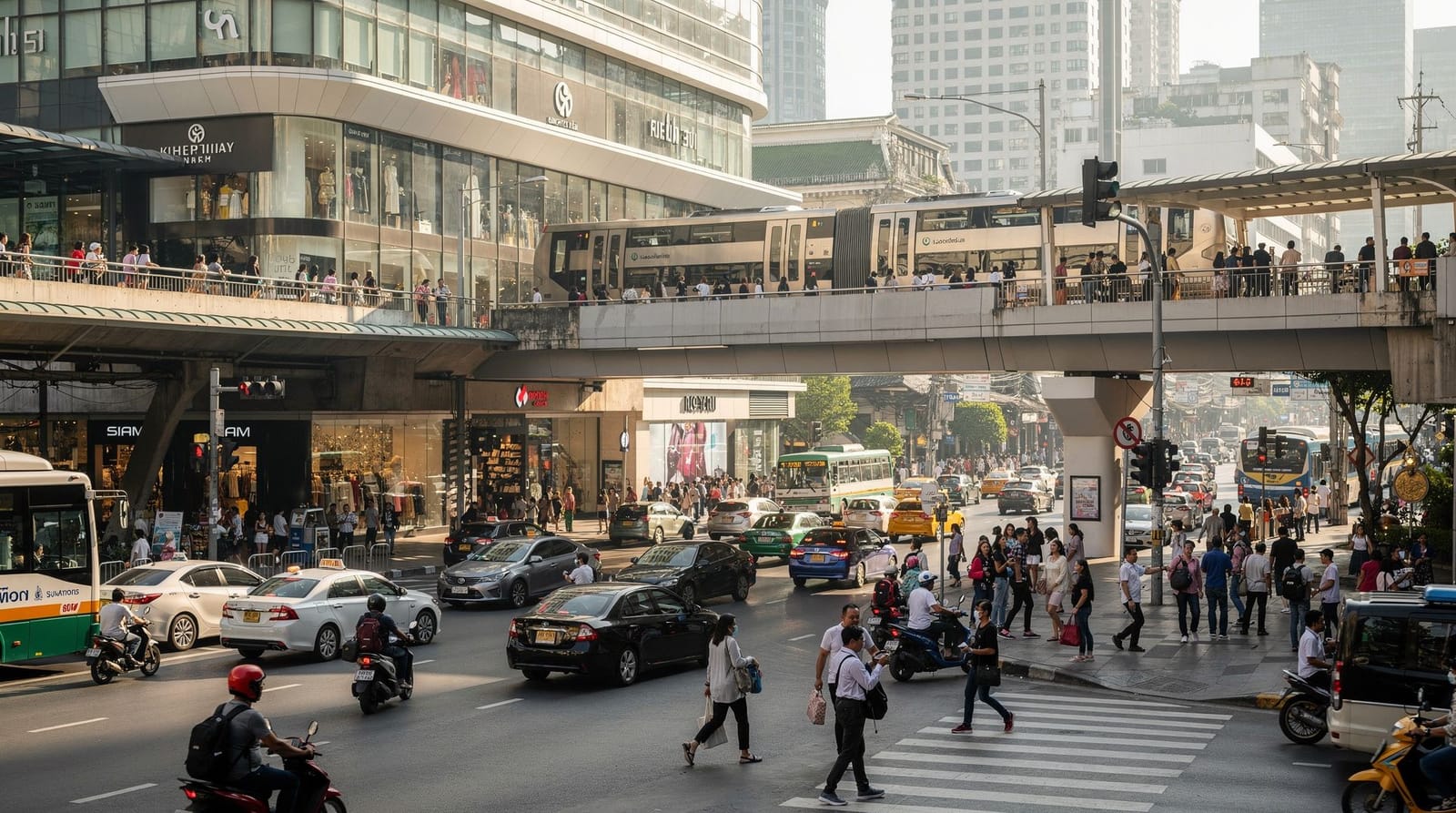
Silom and Sathorn are Bangkok’s financial district — a canyon of glass office towers and luxury hotels where, by day, the city does its serious business. But this is Bangkok, so the same streets transform after dark: rooftop bars open across the skyline, the legendary Patpong night market and go-go bars fire up, the LGBTQ+ heart of the city around Silom Soi 2 and 4 comes alive, and office workers spill onto food streets that rank among the best lunchtime eating in town. Add the soaring Mahanakhon skywalk, the green lung of Lumphini Park on its edge, and excellent transit, and you have a district that works hard and plays hard — and makes a very central base.
The business district by day
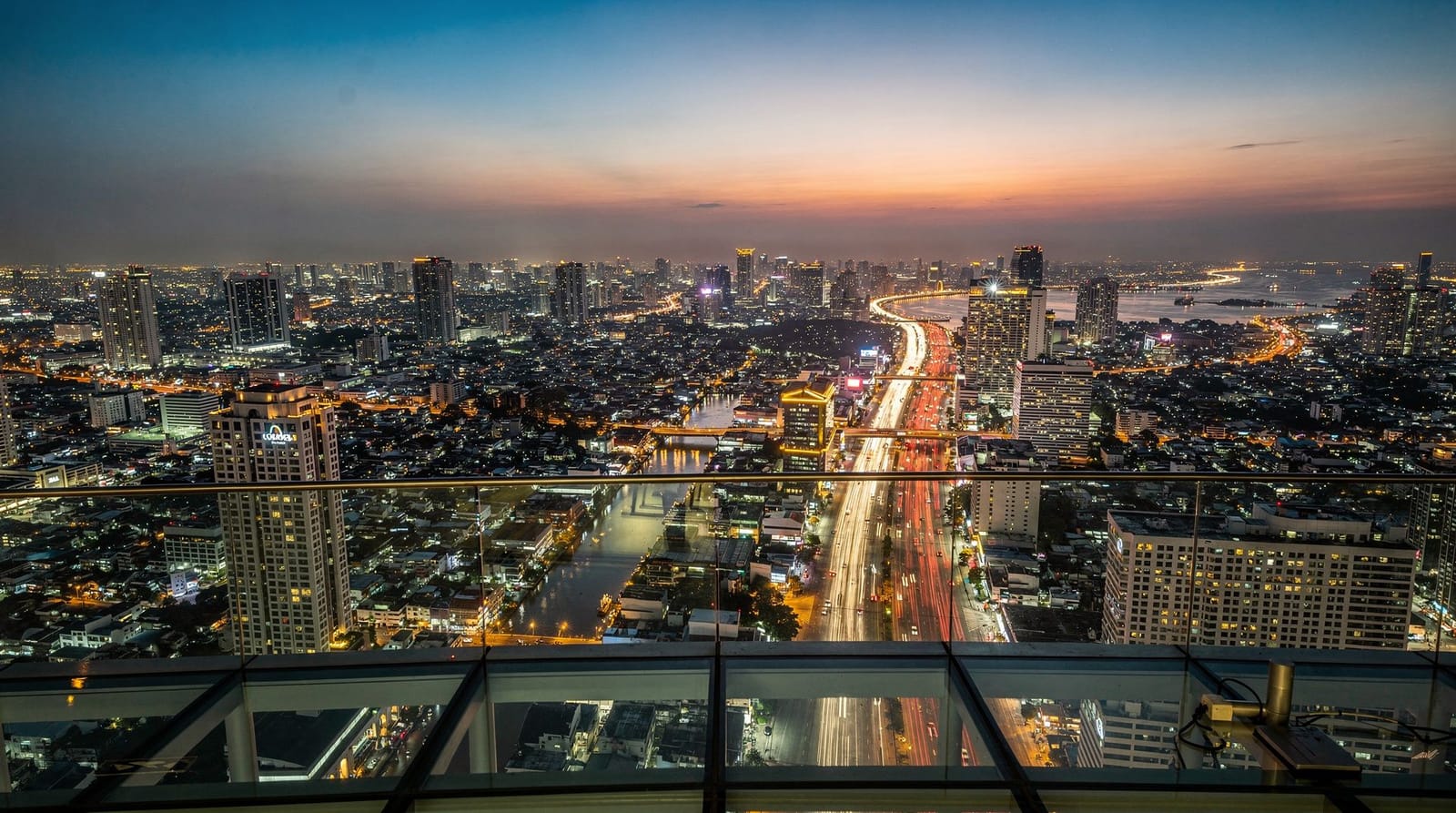
By daylight, Silom Road and the parallel Sathorn Road are all suits, skyscrapers and traffic — the engine room of the Thai economy. It’s not conventionally pretty, but it’s efficient and superbly connected: the BTS Silom Line and the MRT Blue Line both serve it (interchanging at Sala Daeng/Si Lom), linking you to the river at Saphan Taksin, Siam’s malls and the rest of the city. The daytime highlights are the views and the food. For the highest view in the country, the Mahanakhon SkyWalk atop the King Power Mahanakhon tower offers a glass-floored observation deck and rooftop bar with a 360-degree panorama of Bangkok. The Mahanakhon SkyWalk observation deck ticket is the easy way in; see the Mahanakhon skywalk guide and the Bangkok with a view guide.
Rooftop bars — the skyline scene
Silom and Sathorn are the spiritual home of the Bangkok rooftop bar. This is where the genre took off, and the area still has some of the city’s most famous sky-high terraces — open-air lounges 50-plus floors up, with the skyline glittering and the river in the distance. They range from glamorous (smart dress codes, premium prices) to more relaxed. A rooftop sundowner here is one of the quintessential Bangkok experiences. The speakeasy and rooftop pub crawl is a guided way to hit several without planning each. See the best rooftop bars guide.
A practical note on dress codes: the most famous rooftops enforce “smart casual” strictly — no flip-flops, tank tops or shorts for men, and some ask women to avoid beachwear. Pack at least one smart-casual outfit even on a backpacking trip if a rooftop sundowner is on your list; see the what to pack guide for the full packing picture.
Patpong and the nightlife — honestly
After dark, Silom is one of Bangkok’s main nightlife zones, and its most notorious strip is Patpong (Soi 1 and 2) — the original go-go bar and red-light district, now overlaid with a tourist night market selling souvenirs, knock-offs and street food down the middle of the soi. It’s seedy, touristy and a known spot for the “ping pong show” upstairs-bar scam (avoid these — they overcharge and intimidate). The night market itself is fine for a wander, but bargain hard and watch your wallet.
Crucially, Silom is also the heart of Bangkok’s LGBTQ+ nightlife — Silom Soi 2 and Soi 4 are packed with gay bars, clubs and cabaret, among the most welcoming and famous in Asia. The LGBTQ nightlife and drag show experience and the LGBTQ Bangkok guide cover the scene. For the full nightlife picture, including the Patpong realities, see the nightlife guide.
Beyond the ping-pong-show scam, Silom’s business-district crowds attract the same tailor and gem touts found near the old city — a friendly stranger praising your “lucky day” for a suit or a gemstone deal is a red flag here too. See the gem scam guide, the tuk-tuk scams guide and the common Bangkok scams guide for how to recognise and sidestep them.
Silom by day vs Silom by night
| By day | By night | |
|---|---|---|
| Character | Office workers, suits, street-food lunches | Rooftop bars, Patpong, LGBTQ+ nightlife |
| Best for | Cheap authentic lunches, skyline views | Bars, clubs, cabaret |
| Crowd | Business crowd, brisk pace | Tourists, nightlife-goers, mixed locals |
| Feel | Efficient, unglamorous | Neon, loud, energetic |
The same streets genuinely feel like two different neighbourhoods depending on the hour — plan your visit around which version of Silom you actually want to see.
Shaping a day and an evening in Silom
The district rewards a loose, two-part plan. Spend the daylight hours on the things that don’t depend on the bars: a wander along the side sois, a lunch where the office crowd eats, a visit to the temple, and a slow stretch in Lumphini Park if the heat allows. Then head back to your hotel or a café to rest before the evening, because the best of the rooftops and the nightlife is a late-afternoon-onwards affair. If you only have a single day here, this rhythm is far more satisfying than trying to squeeze everything into the evening.
For travellers on a short stay, Silom slots neatly into a wider route. The one-day Bangkok itinerary and the two-day Bangkok itinerary both show how a central-district evening can follow a day of temples, while the first-timer itinerary and the Bangkok for couples itinerary lean on skyline sunsets like the ones found here. If you are building a longer trip, the how many days in Bangkok guide helps you decide how much of your stay belongs in a district like this one.
The food — office-worker street food and fine dining
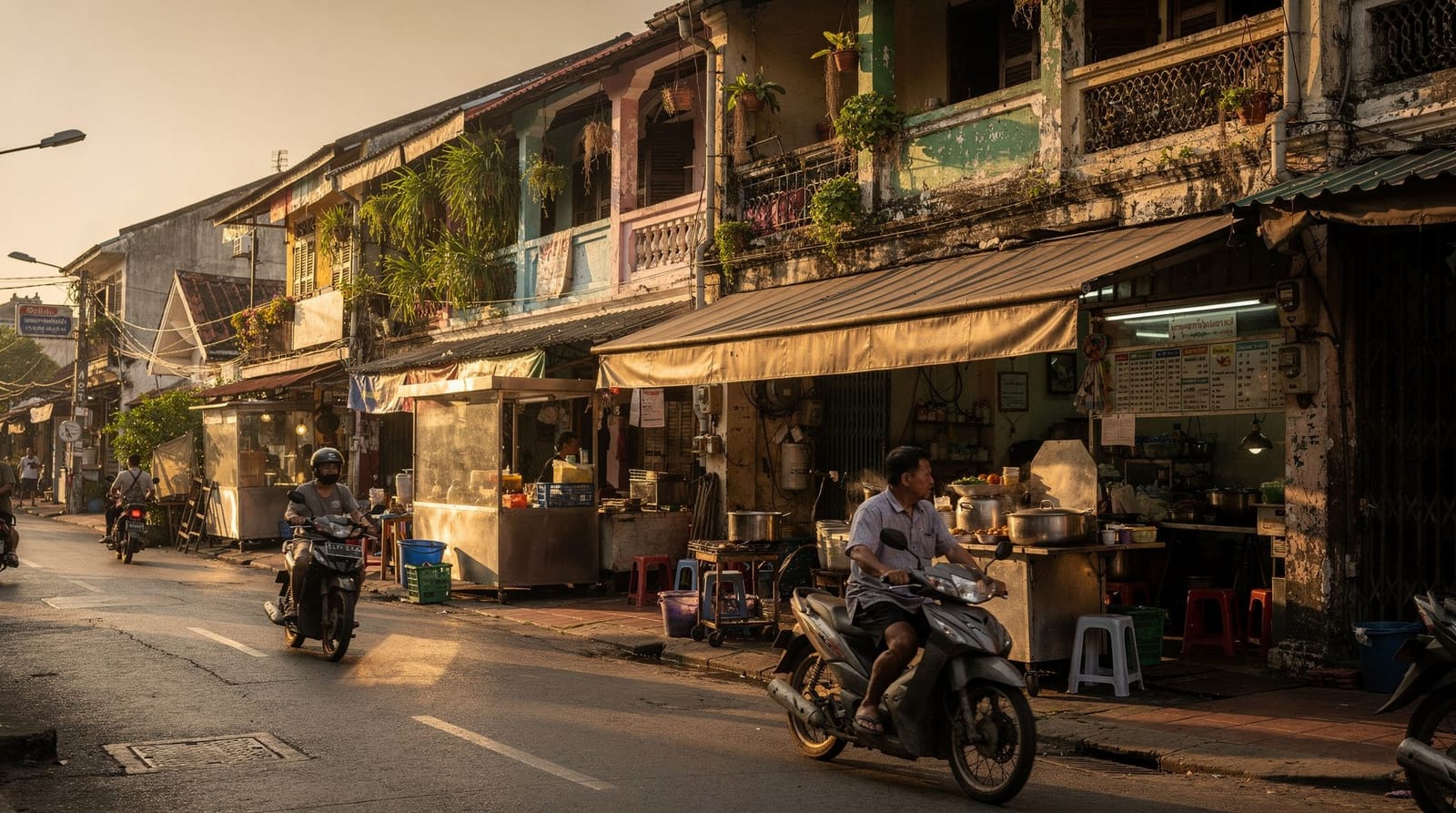
Silom’s daytime food scene is underrated. The side sois and Convent Road fill with street stalls at lunchtime feeding the office crowd — some of the best-value, fast, authentic Thai food in central Bangkok. Silom Soi 20 has a noted food market. There’s a strong Indian Tamil community around the Sri Mariamman (Maha Uma Devi) Temple, with good South Indian food. And at the top end, the area has serious fine dining and the famous Blue Elephant. To cook Thai food yourself, the Silom cooking class with garden and market visit and the Blue Elephant cooking class are both based here. See the street food guide and rooftop restaurants guide.
Eating well without a plan
The easiest way to eat well here is to follow the crowd. Where a queue of office workers has formed at a humble stall, the food is usually fresh, quick and made the way locals like it. Pointing, smiling and ordering what the person ahead of you ordered works surprisingly well. If you are nervous about hygiene, the street food safety guide explains what to look for, and the what to eat in Bangkok guide is a useful primer on dishes worth trying. Vegetarians will find the vegetarian and vegan Bangkok guide helpful, and anyone who wants to eat according to halal rules should read the halal food guide, since the area’s Indian and Muslim communities make it easier than elsewhere. Just across towards the river, the Bang Rak food guide covers the neighbouring stretch in more depth.
The Maha Uma Devi (Sri Mariamman) Temple
Amid the office towers stands a splash of vivid colour: the Sri Mariamman Temple (Wat Khaek / Maha Uma Devi), a richly decorated South Indian Hindu temple founded by the Tamil community in the 1870s. Its gopuram (gateway tower) is crowded with brightly painted deities, and it’s an active, atmospheric place of worship — a reminder of the diversity tucked into Bangkok’s business heart. It’s free to visit; dress respectfully and remove shoes. See the culture guide.
Lumphini Park and how Silom connects
On Silom-Sathorn’s eastern edge lies Lumphini Park, the city’s great green lung — a welcome escape for a morning jog or an evening stroll, complete with monitor lizards. Westward, Silom runs down toward the river and the Bang Rak and Charoenkrung food-and-creative district; the river piers connect onward to the temples. Northward, the Silom Line links to the Siam and Ratchaprasong shopping core. This central position and dual BTS/MRT access make Silom-Sathorn one of the most practical bases in the city — see the Silom-Sathorn guide and where to stay.
Taking the district at your own pace after dark
Silom’s evening energy can be intense, so it helps to decide in advance what kind of night you want. A quiet sundowner with a view, a late dinner followed by a drink, a night of cabaret and dancing and a stroll through the market are all possible here, and each asks for a different mood and a different outfit. Start with the sunset, since the light over the skyline is the point of the whole rooftop experience, and let the night develop from there. The Bangkok at night guide offers ideas for other districts if you want to compare, and the best night markets guide shows how the Patpong market stacks up against the alternatives.
Keep your belongings close in crowded sois, agree on prices before you sit down, and be sceptical of any offer that sounds too generous. Respect matters too: the Thai customs and etiquette guide and the temple etiquette and dress code guide are worth a quick read before you visit the Hindu temple or any other sacred site.
Combining Silom with the rest of the city
Because Silom sits on two rail lines, it makes a good launch point for the rest of the capital. The BTS Skytrain guide and the MRT subway guide explain tickets and routes, and the Rabbit card guide is worth a look if you plan to ride often. Along the river, Riverside and the Chao Phraya is a short hop away, and Chinatown and Yaowarat rewards an evening of street food. For shopping and malls, head north to Siam and Ratchaprasong, or read the best malls guide. If you would rather stay out of the traffic altogether, the getting around Bangkok guide lays out every option.
Getting there and around
By BTS: Sala Daeng and Chong Nonsi stations on the Silom Line serve the district. Sala Daeng is the heart of the action (Patpong, Silom Soi 2/4).
By MRT: Si Lom and Lumphini stations on the Blue Line interchange with the BTS, linking to Chinatown, the old-city fringe and Chatuchak.
By river boat: The Silom Line runs to Saphan Taksin/Sathorn pier for the Chao Phraya boats and the temples; see the Chao Phraya boats guide.
By Grab or taxi: Easy, but business-district traffic is heavy — the BTS/MRT is faster. See the Grab and taxi guide.
Frequently asked questions about Silom & Sathorn
What are Silom and Sathorn known for?
They’re Bangkok’s financial district — glass-tower offices and luxury hotels by day, transforming after dark into a nightlife hub with the Patpong night market and go-go bars, the LGBTQ+ scene around Silom Soi 2 and 4, and famous rooftop bars. The Mahanakhon SkyWalk and leafy Lumphini Park sit on the area’s edges.
Is Silom a good area to stay in Bangkok?
Yes, it’s a strong central base — served by both the BTS Silom Line and the MRT Blue Line, close to the river piers, rooftop bars, nightlife and Lumphini Park. It suits business travellers and nightlife-focused visitors. By day it’s a workaday business district rather than charming, but the connectivity and dining are excellent.
What is Patpong, and is it worth visiting?
Patpong is Bangkok’s original red-light district, now with a tourist night market running down the middle selling souvenirs and street food. The market is fine for a wander if you bargain hard and watch your wallet, but avoid the upstairs “ping pong show” bars, which are known for overcharging and intimidation scams.
Where are the best rooftop bars in Bangkok?
Many of the most famous are in Silom and Sathorn, the birthplace of the city’s rooftop-bar scene — sky-high open-air lounges 50-plus floors up with stunning skyline and river views. The Mahanakhon SkyWalk adds a glass-floored observation deck and rooftop bar with the highest view in the country.
Is Silom good for LGBTQ+ travellers?
Very much so — Silom Soi 2 and Soi 4 are the heart of Bangkok’s LGBTQ+ nightlife, packed with gay bars, clubs and cabaret shows, and among the most welcoming and famous in Asia. The wider area is relaxed and friendly, making it a natural base for LGBTQ+ visitors.
Where can I eat well in Silom?
For value, the lunchtime street stalls on the Silom side sois and Convent Road feed the office crowd with excellent, cheap, authentic Thai food. There’s good South Indian food near the Sri Mariamman Temple, a food market on Silom Soi 20, and serious fine dining at the top end, including the famous Blue Elephant.
Top experiences
Bookable activities with verified prices and instant confirmation on GetYourGuide.