Best time to visit Bangkok
Bangkok: Grand Palace Skip-the-Line Entry Ticket
When is the best time to visit Bangkok?
November to February is the best overall window, with cooler 22 to 30C days, low humidity and almost no rain, though it is peak season for crowds and hotel prices. November is the sweet spot, landing just after the monsoon and around Loy Krathong. For the best value, the rainy season from June to October cuts hotel rates by 30 to 50 percent.
Bangkok sits at about 14 degrees north, which makes it warm to hot all year, with daytime temperatures swinging between 25 and 40C and humidity rarely dropping below 70 percent. There is no cold month and no truly dry month, only three seasons that trade temperature, rain and price against each other. This guide breaks down each season honestly, with real temperatures, hotel-price patterns, crowd levels and the festivals that should pull or push your dates, so you can choose the window that fits how you actually want to travel in 2026.
| Where | applies citywide; river and old-city areas feel heat most |
| Cost swing | hotel rates 30–50% lower June–October vs Dec–Jan peak |
| Time needed | year-round destination; no closed season |
| Getting there | flights connect year-round; fares dip in the rainy season |
| Best time | November for the balance of weather, price and crowds |
The three seasons in one paragraph
Bangkok runs on three overlapping seasons. The cool, dry season from November to February brings the best weather of the year, 22 to 30C days, low humidity and almost no rain, but it is peak tourist season with the highest crowds and prices. The hot season from March to May pushes the thermometer to 35 to 40C, with April the cruellest month for midday sightseeing. The rainy season from June to October delivers short, intense downpours, usually one late-afternoon hour rather than all day, in exchange for hotel rates 30 to 50 percent below peak and noticeably fewer tourists. For a day-by-day breakdown, the Bangkok weather month-by-month guide goes deeper than this overview.
Cool, dry season (November to February): the best weather
This is the window most guidebooks mean when they say “best time”, and for good reason. Daytime highs settle around 26 to 31C in November and December and can dip to a pleasant 22 to 25C on the coolest January mornings, with humidity finally easing and rain almost absent. Walking the Rattanakosin old city between the Grand Palace and Wat Pho becomes a pleasure rather than an endurance test, and rooftop evenings actually feel comfortable.
The catch is everyone else has the same idea. December and January are the busiest and most expensive months of the year, overlapping with Christmas and New Year. Hotel rates can run 40 to 80 percent above low-season prices, queues at the Grand Palace are long, and popular dinner cruises and day trips from Bangkok sell out. If you want this weather with the best skip-the-line access to the top sights, booking ahead matters more in these months than any other:
Skip-the-line Grand Palace entry is worth securing in advance during December and January, when the standard ticket queue can swallow an hour of your morning.
If your priority is the best possible weather and you do not mind crowds or premium prices, target late November or February. November, in particular, is the sweet spot, as covered below.
Hot season (March to May): bring a plan for the heat
From March temperatures climb steadily, and by April Bangkok bakes, with highs of 35 to 40C and humidity that makes the air feel heavier still. This is the hottest stretch of the year, and midday sightseeing in the sun, especially across the open courtyards of the temples, can be genuinely draining. May begins to bring the first monsoon showers, which take a little edge off the heat but add stickiness.
The hot season is not a write-off, though. Prices sit between peak and rainy-season lows, crowds thin compared with December, and the strategy is simply to work with the heat. Sightsee early, retreat to air-conditioning or a mall over the midday peak, and save outdoor time for late afternoon and evening. The Bangkok in the rain guide doubles as a hot-day survival list because the indoor options overlap, and a cruise on the river catches whatever breeze there is after dark.
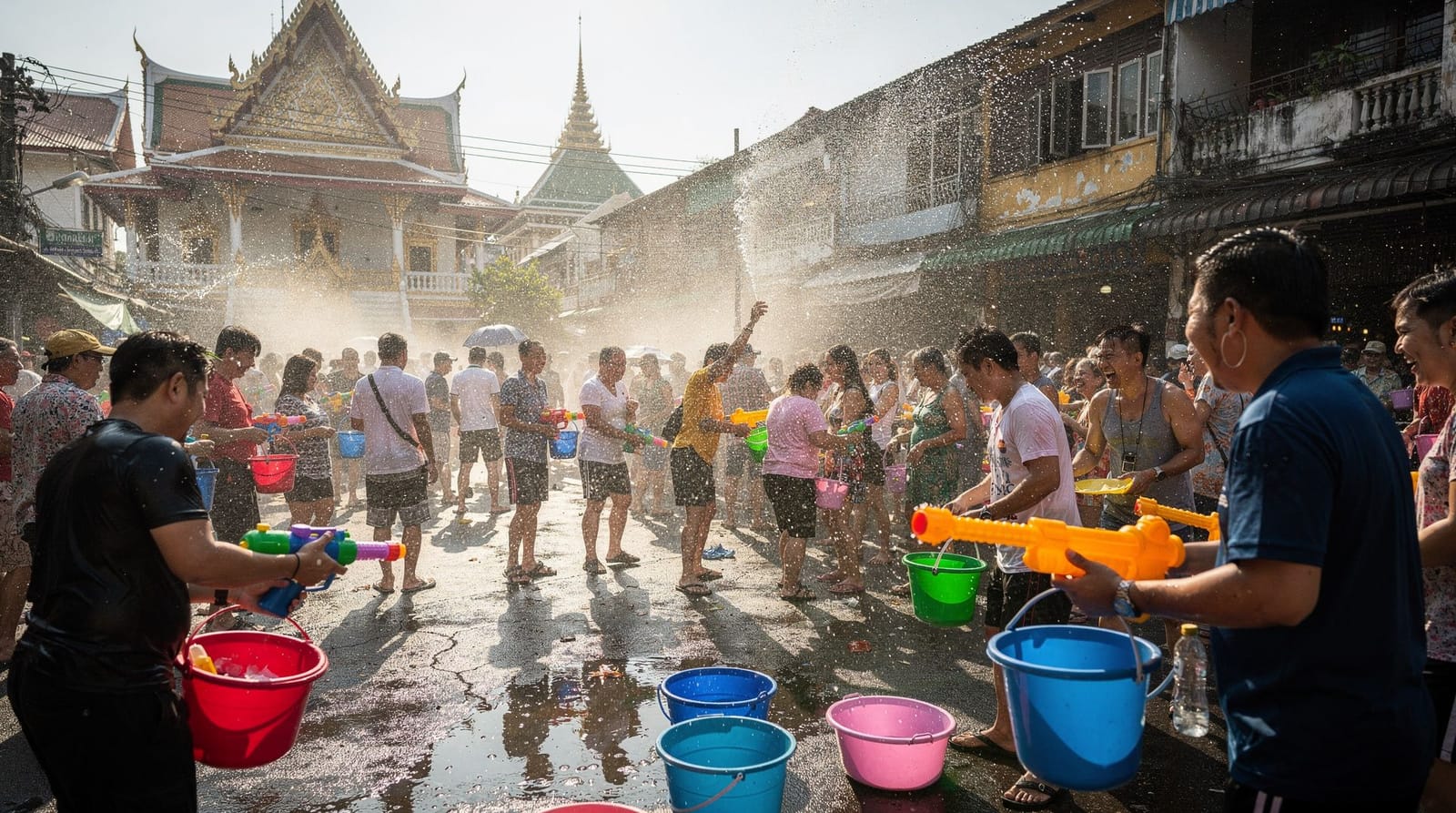
April also brings the year’s biggest party. Songkran, the Thai New Year water festival, runs from 13 to 15 April 2026 and turns Khao San Road and Silom into city-wide water fights. It is a brilliant experience but means very crowded streets and a need to book accommodation early, so read the Songkran in Bangkok guide before committing to those dates.
Rainy season (June to October): the value window
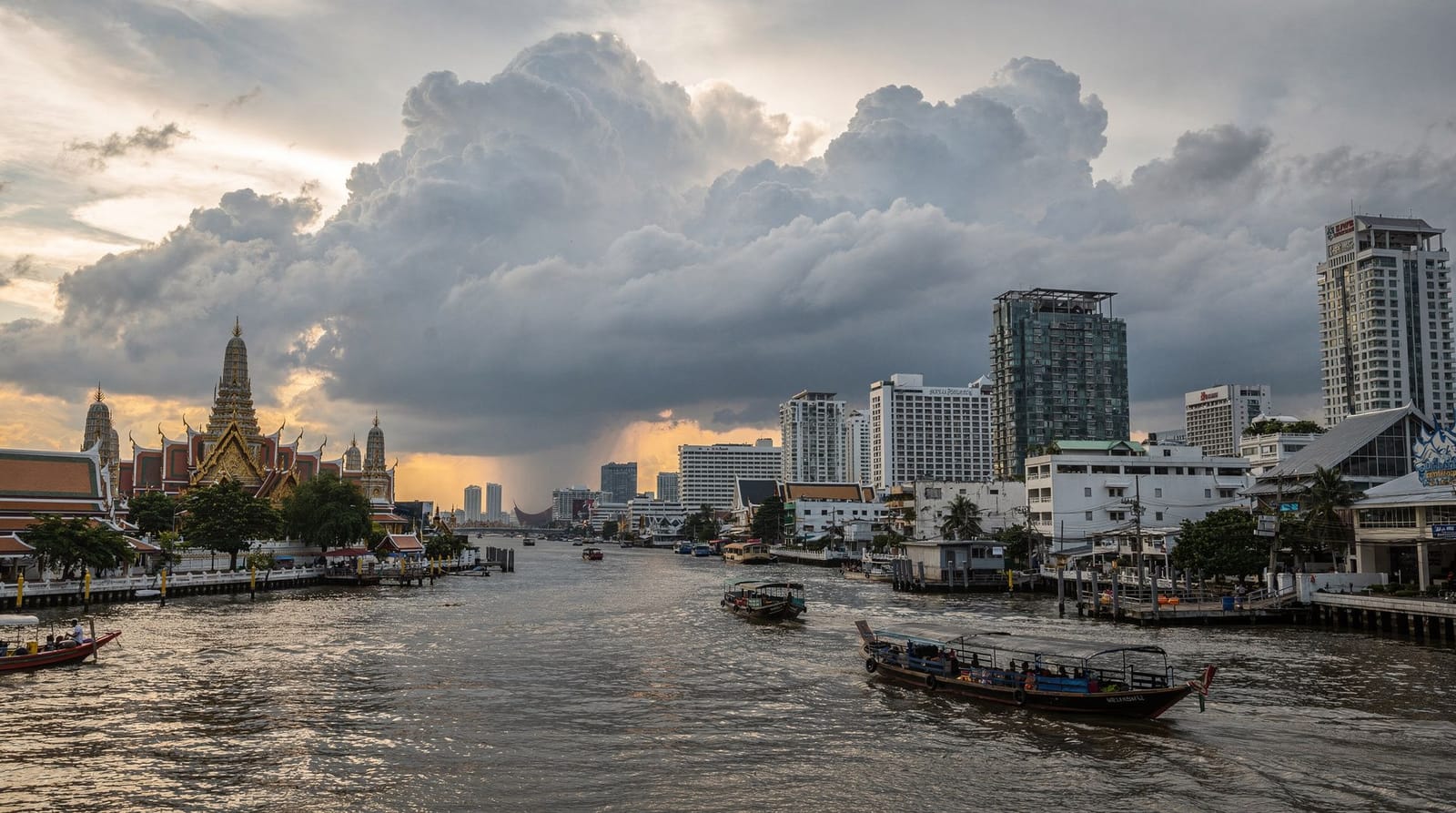
The monsoon scares off a lot of visitors, and that fear is mostly misplaced. The defining pattern is not all-day grey but a hot, humid morning followed by one heavy downpour, often around an hour, in the late afternoon, after which the streets steam and the sky clears. You can sightsee productively most mornings, plan an indoor activity or a long lunch for the late-afternoon window, and carry on into the evening.
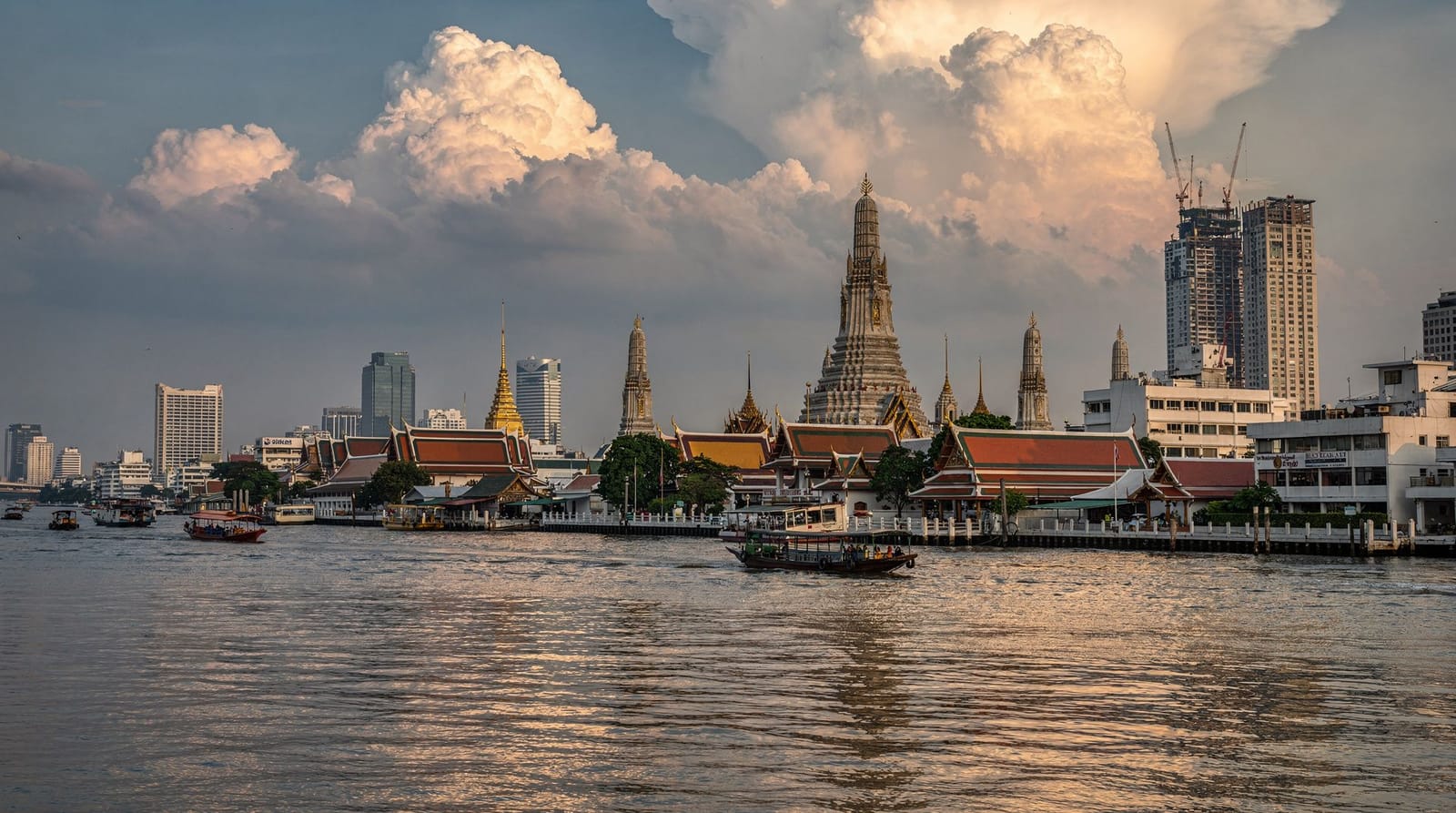
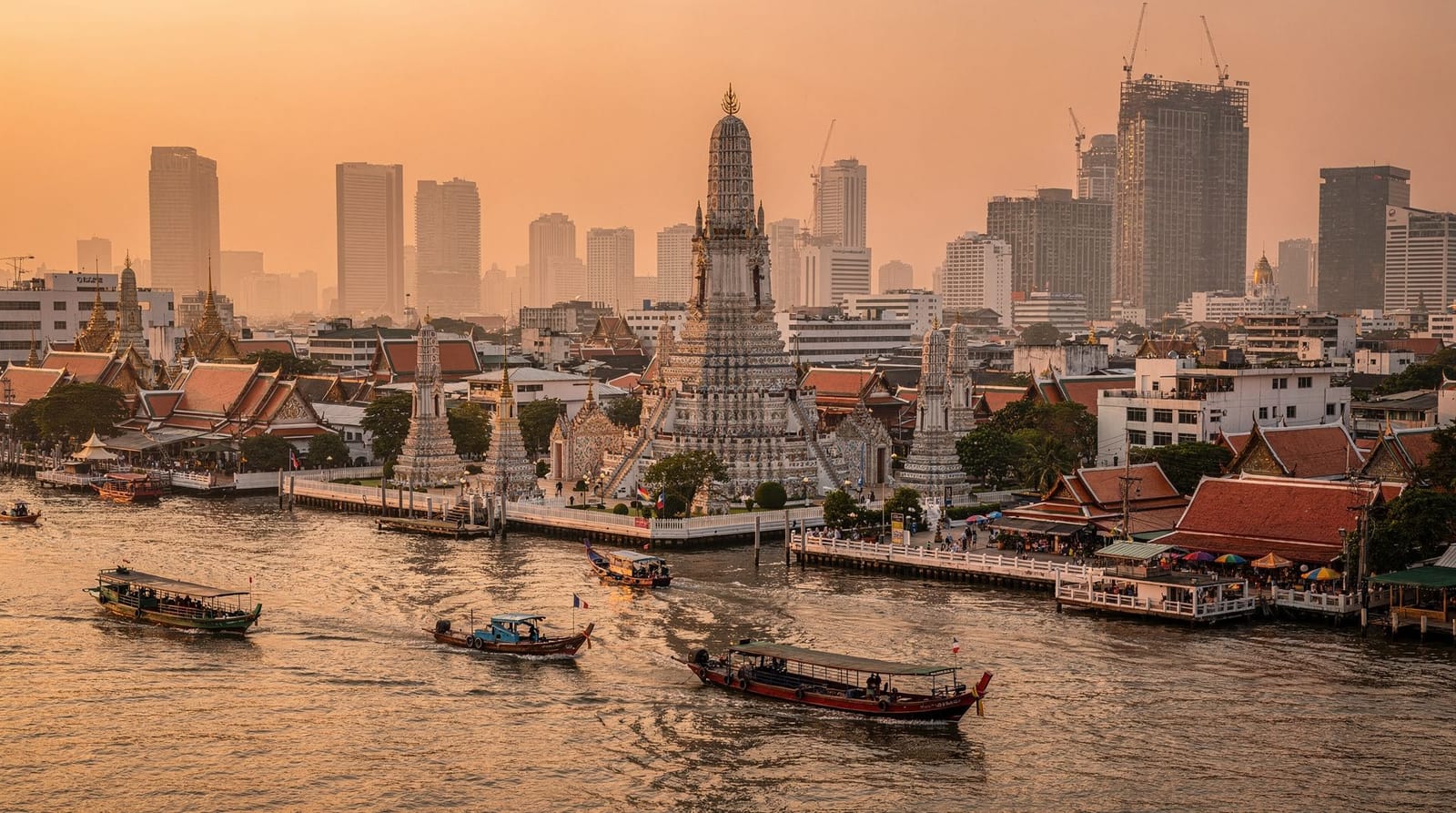
What you get in return is the best value of the year. Hotel rates fall 30 to 50 percent, the Grand Palace and Wat Arun are far quieter, and you can often walk into restaurants and rooftop bars that are booked solid in December. September and October are the wettest months and carry a higher chance of flooded streets, especially in low-lying areas near the river, so factor that in if you are visiting then. The full strategy lives in the rainy season in Bangkok guide, and the Bangkok rainy day with kids guide helps if you are travelling as a family.
The rainy season is also when an evening river cruise pays off, both as a reliably enjoyable wet-weather plan and because it is cheaper and easier to book than at peak:
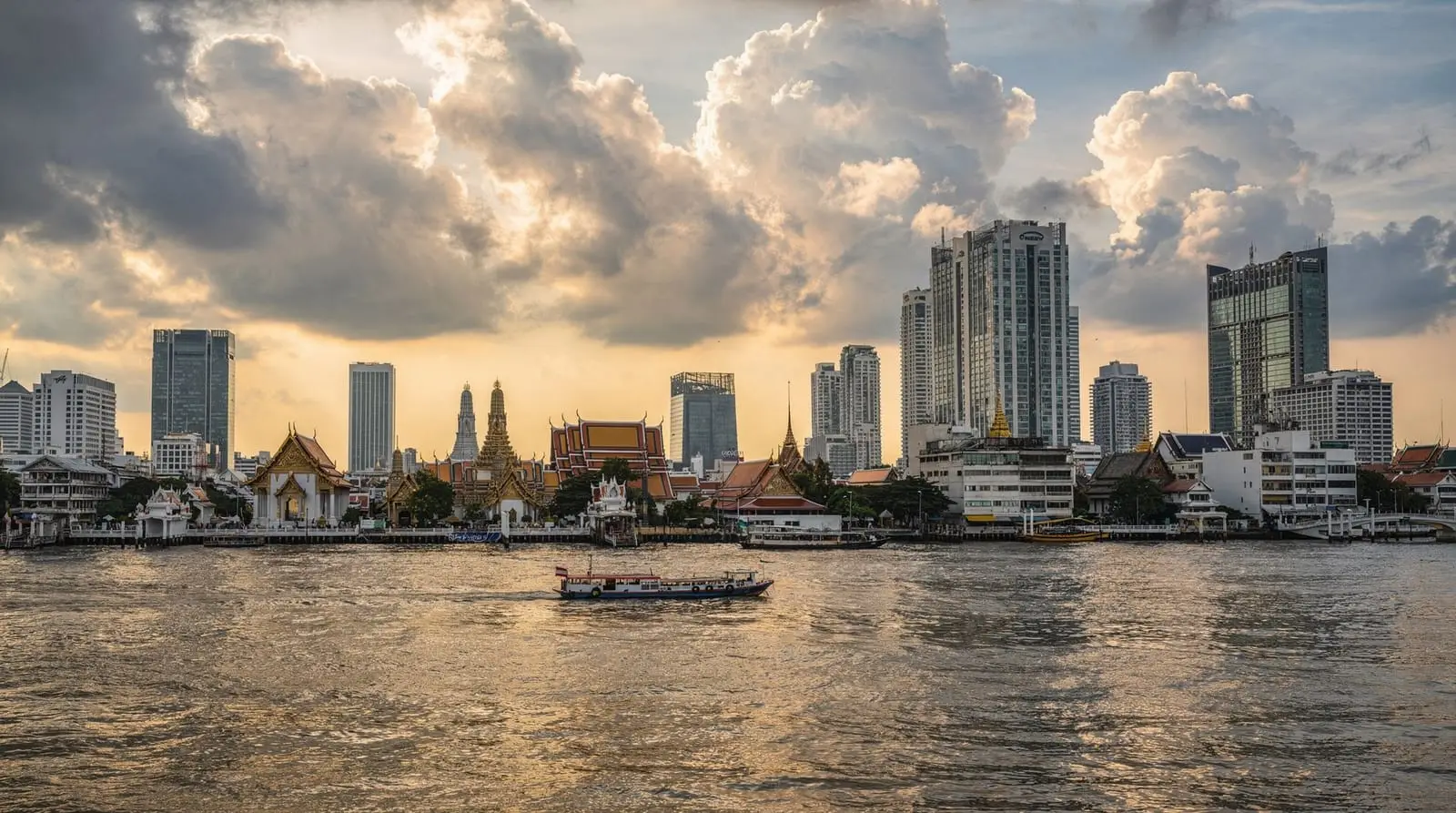
A Chao Phraya dinner cruise works year-round but feels especially good value in the quiet, discounted monsoon months.
November: why it is the sweet spot
If you press us for a single best window, it is the first three weeks of November. The monsoon has usually broken by early November, so the heaviest rain is behind you, while the worst of the cool-season crowds and prices have not yet arrived. Daytime temperatures of roughly 26 to 31C with falling humidity make for the most comfortable sightseeing of the whole post-monsoon period.
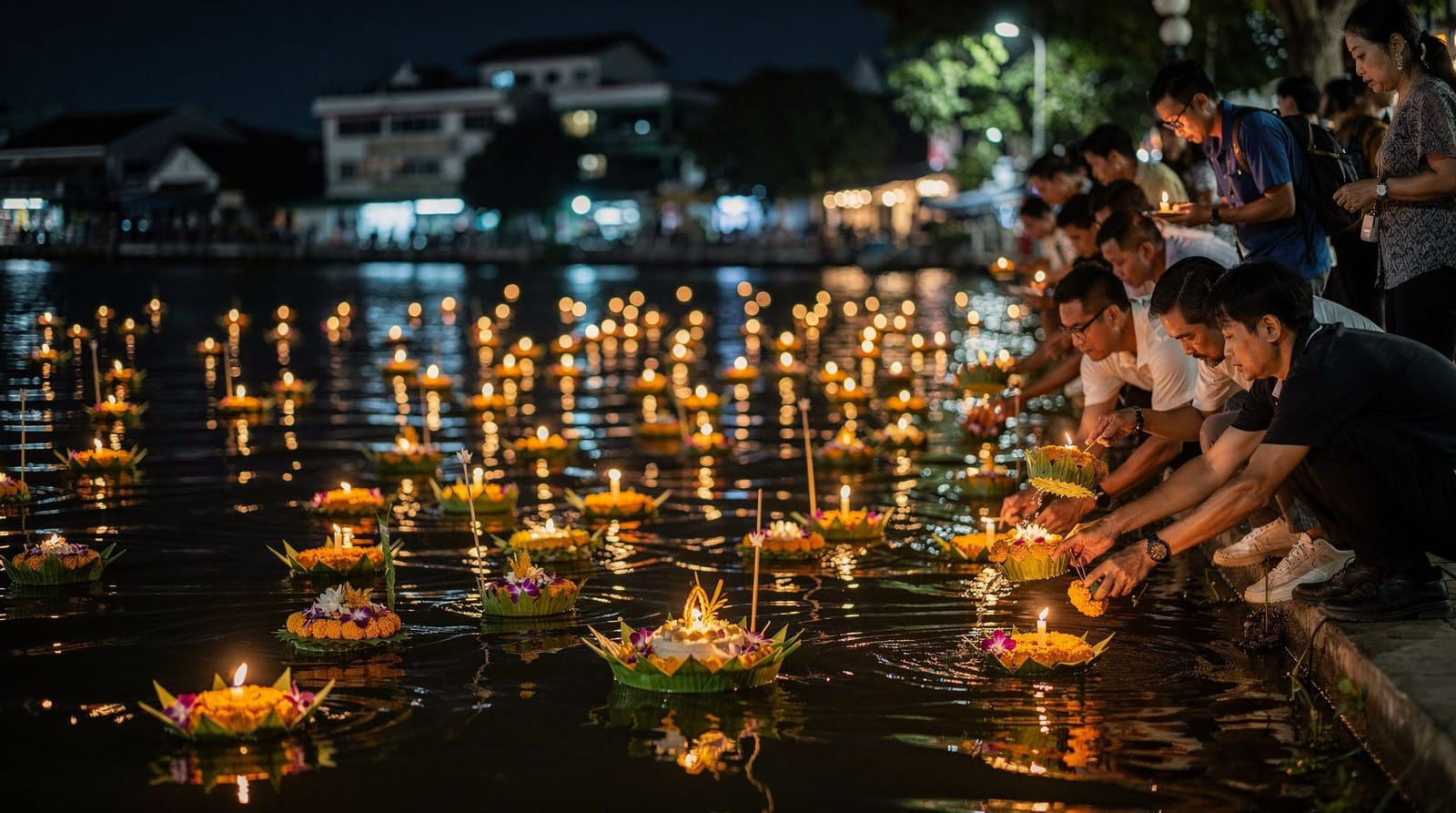
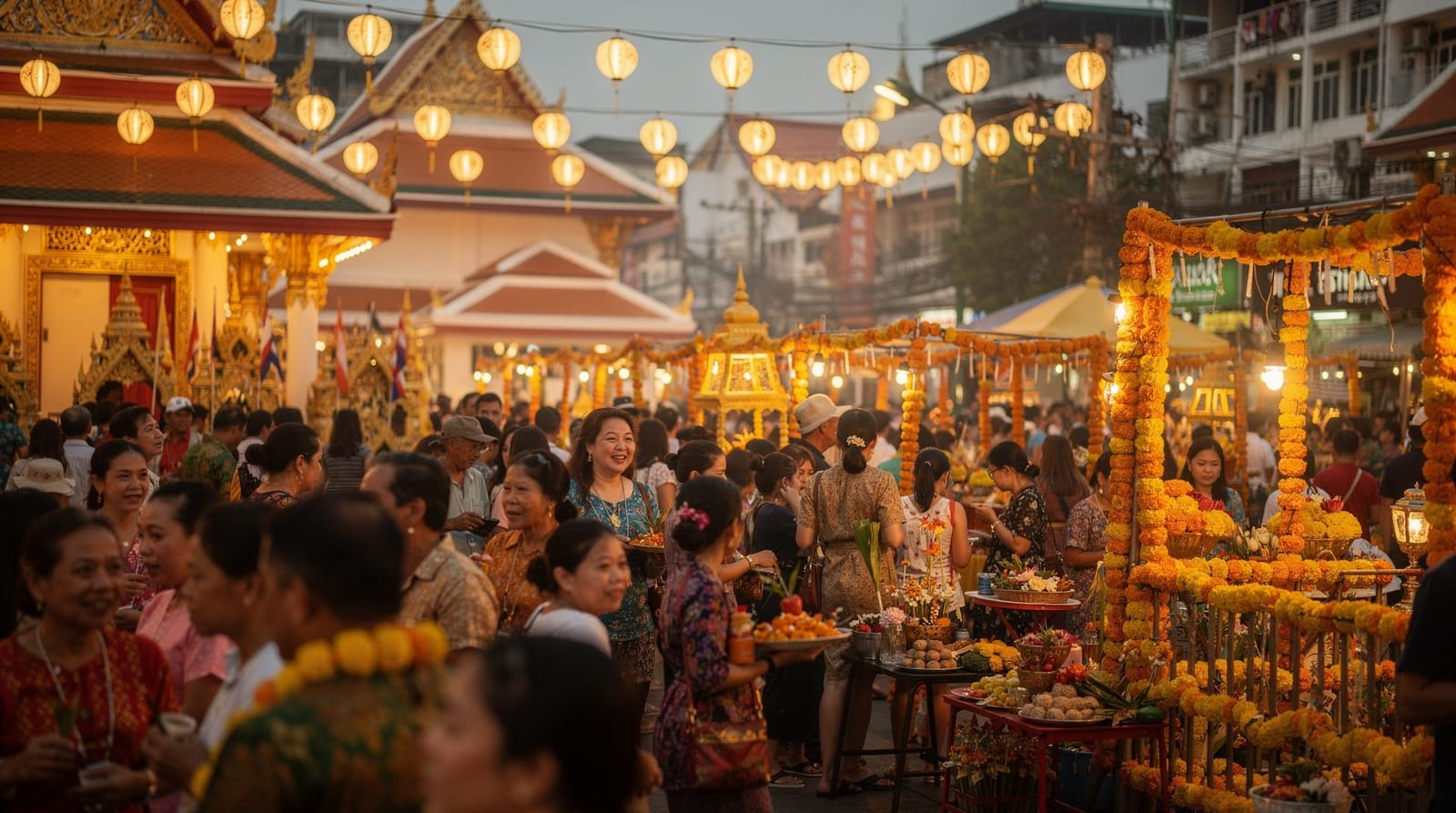
November also carries Loy Krathong, the festival of lights, which falls on 25 November in 2026. On the night, locals float small decorated krathong rafts of banana leaf, flowers and candles down the Chao Phraya and the city’s canals, and the riverside neighbourhoods glow. It is one of the most atmospheric experiences in the Thai calendar, and the Loy Krathong in Bangkok guide covers where to watch it. Note that the famous sky-lantern release, Yi Peng, is a Chiang Mai tradition, not a Bangkok one, so do not come to the capital expecting thousands of floating lanterns.
Crowds and prices through the year
Weather is only half the decision; the other half is how many people share the city with you and what you pay. The pattern is consistent. December and January are the crowd-and-price peak, driven by both the best weather and the Christmas and New Year holidays, with hotel rates often 40 to 80 percent above low-season levels and the top attractions at their busiest. November and February sit just below that peak, still busy but easier on the wallet. March to May is a middle band, quieter than the cool season but not cheap. The rainy season from June to October is the trough for both crowds and prices, with September and October the cheapest of all. If your budget is the deciding factor, the Bangkok travel costs and Bangkok on a budget guides show how far the rainy-season discount stretches, while where to stay in Bangkok helps you lock in a base before the December rush drives rates up.
A practical booking rule follows from this. For a December or January trip, reserve accommodation, dinner cruises and headline day trips weeks ahead, because the popular options sell out and prices only climb closer to the date. For a rainy-season trip, you have far more flexibility and can often book a few days out without penalty, which suits travellers who like to keep plans loose and watch the forecast.
Timing your sightseeing within the season
Whichever season you choose, the time of day matters as much as the month. In every month, the hours from roughly 06:00 to 10:00 are the coolest and least crowded, ideal for the open-courtyard temples of the Rattanakosin old city and for Wat Arun before the tour groups arrive. Midday, from about 11:00 to 15:00, is when the heat peaks in the hot season and when the rain is most likely to threaten in the monsoon, so it is the natural window for an indoor lunch, a mall, a museum or a river-view break. Late afternoon into evening brings the day back to life, the light softens, the rooftop bars open, and the river and night markets come into their own. This rhythm holds across all three seasons; only the intensity of the midday avoidance changes.
Month-by-month at a glance
| Month | Temp (day) | Rain | Crowds | Prices |
|---|---|---|---|---|
| Jan | 22–31C | minimal | very high | peak |
| Feb | 24–33C | minimal | high | high |
| Mar | 26–35C | occasional | medium | medium |
| Apr | 28–40C | building | medium (Songkran spike) | medium |
| May | 27–36C | increasing | medium | medium |
| Jun | 26–34C | frequent showers | low-medium | discounted |
| Jul | 26–34C | frequent showers | low-medium | discounted |
| Aug | 26–33C | frequent showers | low | discounted |
| Sep | 25–32C | wettest | low | cheapest |
| Oct | 25–32C | wettest | low | cheapest |
| Nov | 24–31C | clearing | medium | medium-rising |
| Dec | 22–30C | minimal | very high | peak |
This table is a companion to, not a replacement for, the fuller Bangkok weather month-by-month guide, which breaks down each month’s rainfall days and festival dates individually.
How far ahead to book by season
Booking lead time should track the table above. For December and January, lock in flights and accommodation two to three months out if possible, since the best hotels and popular day trips sell out around the holidays. For the shoulder months of March, April and November, three to six weeks ahead is generally enough, with the exception of Songkran accommodation in Khao San and Silom, which fills earlier. For the rainy season from June to October, you can often book a week or two out and still find good rooms and tables, which suits travellers who prefer to watch the forecast and decide late. If your trip includes a quieter, less crowded slice of the city regardless of season, the hidden gems Bangkok guide and the free things to do in Bangkok guide both work well against any of these booking windows, since they rely less on scarce, bookable slots.
For Loy Krathong specifically, the riverside neighbourhoods along the Chao Phraya get busy for the best krathong-floating spots, so arrive early on the night itself even though the festival needs no advance ticket.
Families weighing up dates have an extra variable: school-holiday crowding overlaps with the December–January and April peaks, so the family itinerary Bangkok guide is worth reading alongside this one, and travellers chasing a specific activity rather than a season should check the Bangkok unique experiences guide for what runs year-round versus what is seasonal.
First-timers versus repeat visitors
If this is your first trip, the cool, dry season removes a variable. You will already be juggling new transport, unfamiliar streets and the getting around Bangkok learning curve, so pleasant weather and longer comfortable sightseeing hours make the introduction smoother, which is why the Bangkok for first-timers guide leans toward November to February. Repeat visitors, who already know the city and have ticked off the headline sights, are often better served by the rainy season, when they can revisit favourites in peace and at a fraction of the cost, dipping indoors when the afternoon downpour arrives without feeling they are missing must-see outdoor time. Families have their own calculus, balanced in the Bangkok with kids guide, where the heat of April and the rain of September both weigh against young travellers.
Choosing by what matters most to you
If best weather is your priority and budget is flexible, choose November to February, leaning on November or February to dodge the December and January peak. If best value drives the decision, the rainy season from June to October, and September and October in particular, gives you the steepest discounts and emptiest sights, at the cost of afternoon rain. If a specific festival is the reason for the trip, let it set the dates: Songkran pins you to mid-April, Loy Krathong to late November, and the wider calendar of holy days and celebrations is mapped in the Bangkok festivals calendar.
Whatever month you land on, the packing list shifts with the season, light and breathable for the heat, a compact umbrella for the monsoon, so the what to pack for Bangkok guide is worth a look once your dates are set. To turn your chosen window into an actual schedule, the how many days in Bangkok guide and the ready-made Bangkok 5 days itinerary give you a starting framework, with planning a trip to Bangkok tying the logistics together. One practical constant across every season: the tap water is not drinkable, so budget for bottled water year-round, and stay hydrated, especially in the hot months.
Pairing Bangkok with the rest of Thailand
Many trips do not stop at the capital, and the best time for Bangkok does not always match the best time for the beaches, which is worth knowing before you lock in dates. Bangkok and the Gulf islands like Koh Samui run on slightly different rain calendars from the Andaman coast around Phuket and Krabi, where the wettest months are also broadly May to October. The cool, dry November-to-February window is the safest all-round choice if you are combining the city with islands, since it is reliably good almost everywhere. If you are pairing Bangkok with nearby escapes instead, the seaside town of Hua Hin, the beach at Koh Samet, or the hills and vineyards of Khao Yai all follow much the same seasonal pattern as Bangkok, so the advice in this guide carries over. For the history-focused, Ayutthaya and Sukhothai are best in the cool, dry months when walking the open ruins is comfortable, the same logic that governs the city’s temples.
A note on holidays and closures
Beyond the weather, a few calendar quirks can affect a trip. Thai public holidays and the long Songkran weekend see banks and government offices close, and intercity transport fills up as locals travel home, so book trains and buses early around mid-April and the New Year period. Major Buddhist holy days such as Makha Bucha and Visakha Bucha are dry days, when alcohol is not sold anywhere and some bars close, which can catch out anyone planning a night out, the Bangkok festivals calendar flags these. None of this should steer your overall choice of season, but checking the specific dates of your trip against the calendar avoids small surprises, and the Thailand visa and TDAC guide covers the entry paperwork to sort before you travel whatever month you choose.
One last reassurance: there is genuinely no bad time to visit Bangkok. Even in the wettest week of September, you will see the temples, eat brilliantly and ride the river; even in the fiercest heat of April, an early start and a midday break keep sightseeing comfortable. The seasons change the texture of the trip, the price you pay, the crowds you share it with, the rhythm of your days, far more than whether the trip is worth taking. Pick the trade-off that fits how you like to travel, book accordingly, and the city will deliver in any month. If you are still weighing it up, the linked seasonal guides on weather, the rainy months and the two great festivals go deeper on each, so you can settle your dates with confidence.
Frequently asked questions about Best time to visit Bangkok
What is the single best month to visit Bangkok?
Is it worth visiting Bangkok in the rainy season?
How hot does Bangkok get in April?
When is peak tourist season in Bangkok?
What is the cheapest time to visit Bangkok?
Does it rain all day in Bangkok during the monsoon?
Is November or December better for Bangkok?
Top experiences
Bookable activities with verified prices and instant confirmation on GetYourGuide.