Bangkok on a budget: how to do it cheaply without missing out
Bangkok Unlimited Bus & River Boat Pass – ThaiGo Travel Card
How can I visit Bangkok on a budget?
Eat street food and at markets (meals from 40–60 THB), use the BTS, MRT and river boats instead of taxis, stay in hostels or budget hotels near a Skytrain station, and lean on Bangkok's many free or cheap attractions — temples, parks and markets. A comfortable budget day costs around 700–1,200 THB per person excluding accommodation. Cash, the cheap orange-flag river boats and the rainy-season hotel discounts stretch your money furthest.
Bangkok is one of the great budget-travel cities — a place where you can eat some of the best food of your life for under USD 2, cross the city for pocket change, and fill days with temples, markets and neighbourhoods that cost little or nothing. The trick is knowing where the value is and where the tourist premium kicks in. This guide shows how to do Bangkok cheaply without missing the best of it, with honest daily budgets, the money-saving tactics that actually work, and the costs worth paying for.
It pairs with the detailed Bangkok travel costs guide, which itemises prices, and the plan a trip to Bangkok guide.
| Daily budget | Around 700–1,200 THB/person, excluding accommodation |
| Cheapest bed | Hostel dorms from around 250–350 THB |
| Cheapest meal | Street food/market plates around 40–70 THB |
| Cheapest ride | Orange-flag river boat, around 16 THB flat |
| Best value season | Rainy season (June–October), hotel rates down 30–50% |
What a budget day actually costs
Realistic budget figures, per person, per day, excluding accommodation:
- Food: ~150–300 THB eating street food and at markets and food courts.
- Transport: ~80–200 THB on BTS, MRT, river boats and the occasional shared Grab.
- Attractions: ~0–300 THB, since many sights are free or cheap (the Grand Palace is the big-ticket exception).
- Total: roughly 700–1,200 THB (USD 21–36) for a comfortable budget day.
Add a hostel bed at roughly 250–600 THB, or a basic guesthouse room, and a full frugal day including a bed can land under 1,500 THB. Bangkok genuinely rewards a modest budget.
Eat like a local — the biggest saving
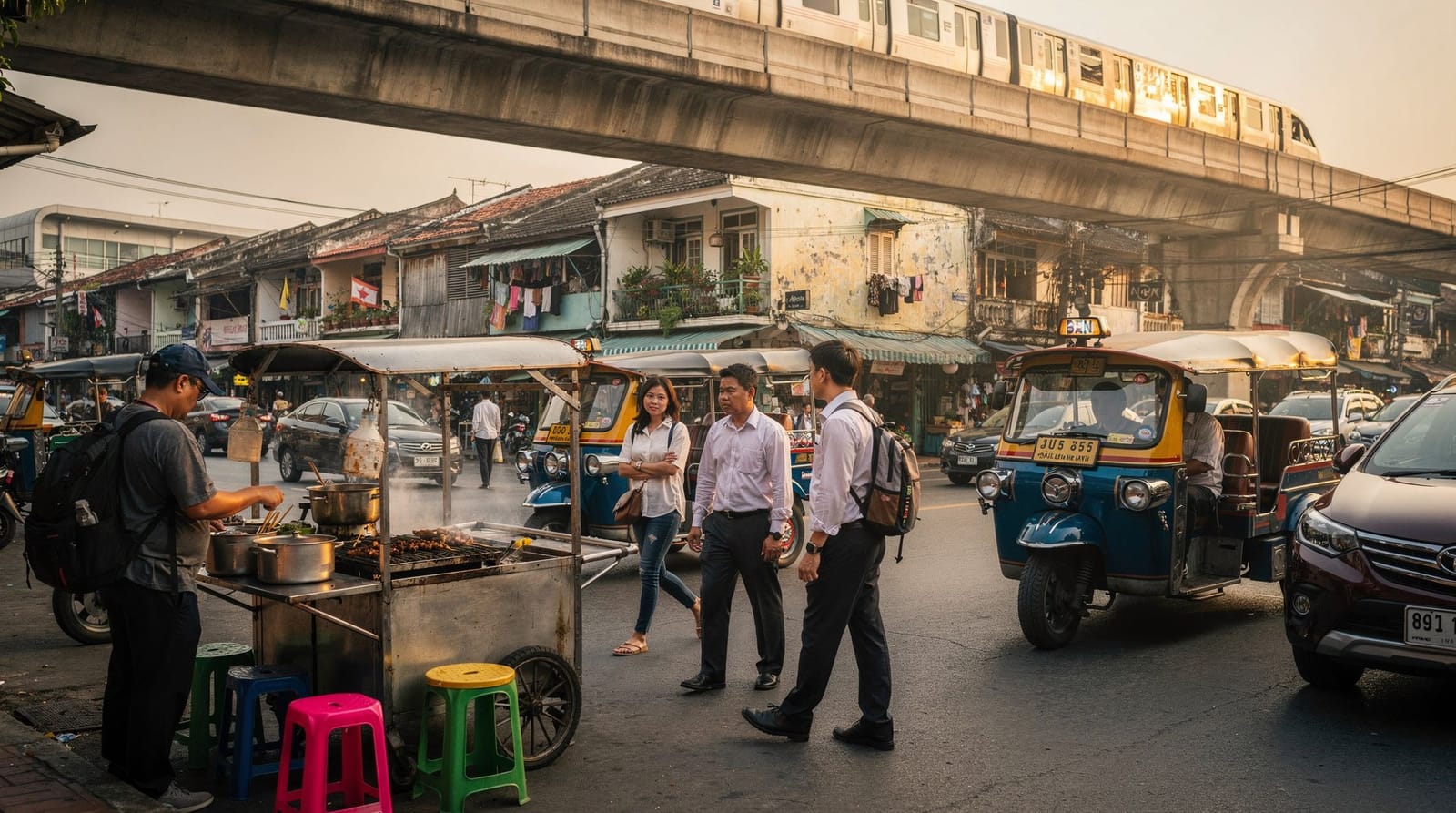
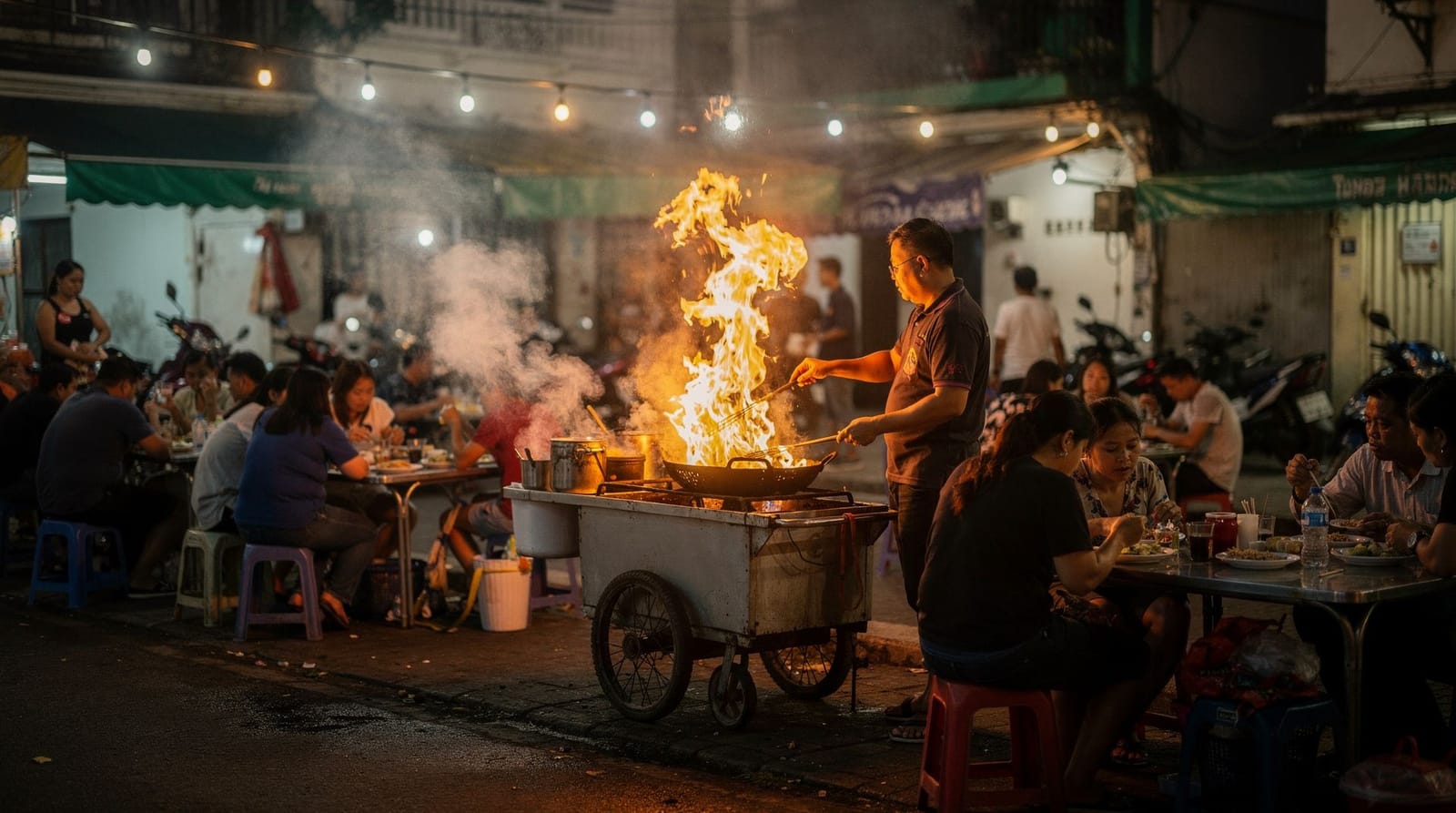
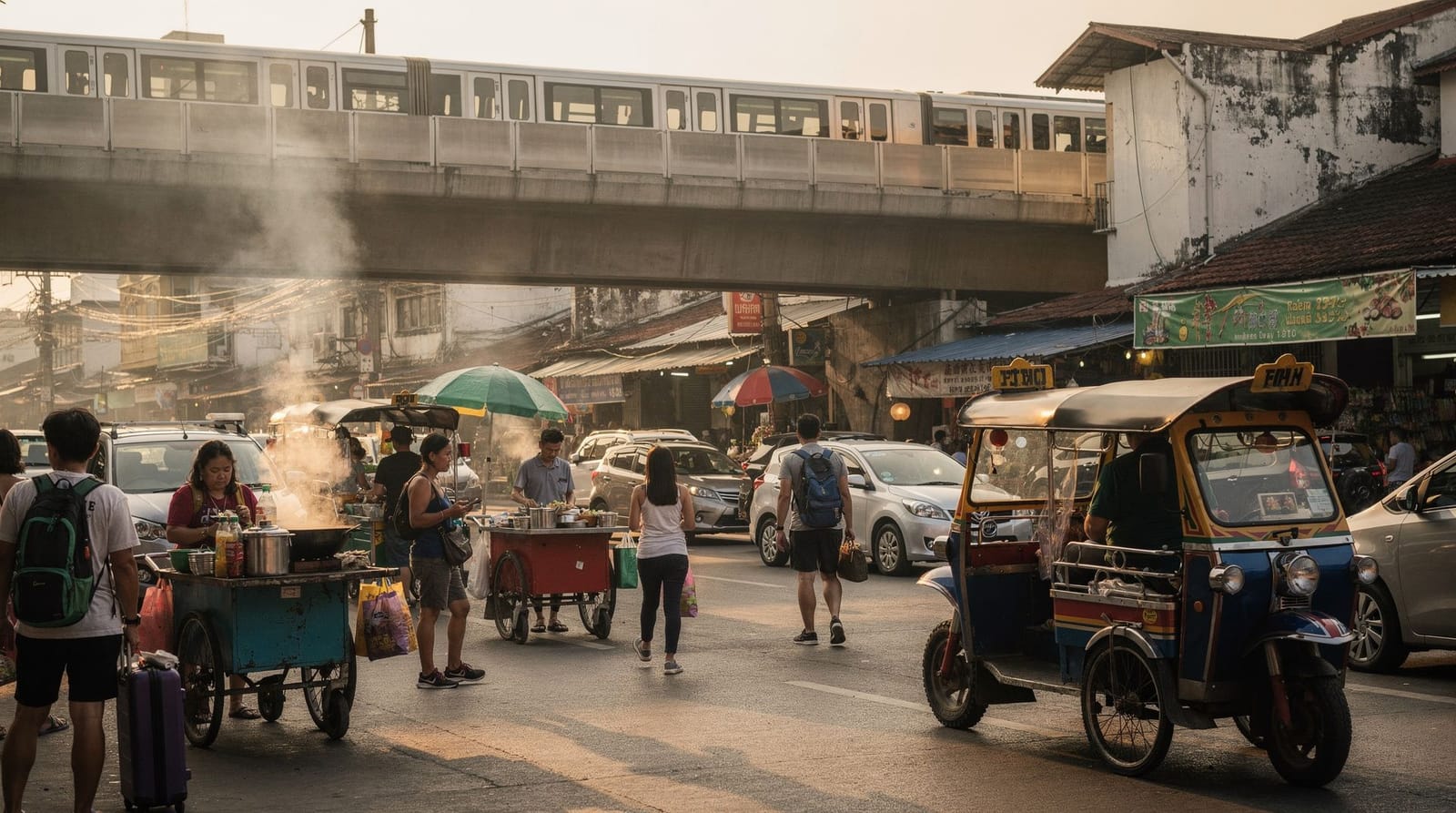
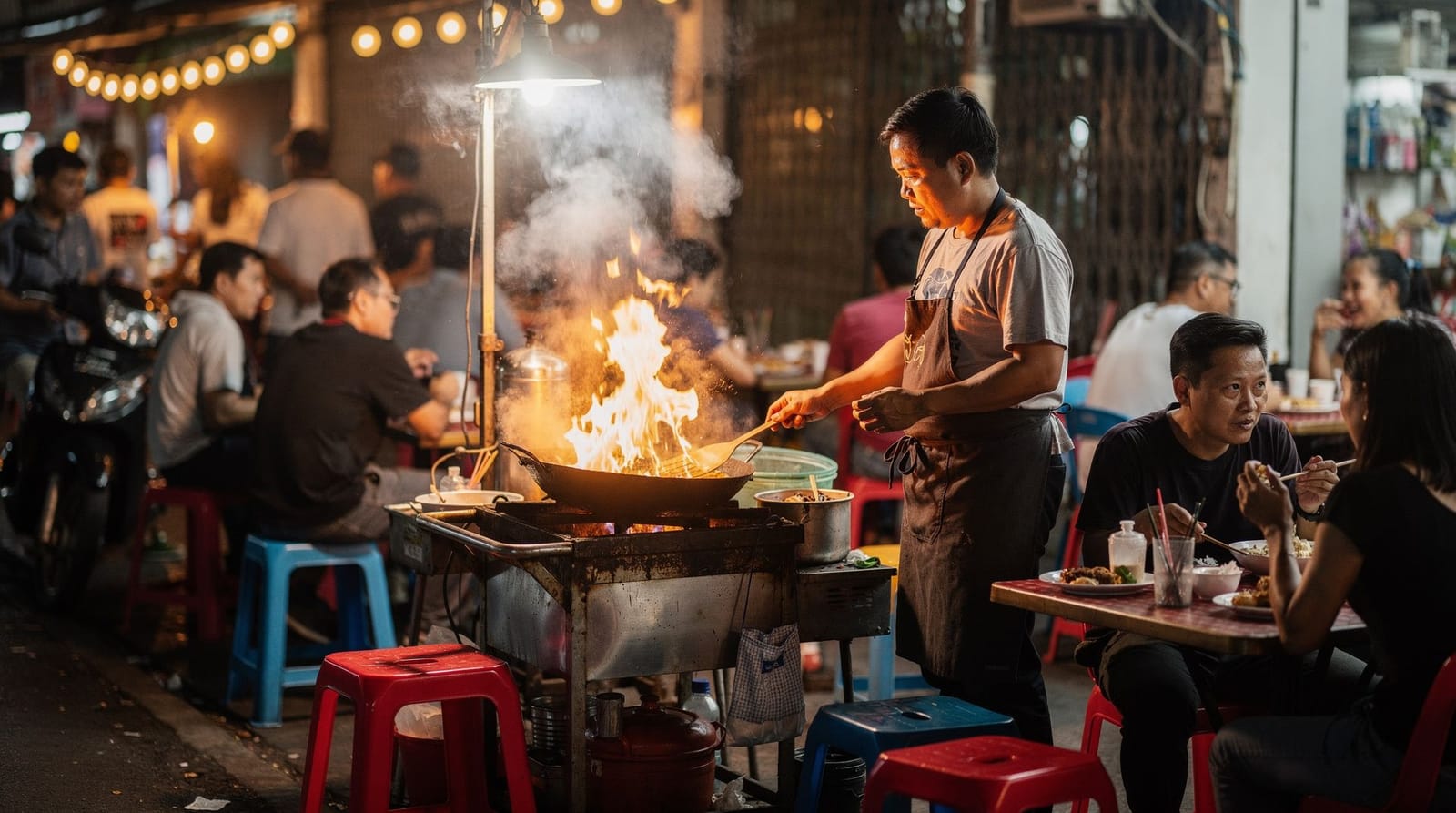
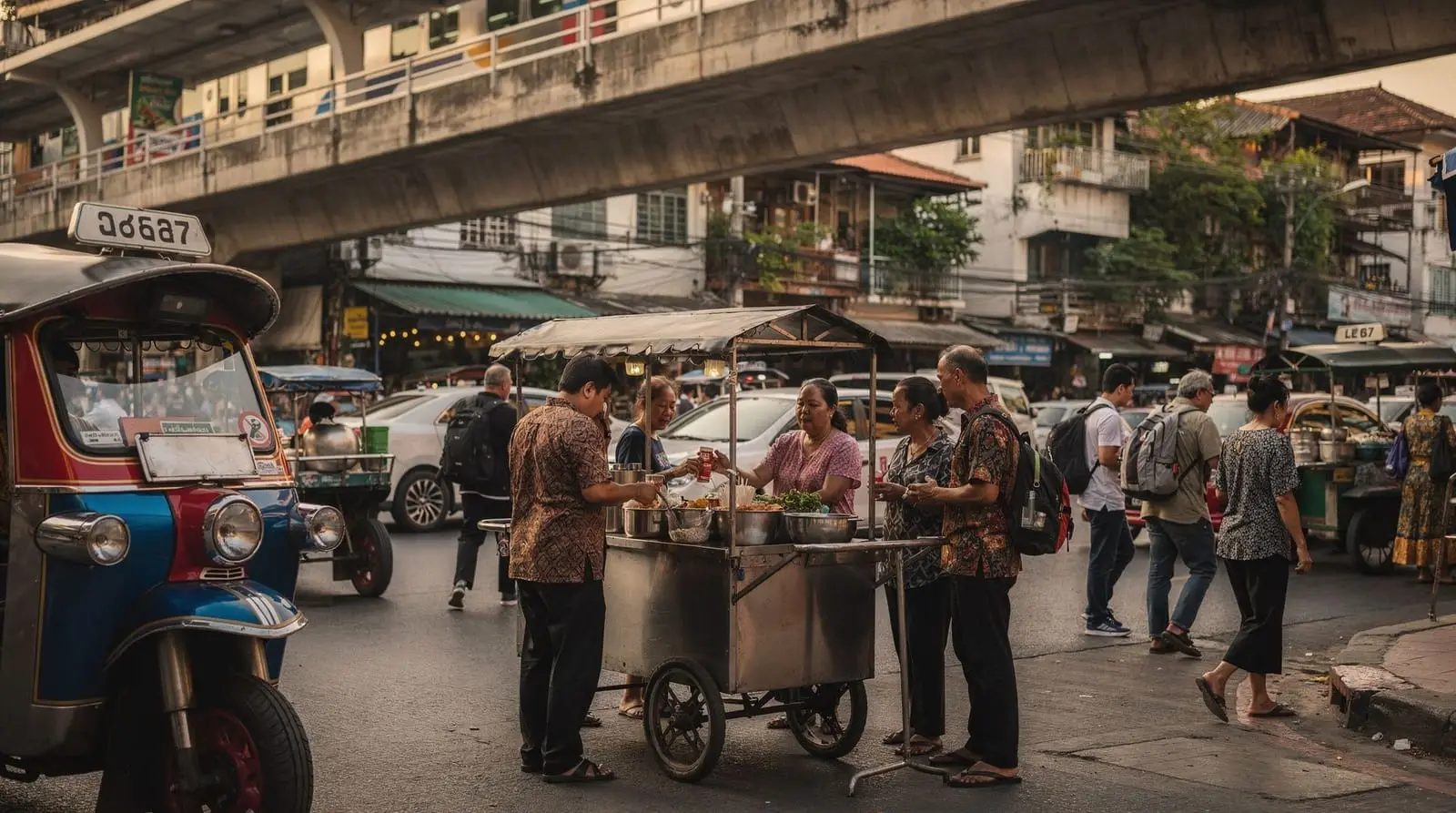
Food is where Bangkok’s value shines and where budget travellers save the most. A plate of pad thai, a bowl of boat noodles, khao man gai (chicken rice) or a rice-and-curry dish costs roughly 40–70 THB from a street stall — a fraction of restaurant prices, and often better. The rule: eat where locals queue.
The Chinatown / Yaowarat night-food streets, the city’s street-food scene generally, and air-conditioned mall food courts (cheap and a heat refuge) all deliver superb cheap meals. 7-Eleven covers snacks, drinks and water for next to nothing. Avoid the inflated tourist-strip restaurants. The full rundown is in the best cheap eats in Bangkok guide.
Transport: ride cheap, skip taxis
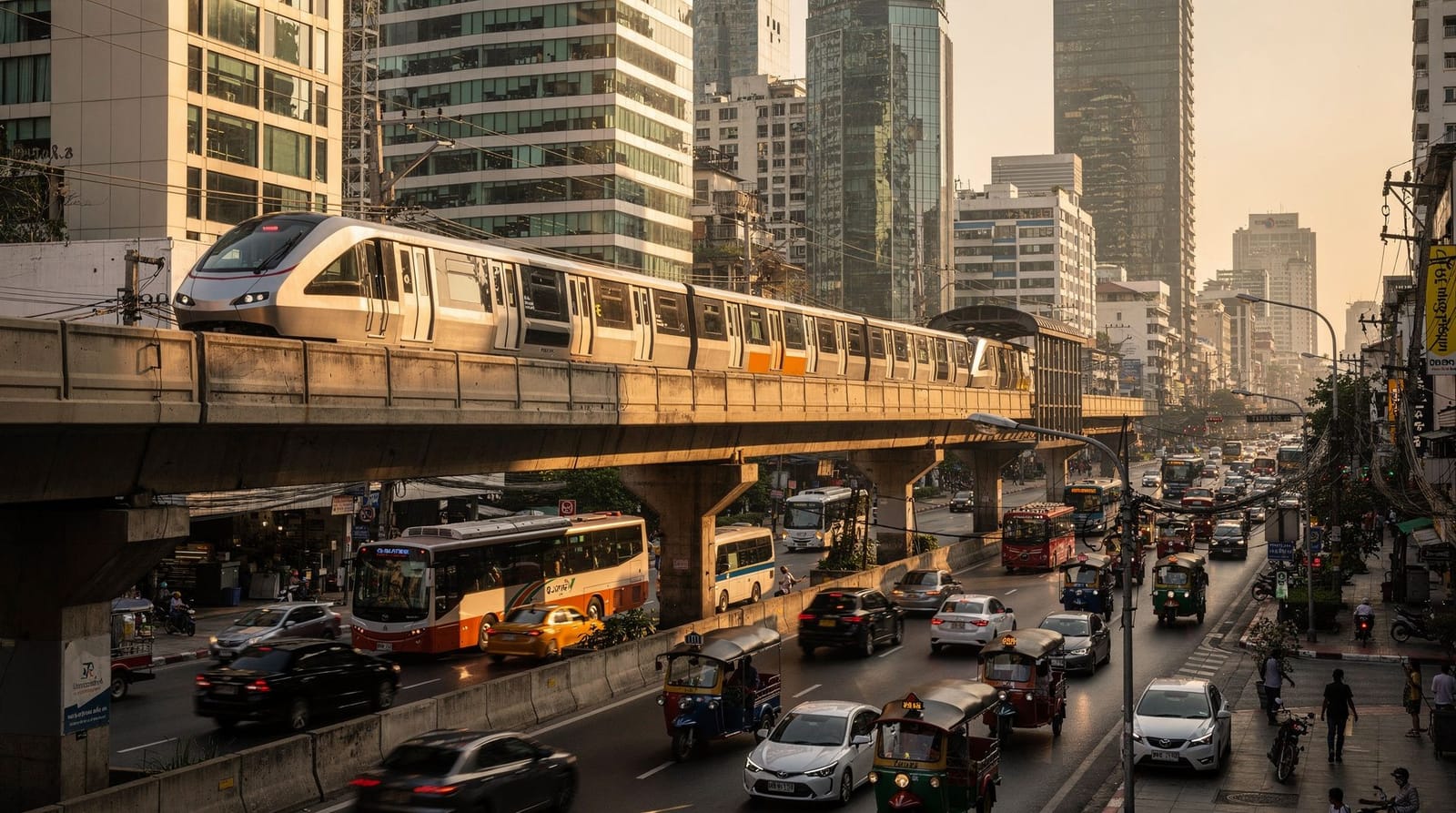
Bangkok’s public network is both cheap and the best way to beat the traffic:
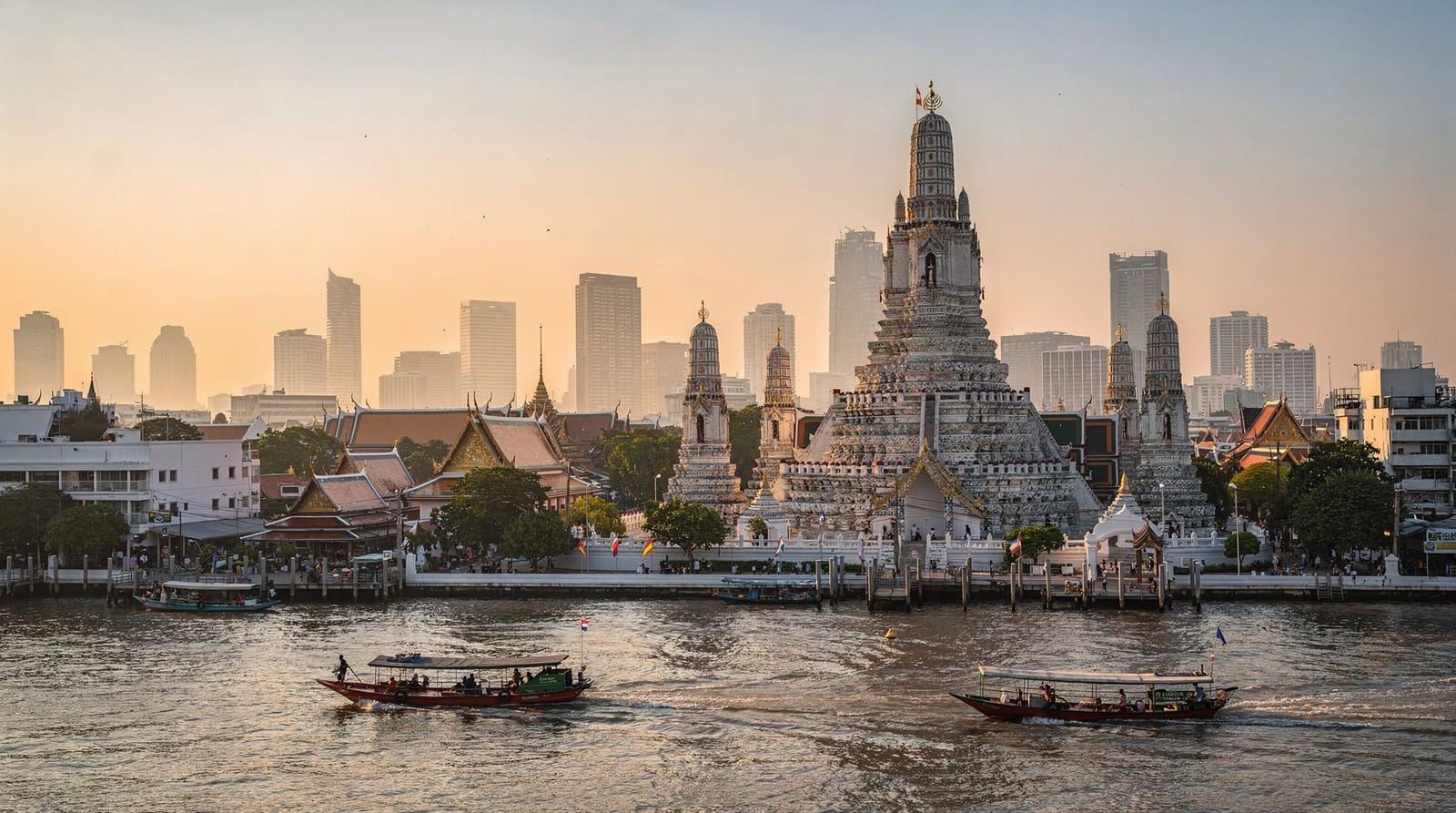
- Chao Phraya orange-flag river boats — about 16 THB flat, the bargain of Bangkok transport, and the scenic way to reach the Old City temples and Chinatown. The full network is in the Chao Phraya boats guide.
- BTS Skytrain and MRT — 17–62 THB per ride, fast and air-conditioned.
- Public buses — 8–25 THB, the cheapest of all if you’re adventurous with the routes.
- Walking — free, and the best way to explore neighbourhoods like the Old City.
Avoid tuk-tuks (more expensive than metered taxis and prone to the commission scam) and save Grab or metered taxis for trips public transport can’t make, splitting the fare if you’re in a group. The full strategy is in the getting around Bangkok guide, and skipping a Rabbit Card deposit on a short stay is covered in the Rabbit Card guide. A combined boat-and-bus day pass is a cheap way to cover the river sights and the wider city without paying for taxis in between.
Bangkok hop-on hop-off boat and bus day pass — one ticket, unlimited rides for a full day of sightseeingFree and cheap things to do
Bangkok is packed with things that cost little or nothing:
- Temples — many are free or charge a small fee; Wat Pho and Wat Arun are modest, and the Golden Mount is cheap.
- Markets — Chatuchak, the flower market and the night markets are free to wander.
- Parks — Lumphini Park and the green lung of Bang Krachao cost nothing.
- Neighbourhood walks — Chinatown, the riverside, the Old City — all free and full of life.
The big paid sight is the Grand Palace, which is worth the entry fee; budget around that one and most of the rest of the city is cheap. The full list is in the free things to do in Bangkok guide.
Stay smart: where and when
Where: stay near a BTS station or the river so you rely on cheap public transport, not taxis. Khao San and Banglamphu is the backpacker hub with the cheapest beds and a lively scene near the Old City; budget options also cluster around the On Nut end of the Sukhumvit BTS line. The where to stay guide compares areas.
When: the rainy season (June–October) brings hotel rates down 30–50% and thins the crowds, with downpours usually short afternoon bursts rather than all-day rain — the single biggest seasonal saving. The rainy season Bangkok guide explains how to travel around the showers.
Money tactics that add up
- Carry cash for street food, markets and boats; cards only work at malls and hotels.
- Withdraw larger amounts, less often — ATMs charge around 220 THB per foreign-card withdrawal, so frequent small withdrawals waste money. A Wise or Revolut card helps.
- Insist on the taxi meter or use Grab’s fixed fares to avoid overcharging.
- Never buy gems as an “investment” and decline cheap tuk-tuk “tours” — both are classic scams that drain budgets.
- Tip lightly — rounding up is the norm; percentage tipping isn’t expected.
Budget vs comfortable: what an extra 500 THB buys
A frugal day and a comfortable one aren’t as far apart in Bangkok as in most cities — a modest top-up buys real comfort without breaking a budget trip:
| Frugal day | Comfortable day | |
|---|---|---|
| Food | Street stalls, market plates (150–300 THB) | Add one sit-down restaurant meal (+300–500 THB) |
| Transport | BTS/MRT/boats only (80–200 THB) | Add a couple of Grab rides (+150–300 THB) |
| Attractions | Free temples, parks, markets | Add one paid sight or activity (+200–500 THB) |
| Total | ~700–1,200 THB | ~1,300–2,000 THB |
The jump mostly buys convenience — air conditioning, sitting down, not waiting for a bus — rather than a fundamentally different trip. Most budget travellers land somewhere between the two, frugal most days with the occasional comfortable one.
More money-saving tricks that add up
A few smaller habits compound over a longer trip. Get a local SIM or eSIM on arrival rather than roaming — data is cheap in Thailand and it makes using Grab, maps and translation apps painless; see the Bangkok SIM and eSIM guide for options. Eat your big meal at lunch, when many restaurants run set menus at a fraction of the dinner price, and save street food for the evening. Refill a water bottle rather than buying single bottles constantly — most hotels and hostels have filtered water stations. If a longer trip includes day trips, bundling transport in advance is usually cheaper than arranging it on the day; the day trips from Bangkok guide has the honest breakdown of DIY versus tour prices. And when eating street food, a little caution around hygiene basics — covered in the street food safety guide — avoids the one expense that can really wreck a budget trip: a lost day (or more) to a stomach bug.
What’s worth paying for
Budgeting well isn’t about refusing to spend — it’s about spending where it counts. A few things justify the outlay even on a tight budget: the Grand Palace entry, one river dinner cruise for a memorable evening, a Thai cooking class that pays you back in skills, or one day trip to Ayutthaya. Skip these and you’ve saved money but missed Bangkok’s best experiences. For a first trip, the how many days in Bangkok guide helps you scale the budget to the length of stay. The dedicated Bangkok on a budget itinerary builds a full trip around cheap days with a couple of worthwhile splurges, so you come home having seen the real city, not just survived it cheaply.
Afternoon Thai cooking class with a local market visit — an affordable way to bring a skill home