Bangkok neighbourhoods: an honest guide to the city's districts
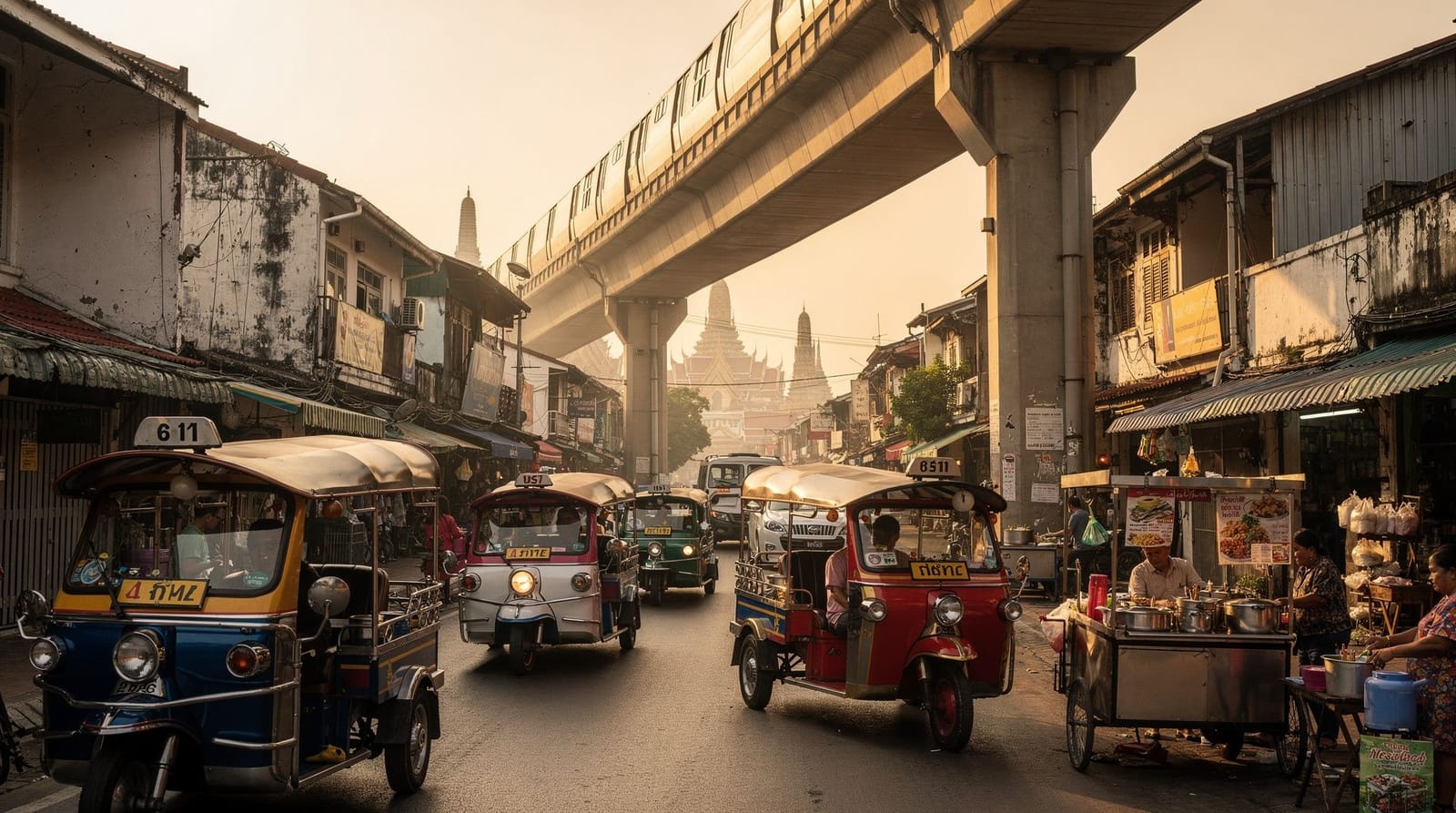
Old Bangkok Temples, Markets & Hidden Gems by Tuk Tuk
How are Bangkok's neighbourhoods organised, and which should I focus on?
Bangkok splits roughly into the historic west (Rattanakosin Old City, Chinatown, Khao San, the riverside and Thonburi) and the modern east (Sukhumvit, Silom-Sathorn, Thonglor-Ekkamai, Ari). First-timers usually want the Old City and riverside for temples and history, plus Sukhumvit or Silom for hotels, transport and food. Each district has a distinct character, price level and reason to visit.
Bangkok is not one city but a collection of very different districts pressed together along the Chao Phraya River and the BTS and MRT rail lines. Understanding how the neighbourhoods divide — historic west versus modern east, river versus rail — is the single most useful thing you can do before booking a hotel or planning your days. This guide gives an honest character sketch of each major area, what it is genuinely good for, and who should skip it.
| Two main clusters | Historic west (temples) vs modern east (rail, hotels) |
| Rail coverage | Excellent in the east; patchy around the Old City and Khao San |
| Best link point | Saphan Taksin — where the BTS meets the river boats |
| Crossing between areas | BTS/MRT within the east; boat or taxi to bridge west and east |
| Typical cross-town Grab/taxi | Around 100–250 THB depending on distance and traffic |
The fundamental geography: west versus east
The Chao Phraya River cuts Bangkok roughly in two, and the city’s identity splits along an older axis as well. The historic west — Rattanakosin (the Old City), Banglamphu and Khao San, Chinatown, the riverside, and Thonburi across the water — holds the palaces, the great temples, the gold shops and the canals. This is the Bangkok of guidebook covers, but it has patchy rail access and heavy traffic.
The modern east — Sukhumvit, Silom-Sathorn, Thonglor-Ekkamai, Ari and beyond — is the Bangkok of skyscrapers, malls, rooftop bars, condos and the BTS Skytrain. This is where most international hotels, business travellers and long-stay visitors base themselves, because the rail network makes it livable.
A good Bangkok trip usually bridges both: sleep in the rail-connected east, sightsee in the historic west, and use the river boats to link them. The getting around Bangkok guide explains how the BTS, MRT and Chao Phraya boats fit together.
Rattanakosin — the Old City and royal heart
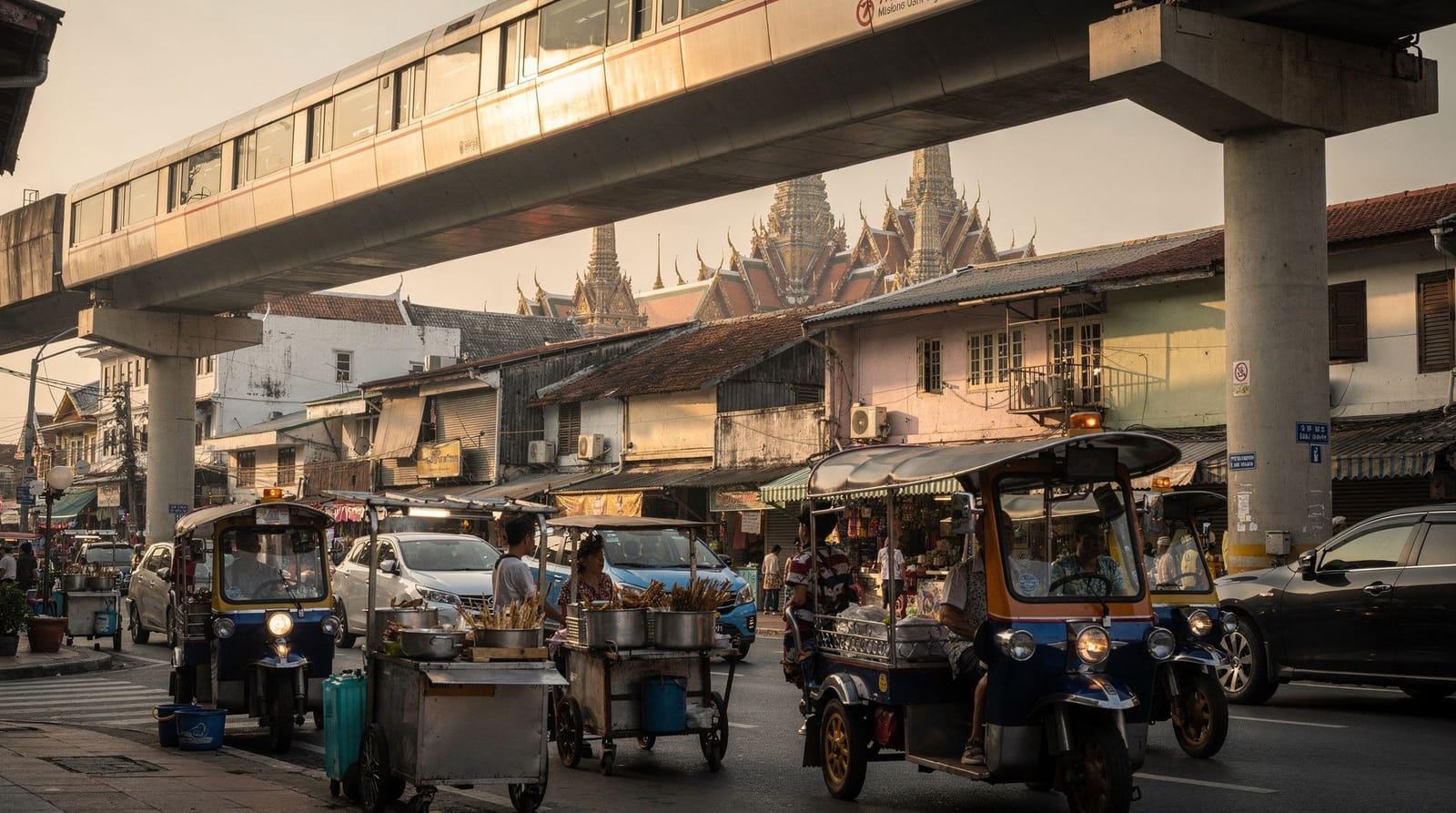
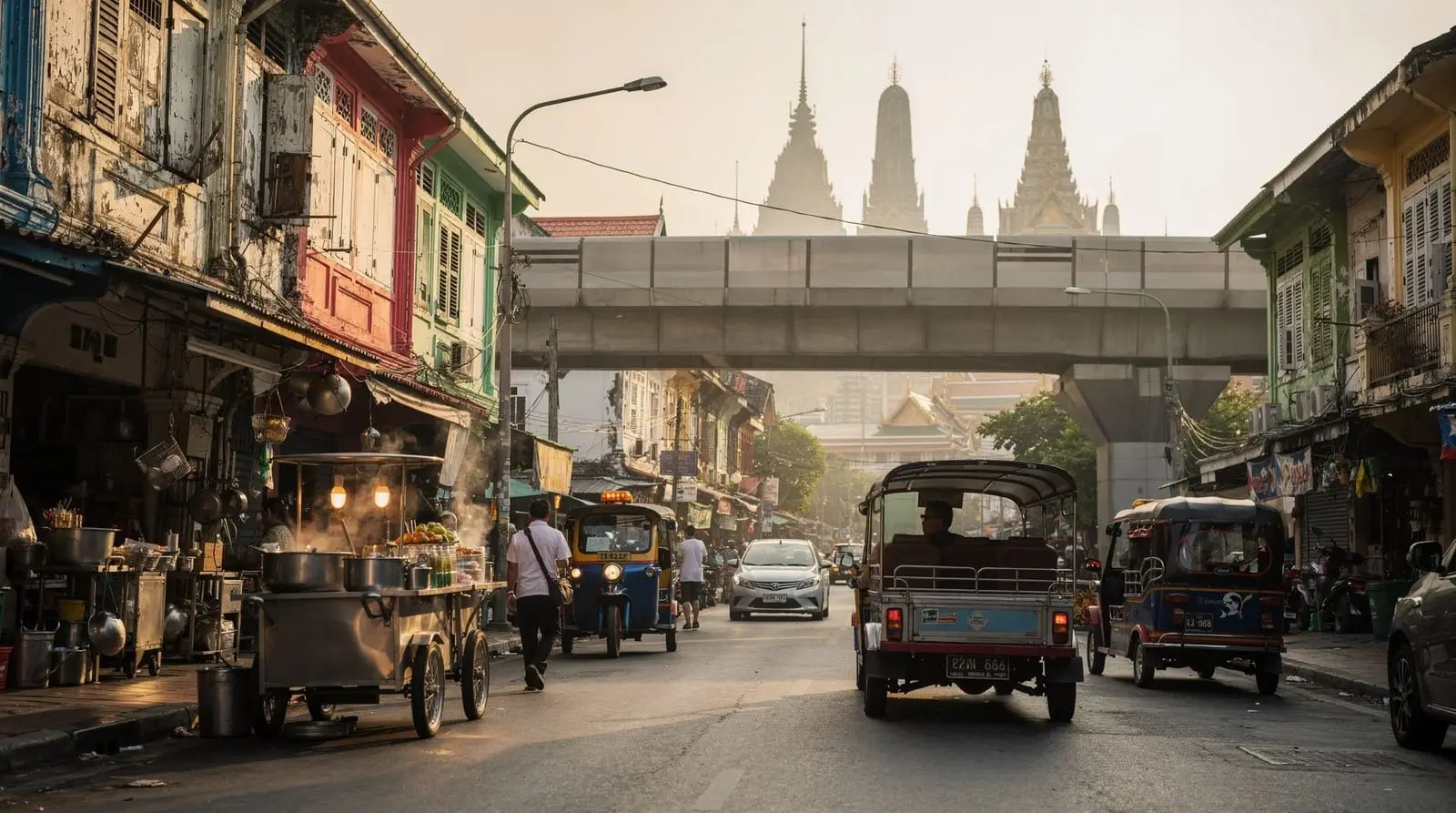
Rattanakosin is the original royal island, founded in 1782, bounded by the river and a ring of canals. It contains the heaviest concentration of must-see sights in Thailand: the Grand Palace and Wat Phra Kaew (the Emerald Buddha), Wat Pho with its reclining Buddha, the city pillar shrine, the National Museum, and a short ferry across to Wat Arun.
It is a daytime district. By early evening the major sights close and the area quietens. There is no BTS or MRT station inside Rattanakosin itself (the nearest MRT, Sanam Chai, sits on the edge), so most visitors arrive by river boat to Tha Tien or Tha Chang piers, or by taxi. Stay here if temples are your priority and you value atmosphere over nightlife; base elsewhere if you want rail access and late dining. The dedicated Old City Rattanakosin guide covers it in depth, and the Rattanakosin destination page maps the sights.
A guided introduction is an efficient way to cover the cluster without scam hassle.
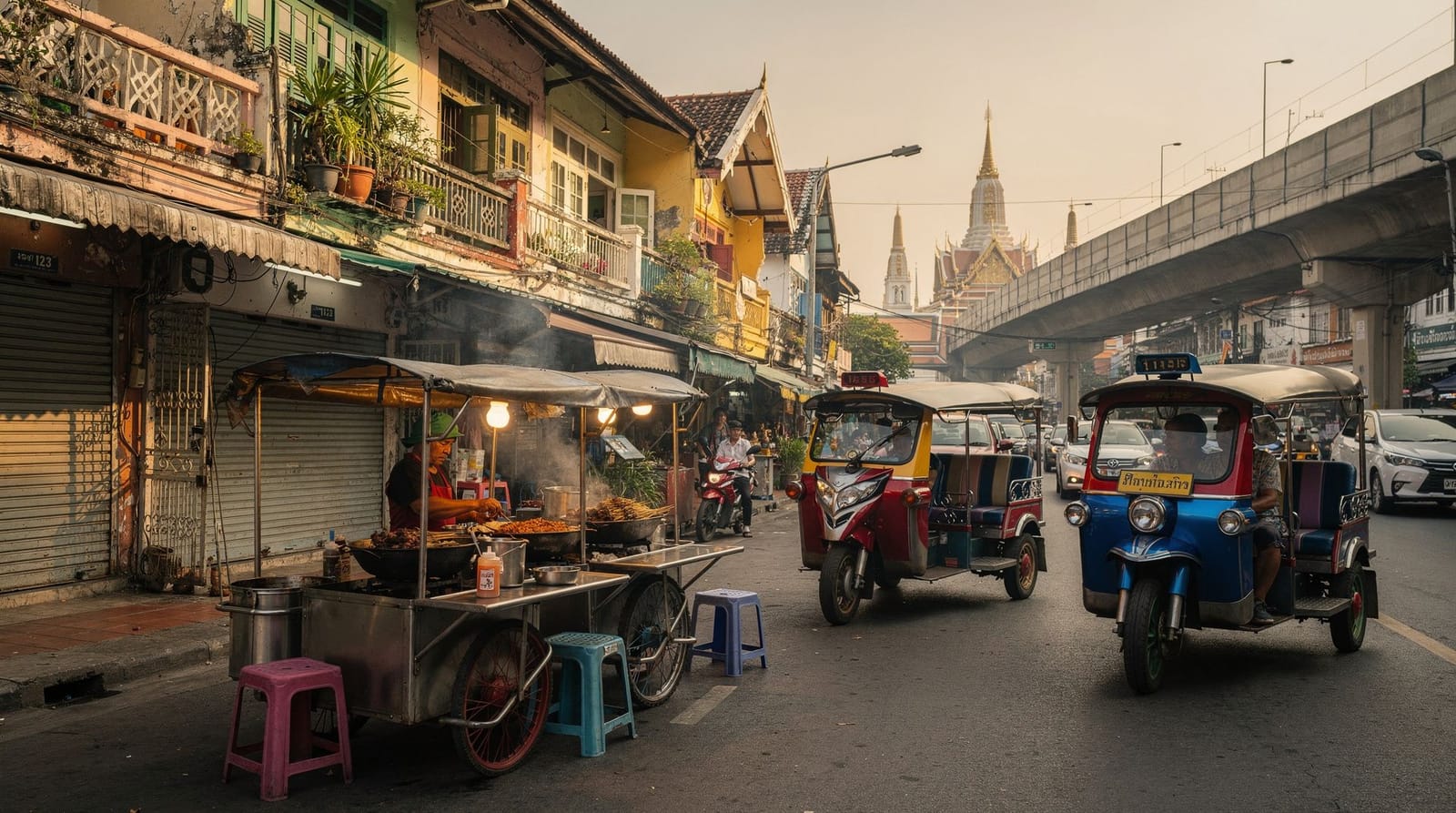
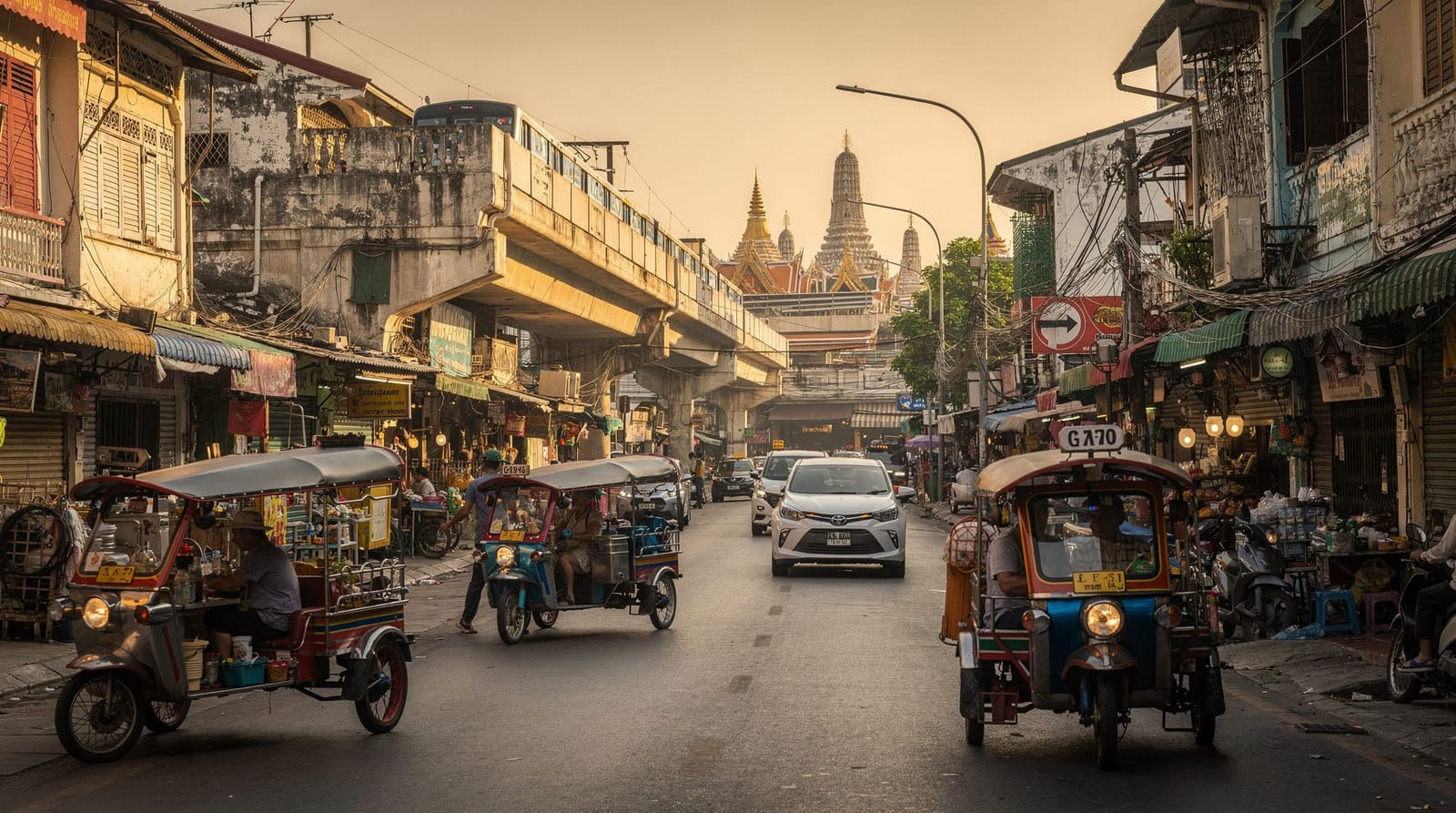
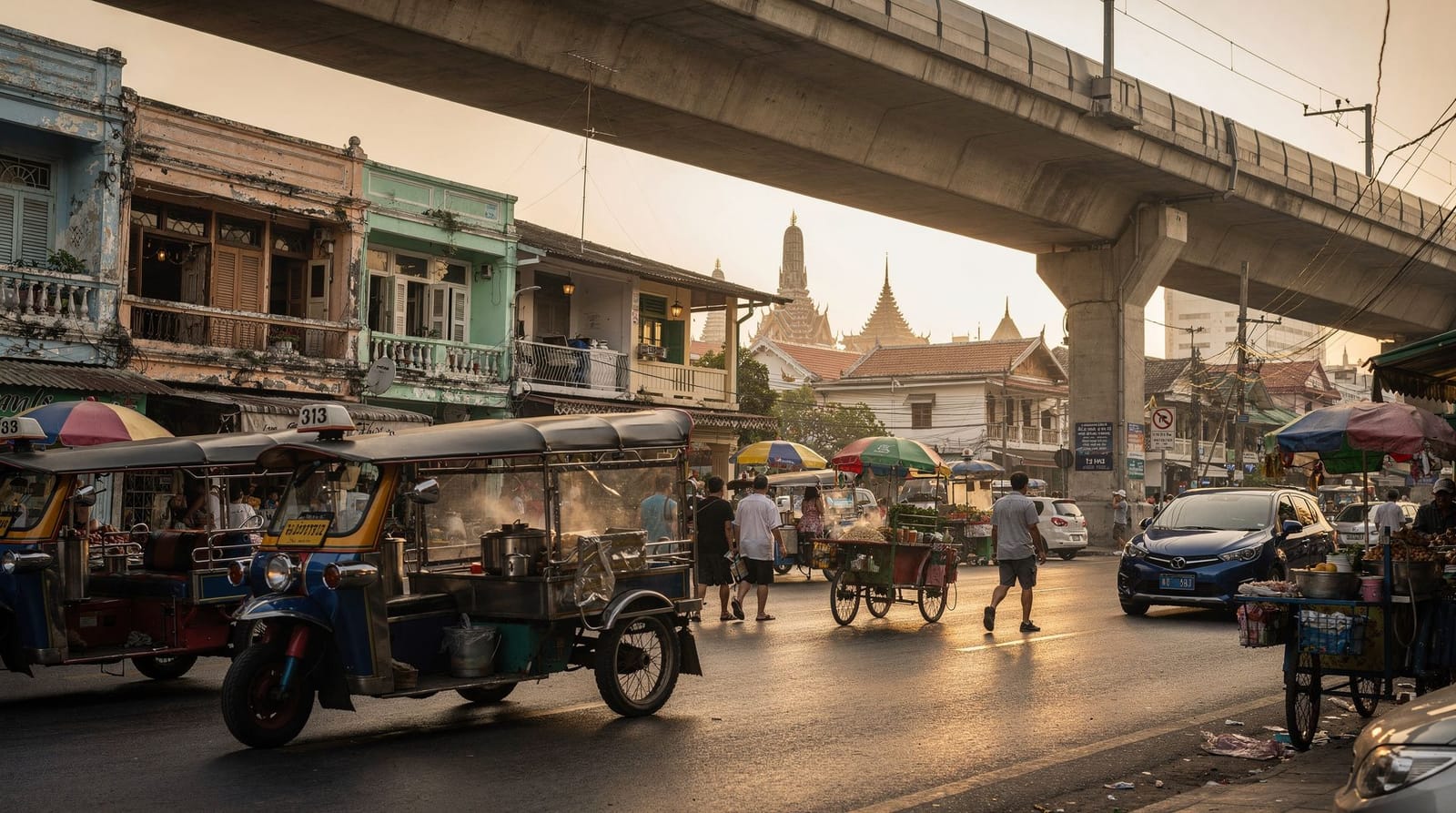
Old Bangkok temples and markets by tuk-tuk — a guided loop of the historic coreKhao San and Banglamphu — the backpacker quarter
Just north of Rattanakosin, Banglamphu wraps around the legendary Khao San Road — the cheap-guesthouse, beer-bucket, banana-pancake strip that launched a million Southeast Asia trips. The honest picture in 2026 is more nuanced than the cliche. Khao San itself is a short, intense party street, increasingly popular with young Thais on weekends; the surrounding Banglamphu lanes (Soi Rambuttri, Phra Athit) are calmer, with riverside cafes and old-Bangkok shophouses.
It is walking distance to the Grand Palace and the Old City temples, and it is genuinely cheap. The trade-offs are noise, no rail station (the nearest MRT is a taxi away), and a backpacker scene that not everyone enjoys. See the Khao San Road guide and the Khao San and Banglamphu destination page for the full read.
Chinatown (Yaowarat) — the street-food engine
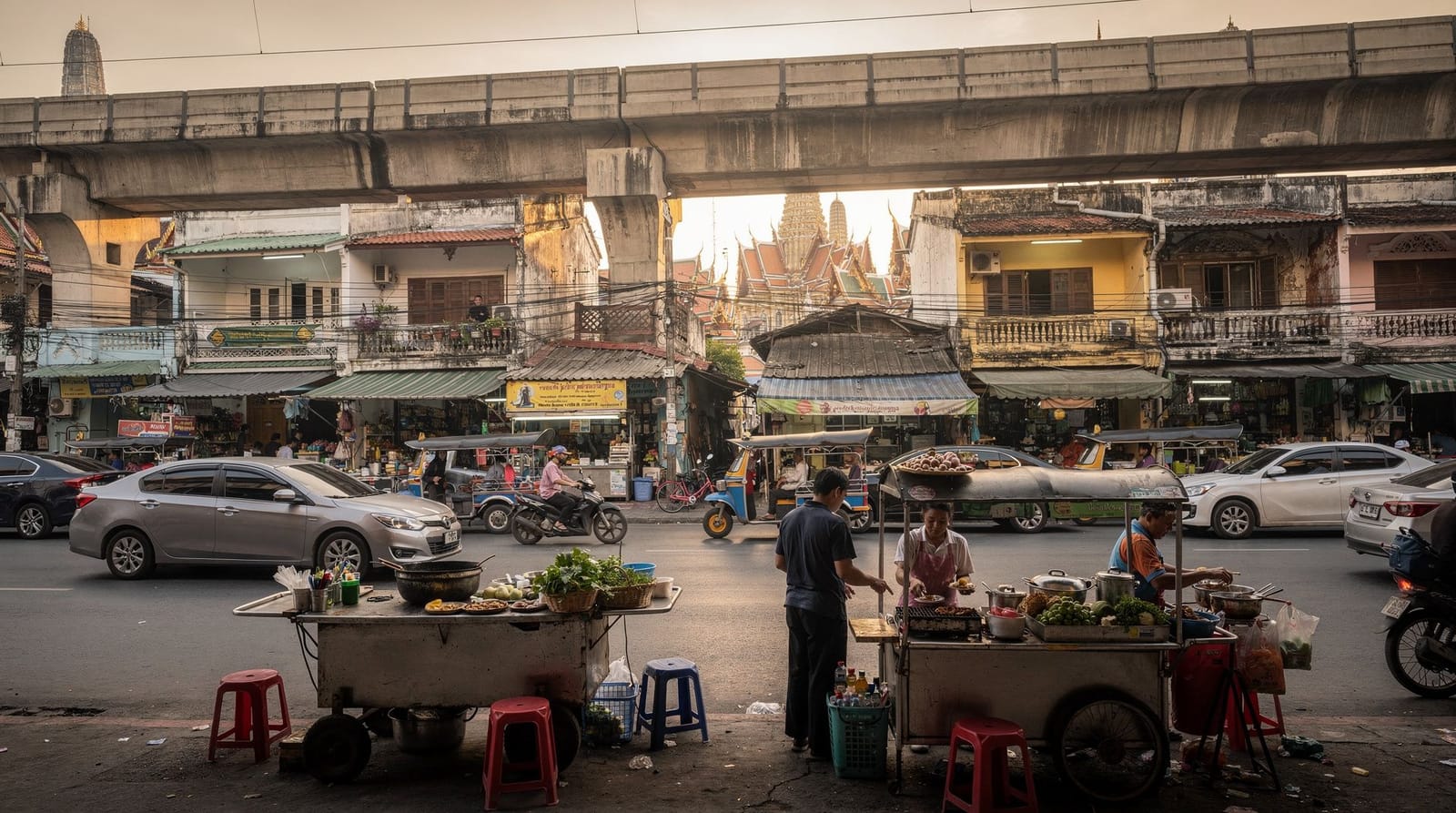
Yaowarat Road and its tangle of lanes form one of the oldest and densest Chinatowns in the world. By day it is gold shops, herbalists, dried-goods markets and the gleaming golden Buddha at Wat Traimit. After dark, Yaowarat transforms into Bangkok’s most famous street-food corridor: charcoal grills, seafood stalls, noodle carts and dessert vendors spilling across the pavements until late.
Chinatown rewards exploration on foot. The neon, the smoke, the crowds and the temple shrines layered between food stalls make it one of the most atmospheric evenings in the city. The nearby Talat Noi district, an artists’ and old-car-parts quarter along the river, is a quieter counterpoint. The Chinatown Bangkok guide, the Yaowarat street-food guide and the Chinatown-Yaowarat destination page go deeper.
Chinatown and Talat Noi guided walking tour — backstreets, shrines and historySukhumvit — the modern spine
Sukhumvit Road runs east for kilometres, threaded by the BTS Sukhumvit line, and it is where most visitors actually sleep, shop and dine. The stretch from Nana through Asok to Phrom Phong is wall-to-wall hotels, malls (EmQuartier, Terminal 21), international restaurants, massage shops, rooftop bars and the city’s best-known nightlife (Nana Plaza, Soi Cowboy).
Sukhumvit is convenient above all else: superb rail access, food in every cuisine and price bracket, and easy connections to the airport rail link. It is not historic or pretty — it is a working modern district — but for a comfortable, well-connected base it is hard to beat. The Sukhumvit guide breaks down the sub-areas, and the Sukhumvit-Nana-Asok destination page covers it on the ground.
Silom-Sathorn — finance by day, nightlife by night
South of Sukhumvit across Lumphini Park, Silom and Sathorn form Bangkok’s financial district. By day it is office towers and business lunches; by night Silom comes alive with the Patpong night market, the LGBTQ+ bars of Silom Soi 2 and Soi 4, and a dense restaurant scene. Lumphini Park — Bangkok’s green lung in the centre — sits on its northern edge, perfect for early-morning jogs and monitor-lizard spotting.
Silom-Sathorn is more compact and walkable than Sukhumvit, well served by both the BTS Silom line and the MRT, and a strong base for travellers who want a central, slightly more grown-up feel. The Silom-Sathorn guide and the Silom-Sathorn destination page cover it fully; see also the Lumphini Park guide.
Riverside — luxury hotels and the best sunsets
The stretch of Chao Phraya riverbank from Saphan Taksin north past the grand colonial-era hotels (The Oriental, the Shangri-La) and the ICONSIAM megamall is Bangkok’s riverside district. This is the place for five-star luxury, river-view rooftop bars, dinner cruises and the most photogenic sunsets in the city, with Wat Arun glowing across the water.
Crucially, Saphan Taksin is the one point where the BTS meets the Chao Phraya boat network — making the riverside a smart base that links rail and river. The riverside Bangkok guide, the riverside Chao Phraya destination page and the ICONSIAM destination page cover it. For an evening on the water, see the Chao Phraya dinner cruise guide.
Thonglor and Ekkamai — where Bangkok goes out
A few BTS stops east of Asok, Thonglor (Sukhumvit Soi 55) and neighbouring Ekkamai are the city’s trendiest dining and nightlife districts — the haunt of affluent young Thais, expats and the design-conscious. Think craft-cocktail bars, izakayas, brunch cafes, boutique fitness and a constant churn of new openings.
It is not a sightseeing area and there is little for the first-timer with a packed temple itinerary. But for nightlife, modern Thai dining and a feel for contemporary Bangkok, Thonglor-Ekkamai is essential. The Thonglor-Ekkamai guide, the Thonglor nightlife guide and the Thonglor-Ekkamai destination page cover the scene.
Ari — the leafy hipster enclave
North of the centre on the BTS Sukhumvit line, Ari is a low-rise, tree-lined neighbourhood that has become a darling of Bangkok’s creative and cafe culture without losing its old residential calm. Speciality coffee, indie restaurants, small galleries and a genuine local feel make it a favourite of digital nomads and repeat visitors who want a softer side of the city.
There are no major sights, which is rather the point. Ari is for slow mornings and good food away from the tourist crush. The Ari neighbourhood guide and the Ari destination page cover it.
Talat Noi and the river’s quiet corners
Squeezed between Chinatown and the river, Talat Noi is an old Teochew Chinese quarter of narrow lanes, vintage car-part workshops, street art and Instagrammable shophouses, anchored by the riverside So Heng Tai mansion and the Holy Rosary Church. It is one of the most atmospheric walking neighbourhoods in Bangkok and a favourite of photographers. The Talat Noi guide and the Talat Noi destination page cover the loop.
Beyond the trail: Bangkok hidden gems half-day tour — backstreets and local lifeBang Krachao — the green lung across the river
A short ferry from the city, Bang Krachao is an artificial island in a loop of the Chao Phraya that has stayed jungly and undeveloped — a maze of raised concrete bike paths through palm groves, a floating weekend market and a botanical park. Locals call it Bangkok’s green lung. It is the antidote to the megacity: cycle the elevated paths, breathe, and return by evening. See the Bang Krachao green lung guide, the Bang Krachao destination page and the Bang Krachao bike tour.
Thonburi — canal life across the water
West of the river, Thonburi was Thailand’s capital before Bangkok and remains its most traditional side: working canals (khlongs), stilt houses, the towering spire of Wat Arun, and longtail-boat tours threading the waterways. It feels a generation removed from the malls of Sukhumvit. The Wat Arun area destination page, the Thonburi khlongs destination page and the longtail canal experience guide cover it.
Getting between neighbourhoods
The rail network defines how easy Bangkok’s districts are to combine. Within the modern east, the BTS Skytrain and MRT subway link Sukhumvit, Silom-Sathorn, Thonglor-Ekkamai and Ari directly — a cross-town hop rarely takes more than 20–30 minutes. Reaching the historic west is different: Rattanakosin, Khao San/Banglamphu and parts of Chinatown sit off the rail grid, so you bridge the gap by Chao Phraya river boat (cheap, scenic, and often faster than a taxi in traffic) or by Grab/taxi, typically around 100–250 THB depending on distance and time of day. Saphan Taksin pier is the hinge point — it’s the one spot where BTS and boat meet, which is why so many itineraries route through the riverside.
Comparing the neighbourhoods
| Neighbourhood | Rail access | Price level | Best for |
|---|---|---|---|
| Rattanakosin (Old City) | Weak — nearest MRT is Sanam Chai, on the edge | Budget–mid | Temples, history |
| Khao San/Banglamphu | None | Budget | Backpackers, cheap nightlife |
| Chinatown (Yaowarat) | MRT Wat Mangkon nearby | Budget–mid | Street food, atmosphere |
| Sukhumvit | Excellent (BTS) | Mid–luxury | Comfort, dining, nightlife |
| Silom-Sathorn | Excellent (BTS + MRT) | Mid–luxury | Business travel, walkability, LGBTQ+ scene |
| Riverside | BTS at Saphan Taksin, plus boats | Luxury | Five-star hotels, sunsets, dinner cruises |
| Thonglor-Ekkamai | Good (BTS) | Mid–luxury | Trendy dining, nightlife |
| Ari | Good (BTS) | Mid | Cafes, local feel, slow mornings |
Which neighbourhood suits which traveller
Base choice depends as much on who you’re travelling with as on your priorities. Families tend to do best in Sukhumvit or Silom-Sathorn, close to malls, easy transport and a wide choice of family-friendly food — see the Bangkok with kids guide for specifics. Solo travellers often gravitate to Silom-Sathorn or Sukhumvit for the mix of safety, nightlife and easy rail access; the solo travel Bangkok guide has more on staying safe and meeting people. LGBTQ+ travellers will find the most visible scene around Silom Soi 2/4, detailed in the LGBTQ+ Bangkok guide. Couples looking for romance lean riverside for sunset views and dinner cruises, or Thonglor for a date-night dining scene — the Bangkok for couples itinerary builds a full trip around it.
How to choose your base — a quick decision guide
- First-timer, temples and history first: riverside near Saphan Taksin, or the Old City if you don’t mind weaker rail access.
- Comfort, food, nightlife, easy transport: Sukhumvit (Asok/Nana/Phrom Phong).
- Central, walkable, slightly grown-up: Silom-Sathorn.
- Budget and backpacker scene: Khao San / Banglamphu.
- Luxury, river views, romance: riverside.
- Trendy dining and going out: Thonglor-Ekkamai.
- Local, slow, cafe culture: Ari.
The companion where to stay in Bangkok guide turns this into concrete hotel-area recommendations by traveller type and budget, and the how many days in Bangkok guide helps you decide how long to give the city.
Private Bangkok highlights tour — temples, old quarters and markets with a guideFrequently asked questions about Bangkok neighbourhoods: an honest guide to the city's districts
Which Bangkok neighbourhood is best for first-time visitors?
Where should I stay to get around Bangkok easily?
Is Khao San Road only for backpackers?
What is the difference between Sukhumvit and Silom?
Which neighbourhoods are best for food?
Are any Bangkok neighbourhoods unsafe?
How many neighbourhoods can I realistically cover in a few days?
Top experiences
Bookable activities with verified prices and instant confirmation on GetYourGuide.